Inspiration
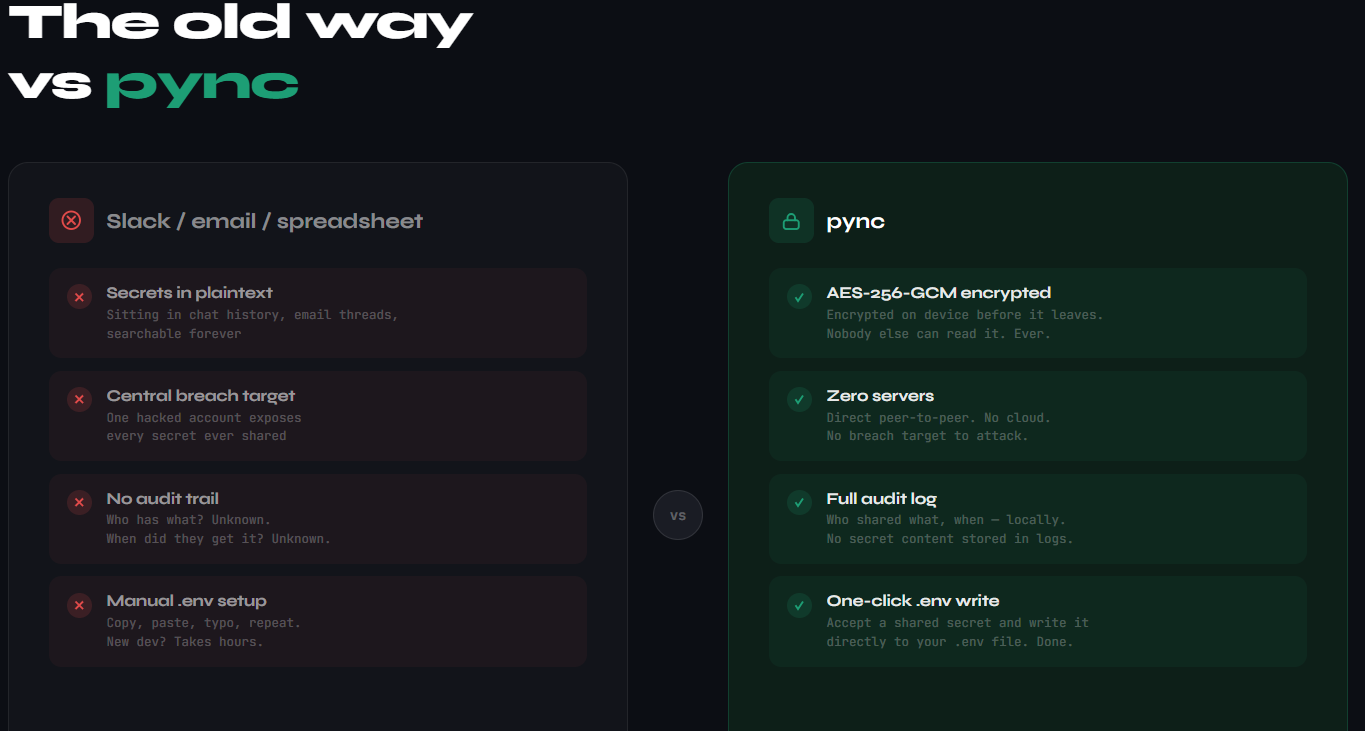
Every dev team has that moment — a new teammate needs the database password and someone ends up DMing credentials over Discord or Slack. We wanted to kill that habit without adding yet another cloud service that becomes a breach target.
What it does
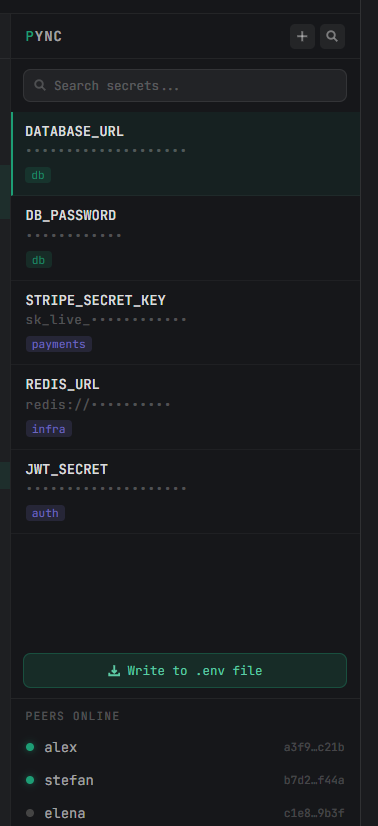
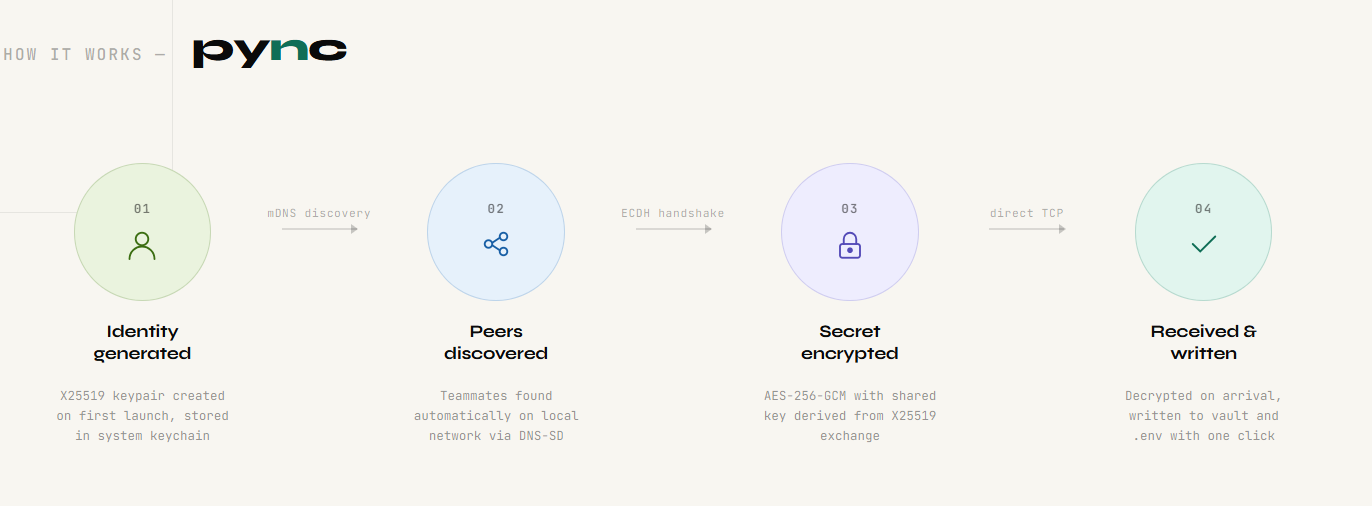
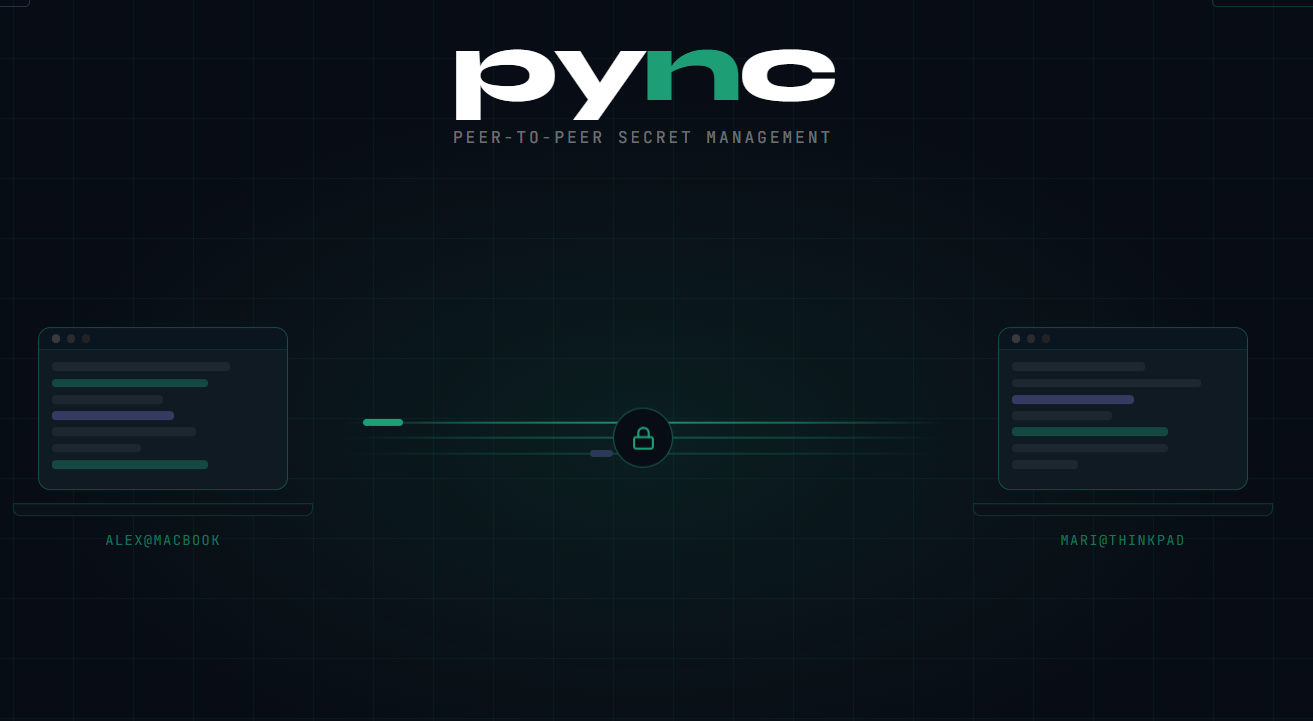
pync lets developers share API keys, database credentials, and environment variables directly with teammates — encrypted on-device, peer-to-peer over the network. No server ever sees your secrets. It lives inside your IDE as an IntelliJ plugin.
How we built it
IntelliJ Platform SDK with Kotlin, Bouncy Castle for X25519/AES-256-GCM cryptography, JmDNS for local peer discovery, and OkHttp for direct TCP transport. Secrets are stored in an encrypted vault file per project, never in plaintext. We have a selfhosted server that helps to connect people all over the world still peer to peer
Challenges we ran into
The hosting of the server, building the intelliJ plugin, thinking of how to do the demo video and present thr ptoject
Accomplishments that we're proud of
A fully working encrypted P2P secret transfer between two IDE instances with zero server infrastructure. The "Write to .env" one-click injection into your project's env file felt like a genuine quality-of-life win.
What we learned
True zero-server P2P is harder than it sounds - network assumptions break constantly. We also learned that developer trust is fragile.
What's next for Pync
VS Code extension, a git pre-commit hook that blocks accidental secret commits, secret expiry reminders, and a CLI companion for teams that don't use JetBrains IDEs.
Built With
- cloudflare
- javascript
- kotlin

Log in or sign up for Devpost to join the conversation.