-
-
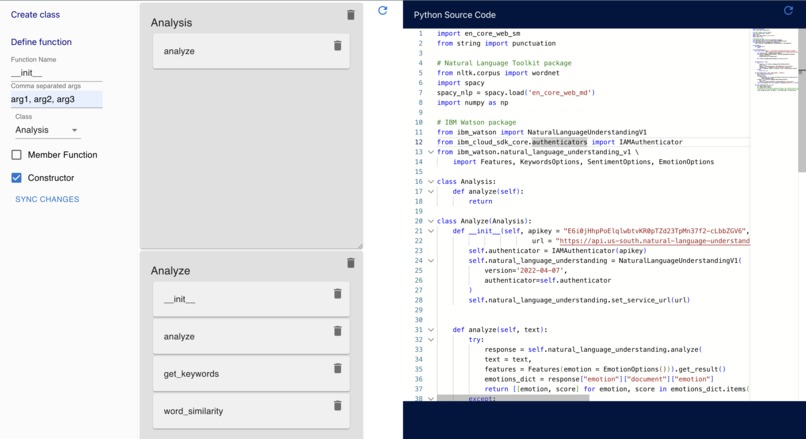
UI of our webpage
Inspiration
Our inspiration stemmed from the desire to bridge the gap between graphical user interface (GUI) design and Python code, particularly in the realm of object-oriented programming (OOP). We aimed to simplify the process of translating complex inheritance patterns and member functions from GUI designs into Python code, making OOP more accessible and less intimidating for developers.
What it does
PyCraft is a groundbreaking tool that seamlessly translates GUI designs into Python code, generating skeleton code with class names, inheritance, and member functions. By simply inputting class names and their relationships, users can effortlessly generate Python code, saving time and reducing the learning curve associated with OOP.
How we built it
We built PyCraft using cutting-edge technologies such as React for the frontend GUI, and Python for the backend code generation. Leveraging the power of both languages, we created an intuitive interface that allows users to input their desired class structure and instantly receive Python code tailored to their specifications. We also used abstract syntax trees to parse the python code and generate it's inheritance graph.
Challenges we ran into
Since we were a small team of just two people, one of the main challenges we faced was designing an algorithm that could accurately interpret complex inheritance patterns and generate corresponding Python code. We also encountered difficulties in synchronizing the frontend and backend components seamlessly while ensuring a smooth user experience. Specifically, handling python to javascript communication was a very complex task.
Accomplishments that we're proud of
We're incredibly proud of creating a tool that simplifies OOP code generation and promotes understanding of complex inheritance patterns. Seeing PyCraft in action, effortlessly translating GUI designs into Python code, is immensely gratifying and validates the hard work and dedication we put into this project.
What we learned
Through building PyCraft, we gained a deeper understanding of OOP principles, programming languages, GUI design, and the intricacies of frontend-backend integration. We also honed our skills in algorithm development, user interface design and backend frontend communication along with full stack development.
What's next for PyCraft
Looking ahead, we envision expanding PyCraft's capabilities to support additional programming languages and frameworks. We also plan to incorporate advanced features such as code optimization, error handling, and real-time collaboration. Our goal is to continually enhance PyCraft's functionality and usability, empowering developers worldwide to streamline their workflow and unleash their creativity.

Log in or sign up for Devpost to join the conversation.