-
-
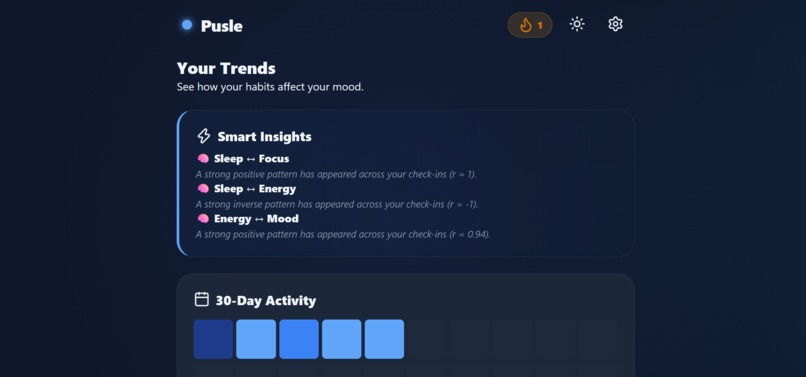
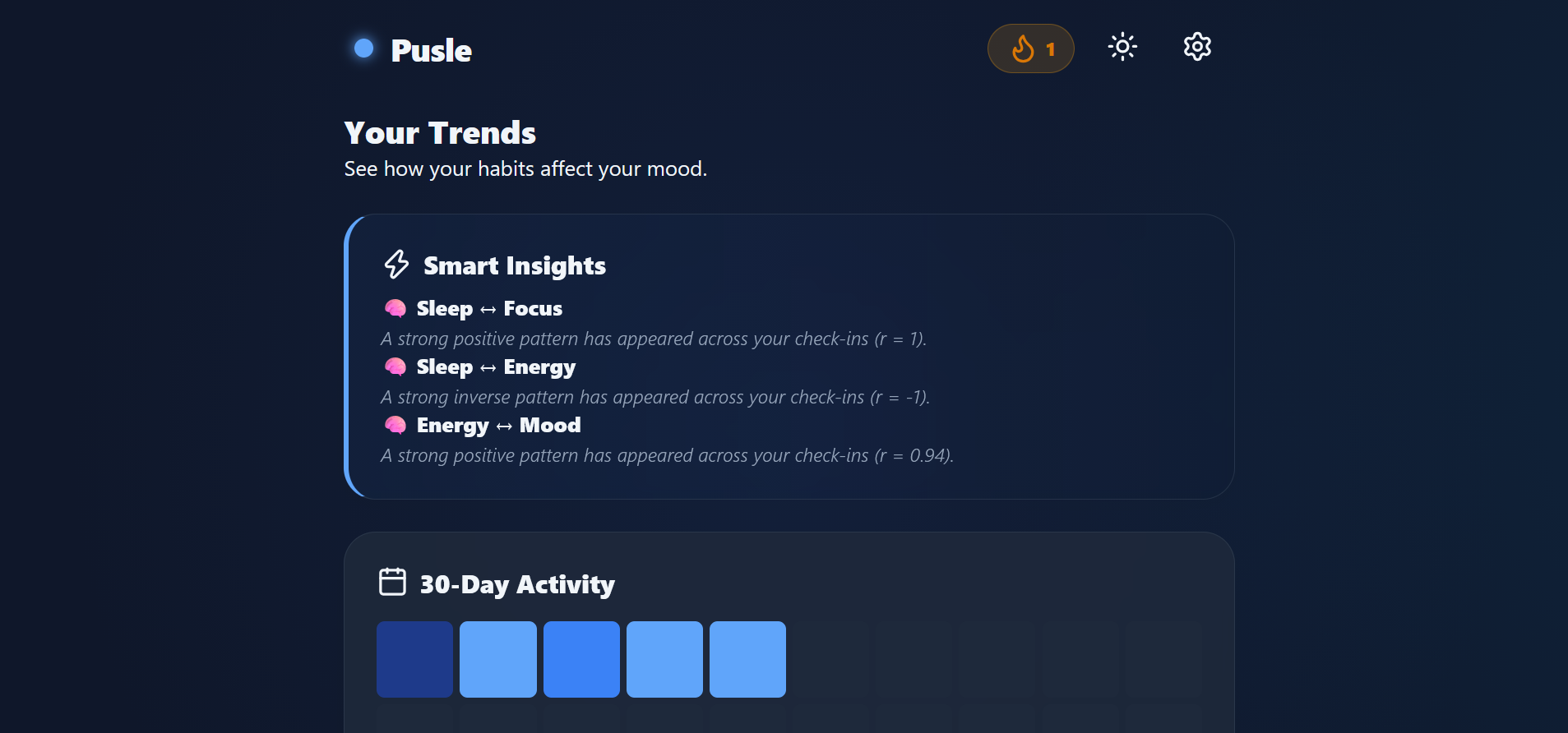
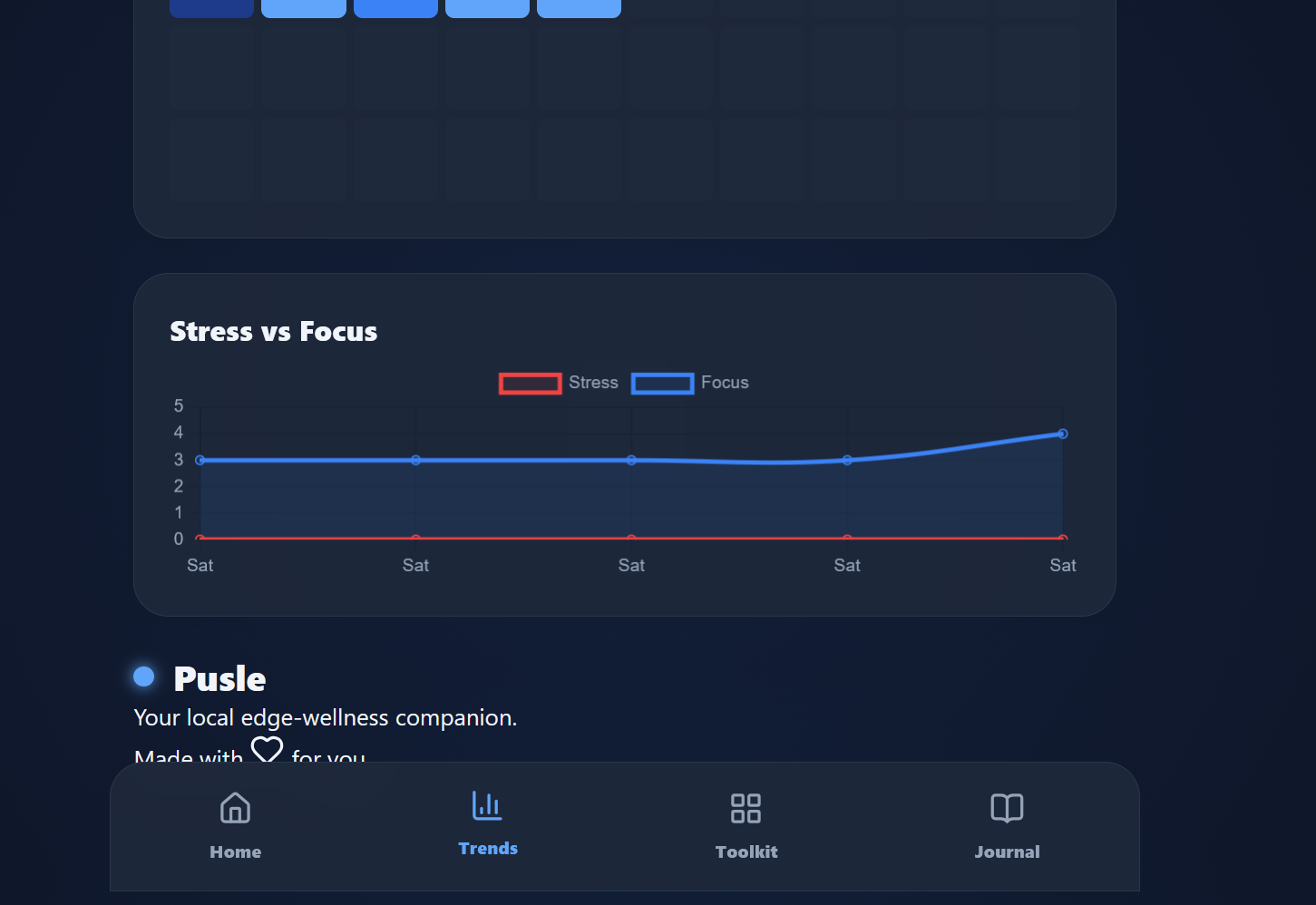
Insights
-
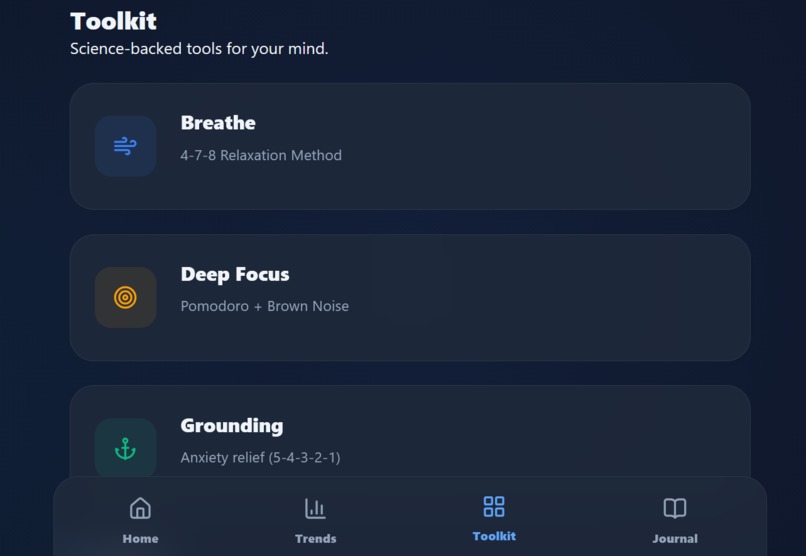
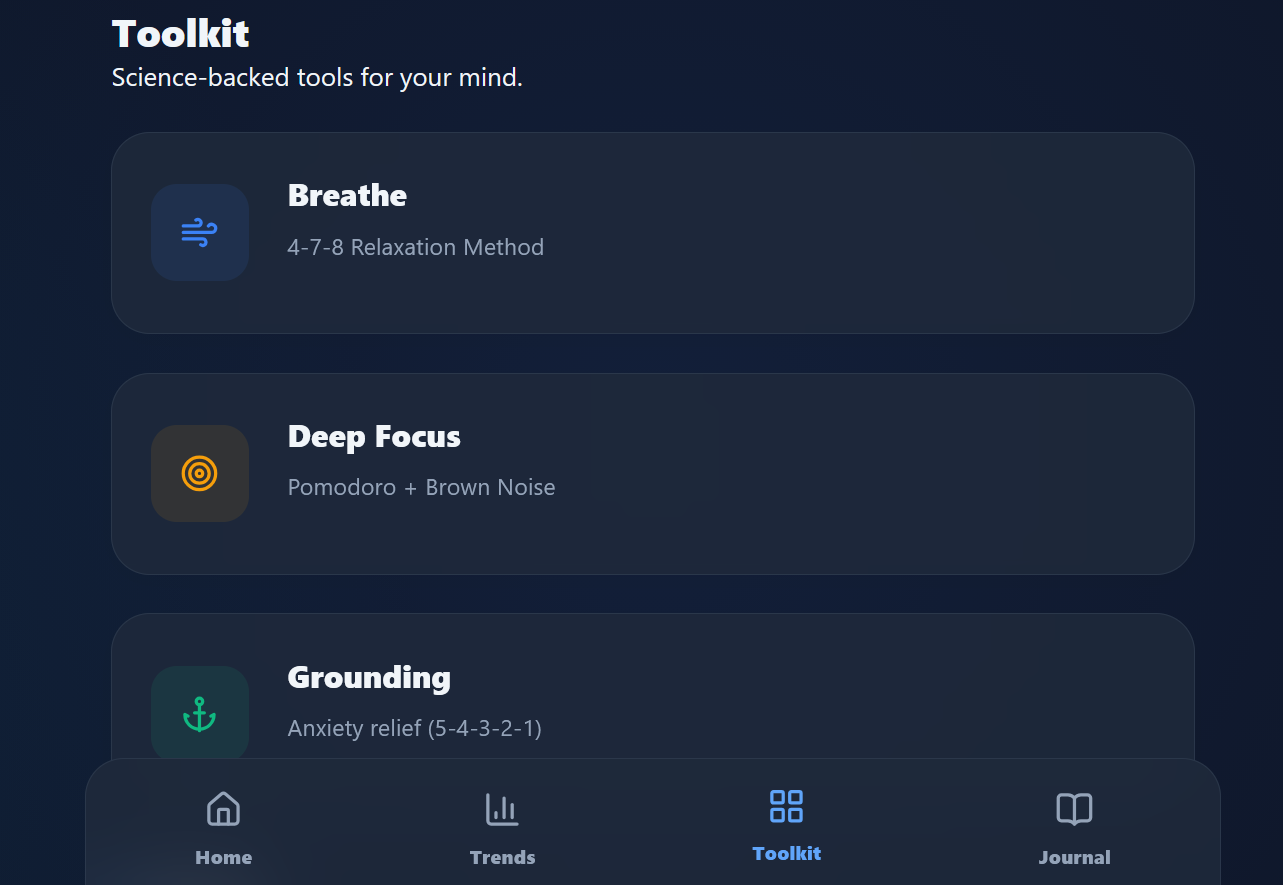
Science-Backed toolkit
-
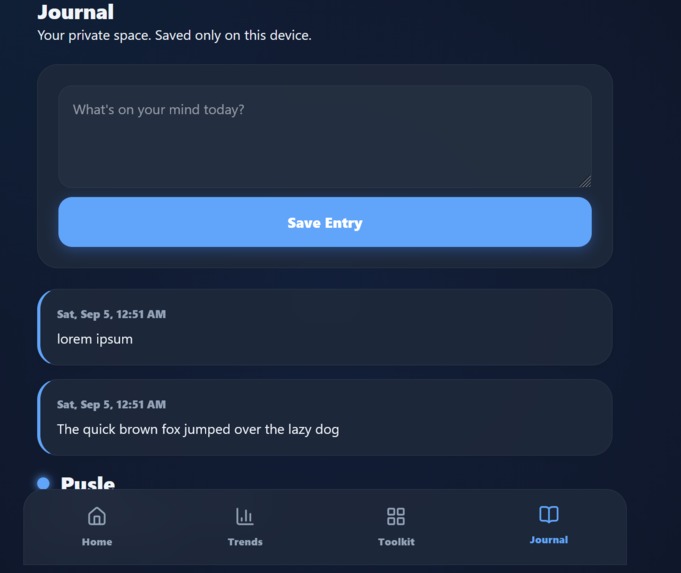
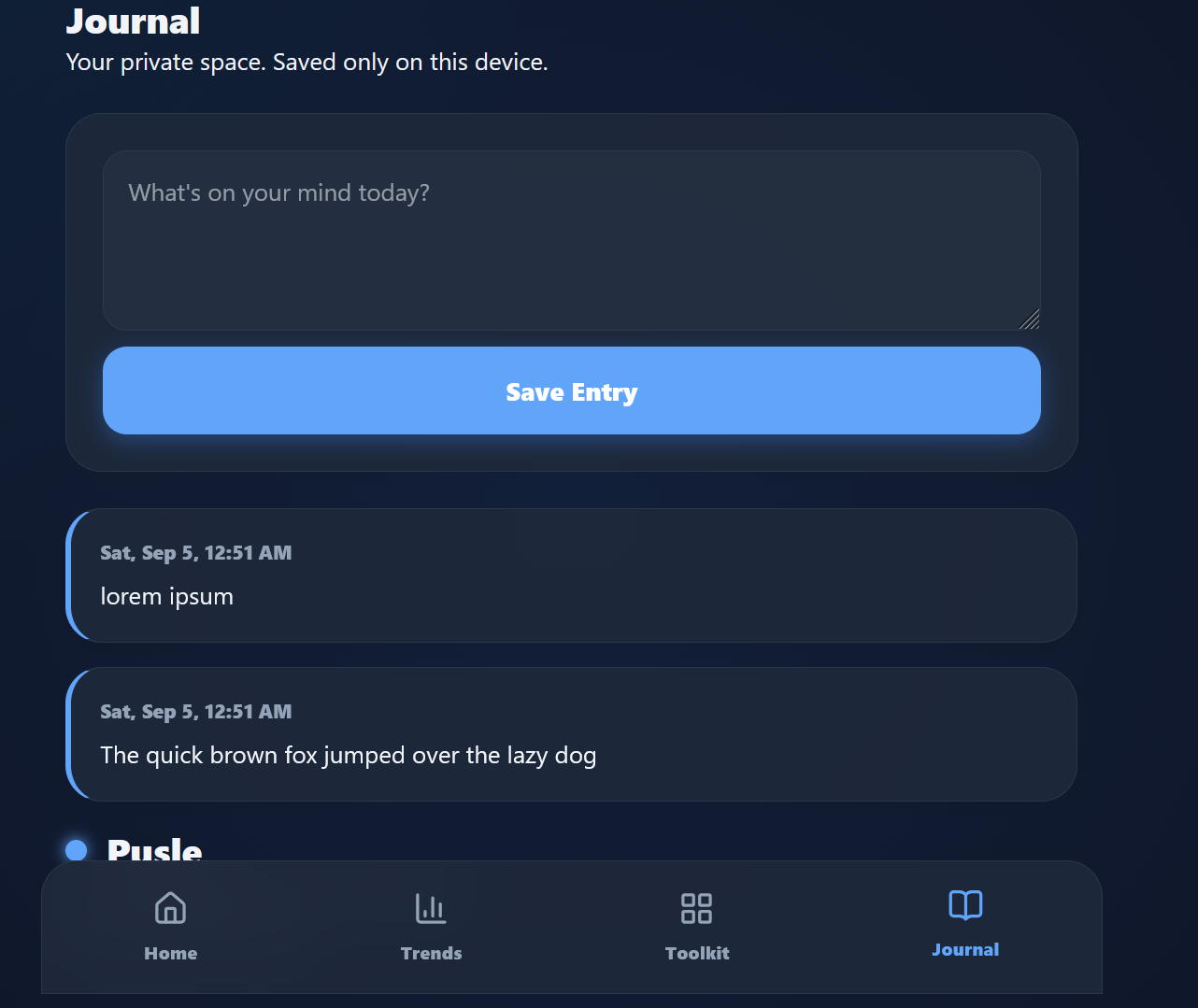
Personal safe journal
-
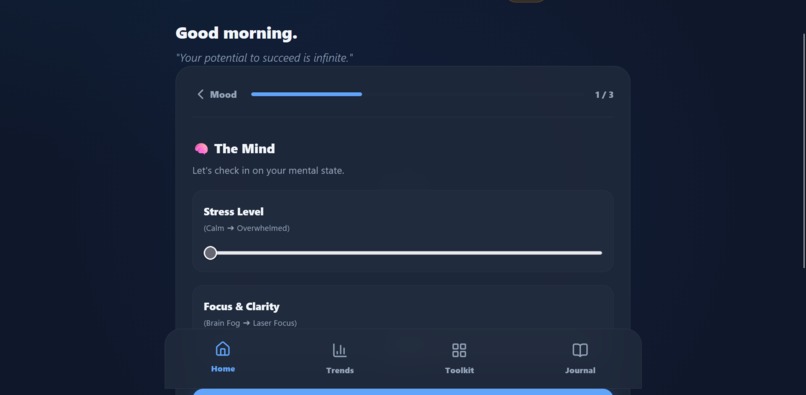
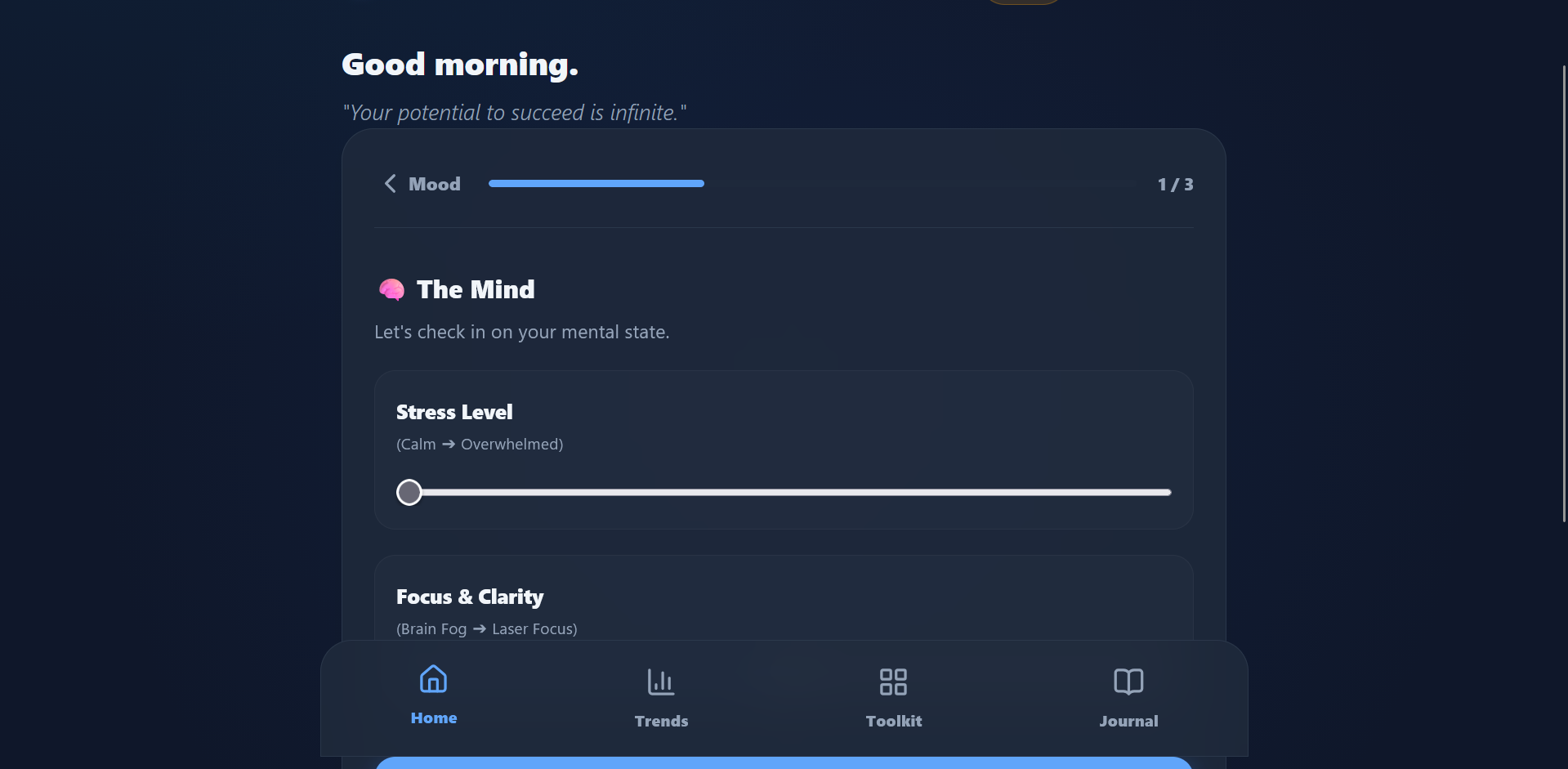
Check-in Wizard
-
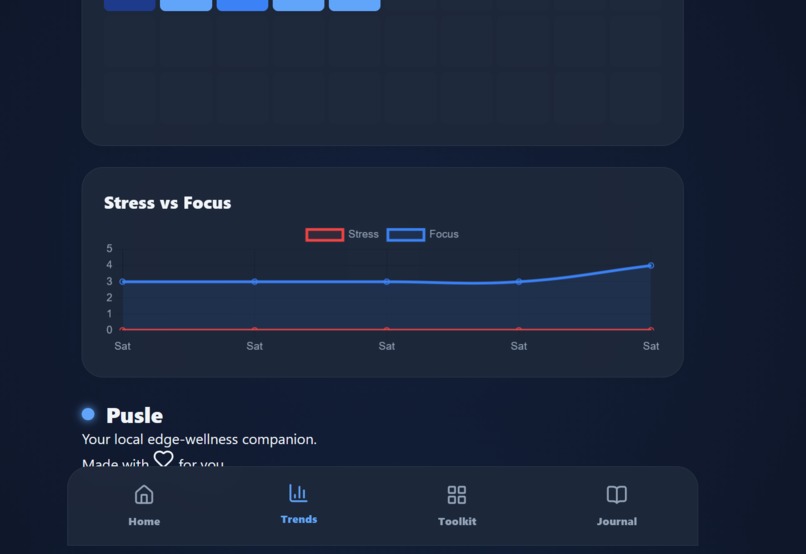
Stress vs Focus chart
-
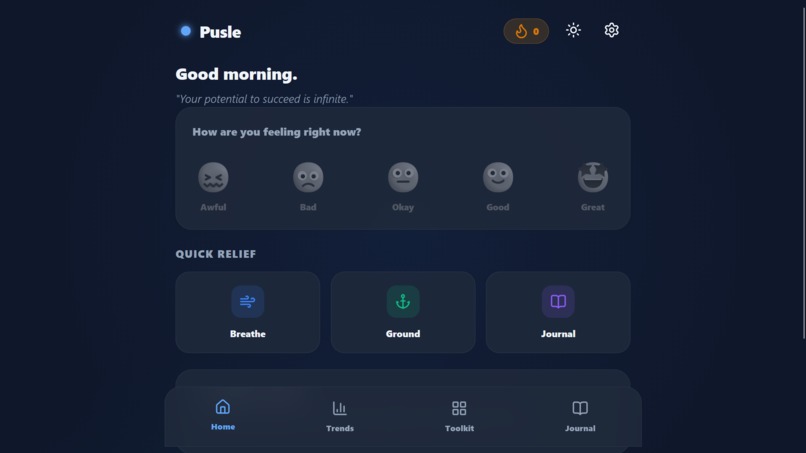
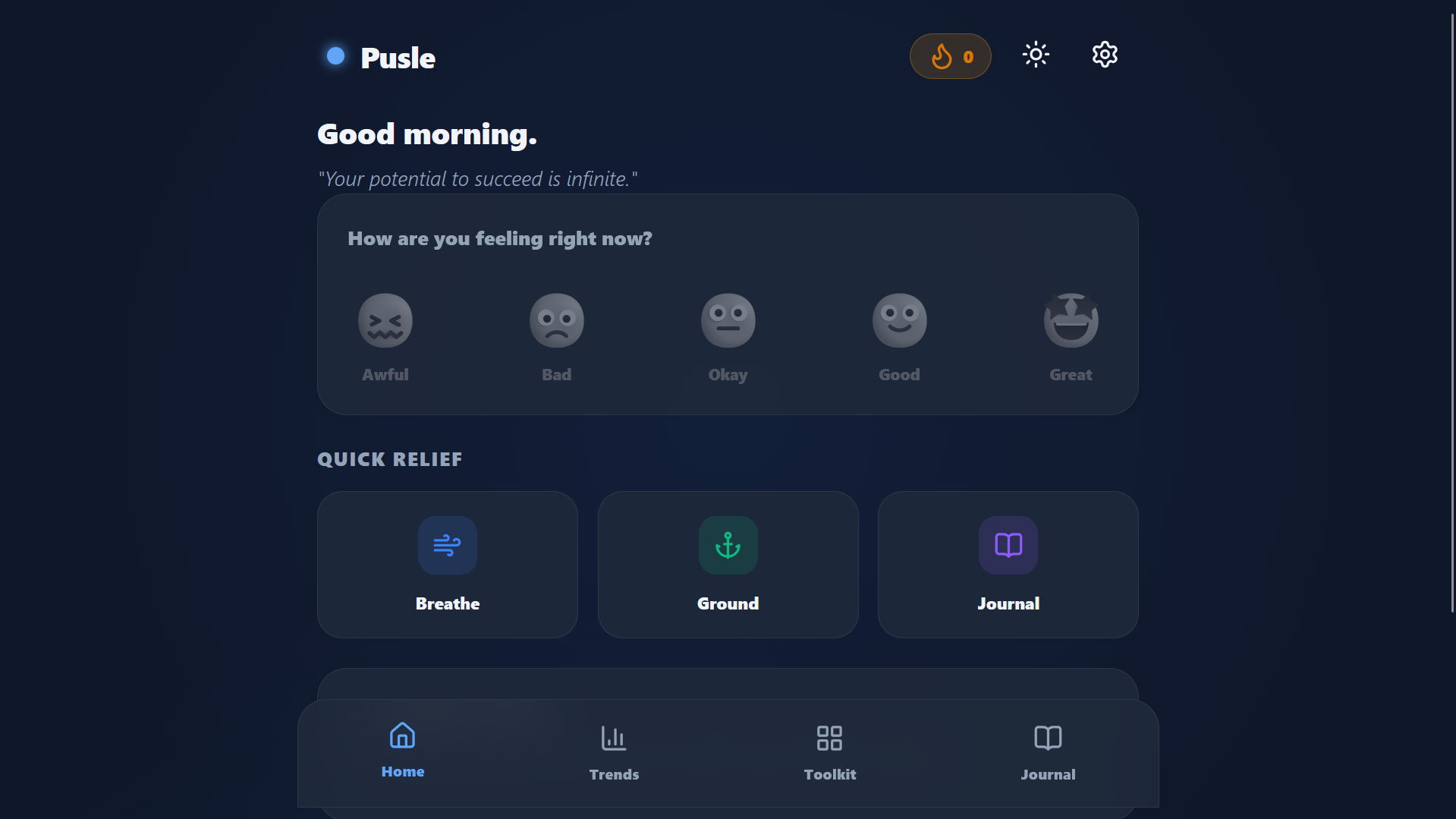
Homepage
Inspiration
Mental wellness can be difficult to talk about, especially for young people. Sometimes you don't need a complicated solution, you just need a place to pause, understand how you're feeling, and take a small step forward.
That inspired me to build PUSLE, a simple and approachable mental wellness platform focused on making those small steps easier.
What it does
PUSLE brings everyday mental wellness tools together in one place. Users can:
- Track their mood and see how it changes over time
- Write down their thoughts through journaling
- Follow guided breathing exercises
- Build and track healthy habits
- Explore simple wellness resources
- View their progress through a clean, easy-to-understand interface
PUSLE is designed to support everyday well-being and is not intended to replace professional mental health care.
How we built it
PUSLE was built as a frontend-first web application using HTML, CSS, and JavaScript.
I focused heavily on the UI/UX and the very advanced suggestion algorithms because the experience needed to feel calm, simple, and approachable yet advanced. JavaScript handles the interactive parts and the health advice suggestion algorithm of the website, while HTML provides the structure and CSS creates the responsive design.
The project was developed by building the core features first and then continuously improving the interface, interactions, and overall user experience.
Challenges we ran into
One of the biggest challenges was deciding what to include without making the website overwhelming, and the fact that we had to build something somewhat close to an ai in one javascript file.
It was easy to keep thinking of new features, but a mental wellness platform shouldn't feel like another complicated app. I had to constantly balance functionality, simplicity, and visual design.
I also faced challenges with responsive layouts, keeping different components consistent, and making sure the interactive elements worked smoothly.
Accomplishments that we're proud of
I'm proud that PUSLE became more than just a collection of individual features. The different tools work together to create one consistent experience.
I'm also proud of the attention given to the interface. Instead of focusing only on functionality, I spent time making the website feel welcoming and easy to navigate.
Most importantly, I turned an idea into a working project that can actually be used and expanded.
What we learned
Building PUSLE taught me that good UI isn't just about making something look good. Every design choice should make the product easier or more comfortable to use.
I also learned more about frontend development, responsive design, JavaScript interactions, UI/UX principles, and organizing a larger web project.
The biggest lesson was learning when not to add another feature. Sometimes making an existing feature simpler is more valuable.
What's next for PUSLE
The next step for PUSLE is to make it more personalized while keeping it simple.
Future improvements could include smarter mood insights, more personalized wellness activities, optional reminders, better accessibility, and additional resources.
I'd also like to explore responsible AI features that can help users understand patterns in their journaling and mood data without pretending to replace a mental health professional.
PUSLE is built around one simple idea: small steps can matter.
Built With
- css
- design
- development
- frontend
- html
- javascript
- responsive
- ui/ux
- web


Log in or sign up for Devpost to join the conversation.