DevPost Submission
Project Name
PushBack
Elevator Pitch
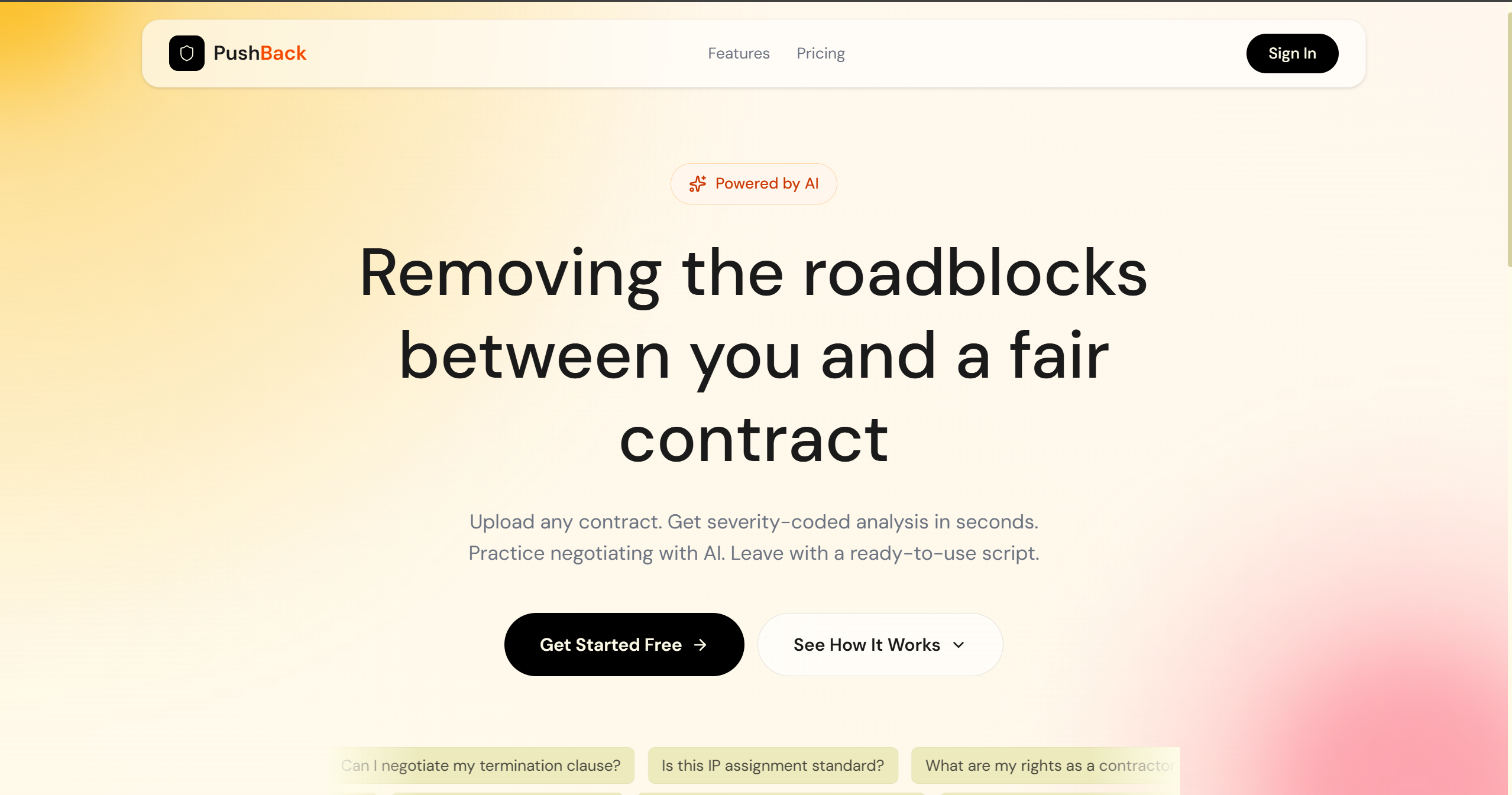
AI-powered contract analysis and negotiation coaching. Upload any contract, get severity-coded clause breakdown, practice pushing back with a voice-enabled AI counterparty, and leave with a ready-to-use script.
Built With
next.js, typescript, vercel, tailwind, css, motion, lucide, react, pdf-parse, claude, anthropic, supabase, zod, vercel-ai-sdk, web-speech-api
Try It Out Links
- GitHub: https://github.com/ibrahimmahafza/PushBack
- Live Demo: (your Vercel URL here)
Project Story
Inspiration
Every year, millions of workers sign contracts they don't fully understand. Immigrants navigating unfamiliar labor laws. Gig workers accepting take-it-or-leave-it terms. Freelancers facing one-sided agreements. First-time employees who were never taught that negotiation is even an option.
A legal consultation costs $300+ per hour, putting real contract review out of reach for the people who need it most. We wanted to build something that could bridge that gap: not a replacement for a lawyer, but a tool that gives people the confidence and knowledge to advocate for themselves.
The idea was simple. What if AI could break down a contract in plain language, tell you what's dangerous, and then coach you through the conversation?
What it does
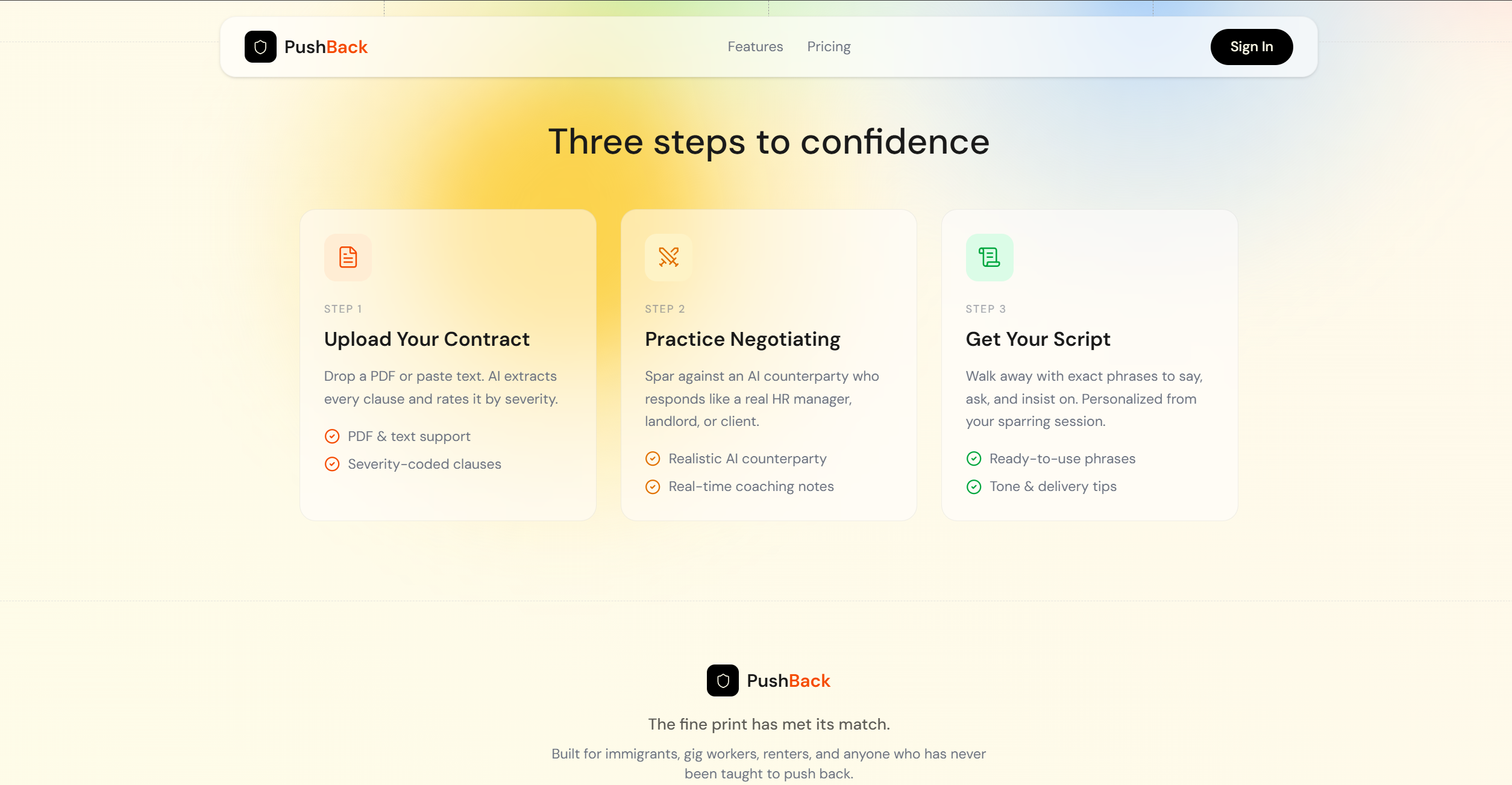
PushBack is a three-step contract intelligence tool:
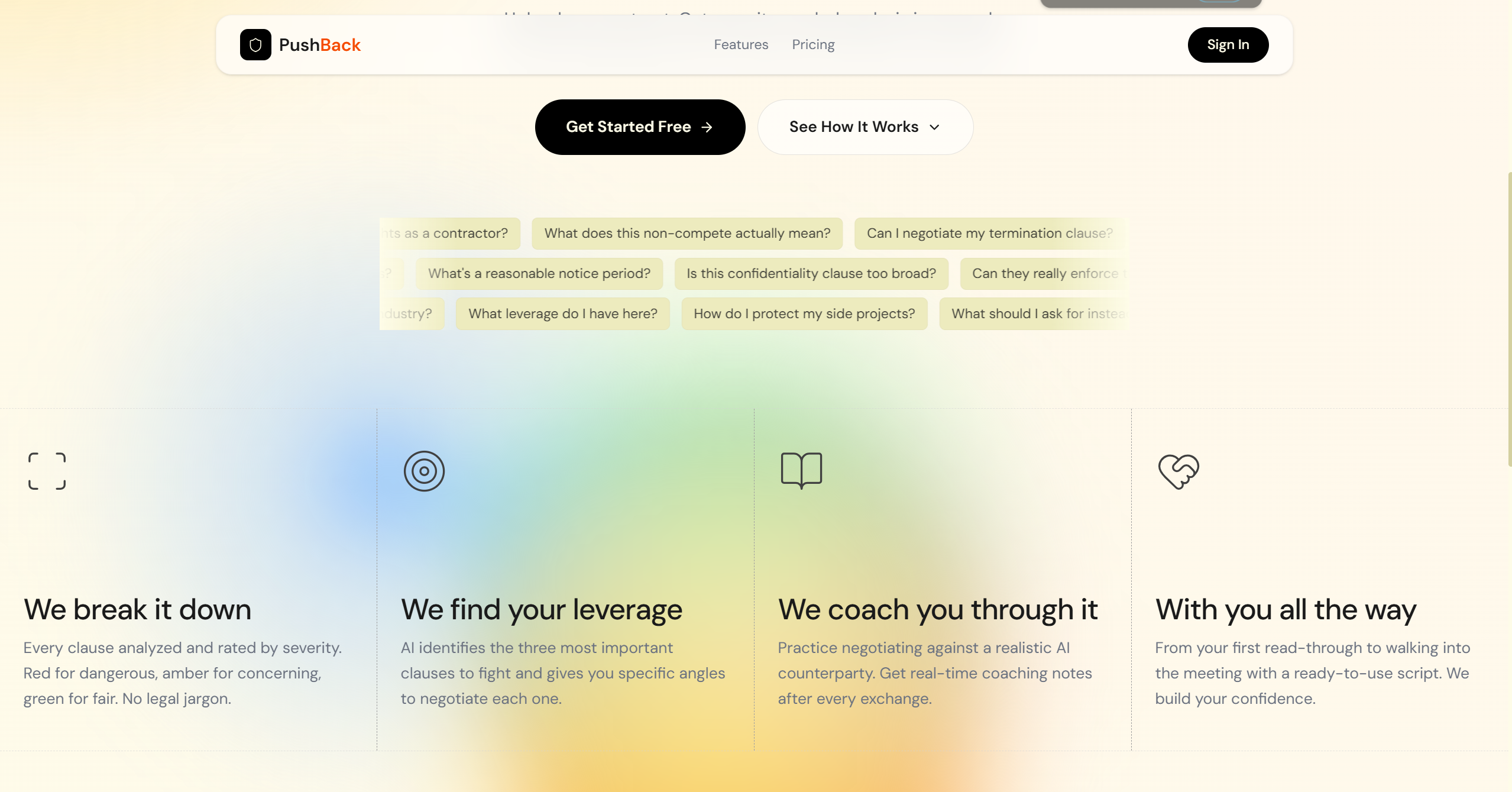
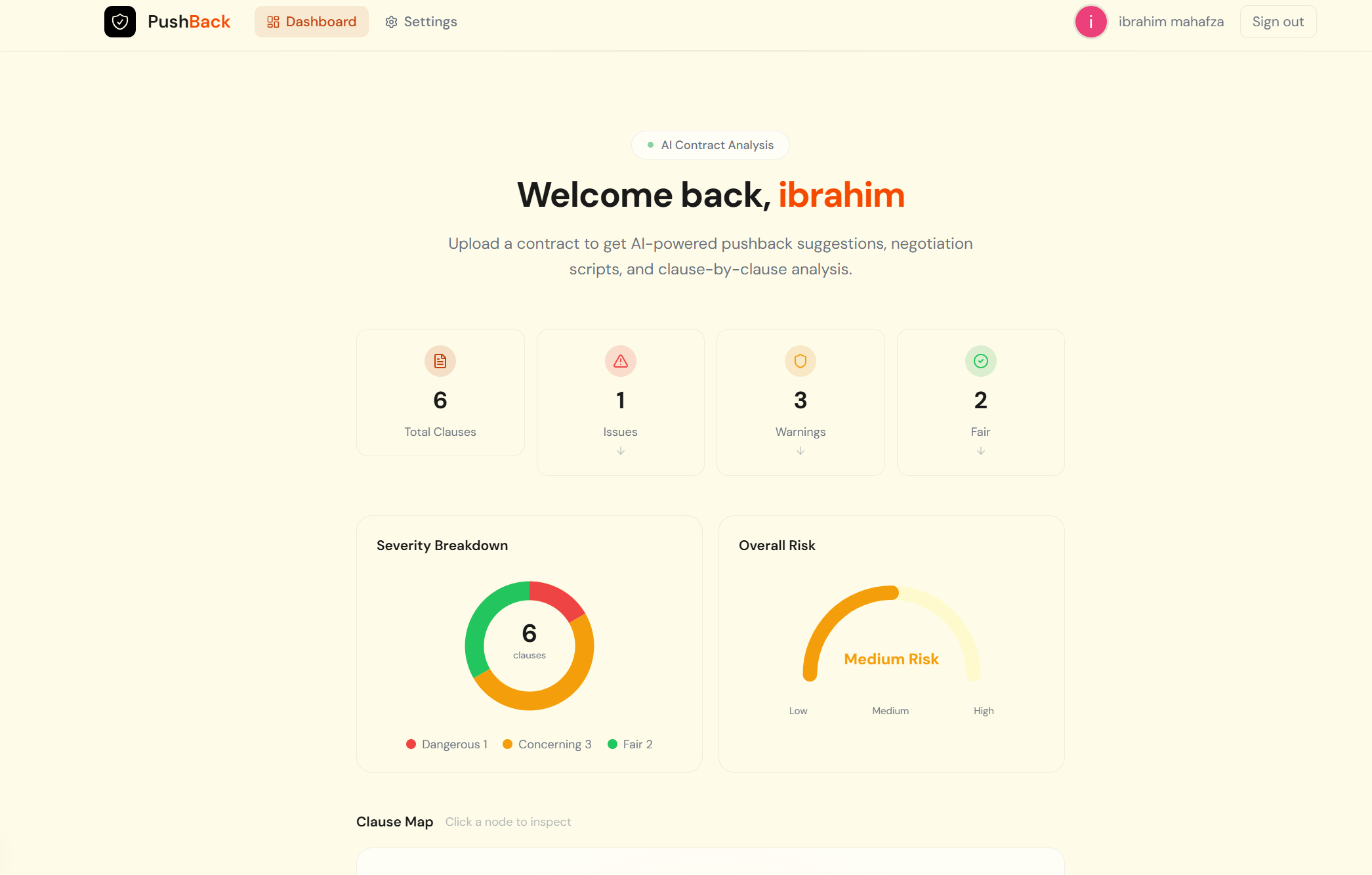
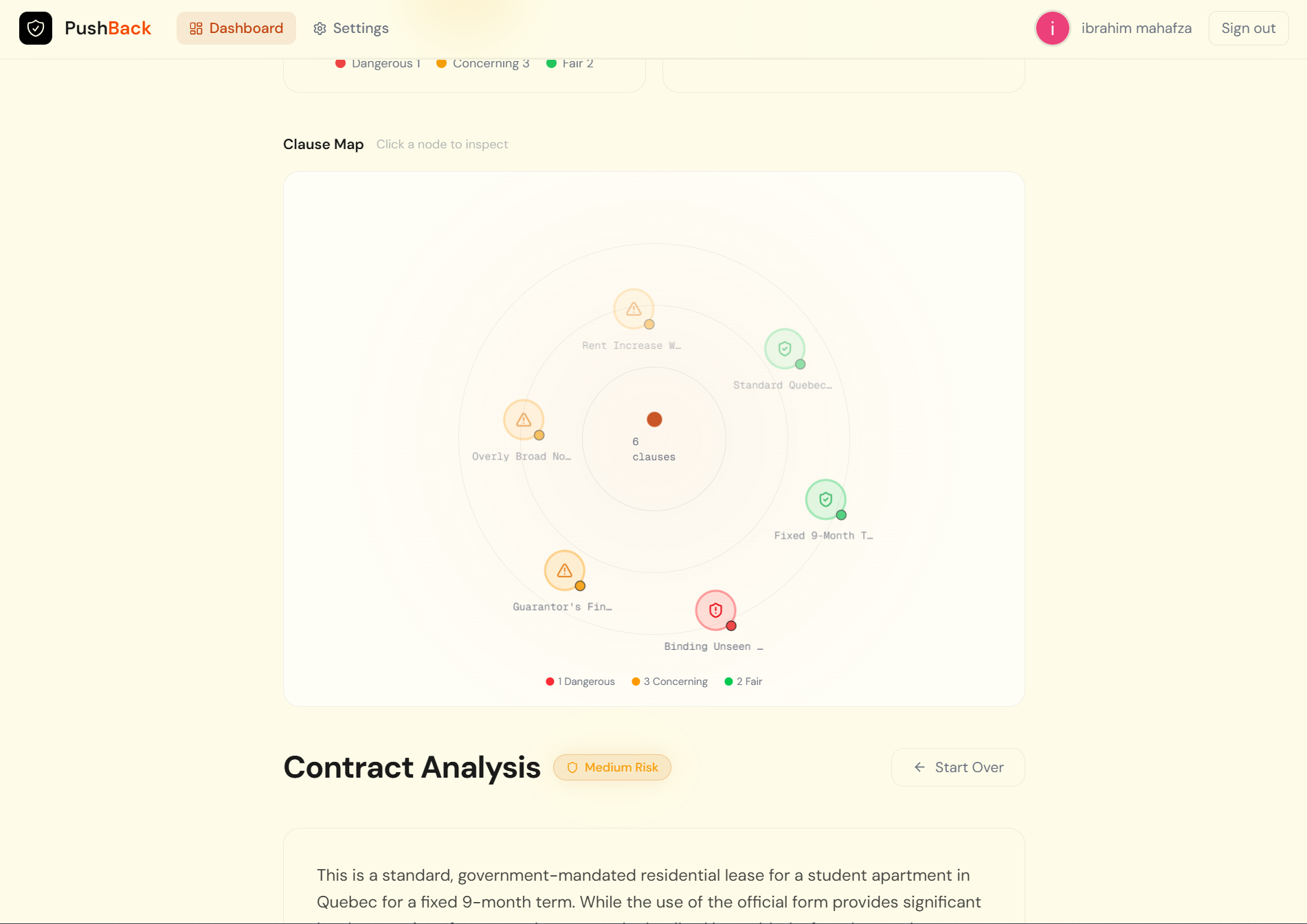
Upload and Analyze. Drop a PDF or paste contract text. Claude Sonnet 4.5 analyzes every clause and rates it by severity: red for dangerous, amber for concerning, green for fair. You get animated charts showing severity distribution, a risk gauge, financial impact estimates, and an interactive orbital clause map.
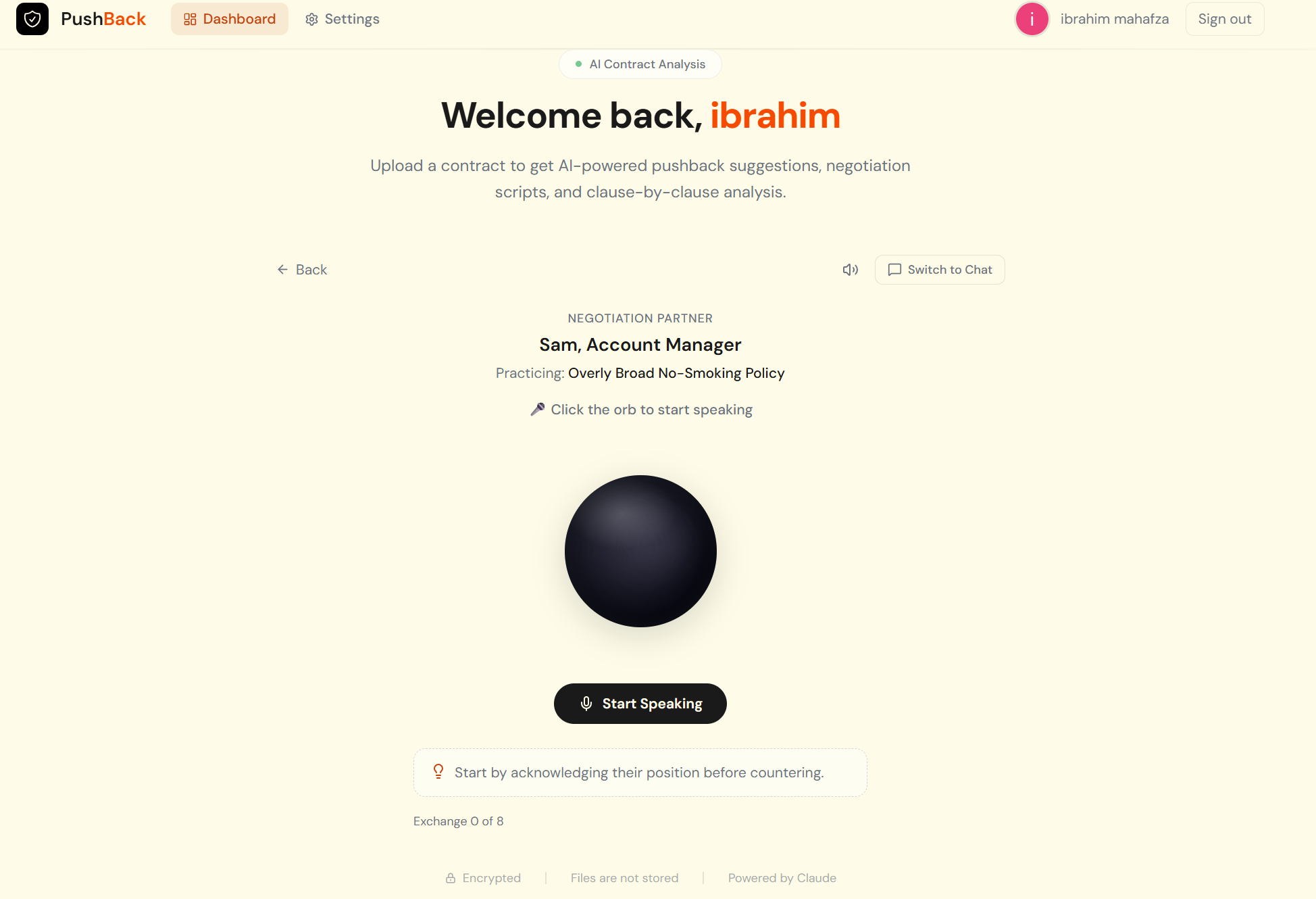
Practice Negotiating. Pick any risky clause and enter a sparring session. The AI plays a realistic counterparty (HR director, landlord, legal counsel) and responds to your arguments. After each exchange, you get real-time coaching notes evaluating your approach. Choose between text chat or voice mode with an animated Siri-style orb that listens, thinks, and speaks back.
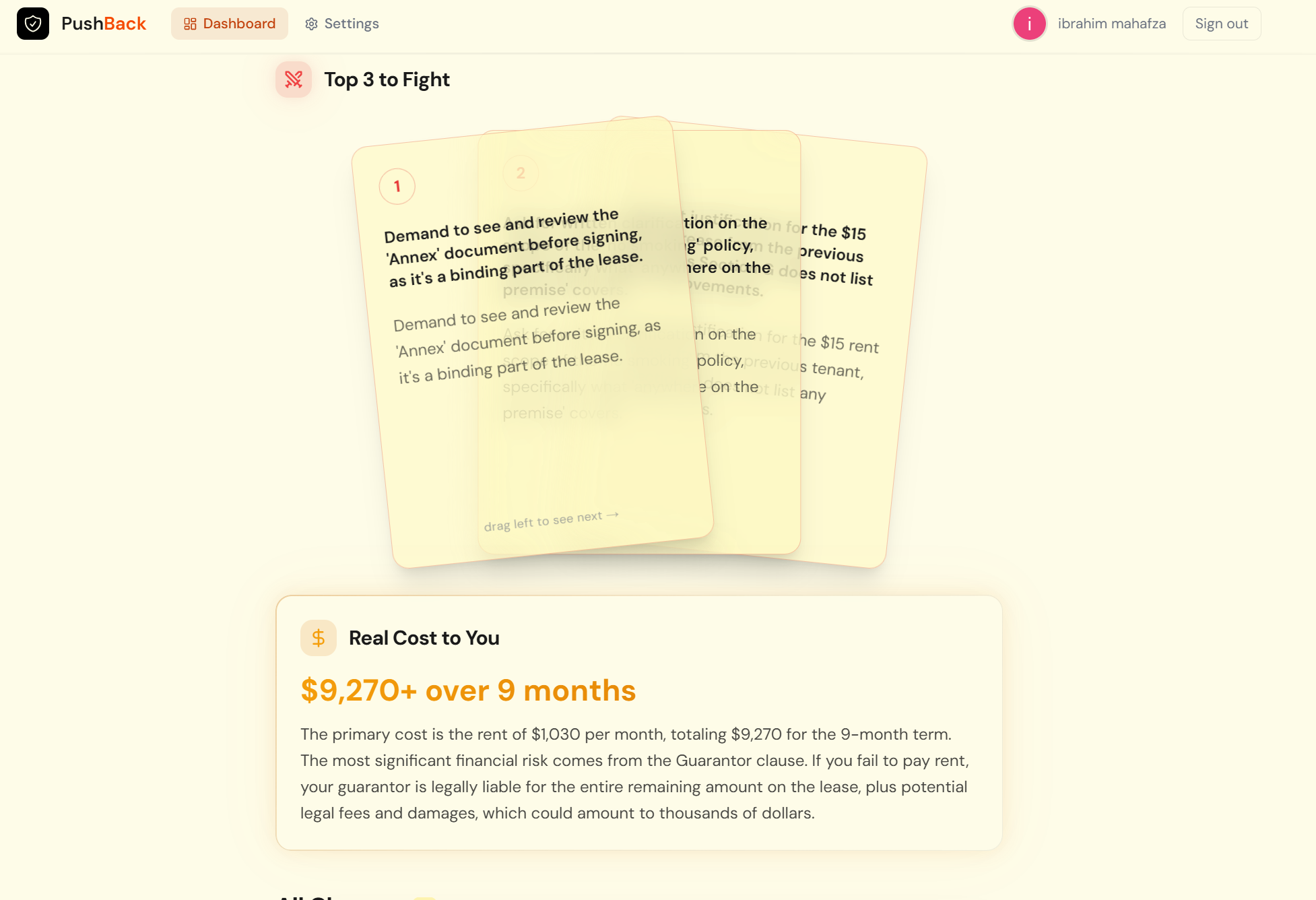
Get Your Script. After practicing, PushBack generates a personalized negotiation script with exact phrases to say, ask, and insist on, plus tone and delivery tips. Walk into the meeting prepared.
How we built it
The frontend is built with Next.js 16 (App Router) and React 19, styled with Tailwind CSS v4 using a warm yellow-50 design system inspired by premium SaaS landing pages. Animations use the Motion library (Framer Motion v12) for staggered entrances, layout transitions, and interactive elements like the orbital clause map and voice orb.
The AI layer uses Claude Sonnet 4.5 through the Vercel AI SDK v6. Contract analysis uses generateObject() with Zod schemas for type-safe structured output. The sparring chat uses streamText() for real-time streaming responses. A custom delimiter protocol (---COACHING---) separates the counterparty dialog from coaching notes in a single stream.
Voice mode uses the Web Speech API (SpeechRecognition + SpeechSynthesis) for a fully hands-free negotiation practice experience. The animated orb visualizes four states: idle, listening, thinking, and speaking.
Authentication runs on Supabase with Google OAuth and SSR cookie-based sessions. All contract data is processed in memory and never stored.
Key UI components include:
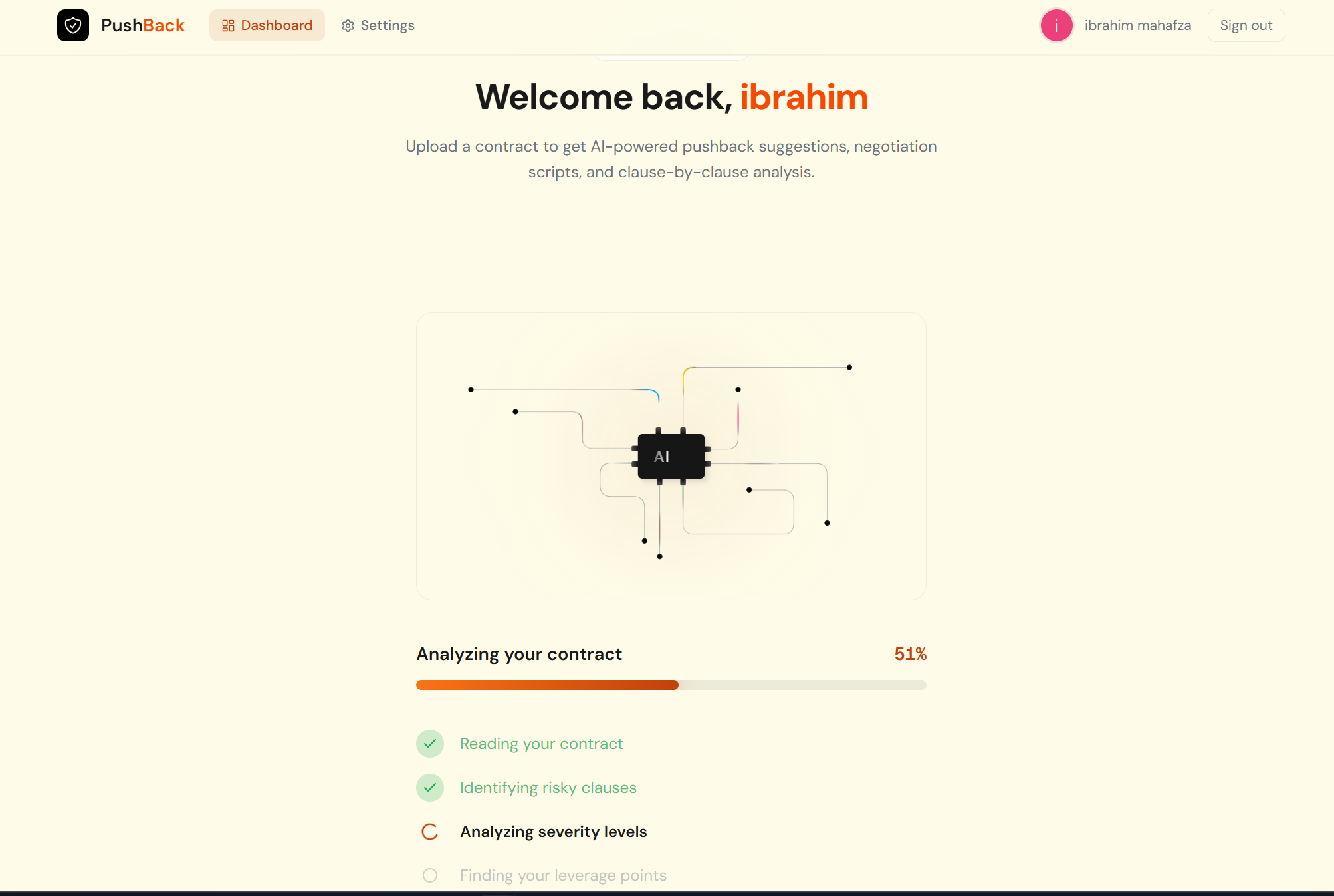
- An animated CPU architecture SVG (from 21st.dev) for the loading screen
- A radial orbital timeline showing clauses orbiting a central hub
- Mouse-tracking glow cards with spotlight border effects
- A scrolling marquee of contract questions on the landing page
- Custom inline markdown rendering for AI-generated bold/italic text
Challenges we faced
AI output consistency. Claude's responses sometimes included markdown formatting (**bold**) that rendered as literal asterisks. We built a lightweight inline markdown parser rather than pulling in a heavy library, handling **bold**, *italic*, *text:* edge cases, and stray unpaired asterisks.
Voice mode browser compatibility. The Web Speech API works differently across browsers. We added feature detection, graceful fallback messaging, and a one-tap switch to text chat for unsupported browsers.
Prompt injection. Contract text is user-supplied and goes directly into AI prompts. We built regex-based injection detection that blocks patterns like "ignore previous instructions" and rate limiting (10 analyses/hour, 50 sparring messages/hour per IP) to prevent abuse.
Theme consistency. We overhauled the entire design system mid-project from a dark theme to a bright warm palette. Every component (20+ files) needed updating to maintain visual consistency across the landing page, dashboard, analysis, sparring, and pricing flows.
Structured AI output. Getting Claude to reliably produce JSON matching a specific Zod schema for contract analysis (with severity ratings, leverage points, financial impact, and top-3 priorities) required careful prompt engineering and schema field descriptions.
What we learned
- The Vercel AI SDK's
generateObject()with Zod schemas is remarkably reliable for structured AI output. Schema field.describe()annotations act as per-field instructions to the model. - Voice interfaces need visual feedback at every state transition. Users need to know the system is listening, thinking, or speaking. The animated orb solved this better than any text-based indicator.
- For hackathon demos, the UI is the product. Judges spend 2 minutes with your project. If it looks like "AI slop," the technical depth doesn't matter. Investing in animations, interactive visualizations, and polish paid off more than any backend feature.
- Rate limiting and prompt injection detection are table-stakes security, not nice-to-haves. Even for a demo.
What's next
- PDF report export for sharing analysis results
- Multi-language support for non-English contracts
- Clause comparison database showing what's standard vs. unusual
- Browser extension for analyzing contracts encountered online
- Team features for organizations reviewing contracts at scale
Built With
- css
- lucide
- motion
- next.js
- pdf-parse
- react
- tailwind
- typescript
- vercel


Log in or sign up for Devpost to join the conversation.