Inspiration
We were inspired by the Fidelity and Capital One track's focus on fintech, which drove us to explore creative ways to increase financial literacy while still keeping with the event's "Night at the Museum" theme. We wanted to create a fun experience that took the user on a useful, educational adventure through both finance and history. As computer science majors who never had much experience with the field, we were well aware of the lack of simplified financial lessons and how daunting the subject can seem; thus, we chose to follow an approach that's worked best in shaping and teaching so many in our own field: educational gaming.
What it does
Purrse is a financial learning game similar to Spent that encourages the user to consider money situations and develop healthier spending habits. The user can pick a "persona" to play as, each with a different starting balance and money job/income per week. As this persona, they will play through a series of financial scenarios that have them choose much money to spend or save. If they save their money, they can use it to buy powerups, which allow you to do things like ask Gemini for a hint, look ahead one choice, or even redo the previous choice. The goal is to survive as long as possible; the demo mode ends at two weeks.
How we built it
We used base repositories on Github to develop a Vite React skeleton framework for the UI, and we prompt-engineered Google AI Studio for a skeleton of the gameplay. We worked on these two aspects of the projects separately, merged them together to work with one another, and populated them with mock data from Capital One's Nessie API. Google AI Studio used Nessie's data to develop four distinct personas the user could choose to play as, each with unique financial challenges. We hosted the site on Vercel and Vulture.
Challenges we ran into
We had our fair share of difficulties with Purrse. It took many tries to connect Vercel up to our project properly, and Google AI Studio frequently returned us code that we found difficult to customize without ruining functionality. This was a huge obstacle for our prompt-engineering skills. The next obstacle was connecting our programmer-made skeleton UI (which already included pages and style sheets) to the AI-generated base pages on which the game ran, and had no real style sheet. We had to make several sacrifices to both versions of the code to merge them together.
Accomplishments that we're proud of
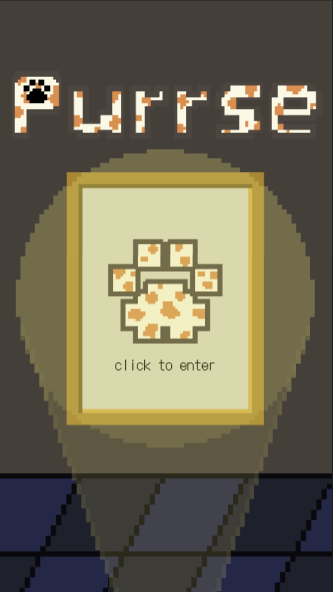
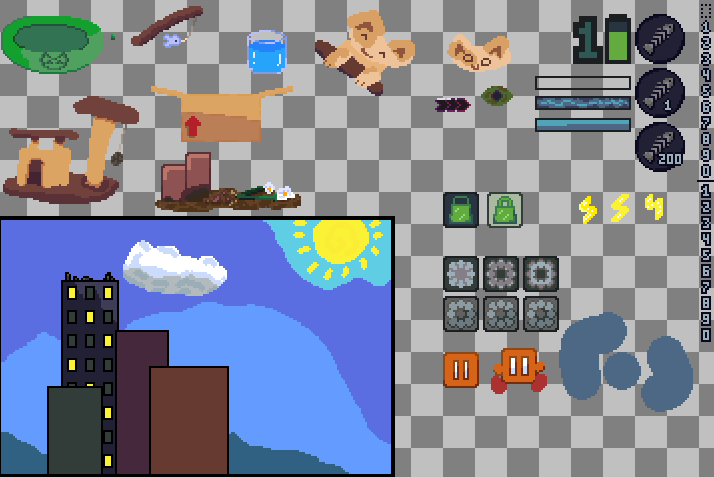
Our team did a beautiful job with the pixel art and animations, as well as prompt-engineering Gemini to developing Nessie's data into personas and game functionality. The generated scenarios were diverse across each persona and distinct from each other and would correctly decrement money based on choices. The power-ups functioned impressively! We spent a long time developing our tech stack and integrating our work in various ways, such as Vercel and Vultr, and this effort paid off into a robust final website product. The game is a fun experience to play and is the product of many collaborating platforms.
What we learned
We learned a lot from this project, from lessons about using APIs (particularly the security risks, as we had to be mindful of our .env files) to the many tricky details that come with integrating a tech stack. Oftentimes all of our individual parts worked, but we had trouble integrating them together. We realized that although working on parts in parallel is important, it's better to make sure they mesh sooner rather than later, lest you be in for several hours of having to change working code just to standardize it. We also learned the importance of fitting a brief and being clear with communication, especially if each teammate was working on an insulated section of the project. This isolation was part of why we ended up with so many programs that were difficult to integrate.
What's next for Purrse
With the endless possibilities of education, finance, and continuous gaming simulations combined, there's truly so much we'd love to do with Purrse. Our goals include extending the simulation period for a more variable time-range, improving the budgeting simulation to adjust the difficulty and gameplay based on user performance from previous simulation rounds, and creating multiplayer simulations dependent on user-inputted data to add a competitive aspect to real-life savings and money management. We'd also like to add more features to the gamified aspect of Purrse, such as allowing for levels with varying environments, widened use of XP to exchange for upgrades, and improving upon the art and overall design for a smooth yet "sticky" experience!
Built With
- gemini-api
- github
- godaddy
- react
- tailwind-css
- typescript
- vercel
- vite
- vue
- vultr


Log in or sign up for Devpost to join the conversation.