-
-
-
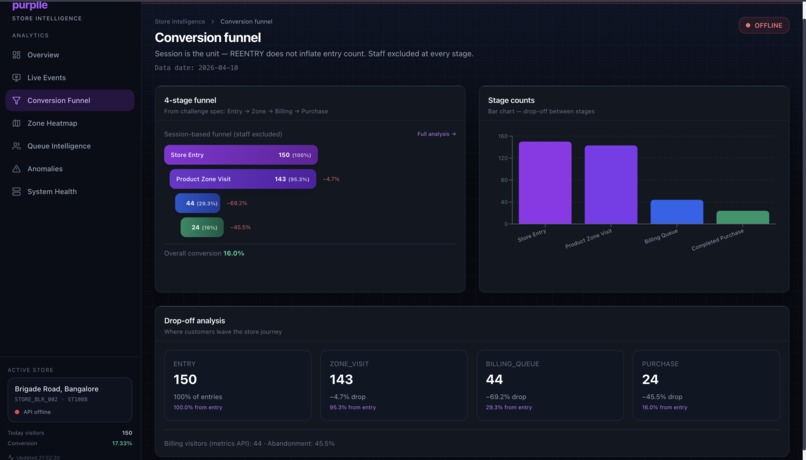
Conversion funnel
-
-
-
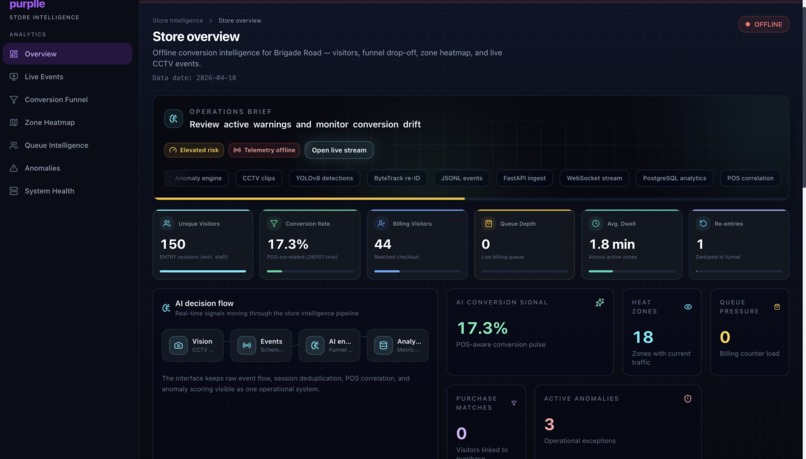
-
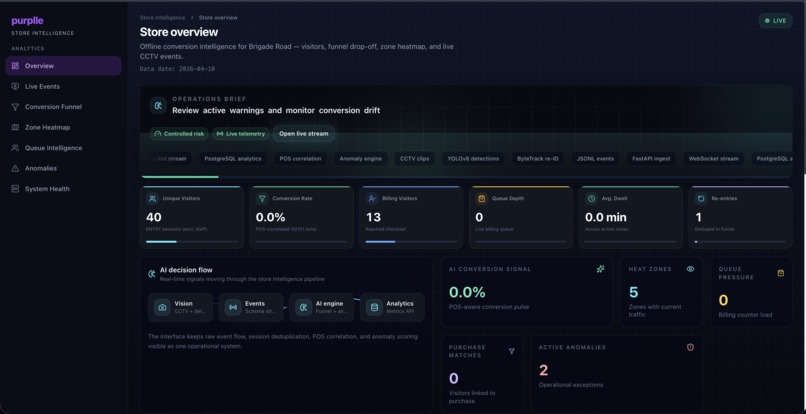
-
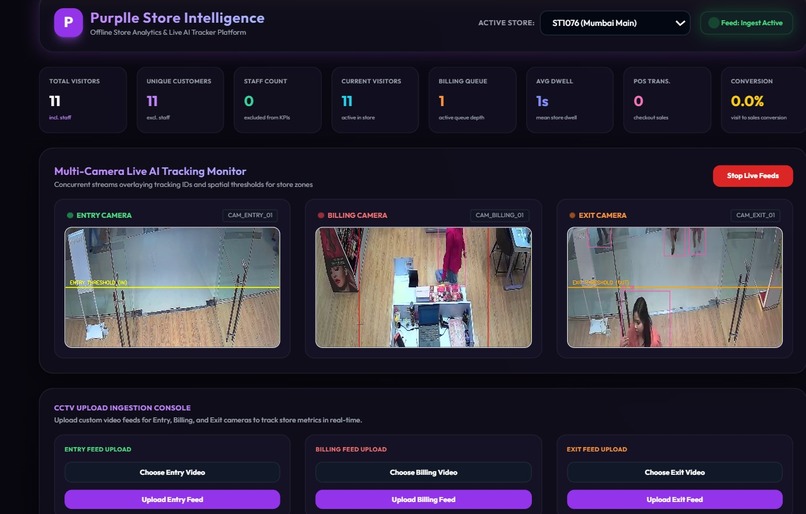
live video detection
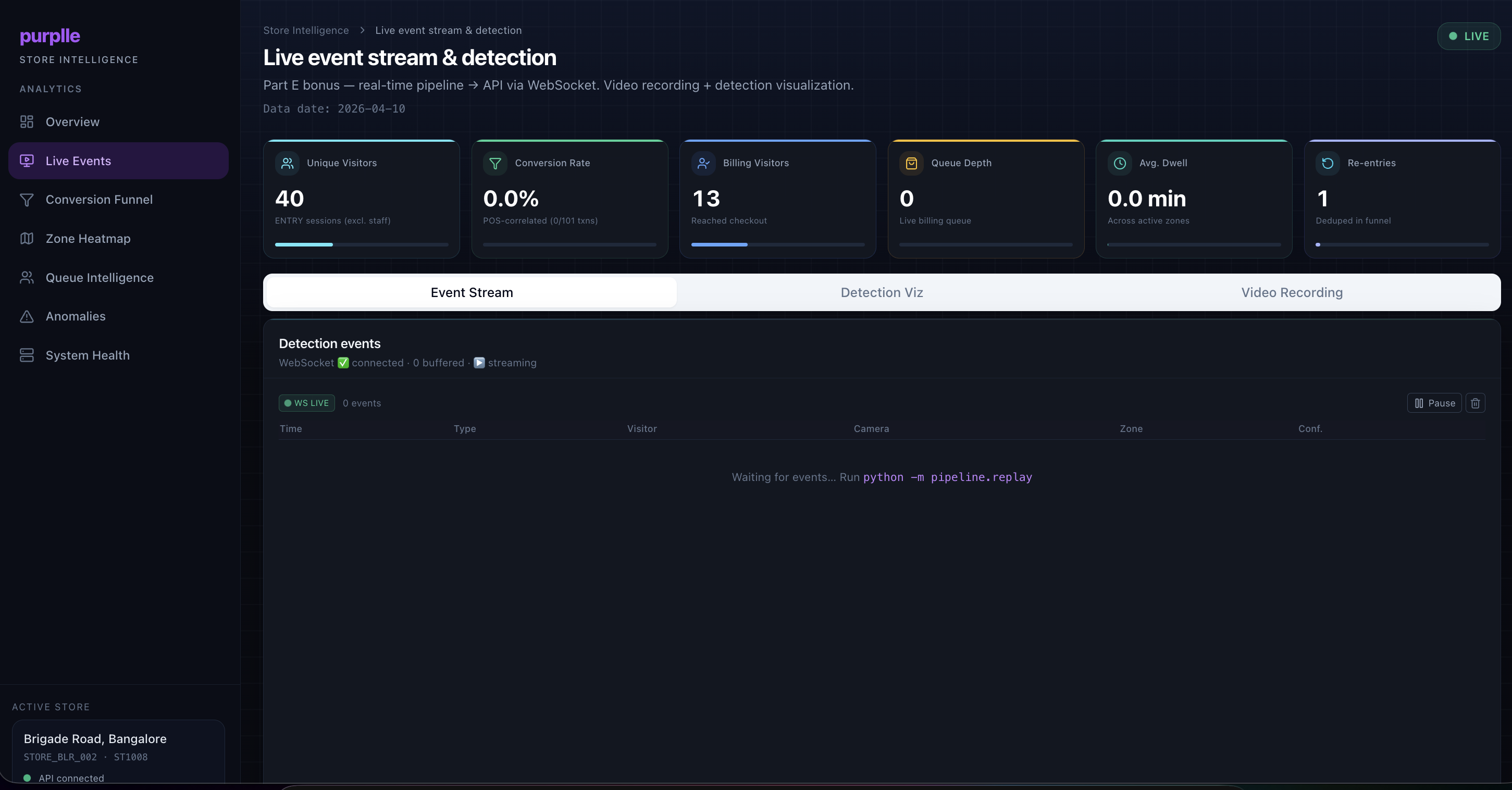
Purplle Store Intelligence System
Inspiration
Retail stores already have extensive CCTV infrastructure, but most of that video is used only for security. Valuable operational information—such as customer movement, queue build-up, repeat visits, and shopping patterns—often remains inaccessible.
We wanted to change that by building a system that converts existing CCTV footage into real-time operational intelligence, enabling stores to make faster and better business decisions without changing their infrastructure.
What it does
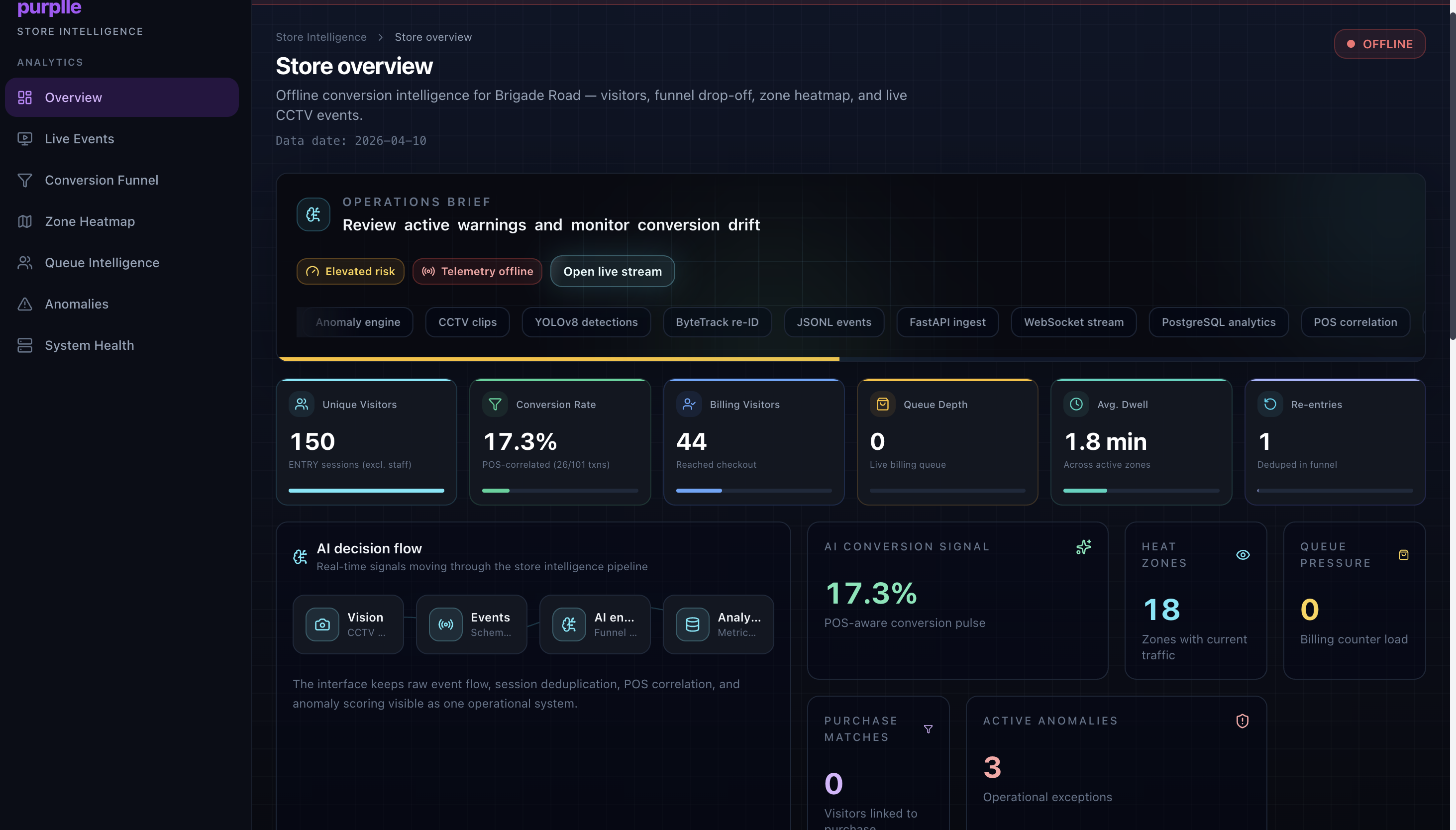
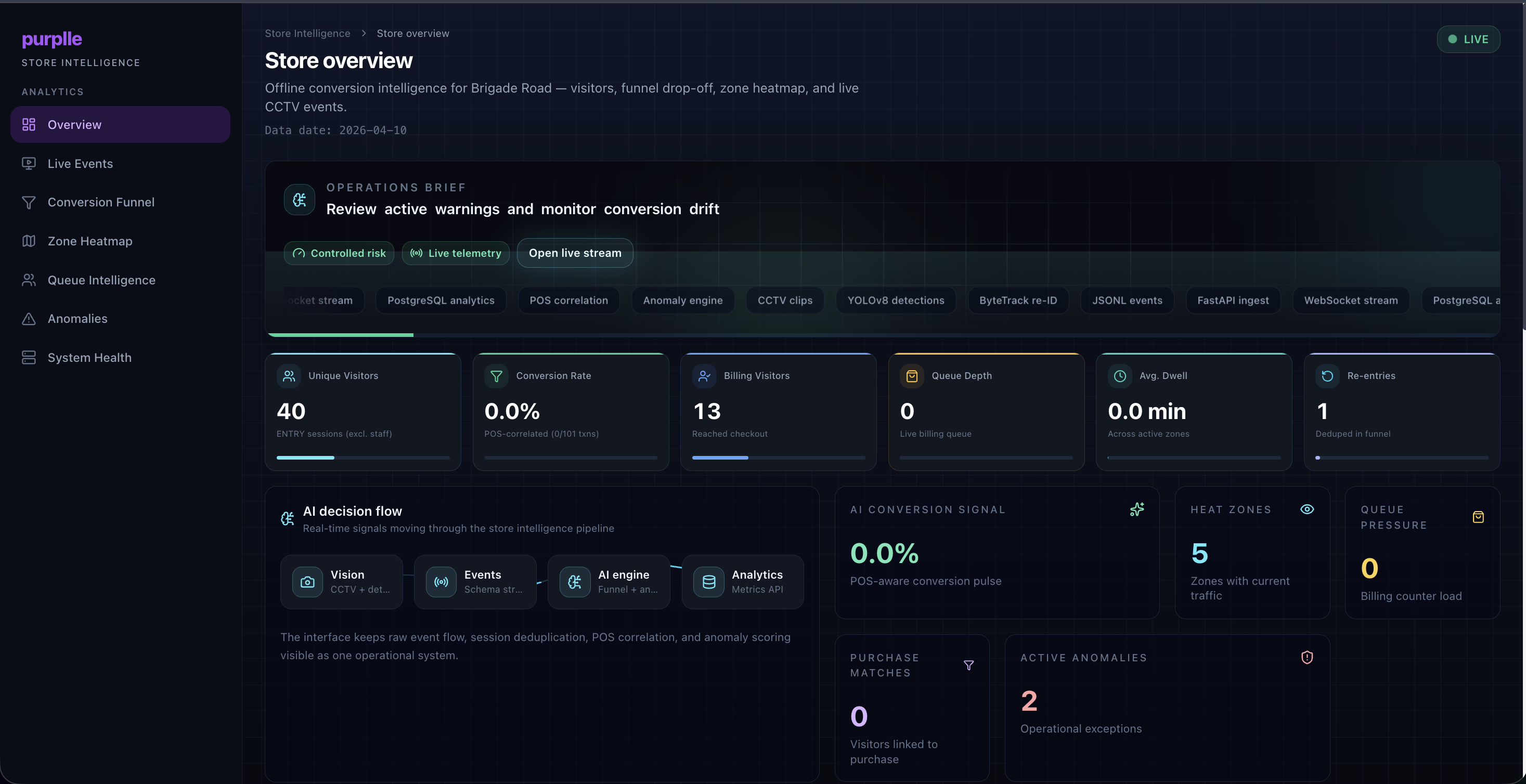
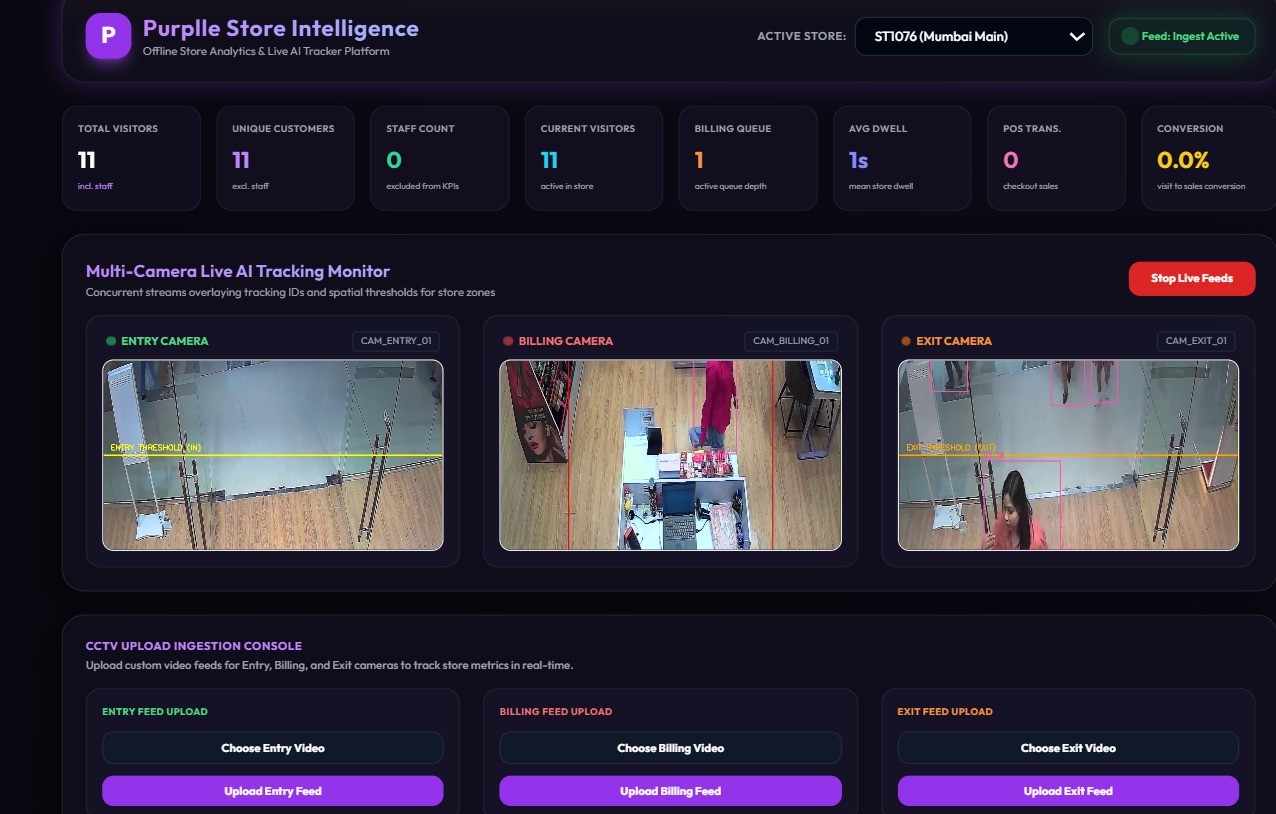
Purplle Store Intelligence System is an AI-powered retail analytics platform that transforms CCTV streams into actionable business insights.
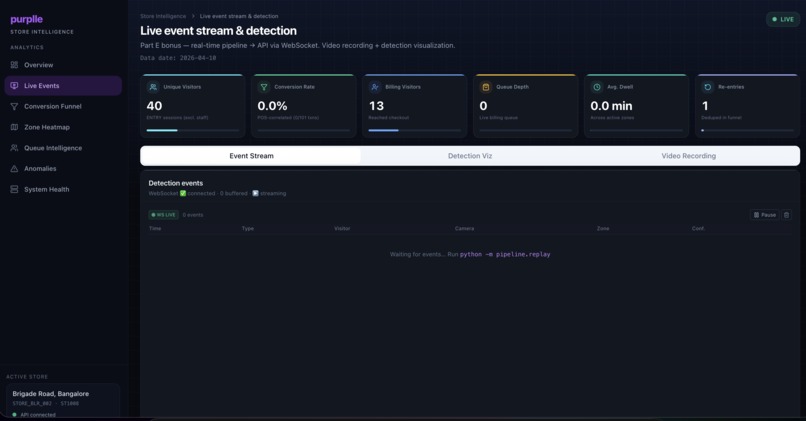
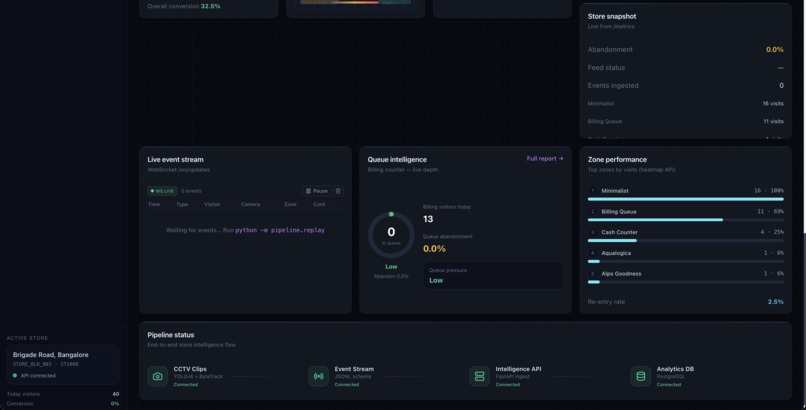
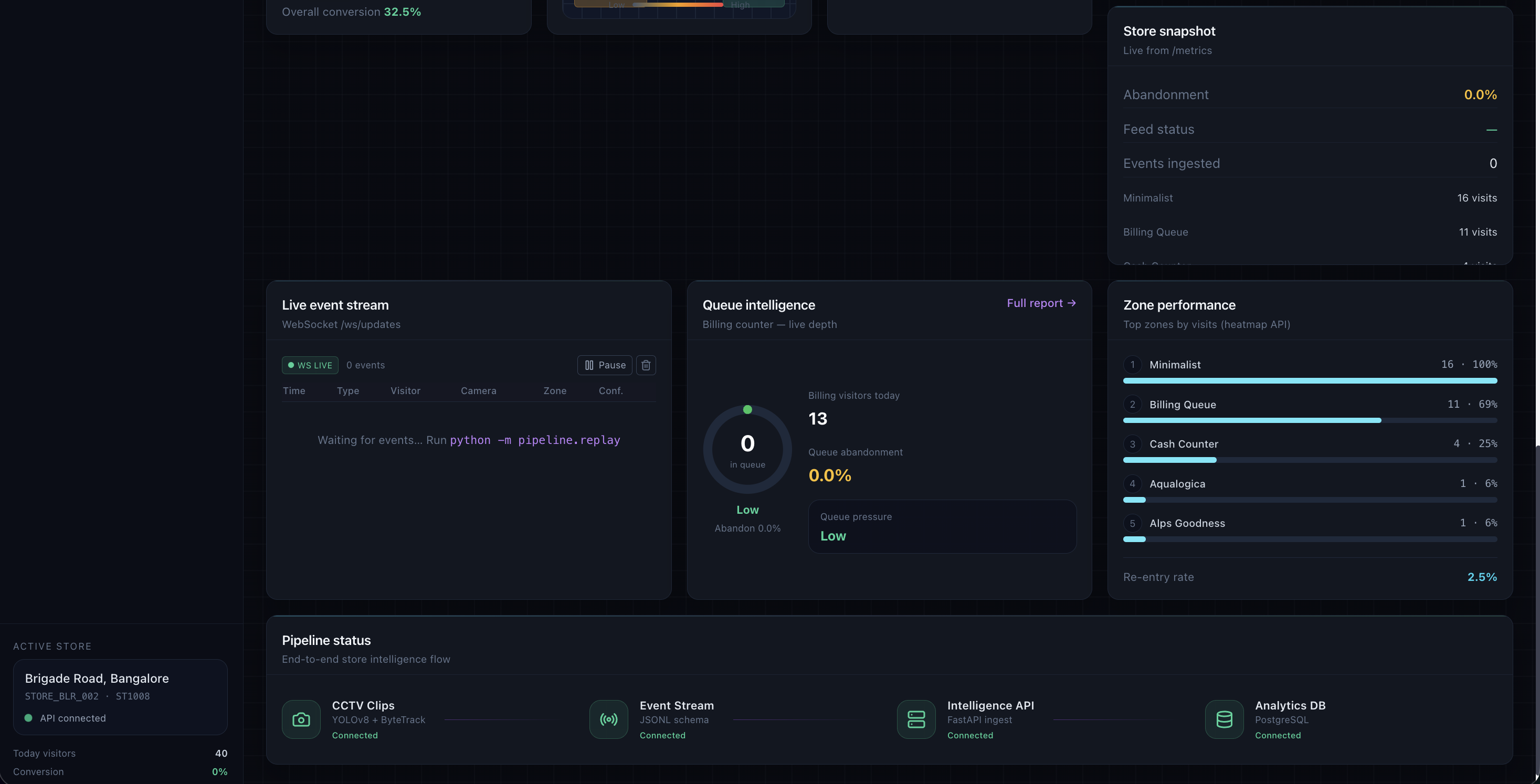
The platform detects and tracks visitors across multiple cameras, distinguishes staff from customers, recognizes repeat visits, monitors billing queues, identifies operational anomalies, and visualizes store performance through a live analytics dashboard.
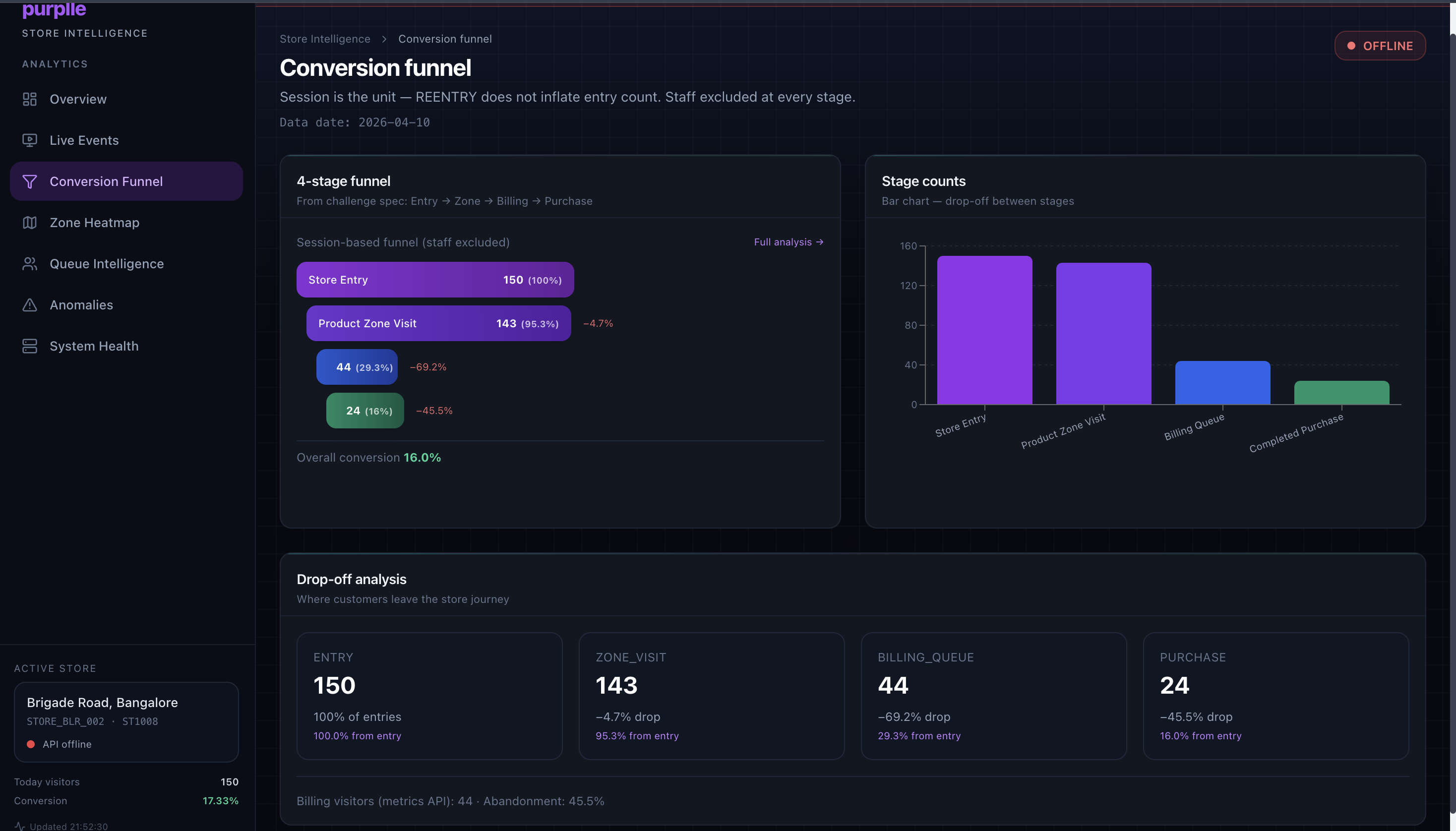
Rather than simply counting people, the system reconstructs the customer journey from store entry to checkout, helping retailers understand customer behavior and improve operational efficiency.
How we built it
The system follows an event-driven architecture.
Video streams are processed through a computer vision pipeline for person detection, tracking, and visitor identification. Every significant interaction—such as entering the store, visiting zones, joining billing queues, or exiting—is converted into structured events.
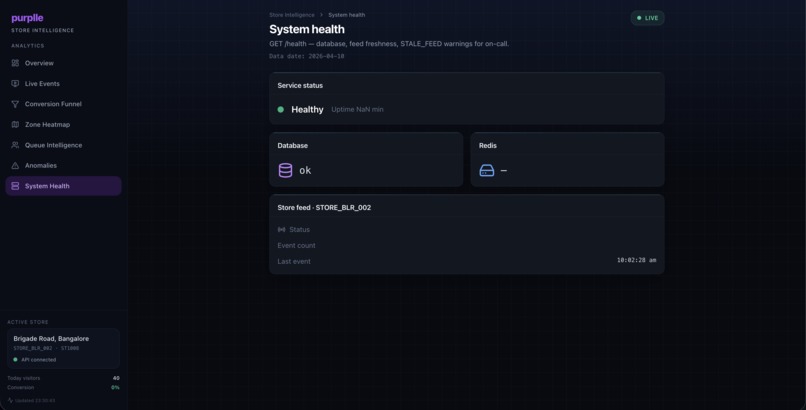
These events are processed by a FastAPI backend that computes business metrics, conversion funnels, dwell times, and operational anomalies.
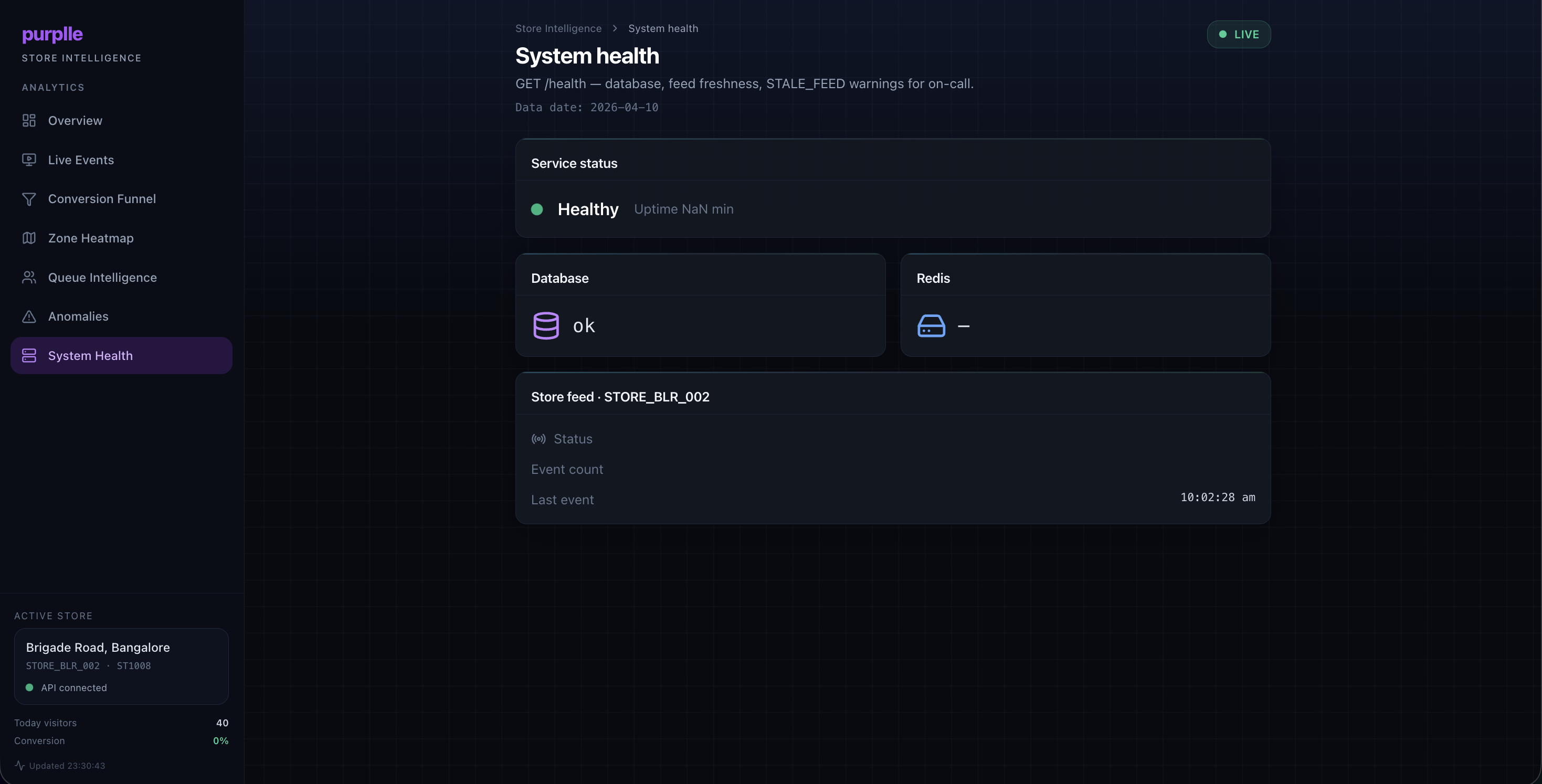
A React dashboard consumes these APIs and WebSocket streams to present live insights with minimal latency. The entire application is containerized using Docker to ensure consistent deployment and reproducibility.
Challenges we ran into
One of the biggest challenges was maintaining consistent visitor identities across multiple cameras while preventing duplicate counting.
Another challenge was separating employee activity from customer analytics without relying on additional sensors or manual tagging.
Designing the system around structured events instead of frame-level predictions also required careful consideration, but it significantly simplified downstream analytics and made the platform easier to scale.
Accomplishments that we're proud of
- Built an end-to-end AI retail intelligence platform from video ingestion to live analytics.
- Designed an event-driven architecture suitable for real-time business reporting.
- Implemented visitor journey analytics instead of basic people counting.
- Integrated staff-aware analytics, queue monitoring, anomaly detection, and operational dashboards into a single platform.
What we learned
Building this project reinforced the importance of designing AI systems around real business problems rather than model accuracy alone.
We also gained deeper experience with scalable backend design, computer vision pipelines, real-time analytics, and translating machine learning outputs into meaningful business metrics.
What's next
Our roadmap focuses on expanding the platform into a complete retail operations suite.
Future work includes product interaction heatmaps, shelf availability monitoring, predictive queue forecasting, multi-store analytics, edge deployment for low-latency inference, and AI-generated operational reports that provide store managers with actionable recommendations.
Built With
- bytetrack
- css
- docker
- fastapi
- git
- github
- numpy
- opencv
- postgresql
- pydantic
- python
- react
- sqlalchemy
- supervision
- tailwind
- typescript
- vite
- websockets
- yolov8

Log in or sign up for Devpost to join the conversation.