-
-
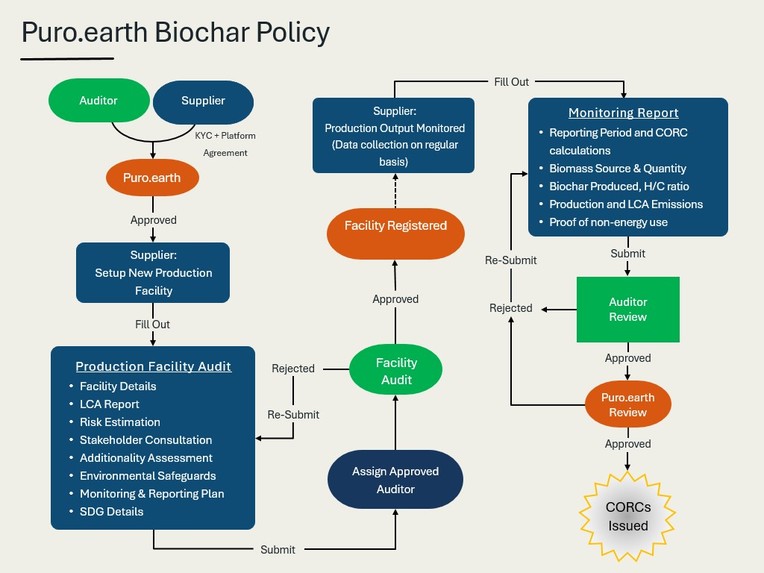
Biochar Policy Workflow
-
Inspiration
I particularly chose Puro.earth's Biochar methodology because it's one of the leading carbon removal focused standards and Biochar projects account for 95% of all delivered removal credits today. It would be very valuable to bring the quality and rigor of biochar credits to a distributed ledger like Hedera.
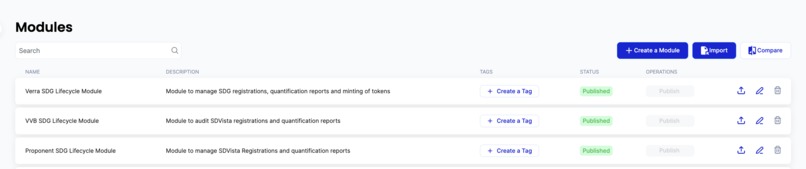
While developing Biochar methodology, I realized the complexity and challenges of Guardian platform. Currently, all the policies on Guardian from a specific standard registry follow the same workflow, and it's very cumbersome & repetitive to develop new methodologies that way. Hence, I decided to do another project, to digitize Verra's SDVista program, but via pluggable modules. To make life easier for policy developers, it's important to leverage the capabilities of modules and design new policies in a way where modules are first-class citizens.
On a broader note, I believe that transparency and auditability are two major pillars for scaling carbon markets to their true potential. I'm impressed by the Guardian's approach to tackle it.
What it does
My project digitizes two key methodologies:
Puro.earth Biochar Policy: This policy focuses on the production of biochar from waste biomass, offering a solution for reducing greenhouse gas emissions and promoting sustainable waste management practices. The digitized version of the policy streamlines the process of quantifying emissions, assessing GHG benefits, and issuing carbon removal certificates.
Verra's SD VISta Program: The SD VISta Program is a comprehensive framework for assessing and verifying the sustainable development benefits of projects. I have digitized the program's modules, including the SD VISta Registration Module and the SD VISta Monitoring & Reporting Module, allowing projects to demonstrate their contributions to the United Nations Sustainable Development Goals (SDGs) in a standardized and credible manner.
The digitized versions of these methodologies provide a user-friendly interface for project proponents to register their projects, submit required documentation, and undergo validation and verification processes. The system automates various calculations, data validations, and workflows, ensuring accuracy and efficiency throughout the project lifecycle.
How I built it
Started by carefully analyzing the requirements and processes outlined in each methodology, identifying the key components, roles, and workflows involved. Next, I designed the policy models, defining the necessary schemas, variables, events, and interactions between different modules and actors. I utilized the Guardian platform's capabilities to create a modular and scalable architecture, allowing for seamless integration and customization.
Challenges we ran into
- Enum types in Schema imports are mostly broken
- Tag updation of modules is buggy, it doesn't update the bindGroup and block type tags
- Testing and development cycle is too long, dry running and coming back to fix failures takes lot of time
Accomplishments that we're proud of
- Successful digitization: Successfully translated the complex methodologies into a digitized format, preserving the integrity of the original processes while enhancing efficiency and accessibility.
- Modular and scalable architecture: My design of modular and scalable policy models allows for easy integration with existing systems and future expansions, enabling the methodologies to adapt to evolving needs and requirements.
- Enhanced transparency and credibility: This is an attempt to enhance the transparency and immutability of carbon projects data, ensuring the credibility and auditability of the carbon removal certificates and SD VISta tokens issued.
What's next for Puro.earth Biochar Policy & Verra's SDVista Program
Auto-Calculation of Fields - Implement auto-calculation functionalities within the schemas to automatically derive certain fields based on the provided input data. This will streamline the data entry process, reduce errors, and ensure consistency in calculations across projects.
Integration with External MRV Systems - Explore integration opportunities with external systems, such as geospatial platforms, data repositories, or impact measurement tools. This integration will enable the seamless exchange of data, enhance the accuracy and reliability of monitoring and reporting, and provide additional insights for project assessment and decision-making.


Log in or sign up for Devpost to join the conversation.