-
-
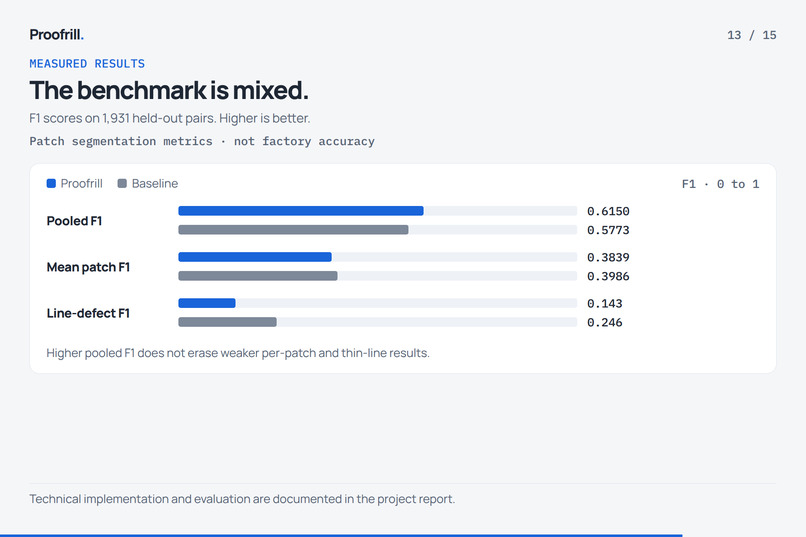
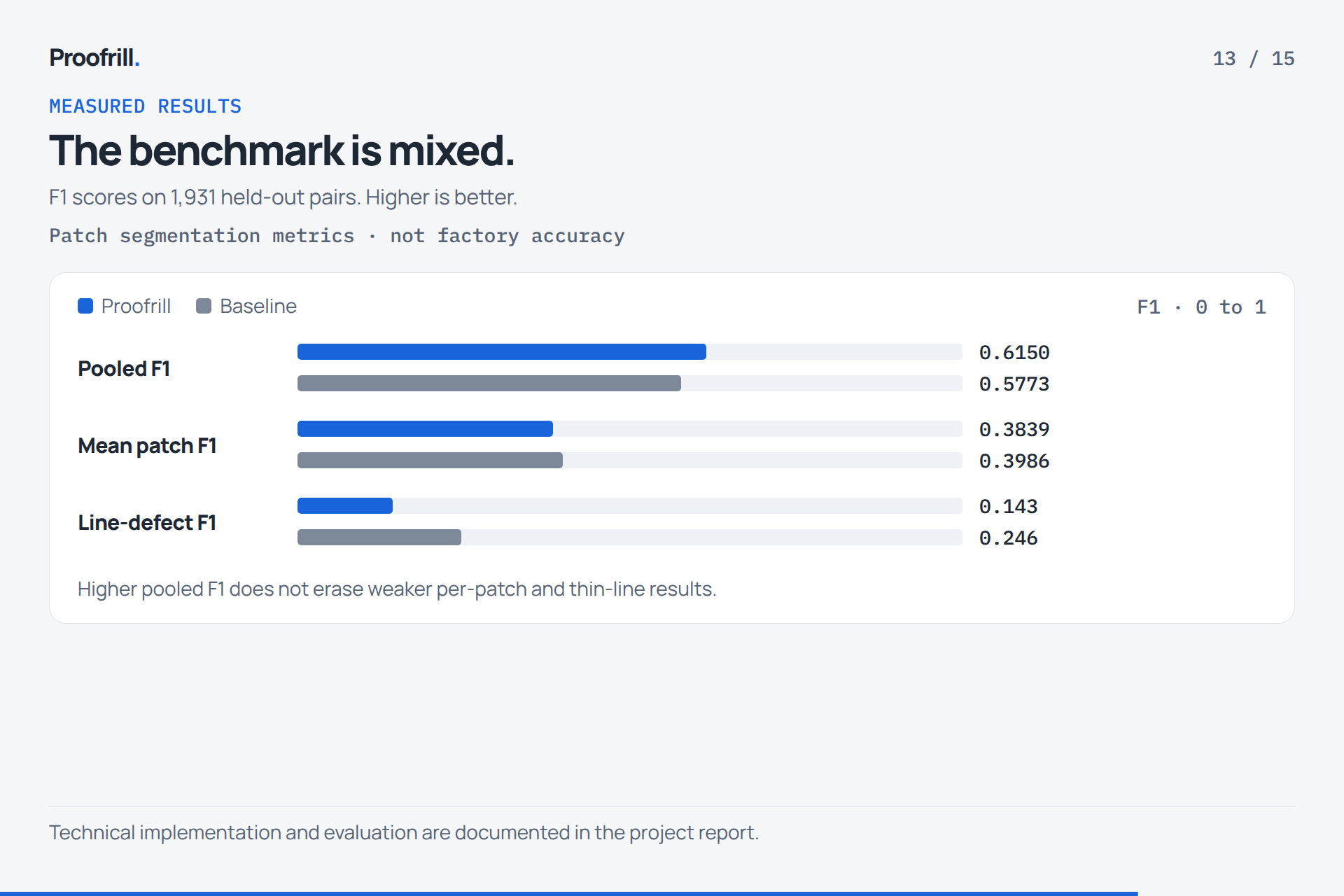
Held-out pooled F1: 0.615 vs 0.577 baseline; mean patch F1 is lower. Taktpixel2025PD-CD, CC BY-SA 4.0.
-
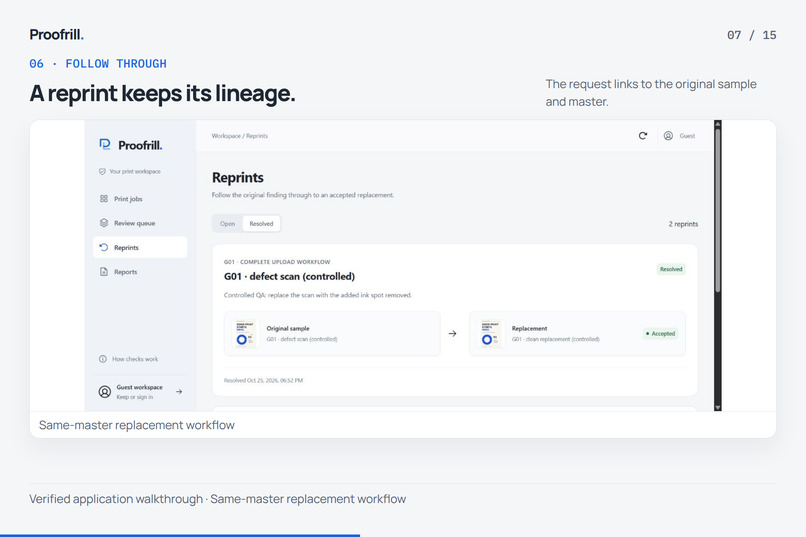
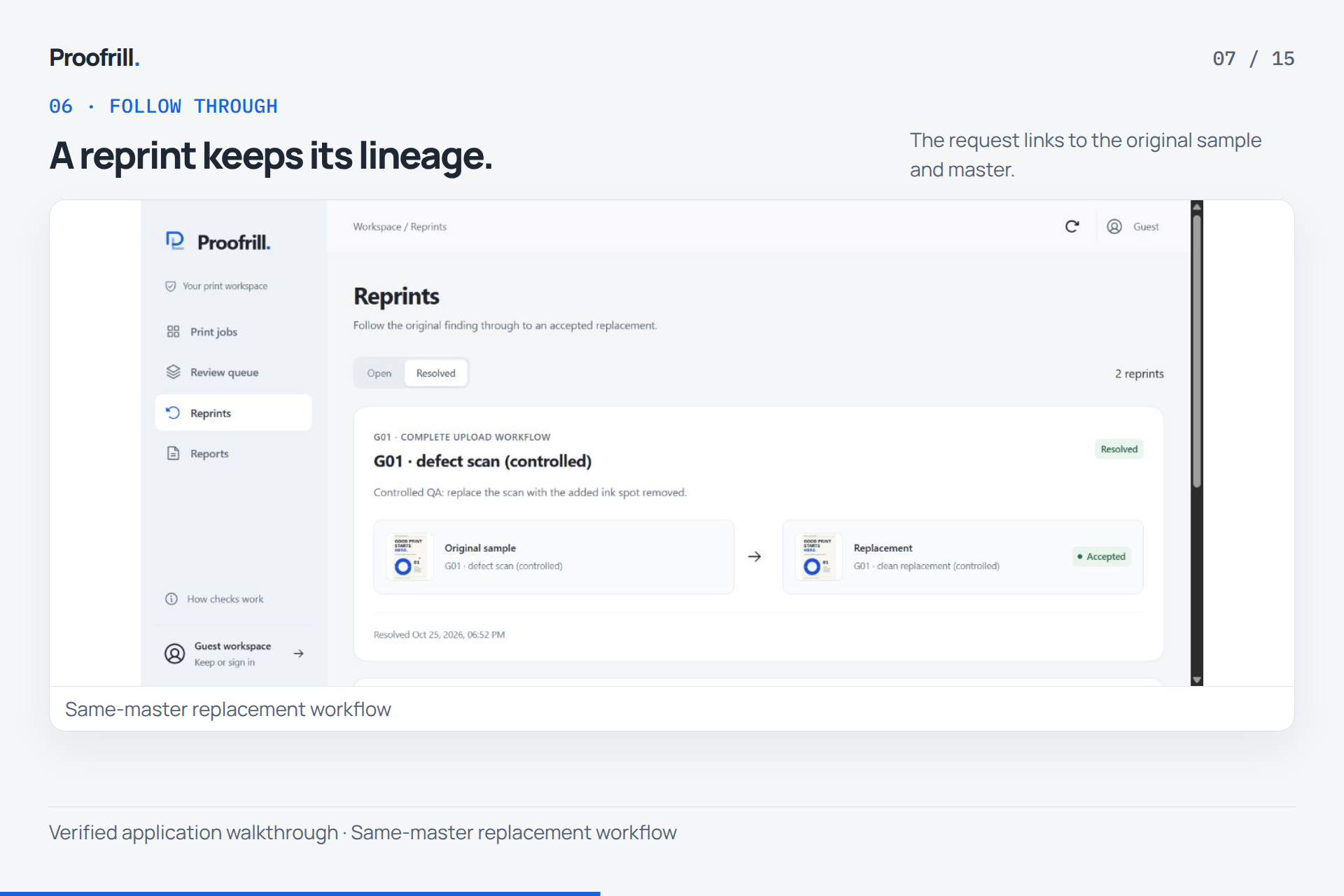
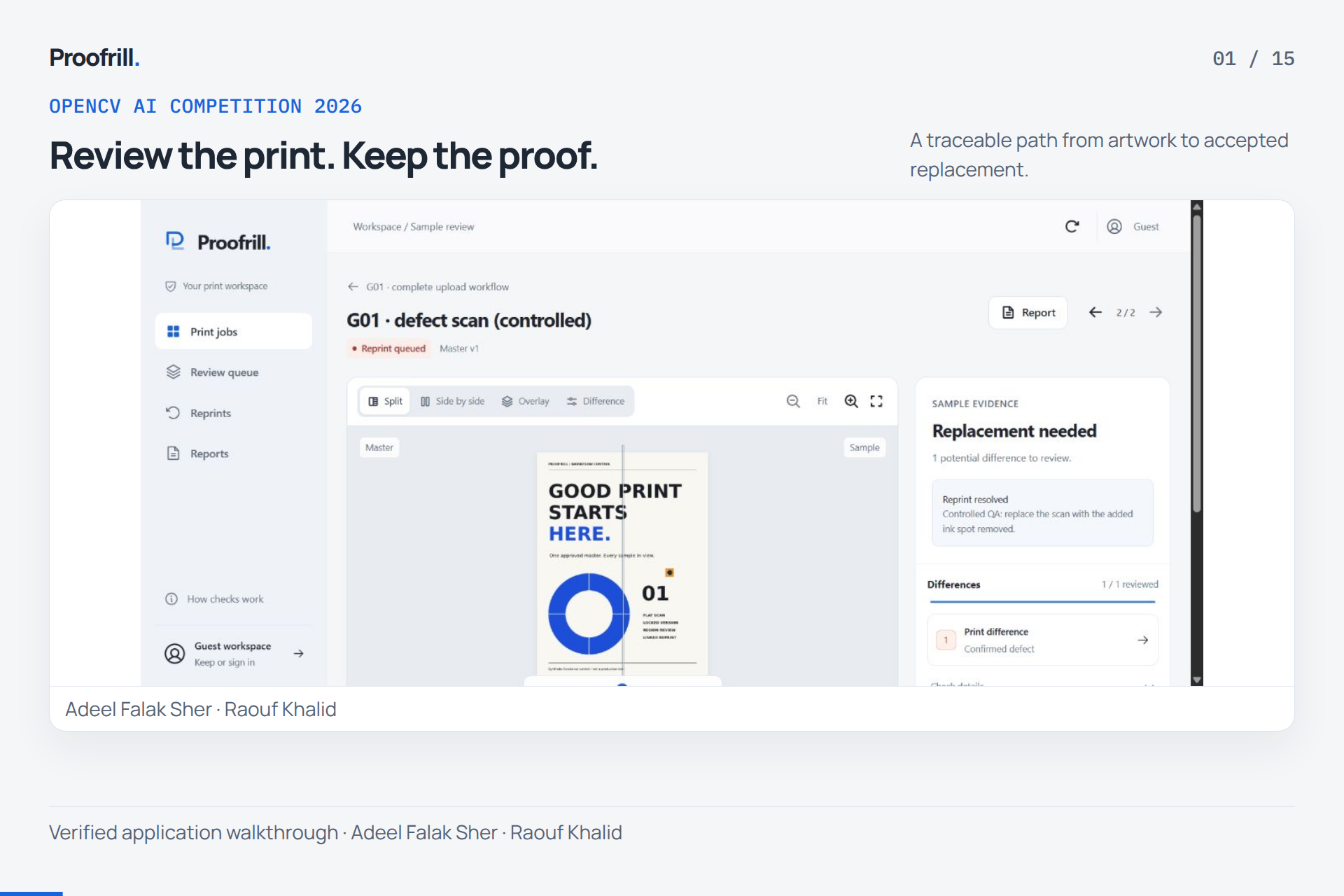
Track a reprint from its rejected sample through a same-master replacement and explicit acceptance.
-
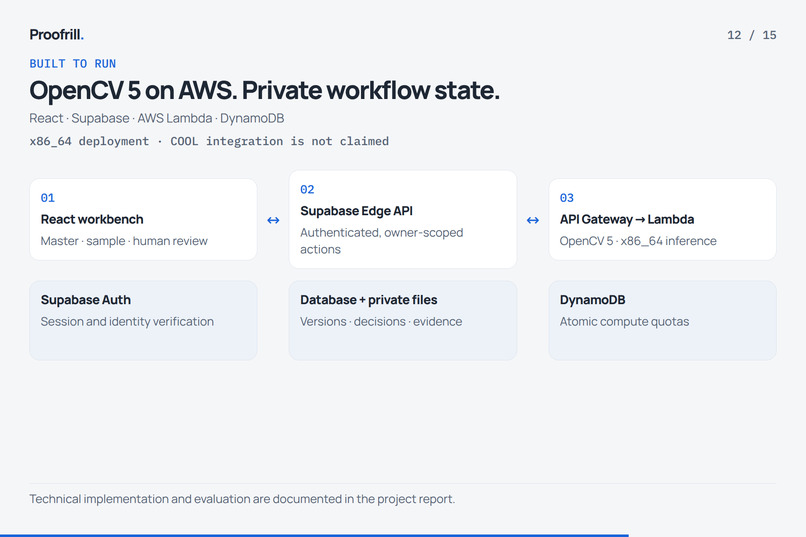
Owner-scoped access, private images, validated workflow transitions and bounded AWS requests protect review records.
-
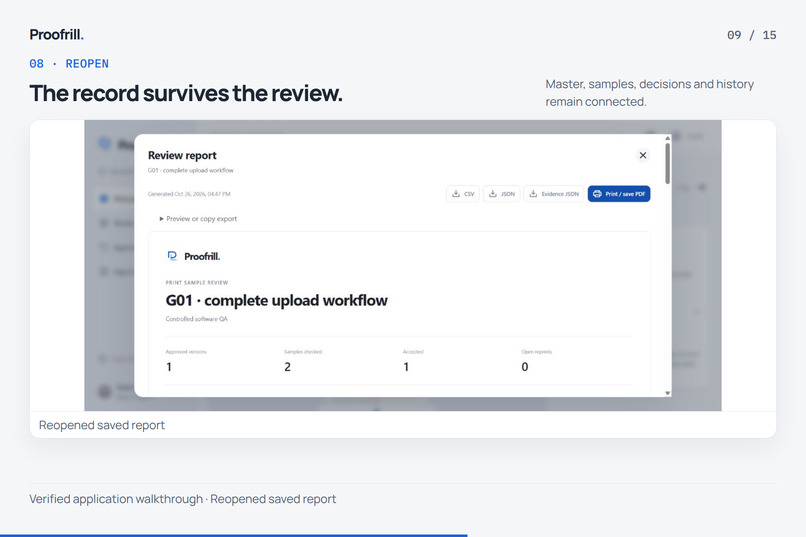
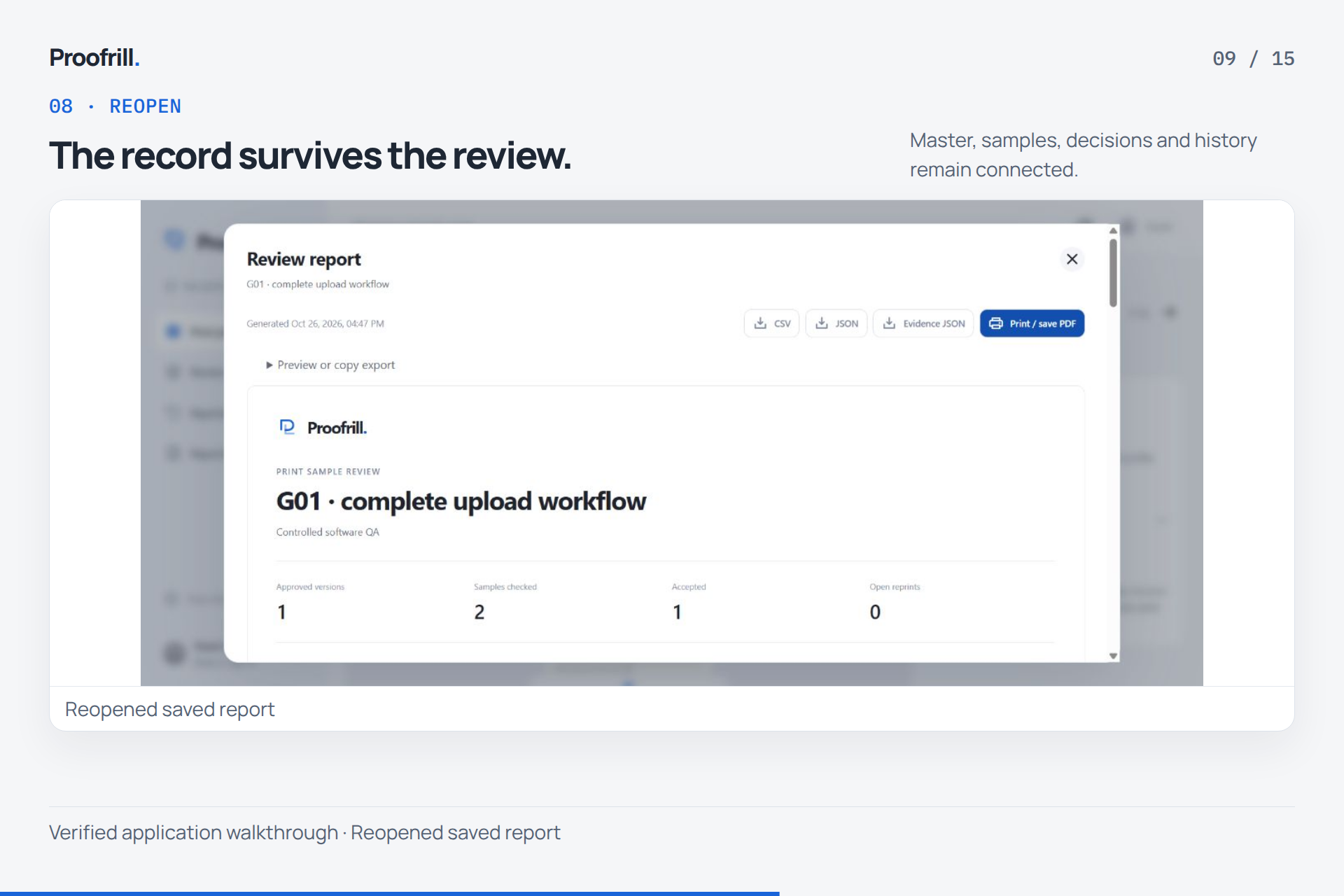
Reopen a report with image hashes, master versions, settings and the saved decision history.
-
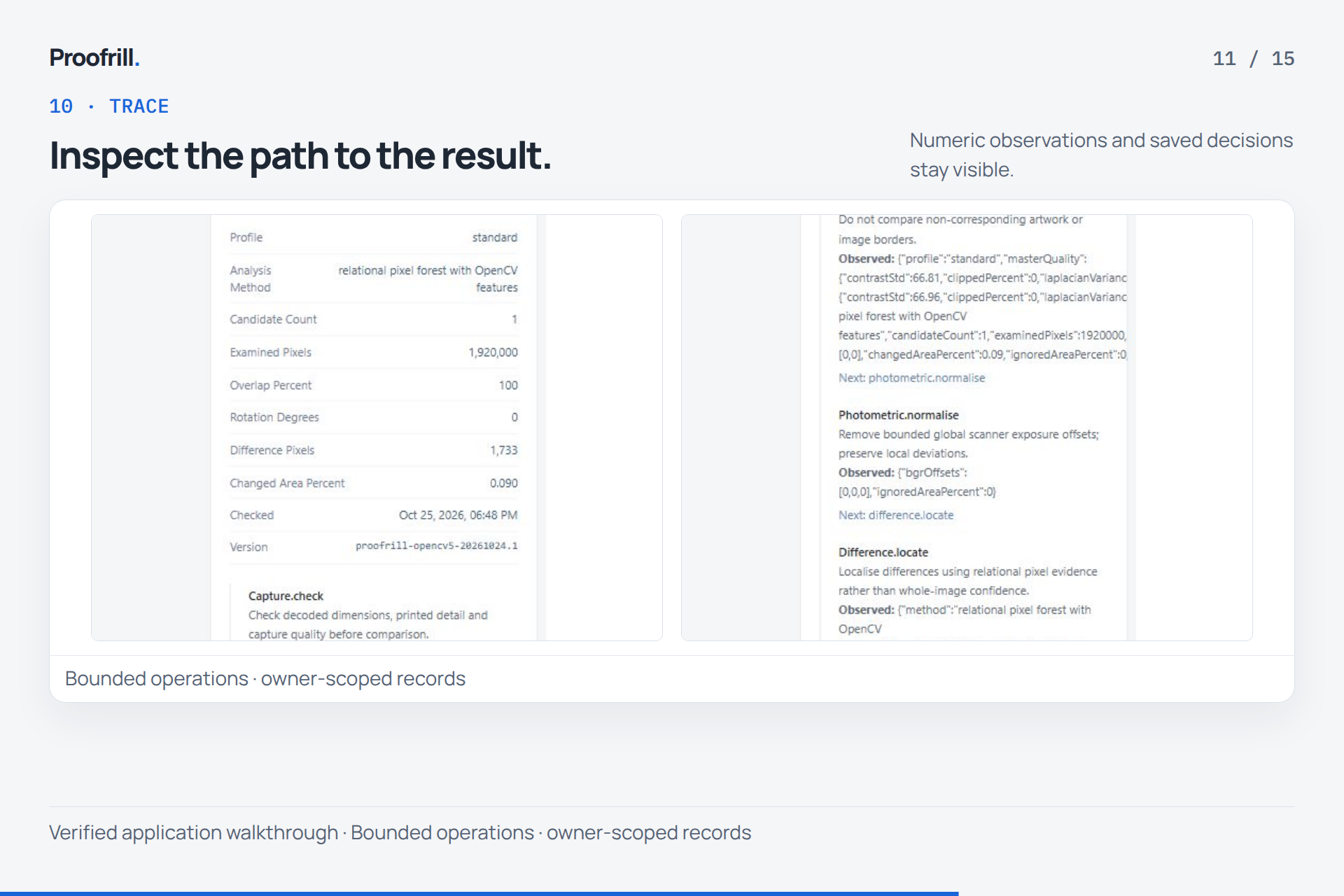
Inspect numeric observations and tool steps in the controller trace; uncertain captures request a rescan.
-
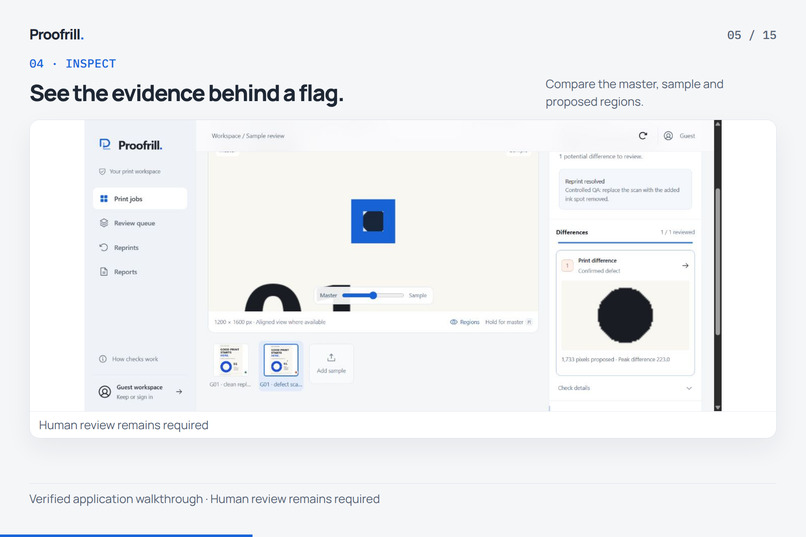
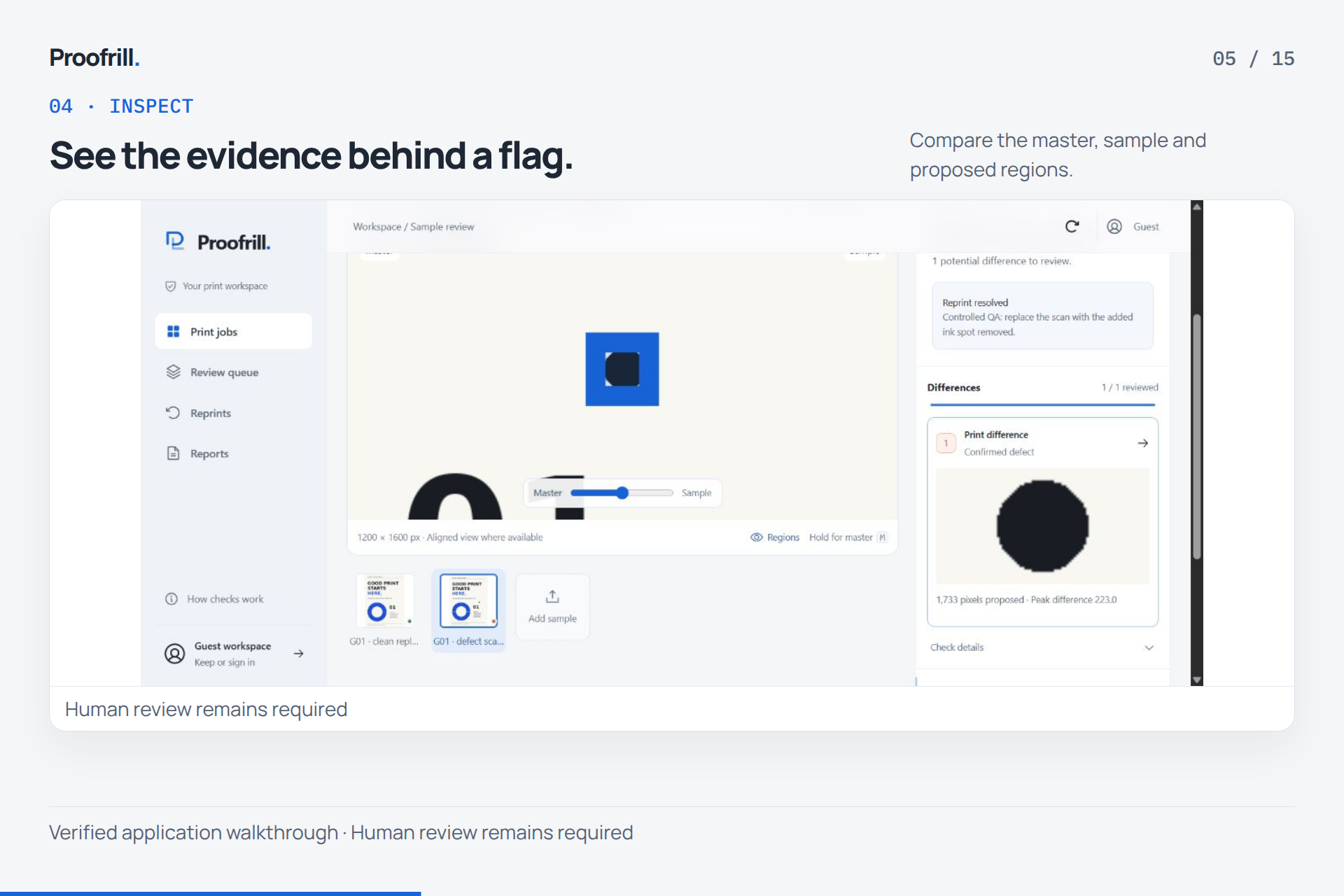
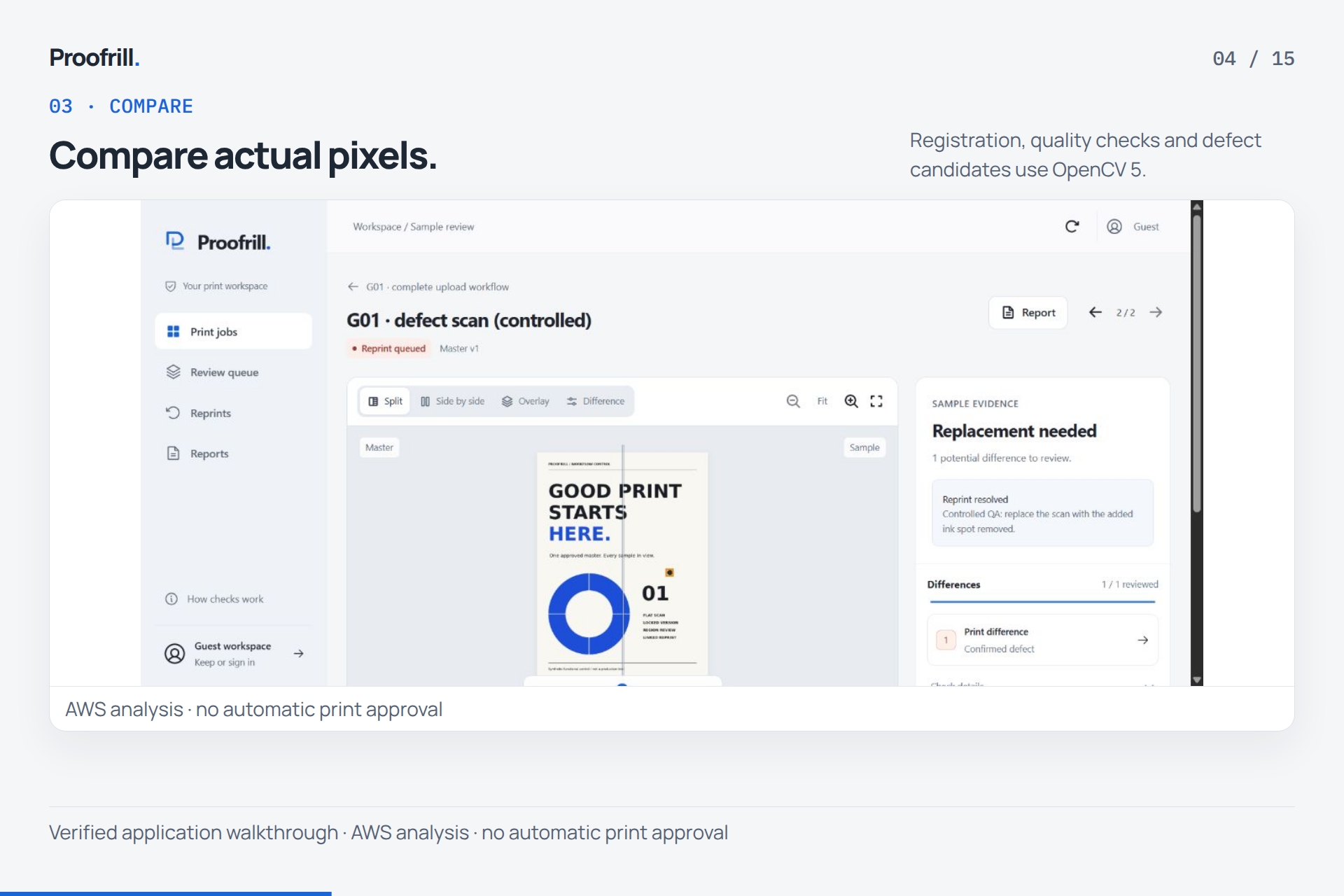
Inspect each proposed region, confirm or dismiss it, and record the reason for your decision.
-
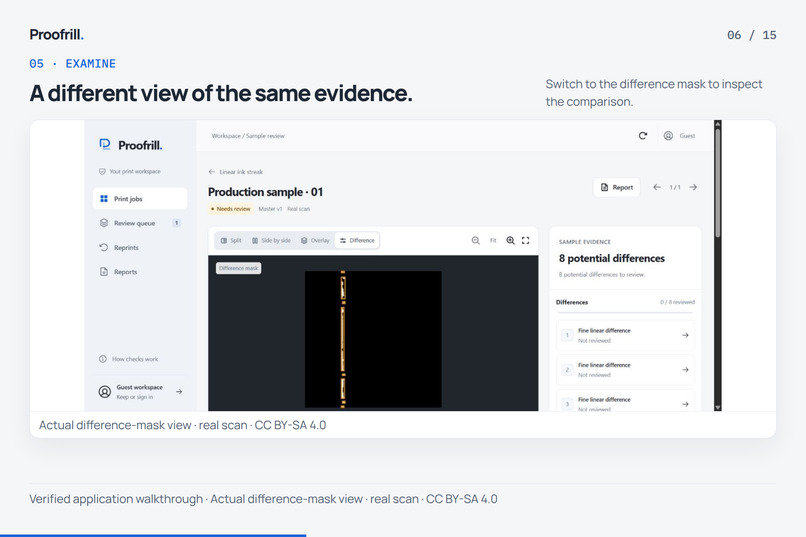
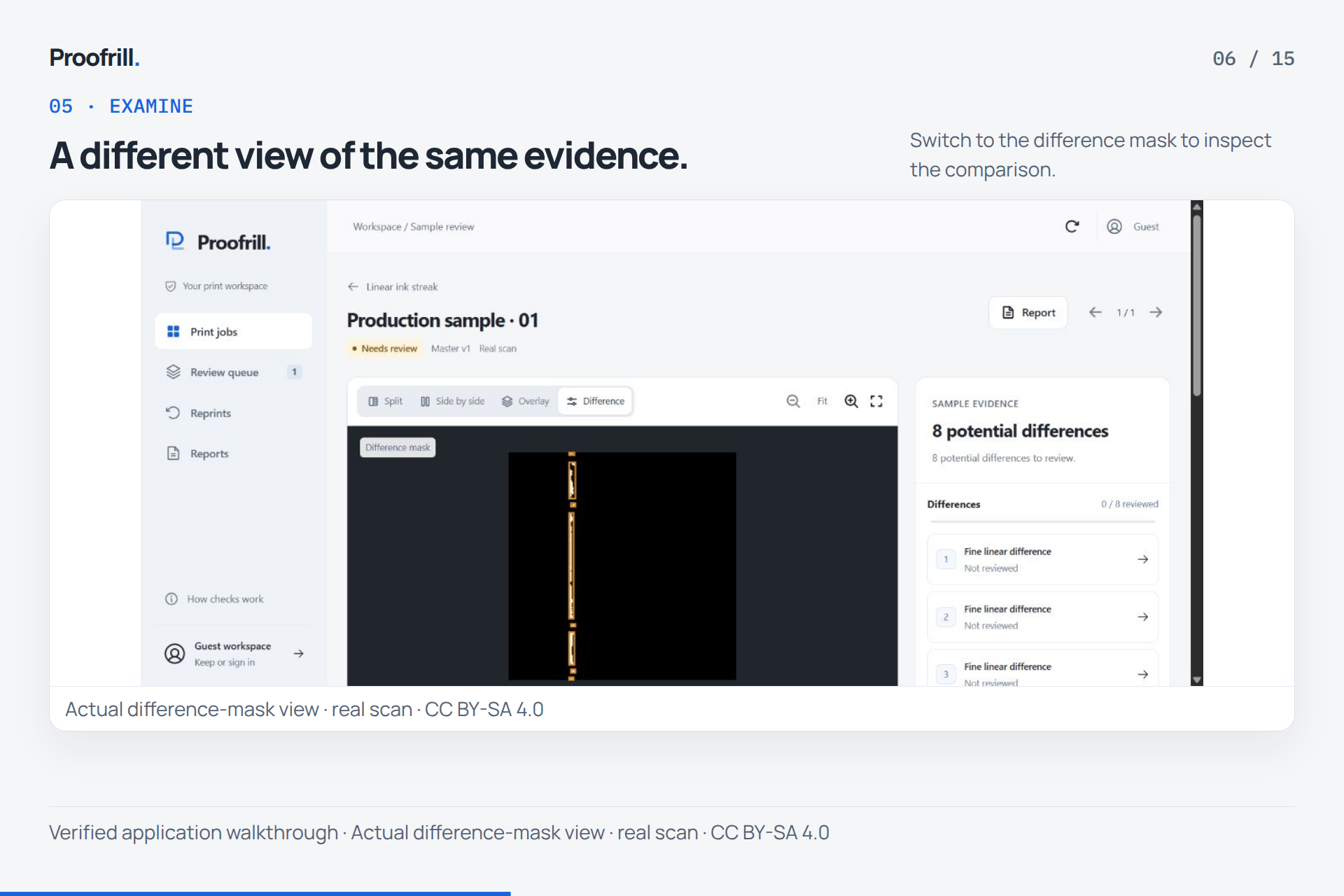
Actual difference-mask view of a real scan. Taktpixel2025PD-CD, Teppei Tamaki, CC BY-SA 4.0.
-
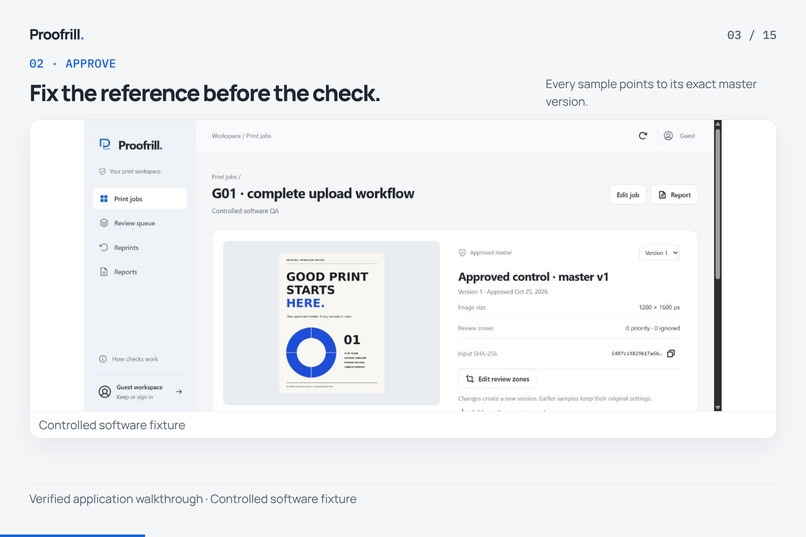
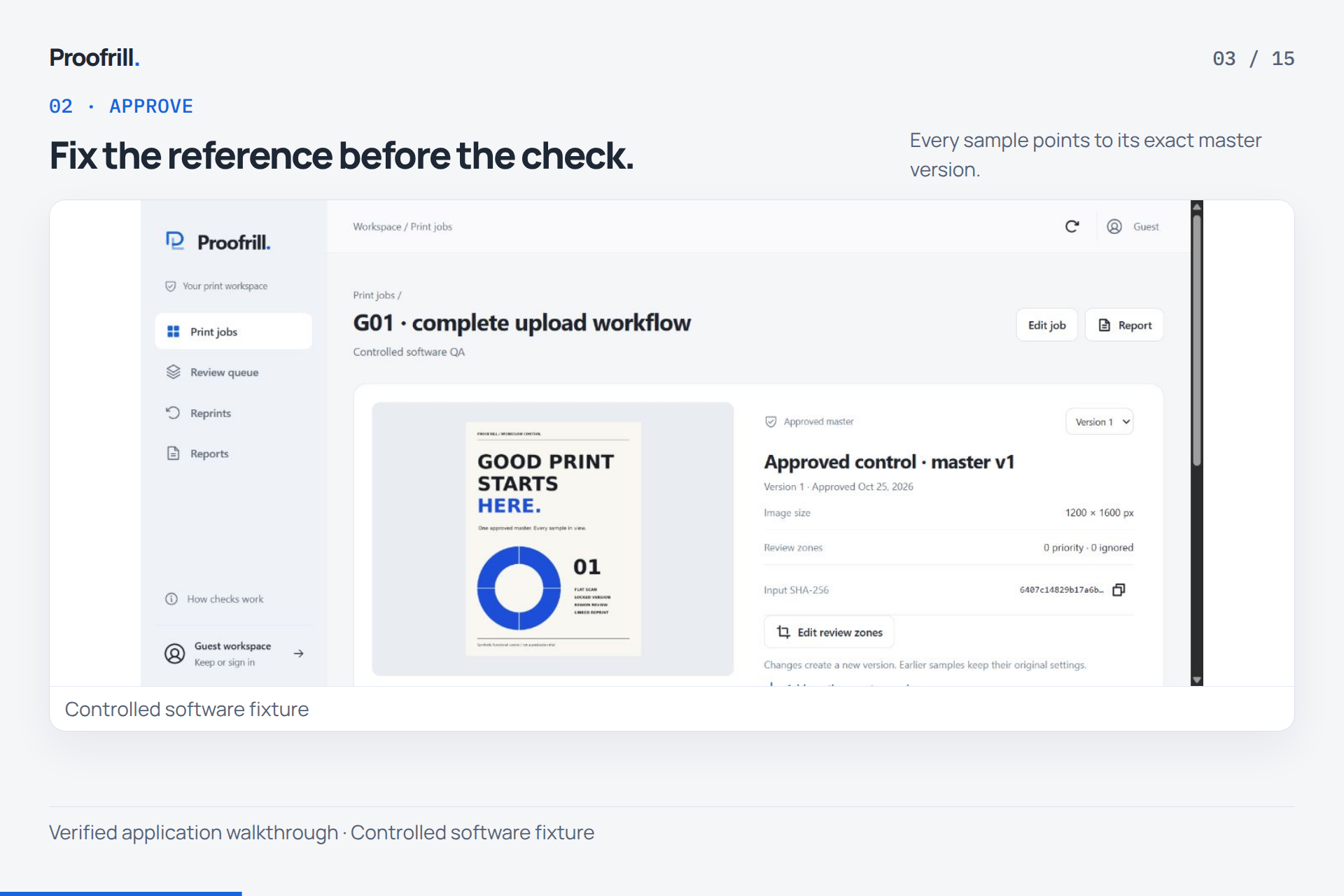
Approve a versioned master before analysis so every sample is checked against the same reference.
-
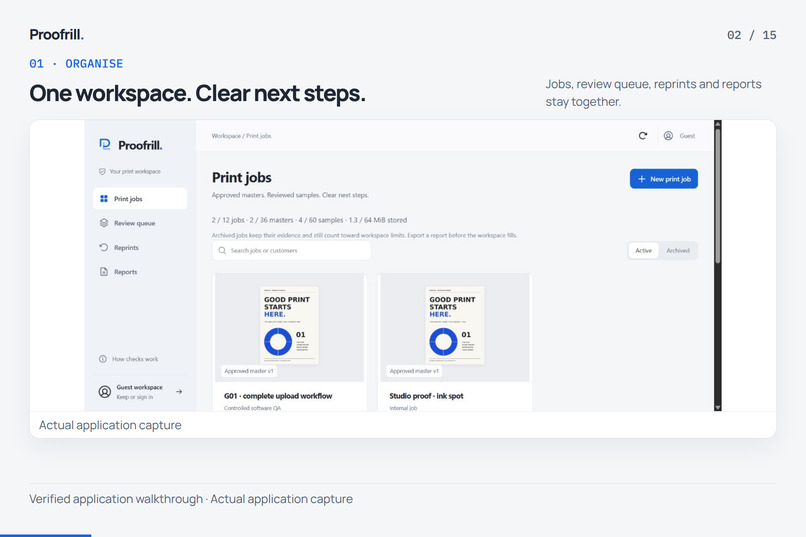
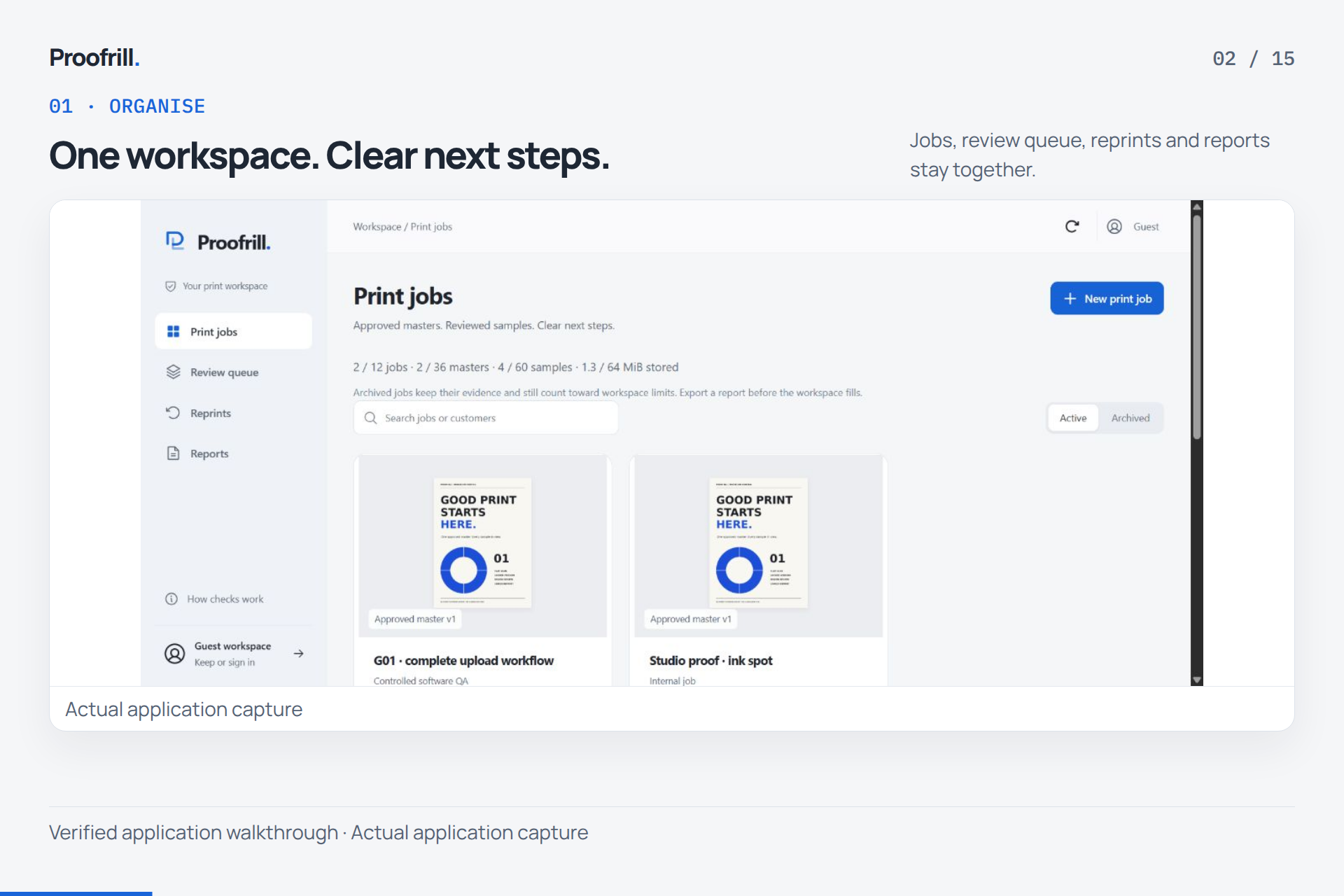
One workspace for print jobs, approved masters, production samples and saved review decisions.
-
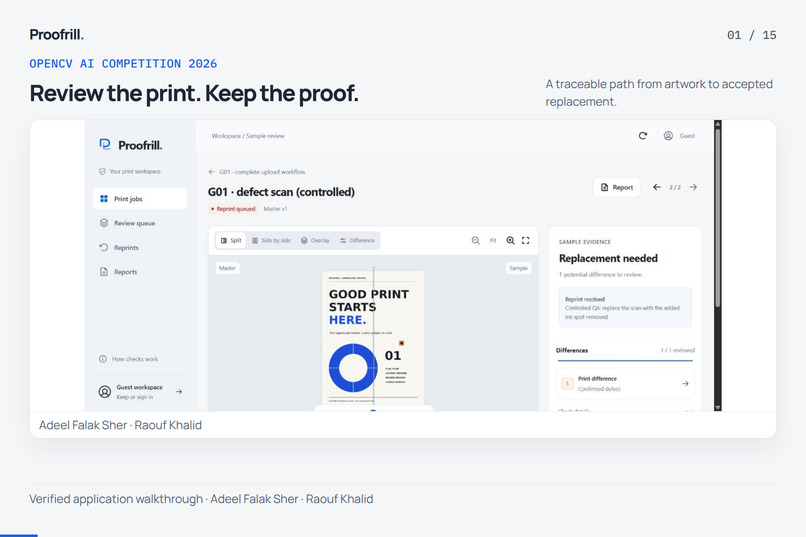
Review print samples against approved artwork, inspect proposed regions and keep the operator in control.
-
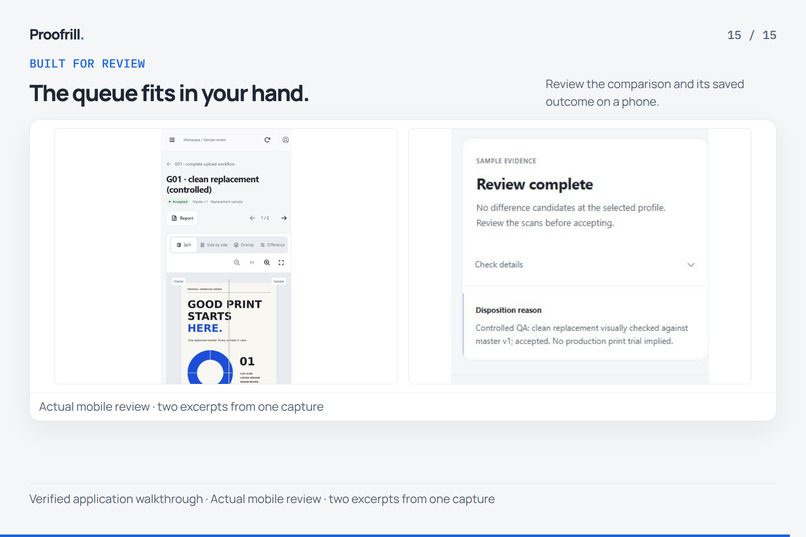
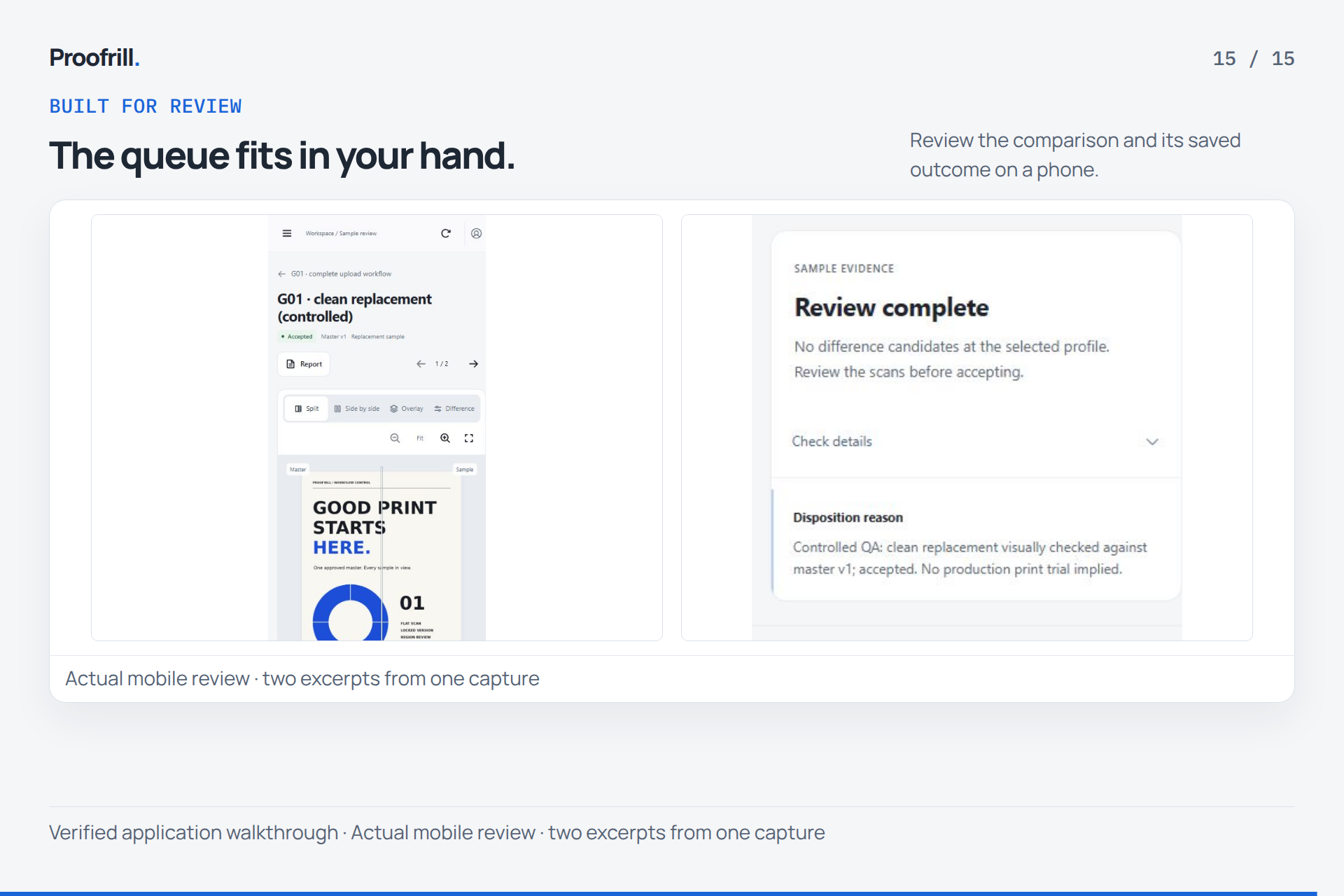
Actual mobile review: comparison controls, accepted replacement and its saved reason in a single-column layout.
-
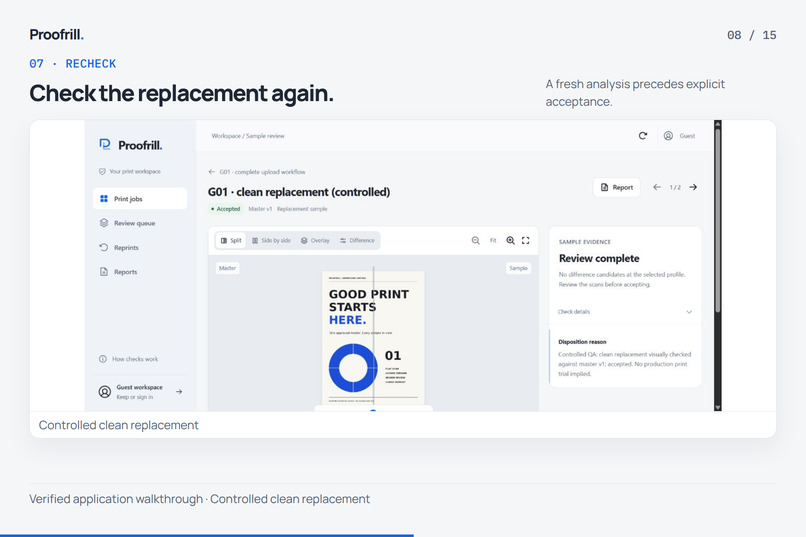
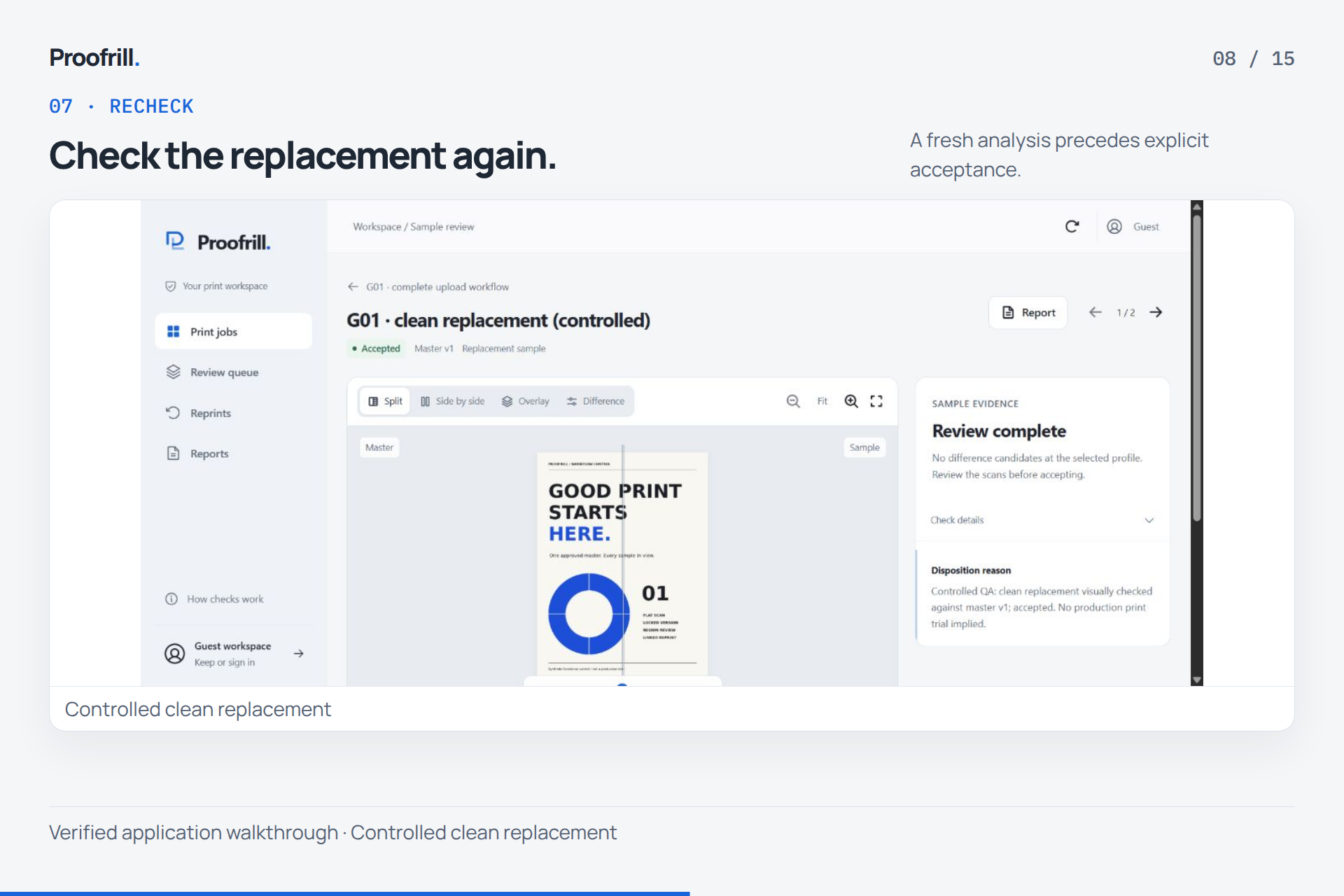
Accept a replacement explicitly after analysis and review; an empty candidate list never means automatic acceptance.
-
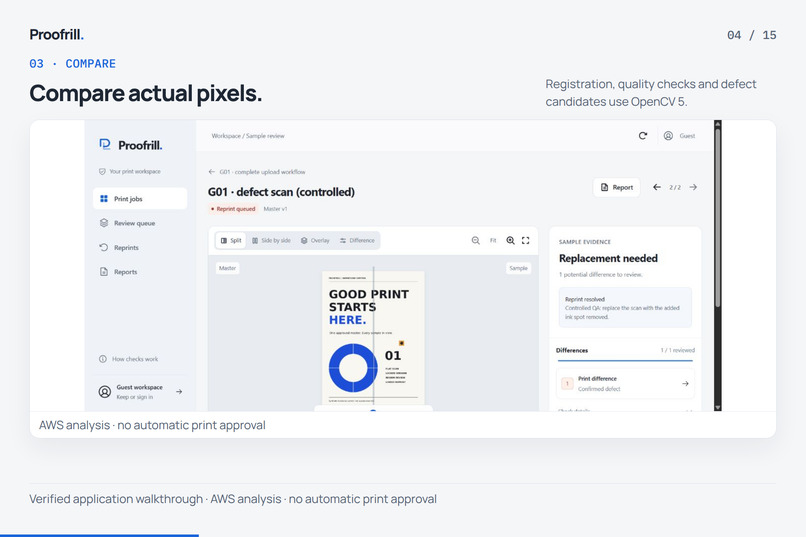
Compare original pixels with split and overlay views before making a print-quality decision.
-
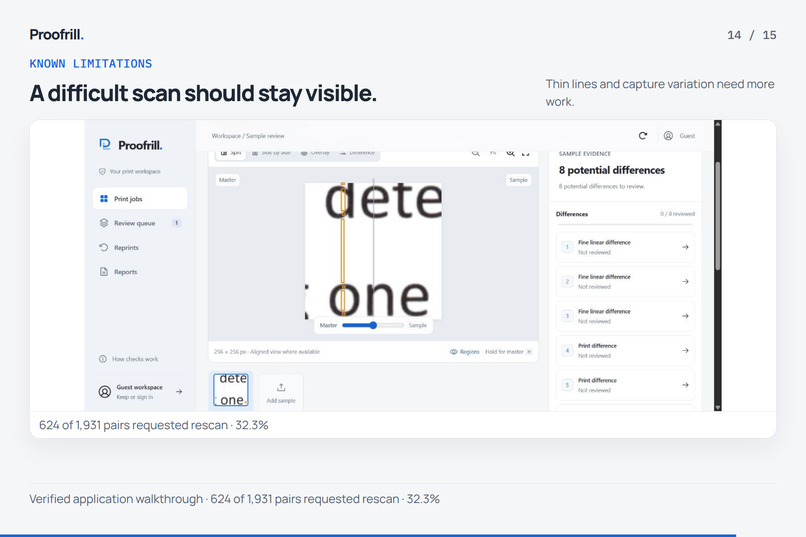
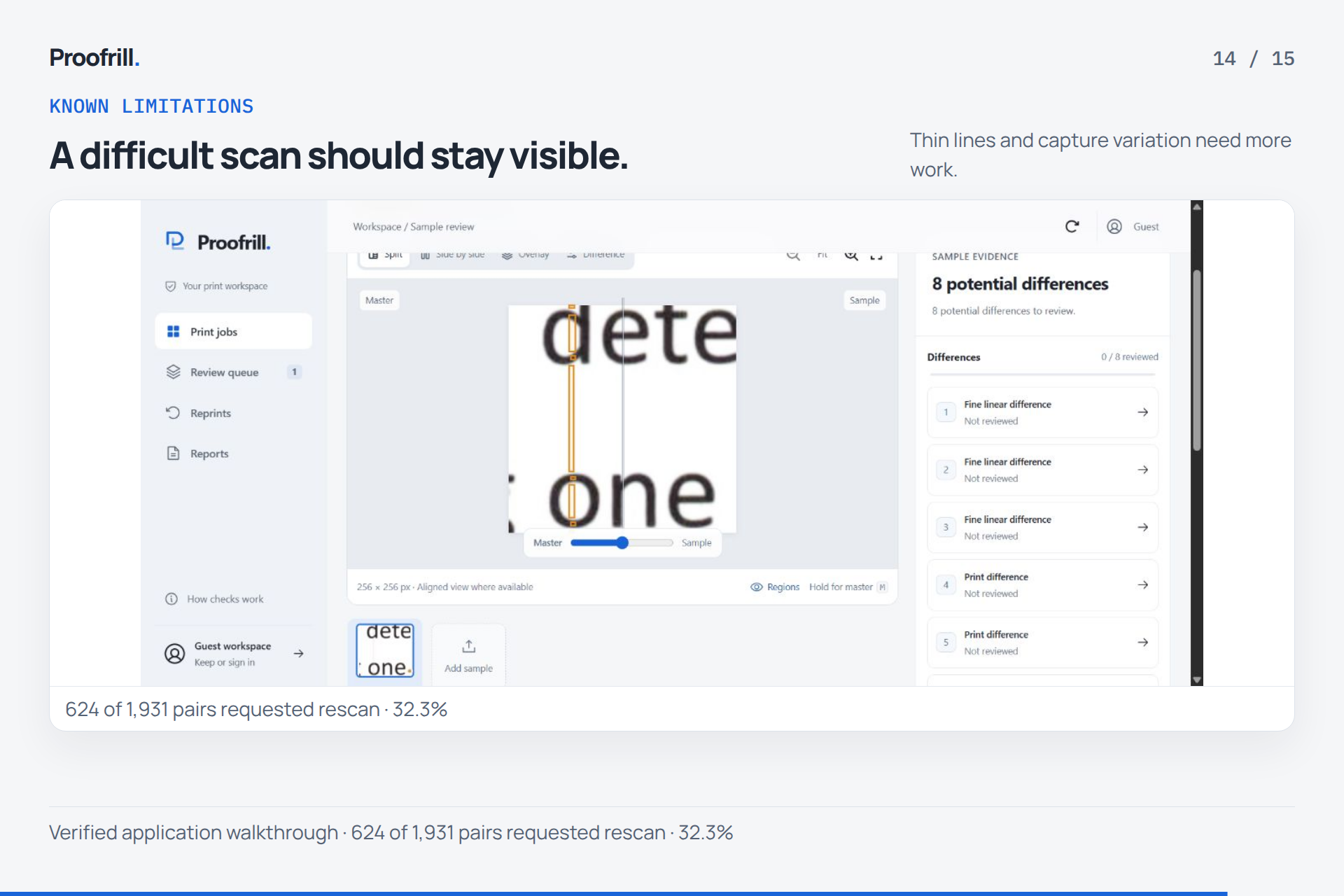
Fine-line and capture-variation failures remain visible. Dataset examples: Taktpixel2025PD-CD, CC BY-SA 4.0.
-
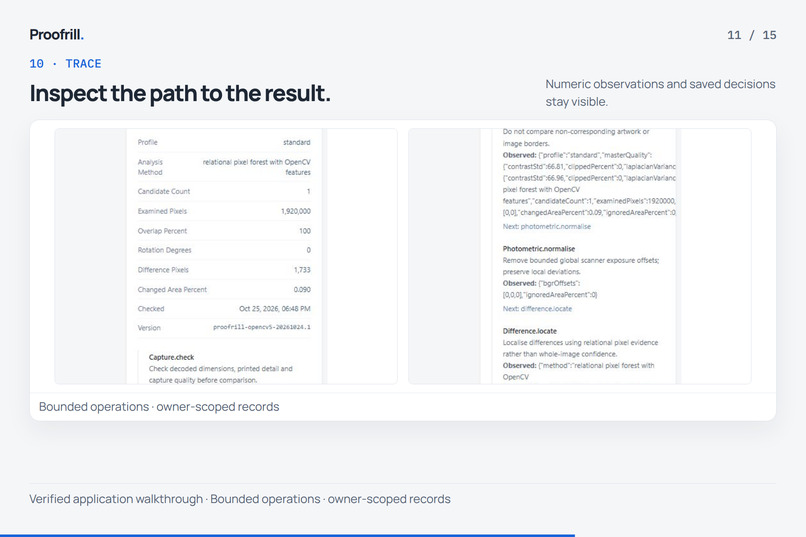
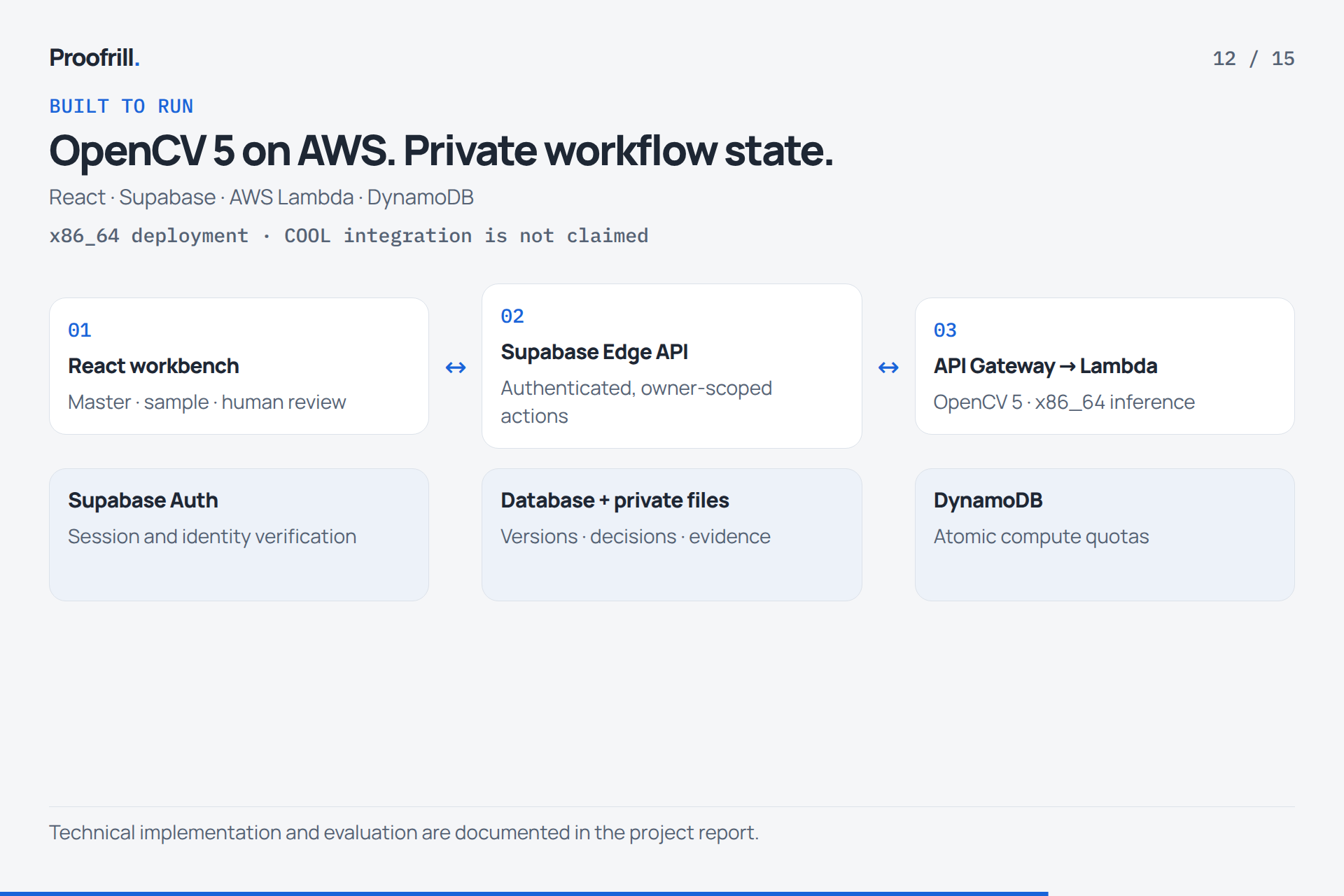
React review workspace, private Supabase records and storage, and an authenticated OpenCV 5 service on AWS Lambda.
Proofrill
Pitch: Compare print samples with approved artwork, review the evidence and follow every reprint through to its replacement.
Team: Adeel Falak Sher and Raouf Khalid
Working application: https://bgwi6r22o5.execute-api.us-east-1.amazonaws.com
Source archive: https://bgwi6r22o5.execute-api.us-east-1.amazonaws.com/source.zip
Inspiration
Finding a mark on a print is only one part of quality review. The next questions are practical: which artwork version was approved, which regions were checked, why was the sample rejected and did its replacement fix the issue? Proofrill brings those decisions into one review record.
What it does
A reviewer creates a print job and approves a fixed master. Each production sample is compared with that master. The workspace presents original pixels, split and overlay views, a difference mask and proposed regions. The reviewer confirms or dismisses regions and records an acceptance, rescan or reprint decision.
A reprint stays linked to the original evidence. Its replacement must use the same approved master, undergo analysis and receive an explicit acceptance before the reprint resolves. Reports preserve master versions, image hashes, check settings and decisions.
How we built it
The React workbench uses a restrained, image-first interface. Supabase provides private guest authentication, owner-scoped business records and private image storage. An authenticated business API validates workflow transitions and sends image comparisons to AWS Lambda.
OpenCV 5 handles image preparation, registration and relational pixel features. A compact numeric forest localizes potential differences. An observation-driven controller selects subsequent registration or inspection steps, records its tool trace and requests another scan when evidence is insufficient. DynamoDB provides atomic request limits around the AWS worker.
The system is designed around a clear boundary: the algorithm proposes evidence; the operator owns the print decision.
Challenges
Scan misalignment and ordinary capture variation can look like print defects. Dataset splits also require care: the publisher's patch splits share inferred source scans. We therefore froze a separate artwork-family holdout and retained a tuned residual baseline, failures and empty results in the evaluation.
The forest reached pooled pixel F1 of 0.6150 against 0.5773 for the baseline on 1,931 held-out pairs. Its mean patch F1 was lower, 0.3839 versus 0.3986. That mixed result shaped the product: inspect the actual pixels, expose uncertainty and never turn an empty candidate list into automatic acceptance.
Accomplishments
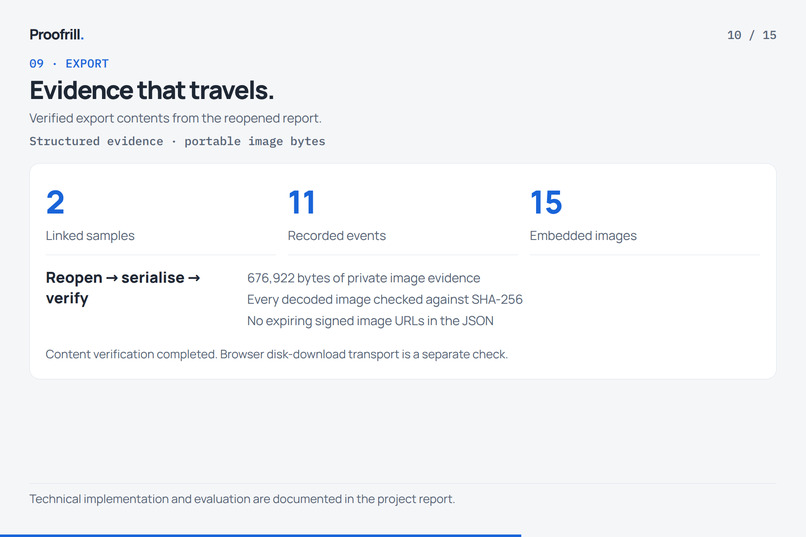
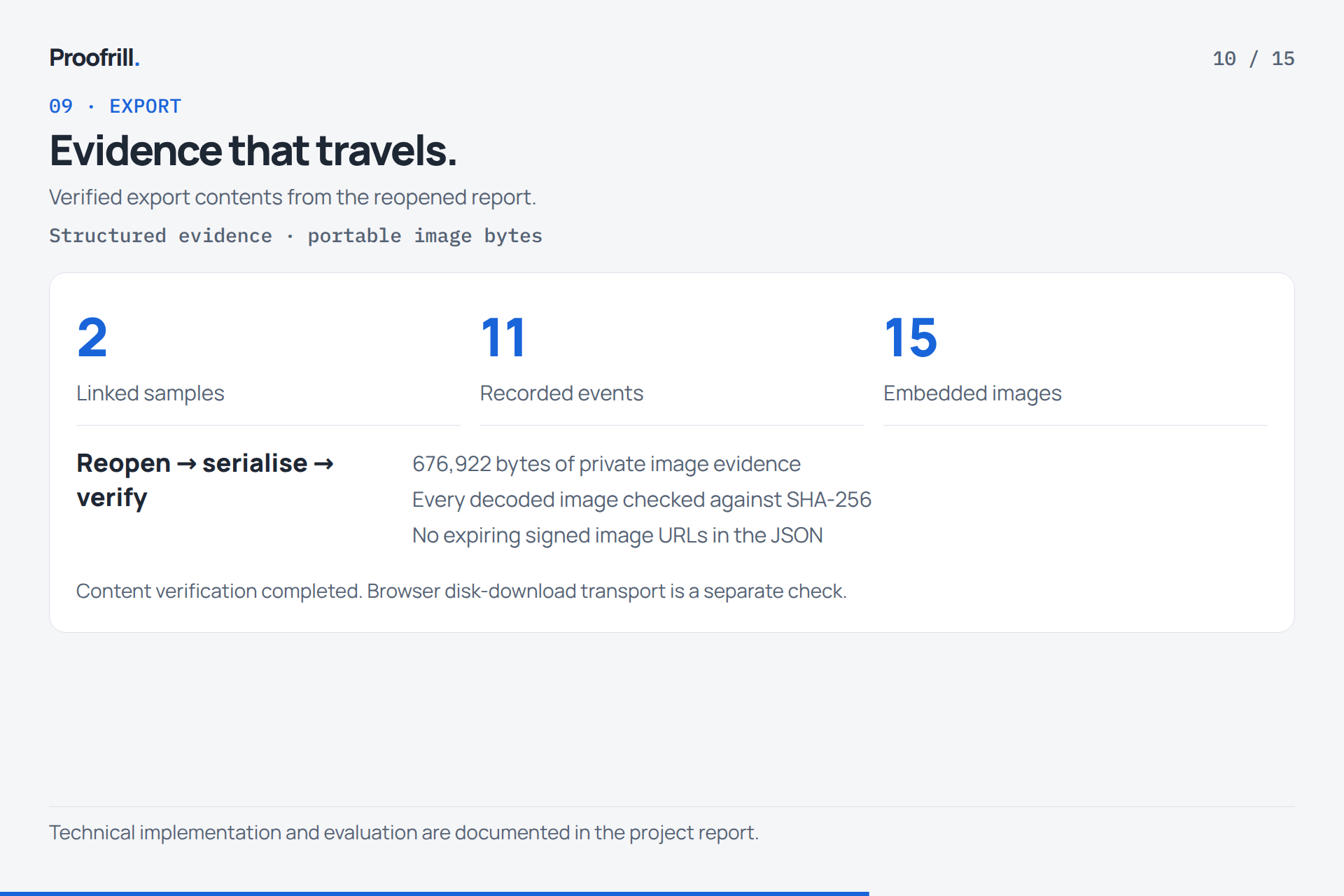
Proofrill connects visual analysis with versioned masters, region-level review and a traceable replacement workflow. It includes a real AWS image service, a private Supabase backend, reproducible model evidence and a source archive with setup instructions. A controlled live guest workflow completed master and sample upload, AWS analysis, confirmed region review, a same-master replacement, explicit acceptance and reopened reporting. A live report export retained two samples and eleven events; all fifteen embedded image hashes verified. Native picker and browser disk-download transport remain separate verification gaps.
What we learned
A useful review system needs more than a detector score. Registration failure, weak fine-line detection, source grouping and the operator's rationale all affect whether an analysis helps. Keeping them visible produces a more defensible review record.
What's next
Validate real full-sheet capture, gather feedback from print operators and measure independent clean-print performance. Improve fine-line localization and test scanner variation across more equipment. The current evidence covers scan patches and clearly identified controls; it does not establish factory savings or automatic print certification.
Data and software
Dataset: Teppei Tamaki, Taktpixel2025PD-CD (2025), https://doi.org/10.5281/zenodo.15318946, CC BY-SA 4.0. Source software is MIT; dataset-derived images retain their original license. Technical details and balanced evaluation results are included in the source archive.

Log in or sign up for Devpost to join the conversation.