






Inspiration
The gig economy powers millions of workers, but trust is still one of its biggest friction points.
Independent cleaners often face inconsistent work, unclear expectations, weak protections, and compensation systems that do not always reflect the quality of the service they provide. At the same time, clients are asked to trust someone entering their home or business based largely on a profile, a few reviews, and a star rating.
We felt that real-world service marketplaces needed something stronger.
PureTask Trust was inspired by a simple question: What if trust could be built into the workflow itself instead of being left to chance?
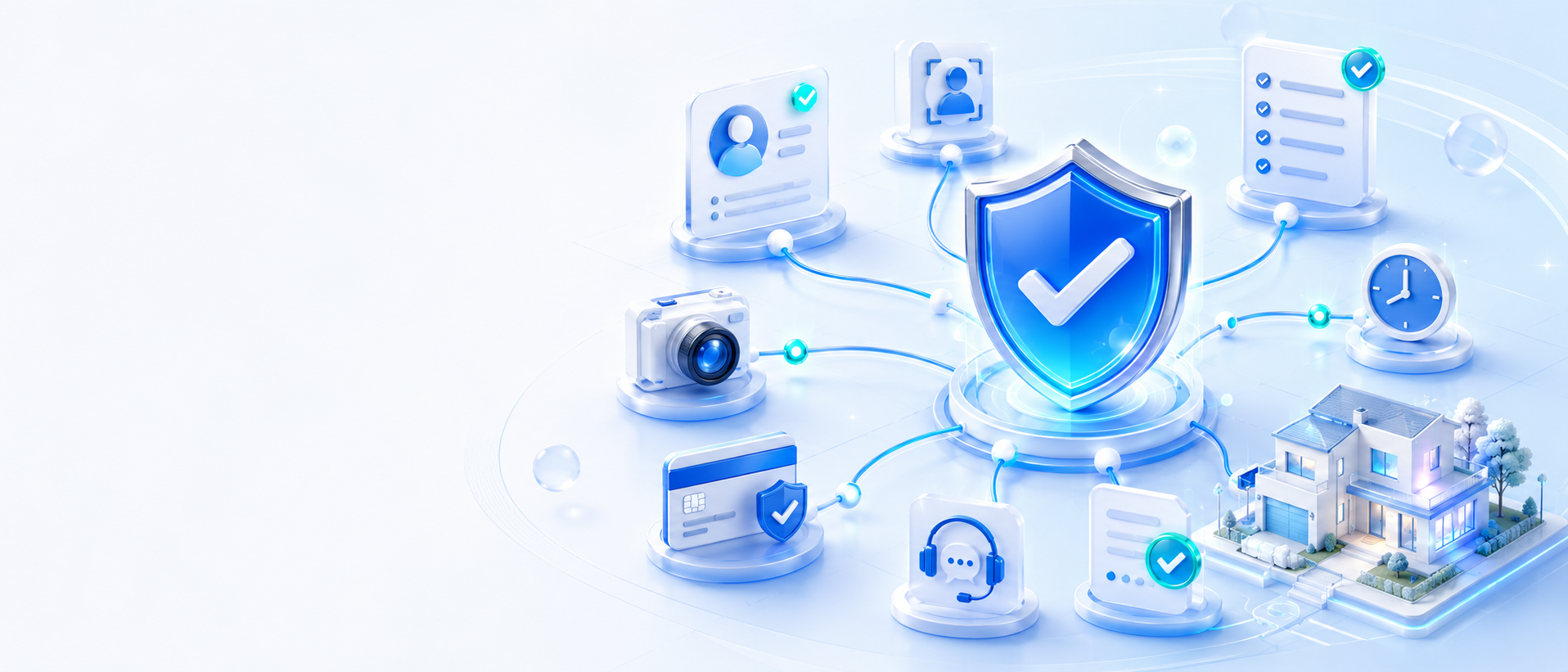
For services like cleaning, home care, maintenance, and inspections, trust requires more than ratings. It requires clear scope, verified identity, transparent expectations, evidence of completed work, fair dispute resolution, and intelligent systems that help both sides make better decisions.
That became the foundation of PureTask Trust: a trust-first service marketplace where AI does not replace the professional—it removes administrative friction, strengthens accountability, and helps good work become visible.
Gemini became the intelligence layer behind that vision, helping us build systems for job matching, evidence analysis, policy interpretation, service quality validation, and contextual decision-making throughout the customer and professional journey.
What it does
PureTask Trust is an AI-powered marketplace and trust infrastructure platform designed for real-world service professionals.
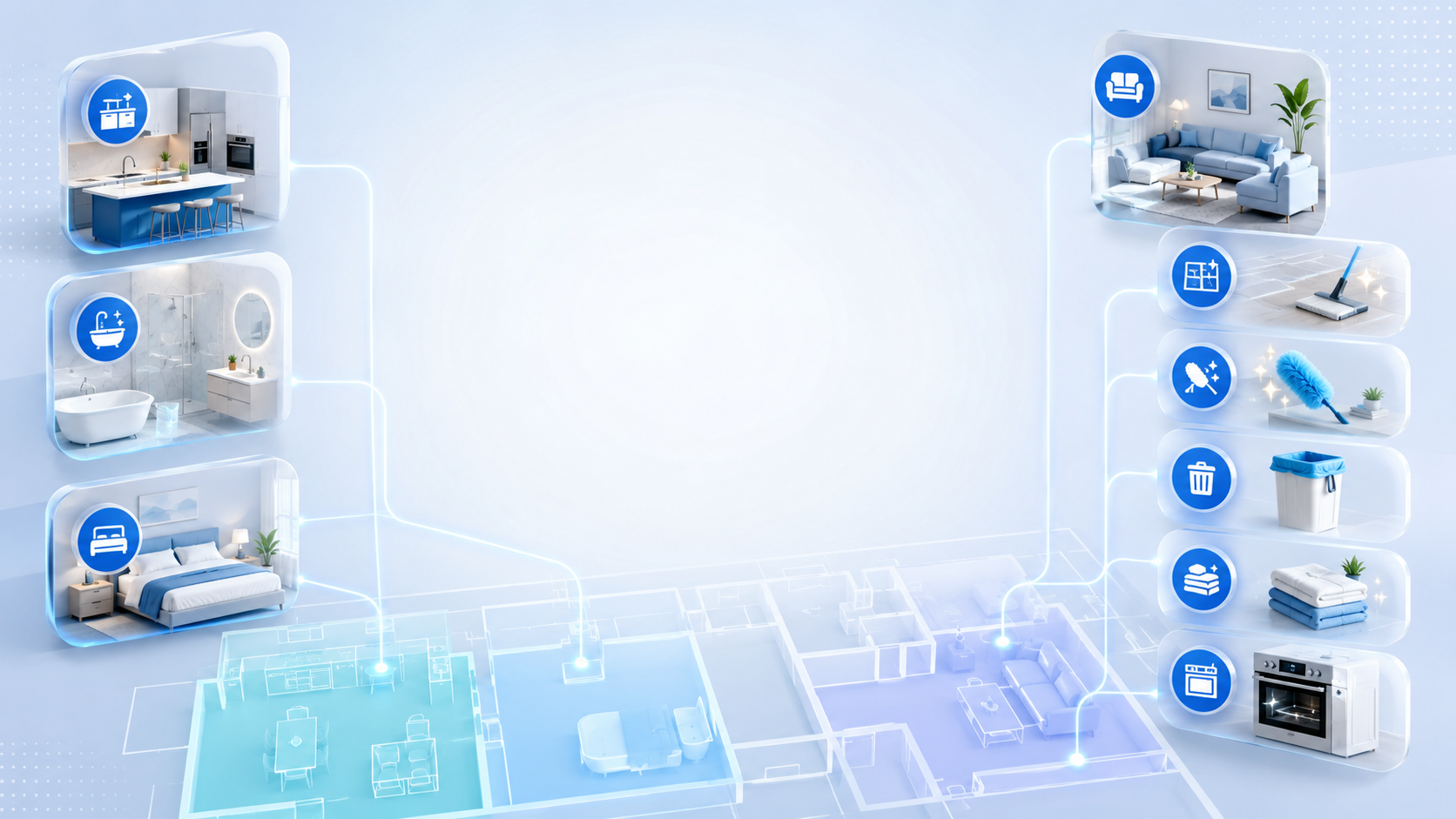
A customer can create a service request, define the scope of work, choose scheduling preferences, and connect with professionals whose availability, service area, experience, and qualifications match the job.
Instead of relying exclusively on traditional ratings, PureTask builds a richer trust record around each service.
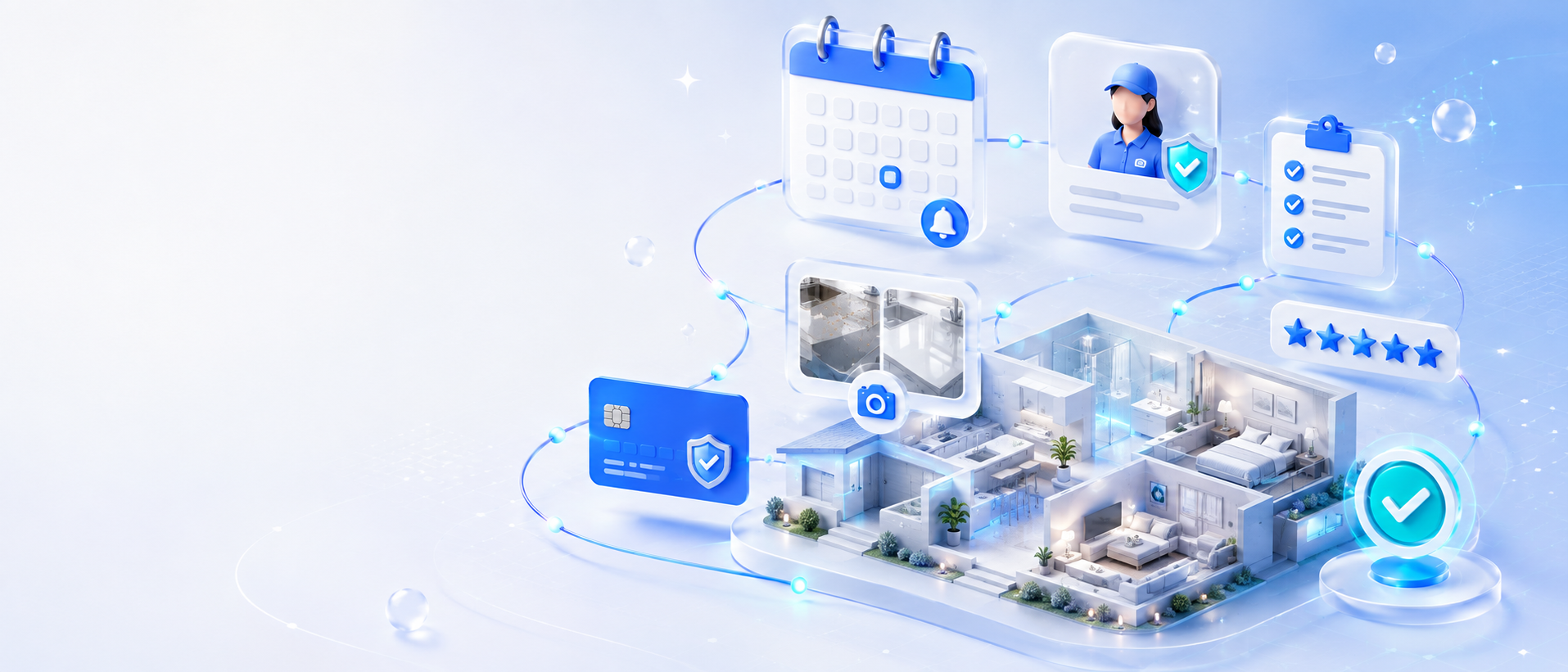
Professionals can verify their identity and profile, manage availability, accept jobs, clock in, document before-and-after conditions, complete task-specific checklists, and submit evidence of completed work.
Customers gain a clearer view of what was requested, what was completed, and what evidence supports the outcome.
Gemini helps power the decision engine behind the system, including:
- intelligent cleaner-to-job matching
- service scope interpretation
- photo and evidence analysis
- detection of missing or inconsistent evidence
- contextual quality checks
- policy and dispute-support reasoning
- workflow recommendations
- risk and trust signals
- structured job summaries
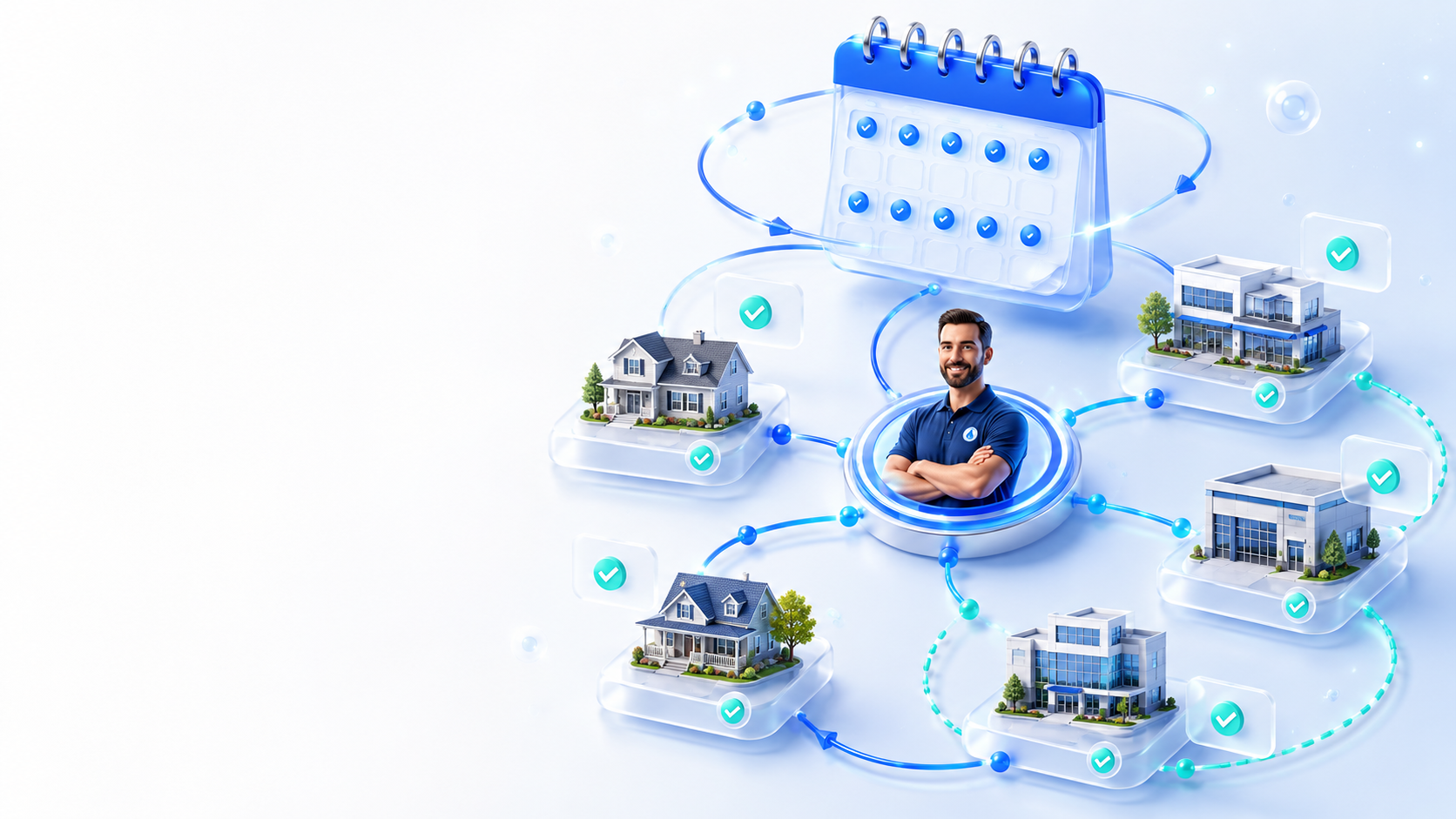
- assistance with recurring-service coordination
The goal is not to let AI make every decision automatically.
PureTask is designed around AI-assisted accountability with human control. AI organizes evidence, identifies inconsistencies, applies structured rules, and surfaces useful information while important decisions can still be reviewed by the people involved.
The result is a marketplace designed around a stronger trust loop:
Clear Scope → Verified Professional → Documented Work → Evidence → Fair Payment → Reputation → Repeat Service
How we built it
We approached PureTask as both a marketplace and an operating system for real-world service work.
The platform was designed around the complete lifecycle of a service job rather than treating booking, messaging, payment, and reviews as disconnected features.
We first mapped the core entities and workflows: customers, professionals, properties, service requests, jobs, schedules, task scopes, evidence, payments, disputes, reputation signals, and recurring services.
From there, we created a job state machine that governs how work progresses from request through completion. This gives the platform a reliable source of truth for states such as requested, matched, accepted, scheduled, in progress, evidence submitted, completed, disputed, and resolved.
For professionals in the field, we designed a mobile-first service workflow around:
Arrive → Verify → Clock In → Review Scope → Capture Before Evidence → Perform Work → Capture After Evidence → Complete Checklist → Clock Out → Submit
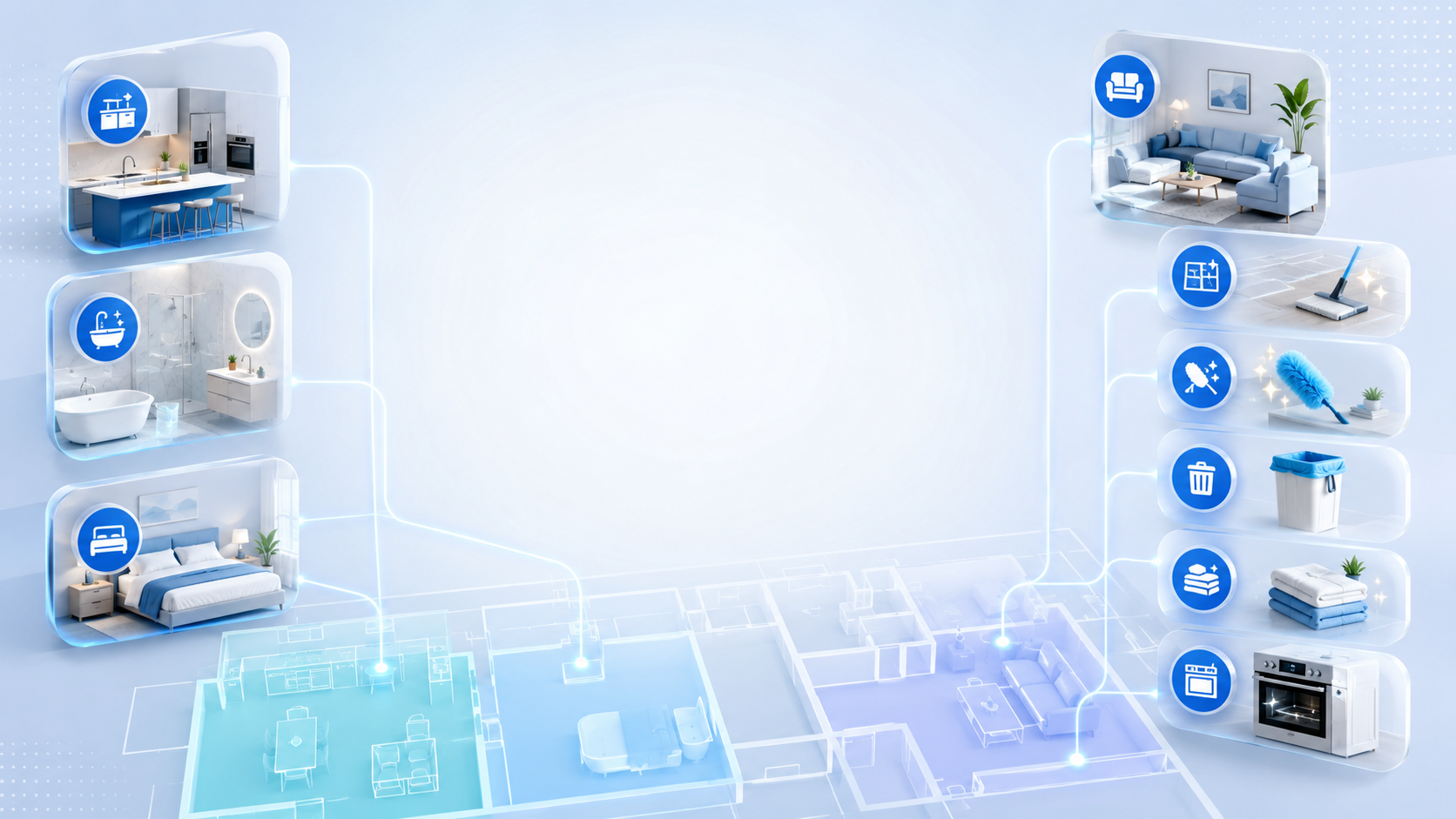
We also designed evidence pairing so that before-and-after photos are tied to specific rooms, tasks, or service requirements instead of existing as an unstructured photo gallery.
Gemini is integrated as an intelligence layer across these workflows. Rather than using a single generic AI prompt, the system separates responsibilities across specialized reasoning tasks such as matching, evidence review, scope interpretation, policy evaluation, trust assessment, and quality validation.
We also designed the platform with reliability in mind. Timer persistence, job-state recovery, evidence synchronization, and offline behavior were considered because cleaners may be working in basements, apartment buildings, commercial properties, or other environments with unreliable connectivity.
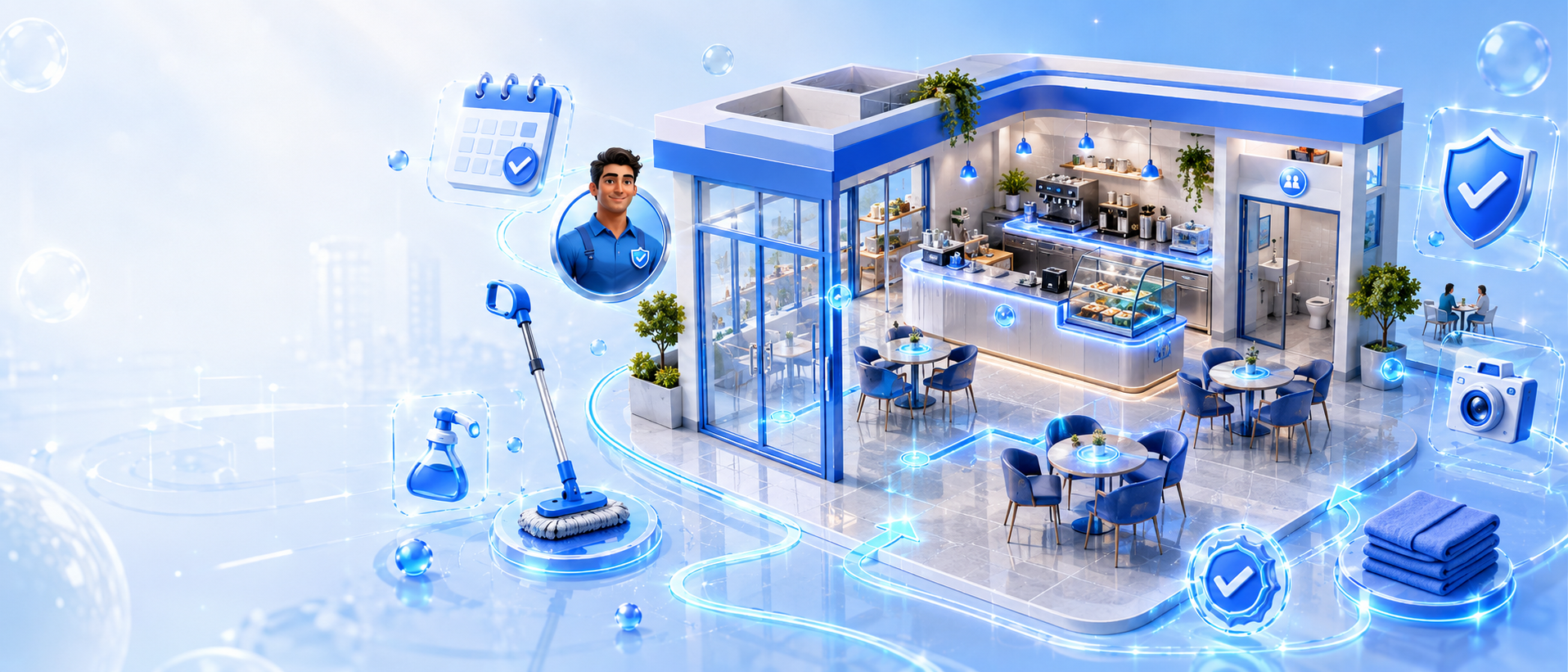
Our UI was built around a visual trust language of clear job states, verification markers, evidence cards, completion indicators, professional profiles, service timelines, and transparent progress.
Every layer was designed to reinforce the same principle:
The system should make trustworthy behavior easier to perform, easier to verify, and easier to reward.
Challenges we ran into
One of the hardest challenges was realizing that trust is not a single feature.
It is a system.
A verified identity does not prove that a job was completed correctly. A five-star rating does not prove that the original scope was understood. A photo does not automatically prove when or where it was taken. And an AI model identifying a clean surface does not necessarily understand whether the customer actually received the service they purchased.
We had to think carefully about how multiple signals work together.
Another major challenge was designing AI systems that assist judgment without creating false certainty.
Real-world service work is messy. Lighting changes between photos. Rooms move. Objects are rearranged. Customers add requests. Professionals encounter unexpected conditions. A photograph can provide evidence without telling the entire story.
Because of this, we designed Gemini outputs as structured trust signals rather than unquestionable verdicts.
Offline behavior was another important technical challenge. A professional cannot lose a timer, job state, or evidence simply because their connection disappears halfway through a service.
We also had to balance accountability with usability. If evidence collection becomes too complicated, workers will hate using it. If it is too lightweight, it loses its value. Finding the point where verification supports the professional instead of becoming administrative burden was a major design consideration.
Finally, the project grew significantly as we explored the problem. What initially looked like a cleaning marketplace quickly became a broader trust and workflow infrastructure problem involving scheduling, reputation, payments, evidence, dispute resolution, AI reasoning, recurring work, and professional business operations.
Accomplishments that we're proud of
We are proud that PureTask developed into more than a basic marketplace prototype.
We created a cohesive trust architecture where service scope, worker identity, job state, evidence, completion, payment, and reputation reinforce one another.
We are especially proud of the evidence-first workflow.
Instead of asking customers to simply believe that work was completed—or asking professionals to defend themselves after a disagreement—PureTask creates a structured record while the service is happening.
We are also proud of how we approached AI.
Rather than treating Gemini as a chatbot added on top of the product, we designed it as an intelligence layer inside the marketplace itself.
Gemini can help interpret requests, match jobs, analyze evidence, identify inconsistencies, summarize service outcomes, and support policy decisions while the platform preserves human oversight.
Another accomplishment is the professional experience we designed. Cleaners are not treated as anonymous labor units. Their profile can become a portable record of reliability, completed jobs, verification, recurring customers, service categories, evidence quality, and professional reputation.
Most importantly, PureTask demonstrates a different philosophy for AI-enabled labor platforms:
AI should remove the burden—not the worker.
Automation should handle coordination, organization, routing, documentation, and administrative friction so professionals can spend more time performing the skilled human work customers are actually paying for.
What we learned
The biggest thing we learned is that trust has to be designed end-to-end.
You cannot fix a trust problem with ratings alone.
Trust begins before a professional arrives. It starts with accurate scope, realistic expectations, identity, scheduling, pricing, and communication. It continues through the service with job-state tracking and evidence. It continues after the service through payment, dispute handling, reputation, and repeat relationships.
We also learned that AI is most valuable when it has context.
A model looking at a single photo has limited information. A model that understands the service request, task scope, expected evidence, property area, before image, after image, timeline, and platform policy can provide significantly more useful reasoning.
Another major lesson was that accountability must work in both directions.
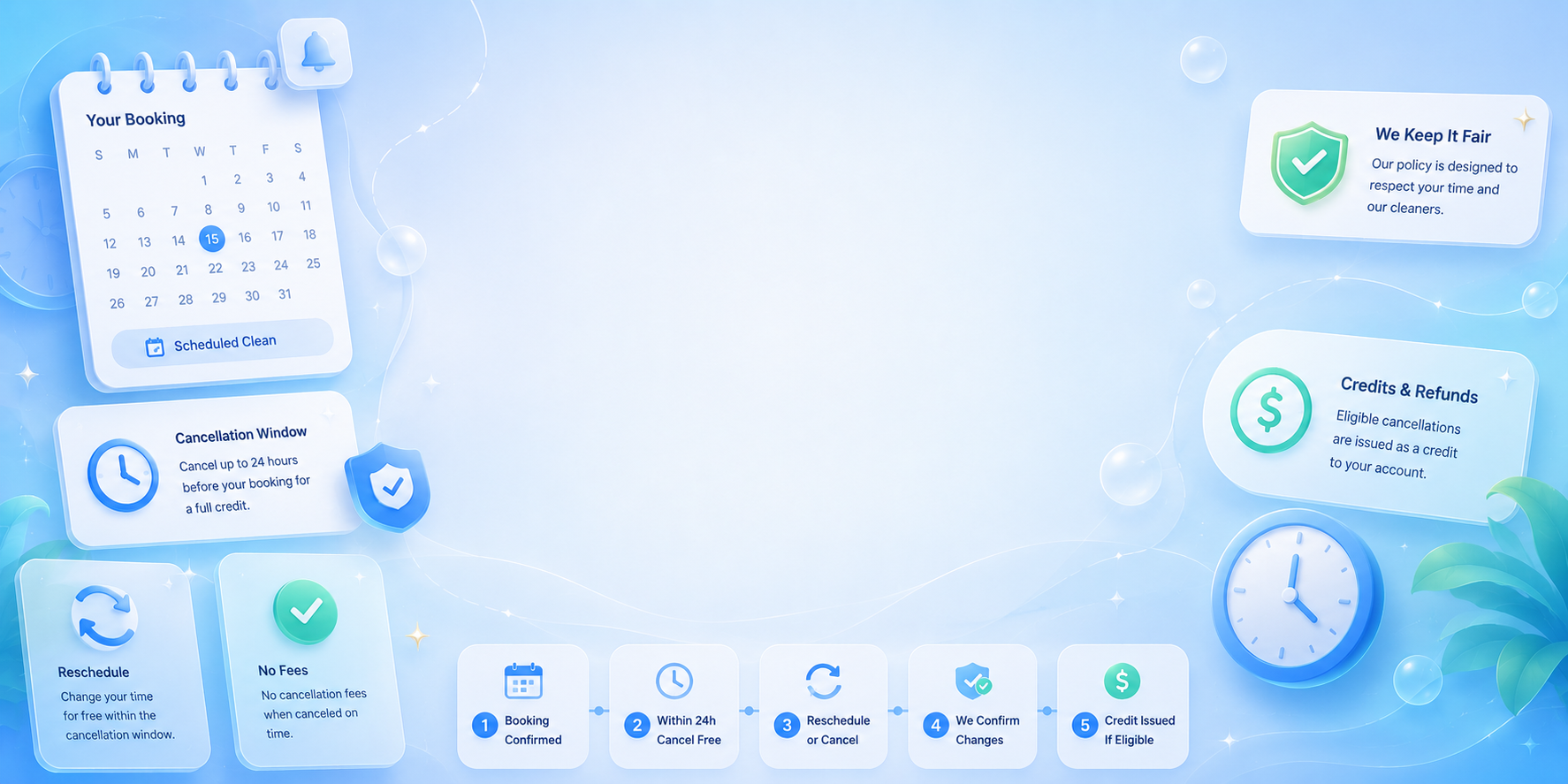
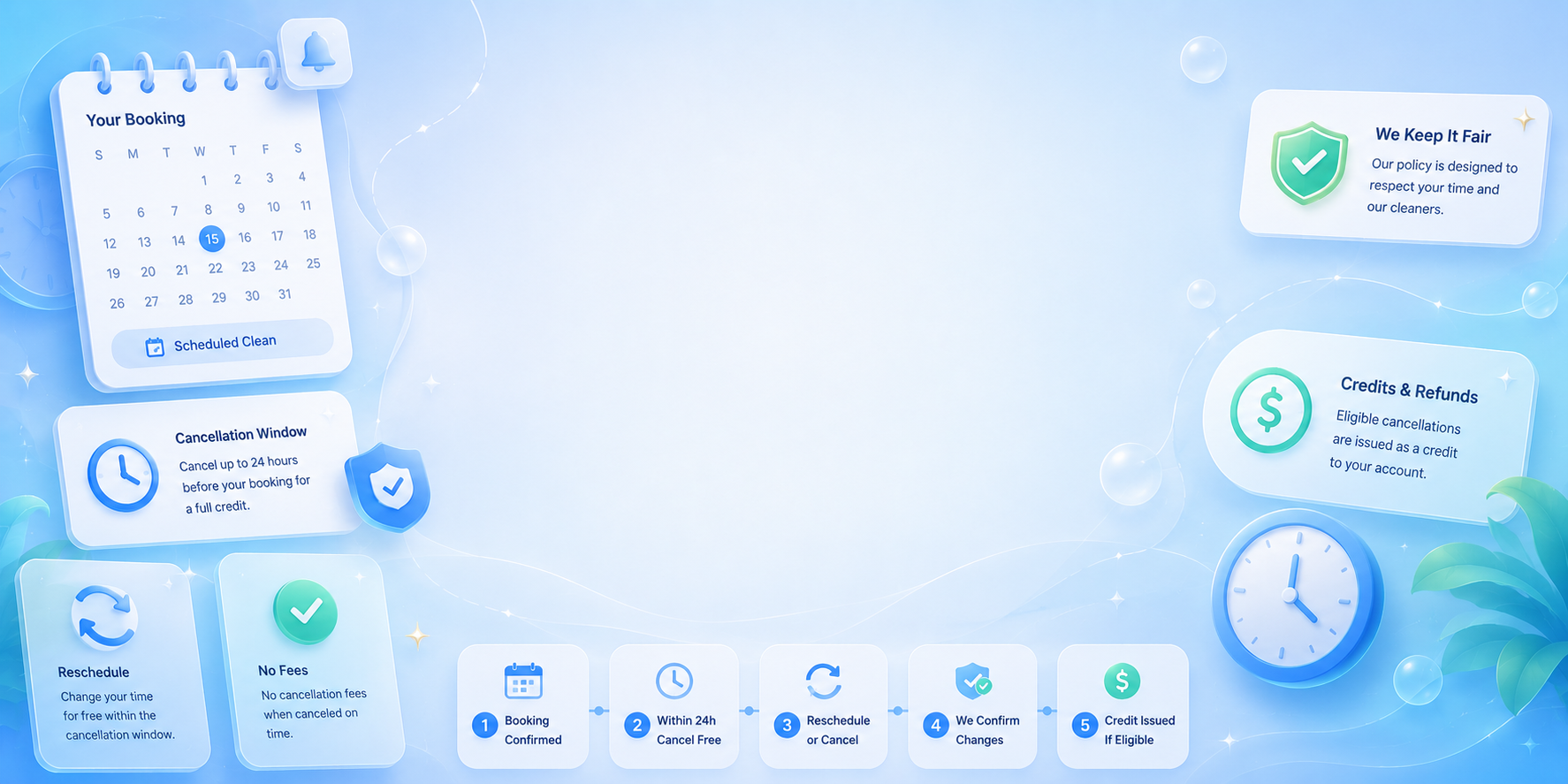
Customers need protection from incomplete or poor-quality work, but professionals also need protection from vague scopes, unreasonable expectations, false claims, unpaid extras, and unfair disputes.
A trustworthy marketplace cannot only protect one side.
We also learned that the best AI experience is often invisible.
The customer does not necessarily need to interact with a chatbot. The cleaner does not need to write prompts. AI can quietly structure information, detect problems, recommend actions, organize evidence, and reduce repetitive administrative work inside the normal workflow.
That is the direction we believe service marketplaces should move toward.
What's next for PureTask
The next phase of PureTask is turning the trust architecture into a broader operating system for independent service professionals.
We want to expand Gemini-powered matching so the system considers much more than distance—including service category, experience, availability, property requirements, historical performance, recurring relationships, and job complexity.
We plan to deepen multimodal evidence analysis so PureTask can better understand before-and-after conditions while continuing to treat AI conclusions as contextual signals rather than absolute judgments.
We also want to build a stronger dispute-resolution system that can assemble the relevant scope, messages, timestamps, evidence, job events, and policy rules into a structured case for human review.
For professionals, we plan to expand PureTask into tools for:
- recurring customer management
- intelligent scheduling
- route optimization
- automated follow-up
- estimates and service recommendations
- business analytics
- earnings visibility
- reputation building
- customer retention
- content and marketing assistance
Longer term, we believe the PureTask trust model can extend beyond cleaning.
The same infrastructure could support home care, inspections, maintenance, landscaping, property services, mobile detailing, repairs, and other industries where strangers coordinate physical work and need a reliable way to establish what was promised, what happened, and whether the outcome was fair.
Our larger goal is to build infrastructure where great service creates verifiable reputation, verifiable reputation creates opportunity, and AI helps both sides participate with greater confidence.
PureTask started with cleaning.
The larger vision is trust infrastructure for the real-world service economy.
Built With
- gemini
- postgresql
- react-19
- shadcn-ui
- supabase
- vite

Log in or sign up for Devpost to join the conversation.