-
-
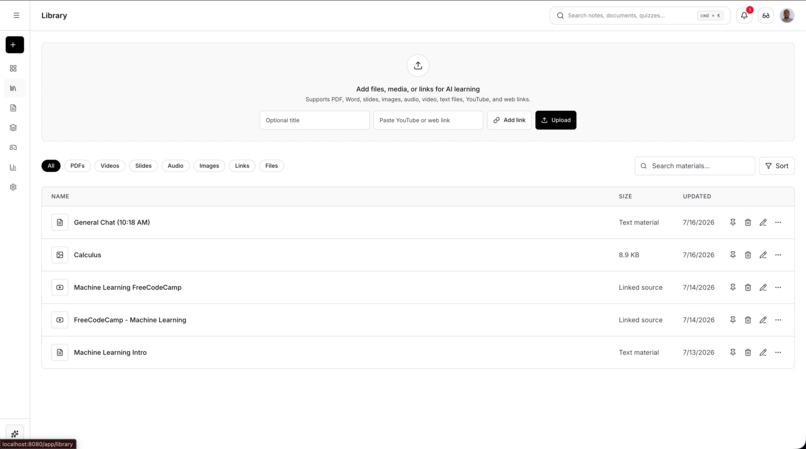
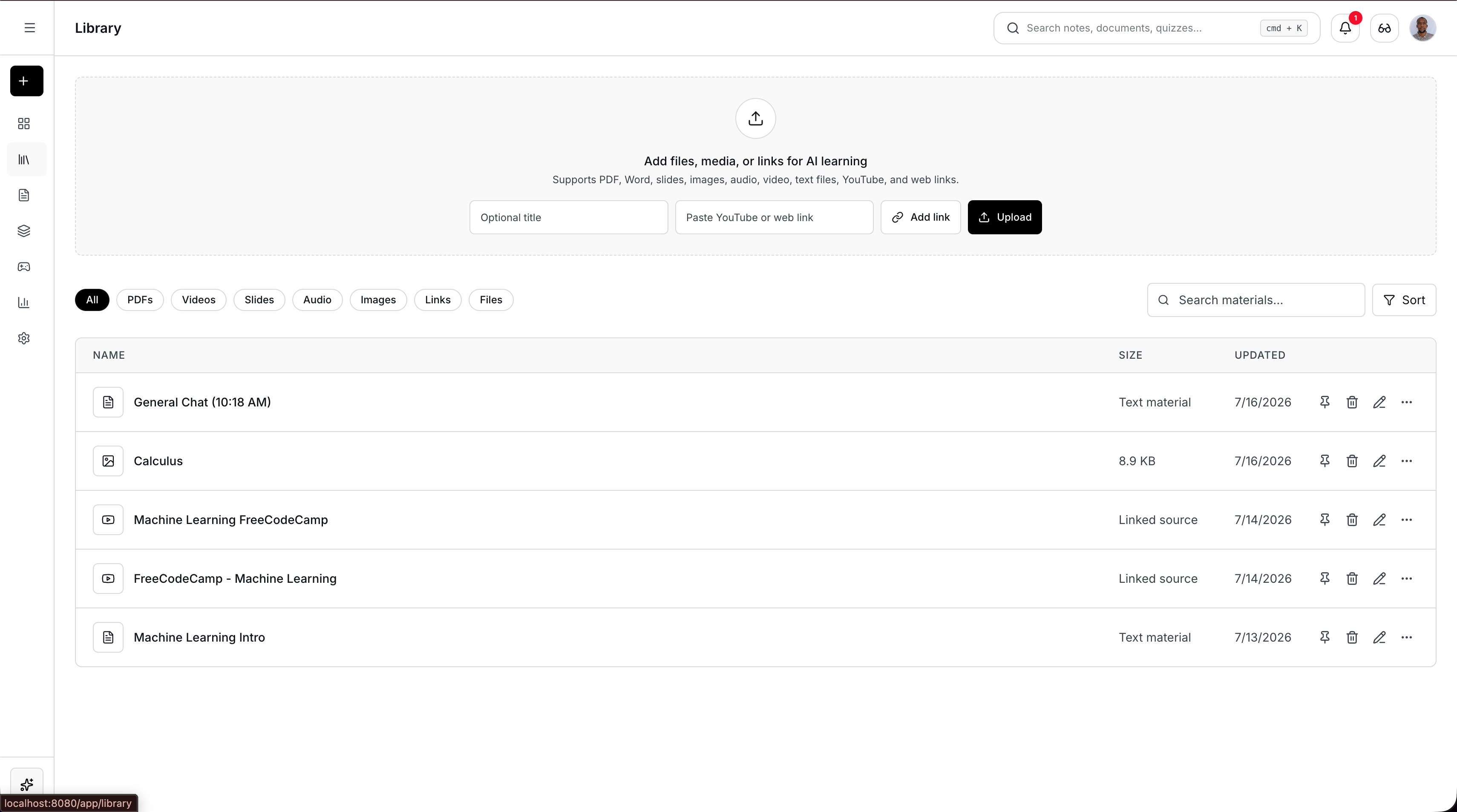
Manage Materials
-
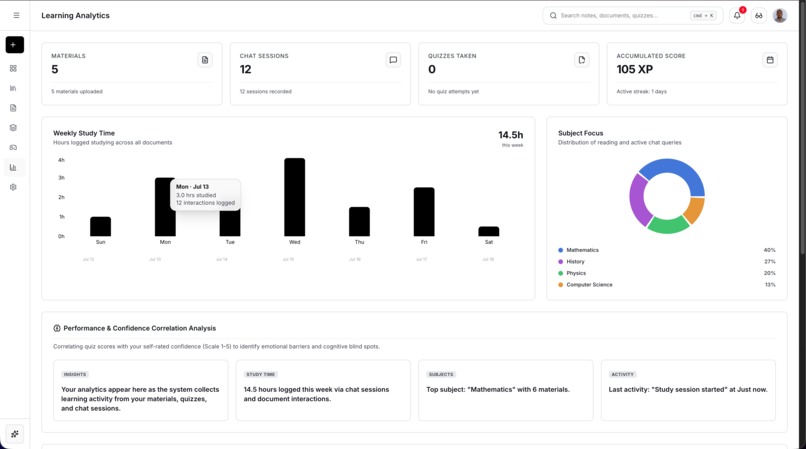
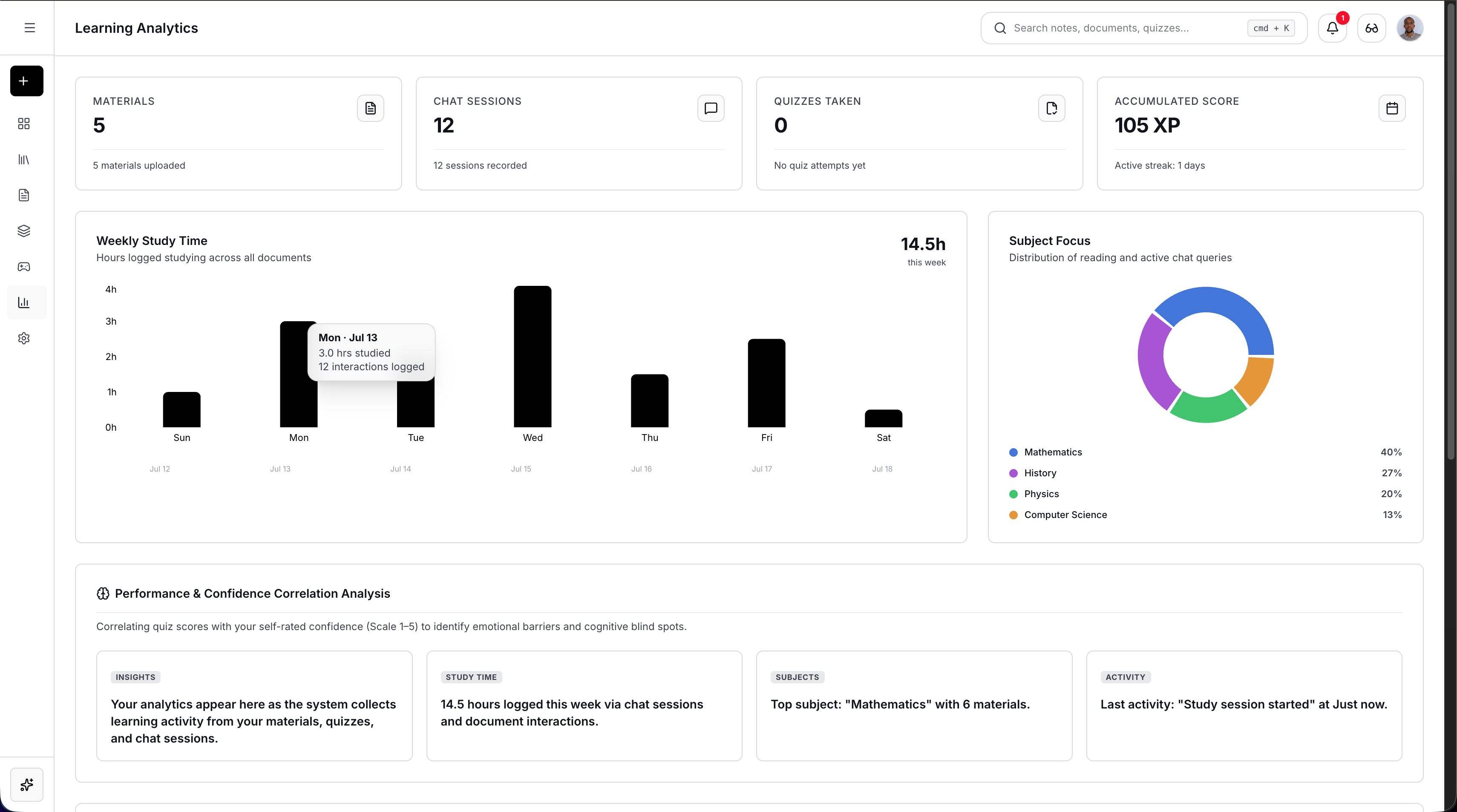
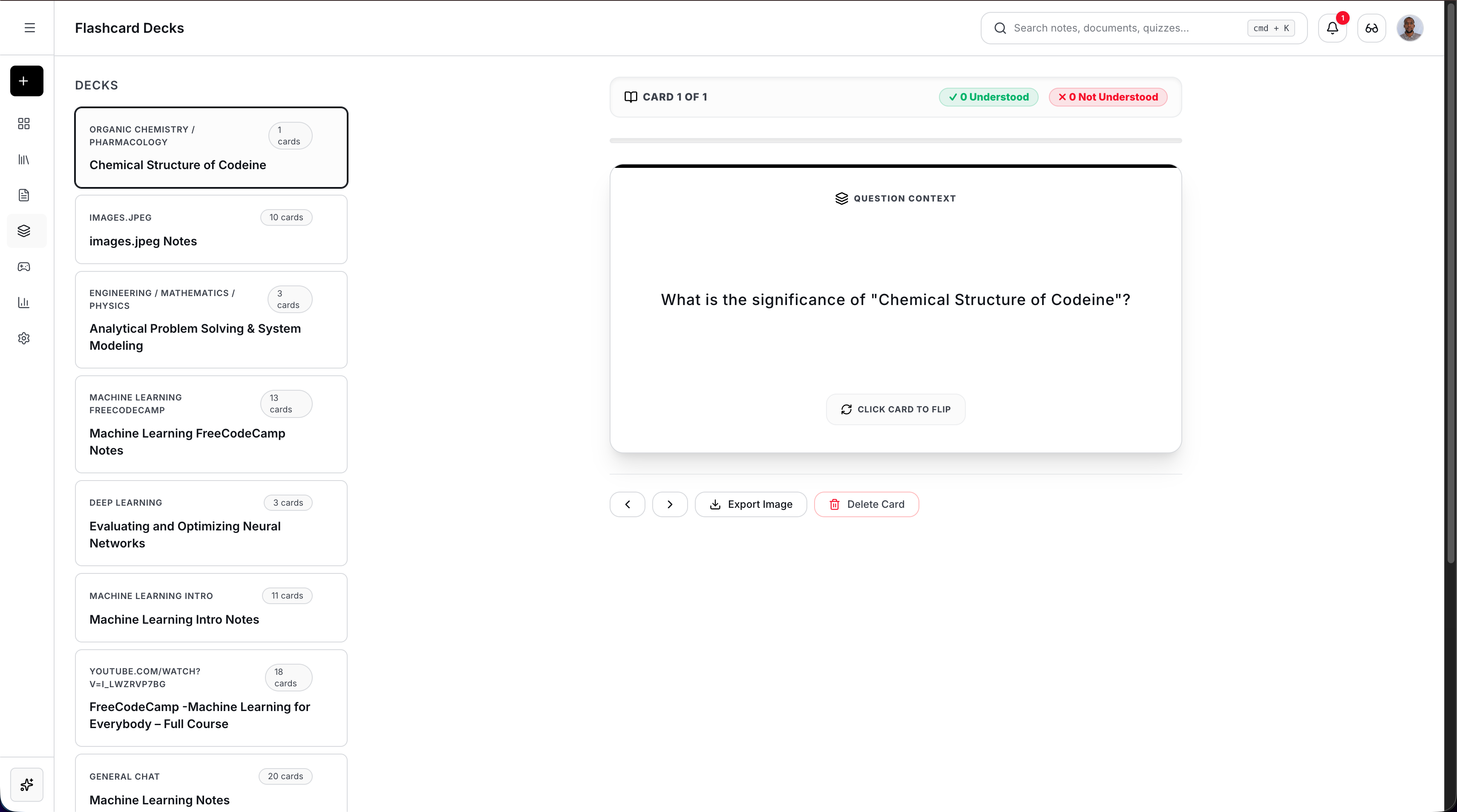
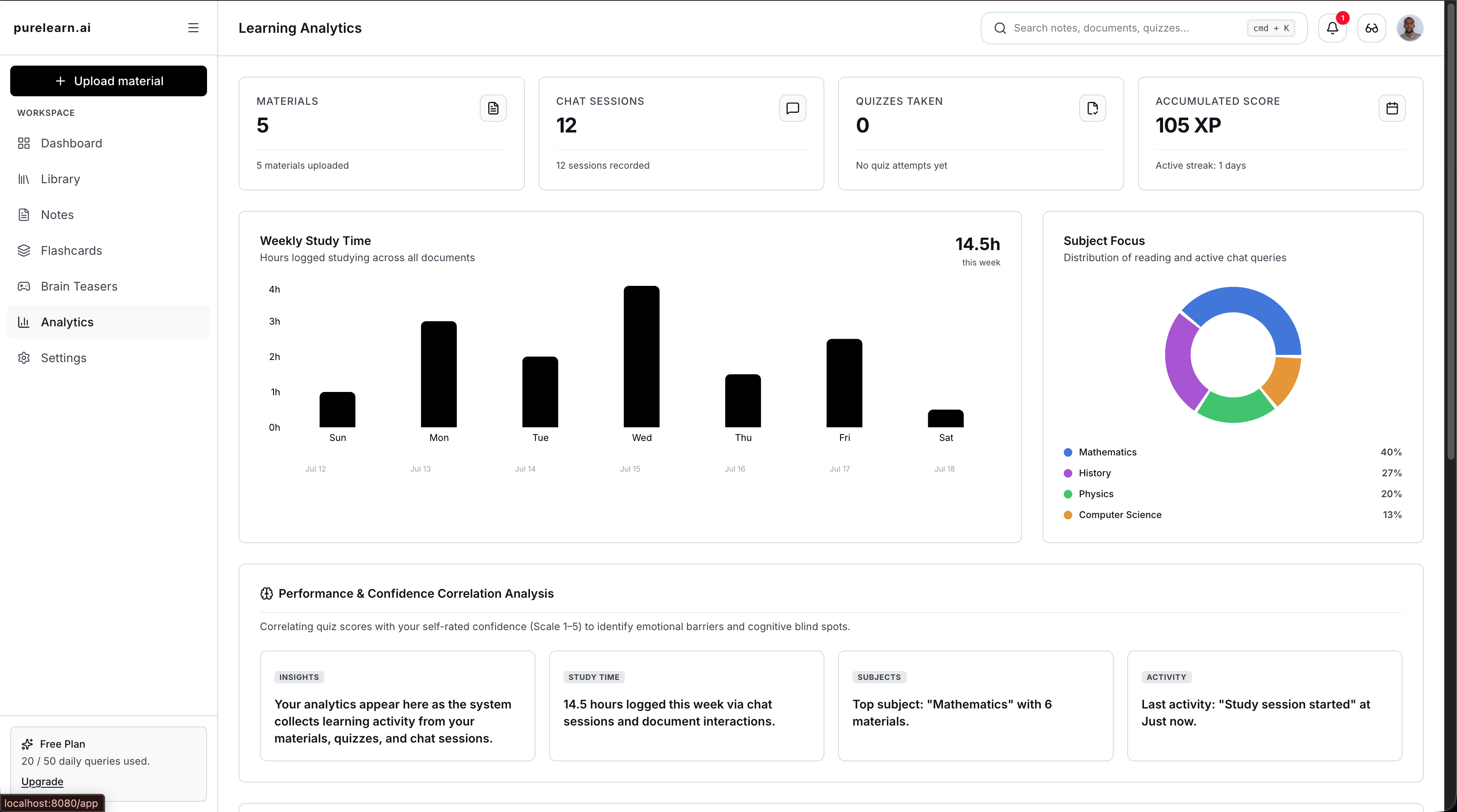
Analytics UI
-
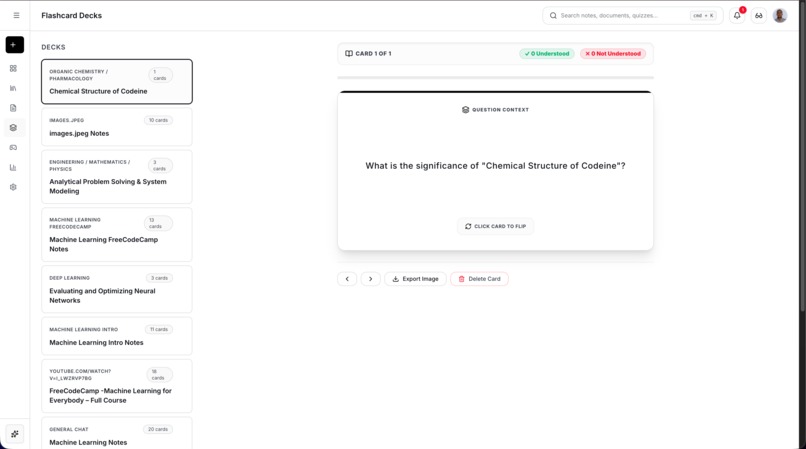
Flash Cards Page
-
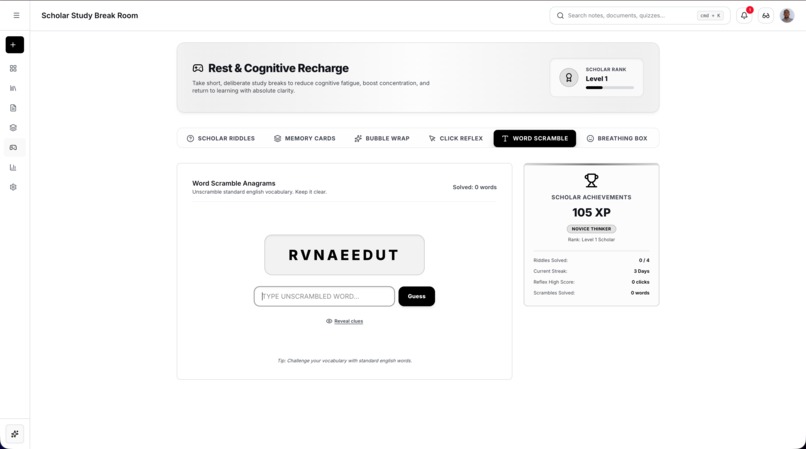
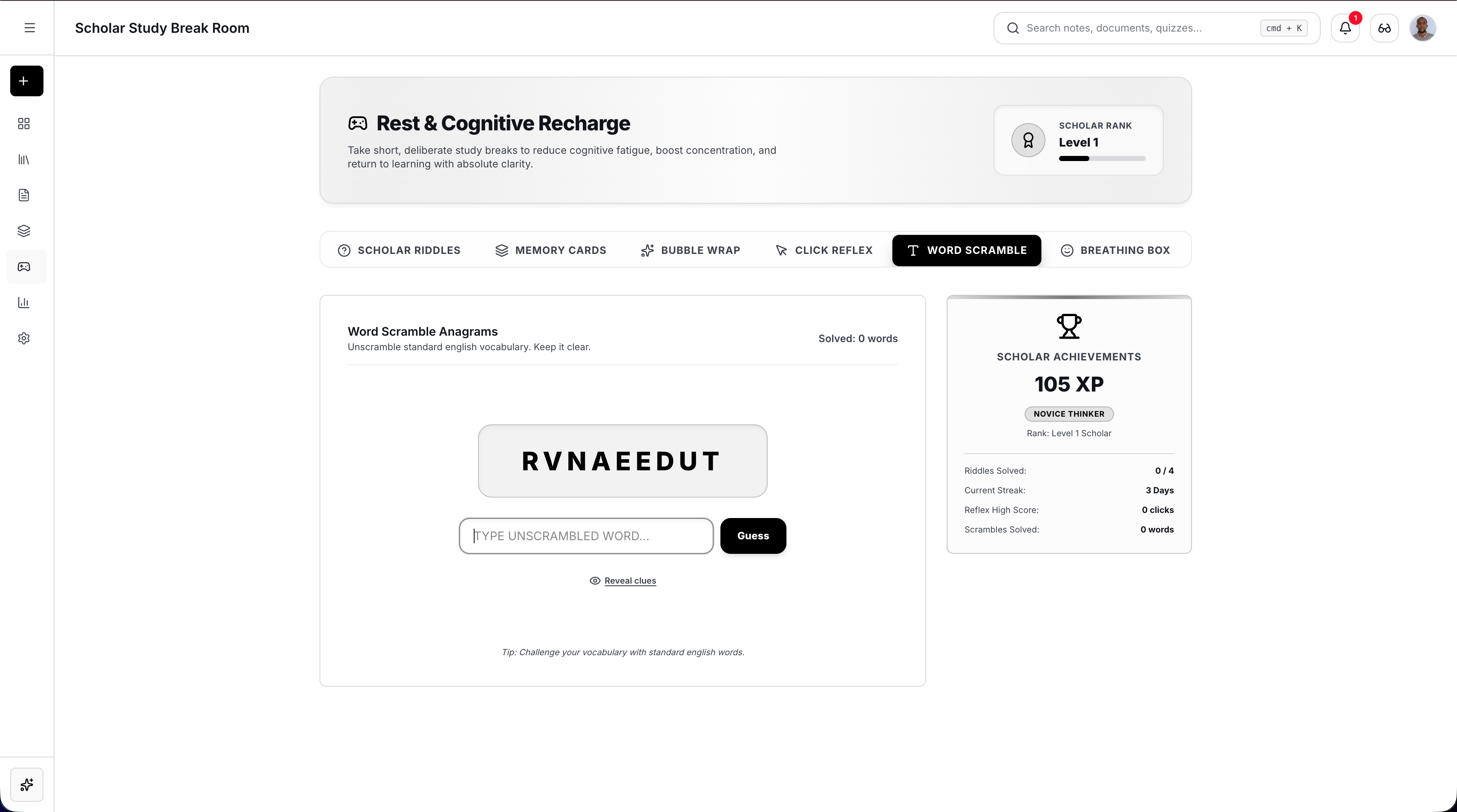
Word Puzzle Game
-
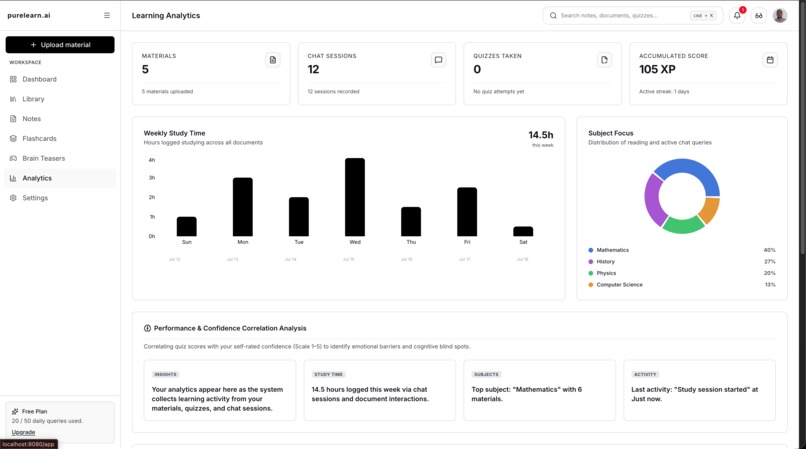
Analytics UI
-
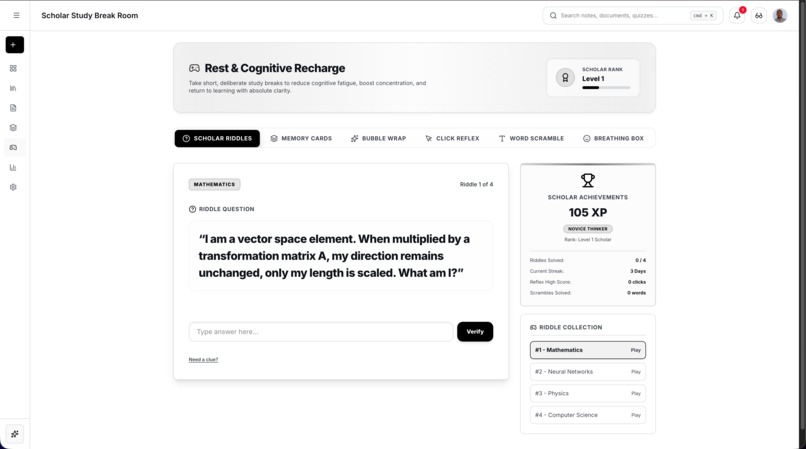
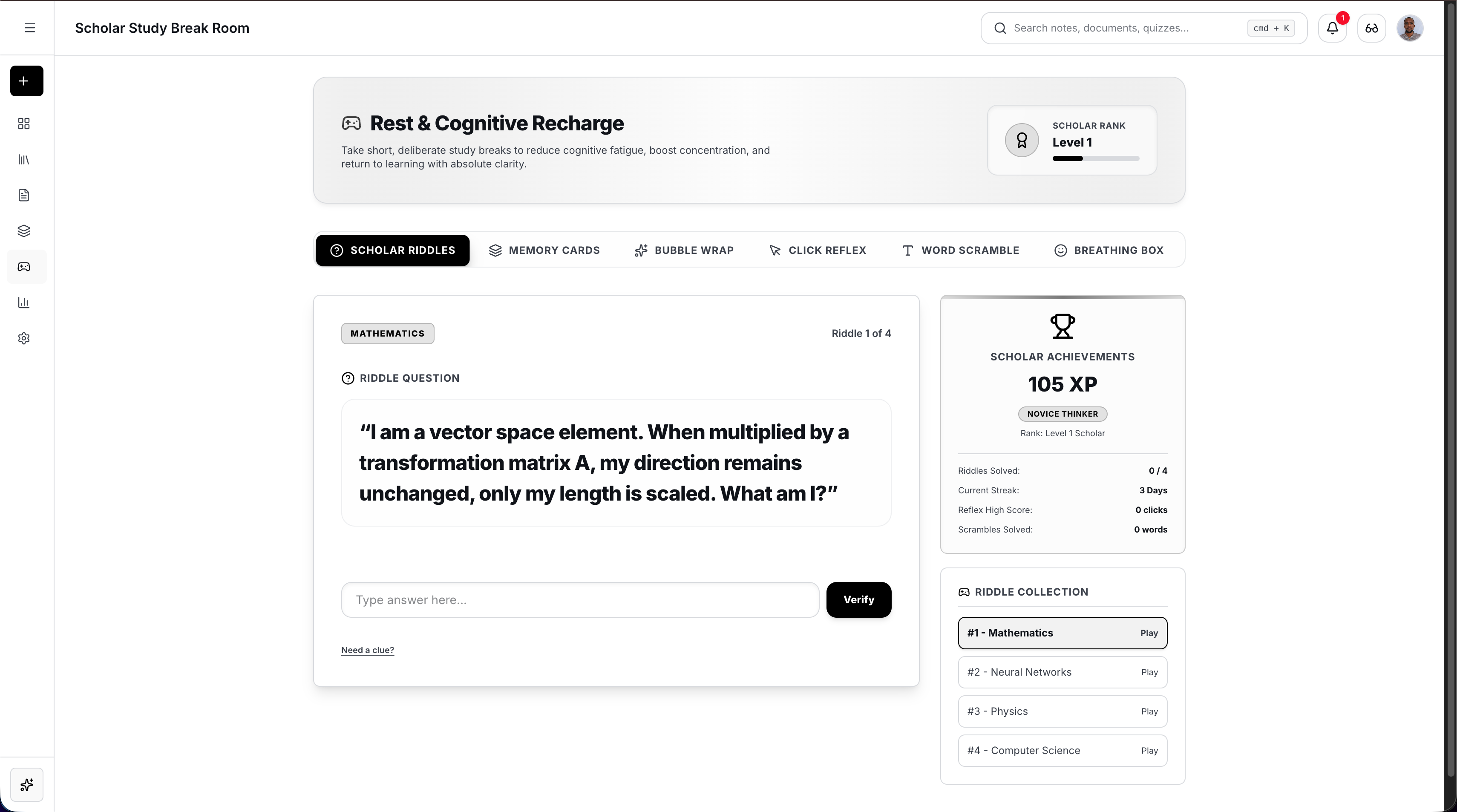
Games and Brain Teasers
-
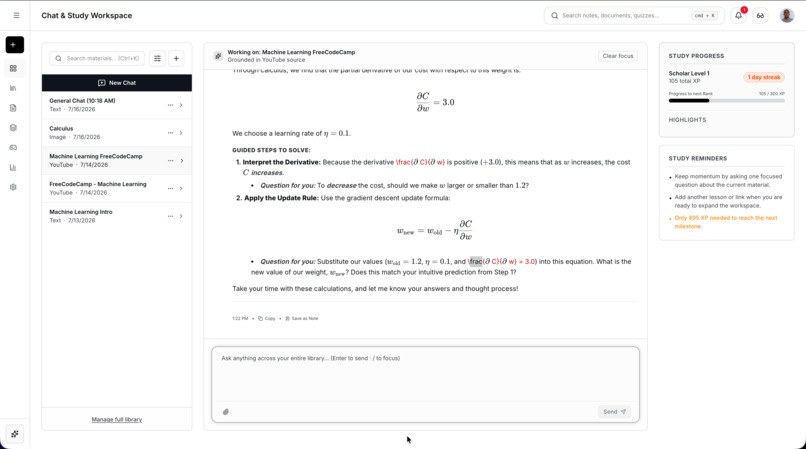
Material Chat UI
-
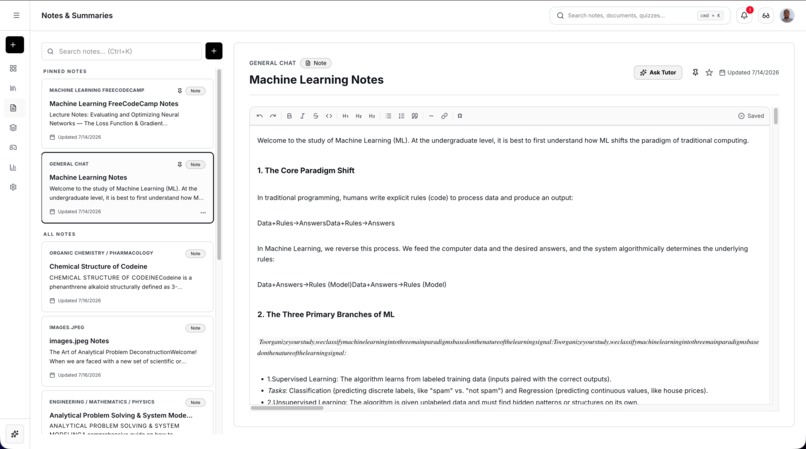
Notes UI
-
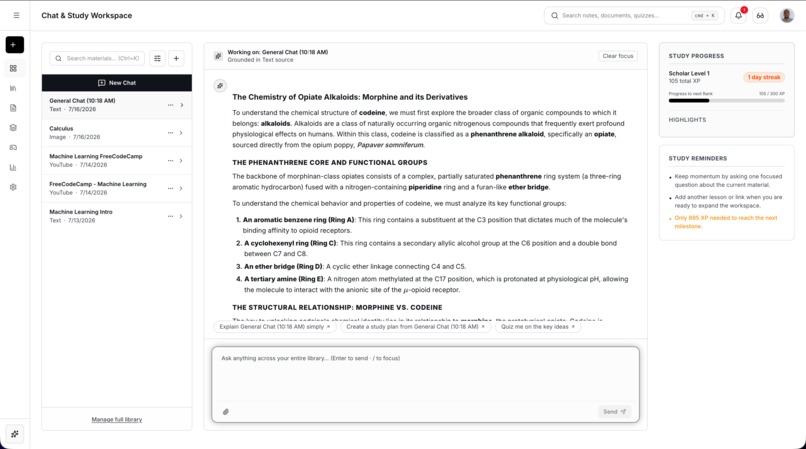
Chat UI
-
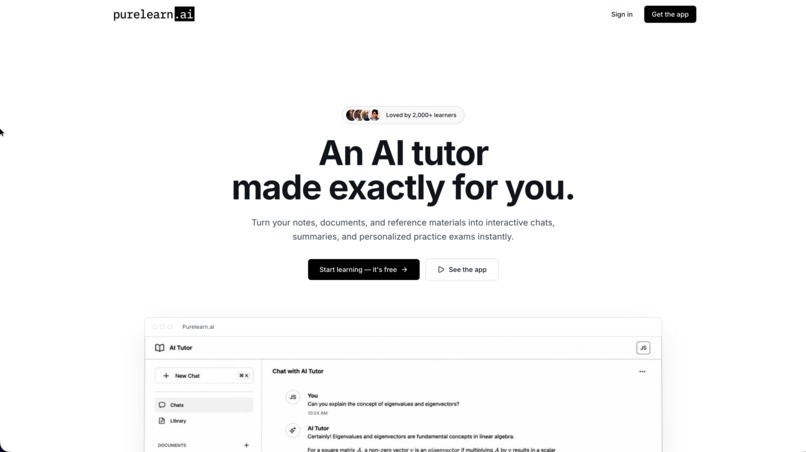
Landing page
Inspiration
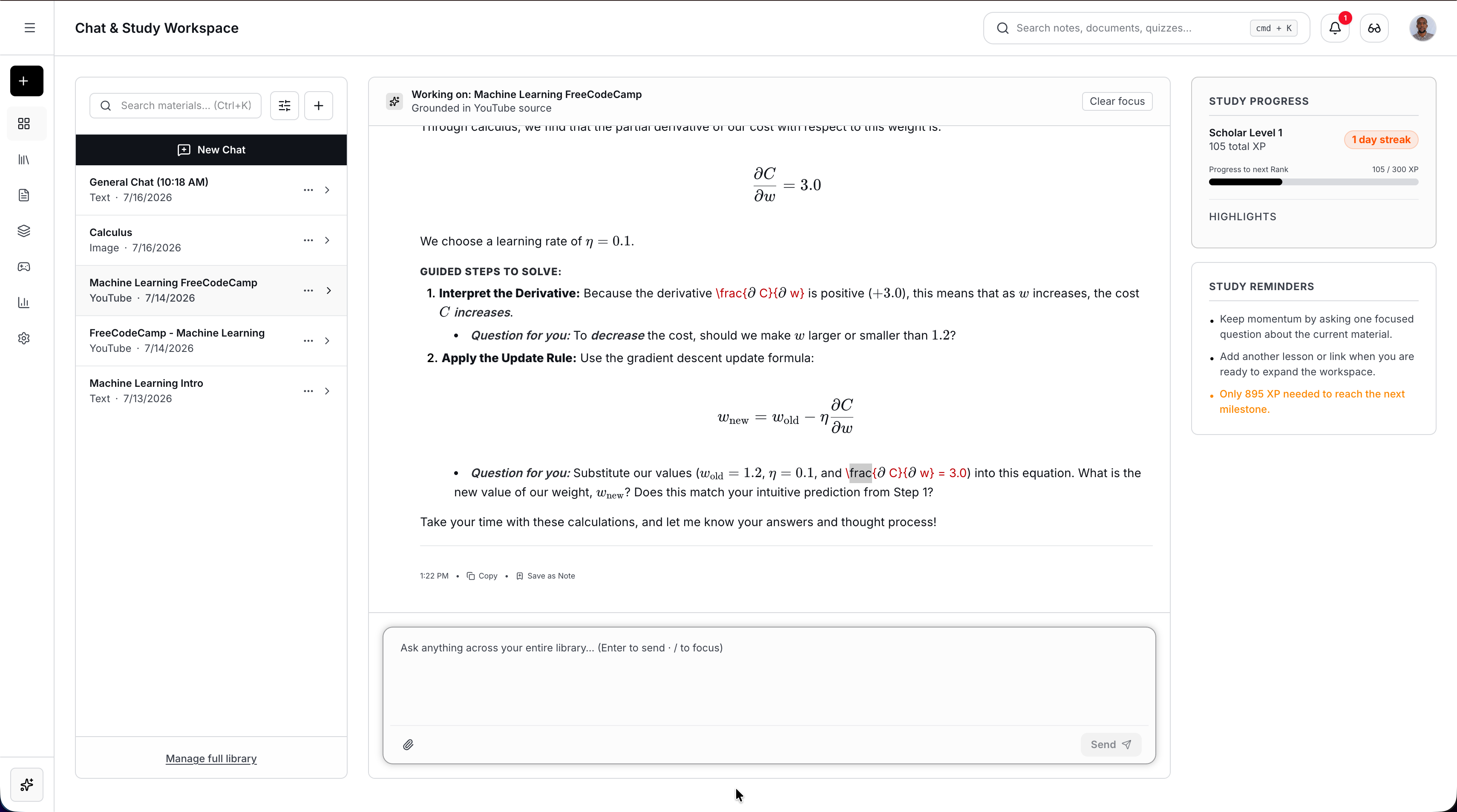
Today's students are overwhelmed by context switching. They juggle disconnected apps—ChatGPT for answers, Notion for notes, and Anki for flashcards. We noticed two major pain points: First, for STEM students, copying a complex math equation from an AI chat to a notebook almost always results in broken, unreadable code. Second, for neurodivergent learners (such as those with ADHD or Dyslexia), traditional dense academic text creates massive cognitive friction, leading to exhaustion before deep learning even begins. We were inspired to build a unified, highly accessible workspace that treats accessibility as a foundational requirement, not an afterthought.
What it does
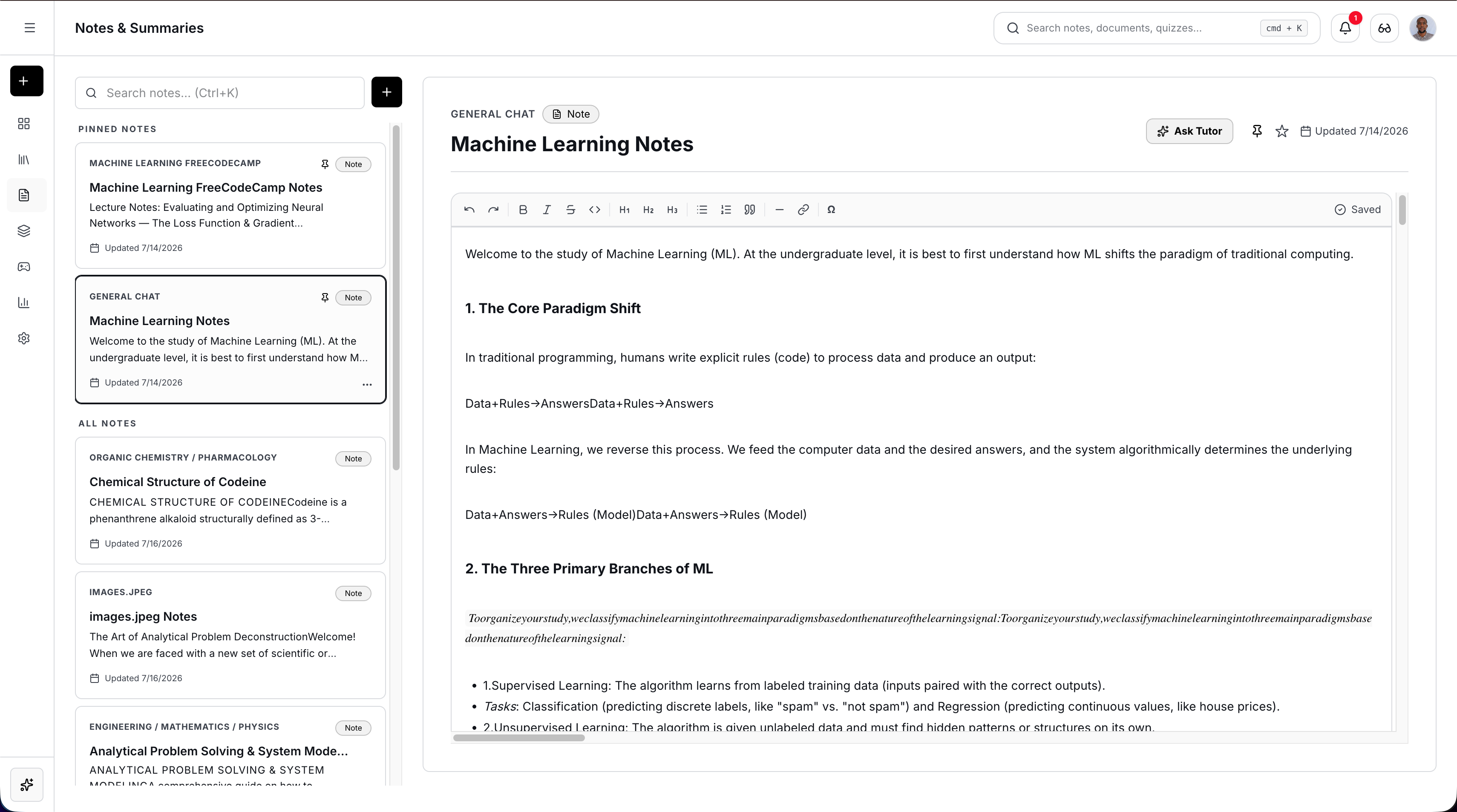
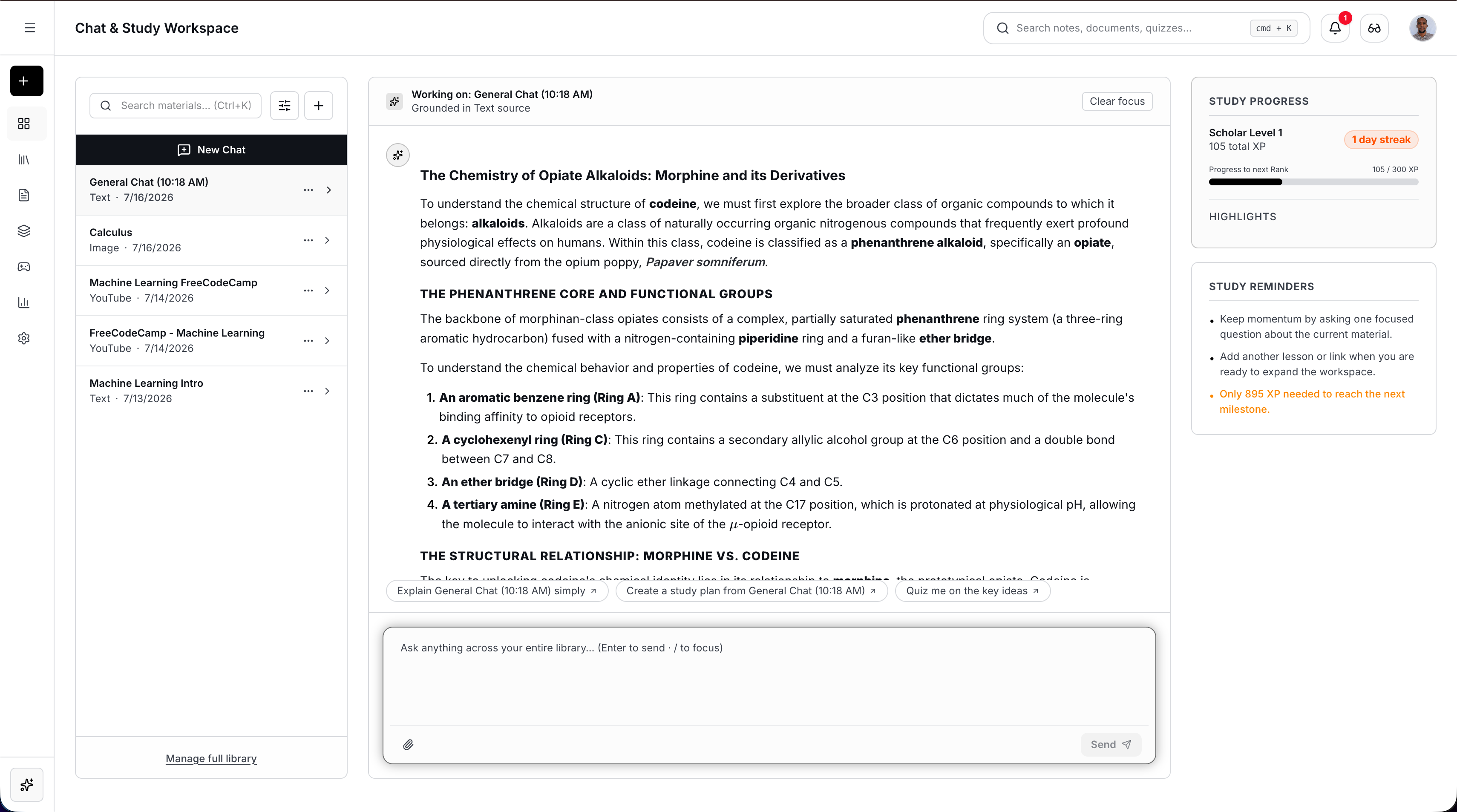
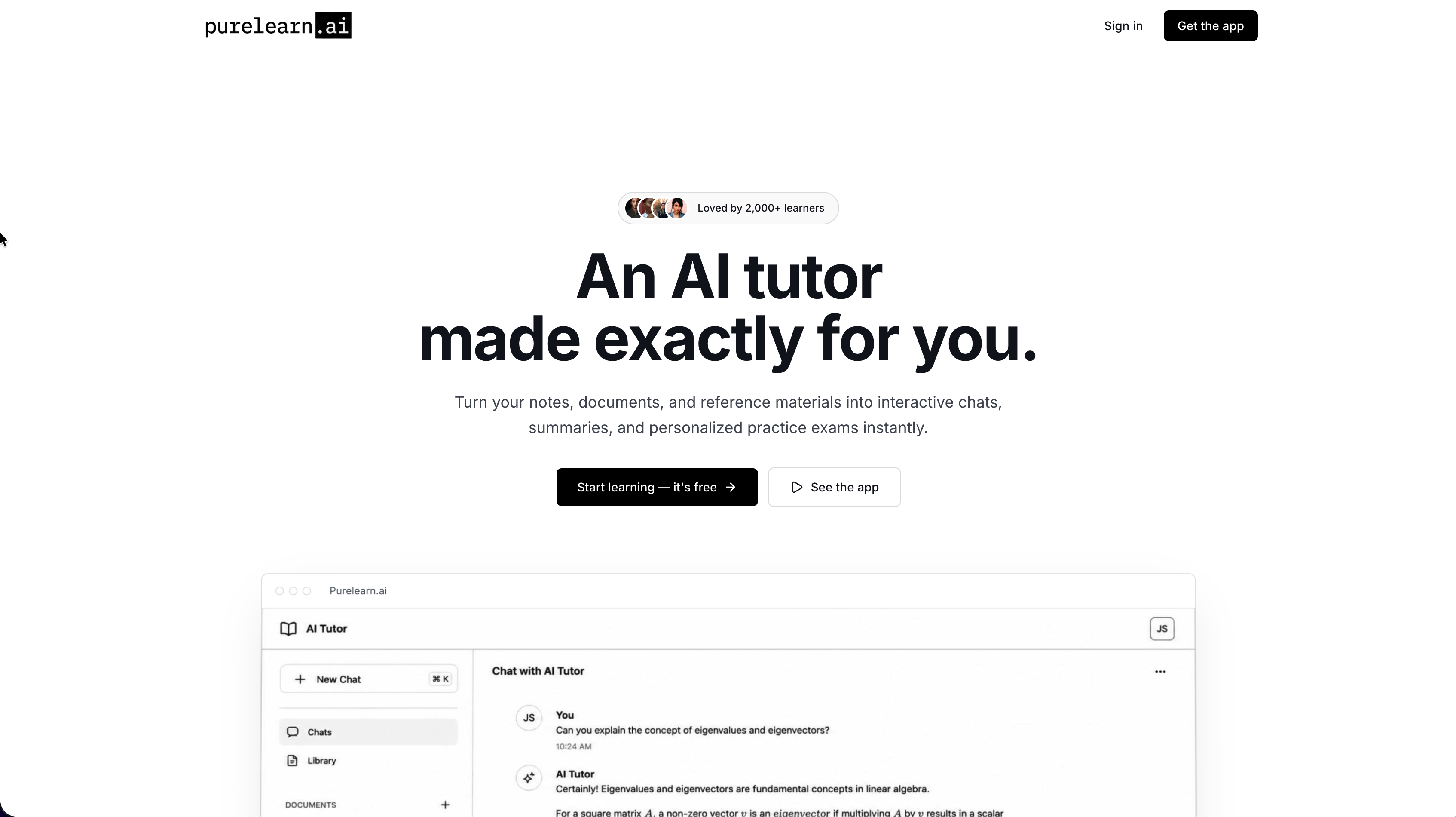
Purelearn.ai is an AI-powered educational environment—think of it as a specialized "Notion for Learning." It seamlessly blends a conversational AI tutor with a robust, academic-grade rich text editor.
- Socratic Tutor: Rather than acting as an "answer engine," it methodically guides students step-by-step, ensuring deep comprehension.
- Frictionless Chat-to-Note: With a single click, students can seamlessly escalate a conversational AI explanation directly into a beautifully formatted, permanent study note.
- Neuro-Inclusive Design: Our Adaptive Cognitive Rendering Engine dynamically alters text formatting (using Bionic Reading principles for ADHD, and specialized kerning/fonts for Dyslexia) to eliminate cognitive friction.
- Unbreakable Math: A custom KaTeX/Markdown editor physically embeds MathML annotations so complex equations never break when transitioning from chat to notes.
How we built it
We built the frontend using React 18 and Tailwind CSS, utilizing complex state management to ensure the document editor and AI chat remain perfectly in sync. For the backend and database, we leveraged Supabase for real-time asset syncing, alongside Google Auth for secure, frictionless student sign-ins. The core conversational engine is powered by Google Gemini, which we strictly prompt-engineered to adhere to Socratic teaching methodologies. To keep students engaged and informed, we integrated Twilio and Resend for reliable SMS and email communications. Lastly, for math and text rendering, we developed a custom markdown parser heavily integrated with KaTeX to ensure lightning-fast, server-side equivalent rendering of formulas.
Challenges we ran into
Our biggest hurdle was building the custom text editor. Parsing streaming Markdown from an AI while simultaneously rendering complex KaTeX mathematical formulas—without destroying the React DOM tree or losing cursor position—was incredibly difficult. We also spent significant time engineering the regex and tokenization logic to ensure that math formatting remained perfectly intact when users copied text from the AI chat directly into their personal notebooks. Additionally, balancing the CSS for the Adaptive Cognitive Rendering Engine so that it applied cleanly across different components without breaking the layout required intense refinement.
Accomplishments that we're proud of
We are incredibly proud of the Frictionless Chat-to-Note Pipeline. It genuinely feels magical to have a complex, mathematically dense conversation with the AI and instantly push that entire interaction into a permanent, beautifully formatted document with zero formatting loss. We are also deeply proud of our Adaptive Cognitive Rendering Engine—building a tool that natively respects and adapts to neurodivergent processing styles is a massive step forward for educational technology.
What we learned
We learned a tremendous amount about Abstract Syntax Trees (AST), custom Markdown parsing, and handling complex DOM manipulations with contentEditable divs. We also deepened our knowledge of prompt engineering, specifically how to constrain an LLM to act as a strict, step-by-step tutor rather than a generic chatbot that just gives away answers.
What's next for purelearn.ai
We have a robust roadmap ahead:
- Phase 1 (Multimodal Ingestion): Integrating Whisper AI for audio transcription, allowing users to upload recorded lectures for instant summarization.
- Phase 2 (Automated Spaced Repetition): Implementing a native algorithm to track flashcard recall rates and automatically schedule study sessions.
- Phase 3 (Collaborative Study Rooms): Real-time multiplayer editing (via WebSockets/CRDTs) where multiple students can inhabit the same note space and query the AI tutor collectively.
Built With
- google-auth
- google-cloud
- google-gemini-api
- javascript
- katex
- react18
- resend
- supabase
- tailwindcss
- twilio
- typescript

Log in or sign up for Devpost to join the conversation.