Inspiration
In the rapidly evolving e-commerce landscape, understanding consumer intent is paramount. I was inspired to bridge the gap between historical data and future actions, focusing on how predictive analytics can optimize inventory and enhance user experience in the book industry.
What it does
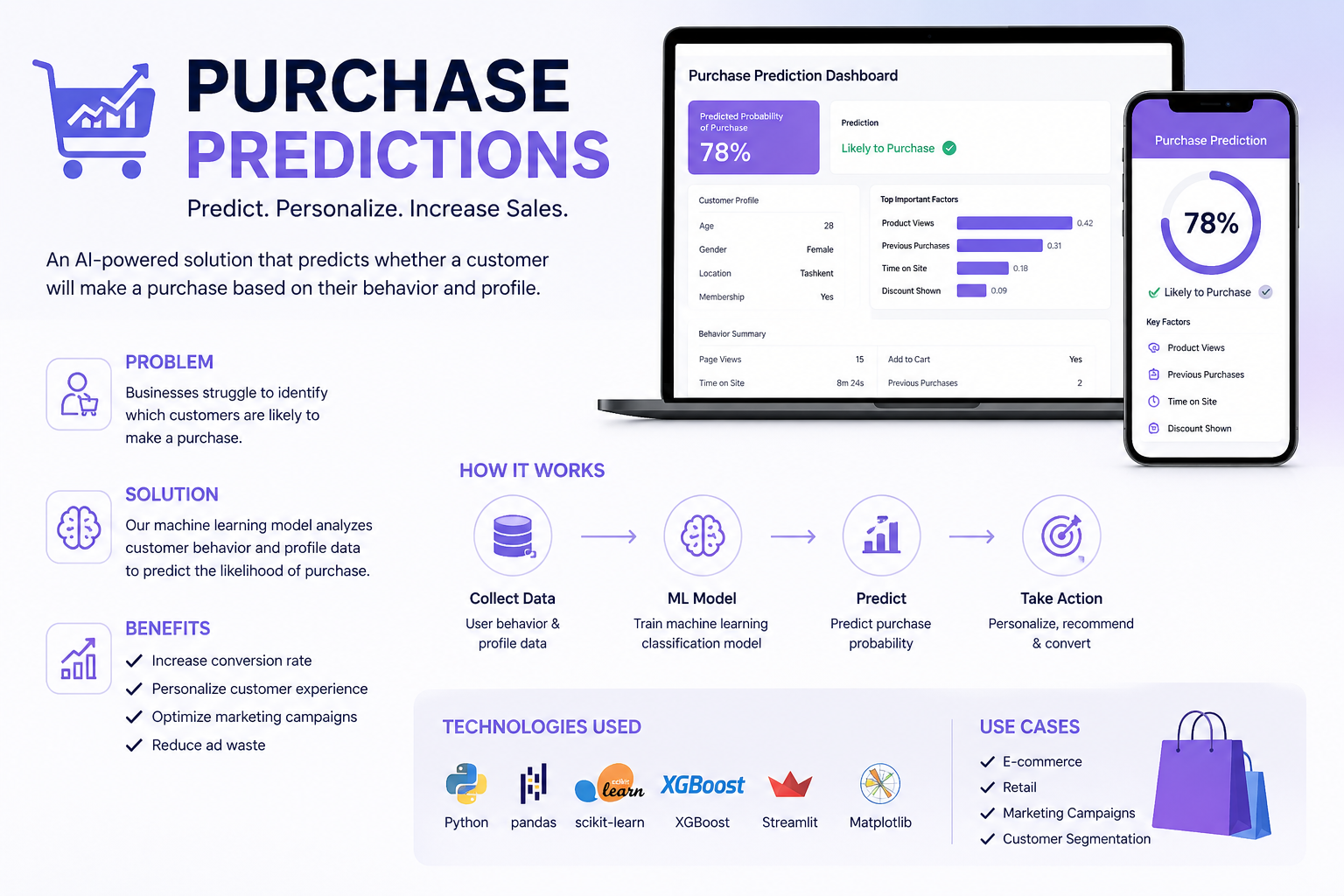
This project is a predictive modeling tool designed to forecast book purchasing trends. By analyzing historical user interactions and behavior patterns, the system generates data-driven insights into future buying habits, helping retailers make informed decisions.
How we built it
The project was developed using data analysis frameworks to process user datasets. I implemented machine learning logic to identify correlations between browsing behavior and successful conversions, ensuring the model remains scalable for larger data environments.
Challenges we ran into
The primary challenge involved data preprocessing—specifically, handling inconsistent data entries and ensuring high accuracy in behavioral mapping. Refining the algorithm to distinguish between casual browsing and high-intent purchasing required significant iterative testing.
Accomplishments that we're proud of
I successfully developed a model that provides actionable insights from raw data. Beyond the technical implementation, I am proud of creating a structured workflow that translates complex behavioral metrics into a clear purchase prediction.
What we learned
This project deepened my understanding of predictive analytics and data integrity. It also enhanced my ability to document technical processes in professional English, emphasizing the importance of precision in both code and communication.
What's next for Purchase prediction
The next phase involves integrating real-time data streams and sentiment analysis from book reviews. This will further refine the prediction accuracy and allow for a more personalized recommendation engine.


Log in or sign up for Devpost to join the conversation.