-
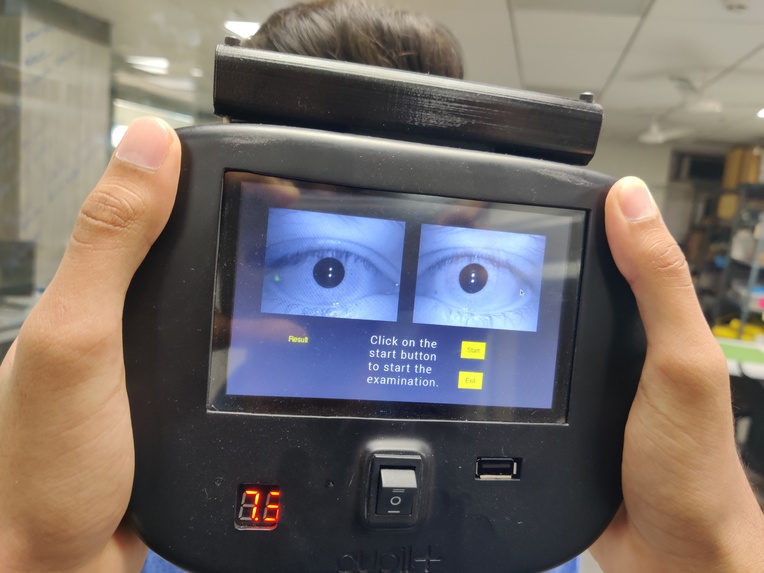
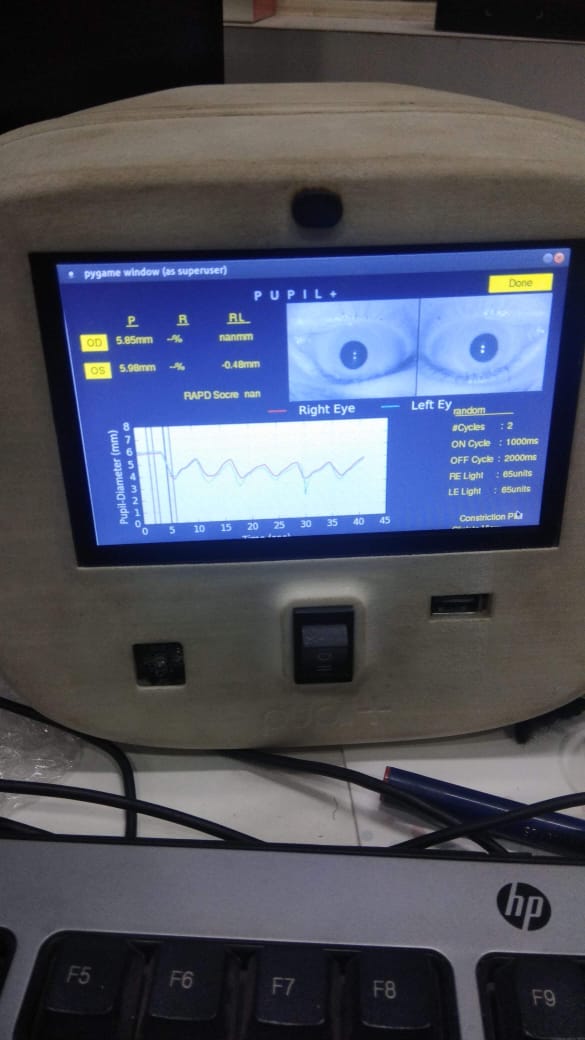
while performing test
-
-
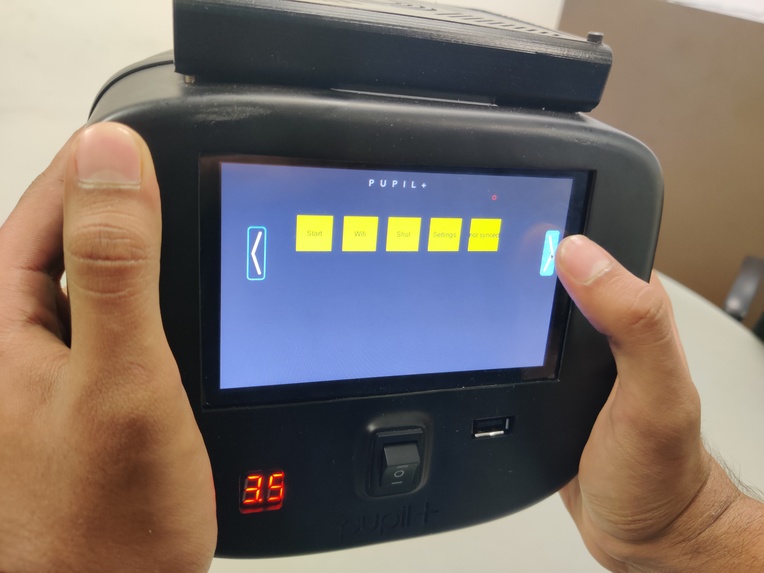
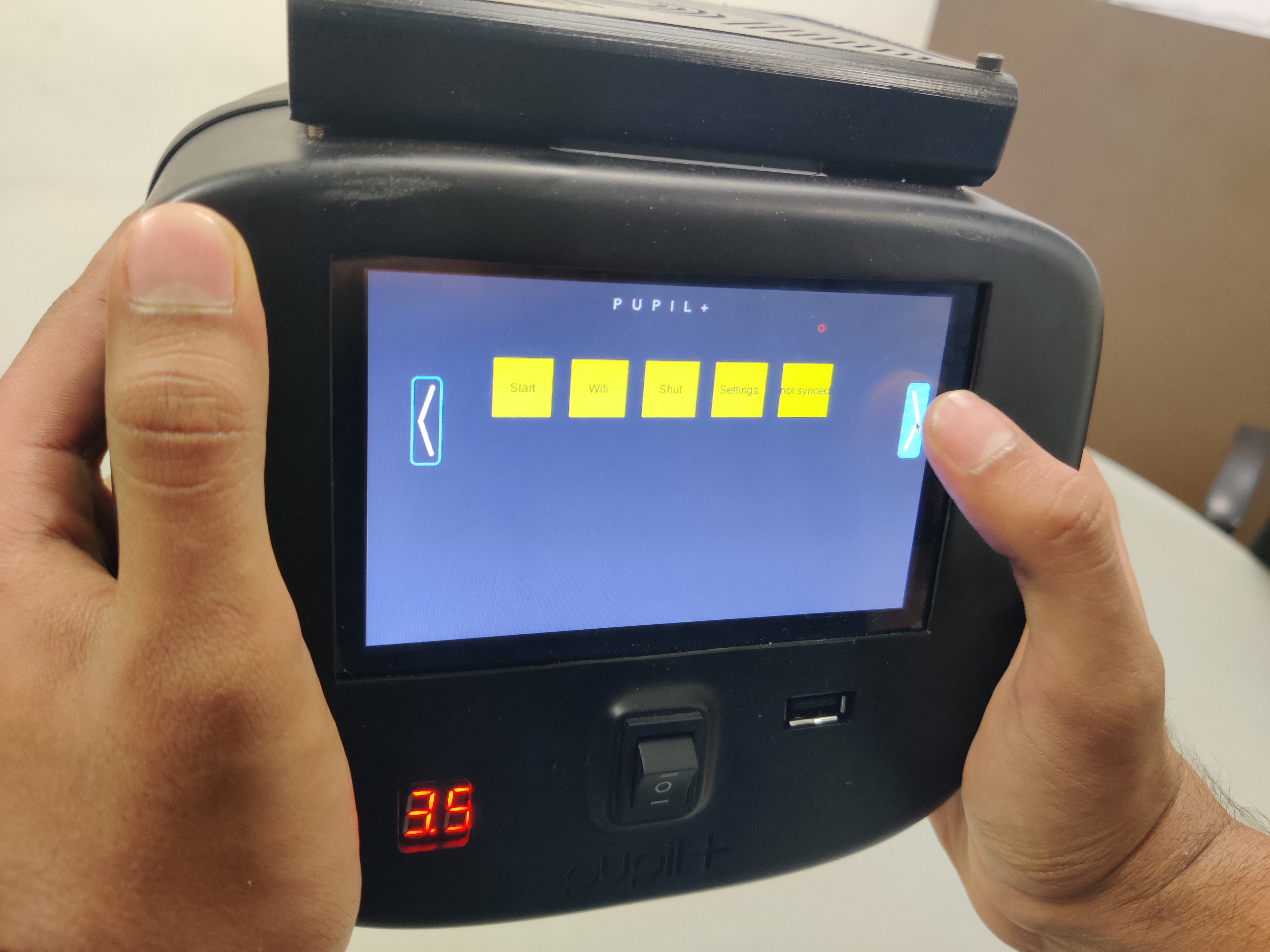
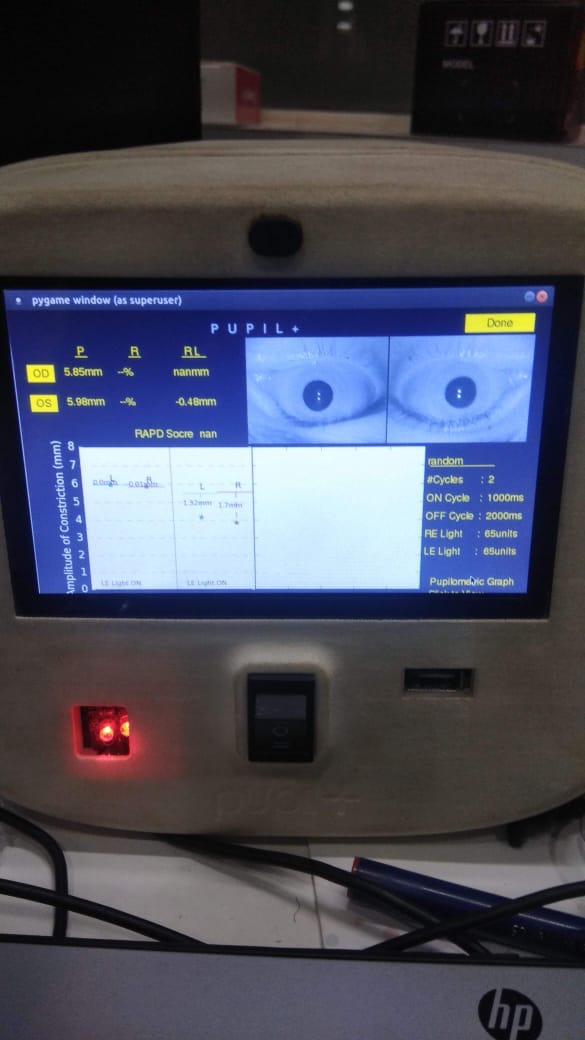
GUI for testing
-
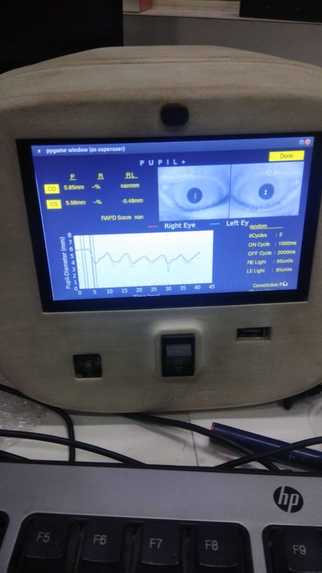
Test result
-
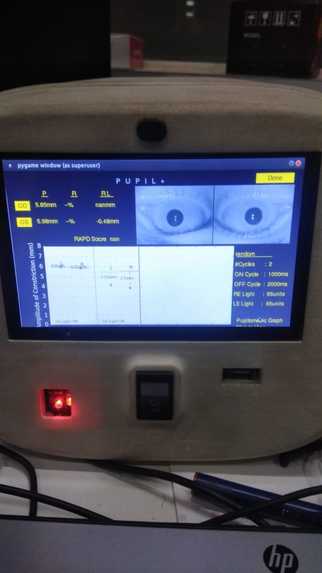
Test result
Inspiration
Pupils – the light-limiting aperture inside the two eyes – is an extremely sensitive and commonly evaluated parameter for assessing neuro-ophthalmic dysfunction, assessing brain-stem function following head concussion in emergency rooms, and as an early marker for neurological conditions like Alzheimer’s disease. Despite performing these evaluations for well over a century, even present-day clinical evaluation of the pupils happens subjectively with no prescribed guidelines, making this a very vulnerable technique for bias and inter-and intra-examiner variability. The technology proposed here seeks to overcome this major limitation by making pupillary measurement objective and quantifiable. The prototype device developed here stimulates the pupil of each eye independently, captures the resultant responses of both eyes simultaneously, and analyzes them in near-real-time for the clinician. The output may be used to triage patients for neuro-ophthalmic dysfunction in a public-health setting or in emergency rooms or used in conjunction with other diagnostic modalities in tertiary eye care settings for disease diagnosis/confirmation. The proposal aims to develop this device from a prototype stage to becoming nearly-ready for commercial deployment. Additionally, the proposal also aims to collect large-scale normative data collection for clinical validation and defining the operating boundaries of the device.
What it does
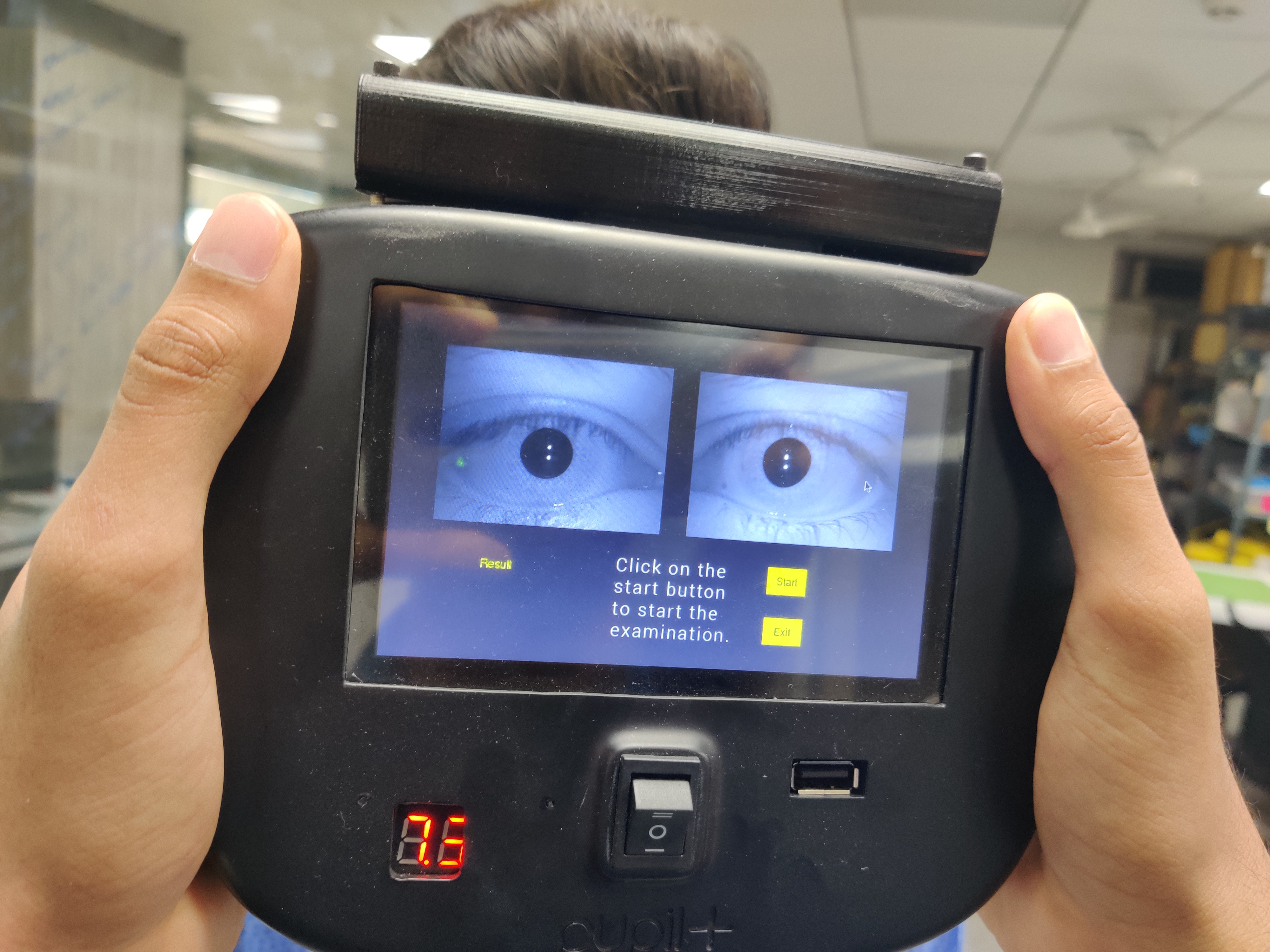
The acronym – PERRLA – Pupils Equal Round Reacting to Light and Accommodation – is commonly used in the clinic to indicate the presence/absence of a neuro-ophthalmic pathology and to grade the severity of this pathology. PERRLA is currently evaluated qualitatively and without any prescribed guidelines. The fundamental purpose of the Pupil + device is to make PERRLA objective and quantifiable. Towards this end, the Pupil + device is built with hardware and software capability that allows controlled stimulation, recording, and analyses of pupil responses of both eyes simultaneously. The design of the Pupil + will allow the aforementioned capabilities to be achieved non-invasively and with minimal discomfort to the patient. Fundamentally, any device that aims to perform objective pupillometry needs to meet four requirements. First, to allow binocular viewing of a target by the patient, second, stimulate the pupil of each eye independently with calibrated light of given intensity in the visible spectrum of humans (300 – 700nm), third, record pupil responses of both eyes simultaneously in darkness and during the light flash for analysis and fourth, analyze the pupils on each frame of the video using image processing algorithms to derive objective metrics of pupillary responses. The Pupil + hardware and software are designed to achieve all four goals efficiently.
How we built it
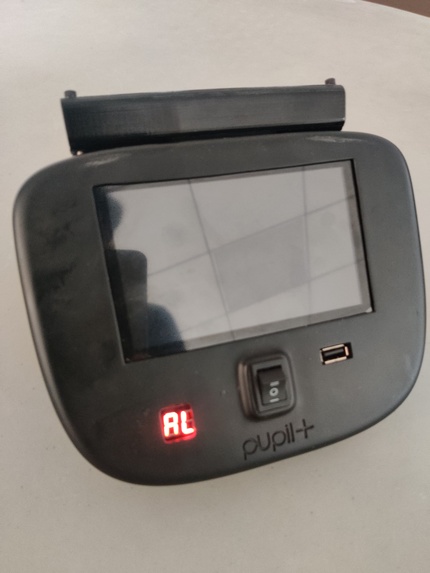
we built the whole hardware in a few numbers iterations, the whole electronic aid to stimulate different light levels, the final iteration is made with odroid to control two cameras and the odroid is attached with a PCB of Arduino to control the LEDs. the whole software is written in python, the cameras capture the burst of images when the test starts and it saves the images locally, these images are pipelined to the image-processing algorithm, to detect the pupil diameters.
Challenges we ran into
we faced various break down of things both in terms of hardware and software, a few of which are the frequent design changes to pack the device, the new software update might crash the old code repository, etc.
Accomplishments that we're proud of
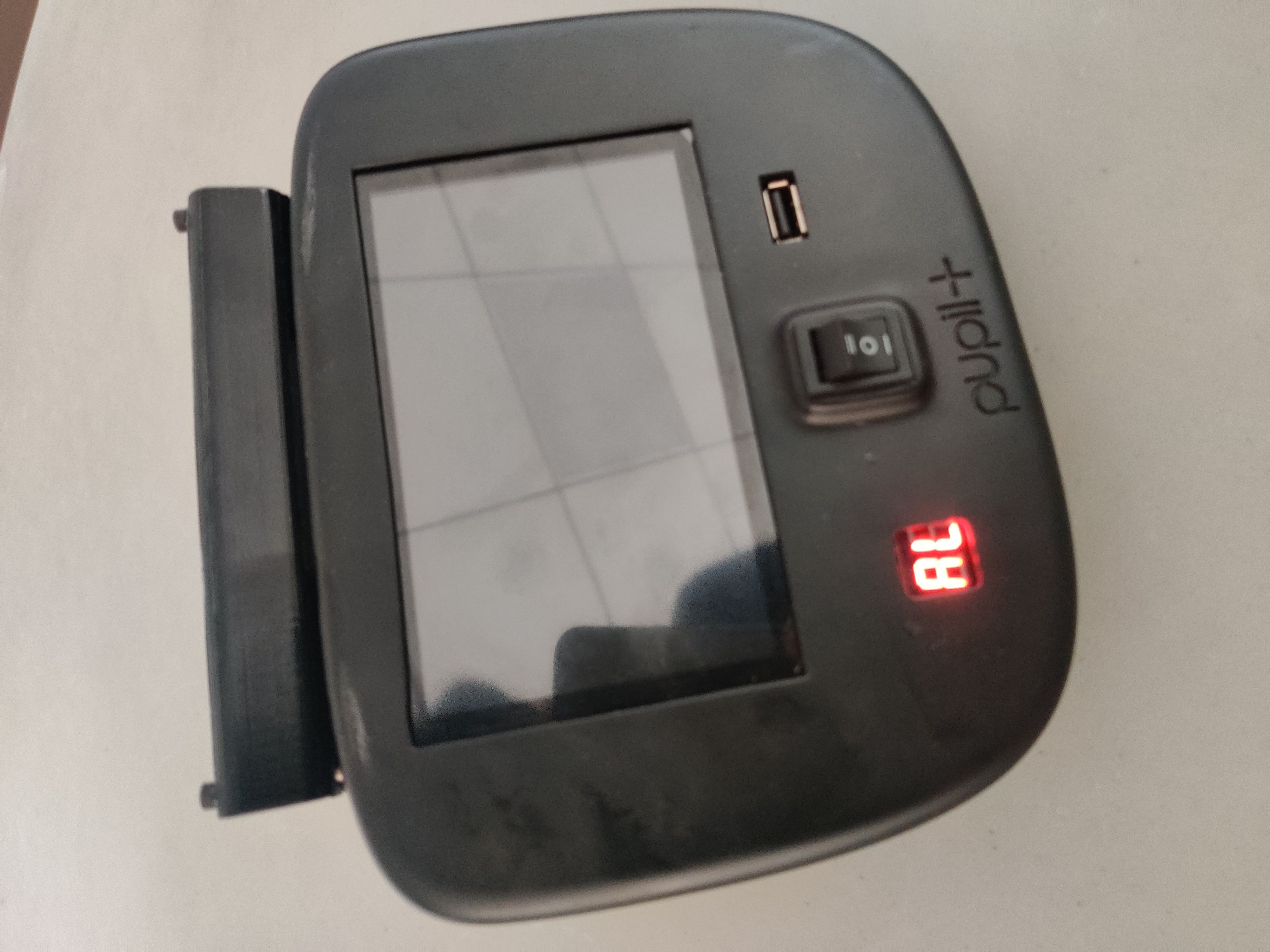
I am extremely proud of the final design and the functionality of the device.
What we learned
This has been quite an escalated learning experience in designing a medical device, including various thoughts from the design of mechatronic systems and the clinical inputs from doctors.
What's next for Pupil+
Data collection and deployment in the clinic for the clinical feedback and draw results from the collected data.

Log in or sign up for Devpost to join the conversation.