-
-
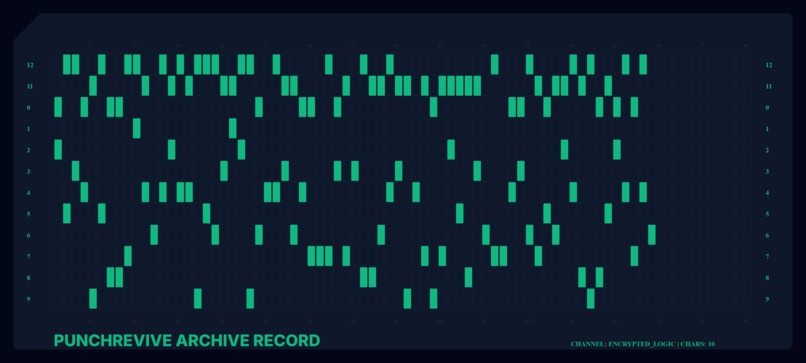
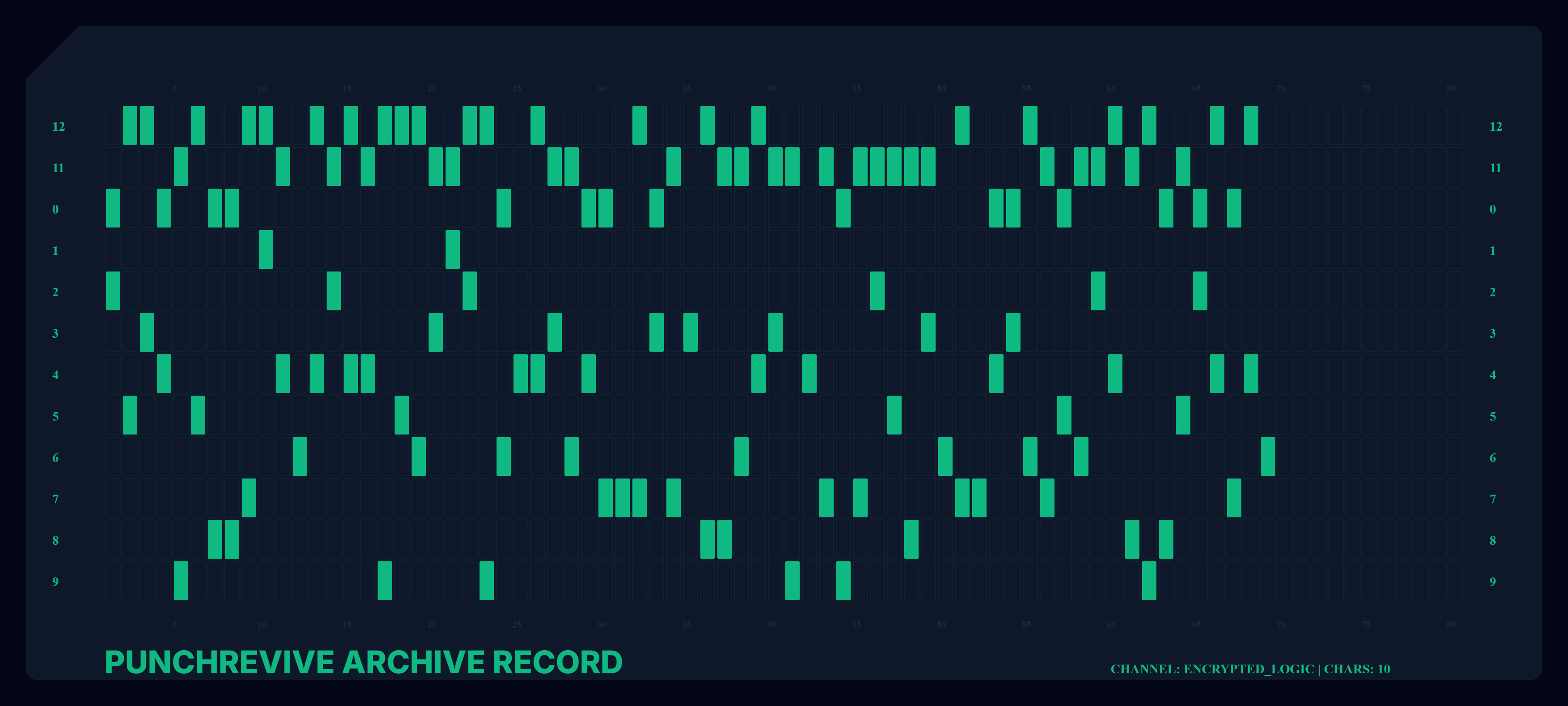
Punch Card Example
-
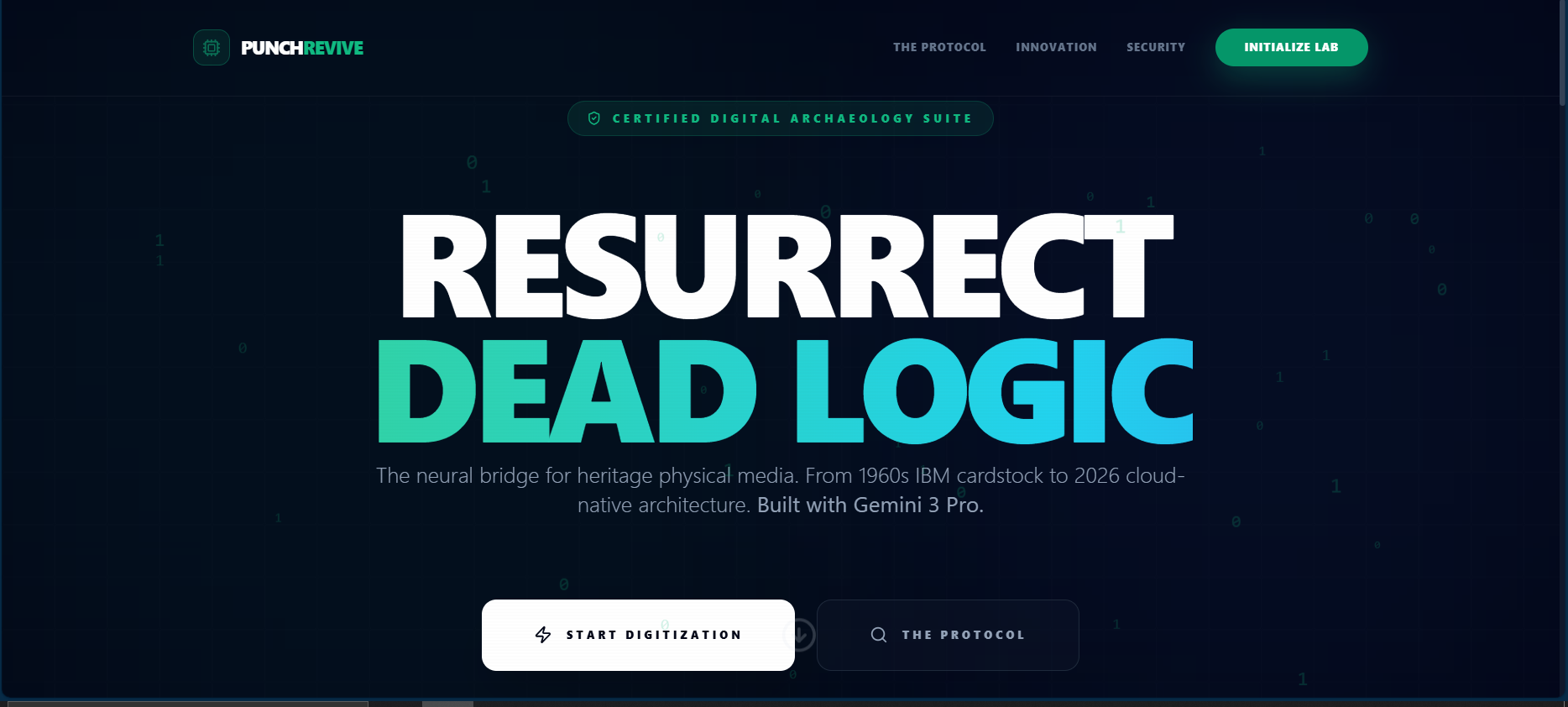
Home page
-
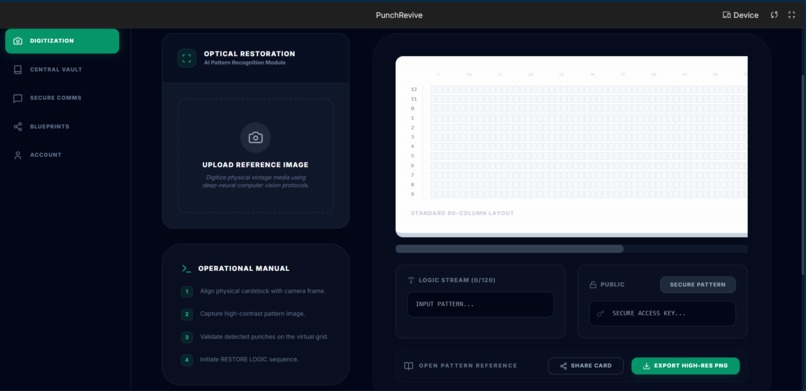
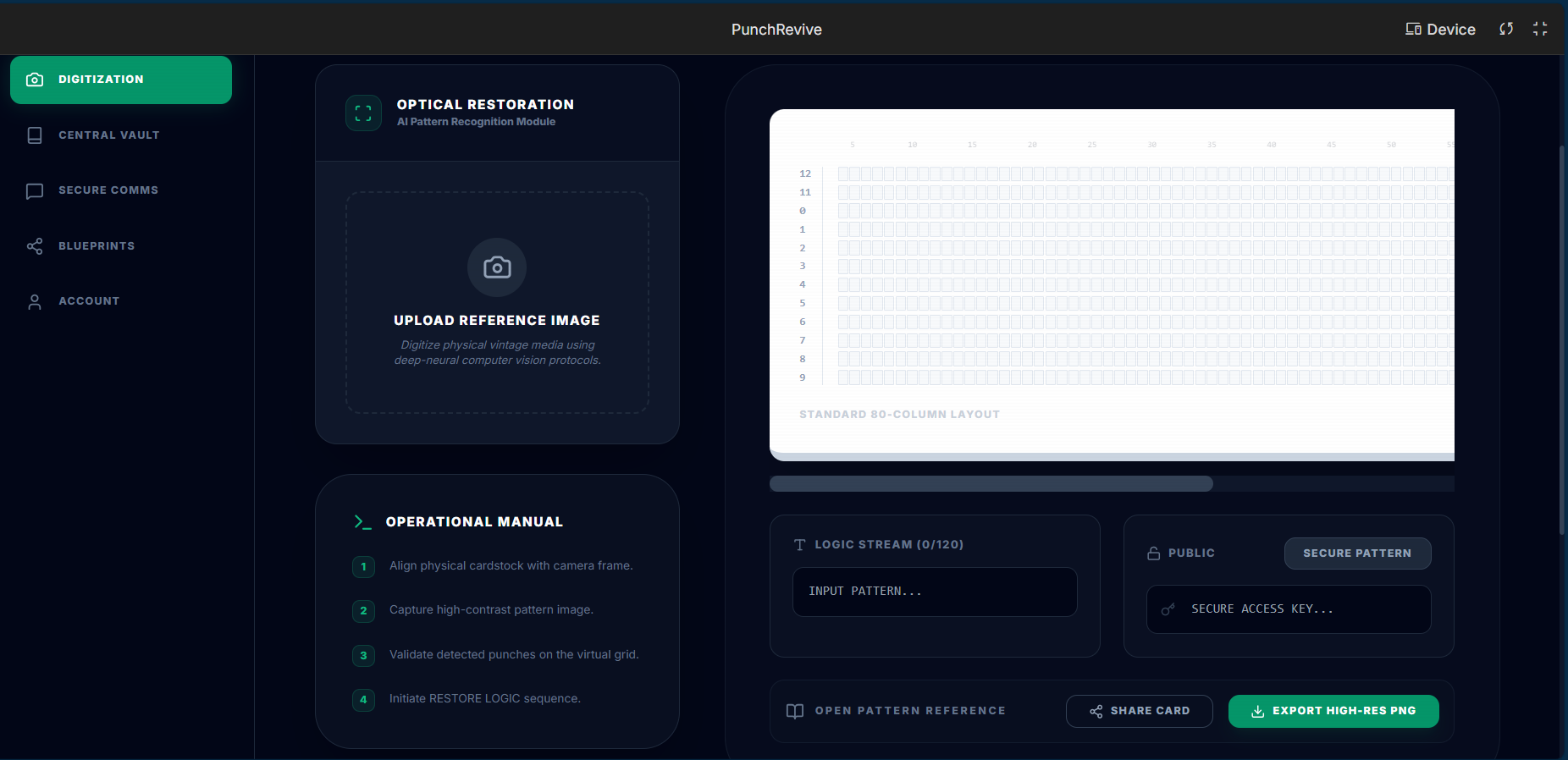
Main functionalities
-
Thumbnail
Inspiration
PunchRevive was born from wanting to create secure text sharing that feels fresh and unbreakable—while paying homage to old technologies like punch cards. I love how 1960s tech like punch cards held entire programs in physical patterns of holes, and wondered: what if we could renovate these forgotten mediums with modern AI?
The vision? Turn punch cards into a visual encryption system where hole patterns become both your secret message and the decryption key. Inspired by retro tech's elegance and today's AI capabilities (especially Gemini), PunchRevive bridges computing history with secure, shareable communication that anyone can understand and use.
What it does
PunchRevive transforms punch cards into an AI-powered platform for secure text sharing, historical code revival, and collaborative learning.
1. Visual Encryption & Secure Sharing
- Type any message or code you want to encrypt securely
- Gemini analyzes and converts it into a unique punch-card pattern where holes represent both ciphertext and key
- Share the visual card as an image (digital or printed) through any channel
- Recipients scan/upload the same card, and Gemini reconstructs/decrypts the original message
- Perfect for secure, visual communication that doubles as education
2. Historical Code Revival
- Upload images of real punch cards from computer history
- AI detects hole patterns and reconstructs binary/character data
- Gemini identifies programming language and explains what the code does
- Converts to modern languages (Python, JavaScript, C++, FORTRAN, Assembly)
- Archive and share in a public gallery
3. Collaborative Punch Card Museum
- Community gallery of decoded historical cards
- Real-time collaborative decoding challenges
- Leaderboards and achievements
- Educational resources on punch cards + cryptography
Key Innovation: Fully client-side, no backend needed. Runs offline after load.
How we built it
Built with Next.js 14, Gemini API, and browser-native computer vision:
npm install → set GEMINI_API_KEY → npm run dev
Tech Stack:
- Frontend: Next.js, Tailwind CSS, HTML5 Canvas
- AI: Gemini for hole detection, language inference, message encryption
- Computer Vision: Client-side image processing with adaptive thresholding
- Storage: Text file database (import/export), in-memory for speed
- Mobile: Camera API with alignment guides
Challenges we ran into
Hole Detection on Real Cards
- Problem: Faded holes, coffee stains, bad lighting
- Solution: Adaptive thresholding + Gemini pattern recognition + manual correction
Language Detection
- Problem: Same binary could be FORTRAN or Assembly
- Solution: Gemini heuristic analysis + user language selector
Secure Key Exchange
- Problem: How to share "key" punch cards safely?
- Solution: Visual dead-drop system—share images anywhere, even print them
Client-Side Limits
- Problem: Browser memory/storage constraints
- Solution: Web Workers, progressive loading, text file export
Accomplishments that we're proud of
- 100% client-side—runs anywhere, even offline
- Successfully decoded real 1960s punch cards from museum photos
- Created novel visual cryptography where the medium = the key
- Gemini integration feels magical—handles edge cases humans miss
- Mobile camera scanning works smoothly with alignment guides
What we learned
- Gemini excels at pattern recognition in noisy images
- Client-side computer vision is viable with modern browsers
- Visual cryptography needs careful key-image design
- Historical accuracy matters—researched actual IBM punch card specs
- Next.js + Canvas + AI = powerful combo for browser apps
What's next for PunchRevive
- Physical punch card printer integration (thermal printers)
- Blockchain timestamping for historical archive authenticity
- AR mode—scan cards with phone camera in real-time
Multi-language punch card support (EBCDIC, BCDIC)
NFT gallery—own pieces of computing history


Log in or sign up for Devpost to join the conversation.