Inspiration
Imagine a patient wearing a smartwatch that continuously generates heart rate, SpO₂, temperature, and other vital data. The challenge is not just collecting this data, but detecting dangerous changes in real time and taking meaningful action. That’s why we built PulseX — to transform continuous wearable health data into real-time, actionable intelligence.
What it does
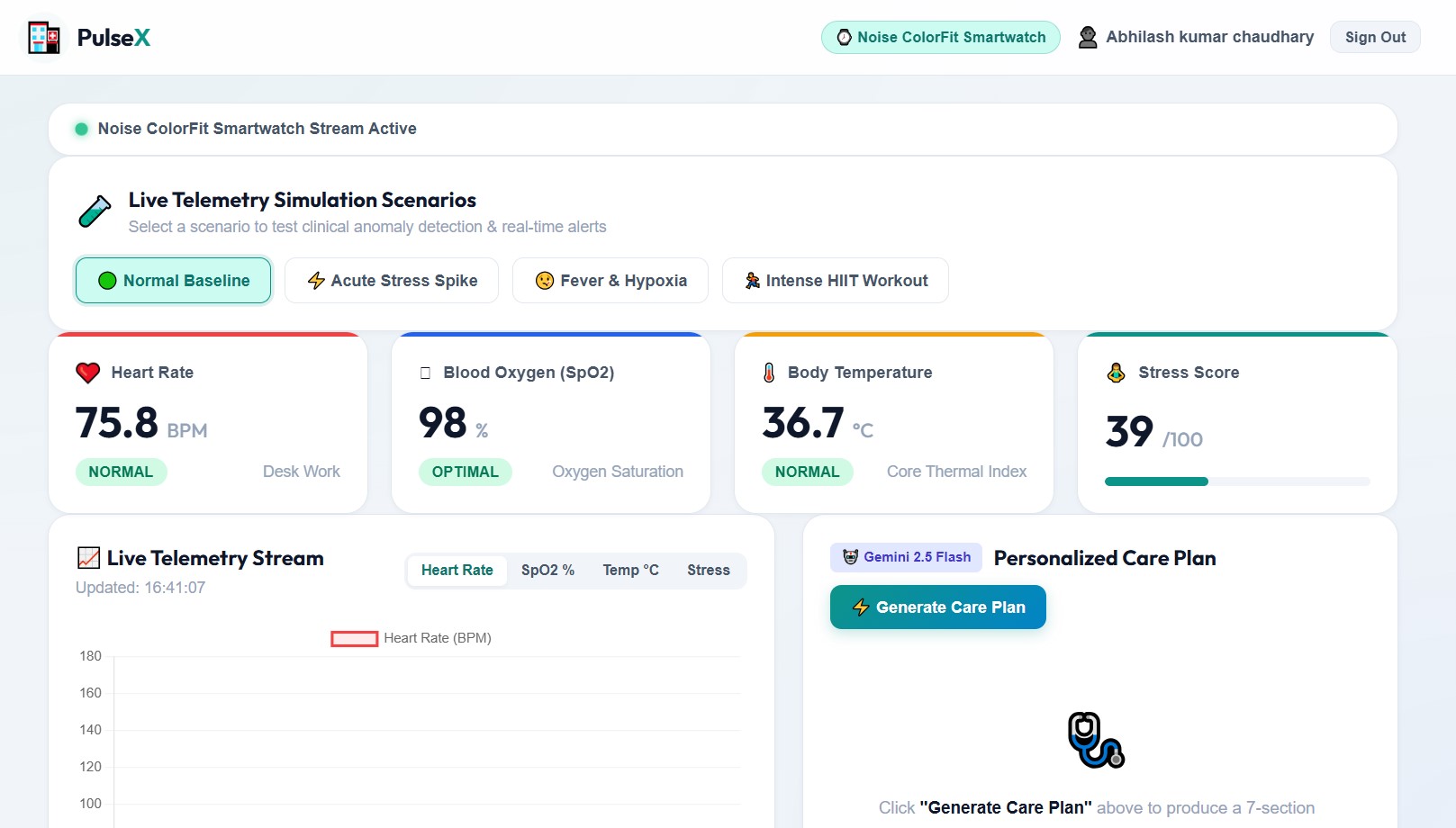
PulseX is a real-time, AI-powered healthcare monitoring system. It collects wearable vital data, detects abnormal changes, generates real-time alerts, and uses Gemini AI to assist in creating personalized care plans. Our goal is simple: Monitor → Detect → Alert → Assist.
How we built it
Our architecture combines multiple technologies: Python + Flask — provides REST APIs for authentication, vitals, alerts, and AI operations. Apache Kafka — handles real-time health events through event-driven streaming. SQLite with WAL mode — provides efficient concurrent read and write operations. Werkzeug — securely stores passwords using salted cryptographic hashing. Gemini AI — analyzes health information and assists in generating personalized care plans. Anomaly Detection — identifies potentially dangerous changes in vital signs. What makes PulseX different is the combination of real-time wearable telemetry, Kafka streaming, anomaly detection, and AI-powered healthcare assistance in one system.
Challenges we ran into
One of our biggest challenges was handling continuous health data in real time while keeping the system responsive. We also had to make sure that abnormal vital changes were detected quickly, Kafka events were processed reliably, and AI-generated recommendations were based on the patient's current health context.
Accomplishments that we're proud of
We are proud that we built an end-to-end healthcare monitoring pipeline rather than just a dashboard. PulseX can take continuous vital data, process it through a real-time event pipeline, detect anomalies, generate alerts, and use AI to provide meaningful care-plan assistance.
What we learned
Through PulseX, we learned how to combine real-time data streaming, backend APIs, databases, anomaly detection, and generative AI into a single healthcare-focused system. We also learned that building an AI application is not only about the AI model — the surrounding architecture, data flow, security, and reliability are equally important.
What's next for PulseX
The next step for PulseX is to move toward more advanced real-world healthcare integration. We want to support more wearable devices, improve anomaly detection using patient-specific patterns, add stronger clinical decision support, and eventually integrate with healthcare professionals and hospital systems. PulseX is designed not just to monitor health data, but to turn continuous health data into actionable intelligence.

Log in or sign up for Devpost to join the conversation.