💡 Inspiration
Healthcare emergencies can become life-threatening when warning signs go unnoticed or patient information is scattered across different systems. We wanted to explore how AI could help identify potential health risks, recognize patient safety concerns, and support faster responses.
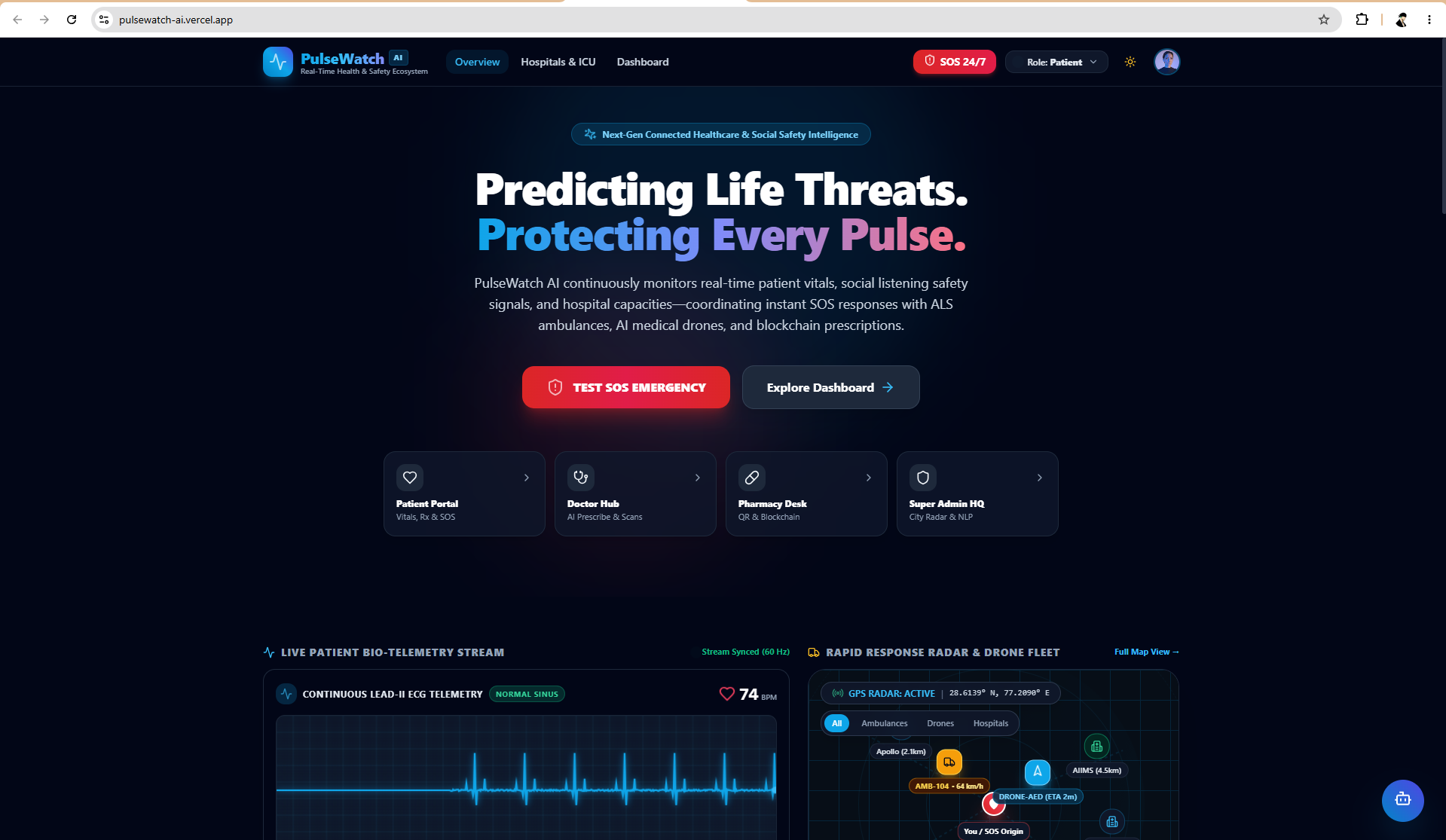
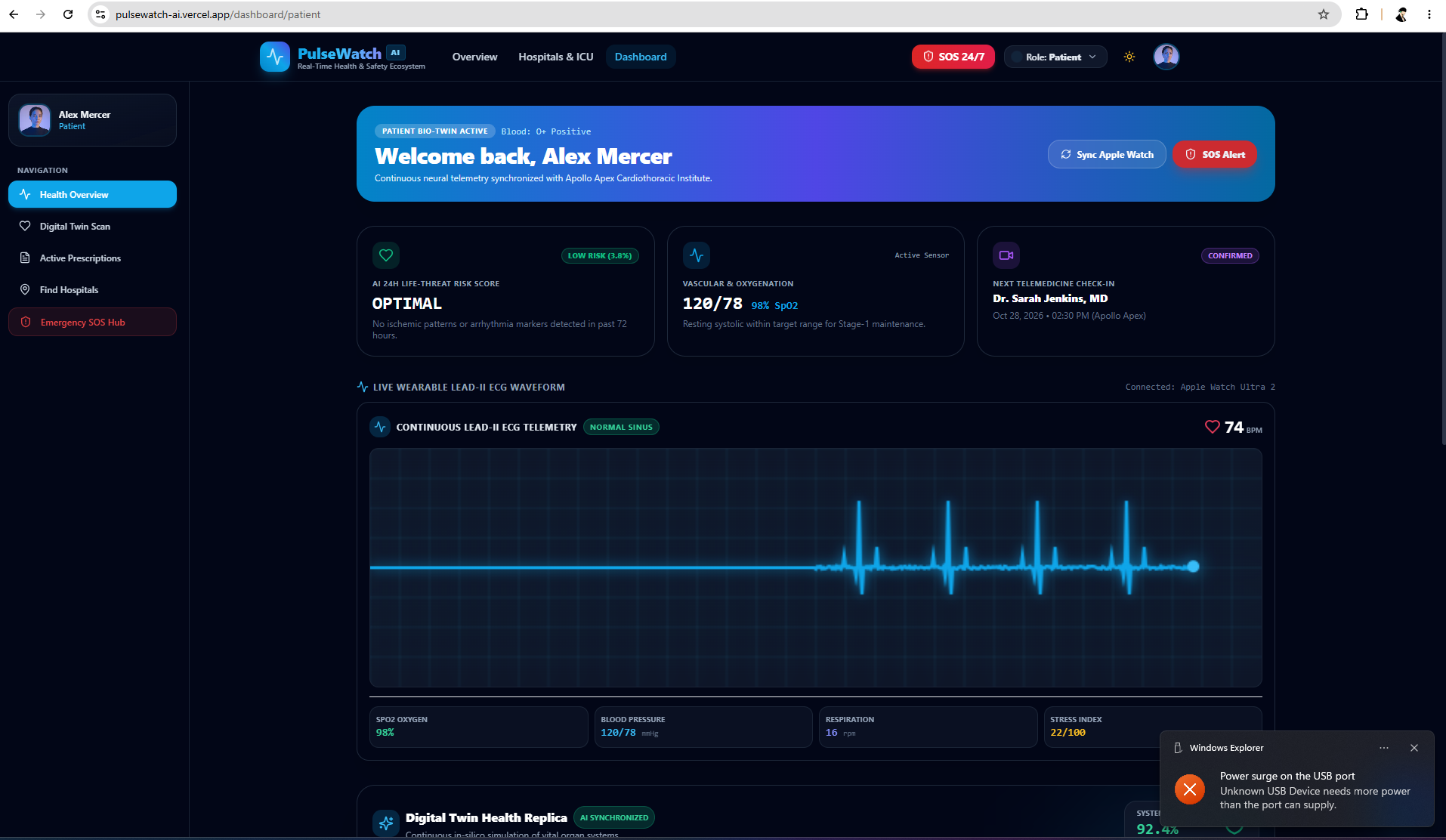
This inspired us to create PulseWatch AI, an intelligent healthcare platform designed to connect patient safety monitoring, AI-powered insights, and emergency support in one unified ecosystem.
🚀 What It Does
PulseWatch AI aims to transform reactive healthcare into proactive, data-driven care through features such as:
- AI-Powered Health Risk Prediction: Helps identify potential health risks using available patient information.
- Patient Safety Monitoring: Organizes and tracks emerging safety signals.
- Emergency SOS: Supports access to emergency assistance.
- Smart Medication Reminders: Helps patients manage medication schedules.
- Live Ambulance Tracking: Aims to improve emergency coordination.
- AI-Powered Social Listening: Analyzes healthcare feedback to identify recurring concerns and potential safety signals.
- Investigation Workspace: Helps healthcare teams review and investigate safety signals.
🛠️ How We Built It
We developed PulseWatch AI using a modular architecture that combines a web-based interface, structured data management, and AI-oriented healthcare workflows.
Our development process involved designing the database schema, preparing seed data, and building frontend components for the dashboard, safety signals, signal details, and investigation workspace.
We used React-based frontend components and Prisma for database management, with the architecture designed to support backend services and future AI integrations.
📚 What We Learned
Building PulseWatch AI helped us understand modular application development, database design, and the importance of presenting complex information through clear interfaces.
We also learned that healthcare AI requires reliable data, responsible predictions, privacy-conscious design, and human oversight. AI should assist healthcare professionals rather than replace their expertise.
🧩 Challenges We Faced
Our main challenge was bringing multiple healthcare capabilities into one coherent platform. Each feature involved different workflows, data requirements, and integration needs.
We addressed this by developing the application in stages, organizing functionality into separate modules, and establishing a structured database foundation.
Integrating advanced capabilities such as predictive analytics and real-time monitoring remains an important challenge, requiring reliable data sources, testing, and further development.
🔮 What's Next
We aim to enhance PulseWatch AI with validated prediction models, secure healthcare integrations, real-time data pipelines, and improved coordination between patients and healthcare providers.
Our long-term vision is to help transform early health warnings into timely, actionable insights.
PulseWatch AI — Smarter Healthcare. Earlier Insights. Safer Lives.
Built With
- artificial-intelligence
- express.js
- html
- javascript
- machine-learning
- node.js
- postgresql
- prisma
- react.js
- rest-api

Log in or sign up for Devpost to join the conversation.