-
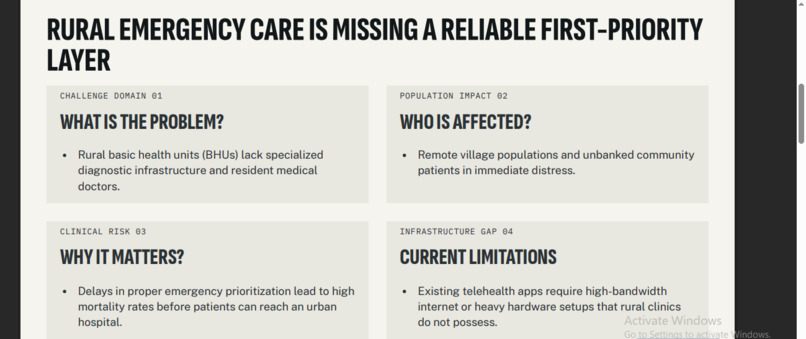
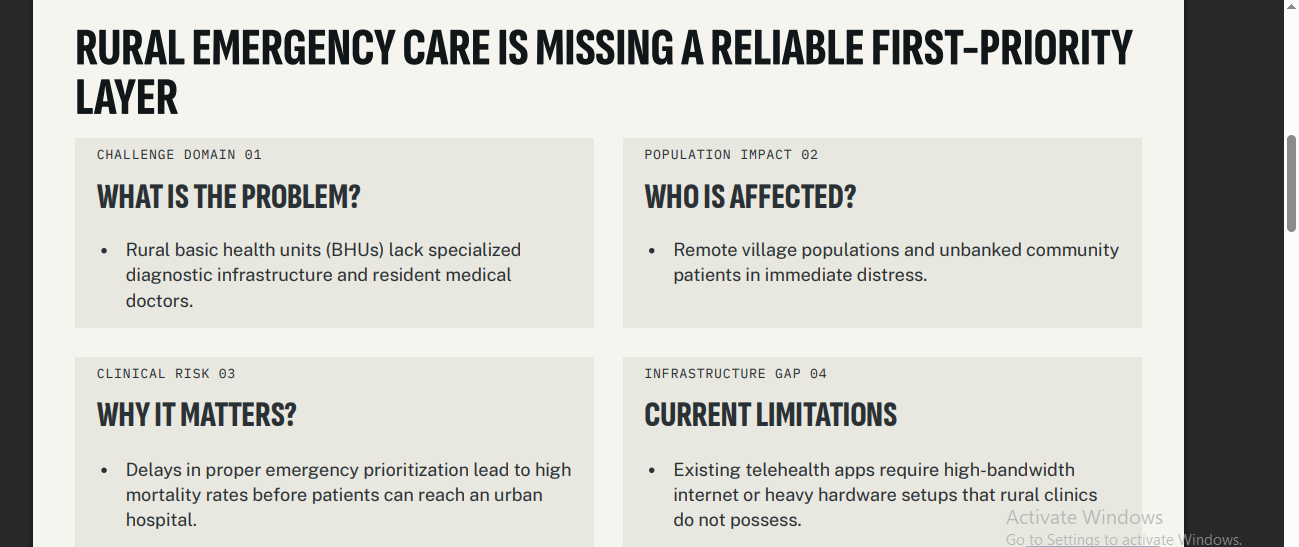
Core challenge overview mapping clinical risks, targeted vulnerable populations, and rural infrastructure limitations.
-

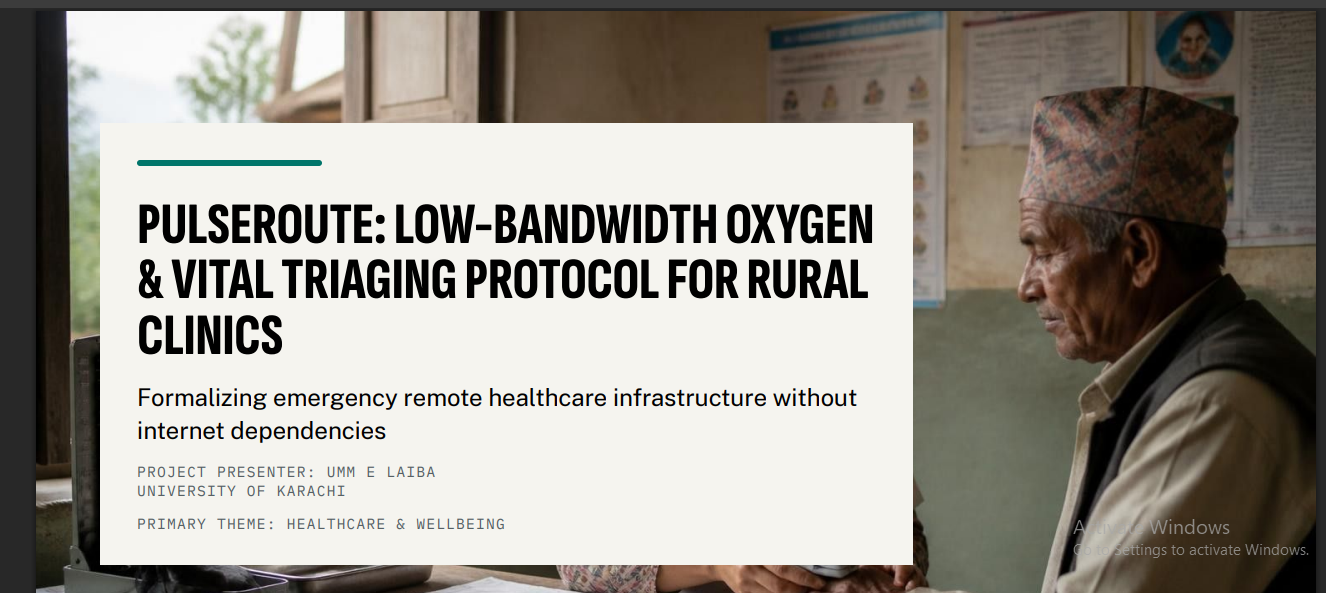
PulseRoute cover title slide presenting the structural low-bandwidth medical triaging design framework.
-
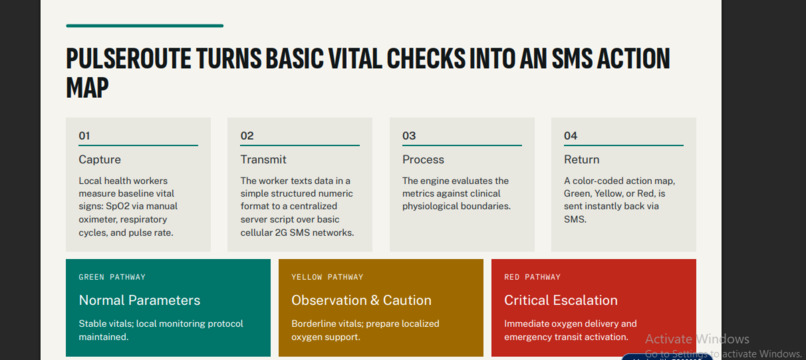
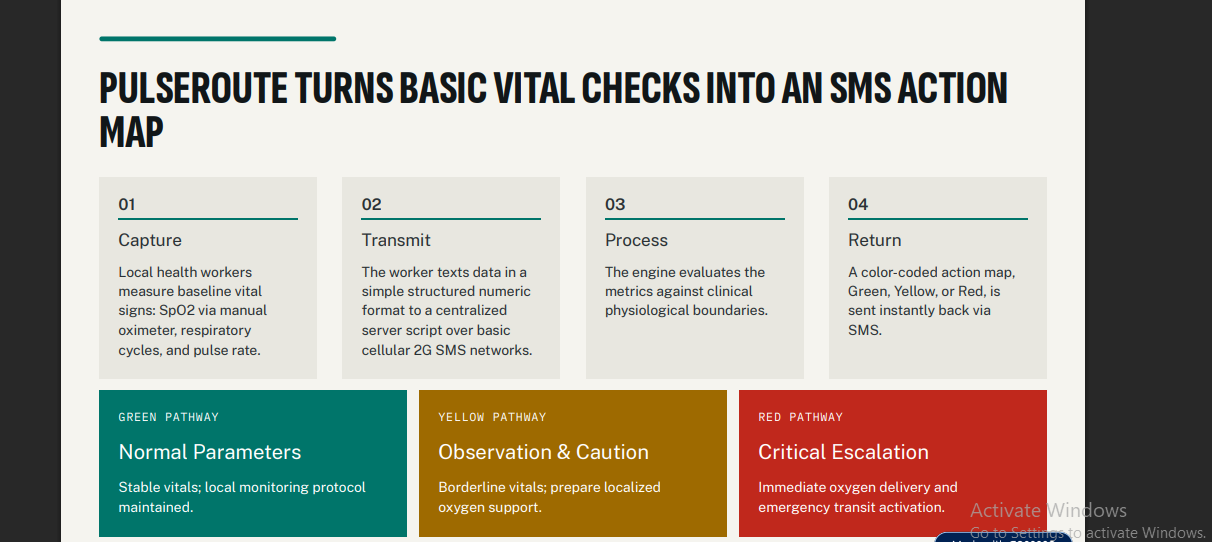
The 4-step physiological routing interface displaying the green, yellow, and red pathway triage metrics.
-
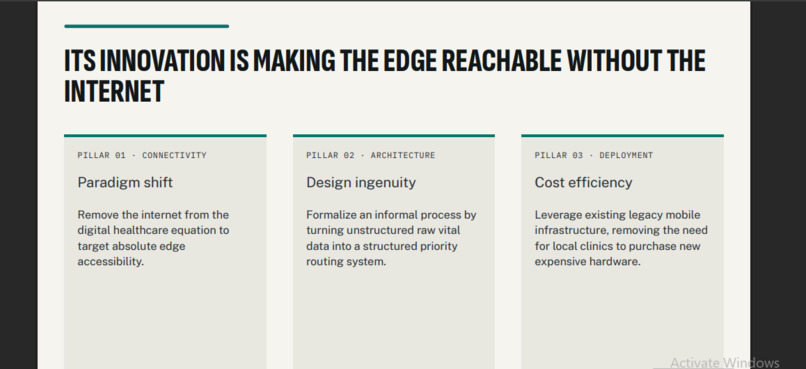
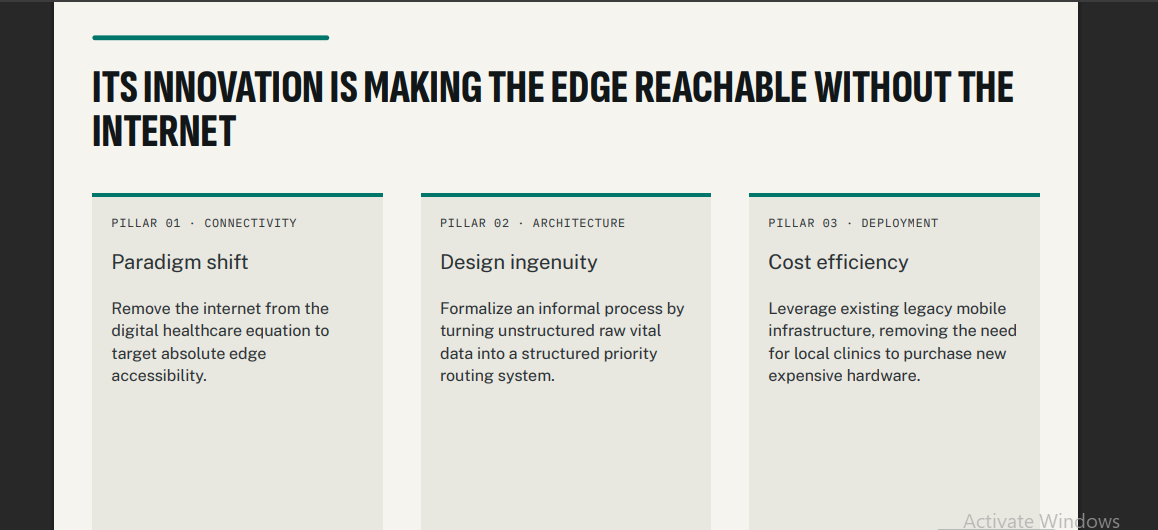
The innovation pillar metrics shifting emergency medical architectures away from structural network dependencies.
-
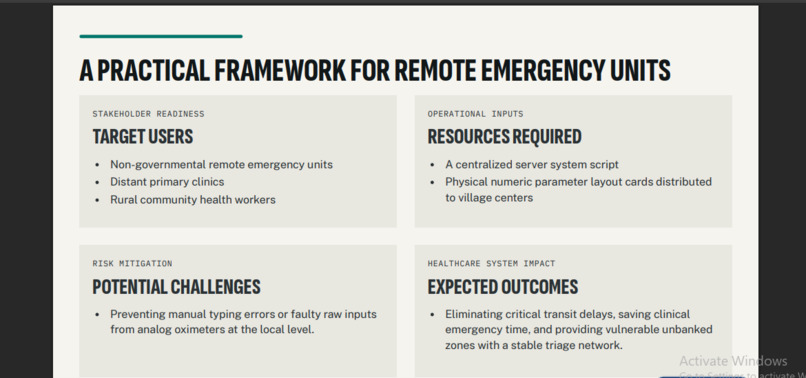
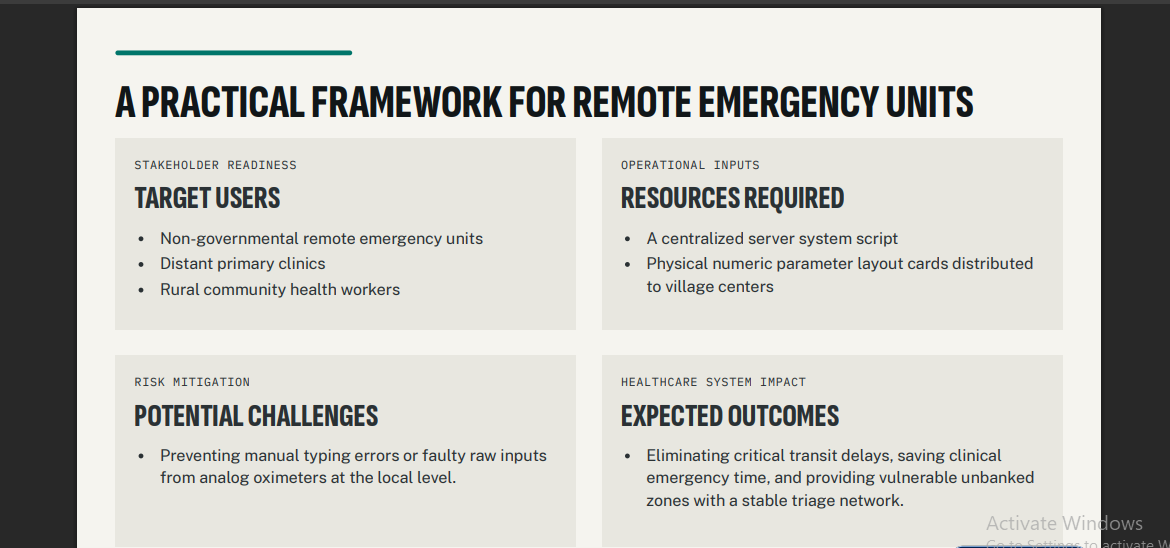
Operational blueprint outlining expected healthcare outcomes, required server scripts, and human error mitigation.
Inspiration
As a physiology student at the University of Karachi, I am highly aware of how critical minutes are during acute respiratory or homeostatic emergencies. In rural areas, patients face devastating delays because basic clinics lack specialized doctors and high-bandwidth internet to access modern digital health apps. I wanted to design a strategy that brings immediate diagnostic validation using the absolute minimum infrastructure possible.
What it does
PulseRoute is an analog-to-digital health tracking strategy. Instead of a smartphone app, it uses basic 2G cellular SMS networks. A rural health worker takes a patient's vital signs (like oxygen saturation via a manual oximeter, respiratory rate, and pulse rate) and texts them in a simple structured numeric format to a central framework. The system instantly evaluates these metrics against clinical physiological boundaries and text-messages back an immediate triage risk level (Green, Yellow, or Red) along with stabilization guidelines.
How we built it
Since this is a non-code conceptual innovation challenge, the system framework was built around business modeling and protocol architecture. We mapped the logical routing matrices of patient physiological indicators, designed a structured shorthand syntax for SMS inputs, and formulated response scripts that work flawlessly on legacy networks without requiring internet bundles.
Challenges we ran into
The biggest hurdle was designing a system that is immune to human typing errors or faulty manual analog oximeter inputs at the village level. We addressed this by implementing strict input boundary filters within the central processing strategy to catch anomalous numbers before generating a triage alert.
Accomplishments that we're proud of
We are proud of creating a strategy that is genuinely practical for remote areas. It respects the existing habits of rural health workers and leverages basic mobile infrastructure to build an alternate emergency medical prioritization pathway.
What we learned
We learned a lot about healthcare system logistics and how to simplify complex medical metrics into accessible iconic cues. It showed us that great innovations do not always require a line of code; sometimes they just require smarter process mapping.
What's next for PulseRoute
We plan to pitch this concept to local healthcare non-profits to distribute physical reference protocol cards to basic health units. We also want to integrate simple automated voice-response (IVR) options in local regional languages.
1. Project Title
PulseRoute: Low-Bandwidth AI Oxygen & Vital Triaging Strategy for Rural Clinics
2. Selected Theme
Healthcare & Wellbeing
3. Problem Statement
In developing countries like Pakistan, rural basic health units (BHUs) face a critical shortage of resident specialized doctors and diagnostic equipment. Patients with acute respiratory or physiological distress often have to travel hours to primary central hubs like Karachi just for absolute basic medical triaging. Current approaches fail because existing digital health solutions require expensive high-bandwidth internet bundles or complex smartphone apps that rural patients do not have access to. This creates massive structural delays in patient emergency transport, poor clinical experience, and a total lack of early preventive alerts before critical blood oxygenation or homeostatic crashes occur at the village level.
4. Proposed Solution
PulseRoute is an analog-to-digital structural strategy that automates patient vital analysis using zero-internet frameworks. Instead of a smartphone app, it utilizes an algorithmic protocol mapped seamlessly through standard cellular 2G SMS networks. A local rural health worker inputs basic raw physiological numbers such as oxygen saturation (SpO2), pulse rate, respiratory cycle counts, and baseline capillary refill time into a simple structured numeric text syntax. A centralized backend system instantly processes these specific clinical metrics against established physiological boundaries to immediately return an automated, color-coded triage risk level (Green, Yellow, or Red) along with instant stabilization guidelines back via text message to the local health worker.
5. Innovation & Uniqueness
The core innovation is using complex physiological guidelines to create a radically simple, "low-tech" outer shell that targets edge accessibility. While modern tech companies focus on high-end smartphone hospital software, PulseRoute focuses on absolute baseline legacy network infrastructure. It takes unstructured data at the very edge of rural communities, turning simple numerical vital inputs into an instant diagnostic priority routing map without forcing local low-income clinics to purchase heavy computing hardware.
6. Supporting Materials
A comprehensive 5-slide presentation concept deck has been structured outlining the full macro-architecture. The presentation documentation features a detailed structural gap analysis between rural basic health clinics and urban medical hospitals, an interactive process logic map tracking patient physiological markers routing via legacy networks, and the visual layout configuration of the automated triage alerts.
7. Project Presentation
The platform strategically targets rural community health workers, non-governmental medical setups, and distant primary emergency units. The rollout strategy involves pairing with localized non-profit clinical setups to distribute physical laminated parameter reference cards to village workers. The primary potential challenge is ensuring accurate raw measurement inputs from local workers using manual analog pulse oximeters. This bottleneck is solved by including smart boundary verification filters within the central routing processing model to instantly detect numerical anomalies or manual typing errors before outputting diagnostic feedback metrics.
Built With
- business
- healthcare
- model
- productivity
- smsapi
- strategy
- uidesign


Log in or sign up for Devpost to join the conversation.