Inspiration
I built PulsePath after seeing how often students burn out without realizing it. Stress builds slowly, and by the time someone notices, it’s already affecting their health, grades, and confidence. I wanted a tool that could warn students earlier and help them stay balanced.
What it does
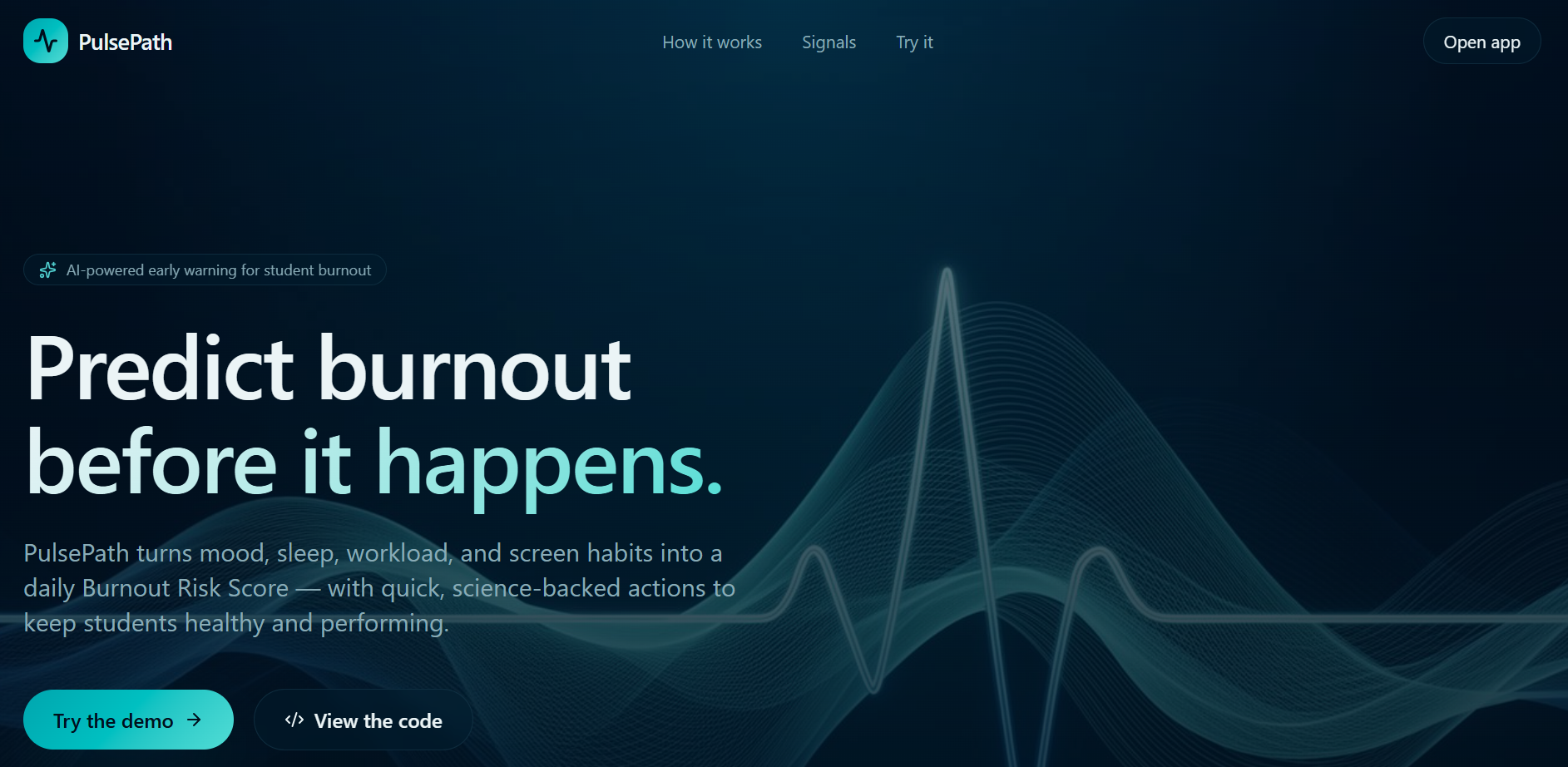
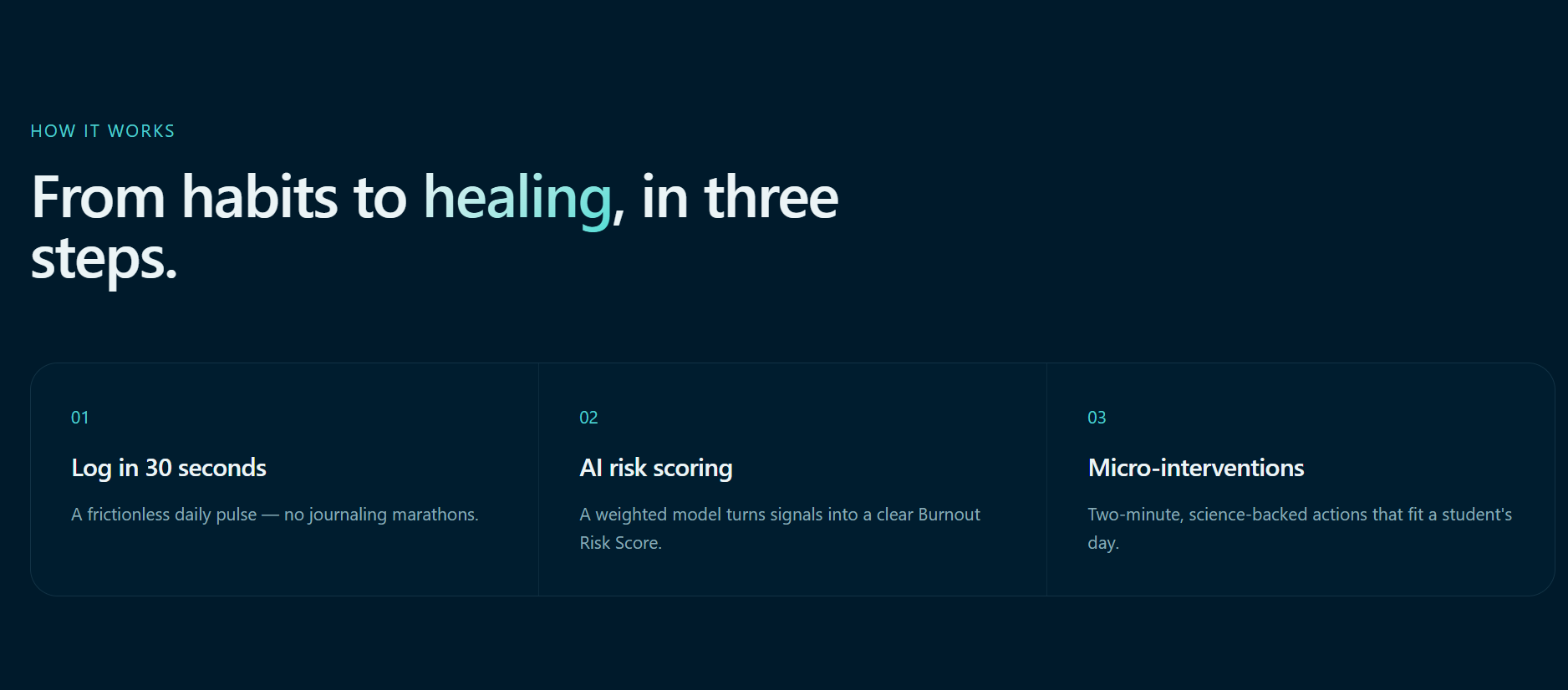
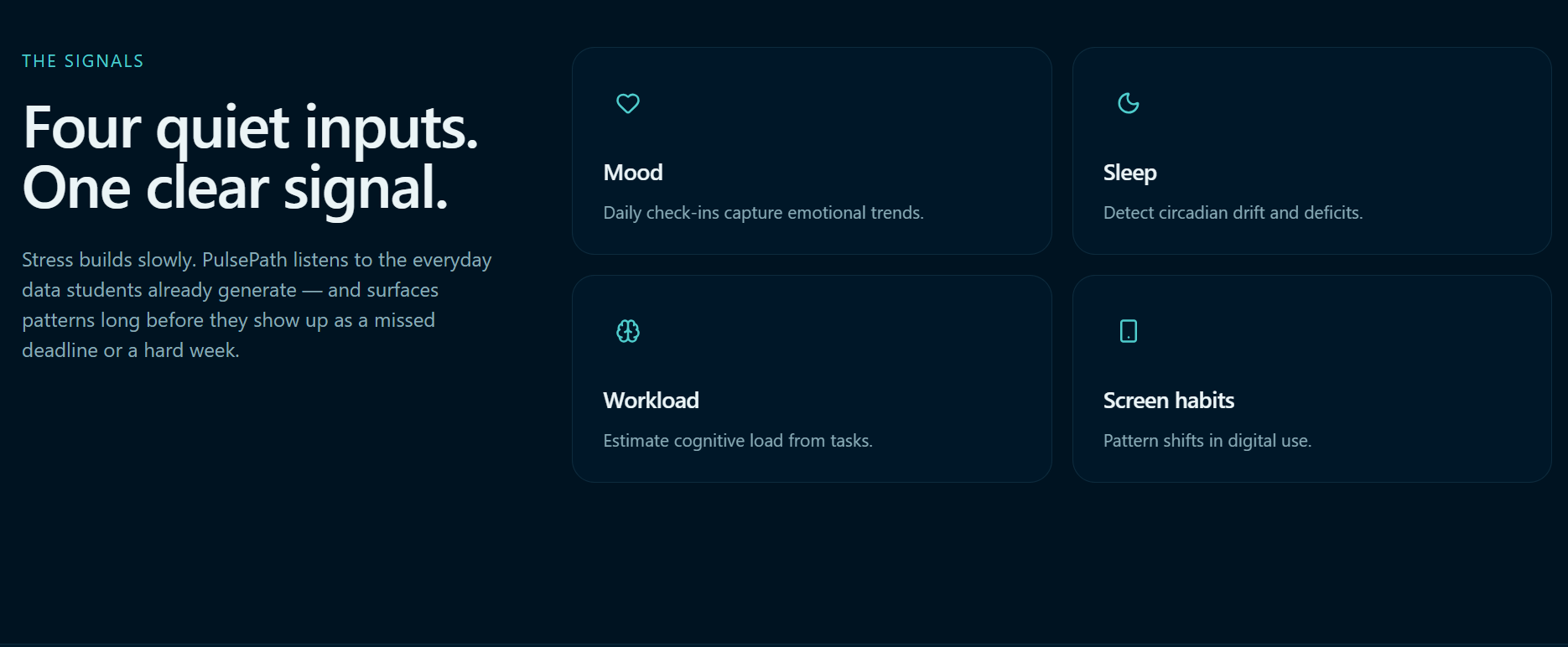
PulsePath uses AI to predict burnout before it happens. It tracks mood, sleep, workload, and screen habits to generate a Burnout Risk Score, then gives quick, science‑backed actions to help students recover and stay focused.
How I built it
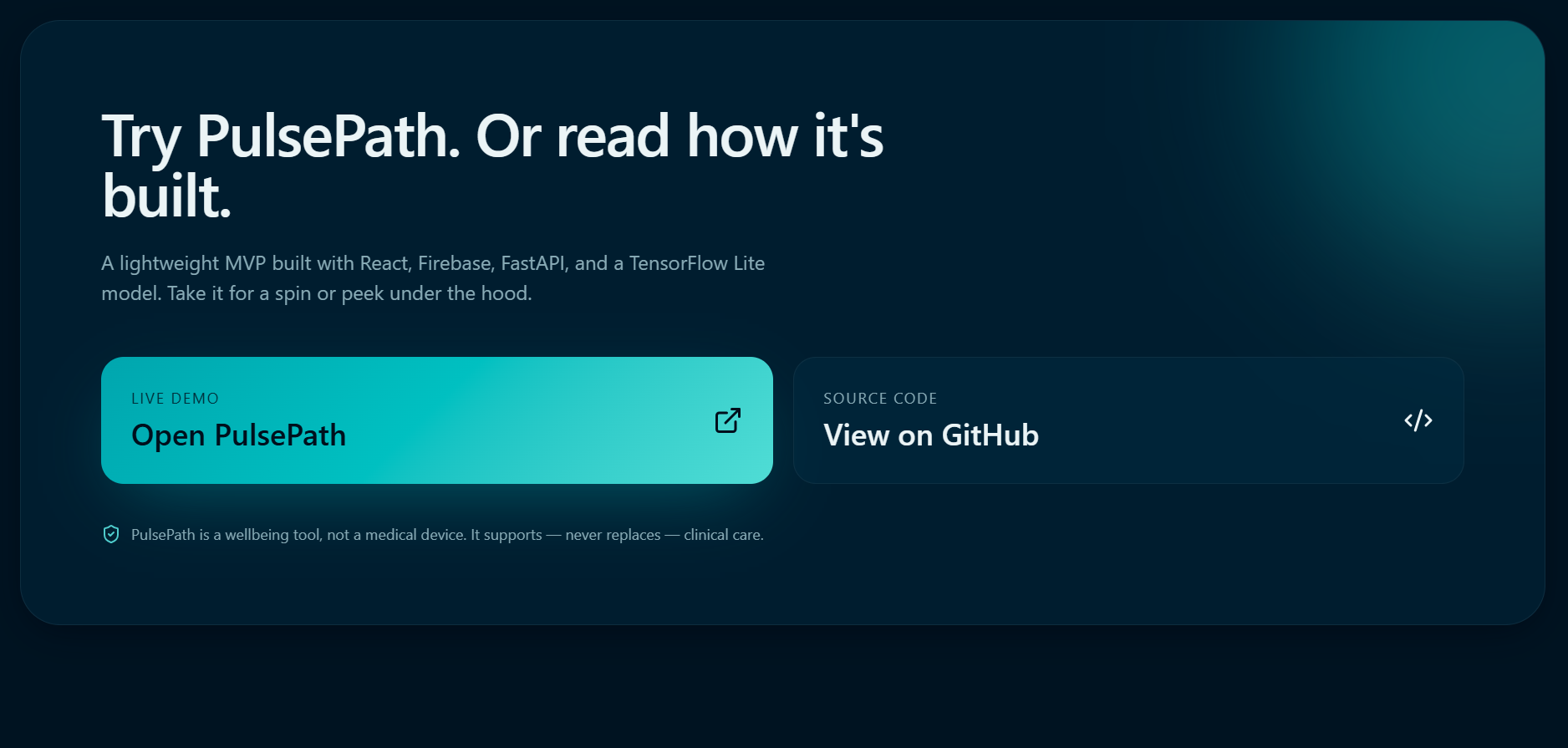
I created a simple MVP using React, Firebase, FastAPI, and a lightweight TensorFlow Lite model. Figma was used for the UI. The AI uses a weighted scoring system to estimate burnout risk and updates the dashboard in real time.
Challenges I ran into
The hardest part was designing an AI model that feels helpful without making medical claims. I also had to simplify the interface so stressed students wouldn’t feel overwhelmed. Balancing accuracy, clarity, and responsibility was a challenge.
Accomplishments that I am proud of
I’m proud that PulsePath can turn everyday habits into meaningful insights. Even as an MVP, it shows how AI can support student well‑being in a practical, accessible way.
What we learned
I learned how to combine data, design, and empathy into one product. I also learned how small behavior patterns can reveal early signs of burnout and how important it is to build tools that genuinely help people.
What's next for PulsePath
Next, I want to add more personalized insights, expand the intervention library, and test PulsePath with real students. I also plan to build a school dashboard so counselors can support students earlier and more effectively.


Log in or sign up for Devpost to join the conversation.