-
-
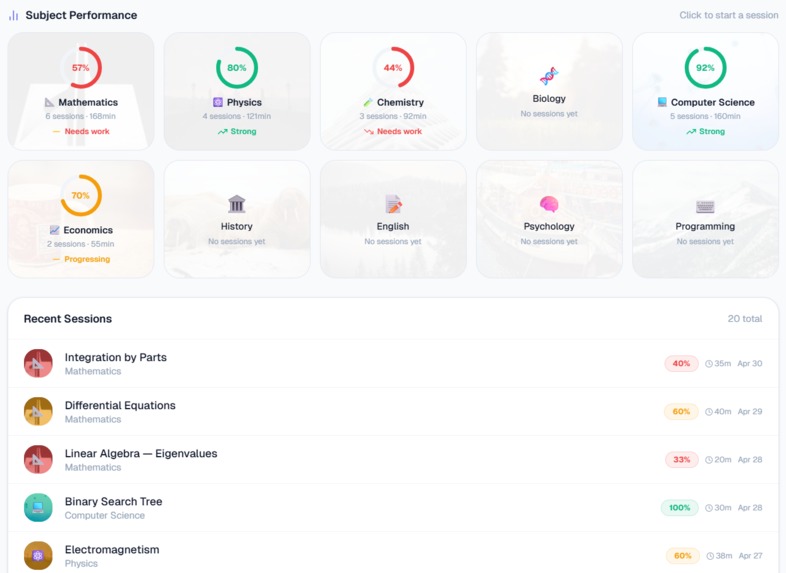
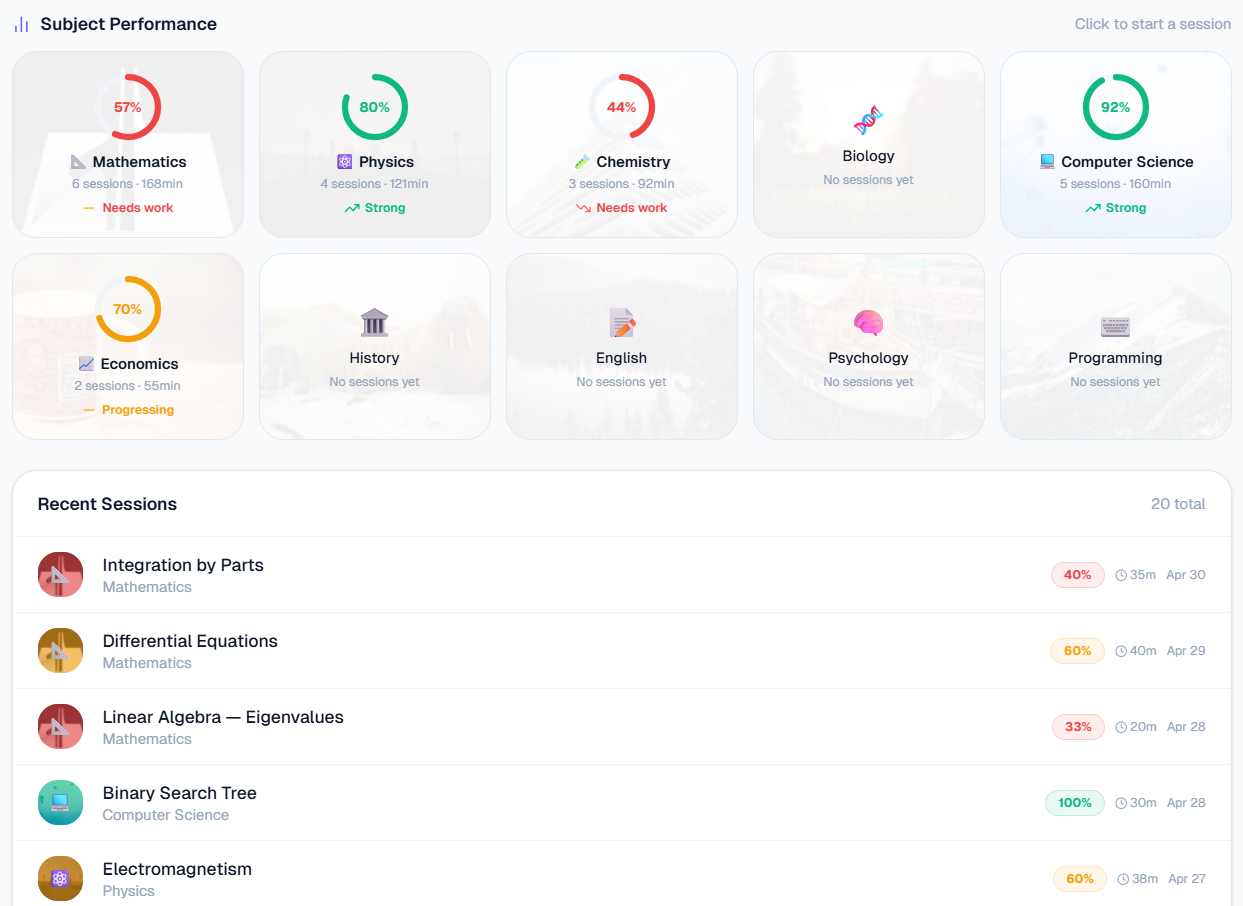
Study-subjects
-
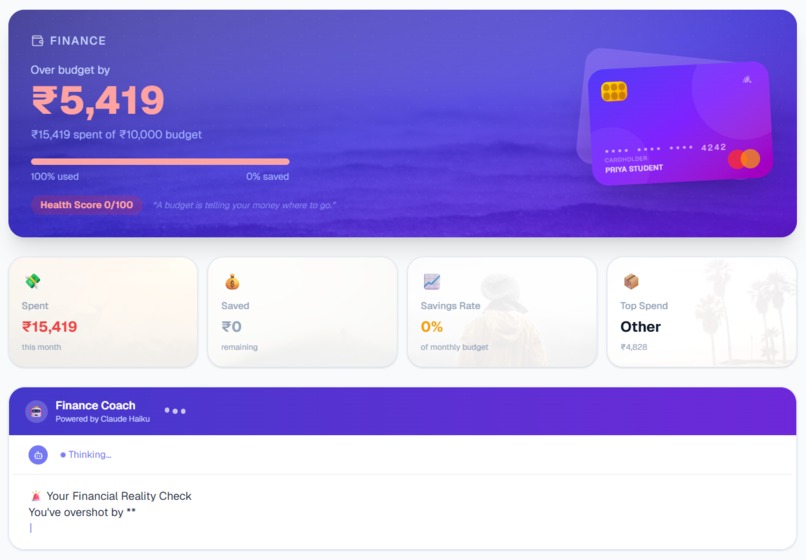
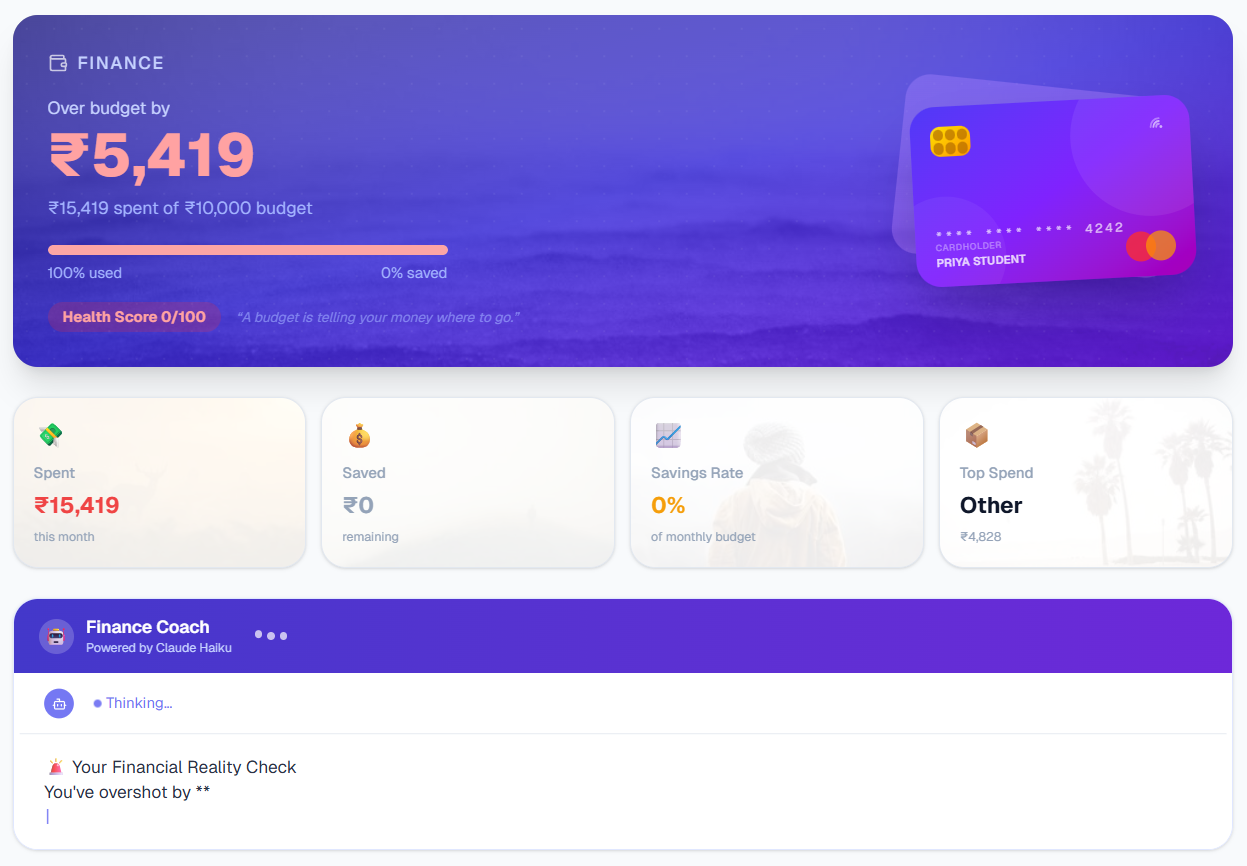
finance-tab
-
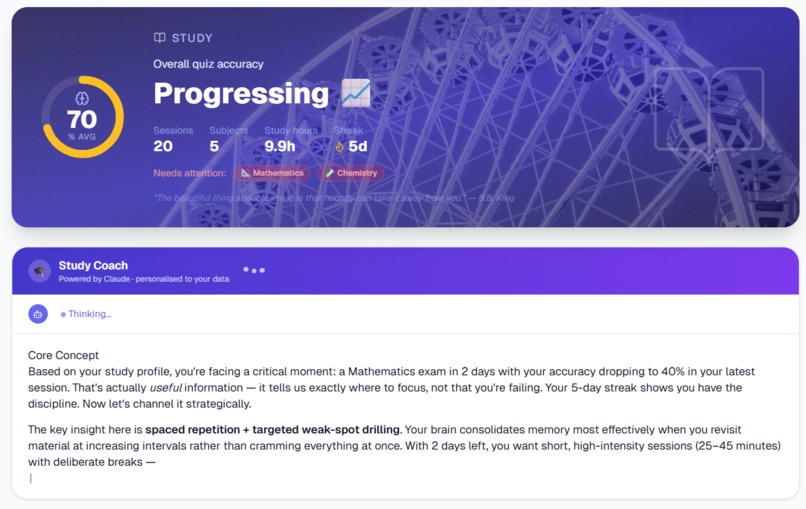
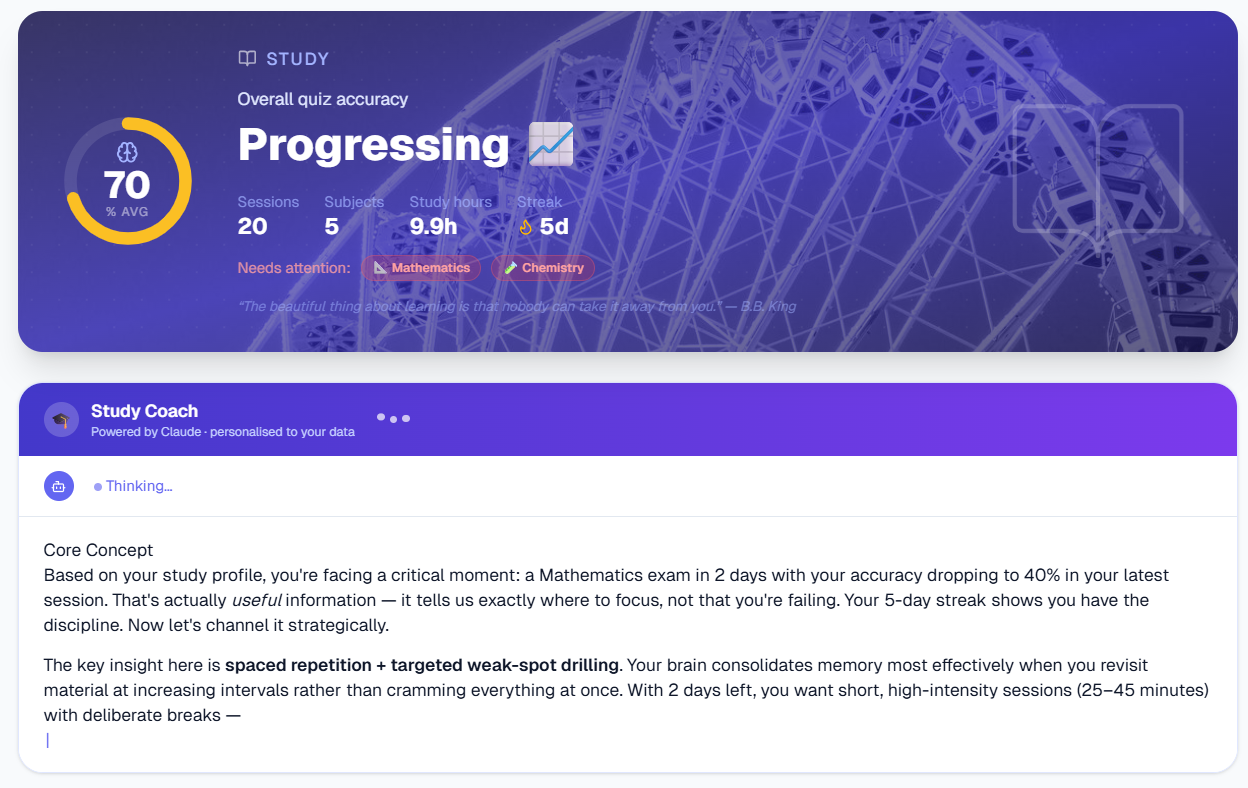
Study-tab
-
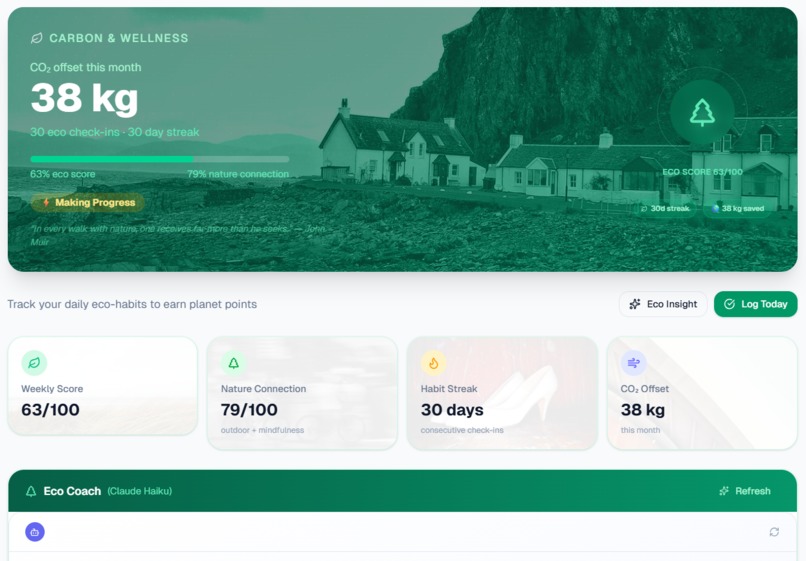
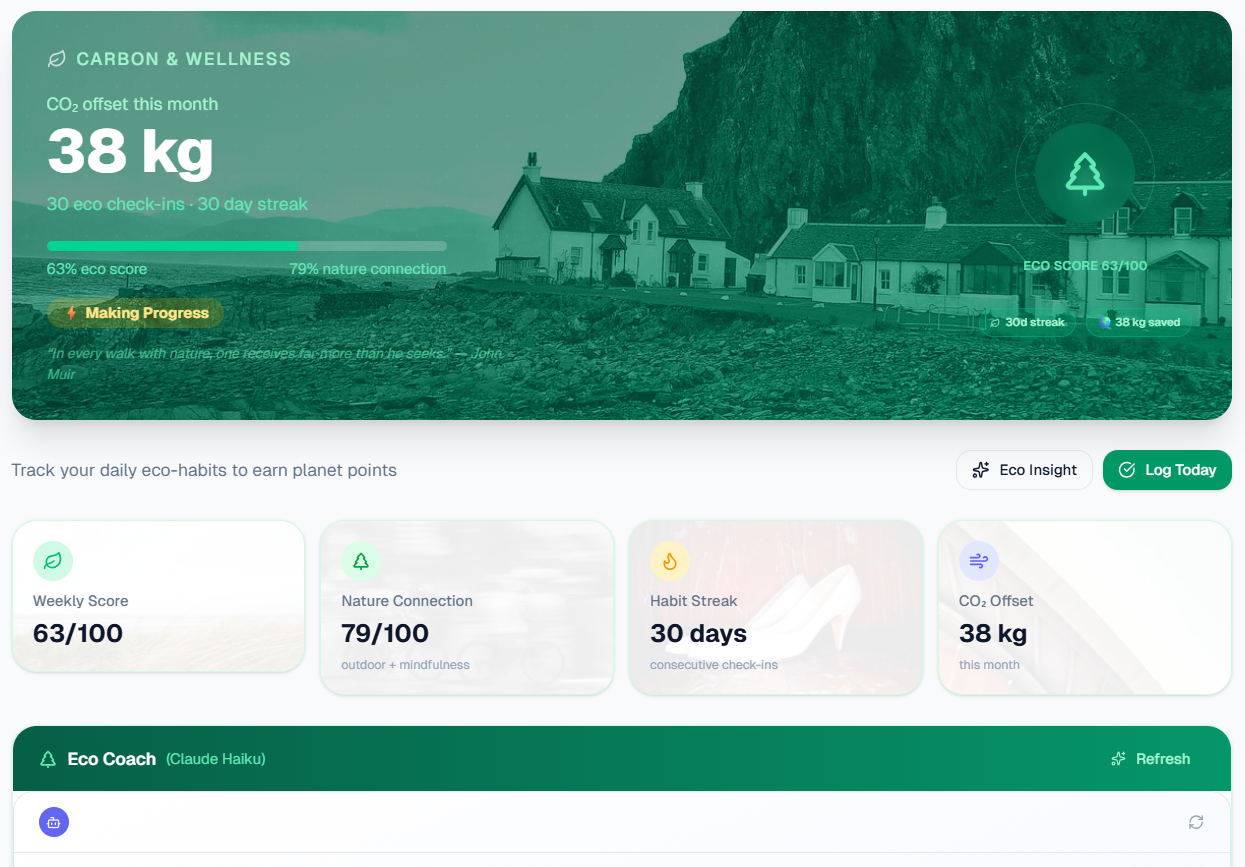
carbon-tab
Inspiration
Students don’t experience life in silos. Money stress affects study performance, exam pressure affects lifestyle habits, and digital insecurity affects confidence. Most apps treat these as separate problems. We built PulseOS to connect them and support students as one whole system.
What it does
PulseOS is a multi-agent AI operating system for student wellbeing and performance across four domains:
- Finance
- Carbon/lifestyle habits
- Digital security
- Study performance
Instead of giving disconnected tips, PulseOS uses a shared context layer and an orchestrator agent to generate one coordinated, personalized action plan.
Example: if quiz accuracy drops, PulseOS can shift finance recommendations into budget mode, suggest a recovery wellness habit, and provide a single cross-domain nudge for next steps.
How we built it
We built PulseOS with a Next.js app and five AI agents:
- Finance Agent
- Carbon Agent
- Security Agent
- Study Agent
- Orchestrator Agent
Each agent reads/writes to a shared pulse_context, enabling cross-domain reasoning without brittle agent-to-agent chaining.
We used streaming responses for a real-time feel, domain scoring logic for each module, and a local JSON fallback so the app still runs even without external database setup.
Challenges we ran into
- Designing reliable cross-domain orchestration instead of isolated agent outputs
- Balancing speed vs reasoning quality by routing workloads to different model tiers
- Keeping auth, state, and streaming stable under hackathon time pressure
- Ensuring the app still works with minimal setup using local fallback storage
Accomplishments that we’re proud of
- Built a working multi-agent system with shared context
- Delivered end-to-end flows across finance, study, carbon, and security
- Added demo-ready seeded data for realistic project walkthroughs
- Kept the architecture practical, fast, and extensible
What we learned
- Shared context is the key to meaningful multi-agent coordination
- Prompt and routing design matters as much as UI
- Building fallback-first developer experience makes demos and onboarding much smoother
What’s next for PulseOS
- Smarter long-term trend detection and proactive intervention timing
- Better personalization for different student profiles
- Calendar/LMS and expense integrations
- Expanded risk and wellbeing scoring with explainability
Built With
- anthropic-claude
- framer-motion
- javascript
- next.js
- node.js
- postgresql
- react
- sse
- supabase
- tailwind-css
- tanstack-query
- typescript


Log in or sign up for Devpost to join the conversation.