-
-
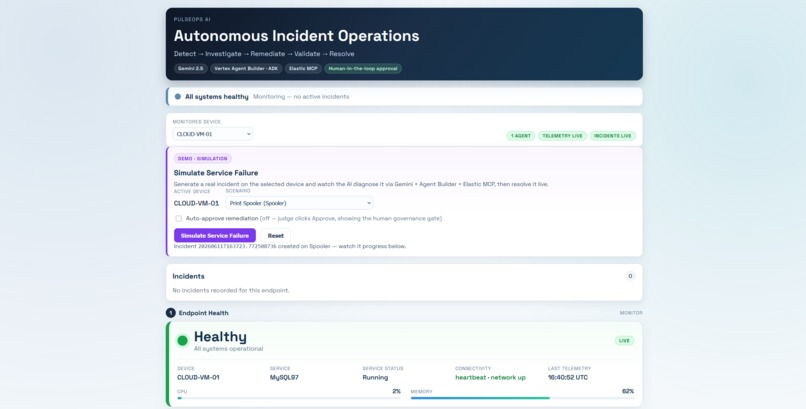
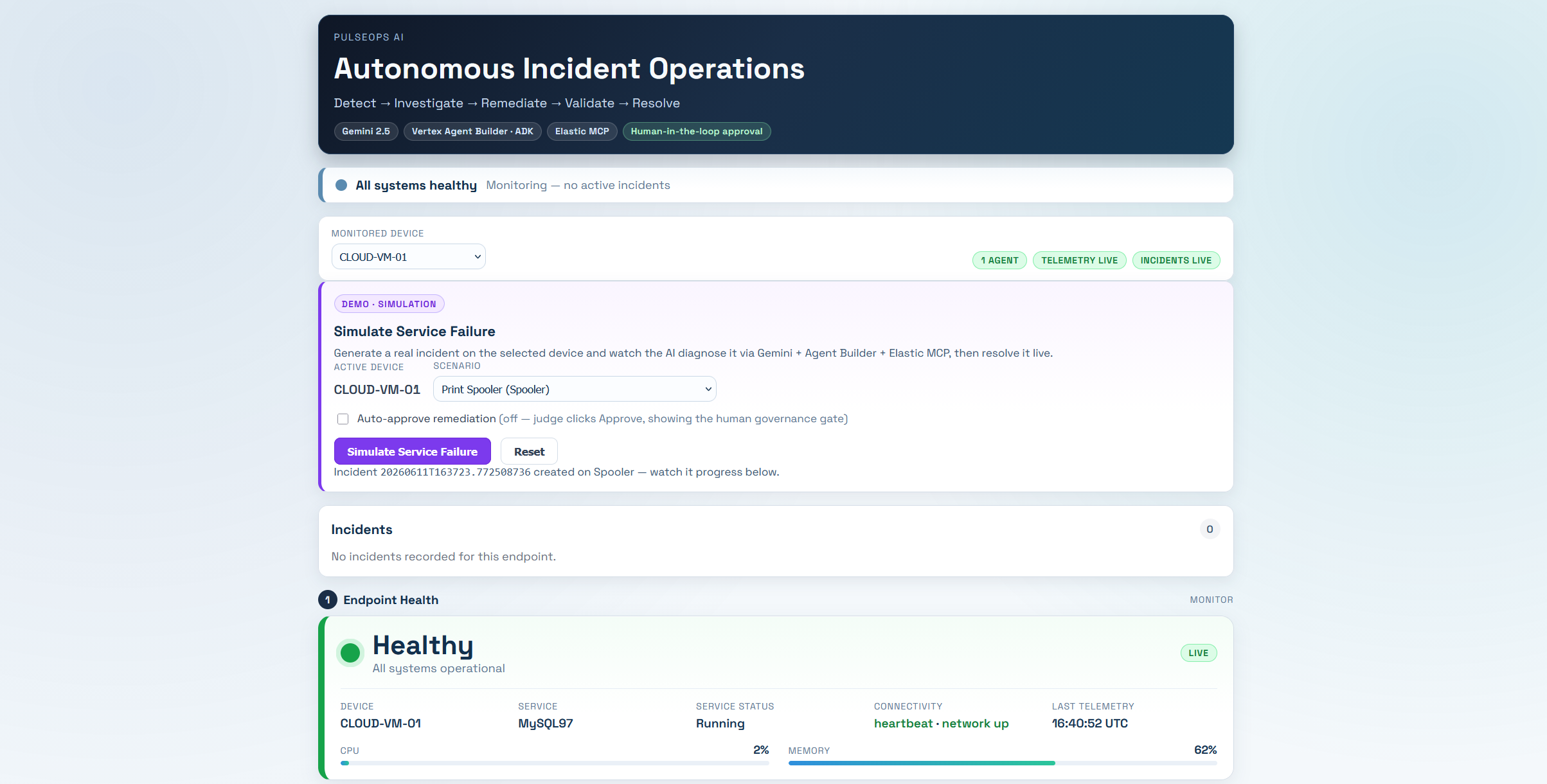
Dashboard
-
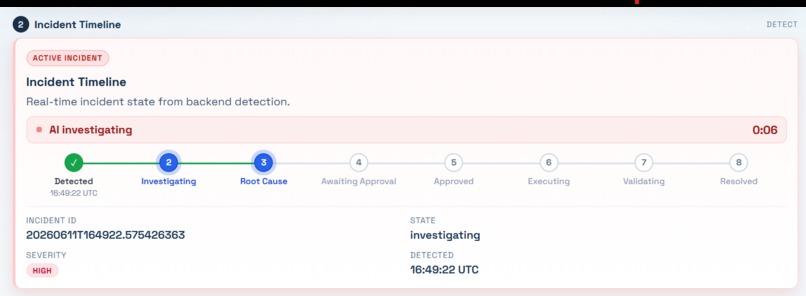
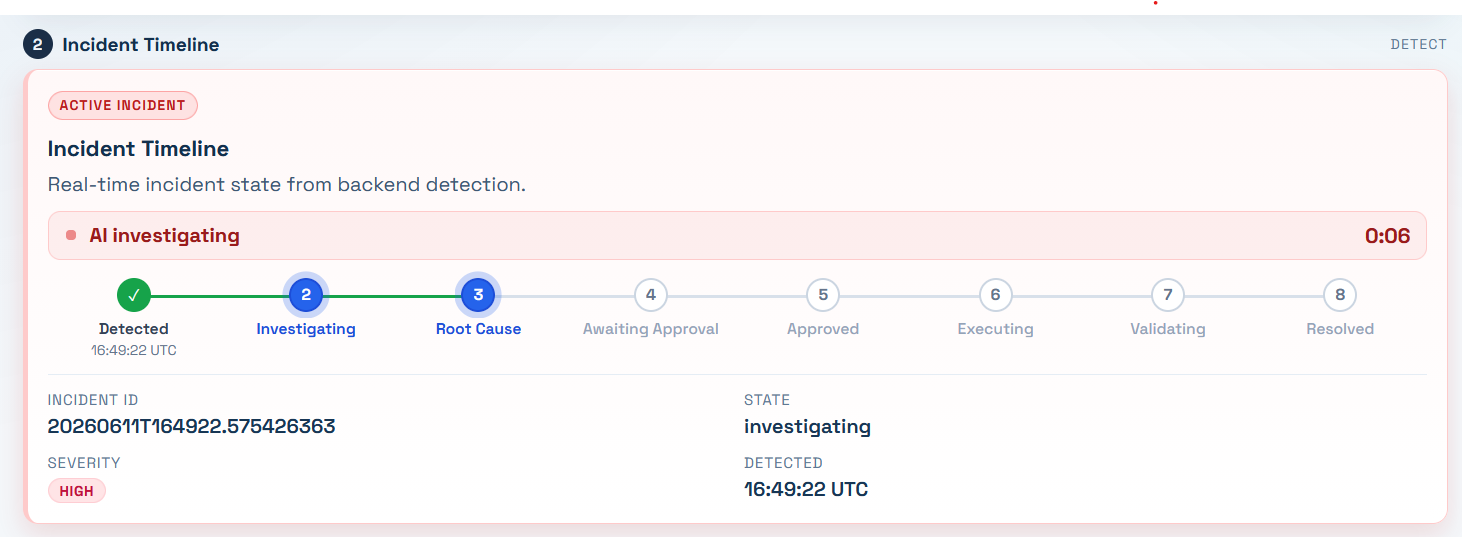
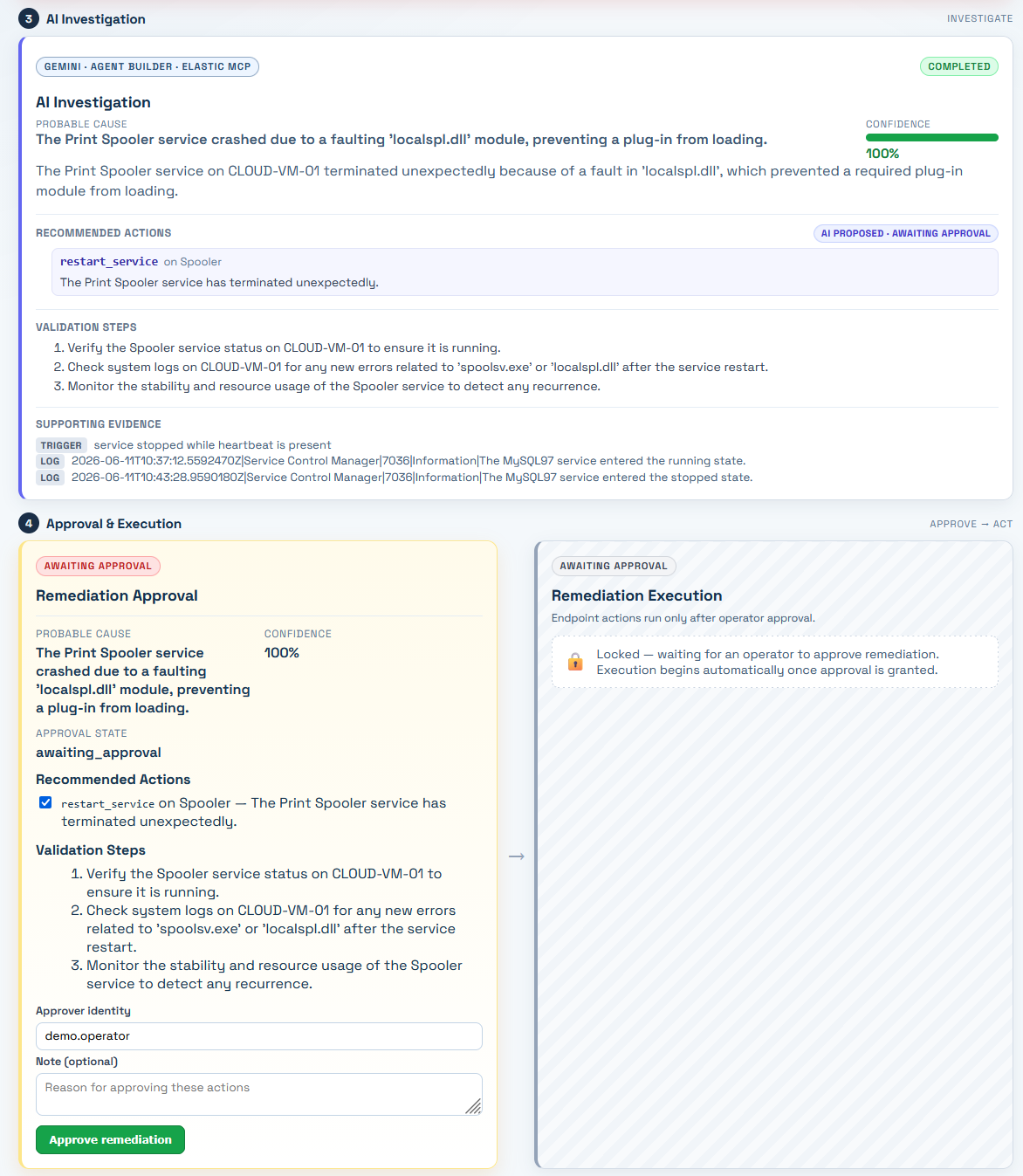
Incident Investigation
-
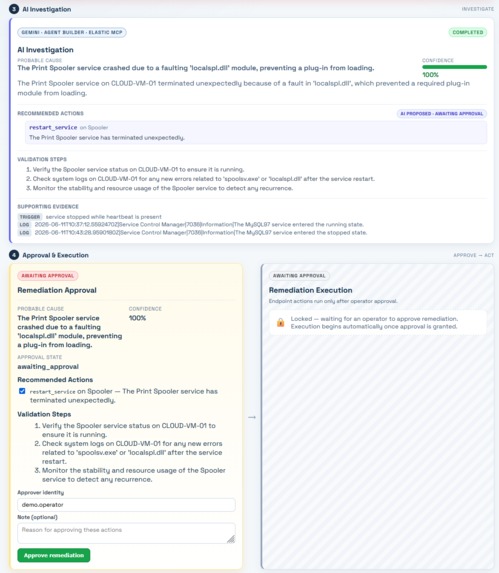
Approval process
-
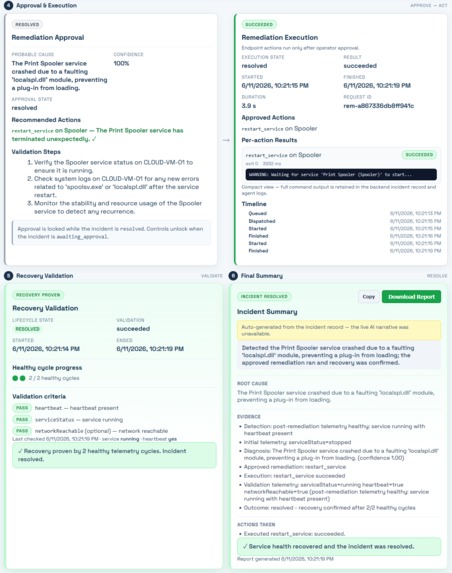
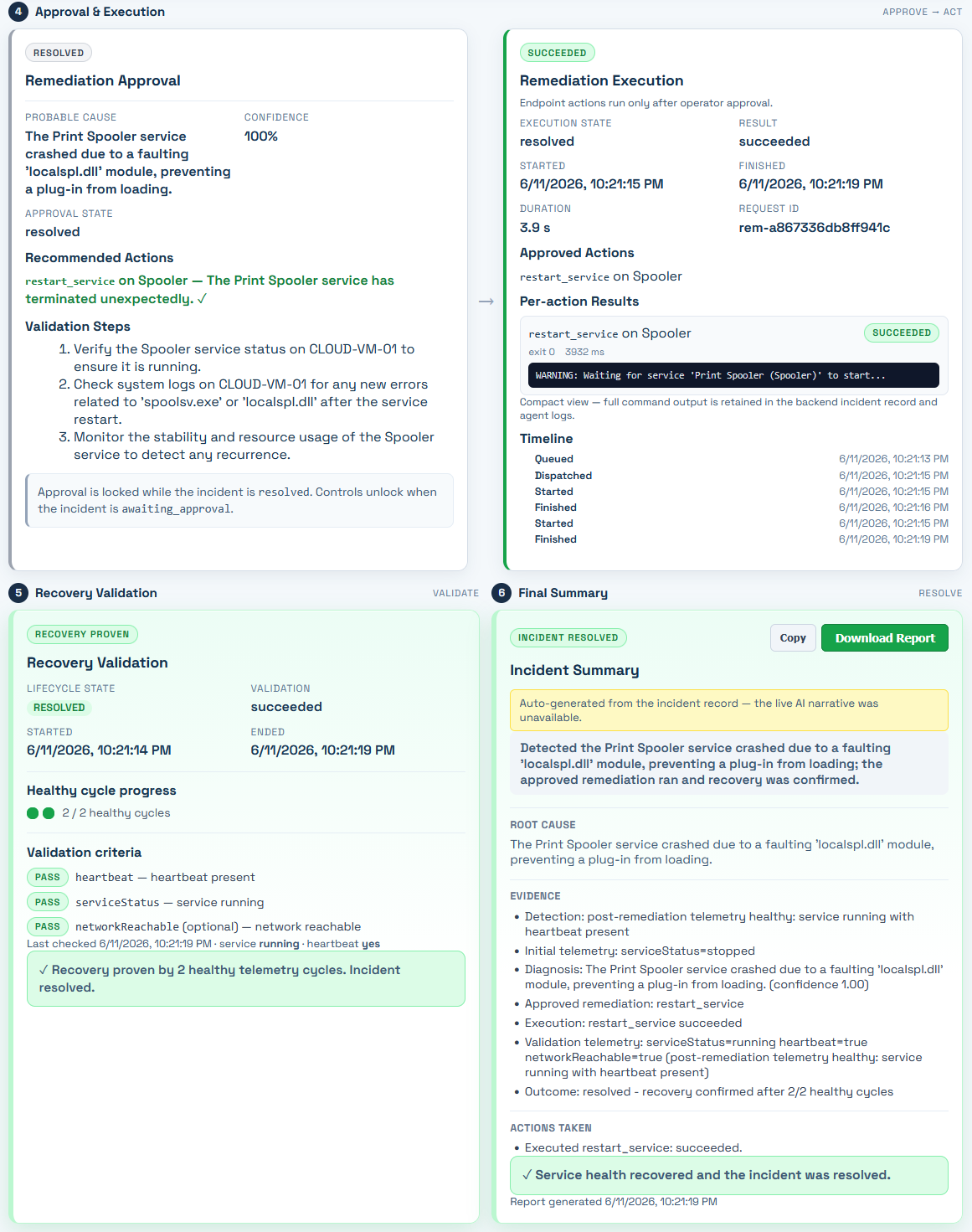
Incident resolution
-
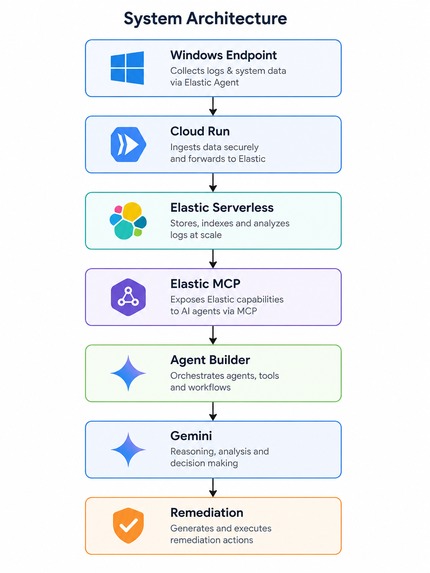
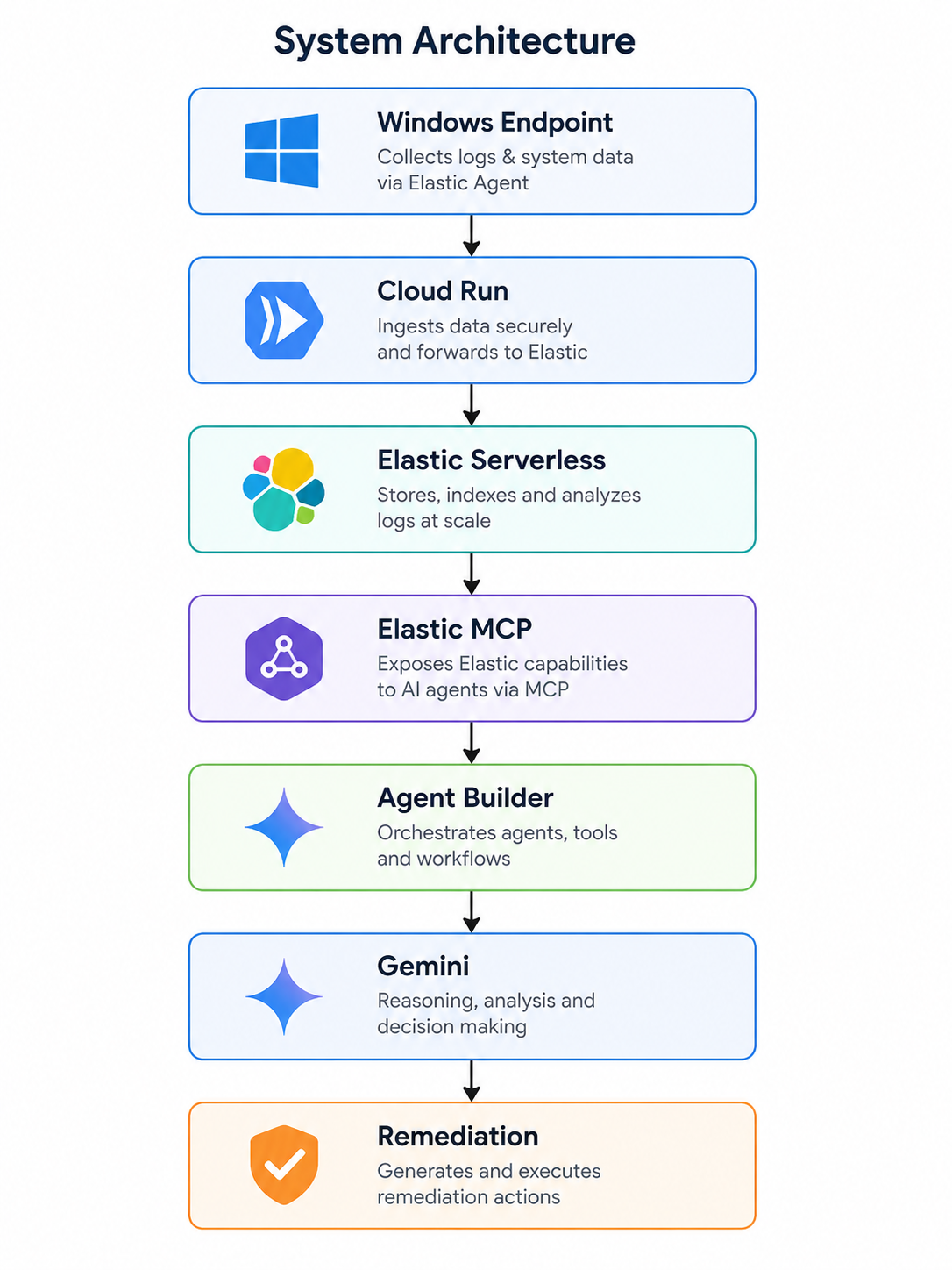
system-architecture
-
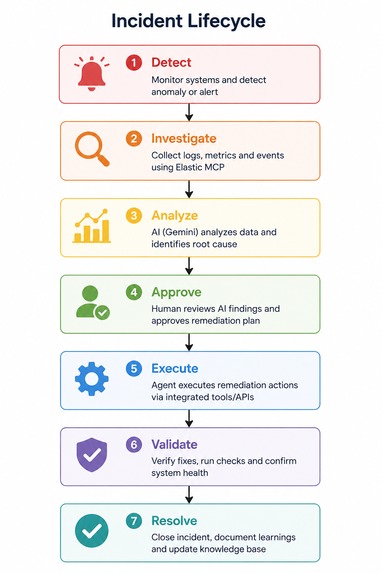
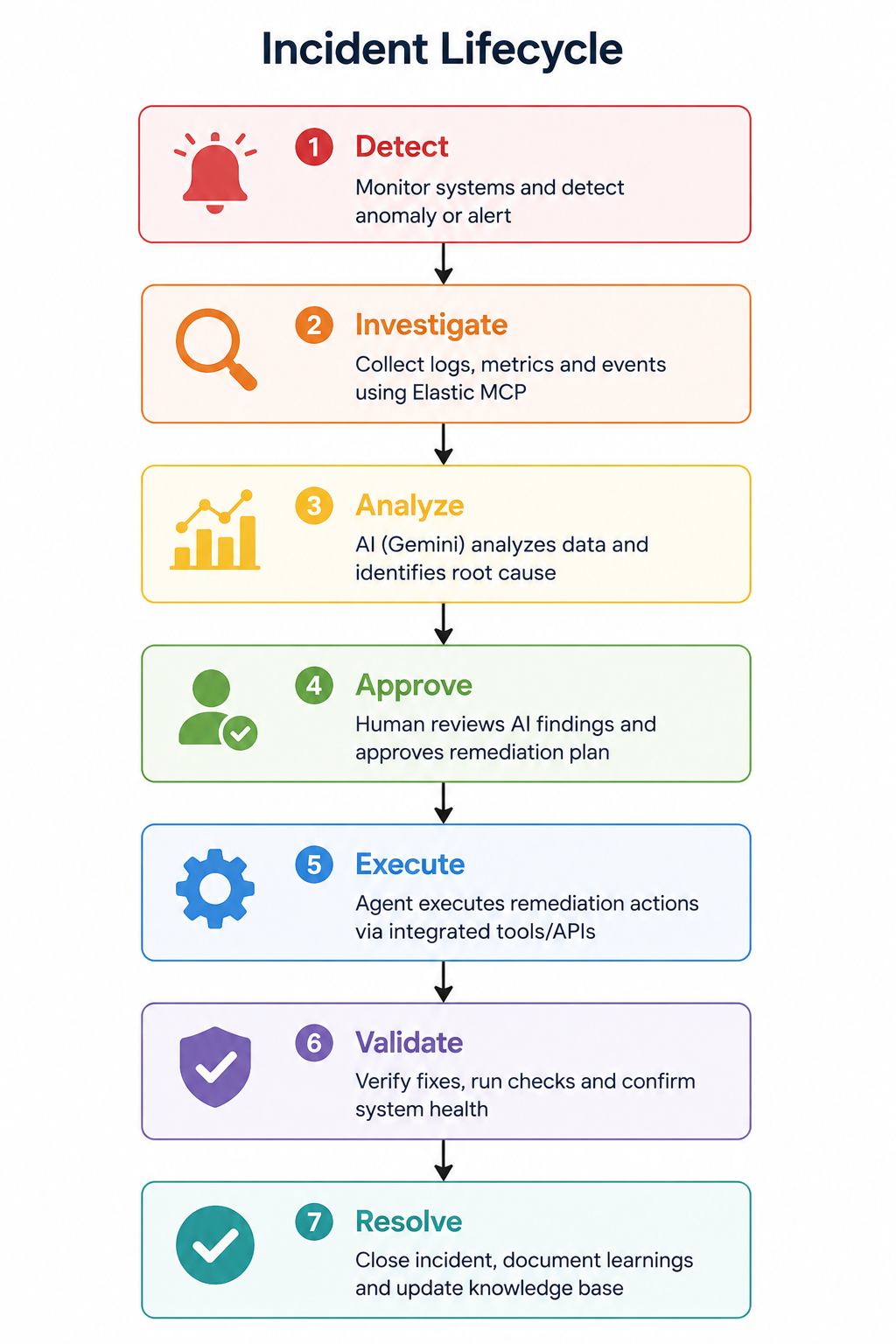
incident-lifecycle
PulseOps AI
The Problem
Modern observability platforms are excellent at detecting incidents, but they stop at the alert.
When a critical service fails, engineers still need to investigate logs, identify the root cause, decide on a remediation plan, execute the fix, and verify that the issue has been resolved. For many operational incidents, this process is repetitive, time-consuming, and often delays recovery.
I wanted to explore a simple idea:
What if observability platforms could do more than detect problems? What if they could actively help resolve them?
That idea became PulseOps AI.
Inspiration
The inspiration for PulseOps AI came from real-world IT operations workflows. Most incidents follow a familiar pattern:
- Something breaks.
- Engineers investigate telemetry and logs.
- A remediation plan is created.
- The fix is executed.
- Recovery is validated.
While monitoring and observability tools have improved dramatically, much of the incident-response process still relies on manual effort. I wanted to build an agent that could bridge the gap between detection and resolution while keeping humans in control of critical decisions.
What PulseOps AI Does
PulseOps AI is an autonomous incident-response agent that transforms observability into action.
When a service failure is detected, PulseOps AI:
- Detects the incident
- Retrieves telemetry and operational context from Elastic
- Uses Elastic MCP tools to investigate the issue
- Uses Gemini to determine the likely root cause
- Generates a remediation plan
- Requests human approval
- Executes the remediation workflow
- Validates recovery
- Produces an incident summary
Instead of functioning as a chatbot, PulseOps AI acts as an operational agent capable of reasoning, planning, and executing multi-step workflows. This directly aligns with the goal of building agents that go beyond conversation and perform real-world tasks.
How I Built It
PulseOps AI combines Google's agent platform with Elastic's observability ecosystem.
The solution is built using:
Google Cloud
- Gemini for reasoning and root-cause analysis
- Google Cloud Agent Builder / ADK for agent orchestration
- Vertex AI Agent Engine for deployment and execution
- Cloud Run for backend services
- Firebase Hosting for the dashboard
- Compute Engine for endpoint monitoring
Elastic
- Elastic Serverless
- Elasticsearch
- Kibana
- Elastic MCP Server
Application Stack
- Go
- React
- TypeScript
- WebSockets
The workflow begins when endpoint telemetry indicates a service failure. The backend creates an incident, Agent Builder orchestrates the investigation, Elastic MCP provides access to telemetry and logs, Gemini analyzes the evidence, and the resulting remediation plan is presented for approval before execution.
Challenges I Faced
One of the biggest challenges was ensuring that PulseOps AI behaved like a true agent rather than a chatbot.
I wanted the system to follow a complete operational workflow:
Detect → Investigate → Analyze → Approve → Execute → Validate → Resolve
Another challenge was integrating Elastic MCP into the investigation process. I needed the agent to use real operational data rather than pre-defined responses, allowing Gemini to reason over live telemetry and logs.
Finally, I had to design a reliable demonstration experience. Real endpoint remediation was implemented and tested on a live Windows endpoint, but I also developed an incident simulation system that allows users and judges to launch incidents on demand and observe the entire lifecycle in real time.
What I Learned
Building PulseOps AI taught me several valuable lessons:
- Observability without action provides limited operational value.
- MCP makes tool integration significantly simpler and more scalable.
- Agent orchestration is just as important as model intelligence.
- Human approval remains critical for trust and governance.
- The most powerful AI agents are those that can both reason and act.
Most importantly, I learned that the future of operations is not simply monitoring systems—it is enabling intelligent agents to investigate, reason, and assist with resolution.
Impact
PulseOps AI demonstrates how Gemini, Google Cloud Agent Builder, and Elastic MCP can work together to create a practical AI operations platform.
Through this project, I explored how observability data, agent orchestration, and AI reasoning can be combined to reduce the gap between detecting incidents and resolving them.
Rather than generating another alert, PulseOps AI helps operators move from incident to recovery faster, transforming observability into autonomous action.
Built With
- agentic-ai
- aiops
- autonomous-remediation
- cloud-build
- cloud-native-architecture
- cloud-run
- docker
- elastic-mcp-server
- elastic-serverless
- elasticsearch
- firebase-hosting
- github
- go-(golang)
- google-adk
- google-cloud-agent-builder
- google-cloud-run
- google-compute-engine
- google-gemini
- google-secret-manager
- incident-response-automation
- kibana
- mcp
- model-context-protocol-(mcp)
- observability
- powershell
- react
- real-time-telemetry-monitoring
- rest-api
- root-cause-analysis
- service-health-monitoring
- tool
- typescript
- vertex-ai
- vertex-ai-agent-engine
- vite
- websockets

Log in or sign up for Devpost to join the conversation.