-
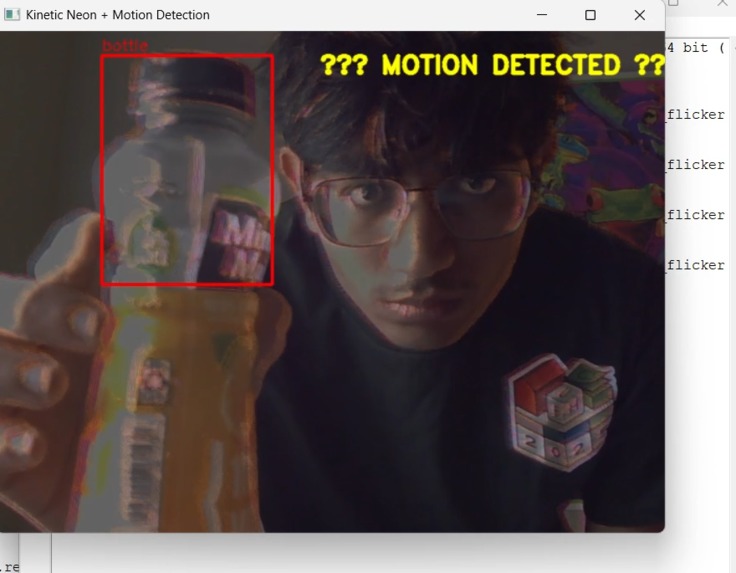
it recognises stuff too
-
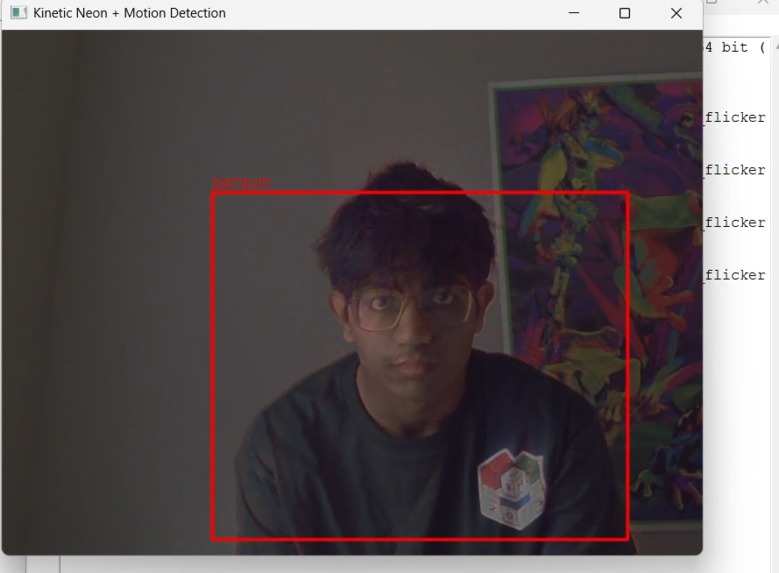
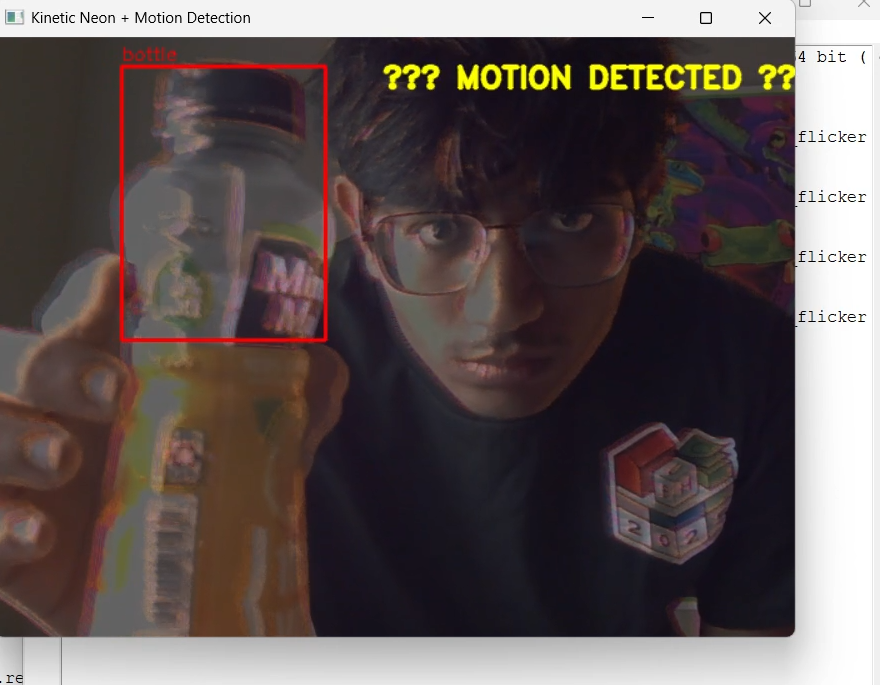
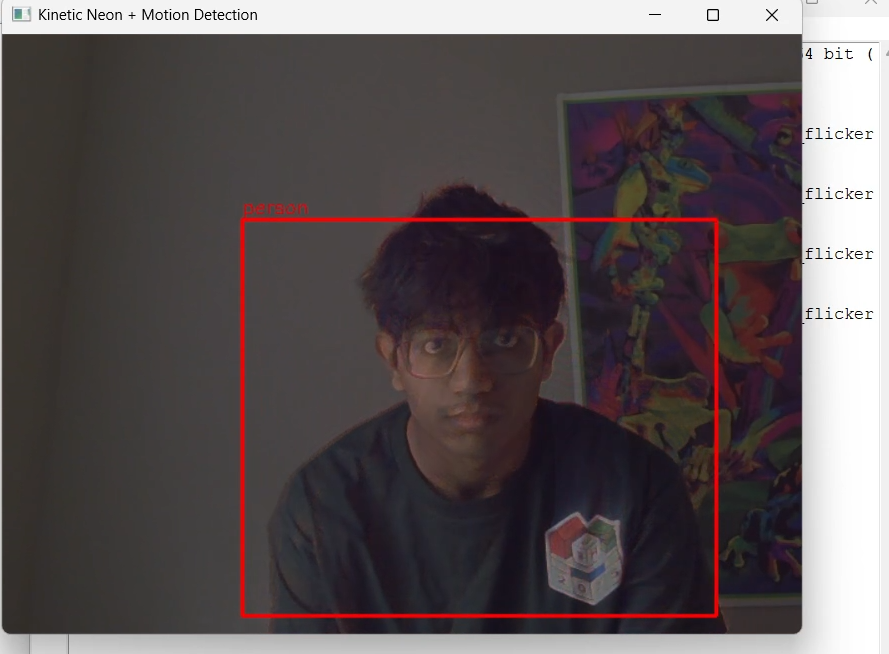
This project is a motion detection and visualization system built using Python and OpenCV. It uses a standard webcam logitech webcam to continuously capture frames and process them in real time. The system not only detects motion and moving objects but also transforms the live feed into a visually dynamic “portal-like” display inspired by Doctor Strange — combining motion analysis with creative image processing effects.
Working Principle
The detector operates on the principle of frame differencing — observing changes between consecutive video frames to identify motion. When an object moves within the camera’s field of view, pixel intensity differences are detected and visually enhanced through edge detection and trail persistence effects. This allows the system to both detect and visualize motion in an artistic way.
Key Components and Logic
Camera Initialization
The program attempts to open an available webcam using OpenCV’s VideoCapture.
The resolution is optimized (640×480) for performance on both PCs and Raspberry Pi.
Frame Processing
Each captured frame is blurred slightly to reduce noise.
Edge detection (cv2.Canny) highlights object boundaries, making motion areas more visible.
The edge map is then colorized using the Plasma colormap for a high-contrast, glowing effect.
Motion Trails and Glow
A trail buffer blends current and previous frames (cv2.addWeighted) to create a fading motion trail behind moving objects.
Gaussian blur is applied to produce a soft glowing effect that visually emphasizes movement intensity.
Visual Effects
Kaleidoscope Effect: Mirrors half the frame to generate symmetrical motion patterns.
Swirl Effect: Warps the image around the center, simulating a swirling portal.
Color Shift: Gradually shifts hues in HSV space, giving a dynamic color-changing animation.
Real-Time Loop
The entire system updates continuously, responding to new motion in real time.
Pressing ‘q’ exits the program safely and releases the camera.
Applications
Surveillance and Security: Detects motion or intrusions in a monitored space.
Interactive Art Installations: The portal-like visuals make it ideal for exhibitions or creative visual systems.
Smart Vision Projects: Can be extended with YOLO or background subtraction for object classification and tracking.
Technical Highlights
Libraries Used: OpenCV, NumPy, Math, and Time.
Performance Optimizations: Adjustable frame blending, resolution, and effect strengths for different hardware.
Custom Effects: Implemented using OpenCV’s mapping, blurring, and color transformation techniques.


Log in or sign up for Devpost to join the conversation.