-
-
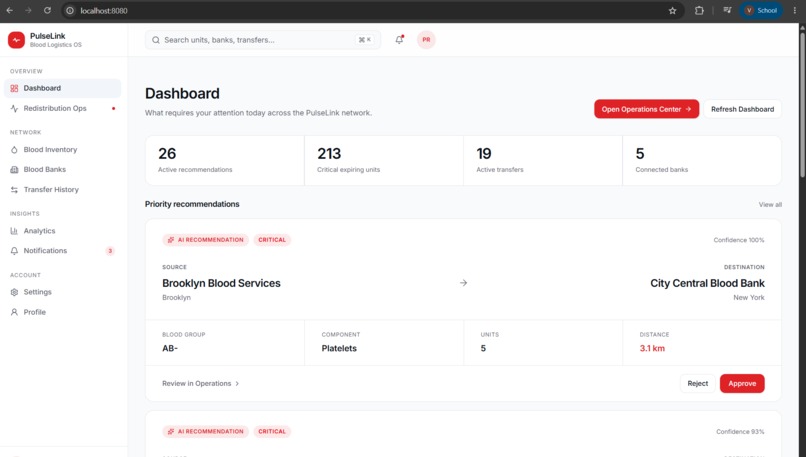
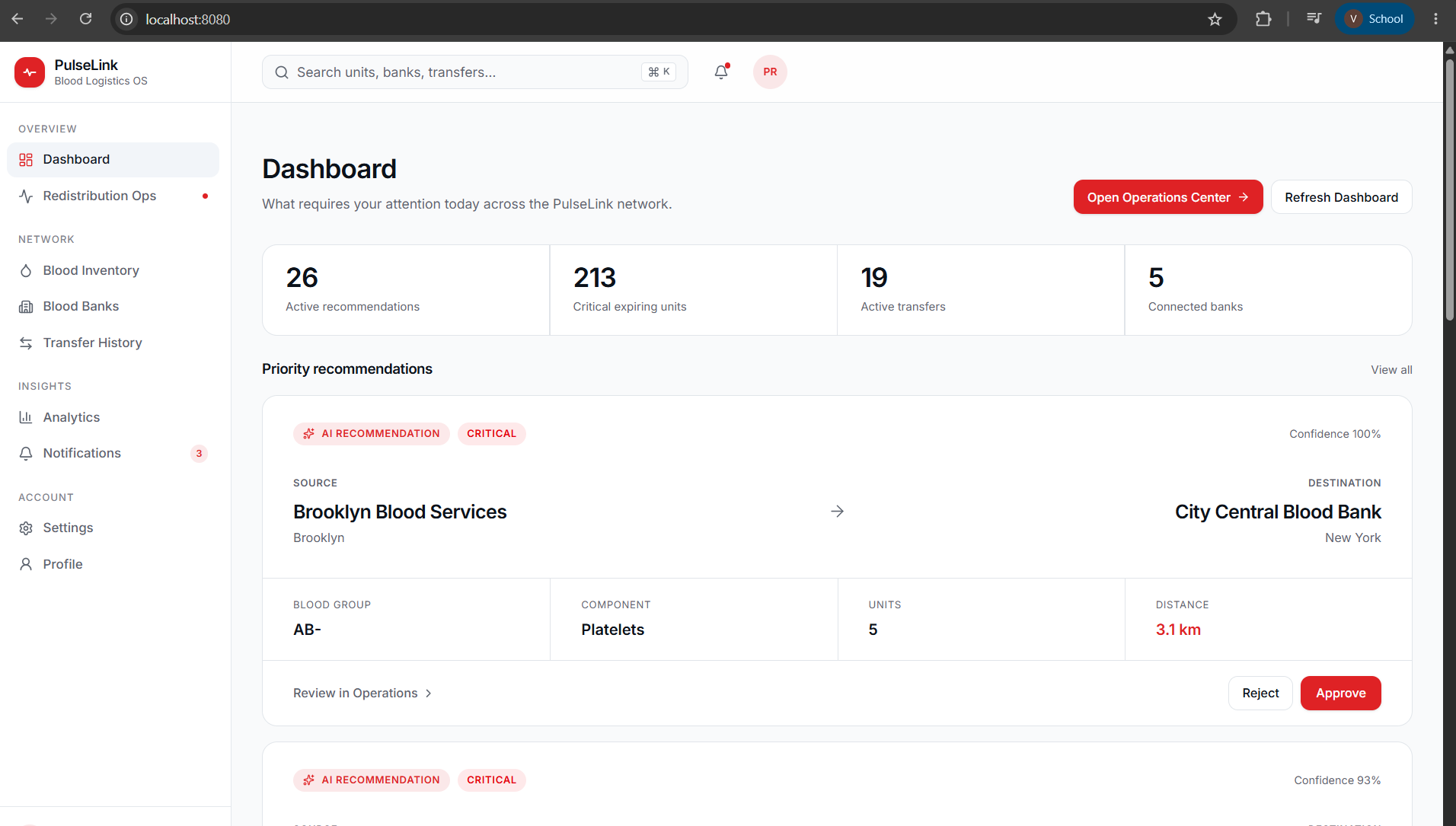
DASHBOARD
-
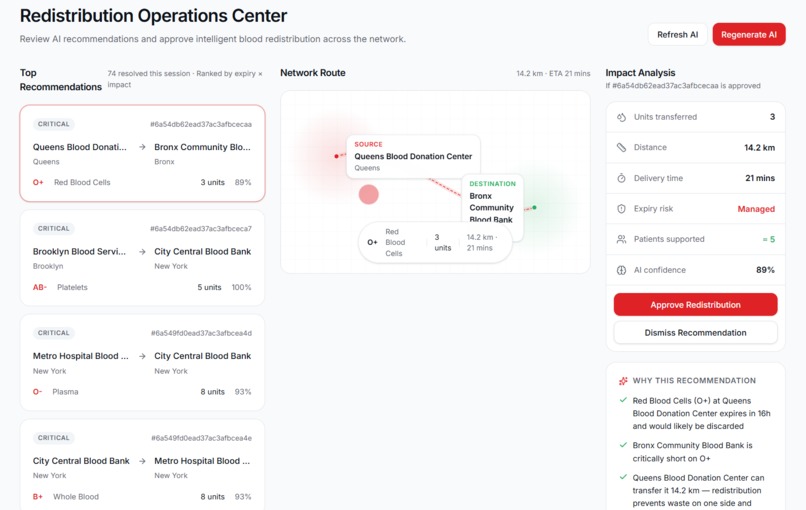
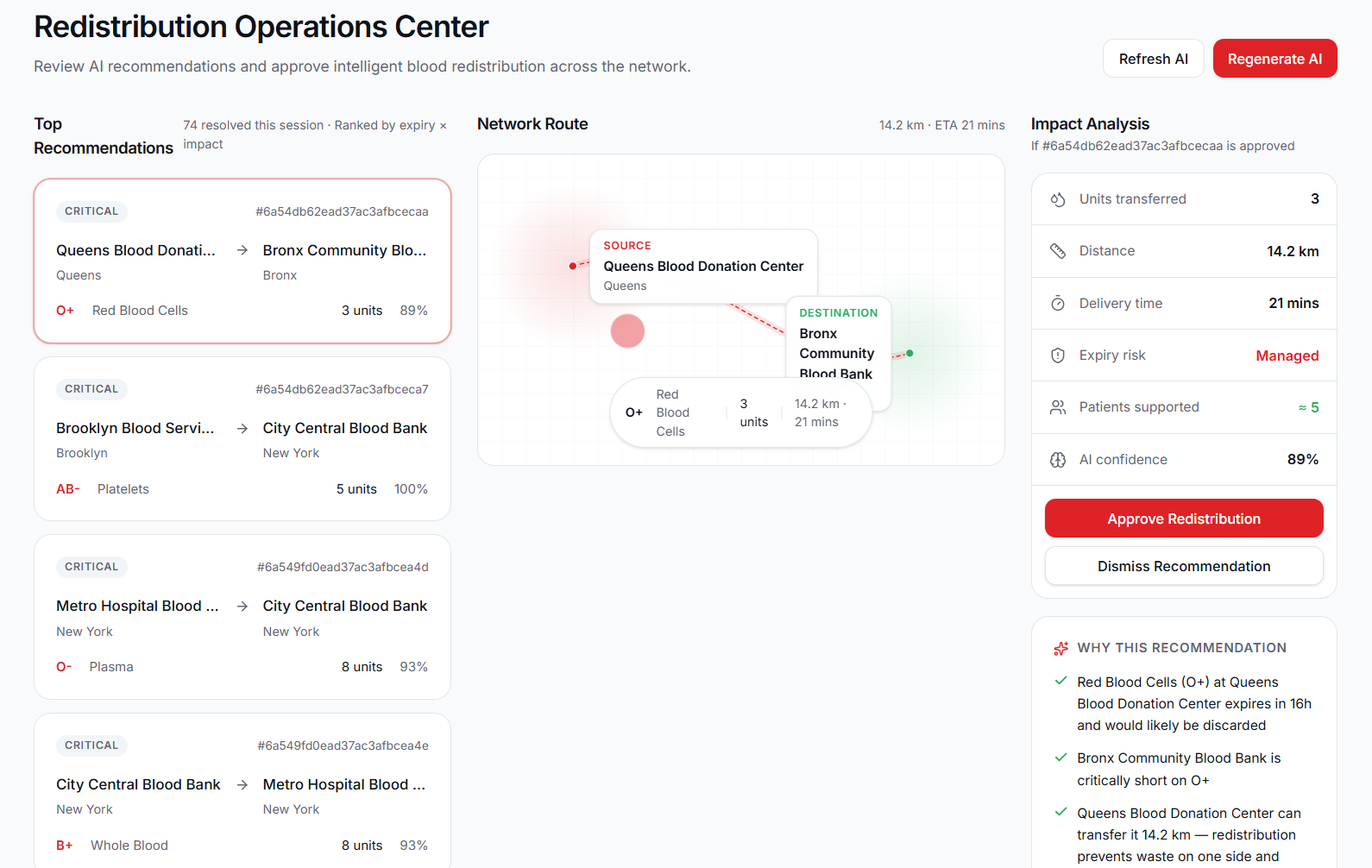
TOP RECOMMANDATION PAGE
-
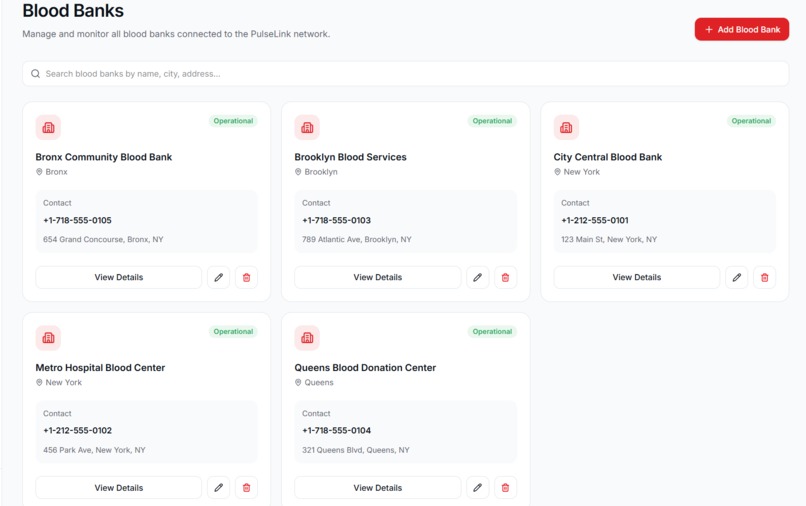
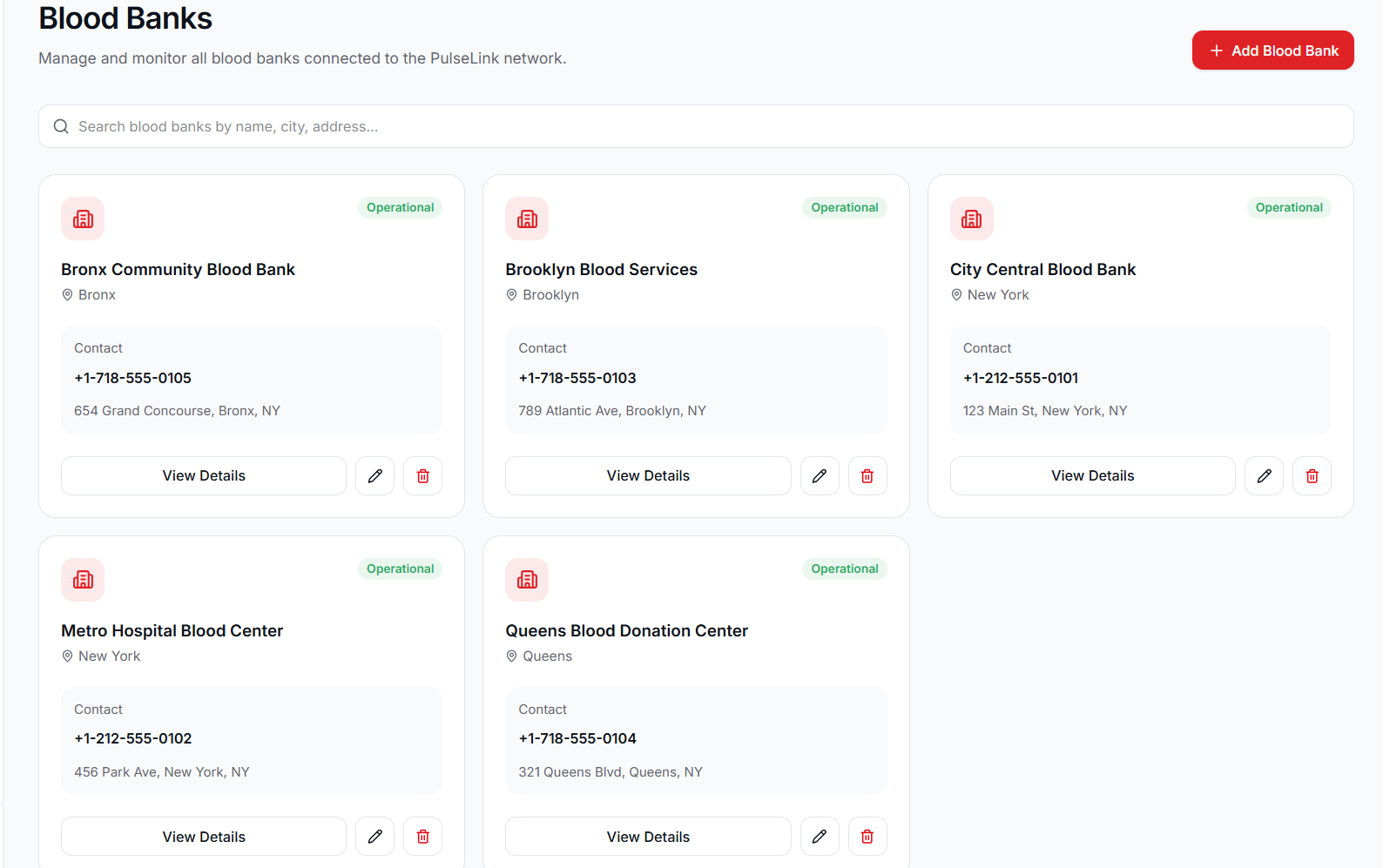
BLOOD BANK
-
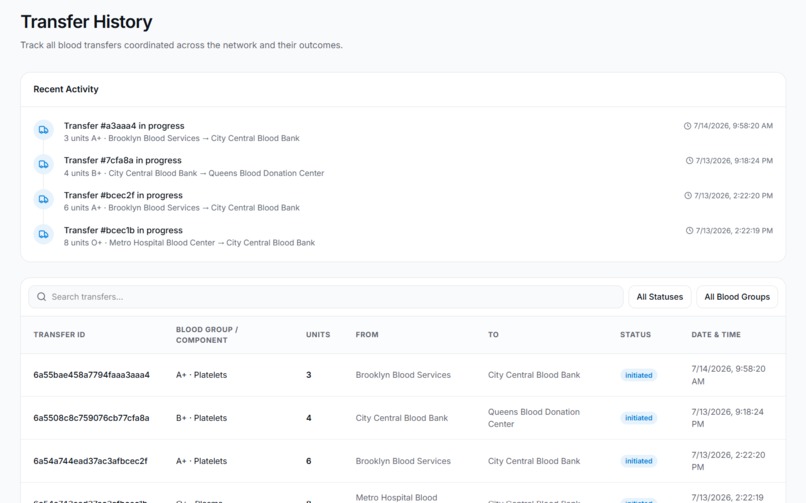
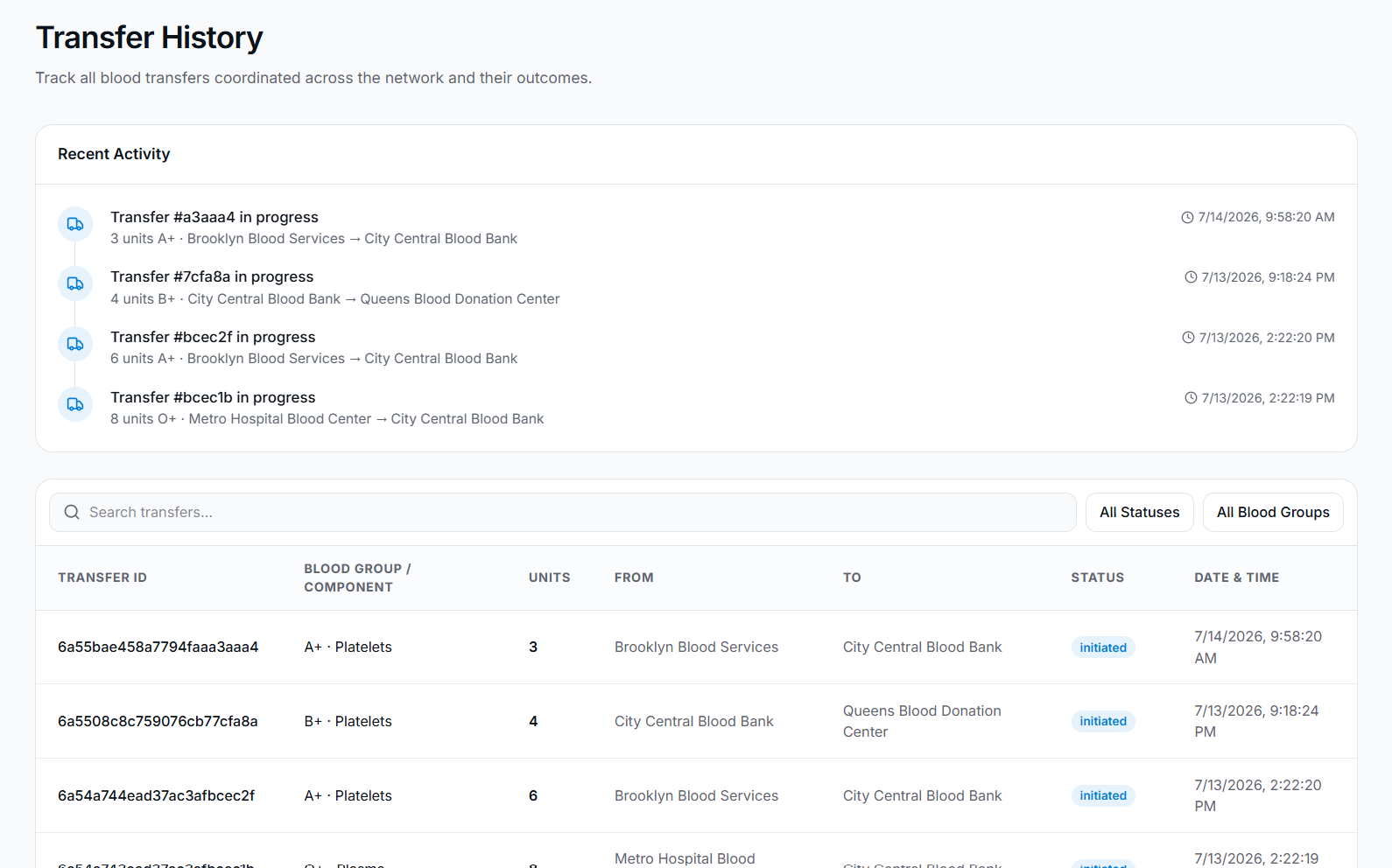
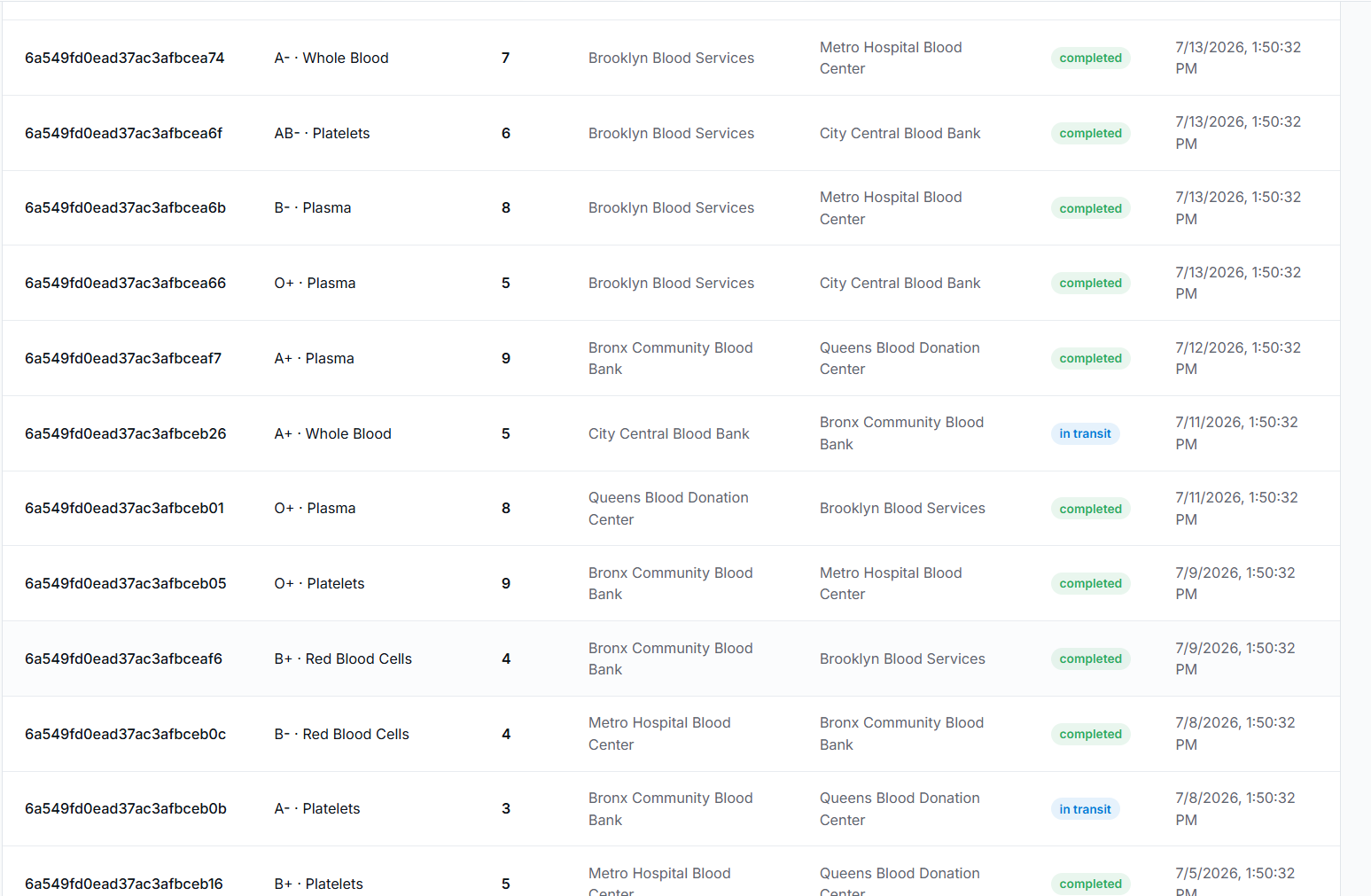
TRANSFER HISTORY 1
-
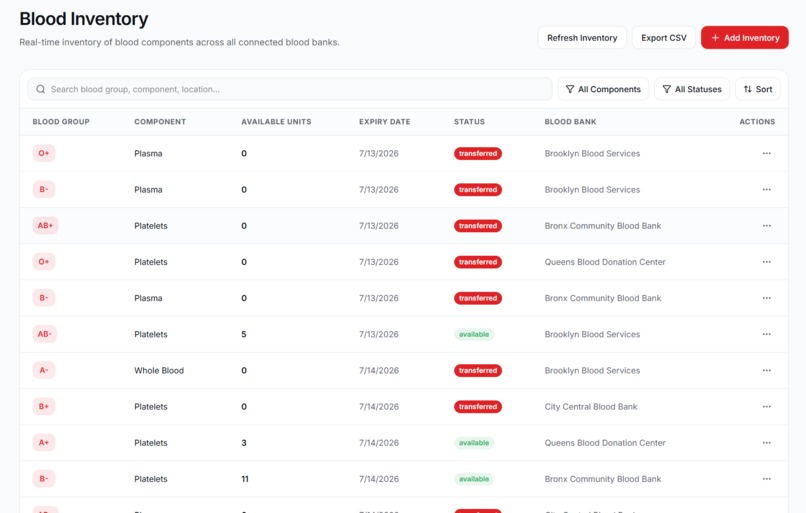
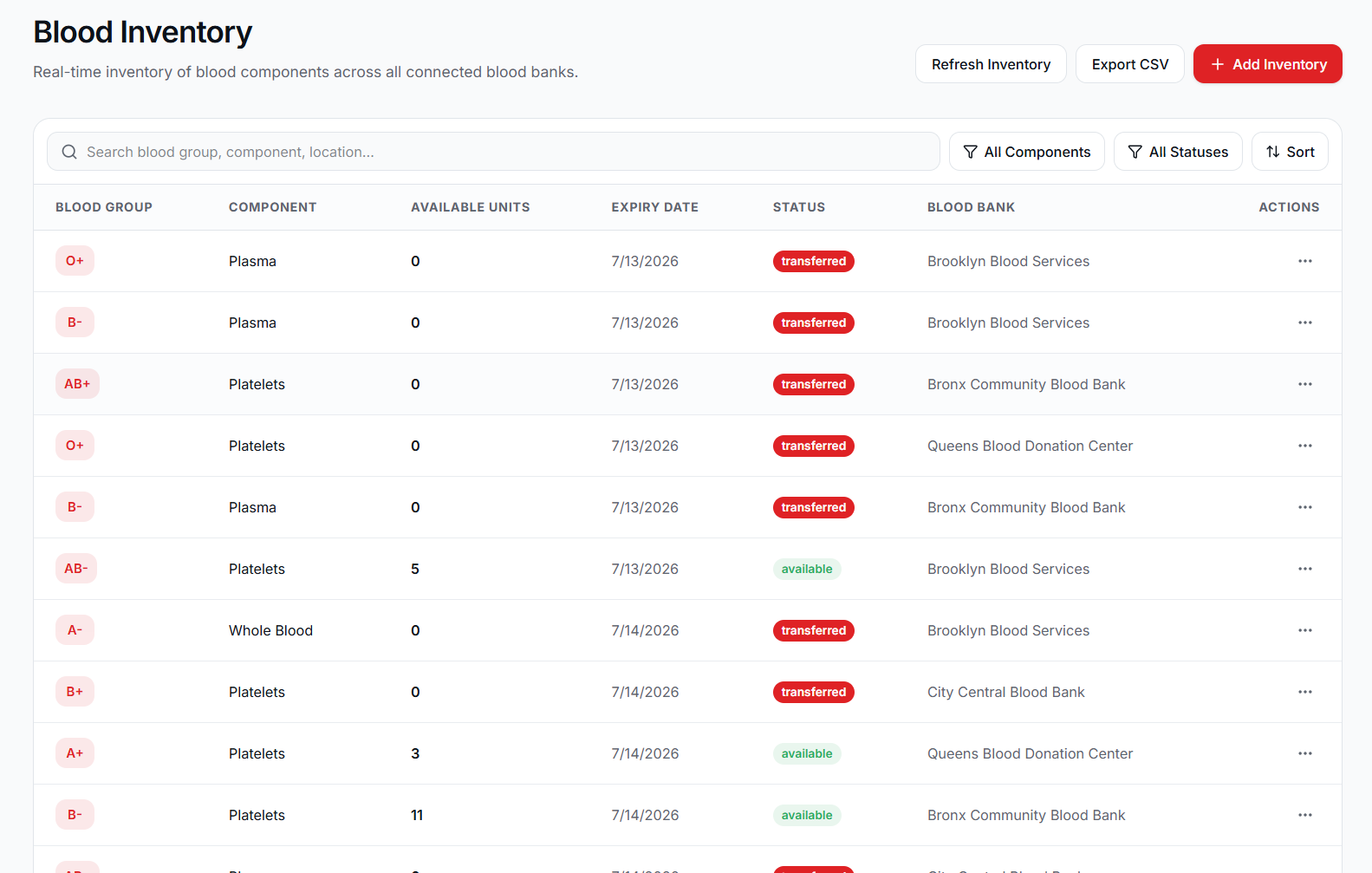
BLOOD INVENTORY
-
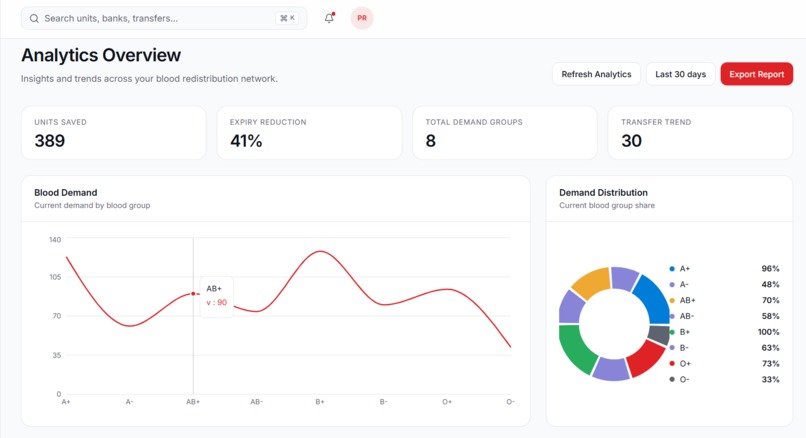
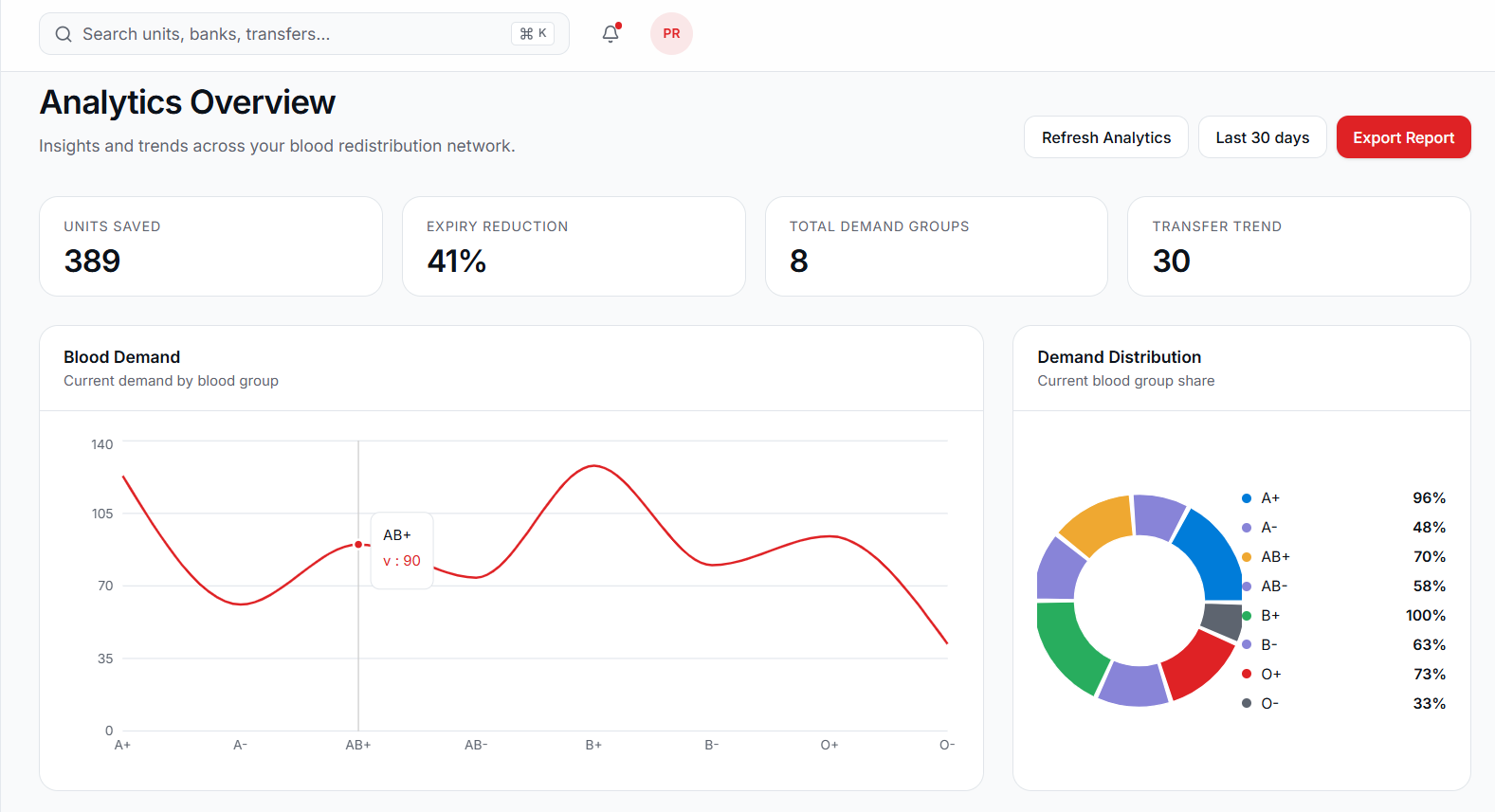
ANALYTICS
-
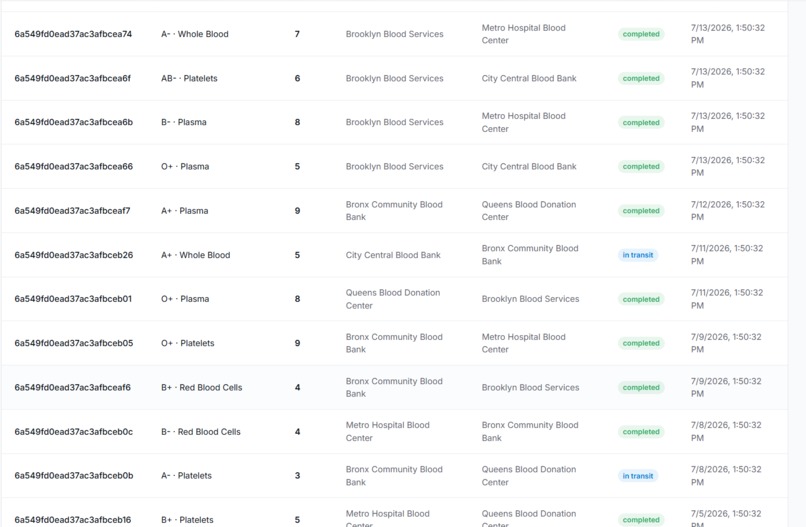
TRANSFER HISTORY 2
-
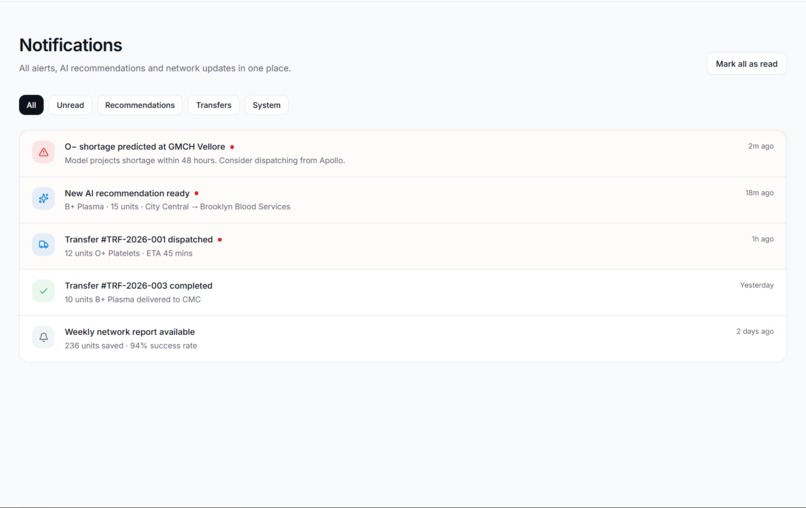
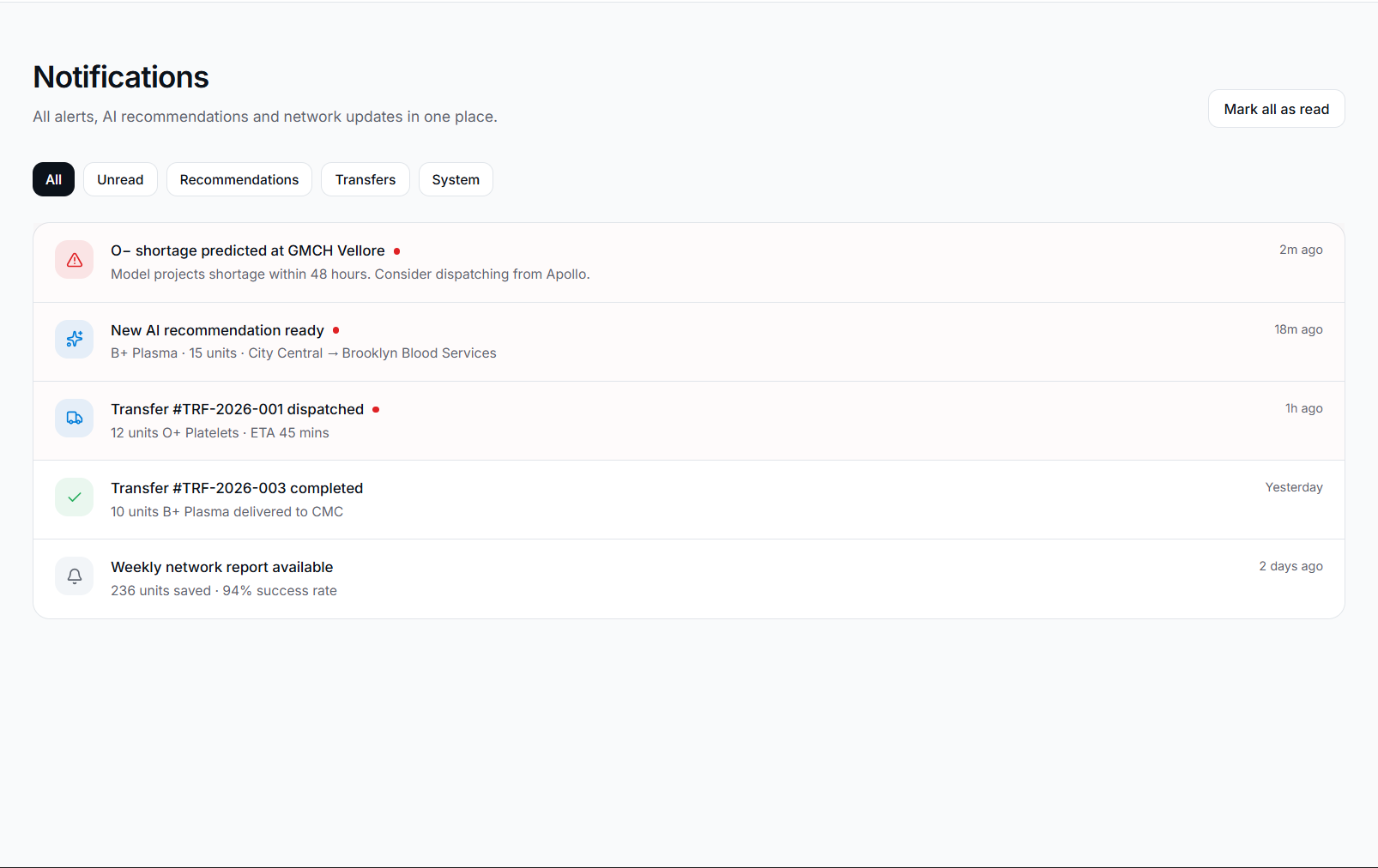
NOTIFICATIONS
-
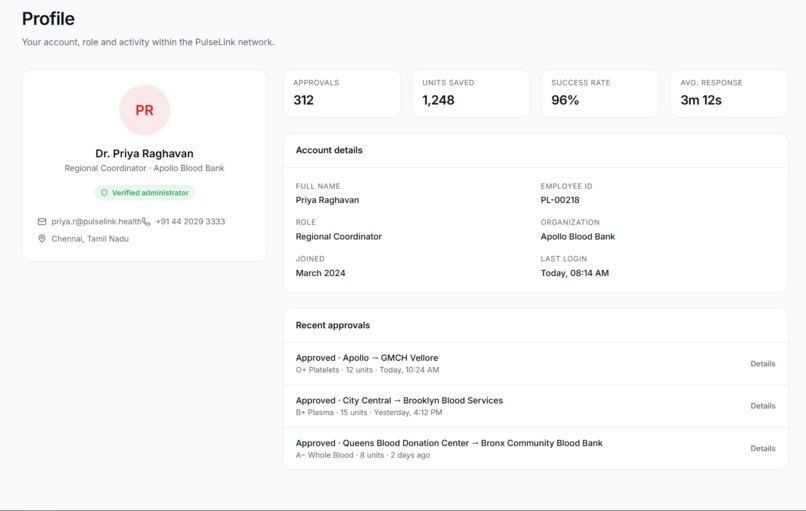
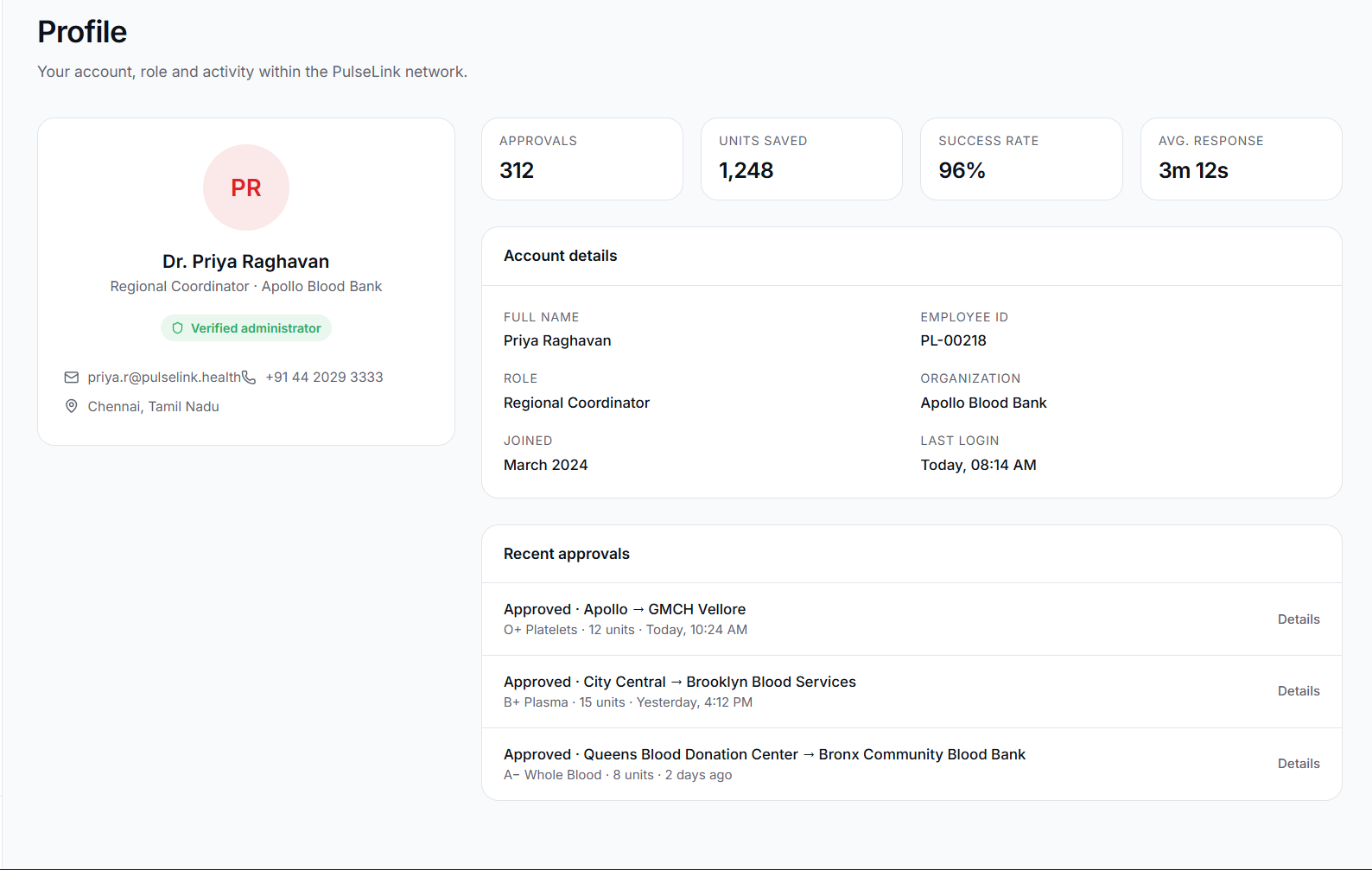
PROFILE
-
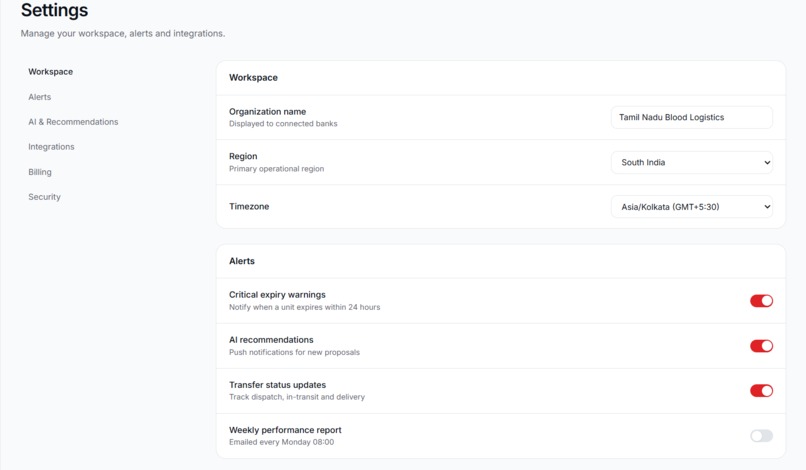
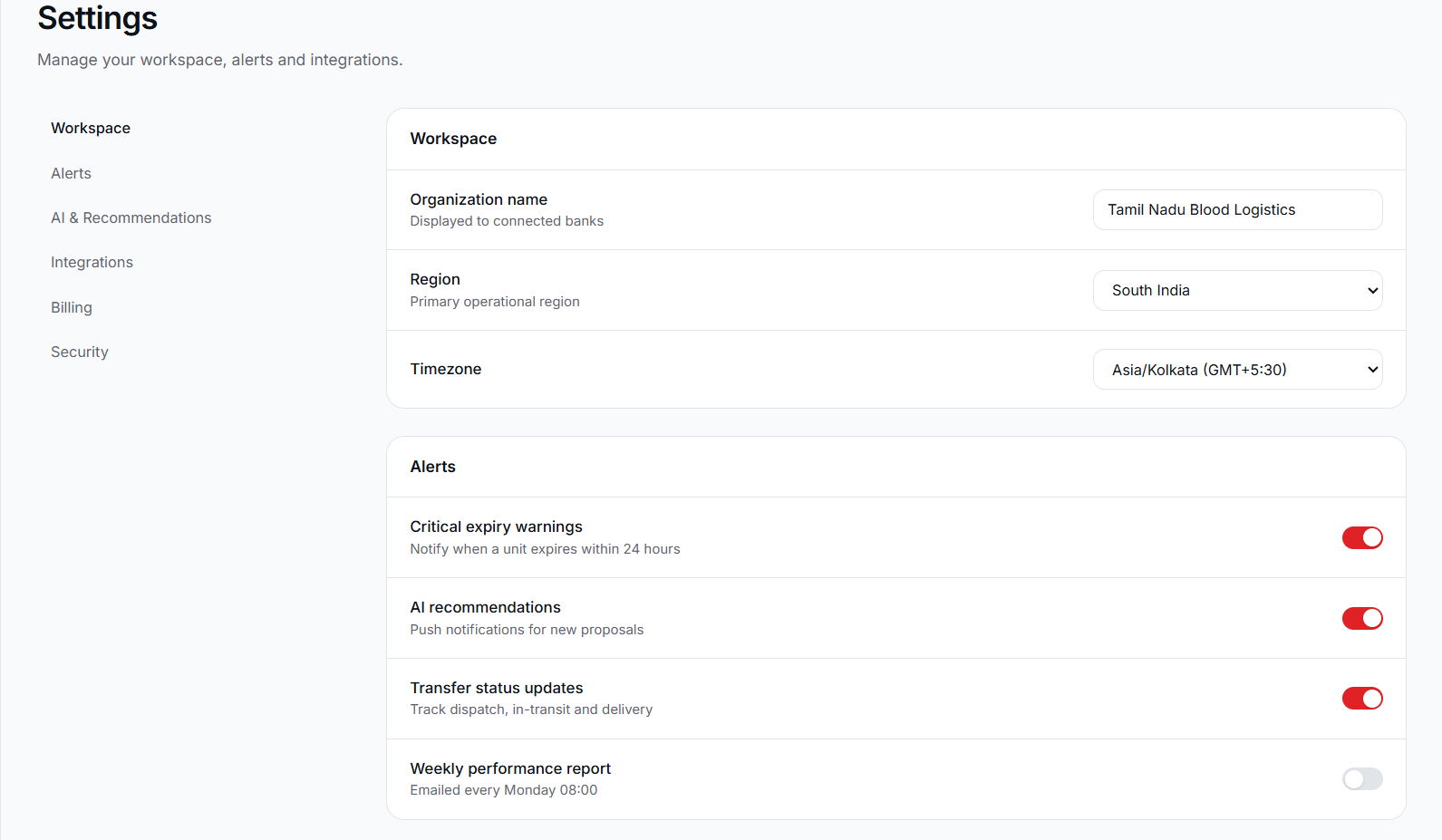
SETTINGS
PulseLink – Intelligent Inter-Bank Blood Redistribution Network
🚀 What Inspired Us
Blood is one of the few life-saving resources that cannot be manufactured—it can only be donated. Yet, while researching hospital blood management systems, we discovered a surprising reality: the challenge is often not the lack of blood, but the lack of coordination between blood banks. Studies across India report that 8–23% of collected blood components are discarded, with platelets accounting for the majority of this wastage due to their 5–7 day shelf life. At the same time, neighboring hospitals frequently face shortages of those very same blood groups.
This contrast inspired us to think differently. Instead of building another donor-search application, we focused on preserving the value of every donated unit. We envisioned a system where blood banks could communicate intelligently, identify surplus inventory before expiry, and redistribute it to hospitals experiencing shortages. That vision became PulseLink, an intelligent healthcare logistics platform designed to ensure that every possible donated unit reaches a patient instead of becoming medical waste. Our guiding belief is simple:
"Blood doesn't run out. It simply doesn't reach the right place in time."
📚 What We Learned
Building PulseLink was much more than a software development exercise—it was an opportunity to understand the intersection of healthcare, logistics, and decision science.
We learned how blood components differ not only biologically but also operationally. Red blood cells can be stored for approximately 42 days, whereas platelets remain viable for only 5–7 days, making timely redistribution critical. We also studied blood-group compatibility rules, inventory management principles, and how healthcare systems prioritize patient safety during transfusions.
From a technical perspective, we explored Multi-Criteria Decision Analysis (MCDA) using the Weighted Sum Model (WSM) to rank redistribution options. Instead of relying on black-box machine learning, we adopted an explainable decision-support approach where every recommendation can be justified through measurable criteria. We also implemented the Haversine Algorithm to calculate geographical distances between blood banks, ensuring that suggested transfers remain both medically and logistically feasible.
Most importantly, we learned that solving healthcare challenges requires balancing technology with transparency, reliability, and practical implementation.
🛠️ How We Built Our Project
PulseLink was designed as an intelligent decision-support platform that continuously monitors blood inventory across a connected network of blood banks.
The workflow begins by scanning inventory records to identify blood units approaching their expiry period. Simultaneously, the system evaluates hospitals experiencing shortages based on predefined safe inventory levels, known as par levels. Every possible surplus-to-deficit pair is then evaluated using four critical decision parameters:
- Expiry Urgency
- Deficit Urgency
- Distance Feasibility
- Blood-Type Compatibility
These factors are combined using a weighted scoring model:
$$ \text{Redistribution Priority Score} = (0.35 \times E) + (0.30 \times D) + (0.20 \times L) + (0.15 \times C) $$
Where:
- $E$ = Expiry Urgency
- $D$ = Deficit Urgency
- $L$ = Distance Feasibility
- $C$ = Blood-Type Compatibility
To determine transportation feasibility, PulseLink applies the Haversine Algorithm, which computes the shortest geographical distance between two blood banks using their latitude and longitude coordinates:
$$ d = 2R \sin^{-1} \left( \sqrt{ \sin^2\left(\frac{\Delta\phi}{2}\right) + \cos(\phi_1) \cos(\phi_2) \sin^2\left(\frac{\Delta\lambda}{2}\right) } \right) $$
where:
- $R$ = Earth's radius
- $\phi$ = Latitude
- $\lambda$ = Longitude
The system evaluates every feasible redistribution possibility, ranks them according to the Redistribution Priority Score, and presents hospital staff with the most effective transfer recommendation. Once approved, inventory records are updated across both blood banks, ensuring accurate synchronization throughout the network.
Unlike traditional blood directories that simply display availability, PulseLink actively recommends where blood should move, transforming isolated blood banks into a collaborative healthcare ecosystem.
⚡ Challenges We Faced
One of the biggest challenges was realizing that this problem is not a simple location-search problem but a two-sided optimization problem. Instead of merely finding the nearest blood bank, our system needed to identify the most effective redistribution pair by simultaneously considering medical compatibility, expiry risk, transportation feasibility, and shortage severity.
Another challenge involved balancing technical sophistication with explainability. While machine learning could have been used for prediction, healthcare professionals require transparent and auditable recommendations. We therefore chose a rule-based multi-criteria decision model that allows every recommendation to be traced back to measurable parameters.
Data availability also presented a challenge. Since real-time hospital inventory data is not publicly accessible, we relied on published hospital discard-rate studies and carefully designed datasets to simulate realistic blood bank operations. This allowed us to validate the workflow while maintaining practical relevance.
Finally, integrating healthcare knowledge with operations research required extensive study of blood storage, transfusion compatibility, inventory management, and logistics optimization. Combining these diverse domains into a single intelligent platform was one of the most rewarding aspects of developing PulseLink.
🌍 Impact
PulseLink demonstrates that the future of blood management lies not only in increasing donations but also in improving coordination. By intelligently redistributing near-expiry blood units before they become unusable, the system minimizes wastage, supports hospitals facing shortages, and maximizes the value of every blood donation.
Rather than asking "Where can we find more blood?", PulseLink answers a more meaningful question:
"How can we ensure the blood we already have reaches the patient who needs it most?"

Log in or sign up for Devpost to join the conversation.