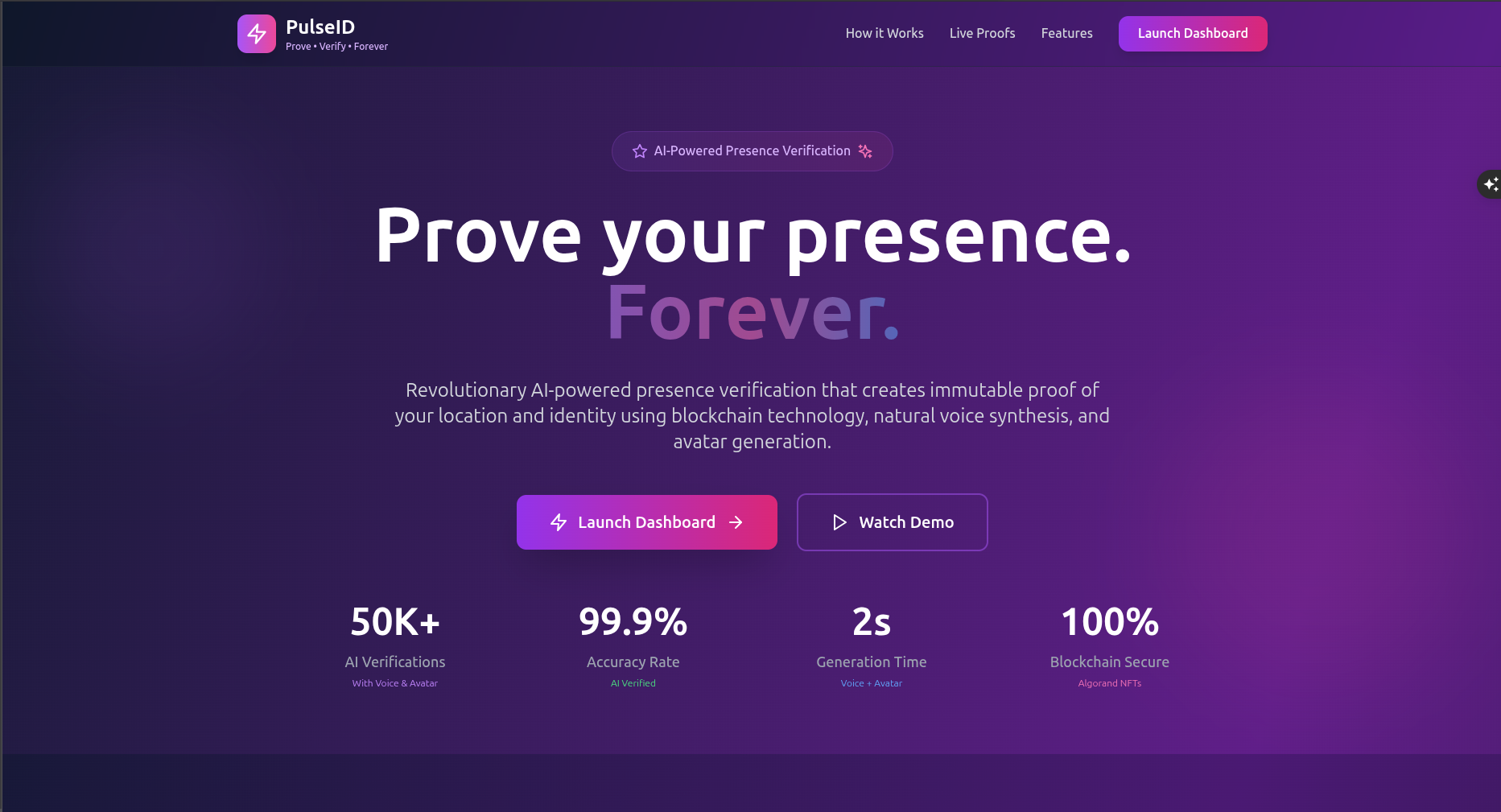
About PulseID In a world full of bots, remote work, and virtual events, the concept of "being present" has lost its weight. We were inspired to build PulseID to bring verifiable, irrefutable presence back into the digital age. Whether you're attending a global summit, joining a DAO vote, or simply showing up — PulseID gives you a way to prove it with AI and blockchain.
We asked: What if your presence could be as valuable and verifiable as your signature? That question sparked PulseID.
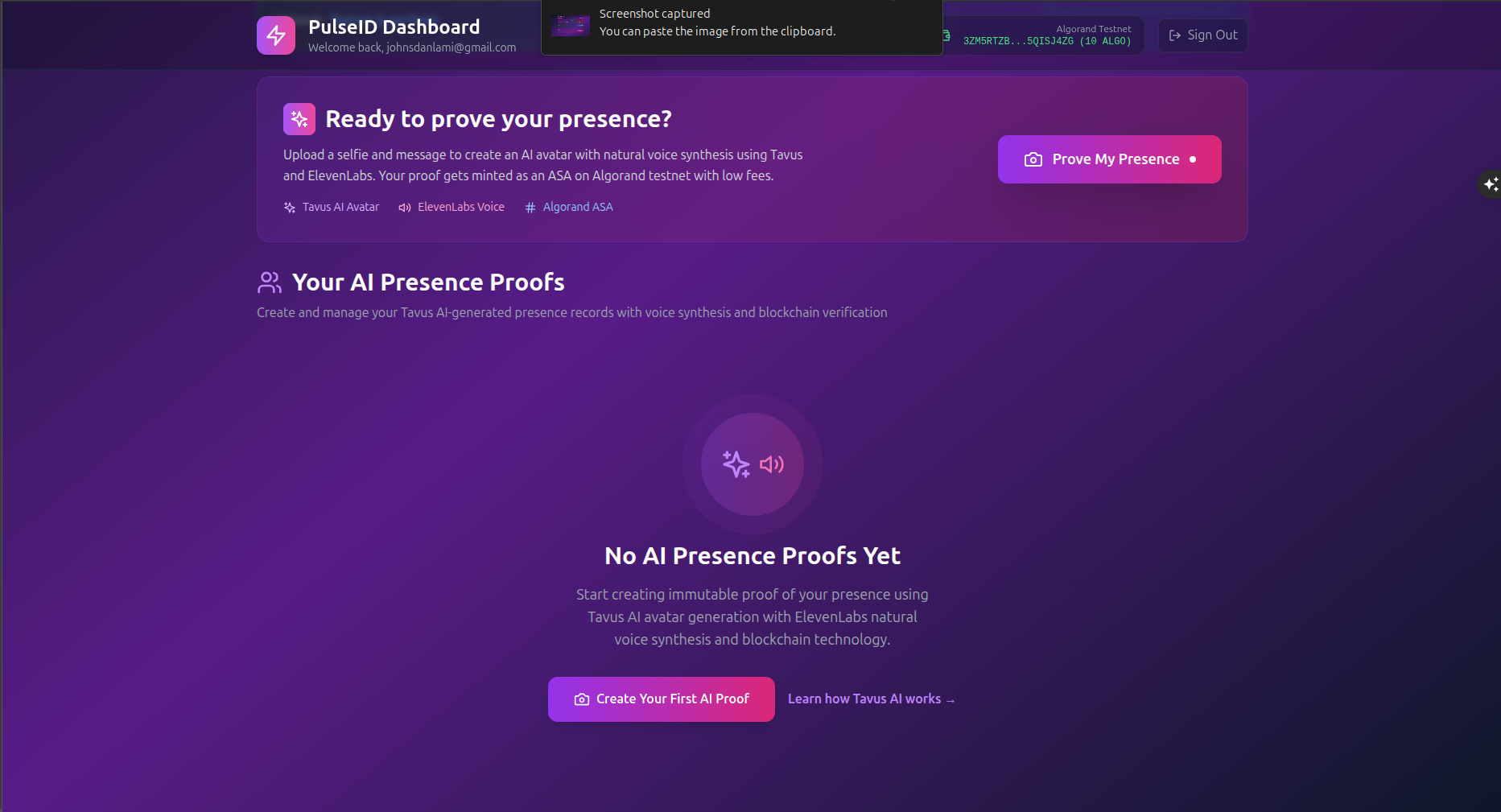
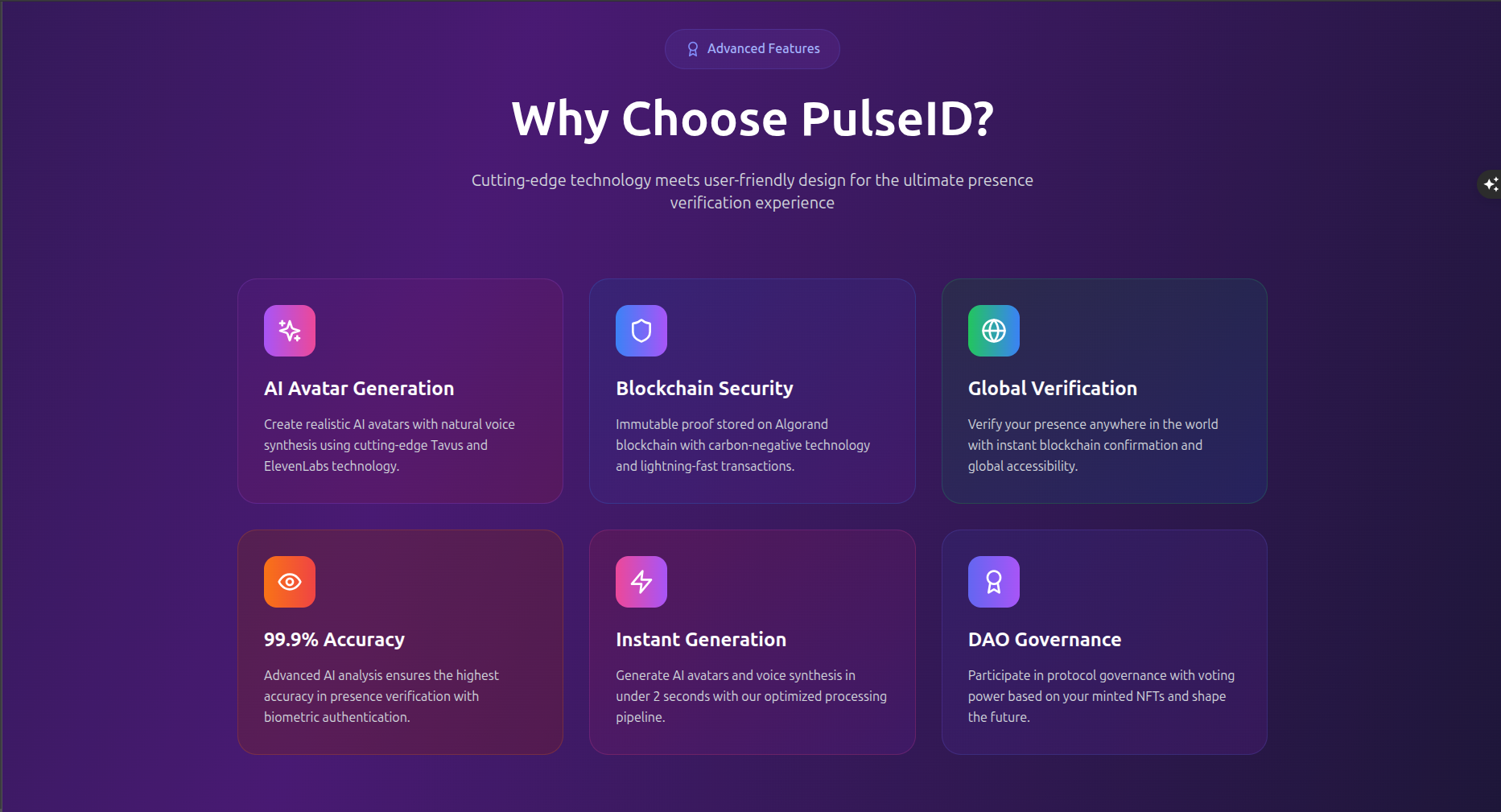
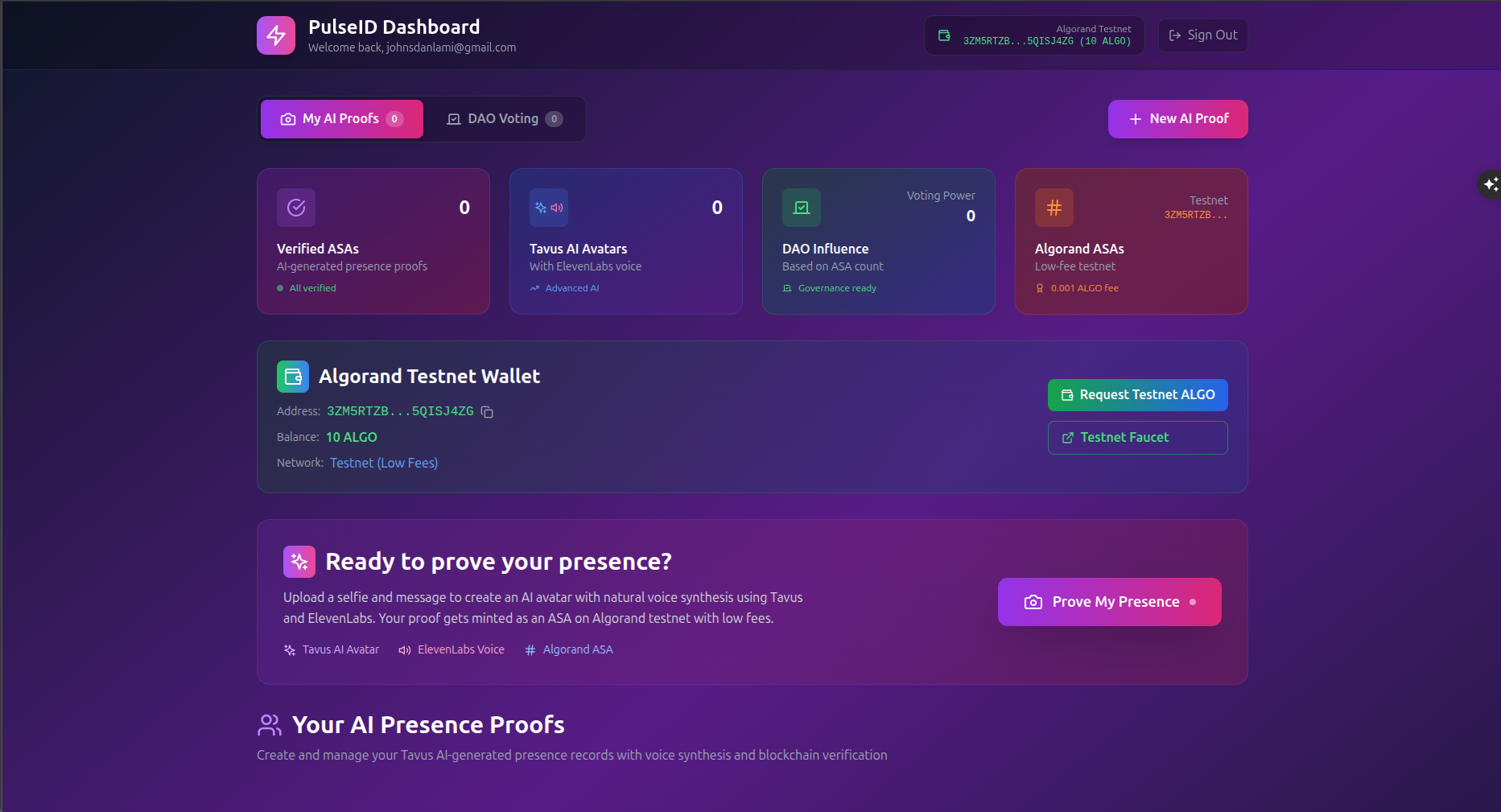
🧠 What We Built PulseID is a decentralized, AI-powered platform that lets users: Record their presence with AI-generated video avatars (Tavus) Add realistic, synthesized voice clips (ElevenLabs) Mint these as verifiable NFTs on the Algorand blockchain Use those NFTs to access features, vote in DAOs, or unlock digital rights
We built it entirely with Bolt.new, using a combination of: 🧠 Tavus API for real-time AI video generation 🔊 ElevenLabs for natural-sounding voice generation 🔗 Algorand for fast, low-cost NFT minting 💳 RevenueCat to monetize via gated feature tiers ☁️ Supabase for auth + presence metadata 🌐 Netlify global deployment
🧪 What We Learned How to blend AI video + voice synthesis into a seamless, user-driven experience How to deploy no-code tools with real production APIs using Bolt.new How to mint NFTs on Algorand with metadata that links to AI assets Best practices for monetizing digital experiences using entitlements How to keep the UX simple while stacking powerful tech under the hood
🧩 Challenges We Faced Getting Tavus + ElevenLabs timing to sync correctly Handling async file uploads and API callbacks in a no-code environment Working within Bolt.new’s current limitations while still building a powerful multi-layered app Integrating Algorand minting without exposing private keys or bloating the UX Ensuring RevenueCat entitlements worked across different plans in a Bolt flow
Built With
- bolt
- react
- superbase

Log in or sign up for Devpost to join the conversation.