PulseGrid AI — Agentic Power Grid Incident Intelligence & Recovery Simulator
Inspiration
A single failure in an electrical network can affect hospitals, water supply systems, industries, and entire communities. The challenge is not simply detecting a fault, but understanding how that failure propagates through interconnected infrastructure and determining the best response.
We envisioned PulseGrid AI as an intelligent platform that makes infrastructure incident analysis faster, more transparent, and easier to understand.
Our goal was to explore how graph-based intelligence and agentic AI could work together to transform complex network information into actionable insights.
What It Does
PulseGrid AI is an AI-powered electrical infrastructure incident analysis and recovery simulator built around an interconnected power-grid model.
The system is designed to support four key stages:
- Detect: Identify simulated infrastructure faults and abnormal operating conditions.
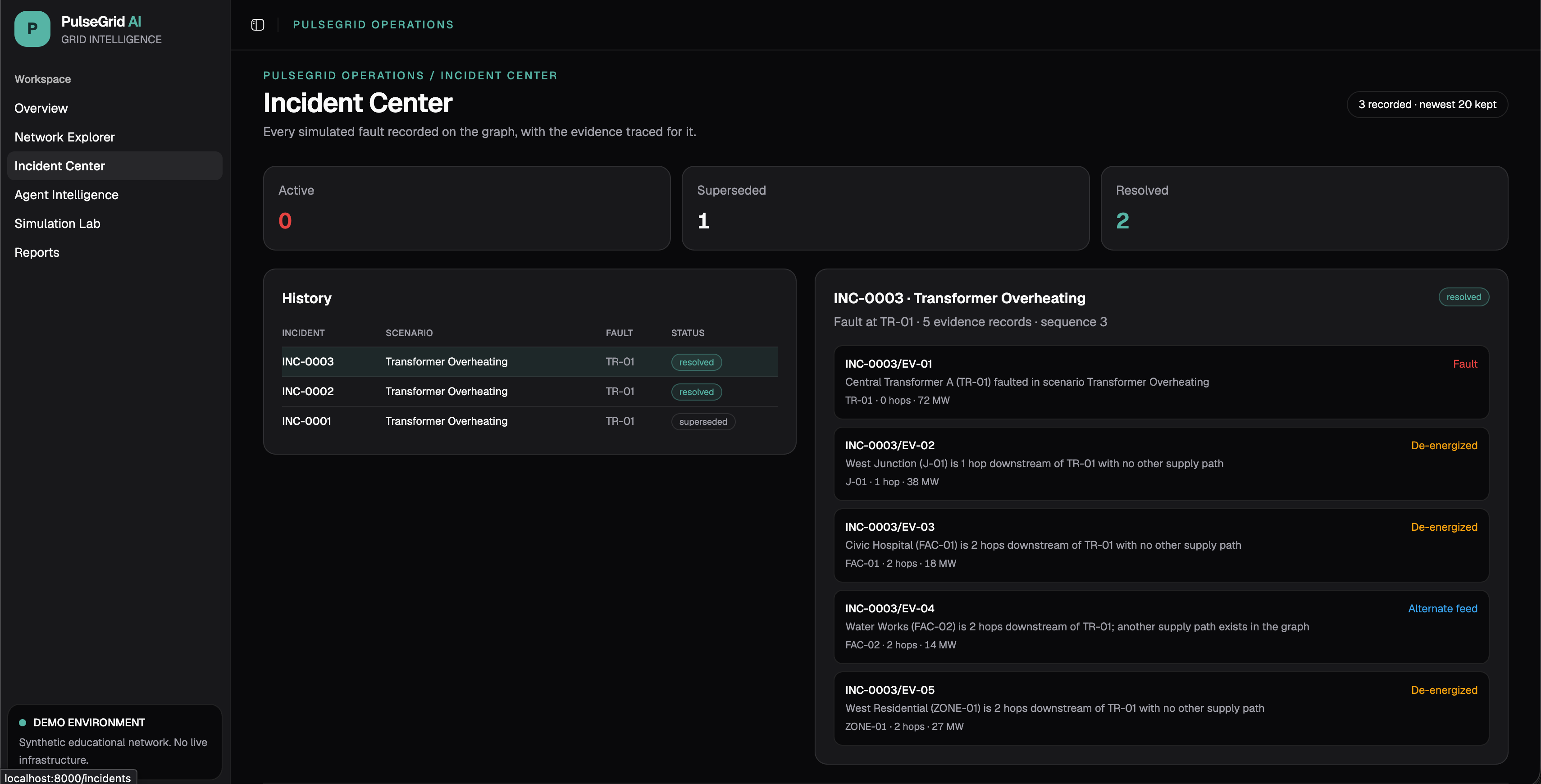
- Investigate: Explore network dependencies and identify potentially affected infrastructure, including critical facilities.
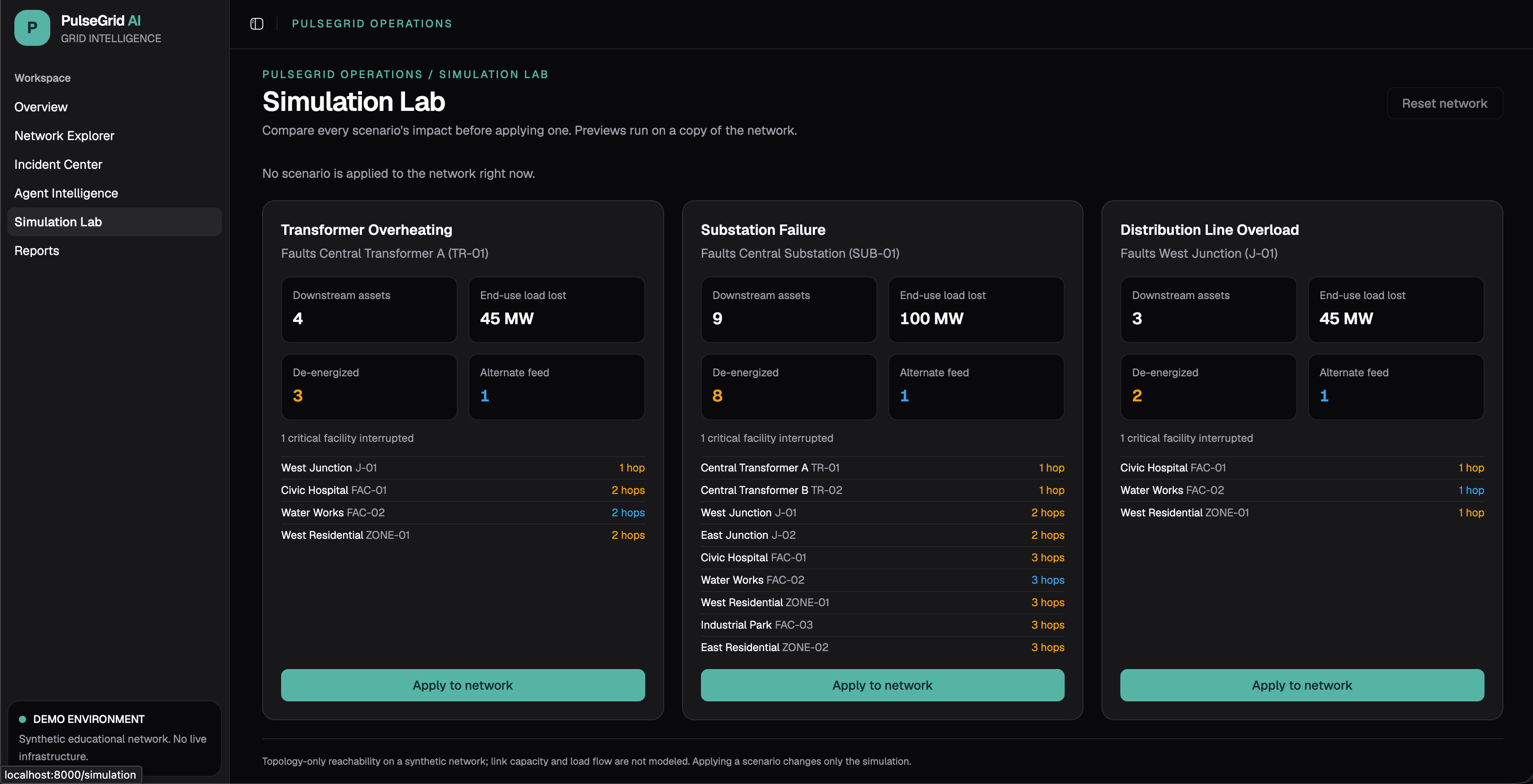
- Plan: Evaluate possible recovery strategies using network information and operational constraints.
- Verify: Check proposed actions against simulated network constraints and explain the findings.
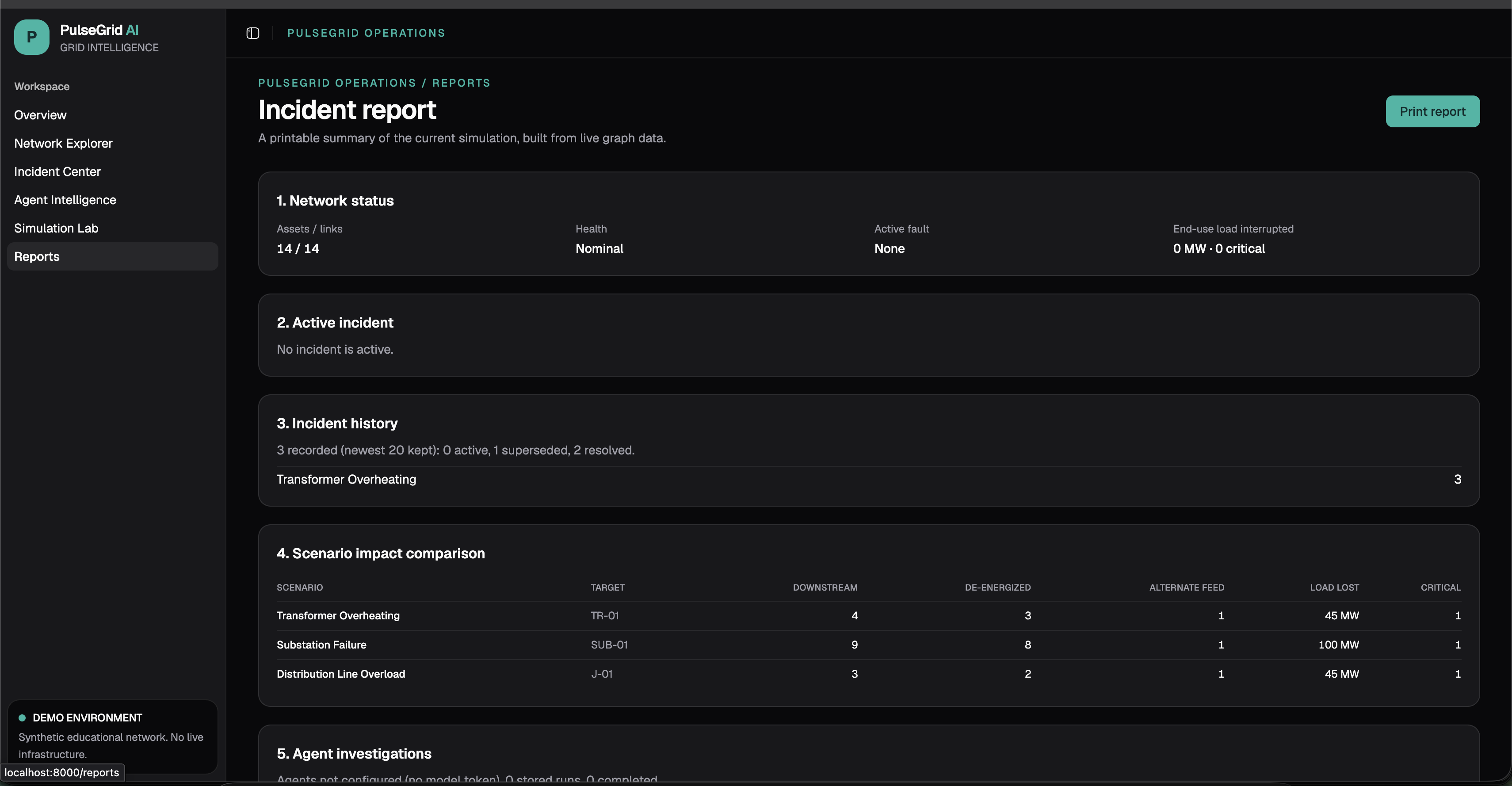
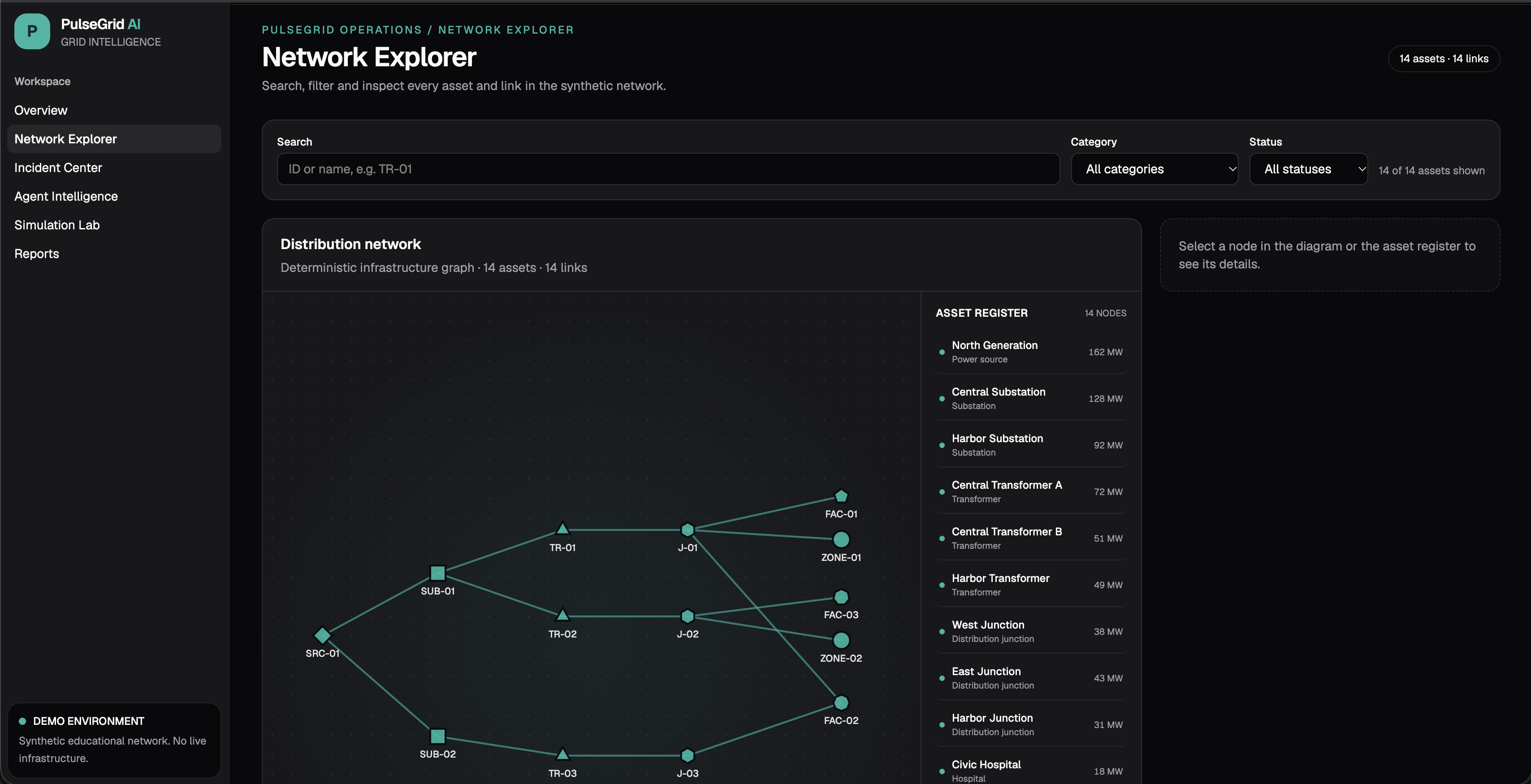
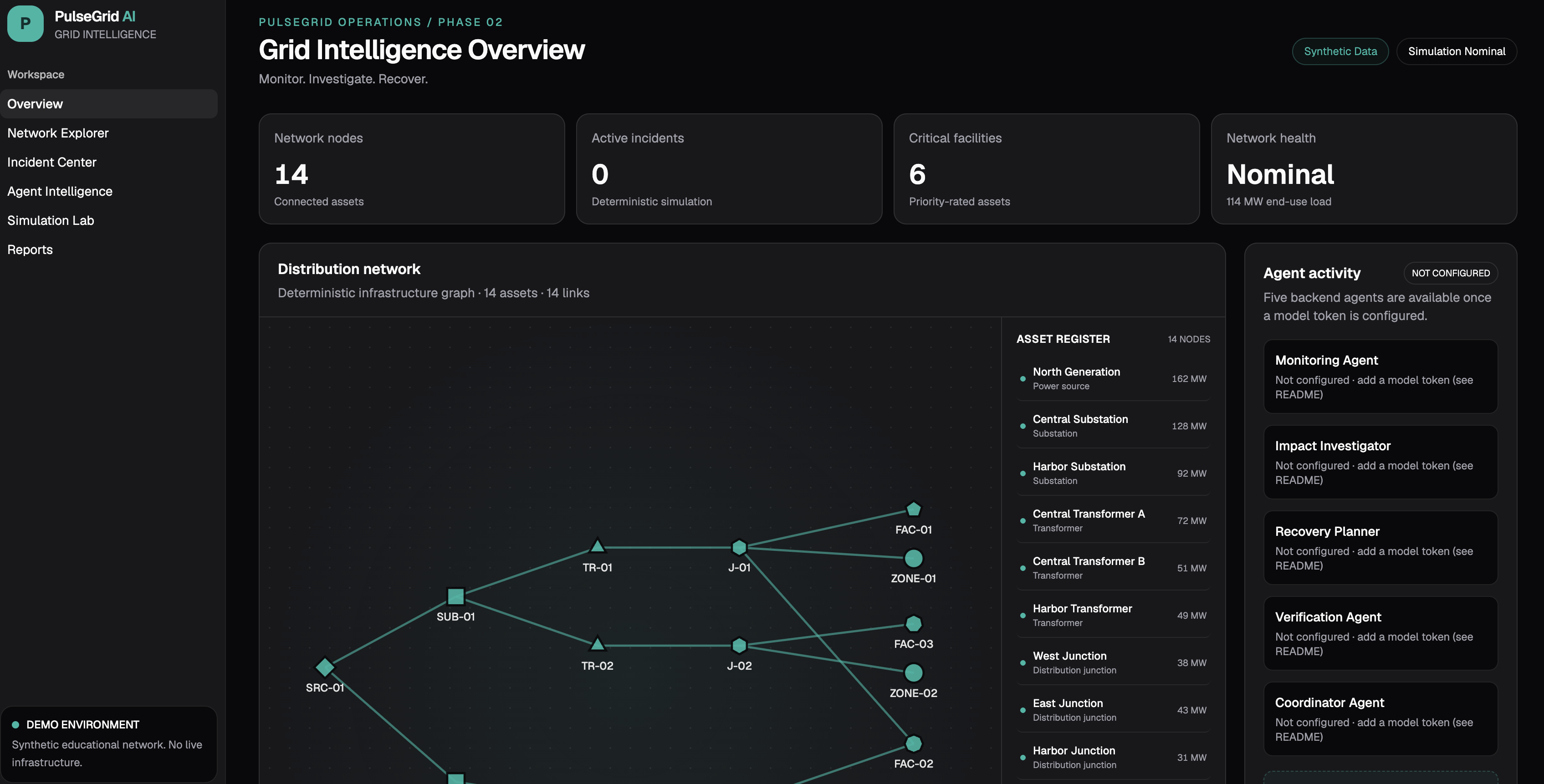
An interactive dashboard provides a visual representation of the network, incident conditions, and investigation results.
By combining graph traversal with AI-assisted reasoning, PulseGrid AI explores how infrastructure operators could gain a clearer understanding of complex incidents before making decisions.
All network data and incidents are simulated. PulseGrid AI is a decision-support prototype, not a real-world electrical grid control system.
How We Built It
PulseGrid AI is built around Jac and the Jaseci ecosystem, using Jac's graph-native programming capabilities as the foundation.
Our architecture centers on three core concepts:
1. Graph-Based Infrastructure Modeling
Power sources, substations, transformers, and critical facilities are represented as interconnected nodes and edges. This allows network relationships and dependencies to be examined directly.
2. Object-Spatial Programming
Jac's nodes, edges, and walkers provide a natural programming model for exploring infrastructure connections and investigating the potential consequences of simulated failures.
3. Agentic Intelligence
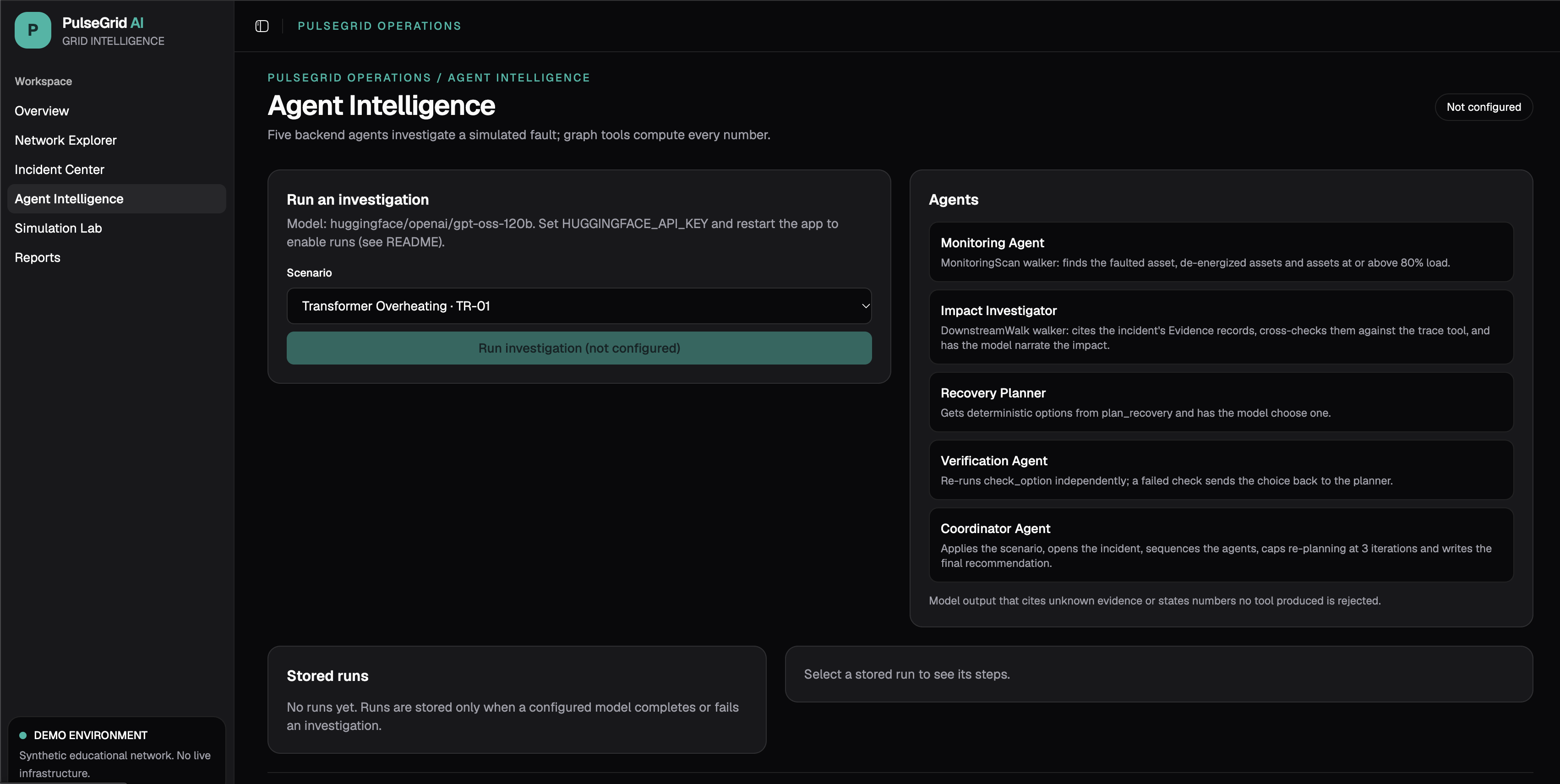
The system architecture separates monitoring, impact investigation, recovery planning, and verification responsibilities. This provides a foundation for AI agents that can use graph evidence, structured reasoning, and validation tools to support incident analysis.
We used the Jac ecosystem to bring application logic, graph-based processing, and the user experience together.
Challenges We Faced
One of the biggest technical challenges was representing interconnected infrastructure in a way that supports meaningful incident investigation.
Unlike ordinary datasets, power-grid relationships are highly dependent on network structure. An incident affecting one component may influence several connected facilities.
Another important challenge was separating AI-generated reasoning from deterministic calculations. Network connectivity, capacity limits, and operational constraints must be evaluated using verifiable logic rather than relying entirely on language-model outputs.
We also had to balance technical complexity with the limited development time available during a one-day hackathon.
What We Learned
This project helped us explore the potential of Jac's Object-Spatial Programming model for developing graph-aware intelligent applications.
We also learned an important principle of agentic system design: intelligence becomes more useful when AI reasoning is connected to structured data, reliable tools, and verifiable outcomes.
Building a convincing AI application requires more than generating responses. It requires understanding the problem, maintaining context, and making the reasoning process explainable.
What's Next
Our long-term vision is to extend PulseGrid AI with richer network simulation, deeper agent collaboration, historical incident analysis, and more advanced recovery-strategy evaluation.
Future improvements could include integration with simulated real-time telemetry, predictive anomaly detection, and more comprehensive operational decision-support workflows.
PulseGrid AI represents our vision of moving from reactive infrastructure monitoring toward intelligent, explainable incident investigation.
Built with Jac & Jaseci | AI Hackathon Sri Lanka 2026
Built With
- artificial-intelligence
- graph-based-ai
- jac
- jac-hammer
- jaseci
- multi-agent
- object-spatial-programming
- simulation

Log in or sign up for Devpost to join the conversation.