-
-
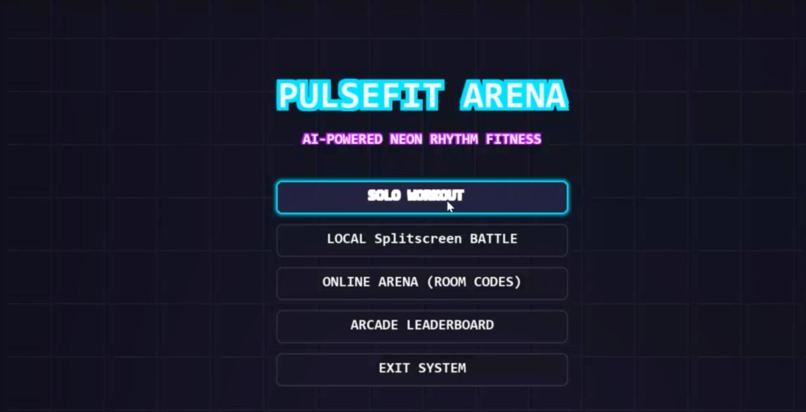
Home Screen
-
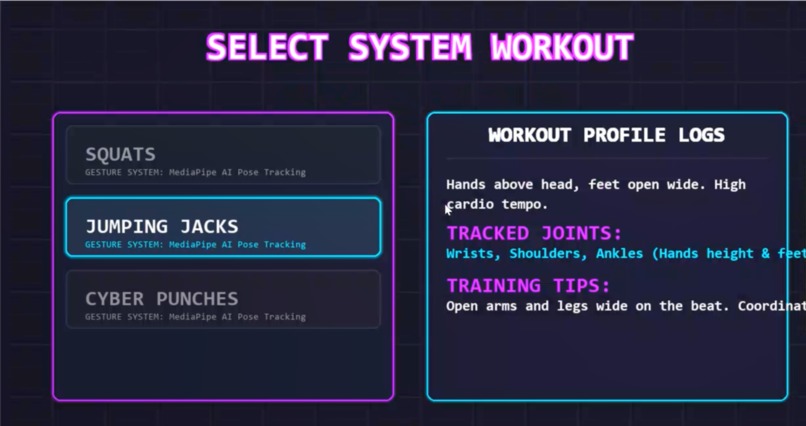
Select Workout
-
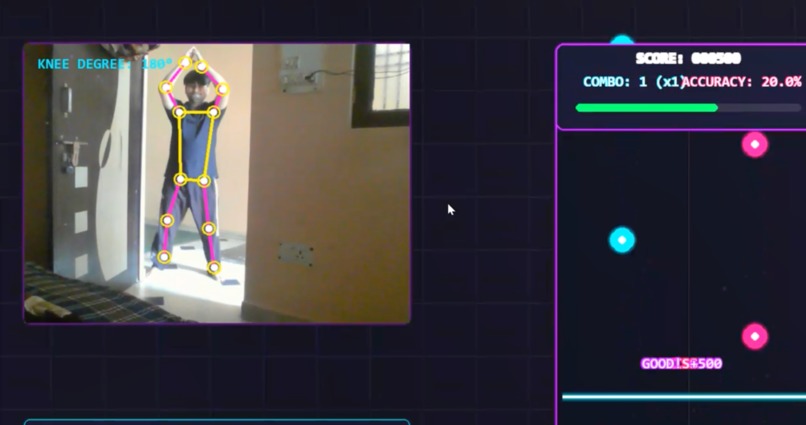
Do workout in proper posture to score
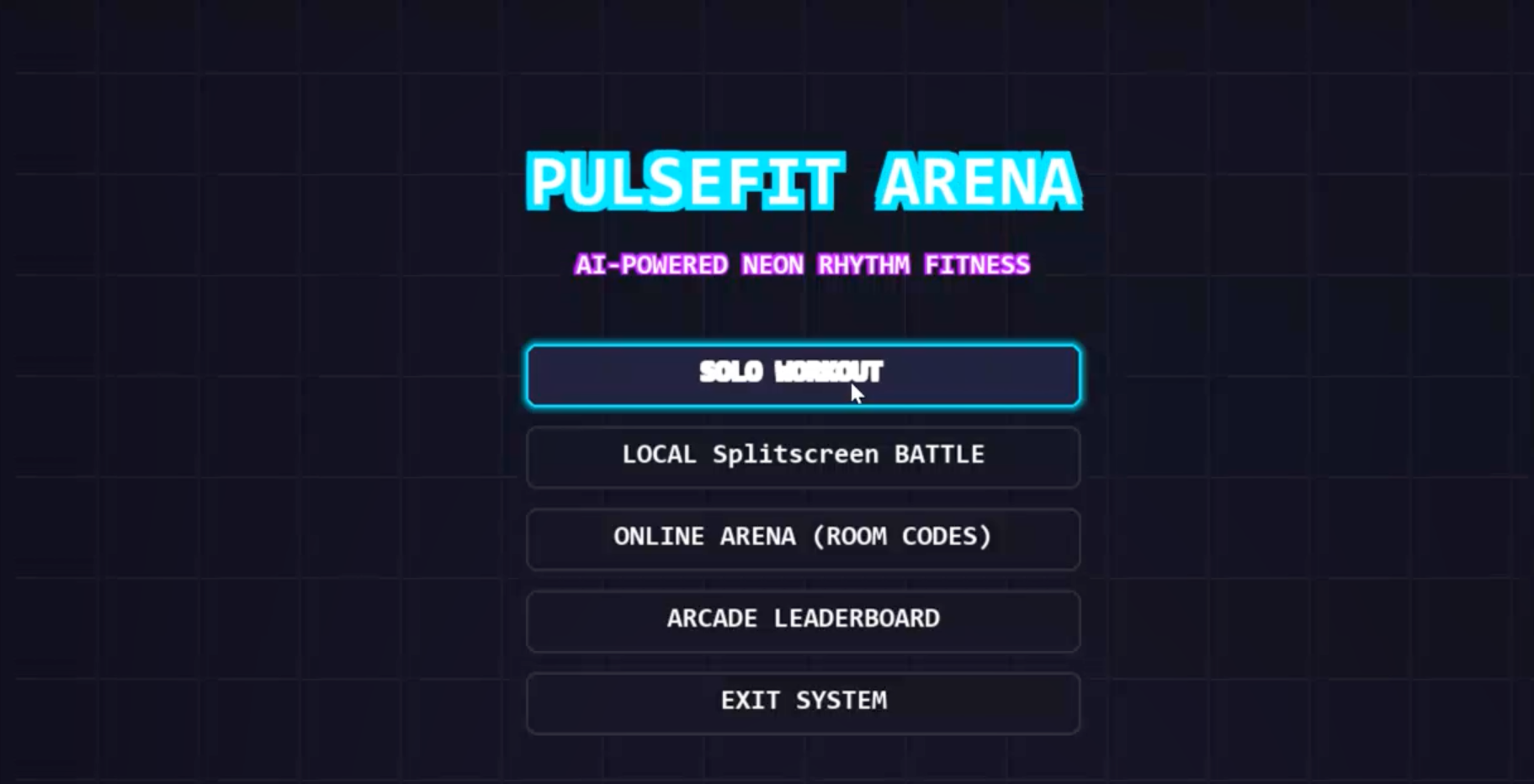
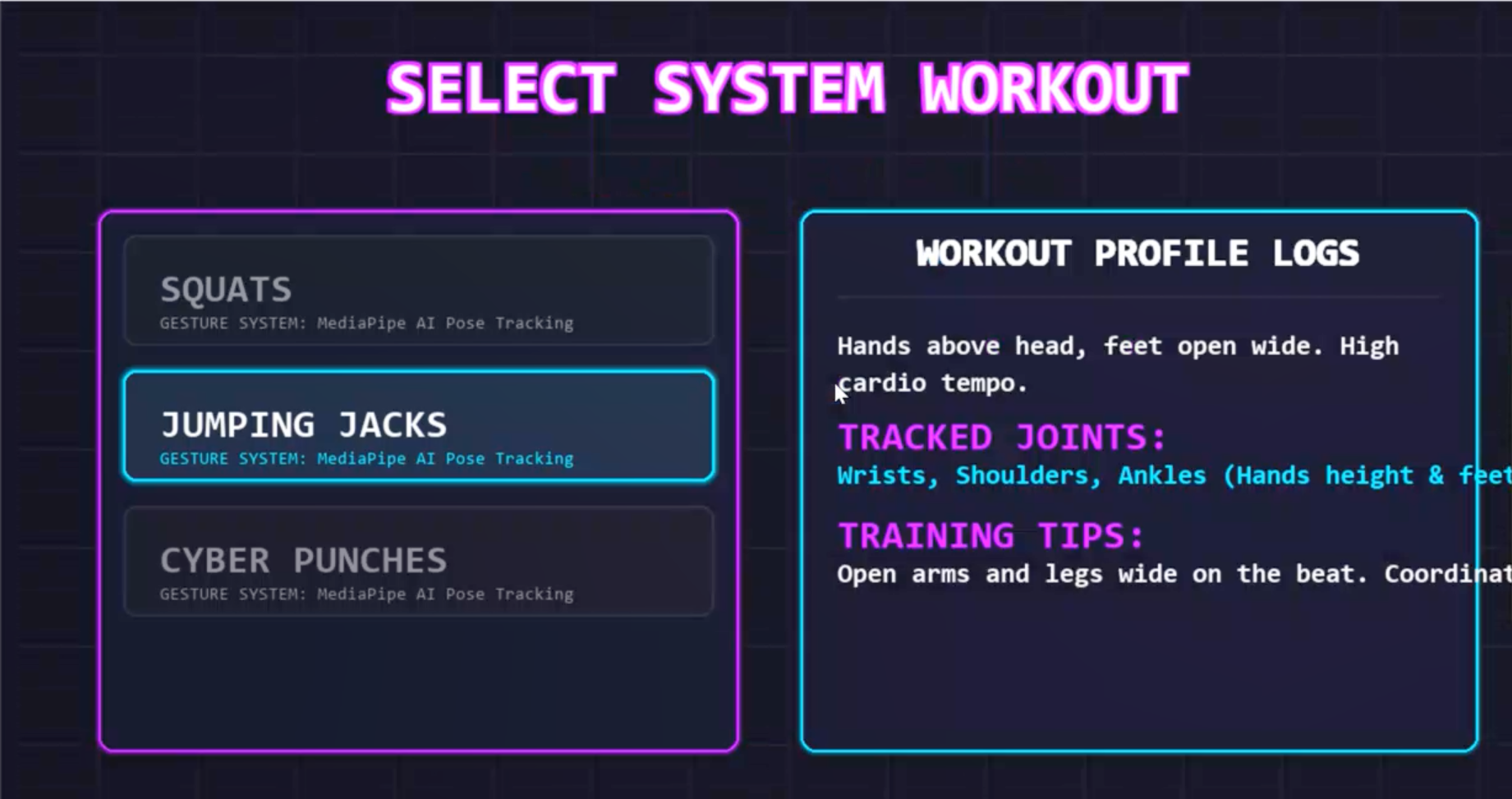
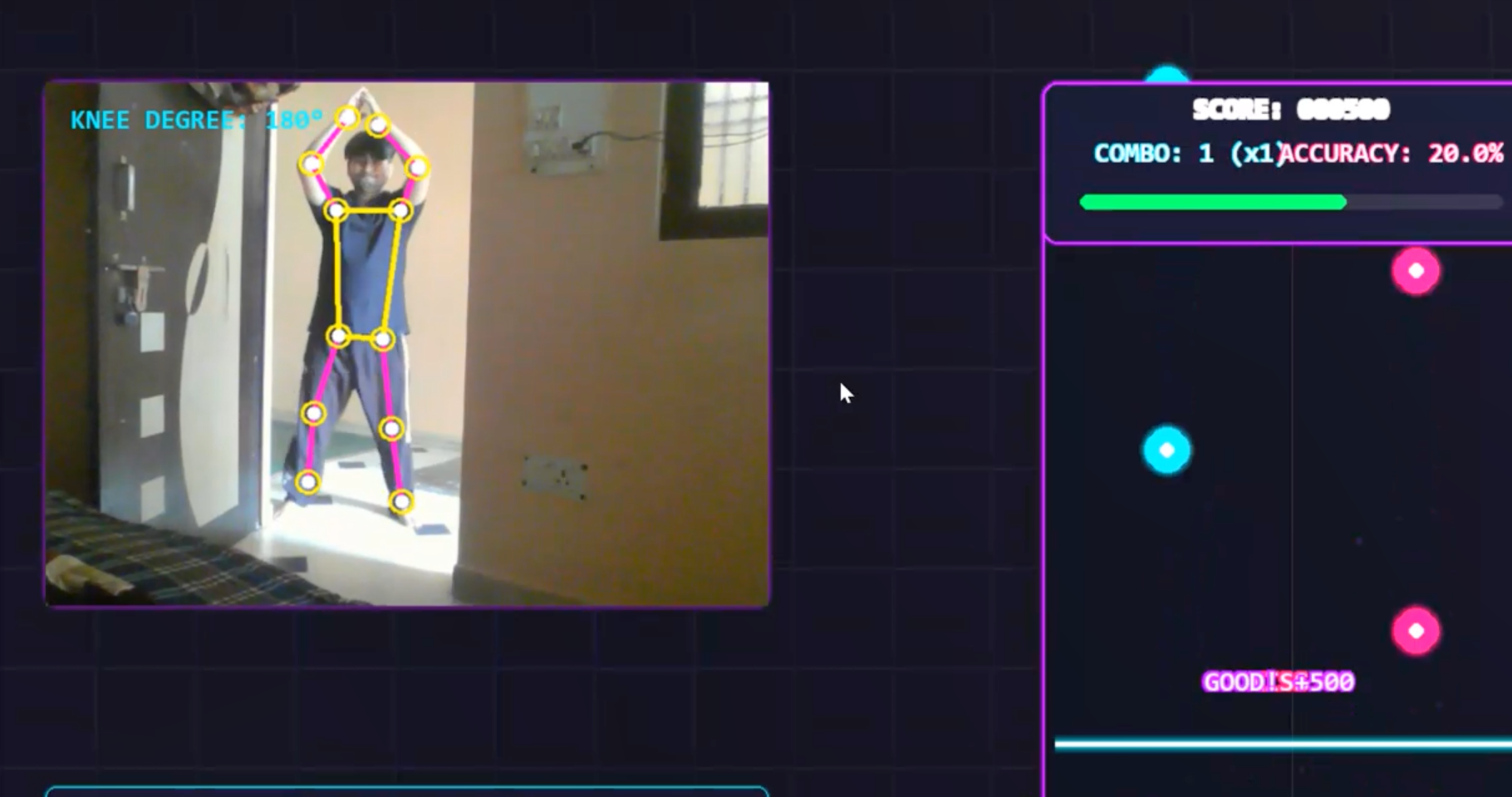
PulseFit Arena
Inspiration
Traditional workouts often feel repetitive and boring, especially for students and young users who spend most of their time around games, music, and digital entertainment. We wanted to explore a simple idea:
“What if working out felt like playing an arcade game?”
That idea became PulseFit Arena — a rhythm-based AI fitness game where players perform squats in sync with music beats using real-time computer vision.
Inspired by games like Guitar Hero and Just Dance, we combined:
- rhythm gaming
- AI pose tracking
- fitness
- multiplayer competition
- immersive visuals
into one interactive experience.
Our goal was to make workouts:
- fun
- competitive
- immersive
- social
- visually exciting
instead of repetitive and boring.
What it does
PulseFit Arena is an AI-powered rhythm fitness game that transforms workouts into an interactive gaming experience using real-time pose detection and beat synchronization.
Players squat to the rhythm of the music while the system:
- tracks body posture
- validates squat depth
- checks timing accuracy
- calculates scores
- provides AI-powered feedback
The gameplay combines:
- computer vision
- rhythm mechanics
- multiplayer competition
- live scoring
- cyberpunk arcade visuals
into one immersive experience.
Core Features
- Real-time squat detection using MediaPipe Pose
- Beat-synced rhythm gameplay
- Accuracy-based scoring system
- AI posture correction
- Multiplayer battle mode
- Combo streaks and score multipliers
- Cyberpunk-inspired neon UI
- Post-game fitness analytics
The experience feels like:
“Guitar Hero meets AI fitness training.”
System Architecture
Webcam Feed
    ↓
OpenCV Frame Capture
    ↓
MediaPipe Pose Detection
    ↓
Squat Validation System
(Knee Angle + Depth Tracking)
    ↓
Rhythm Engine
(BPM + Beat Synchronization)
    ↓
Scoring System
(Perfect / Good / Miss)
    ↓
Game UI + Visual Effects
    ↓
AI Coach Feedback
How we built it
We built PulseFit Arena using a combination of:
- game development
- computer vision
- audio processing
- real-time gameplay systems
- pose estimation AI
Tech Stack
| Technology | Purpose |
|---|---|
| Python | Core application logic |
| Pygame | Game engine and rendering |
| OpenCV | Webcam capture and processing |
| MediaPipe Pose | Real-time body tracking |
| librosa | BPM and beat detection |
| pygame.mixer | Music playback and synchronization |
Real-Time Pose Detection
We used MediaPipe Pose to detect:
- hips
- knees
- ankles
- shoulders
The system continuously calculates knee angles to determine:
- squat depth
- movement timing
- squat completion
This allows accurate real-time movement tracking directly through a webcam.
Rhythm Engine
We built a rhythm synchronization system using:
- BPM analysis
- beat timestamp extraction
- timing windows
This allows gameplay to function similarly to rhythm games where players must squat exactly on beat.
Scoring System
Players receive:
- Perfect
- Good
- Miss
based on:
- squat timing
- movement accuracy
- squat depth consistency
Combo streaks increase score multipliers and create competitive gameplay.
AI Coach
The AI coach provides live feedback such as:
- “Go lower”
- “Straighten your back”
- “Perfect squat”
- “Too early”
After each match, the system generates:
- posture analytics
- timing accuracy
- squat count
- estimated calories burned
Gameplay Pipeline
Music Beat
    ↓
Incoming Rhythm Note
    ↓
Player Performs Squat
    ↓
Pose Detection
    ↓
Timing Validation
    ↓
Score Calculation
    ↓
Combo + Visual Effects
    ↓
AI Feedback + Analytics
Challenges we ran into
One of the biggest challenges was synchronizing:
- webcam input
- computer vision processing
- music timing
- gameplay rendering
all in real time with minimal latency.
1. Accurate Squat Detection
Detecting proper squat movements consistently was difficult because:
- camera angles varied
- lighting conditions changed
- users had different body proportions
We solved this using:
- knee angle thresholds
- movement smoothing
- pose confidence filtering
- repeated frame validation
2. Beat Synchronization
Even tiny delays between:
- music playback
- pose detection
- scoring
made gameplay feel inaccurate.
We optimized:
- audio timing
- beat spawning
- frame synchronization
- scoring windows
to improve responsiveness.
3. Performance Optimization
Running:
- computer vision
- pose estimation
- real-time rendering
- audio systems
simultaneously initially caused FPS drops.
We improved performance by:
- lowering webcam resolution
- optimizing MediaPipe processing
- reducing rendering overhead
- separating gameplay systems logically
Accomplishments that we're proud of
We are proud that we transformed a simple fitness exercise into a fully interactive rhythm gaming experience.
Highlights
- Successfully implemented real-time AI squat tracking
- Built a fully playable rhythm fitness game
- Created a multiplayer battle experience
- Designed a polished cyberpunk-inspired interface
- Achieved low-latency gameplay
- Combined AI, gaming, and fitness into one experience
Most importantly, we created something that encouraged people to:
- compete
- move
- exercise
- interact socially
while genuinely enjoying the experience.
Performance Flow
Camera Input
    ↓
30 FPS Processing
    ↓
Optimized Pose Tracking
    ↓
Real-Time Beat Matching
    ↓
Smooth Gameplay Rendering
    ↓
Low-Latency Feedback
What we learned
This project taught us a lot about:
- real-time systems
- computer vision
- pose estimation
- game optimization
- interactive UI design
- rhythm synchronization
We also learned that:
User experience matters just as much as technical complexity.
Even advanced AI systems feel ordinary without:
- engaging visuals
- smooth responsiveness
- immersive gameplay
- polished interaction
We also gained valuable experience balancing:
- AI processing
- performance optimization
- multiplayer gameplay
- UI design
- real-time interaction
under hackathon time constraints.
What's next for PulseFit Arena
We believe PulseFit Arena has the potential to evolve into a full AI-powered fitness gaming platform.
More Workout Modes
- pushups
- jumping jacks
- lunges
- dance workouts
- full-body cardio sessions
Online Multiplayer
- global matchmaking
- ranked battles
- tournament modes
AI Fitness Expansion
- personalized workout plans
- posture improvement tracking
- adaptive difficulty systems
- smart AI fitness coaching
Platform Expansion
- mobile version
- web version
- AR/VR fitness experiences
- smartwatch integration
Community Features
- leaderboards
- streamer integration
- social challenges
- workout sharing
Our long-term vision is to create:
a future where workouts feel like multiplayer games instead of repetitive routines.
PulseFit Arena is just the beginning.


Log in or sign up for Devpost to join the conversation.