-
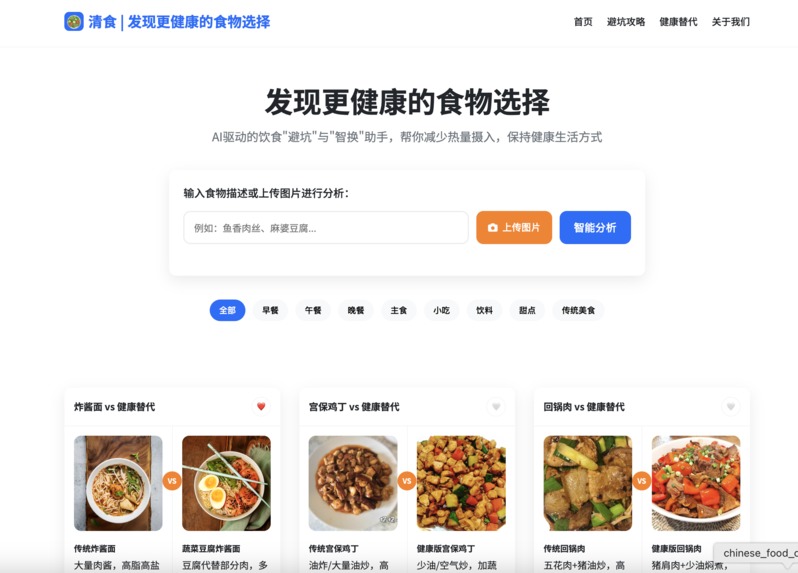
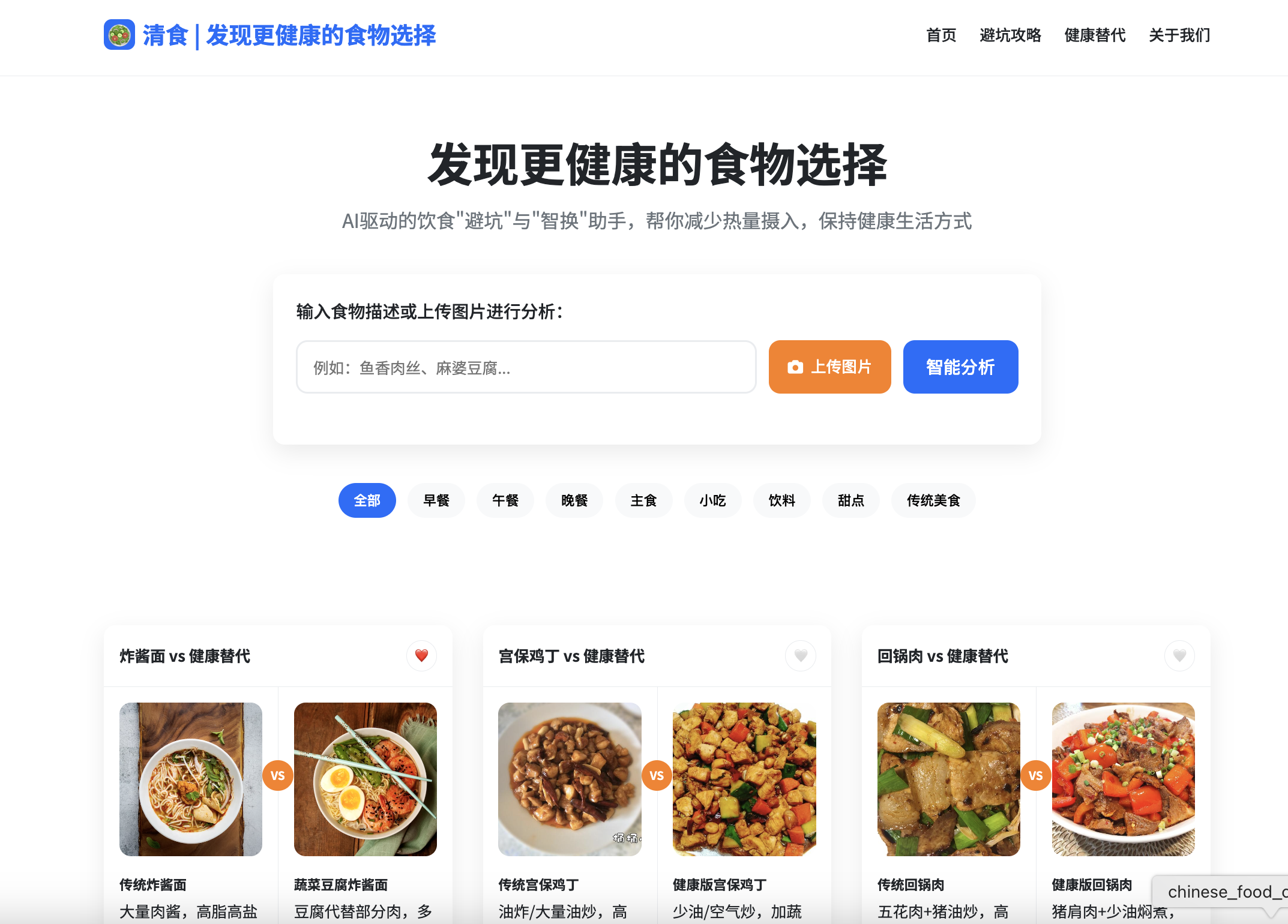
Chinese ver. of webpage
Our project keynote: https://drive.google.com/file/d/1zIpLdB4kJc40OVe_e3qOBMyTDfzQh2cH/view?usp=sharing
Inspiration
Many people are unaware that their daily meals, even those labeled “healthy,” can hide excessive calories. In China especially, few tools address local eating habits or offer realistic, tasty alternatives. We wanted to create a platform that empowers users to recognize hidden high-calorie foods and find Chinese-style, healthier options without sacrificing the flavors they love.
What it does
Our platform uses AI to help users identify “fake healthy” foods in their everyday life. It analyzes ingredients, cooking methods, and common misconceptions, then recommends lower-calorie Chinese alternatives tailored to users’ taste preferences — making nutrition awareness accessible, actionable, and sustainable.
How we built it
We combined a fine-tuned large language model (LLM) with a customized nutrition database, integrating it into a web application. Users can input or upload information about their meals, and the AI processes it to give nutrition insights and culturally relevant alternative suggestions. We used [your tech stack, e.g., Python, Node.js, React, etc.] for the backend and frontend development.
Challenges we ran into
One major challenge was adapting nutritional data to Chinese foods, which are often more complex than Western categories. Another difficulty was designing AI prompts that accurately distinguish between genuinely healthy and deceptively unhealthy foods, especially in casual or homemade dishes.
Accomplishments that we’re proud of
We successfully built a working platform that delivers personalized food analysis and alternative recommendations in real time. We’re proud that our tool doesn’t just flag problems, but actively offers practical, culturally fitting solutions — something existing apps rarely achieve.
What we learned
We learned how to fine-tune AI models for highly specific, real-world applications, how important cultural context is in building effective health tech solutions, and how to balance technical performance with user-friendly design.
What’s next for PulseCipher
We plan to expand our database to cover more regional Chinese cuisines, integrate image recognition for direct food photo analysis, and collaborate with nutritionists to improve recommendation accuracy. We also envision creating a mobile app version to make healthy eating guidance even more accessible.

Log in or sign up for Devpost to join the conversation.