-
-
Logo
-
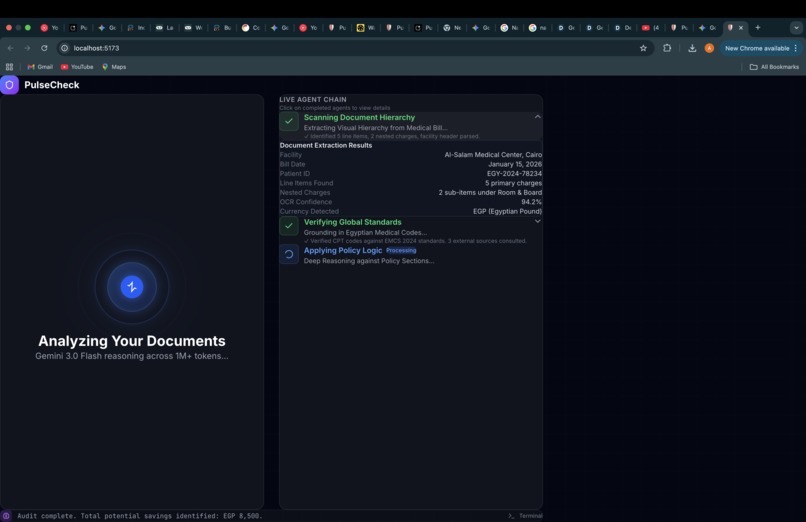
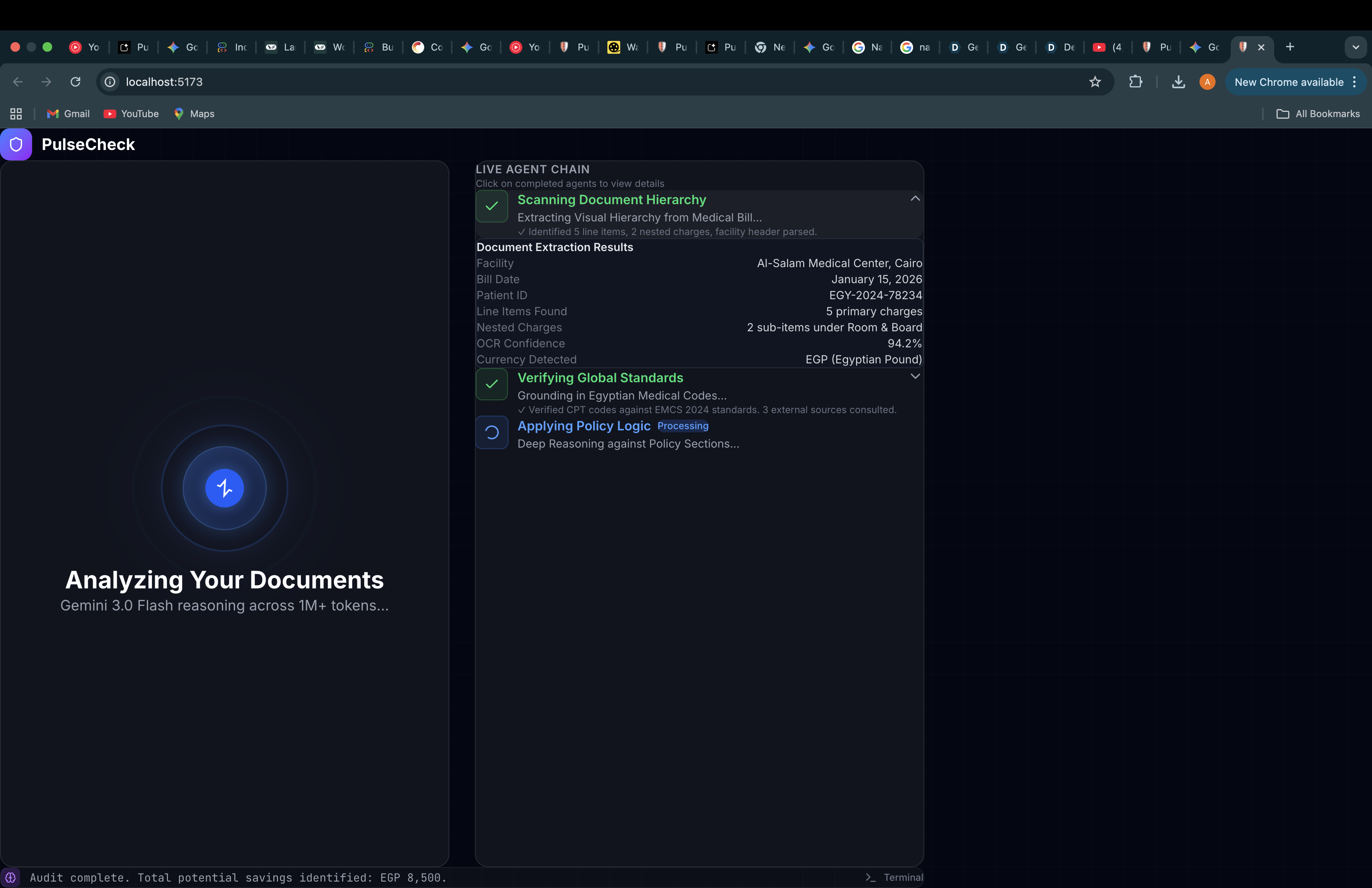
Processing - bill info extraction
-
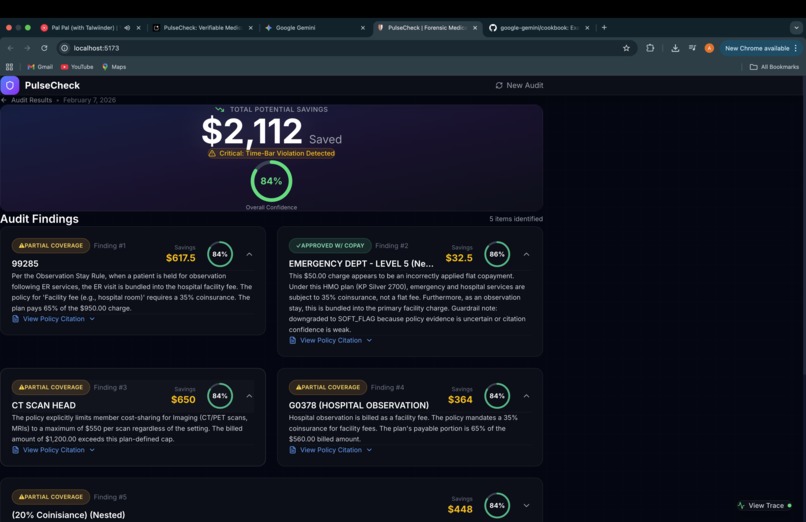
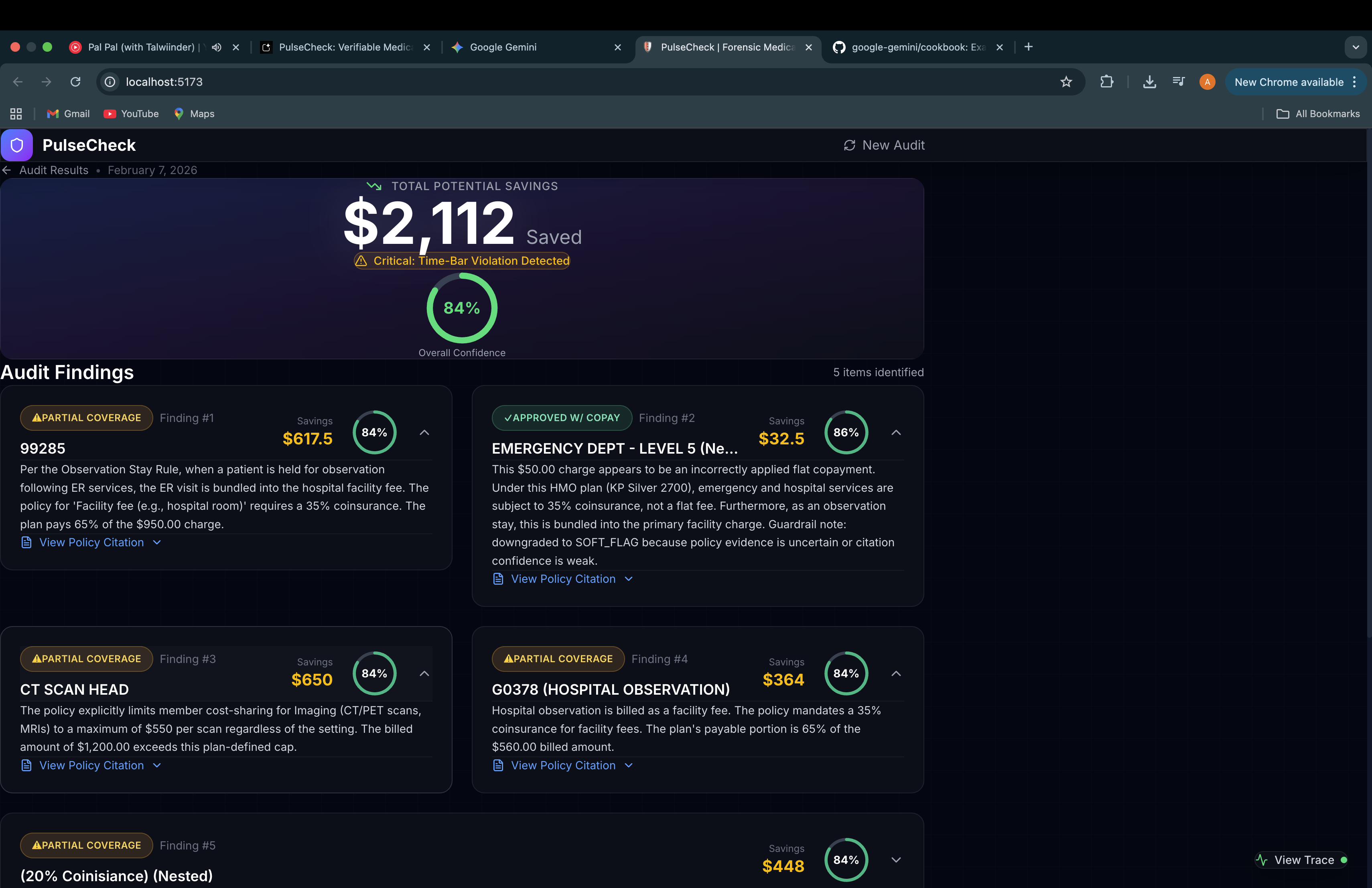
Output Dashboard
-
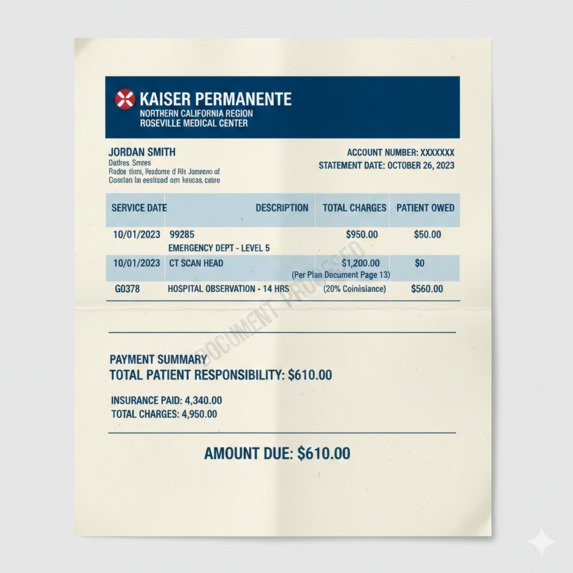
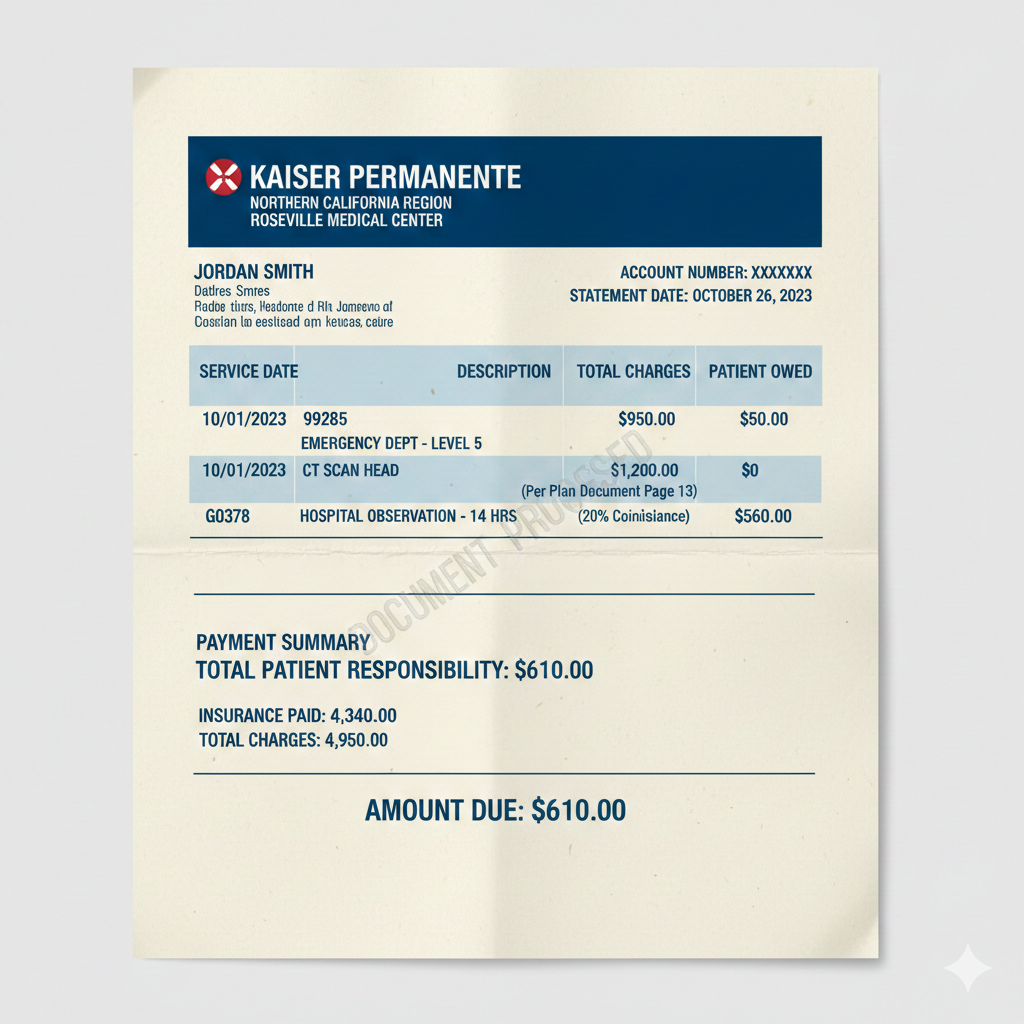
Sample Bill
-
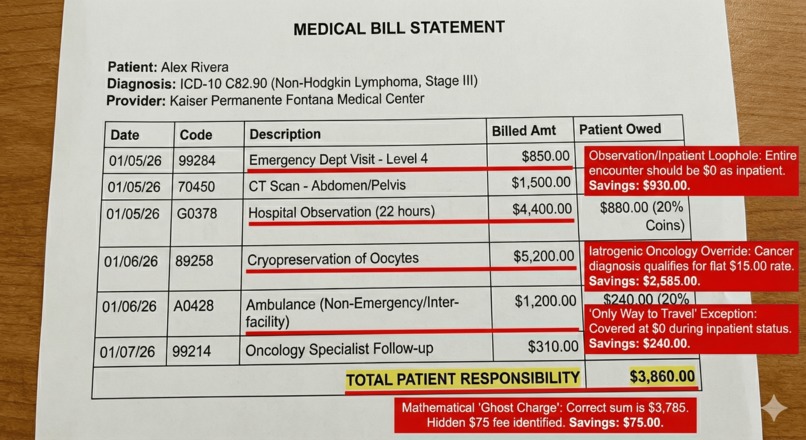
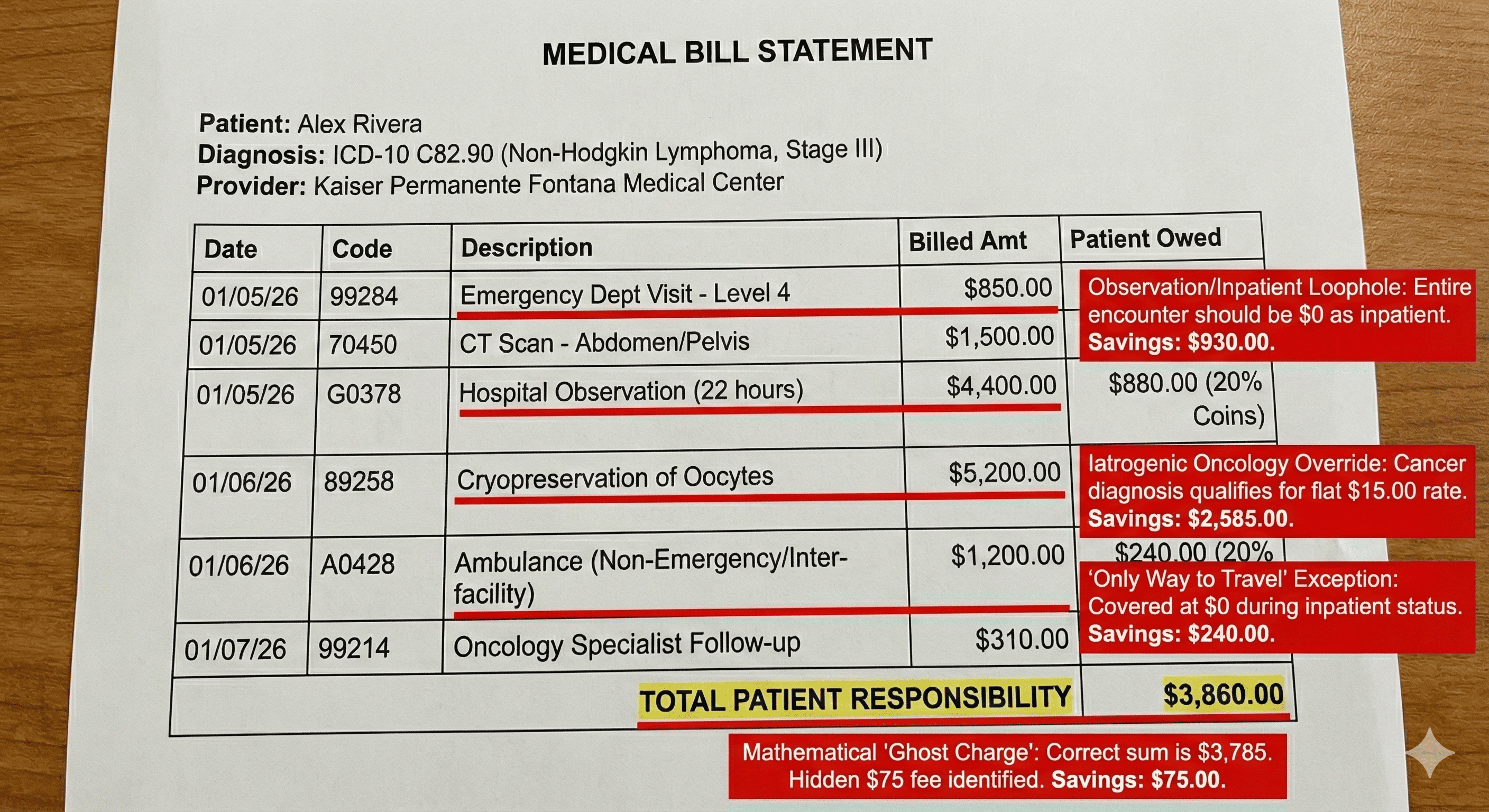
Annotated bill example 4
-
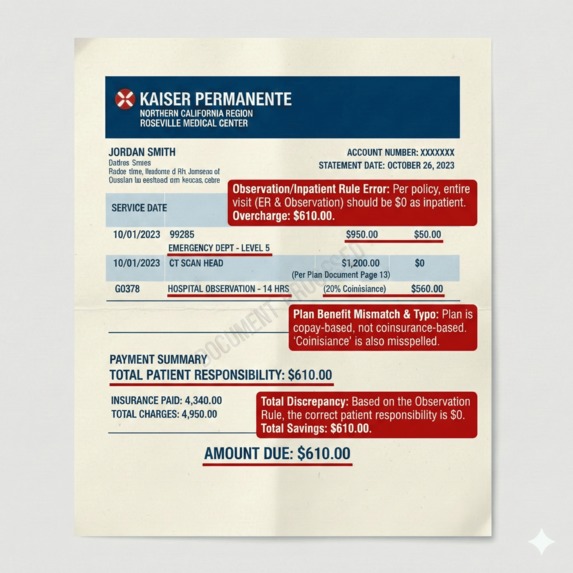
Sample Bill Annotated
-
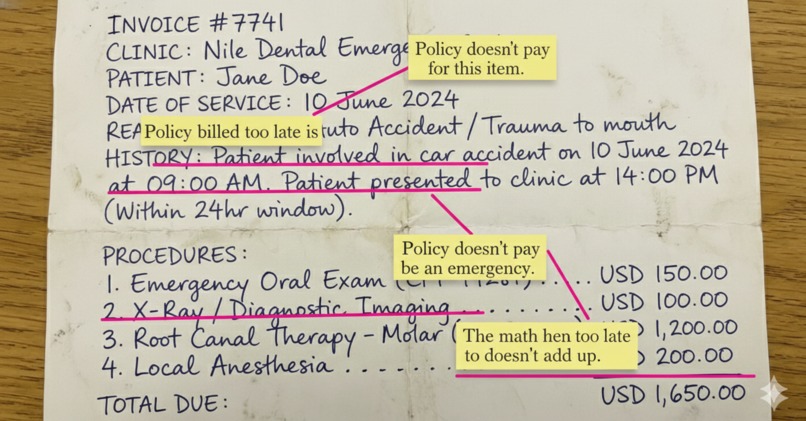
Annotated bill example 2
Inspiration
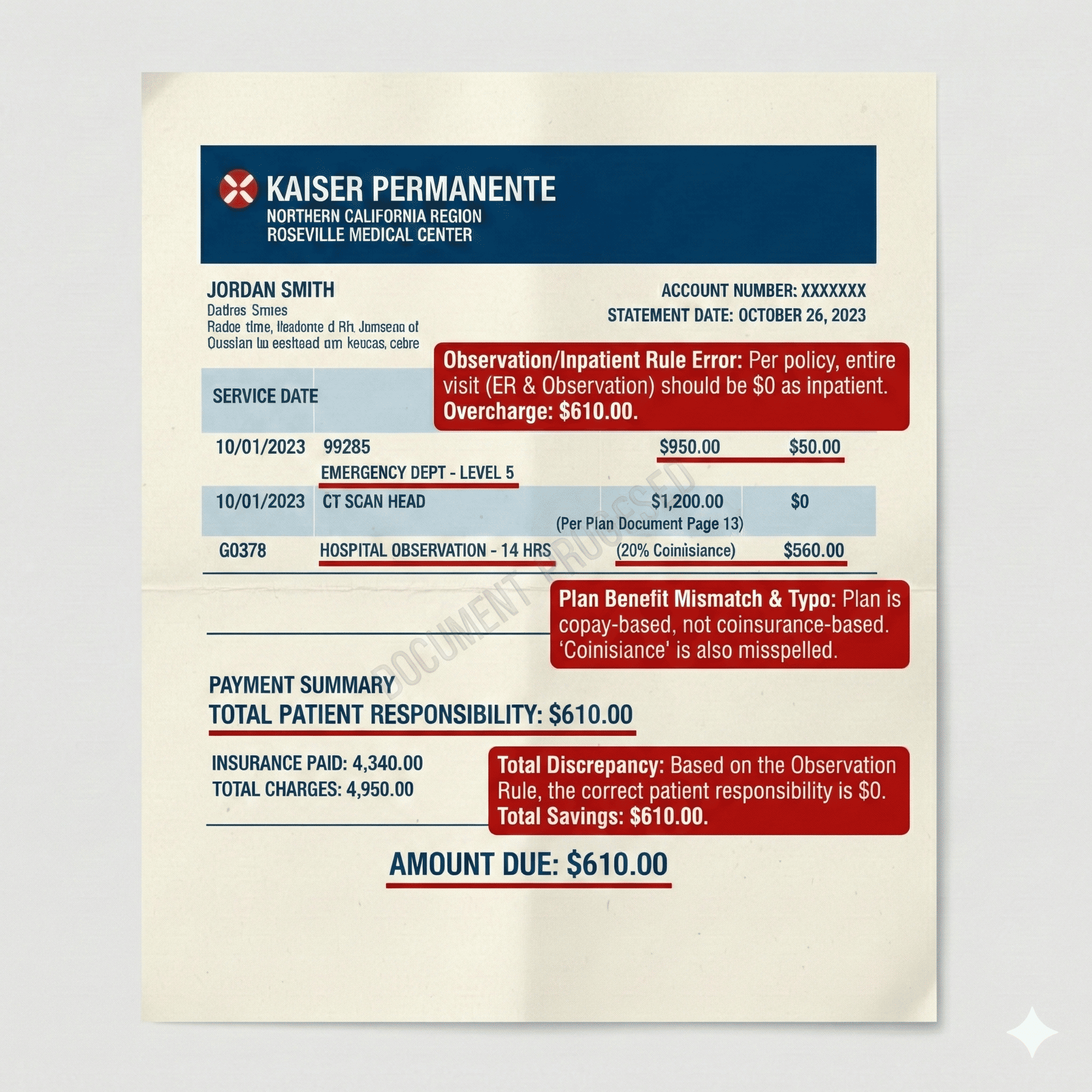
Medical debt is the leading cause of bankruptcy in the United States, yet national audits indicate that approximately 80 percent of medical bills contain errors. The fundamental problem is a lack of transparency between hospital billing systems and consumer insurance contracts. Insurance policies are frequently 100-page Evidence of Coverage (EOC) documents filled with nested exceptions and conflicting clauses. For example, a cancer patient might be billed a 50 percent fertility coinsurance for cryopreservation, unaware that a specific Iatrogenic clause on Page 47 of their contract should reduce that cost to a 15 dollar flat fee. We built PulseCheck to transition medical billing from a black box to a glass box, providing patients with the forensic auditing tools typically reserved for insurance adjusters.
What it does
PulseCheck is a multi-agent forensic audit engine designed to identify discrepancies between unstructured medical bills and complex insurance policies.
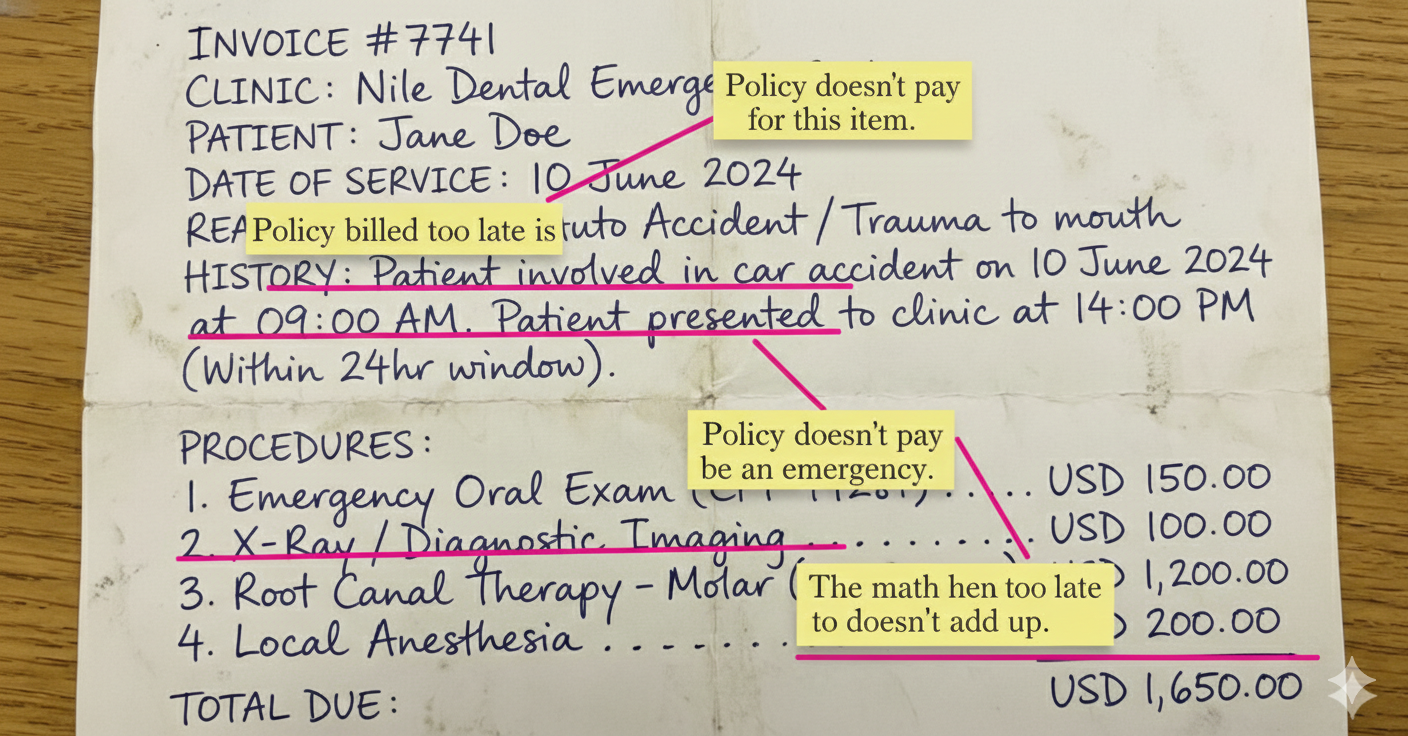
- Visual Extraction: The system uses spatial reasoning to identify visual hierarchies in bill images, detecting nested charges and reading through watermarks or visual noise.
- Deep Policy Logic: It identifies logic-heavy exceptions, such as the Observation Stay Rule, where an emergency room visit fee is legally required to be waived if the patient is held for observation.
- Mathematical Verification: A dedicated agent executes Python code to sum line items and identify Ghost Charges—hidden fees added to the total that do not appear in the itemized list.
- Traceable Evidence: Every finding is linked to a specific page and paragraph in the policy, ensuring that every identified saving is technically and legally defensible.
How we built it
The application utilizes a multi-agent architecture powered by Google Antigravity and Gemini 3.0 Pro.
- The Ingestor: Uses Gemini Vision to map the bill on a 0-1000 coordinate grid for precise spatial grounding and visual OCR.
- The Researcher: Performs targeted web searches to validate CPT and HCPCS codes against clinical standards without exposing sensitive policy data.
- The Quant Agent: A Python-native agent that handles all arithmetic and financial calculations to prevent LLM mathematical hallucinations.
- The Supervisor: The central reasoning core that chains diagnostic data from the bill to specific contractual exceptions buried deep in the insurance PDF.
- Comet Opik: We integrated Opik to trace the reasoning chain of every agent, allowing us to evaluate the faithfulness of the output and ensure zero hallucinations in high-stakes financial calculations.
The financial impact is calculated via the following logic: $$\text{Total Savings} = (\text{Billed Amount} - \text{Contractual Cap}) + \text{Mathematical Discrepancies}$$
Challenges we faced
The primary challenge was Training Data Contamination. Standard LLMs often have internal knowledge of generic insurance plans and will hallucinate a standard 20 percent coinsurance even if the provided PDF explicitly states No Charge. We solved this by implementing a Zero-Knowledge Adherence layer, which forces the Supervisor agent to discard all pre-trained insurance knowledge and rely exclusively on the uploaded Evidence of Coverage. Additionally, addressing visual noise on crumpled or watermarked bills required the implementation of high-density spatial reasoning prompts to ensure OCR accuracy remained above 95 percent.
What we learned
We discovered that the Gemini 3.0 Long Context window is the most effective tool currently available for healthcare finance. The ability to hold a 1 million token policy in active memory allows the engine to find direct contradictions between clauses on Page 8 and Page 100 that a human auditor would miss after hours of manual review. We also learned that in high-stakes financial applications, a simple chatbot interface is insufficient; users and legal professionals require a Forensic Engine with an immutable, traceable audit trail provided by tools like Comet Opik.
Built With
- comet-opik
- gemini-3.0-pro-/-flash-preview
- google-adk
- google-antigravity
- python
- react-/-tailwind-css

Log in or sign up for Devpost to join the conversation.