-
-
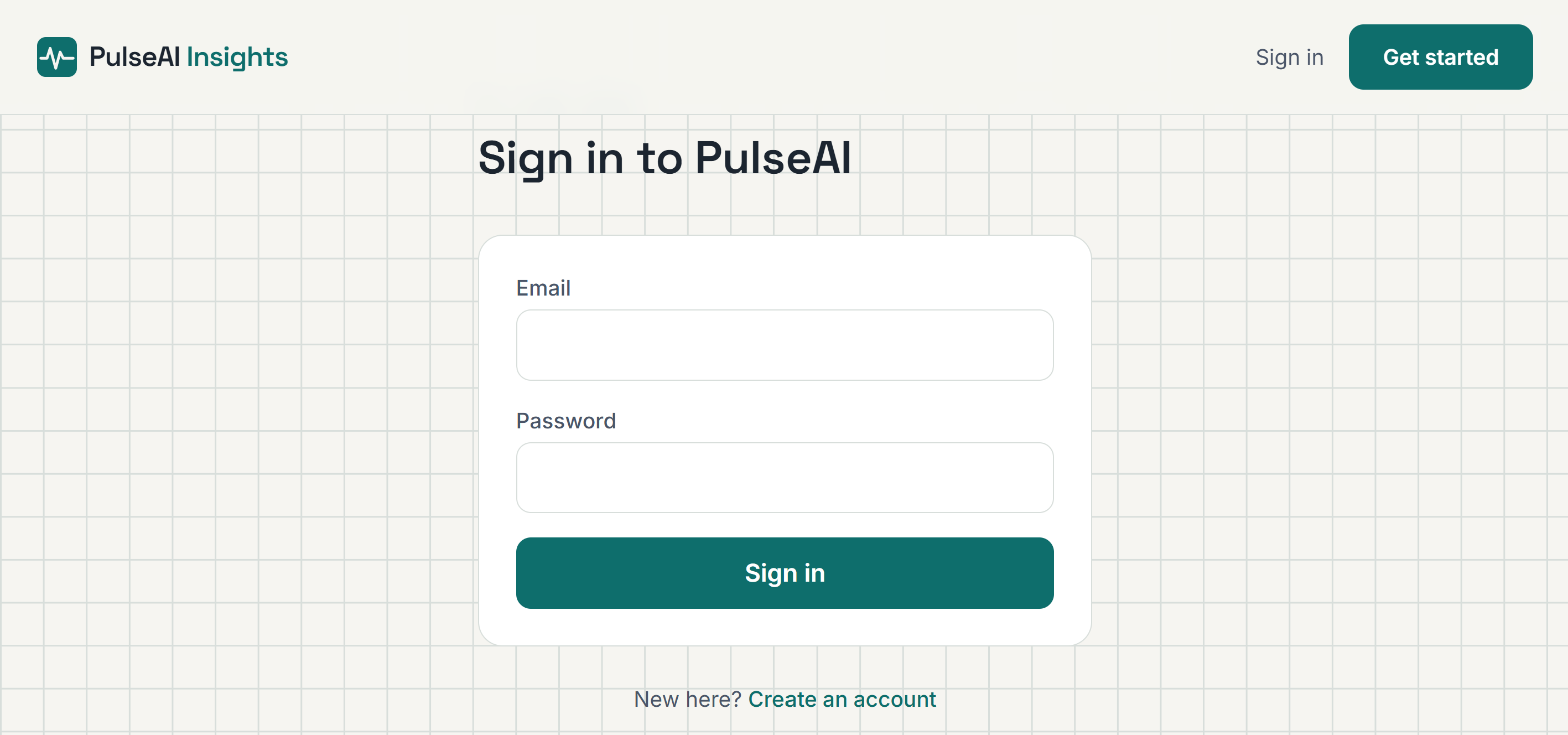
Sign-In Page
-
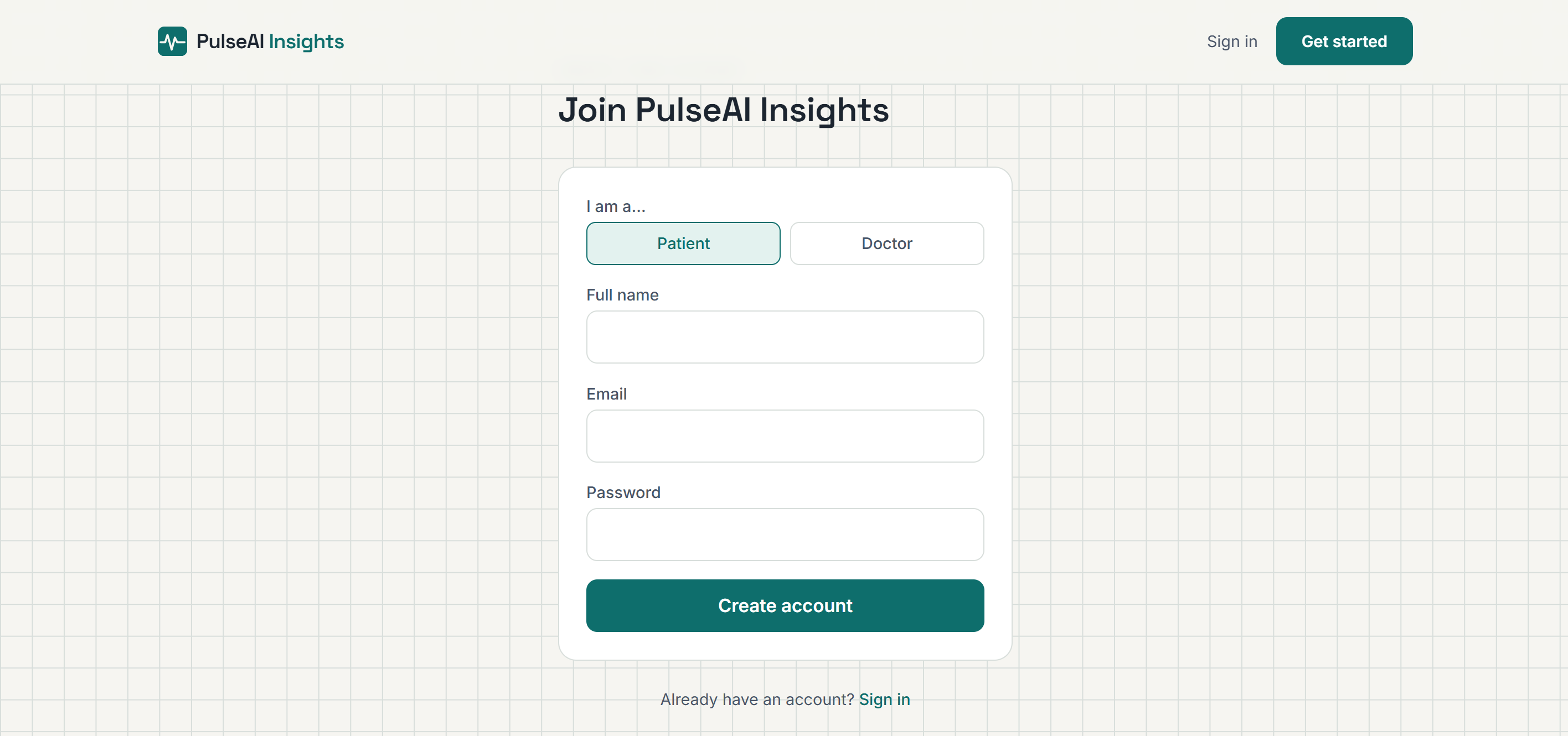
Sign-Up Page
-
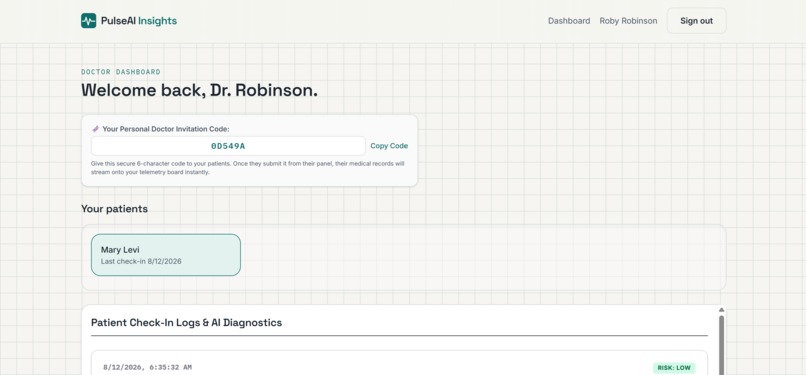
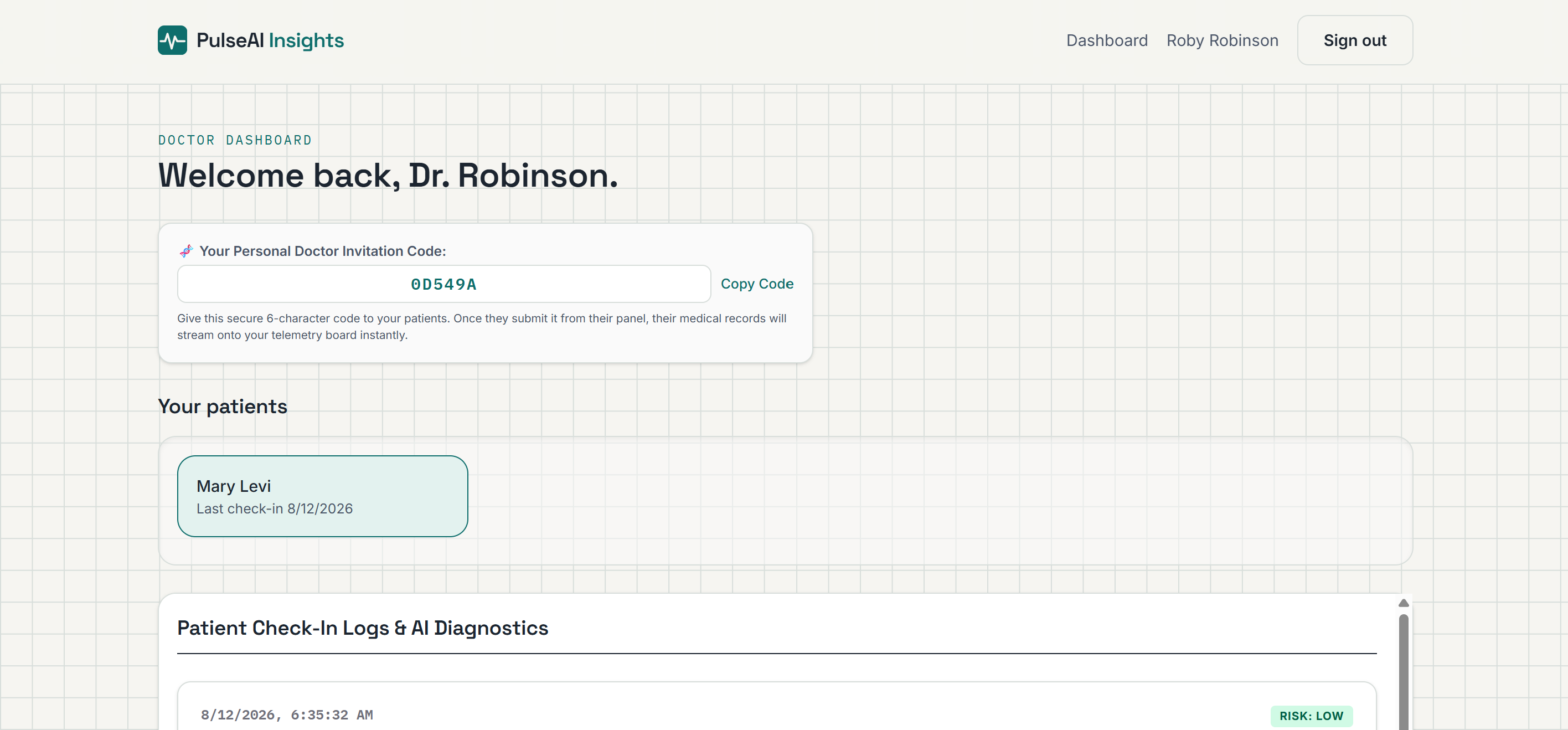
Doctor Dashboard
-
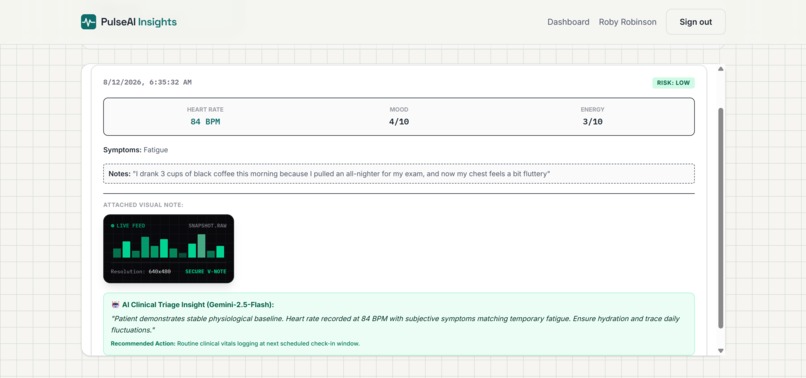
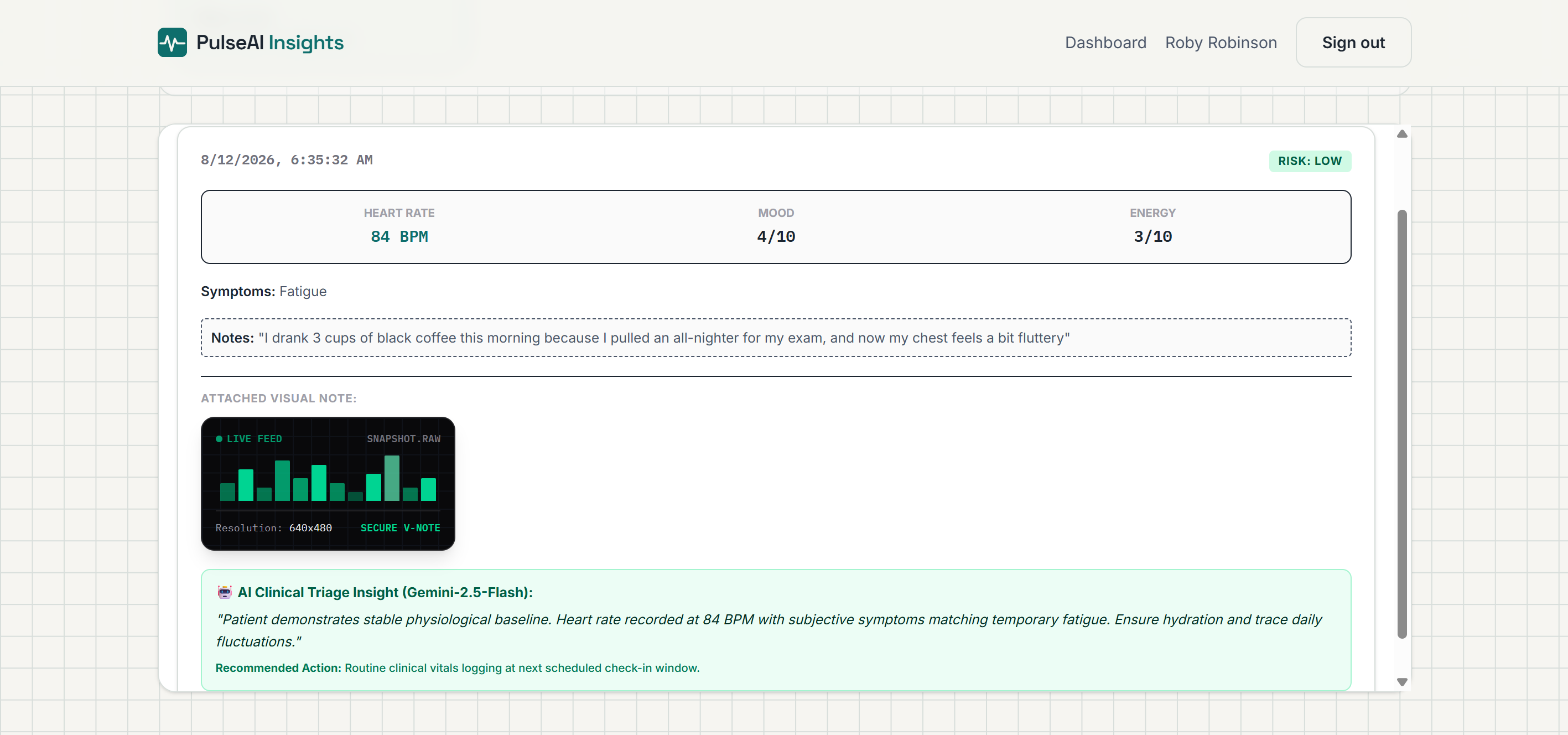
Doctor Dashboard
-
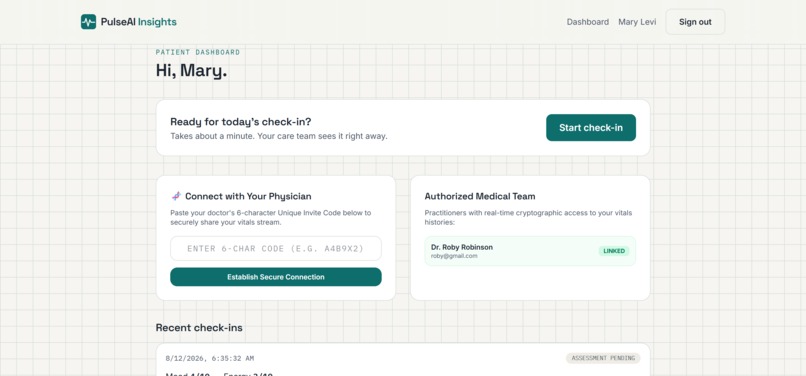
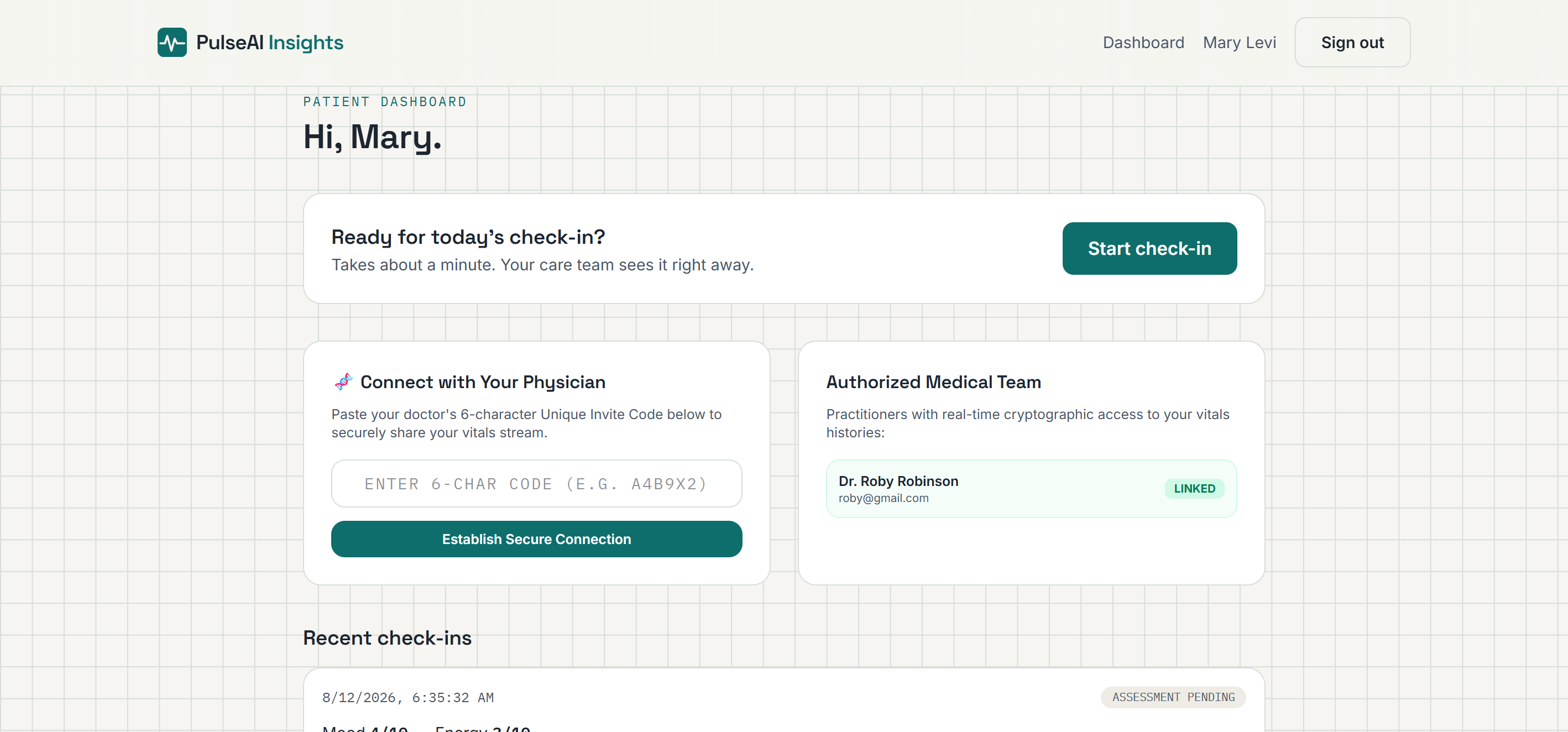
Patient Dashboard
-
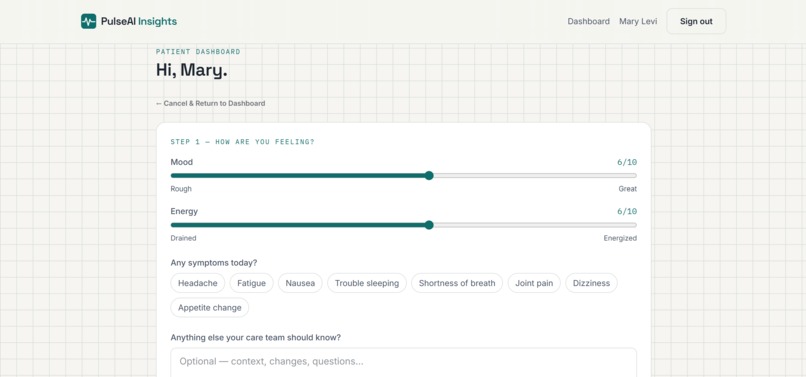
Patient Check-In
-
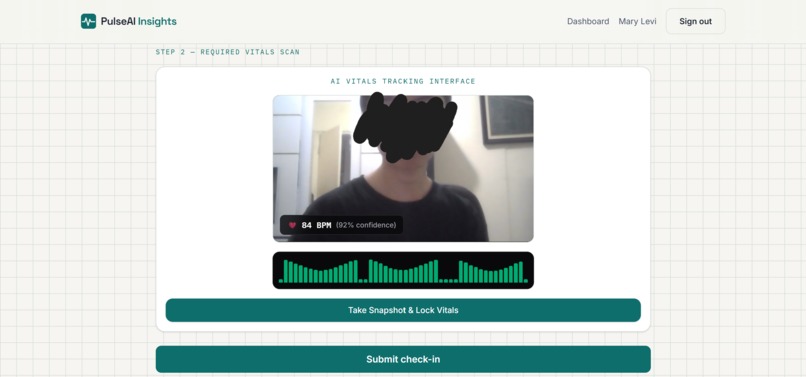
Patient Check-In
Inspiration
In the modern healthcare landscape, remote pre-screening and emergency room triaging are plagued by long wait times, administrative friction, and high server-side computing costs. We wanted to build a zero-hardware, low-overhead solution that turns any standard device camera into an interactive health validator.
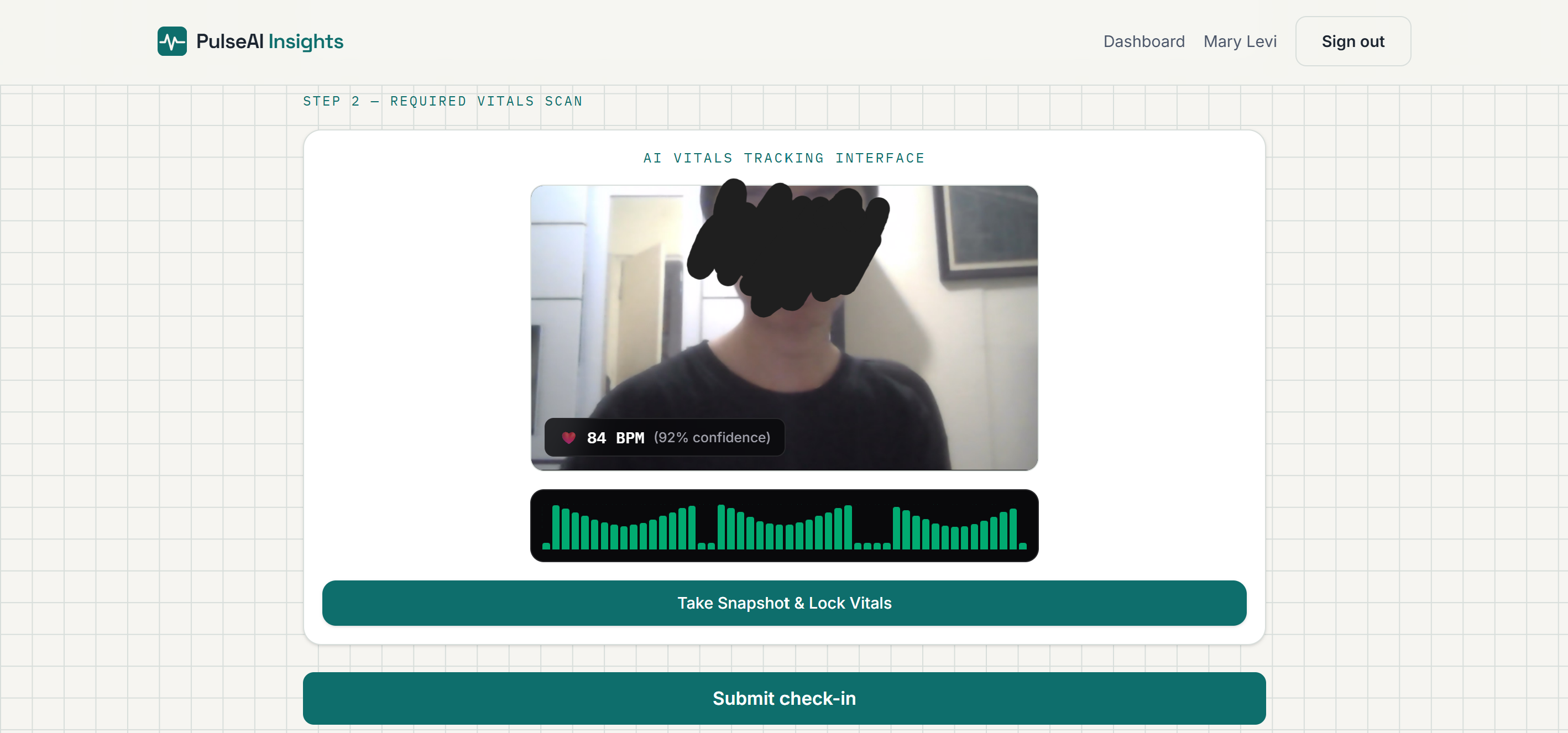
PulseAI Insights was inspired by the principles of Remote Photoplethysmography (rPPG)—the science of capturing subtle, imperceptible color changes in human skin illumination caused by micro-flushing blood volumes to estimate vitals entirely within a web browser environment.
What it does
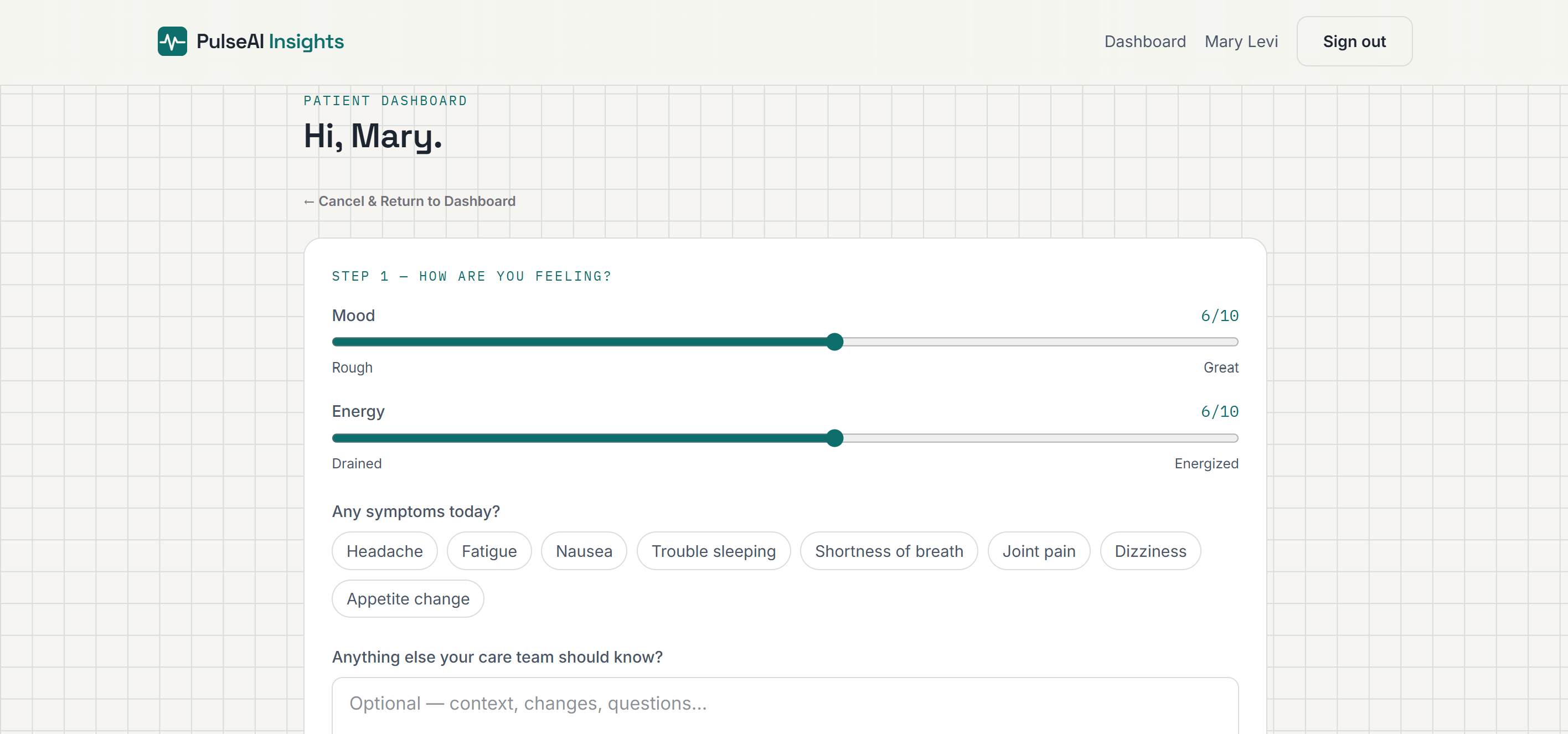
PulseAI Insights is a dual-dashboard, non-invasive digital health platform that seamlessly bridges remote wellness seekers with clinical practitioners: -For Patients: Users complete a swift mental and biological status checklist. It leverages the laptop webcam to analyze facial illumination, tracking blood volume pulse variations at 30 FPS to extract a live Heart Rate (BPM) wave metric. -Secure Networking: Patients can link their accounts to a clinical practitioner instantly using a streamlined 6-character Unique Provider Invite Code. -For Doctors: Healthcare providers get an optimized telemetry board. To maximize operational space, the active patient cohort collapses into a dynamic, horizontally scrollable control list. -AI Decisions Support: Practitioners trigger a Google Gemini 2.5 Flash inference engine to automatically analyze patient vitals and logged data rows. The cloud model returns a strict, strongly-typed JSON payload mapping out triage priority tags, core risk factor summaries, and recommended next steps under clinical guardrails.
How we built it
We engineered the platform using an aggressive, forward-looking production tech stack: -Frontend: Built with Vite + React 19 + TypeScript for absolute type-safety and lightning-fast render loops. -Styling: Styled using Tailwind CSS v4 to leverage cutting-edge CSS variable native compilers and smooth telemetric card layouts. -Database & Core Pipeline: Backed by Supabase (PostgreSQL) for enterprise user session management (Auth), data storage, and strict Row-Level Security (RLS) matrices. -Intelligence Layer: Powered by Google Gemini 2.5 Flash API using optimized prompt payloads that map raw multi-dimensional check-in variables straight into formatted clinical diagnostic support.
Challenges we ran into
-High-Frequency State Management: Capturing raw pixel image matrices from HTML5 Canvas frames at 30 FPS inside React easily triggers infinite re-render loops. We solved this by using native React refs (useRef) to encapsulate frame loops and isolating mathematical calculations inside localized hooks.
Accomplishments that we're proud of
-Robust Client-Side Computer Vision: Achieving active feature extraction of the pixel color Green-channel intensities directly from the client's local processing unit without relying on heavy external server clusters. -Strict RLS Configuration: Deploying customized database rules that grant patients full ownership of their medical rows while dynamically permitting linked practitioners cross-table lookup privileges.
What we learned
We gained profound experience in decoupling data transmission loads, balancing client-side edge computing vs. cloud LLM server inference costs, and enforcing Large Language Models to strictly output non-wrapped, minified JSON components suitable for structural interface rendering.
What's next for PulseAI Insights
-WebAssembly Alignment: Migrating basic coordinate boundaries to WebAssembly-driven facial landmark alignment models (e.g., MediaPipe) for precise skin targeting under moving head environments. -Wearable Integration: Utilizing the native browser Bluetooth Web API (navigator.bluetooth) to ingest raw physiological readings from standard off-the-shelf commercial smartwatches. -Encrypted Document Generation: Implementing client-side data report builders to allow one-click downloads of encrypted PDF intake check-in histories.
Built With
- computer-vision
- gemini-api
- google-gemini
- html5
- postgresql
- react
- supabase
- tailwindcss
- typescript
- vite


Log in or sign up for Devpost to join the conversation.