-
-
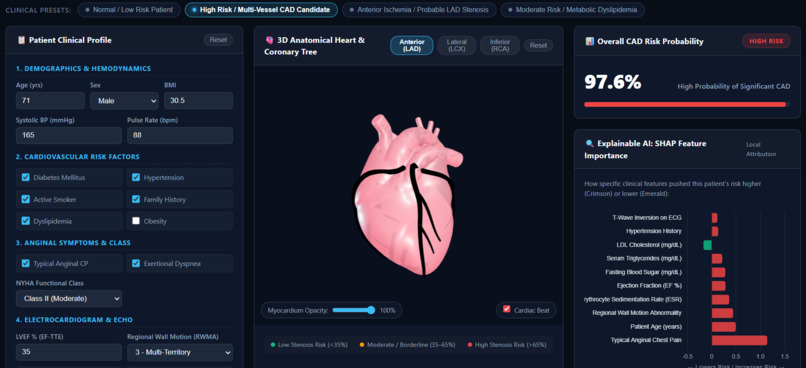
PulseAI main interface displaying overall CAD risk score and 3D spatial mapping.
-
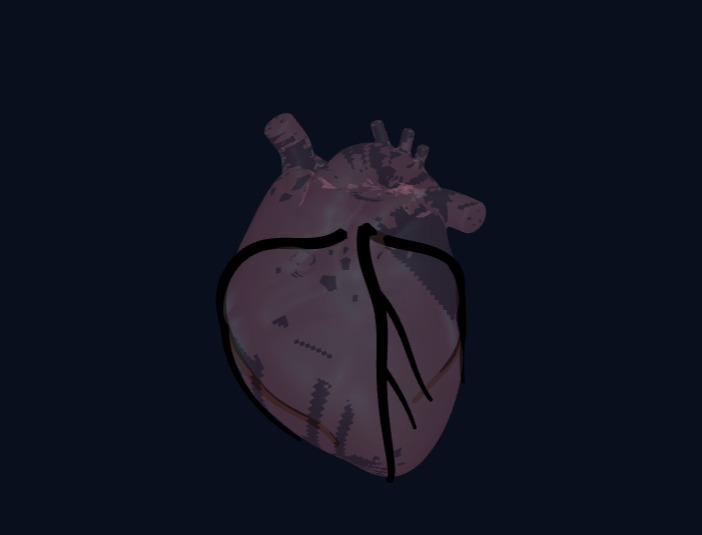
Interactive 3D anatomical heart model with dynamic coronary artery risk highlighting.
-
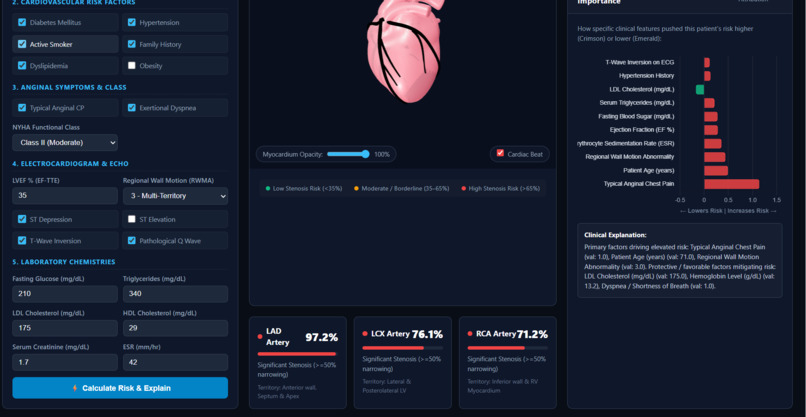
Vessel-specific stenosis breakdown (LAD, LCX, RCA) and SHAP feature explainability panel.
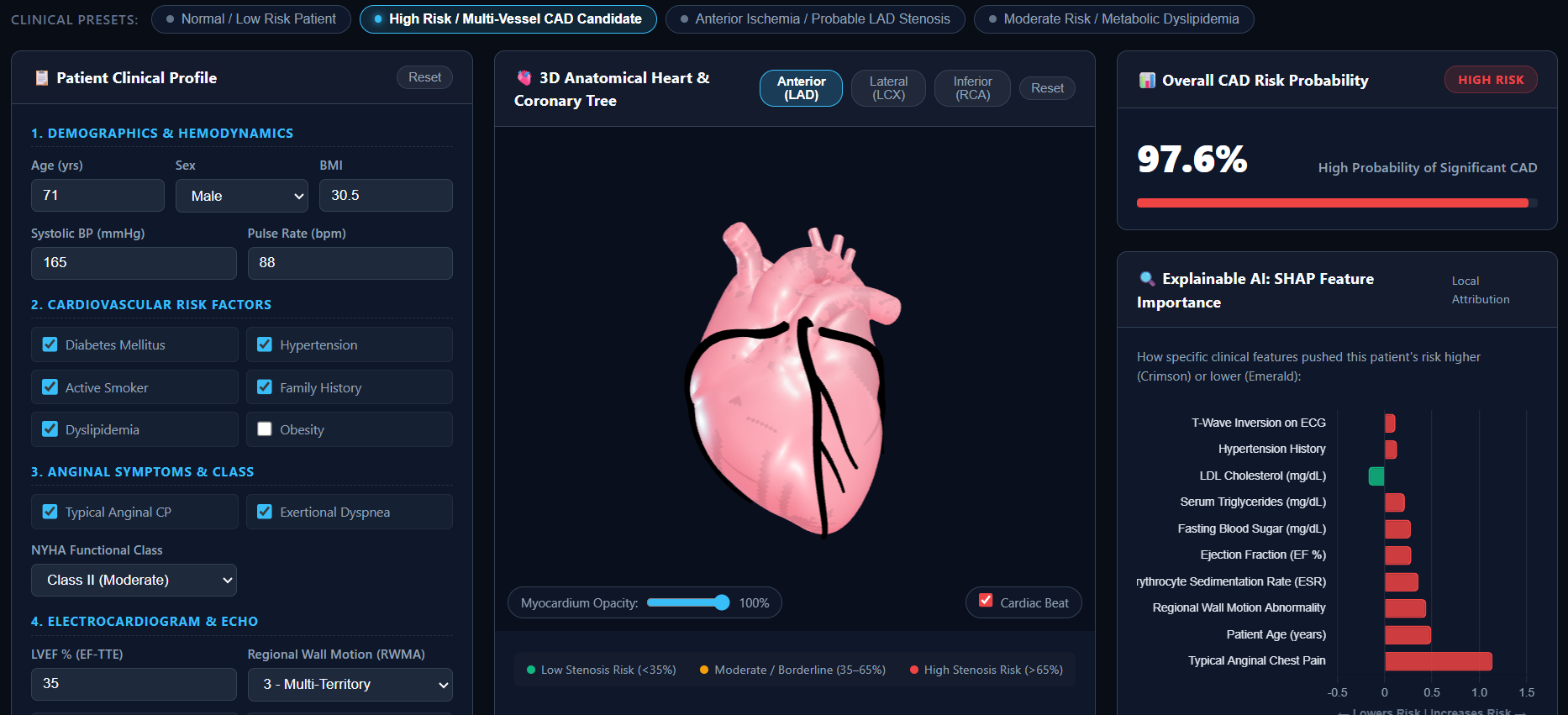
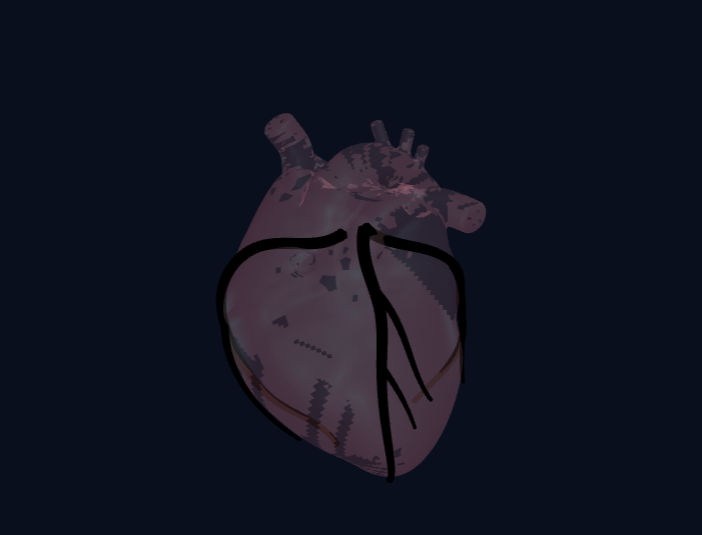
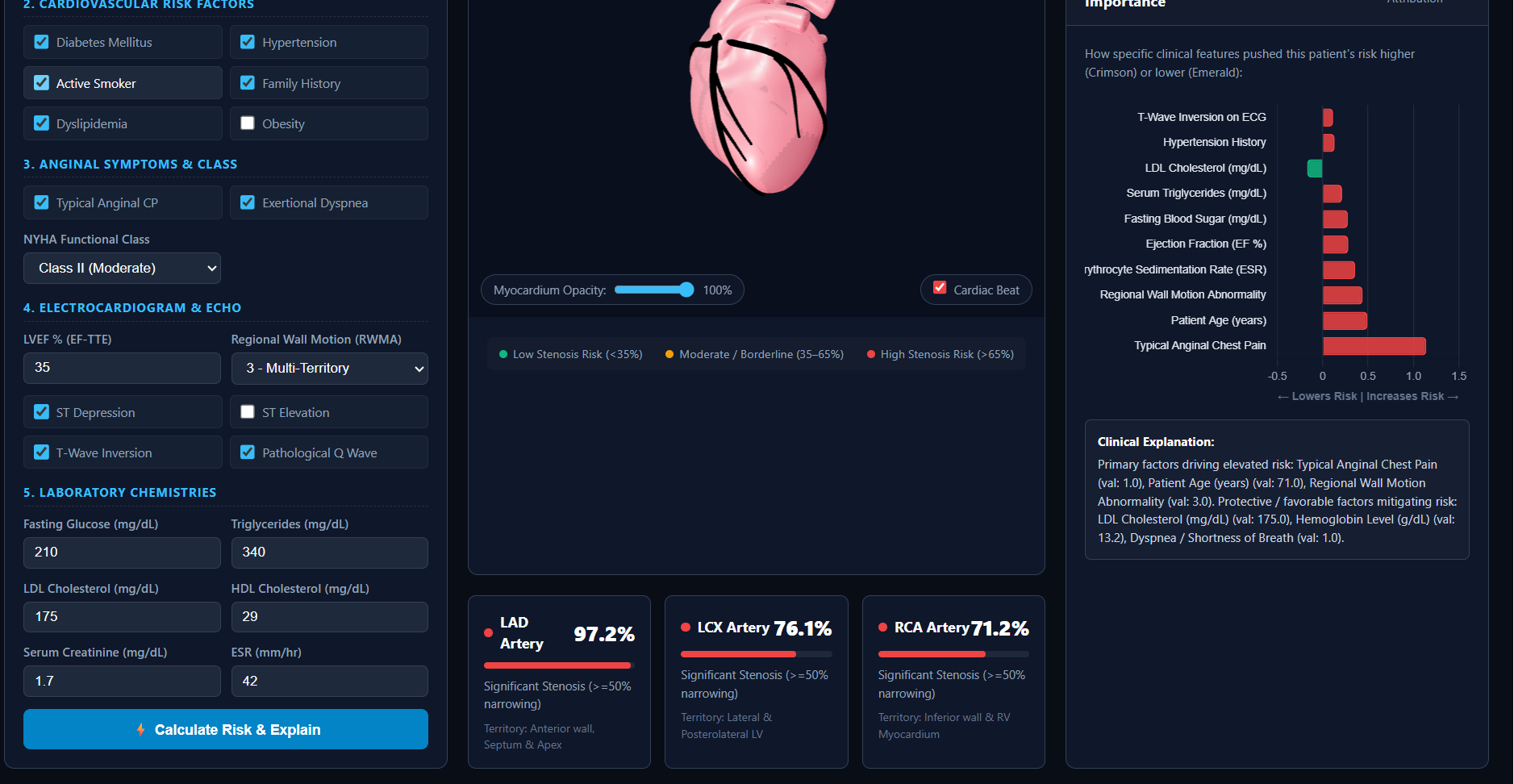
*3D Visual Mapping :Interactive heart rendering that highlights risk zones directly on coronary arteries.
- Vessel-Specific ML: XGBoost predictions for overall CAD risk alongside individual blockages (LAD, LCX, RCA).
- Clear Explainability : Integrated SHAP values so doctors and patients can see which metrics drove the prediction.
- Production Ready: Fully containerized with Docker and live on Render with built-in safety disclaimers.
Inspiration
Heart disease diagnostic tools often give raw numbers or probabilities, but they rarely show where the actual problem lies. We wanted to build something practical that connects clinical risk scores directly to a visual 3D model of the heart. By making predictions interactive and visual, it becomes much easier to communicate risk clearly without guessing what a percentage means in real life.
What it does
PulseAI takes patient clinical metrics and runs them through our machine learning pipeline to:
- Predict overall Coronary Artery Disease (CAD) risk.
- Estimate vessel-specific stenosis across the three main coronary arteries: LAD, LCX, and RCA.
- Color-code high-risk areas live on an interactive 3D heart model using Three.js.
- Show a SHAP explanation breakdown for each factor (like age, BP, or cholesterol) that impacted the score.
How we built it
- Machine Learning: Built with Python, XGBoost, and SHAP using clinical datasets.
- Backend:FastAPI handles API endpoints, predictions, and model loading.
- Frontend: Built with HTML/JS and Three.js for real-time 3D WebGL rendering and dynamic vessel highlighting.
- Deployment: Packaged using Docker and deployed as a web service on Render.
Challenges we ran into
Preventing target leakage during data preprocessing was critical to keep the model realistic and accurate. On the frontend, mapping risk probability scores directly onto specific 3D artery mesh segments in WebGL took a lot of fine-tuning so the visual feedback felt instant and accurate.
Accomplishments that we're proud of
Getting a full 3D interactive pipeline working end-to-end—from patient data entry to machine learning inference, SHAP generation, and dynamic mesh coloring—all running smoothly in the browser.
What we learned
We learned how to properly handle clinical datasets without subtle target leakage, how to containerize heavy Python ML frameworks for light cloud deployments, and how much clearer AI becomes when paired with spatial 3D visuals.
What's next for PulseAI: 3D Heart Risk & Stenosis Predictor
We want to support uploading real DICOM scans to generate patient-specific 3D heart meshes, integrate temporal risk tracking over time, and expand multi-vessel prediction to finer arterial branches.

Log in or sign up for Devpost to join the conversation.