Pulse – Real-Time Crisis Alerts Powered by AI & Web3
Inspiration
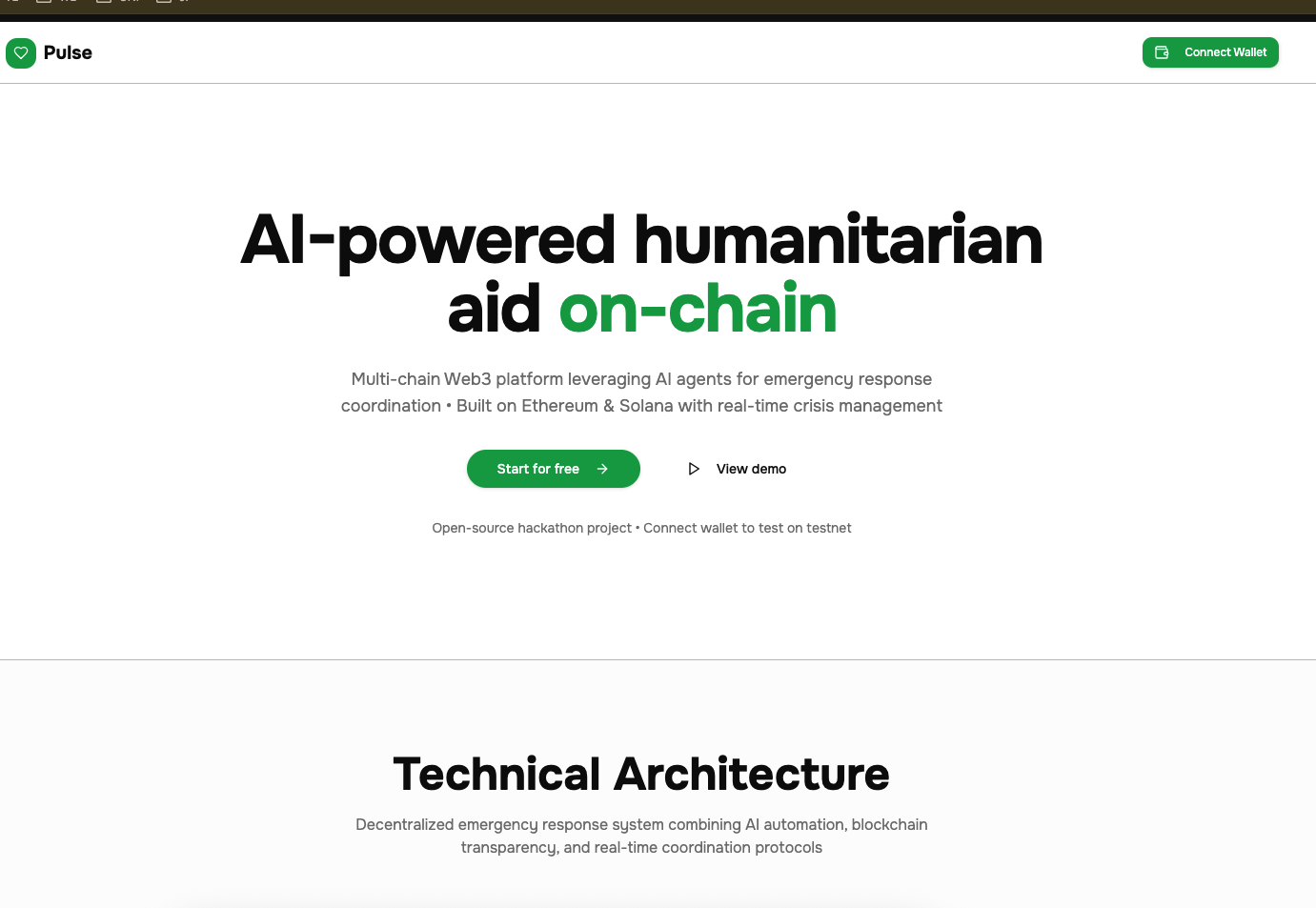
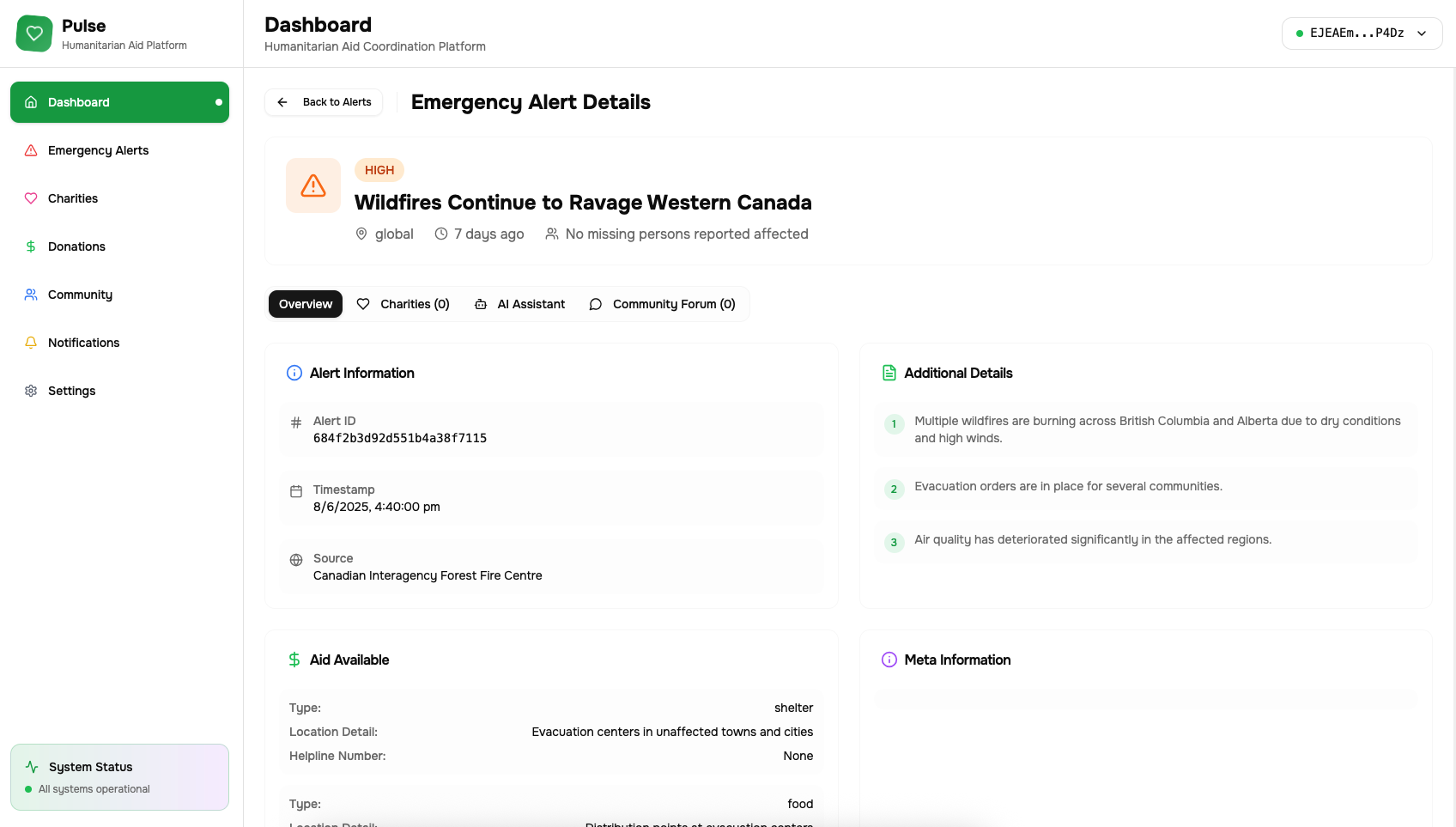
During natural disasters and humanitarian crises — whether earthquakes, floods, or conflicts — aid often arrives too late or too uncoordinated. Witnessing this delay inspired us to build Pulse: a platform that empowers communities with real-time alerts and ensures that help, donations, and resources are verified, traceable, and fast. We wanted to bridge the gap between technology and emergency response using the power of AI and blockchain.
What it does
Pulse is an end-to-end emergency coordination platform that:
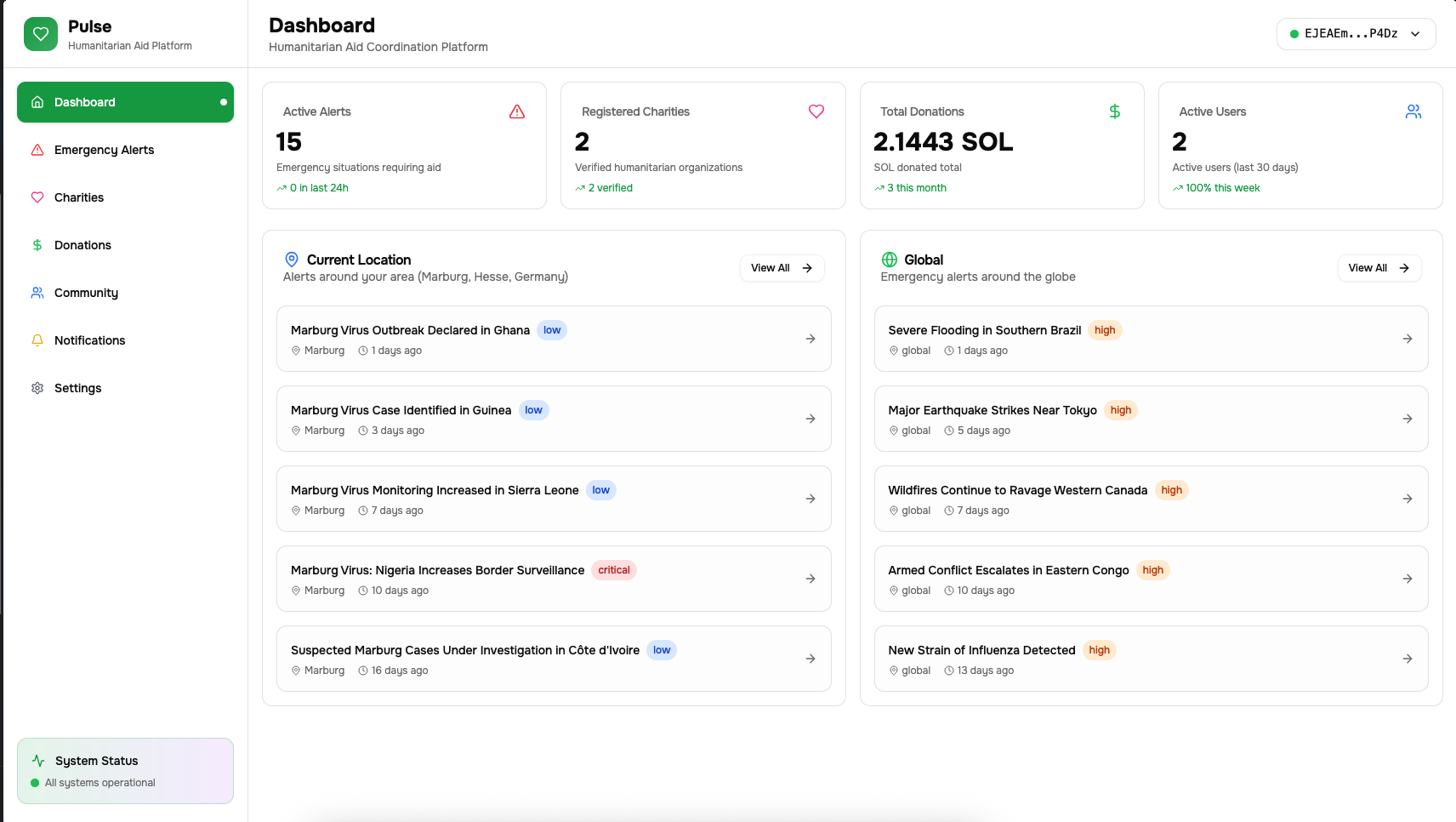
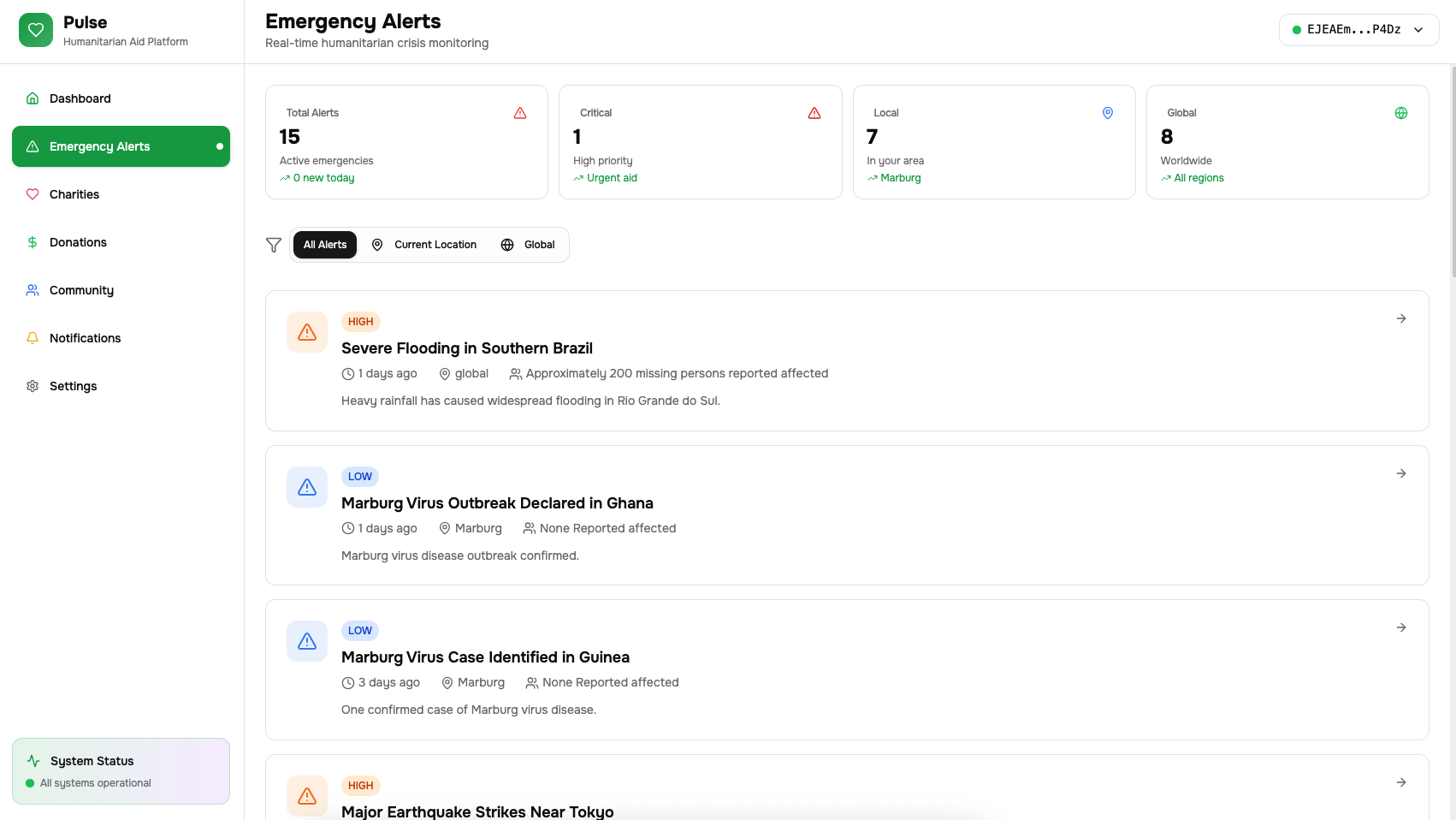
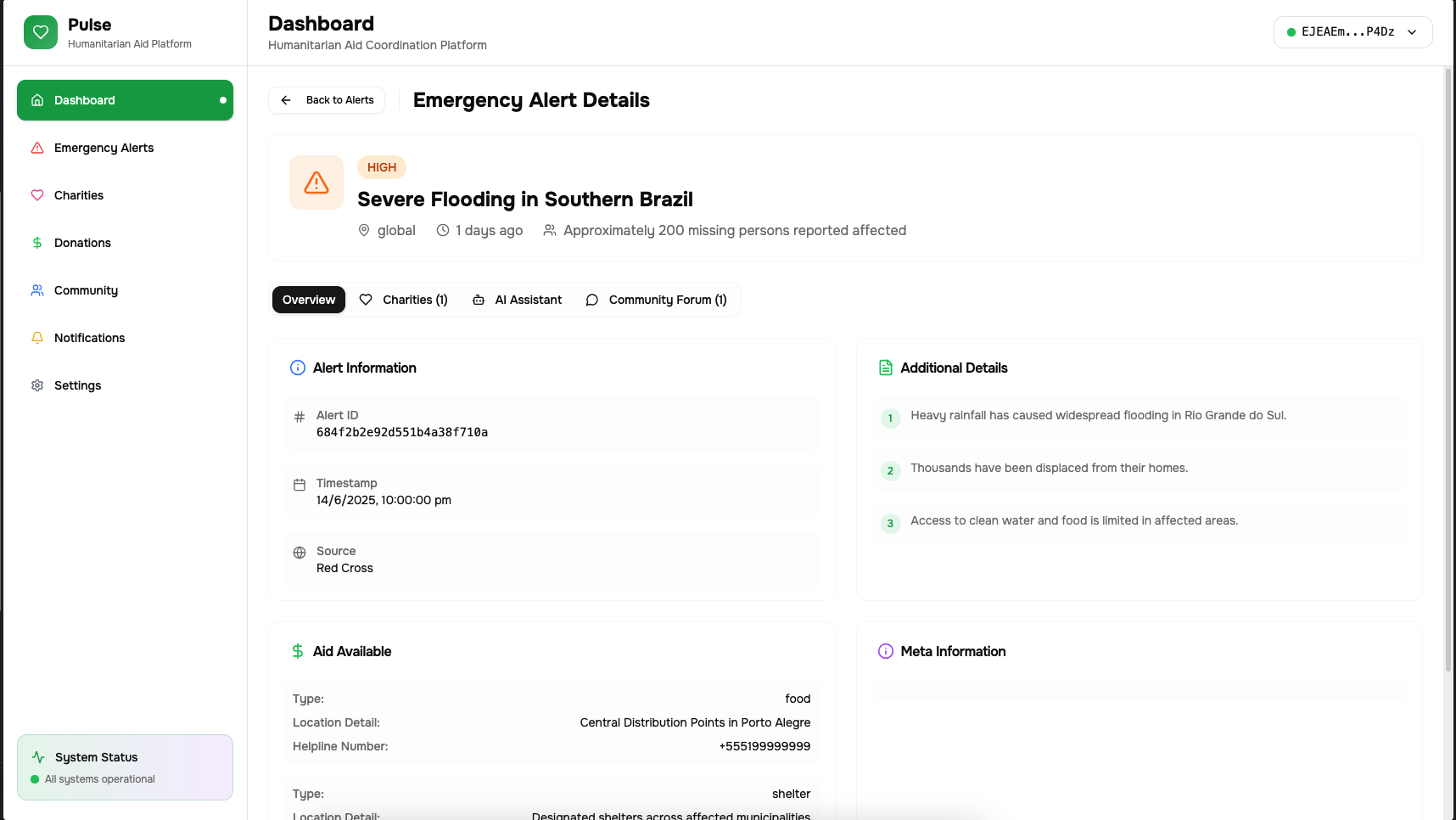
- Sends real-time crisis alerts to affected regions.
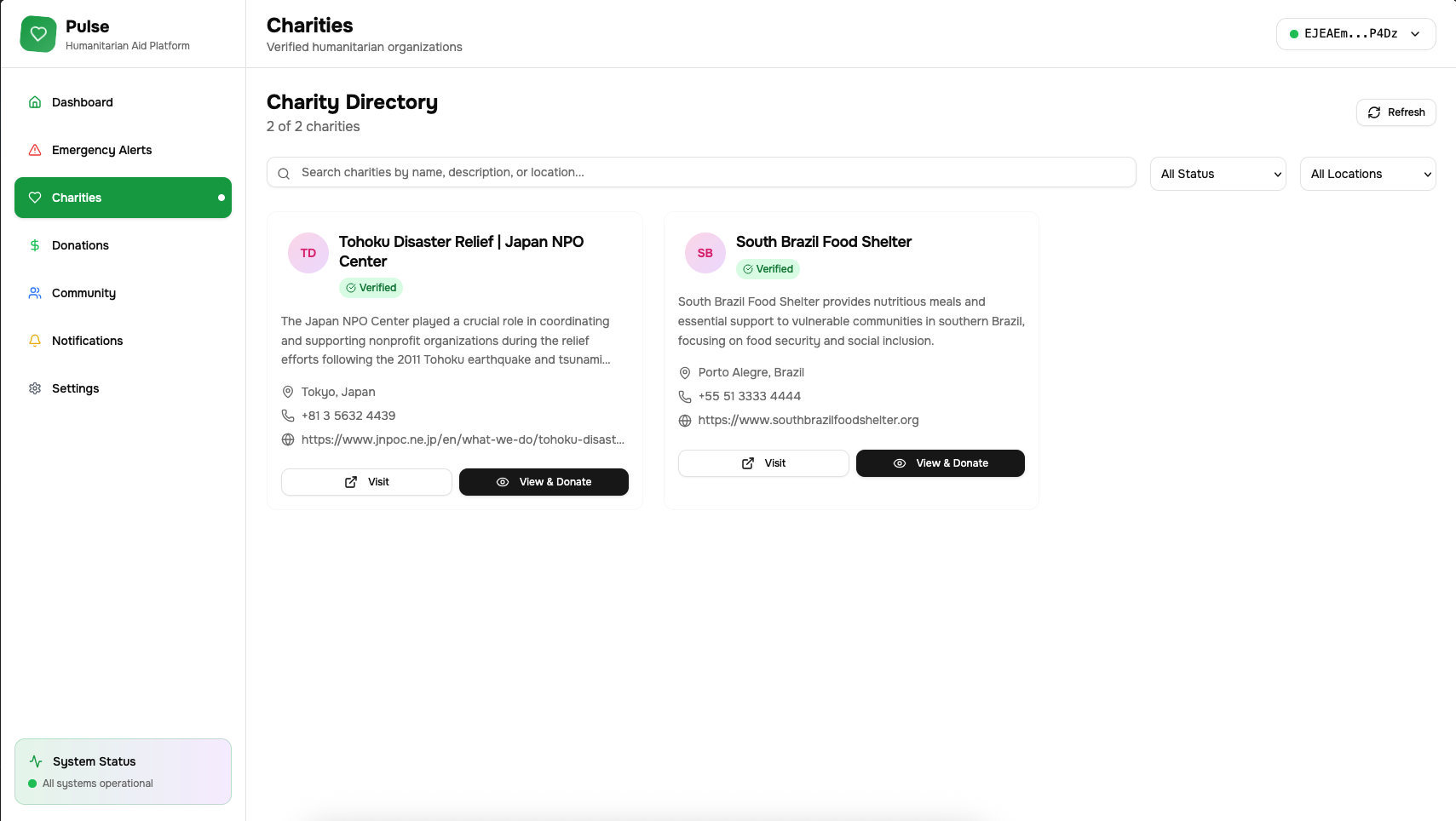
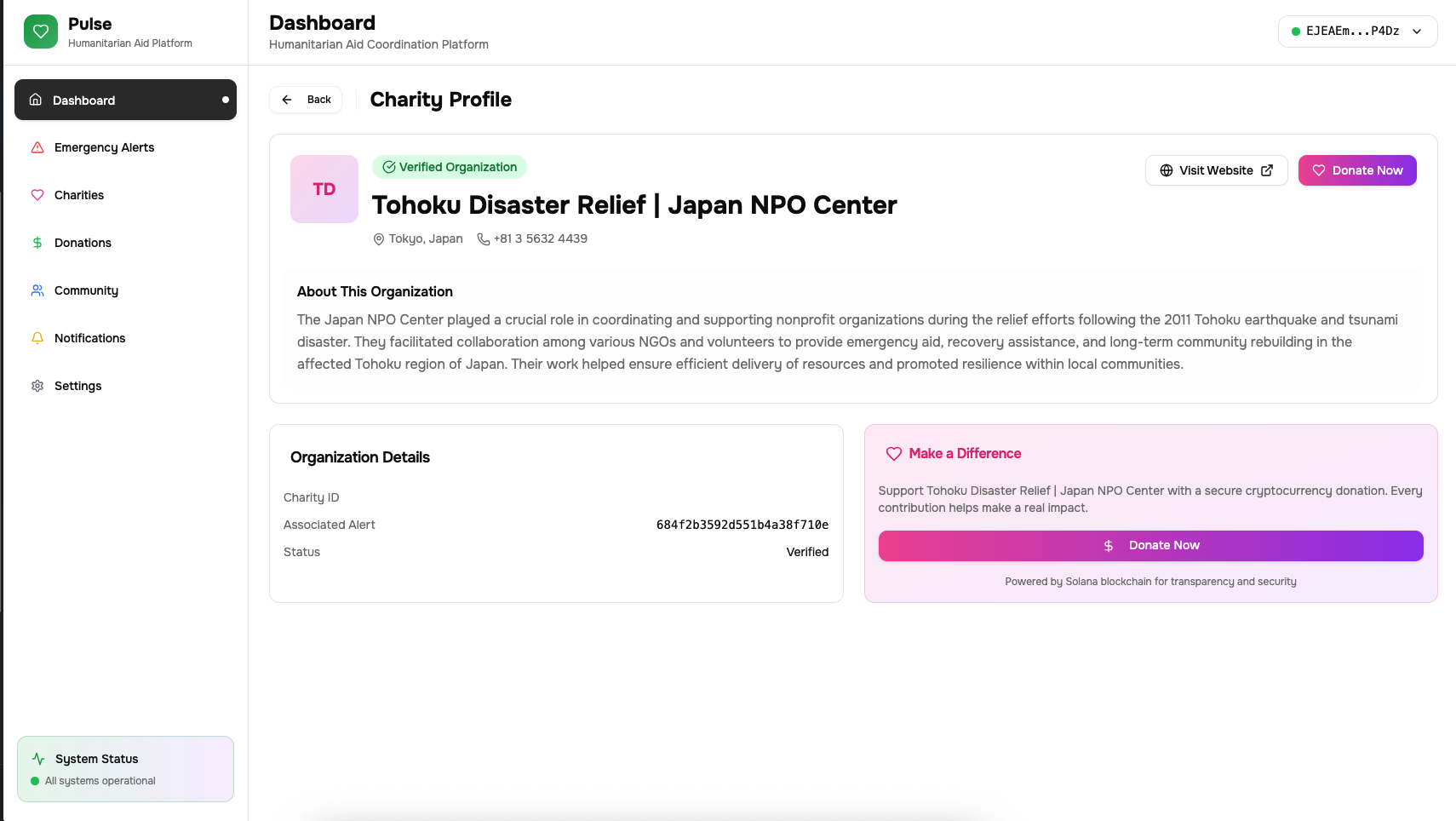
- Verifies NGOs and donation requests using AI.
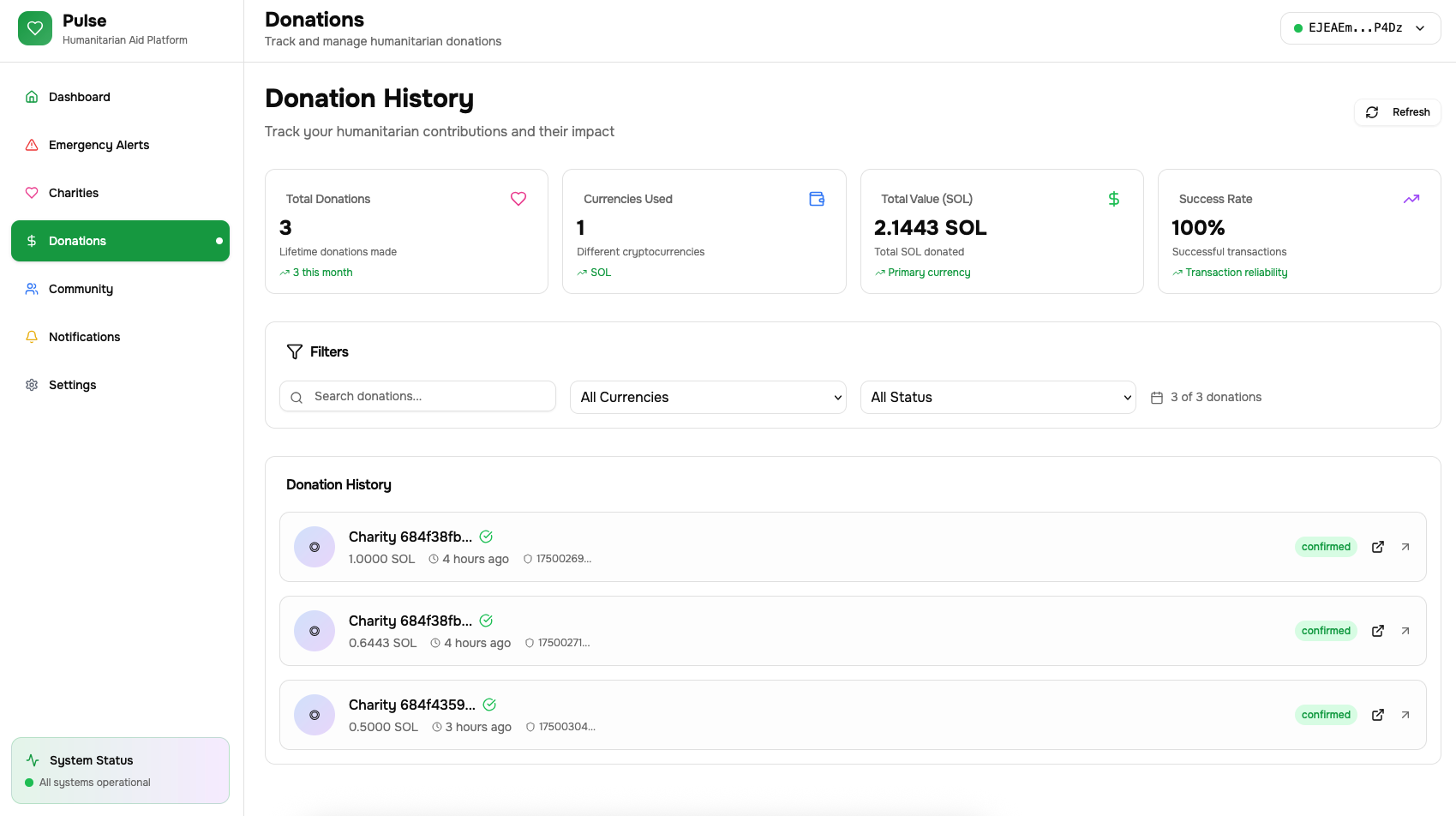
- Tracks crypto donations transparently via the Solana blockchain.
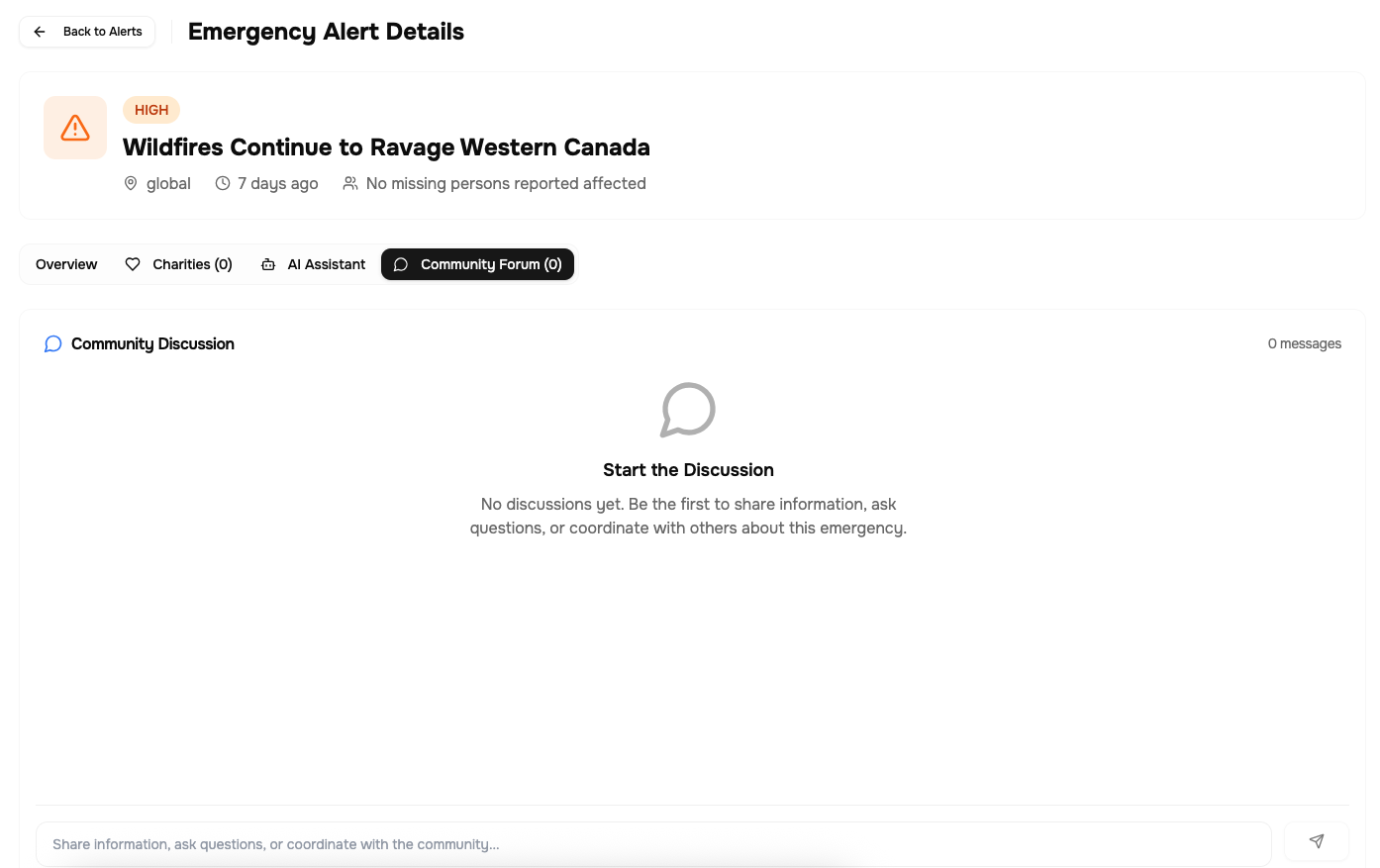
- Connects responders, volunteers, and donors through a secure and dynamic interface.
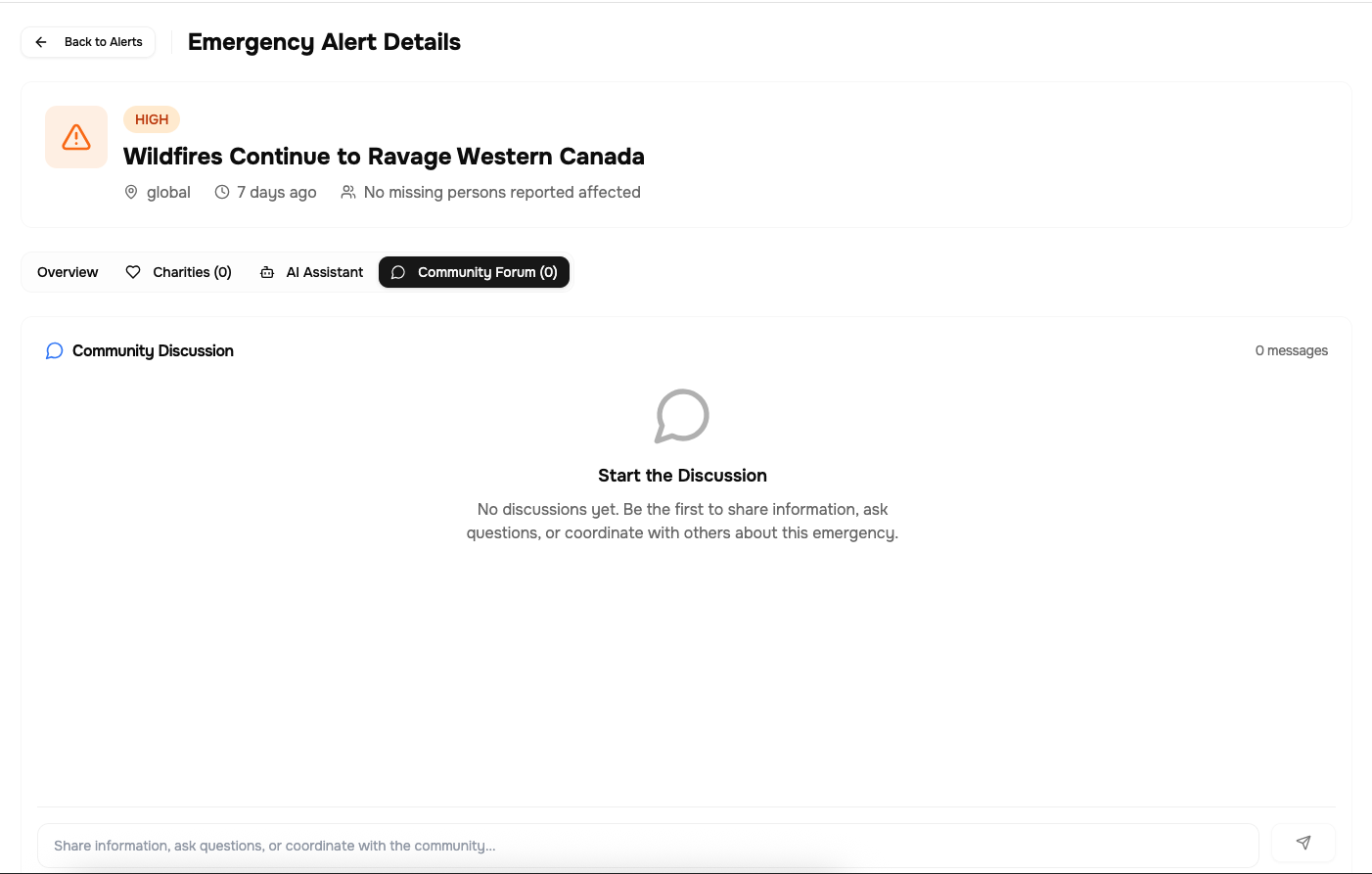
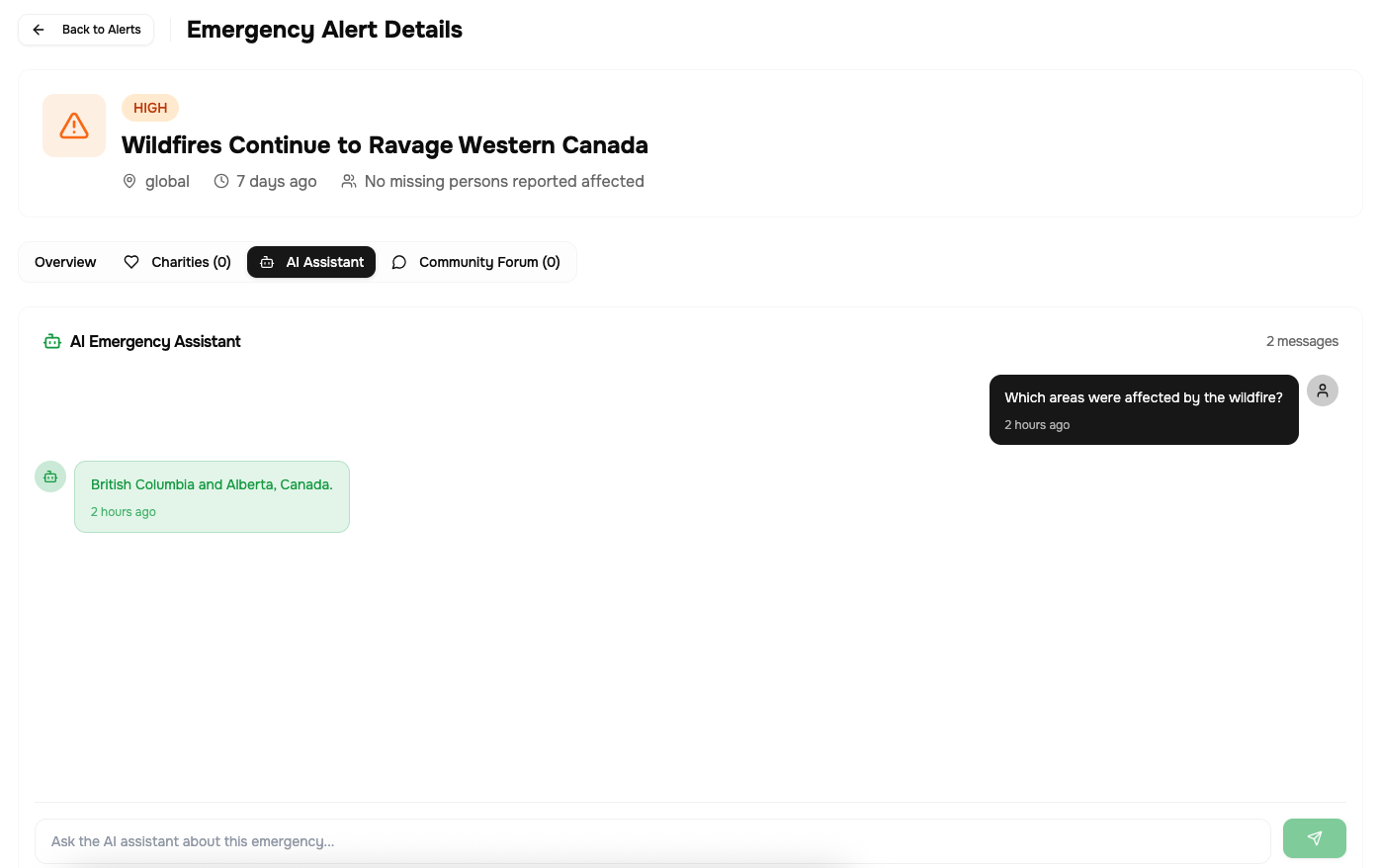
- Provides AI-powered chat assistance for each alert to improve decision-making during crises.
How we built it
- Backend: Built with FastAPI for async, high-performance APIs. Beanie ODM with MongoDB stores and manages alert, user, and donation data.
- AI Integration: We used LLM and Live feed and Selenium scrapers to fetch and validate real-time crisis data.
- Blockchain Layer: Integrated Solana wallet support via solana-py for receiving and tracking donations, ensuring full on-chain transparency.
- Frontend: Developed using React + Vite for speed and interactivity, tightly coupled with our APIs for seamless data flow.
Challenges we ran into
- Real-time AI integration was tough — ensuring non-redundant alerts from multiple sources required smart deduplication logic.
- Solana's transaction verification was new territory for us; we had to learn and build secure signing and wallet-linking mechanisms.
- Maintaining performance in an async-heavy system with live updates and blockchain interactions was tricky to debug.
Accomplishments that we're proud of
- Unified AI, Web3, and backend APIs into a cohesive, production-ready platform.
- Built a working alert system that updates dynamically and is smart enough to avoid misinformation.
- Designed an AI-powered chatbot tailored to each crisis alert, providing helpful insights in real-time.
- Created a transparent donation system where donors can verify their crypto contributions.
What we learned
- Building scalable async APIs with FastAPI and adapting to Pydantic v2 changes.
- Extracting and verifying real-time data with modern LLMs and automated scrapers.
- Learning Solana blockchain concepts — including signing, transaction tracking, and wallet integration using Python.
- Improving our ability to debug deeply async, distributed systems.
What's next for Pulse
- Enhance AI models for better accuracy and misinformation detection.
- Add analytics dashboards for visualizing donation impact and crisis heatmaps.
- Expand support to multi-chain donations (Ethereum, Polygon).
- Implement offline alerting via SMS/local radio APIs for areas with poor connectivity.
- Partner with verified NGOs to create a real-world feedback loop from aid to results.
Built With
- Python, FastAPI, Pydantic v2, Beanie-ODM, MongoDB
- React, Vite, JavaScript/TypeScript
- Solana-Py, Solana Blockchain
- LLM Model, Selenium
- Docker, Uvicorn
Built With
- beanie-odm
- docker
- fastapi
- javascript
- mongodb
- pydantic
- python
- react
- solana-blockchain
- solana-py
- typescript
- uvicorn


Log in or sign up for Devpost to join the conversation.