-
-
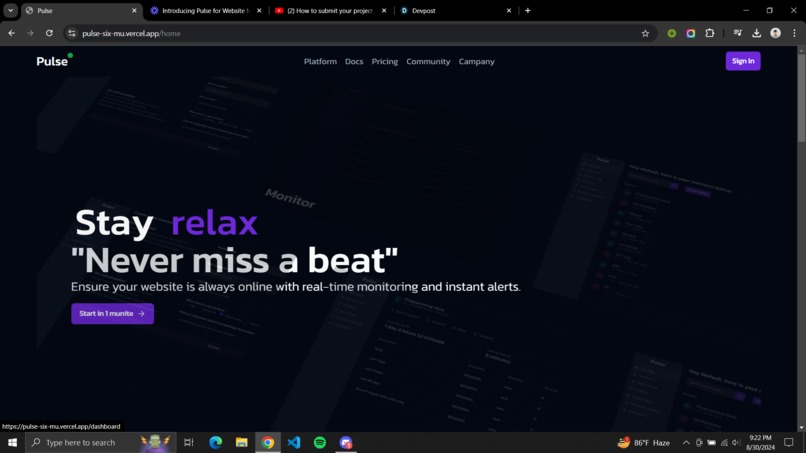
Landing Page
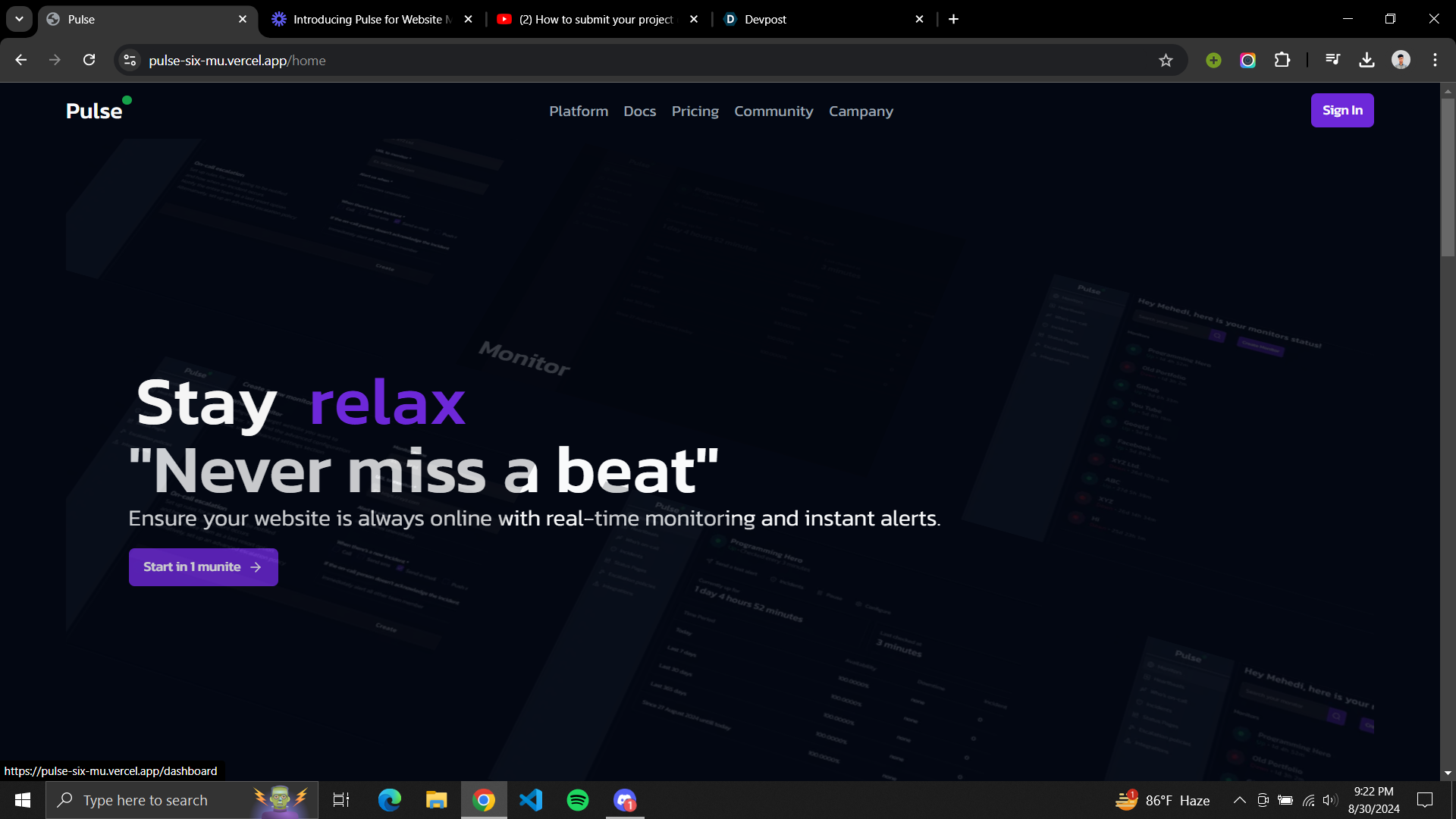
Inspiration
In Bangladesh, that type of website is not much available. That's why entrepreneurs face challenges in running their businesses. From that thinking, I just want to solve their problem.
What it does
It continuously checks your website's status, ensuring you know if anything goes wrong. Whether it’s an unexpected downtime, Pulse alerts you instantly. When an issue is detected, Pulse sends real-time notifications via email to keep you informed. You'll know exactly when an incident occurred, its status, and even who acknowledged it—all in real time.
How we built it
We built Pulse using Next.js, Express.js, TypeScript, Prisma, PostgreSQL, Stripe, and some other third party libraries, deploying on Vercel with real-time monitoring and notifications.
Challenges we ran into
- We are facing challenges to get response from a secure public url.
- Handle bulk amounts of requests. We solved it using node-schedule.
Accomplishments that we're proud of
We're proud of implementing real-time monitoring service like that with limited time, and delivering a user-friendly interface with accurate uptime tracking.
What we learned
In simple word, nothing is impossible. We have to try our best. That's it.
What's next for Pulse
We'll continuously keep updating it. Like expanding features like advanced analytics, user-customized alerts, and integrating AI for predictive downtime insights etc.
Video demo link is not related to this hackcsb. I couldn't upload the video on Youtube. Please watch the loom video.
Loom Video: https://www.loom.com/share/84e4b6c7c7d941ad9947142c27c7537e?sid=f5b16cd3-adf1-40a1-9d01-1c709dfb1b5a Note: Please watch video in normal speed. By default it play 1.2x. (1x recommended).
Built With
- express.js
- kinde
- next.js
- node.js
- stripe
- tailwind
- typescript
- vercel

Log in or sign up for Devpost to join the conversation.