-
-
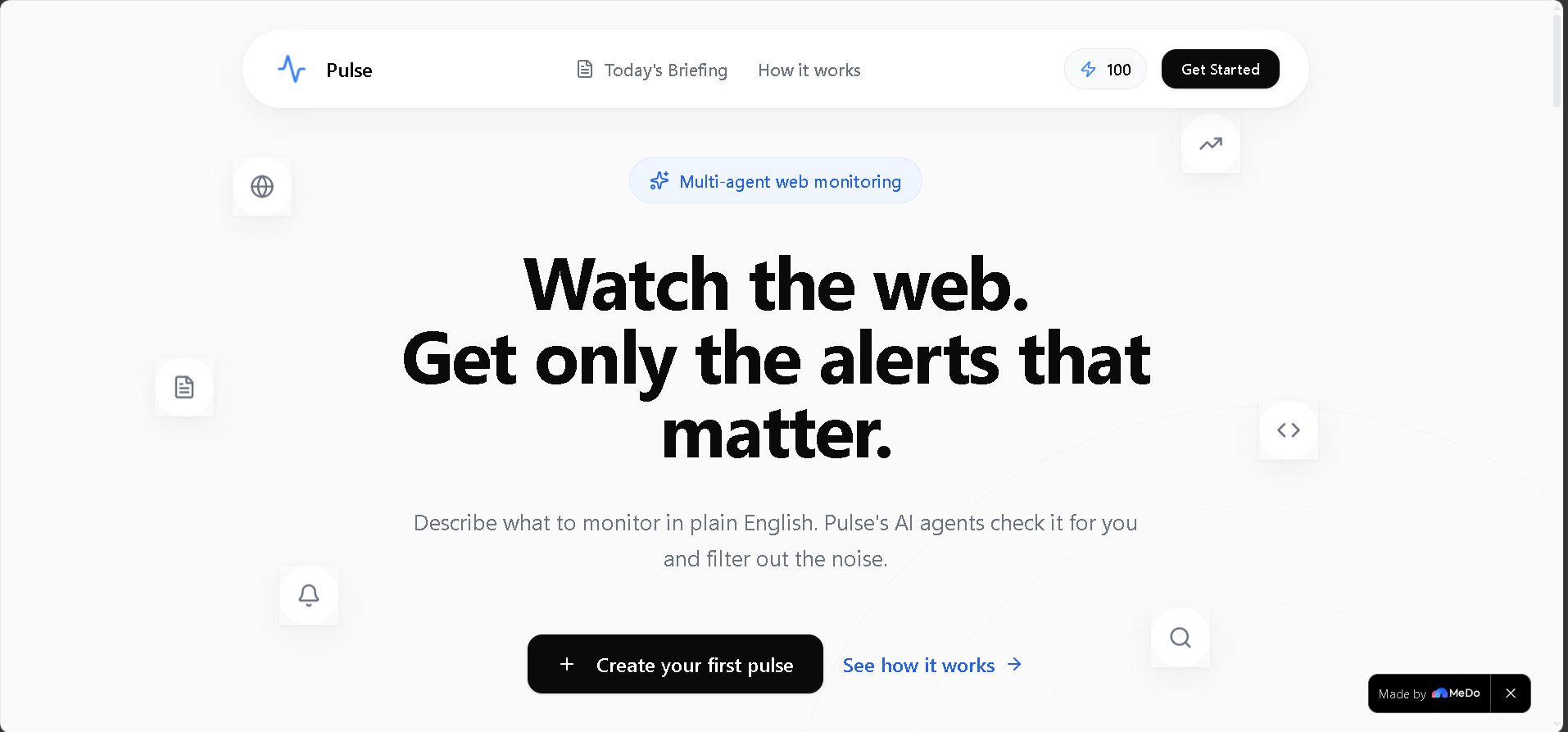
Homescreen
-
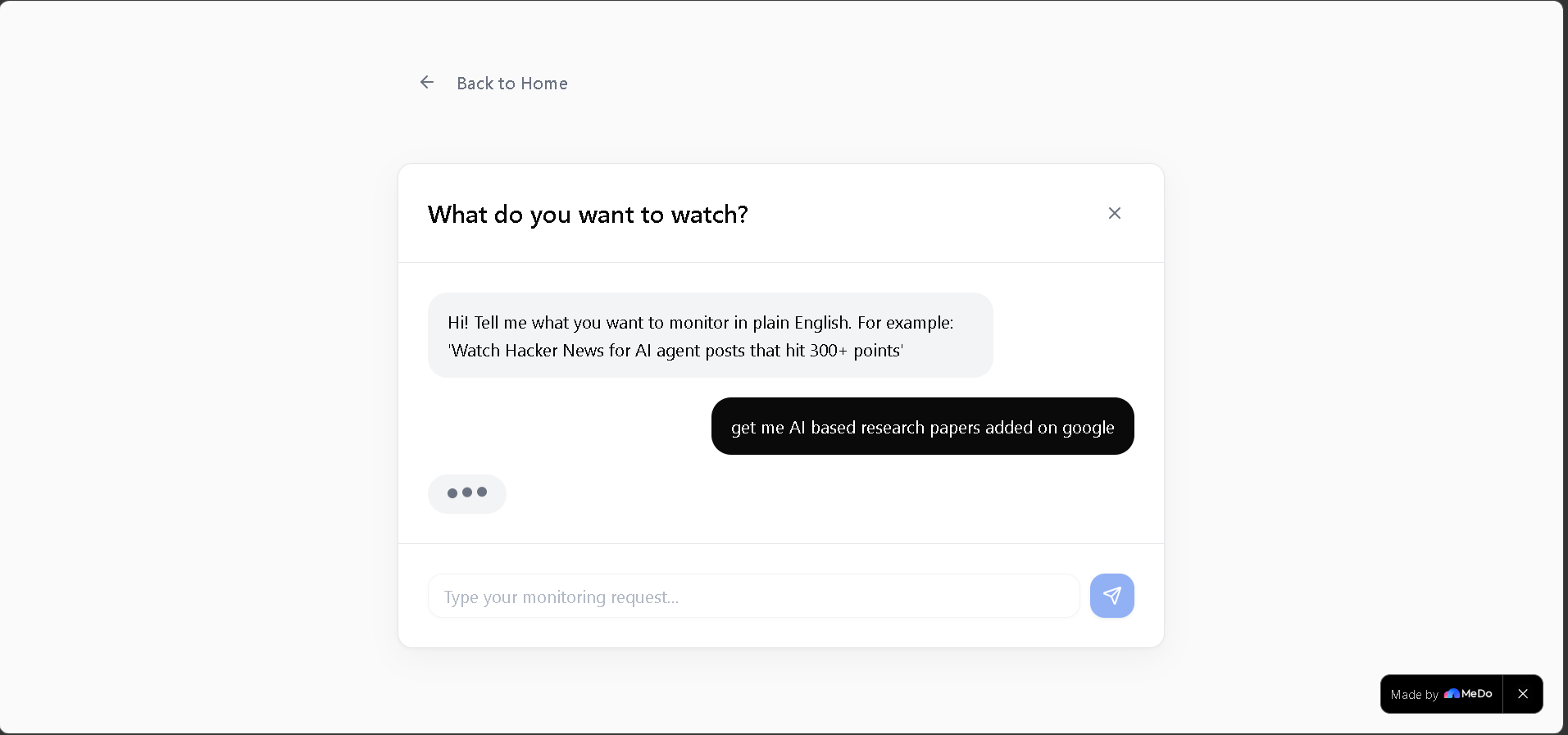
New Pulse Chat
-
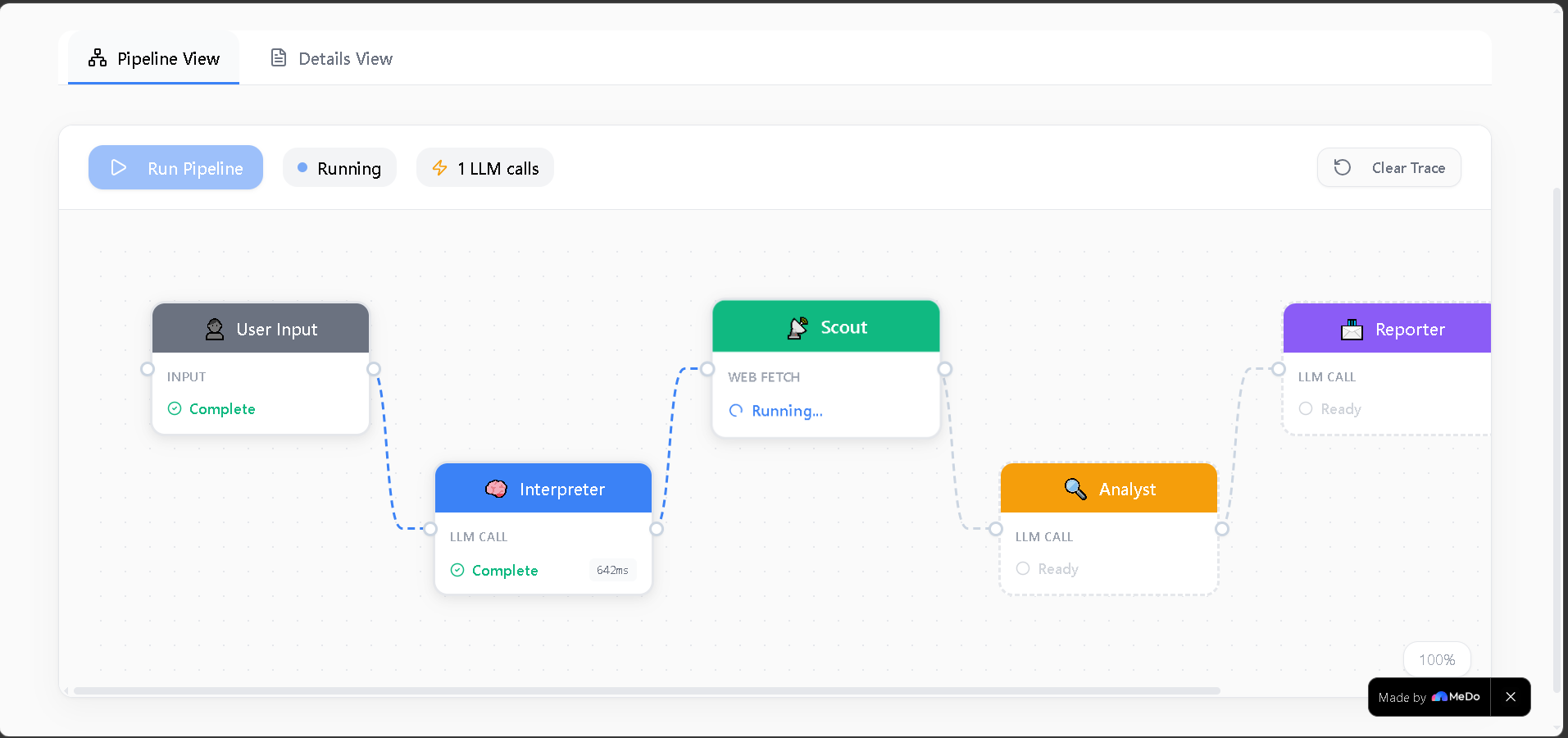
Pipeline View running
-
Alert Screen
-
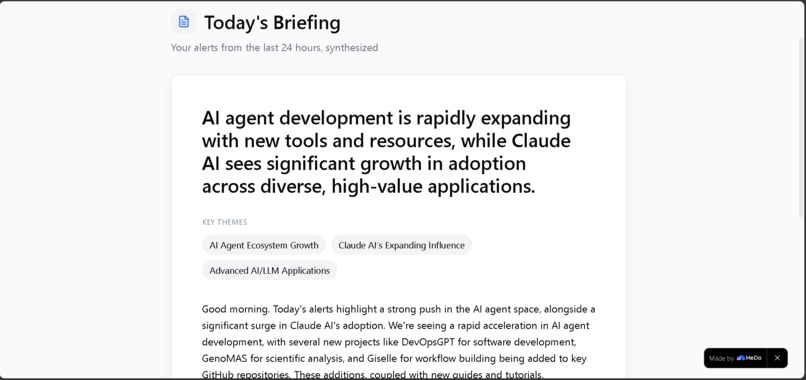
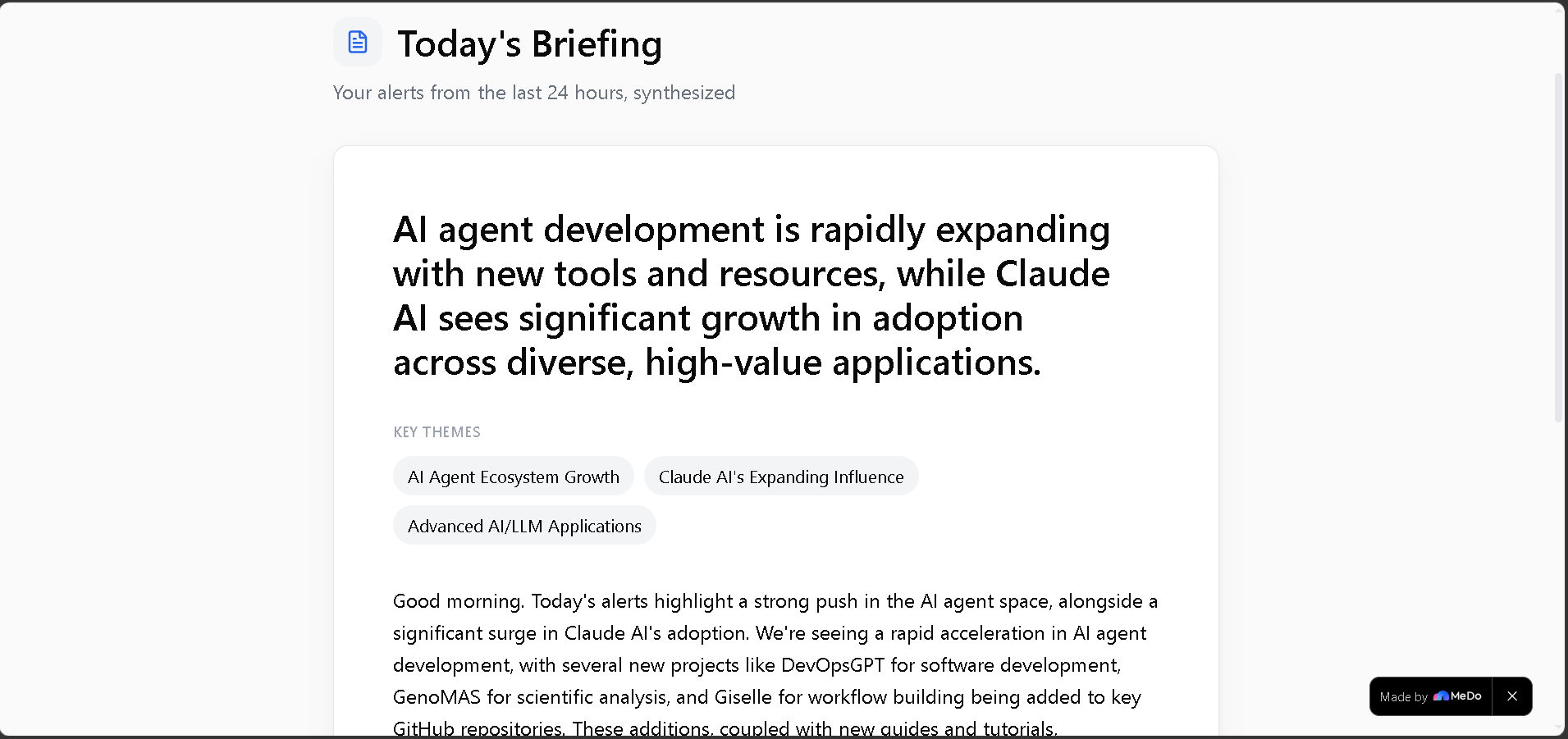
Briefing
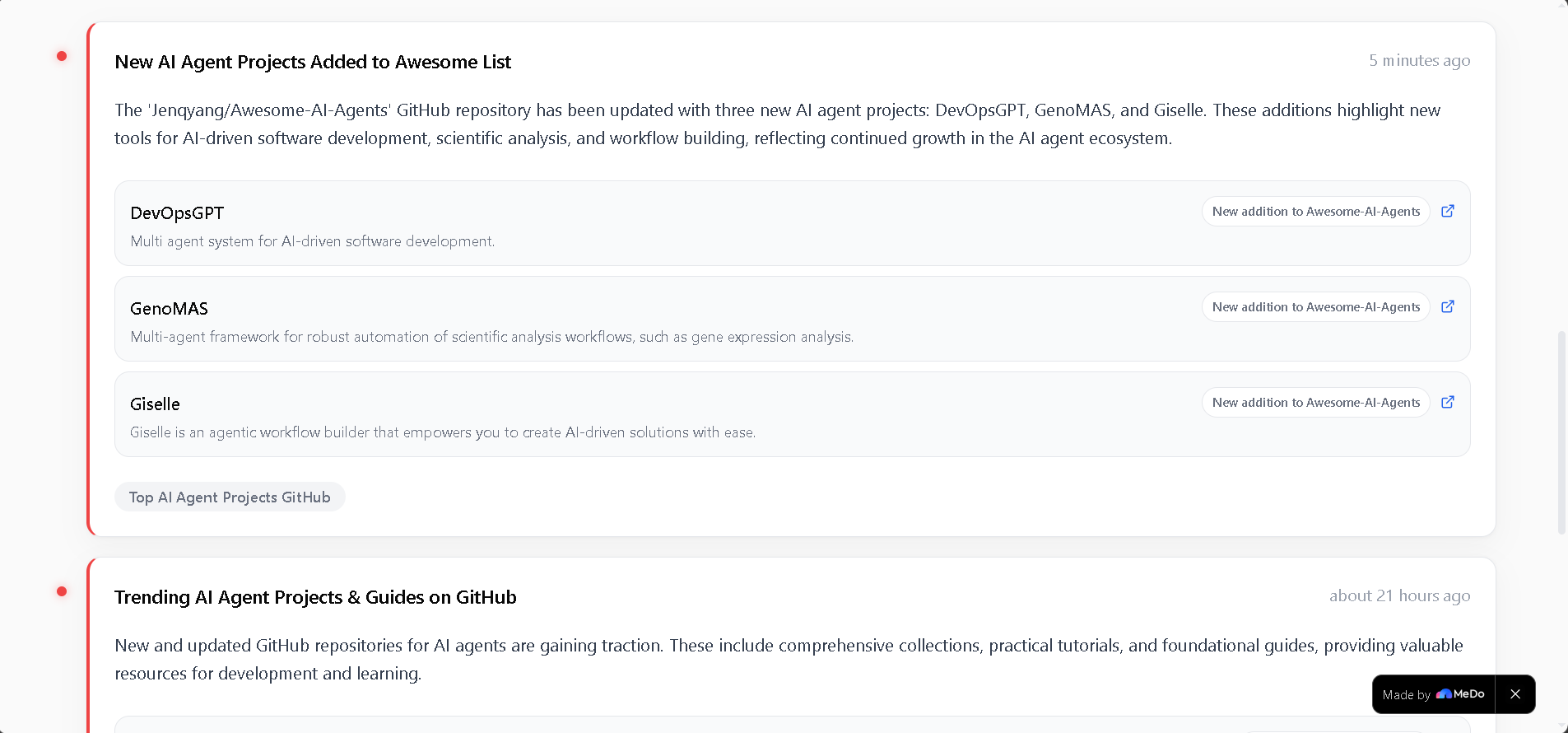
What is Pulse?
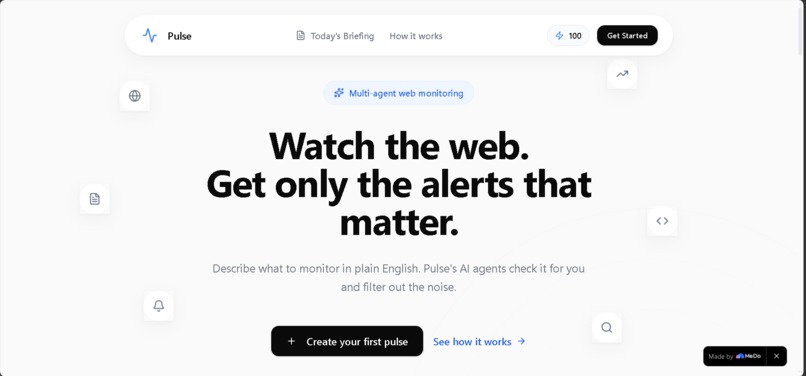
Pulse is a multi-agent web monitoring system built entirely on MeDo. You describe what you want to watch in plain English, and five specialized AI agents collaborate through structured JSON contracts to fetch the source, score relevance, filter the noise, and only alert you when something genuinely matters.
Existing tools like Google Alerts and change-detection services either fire on every change (too noisy) or miss meaningful ones (too dumb). Pulse understands relevance — it knows what YOU specifically care about, not just whether something changed.
The Five-Agent Pipeline
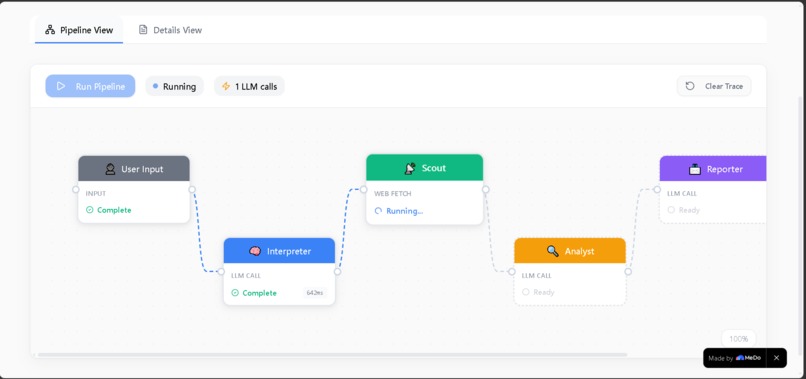
Pulse runs every check through a coordinated pipeline:
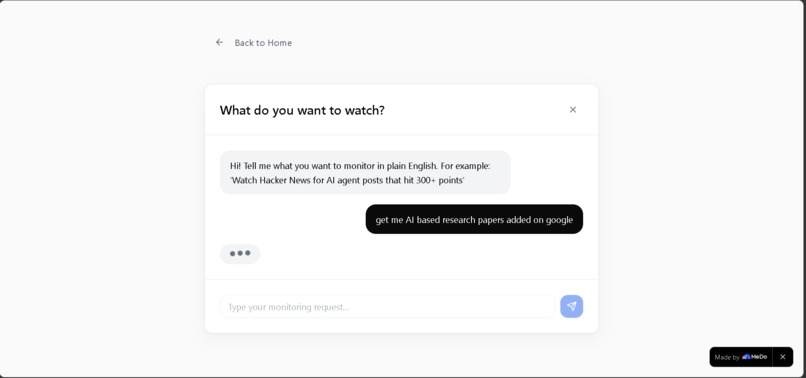
Interpreter Agent — Parses your natural-language request into a structured monitoring spec (source, relevance criteria, threshold, frequency).
Scout Agent — Fetches the source. Notably, this agent uses NO LLM — it's pure deterministic logic. The cheapest, most reliable agent is the one that doesn't need an LLM call.
Analyst Agent — Compares new content to the baseline, scores relevance 0-10, and decides whether to escalate. Strict by default — false alarms erode trust.
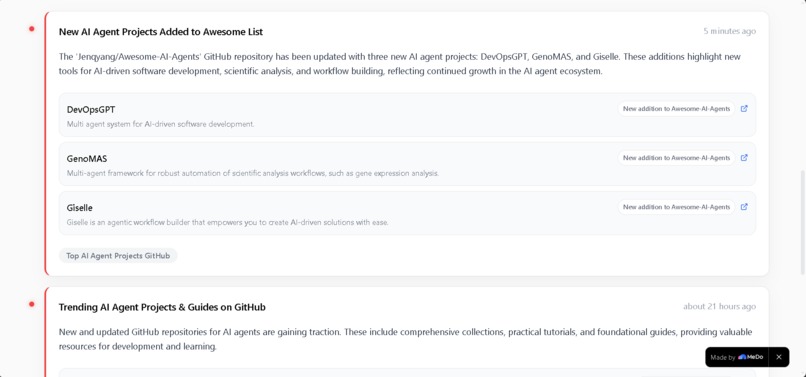
Reporter Agent — Only fires when score crosses your threshold. Writes structured alerts with optional list-mode for multi-item results (top GitHub repos, trending HN posts, etc.) with real working links.
Briefing Agent — Synthesizes all alerts from the last 24 hours into a calm, useful morning briefing.
How I Used MeDo
I built the entire system through conversational prompts in MeDo. What started as a request to scaffold a UI evolved through multi-turn refinement into a full agent orchestration platform. Key MeDo features used:
- Multi-turn chat refinement to iteratively shape system prompts
- Web fetch and search plugins for the Scout
- Persistent storage for pulses, alerts, and snapshots
- Webhook generation for autonomous scheduling
- Dynamic UI generation for the n8n-style Pipeline View
The Most Impressive Feature
The Pipeline View — an n8n-style live node graph that visualizes the five agents collaborating in real time. When a pulse runs, you watch glowing data dots travel between nodes, see each agent's structured JSON I/O by clicking it, and inspect the actual system prompts. This makes multi-agent orchestration visible — turning an abstract architectural pattern into something users can see and trust.
Engineering Decisions Worth Noting
Mixed LLM/deterministic architecture: Scout uses no LLM, saving tokens and improving reliability. LLMs are reserved for steps that genuinely require reasoning.
JSON parse-and-retry loop: Every LLM call validates structured output. Parse failure triggers a retry with the explicit error message. This single layer is the difference between demo-grade and production-pattern systems.
Strict relevance scoring: The Analyst is instructed to score conservatively. Below-threshold = no alert. This is what makes Pulse useful instead of noisy.
Try It
Live demo: app-beuddiiusxs1.appmedo.com
Type any monitoring request in plain English. Switch to Pipeline View. Hit Run. Watch five AI agents collaborate.
Built with MeDo. No code. Just conversation.
Built With
- ai-agents
- baidu
- ernie
- medo
- multi-agent
- no-code
- pipeline-architecture

Log in or sign up for Devpost to join the conversation.