-
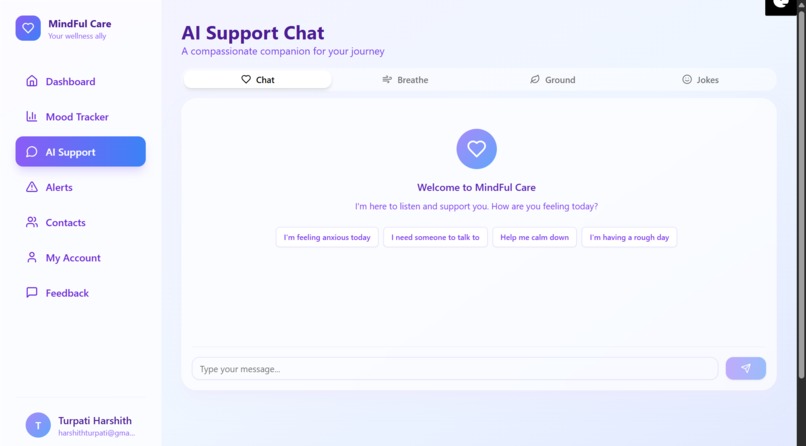
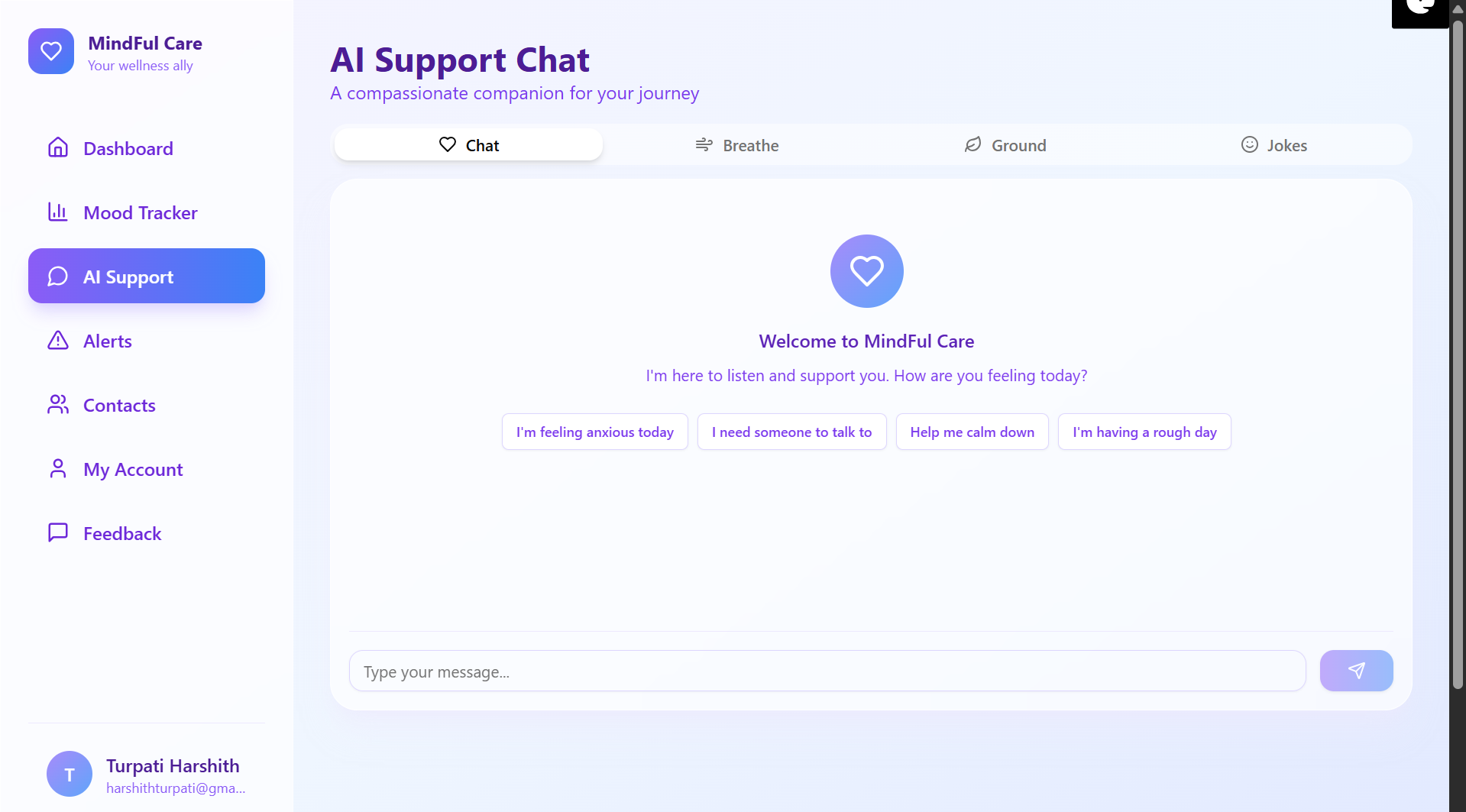
AI Chatbot page
-
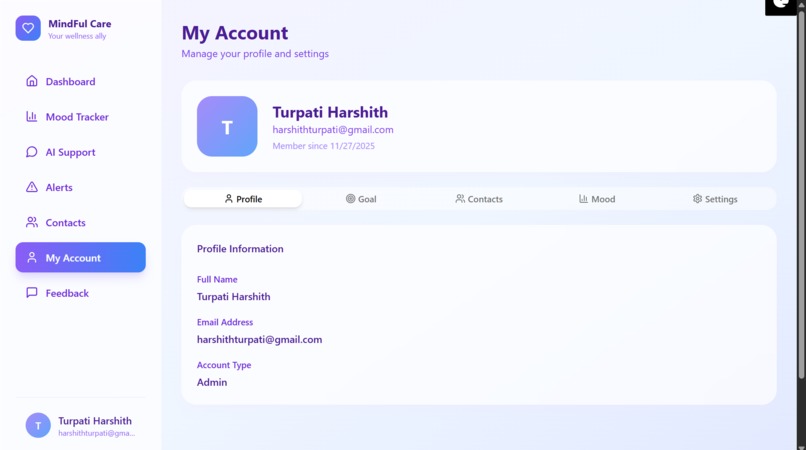
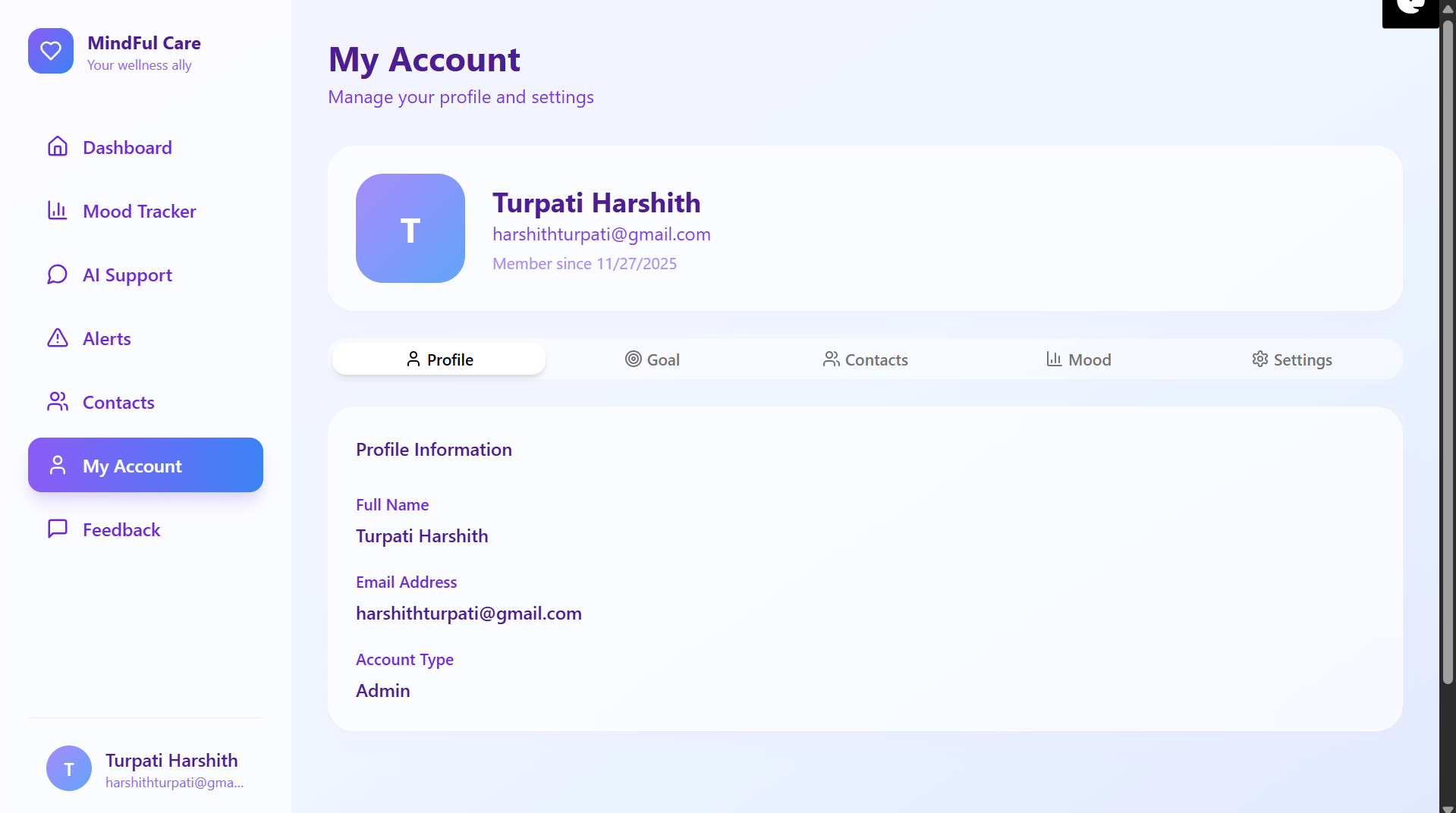
Profile page
-
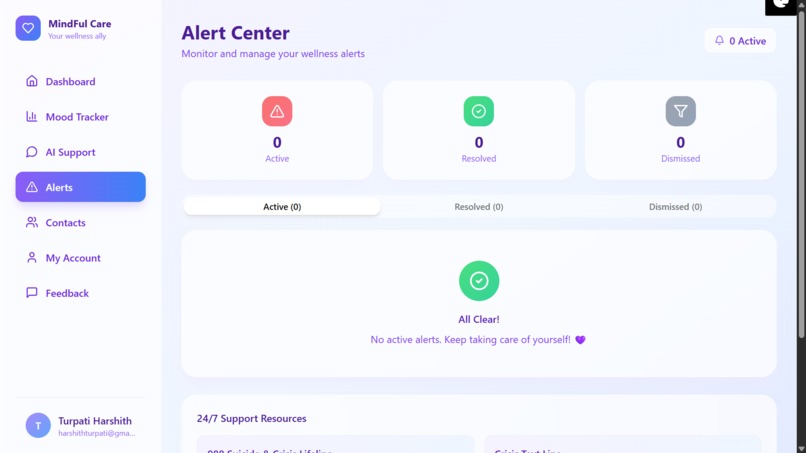
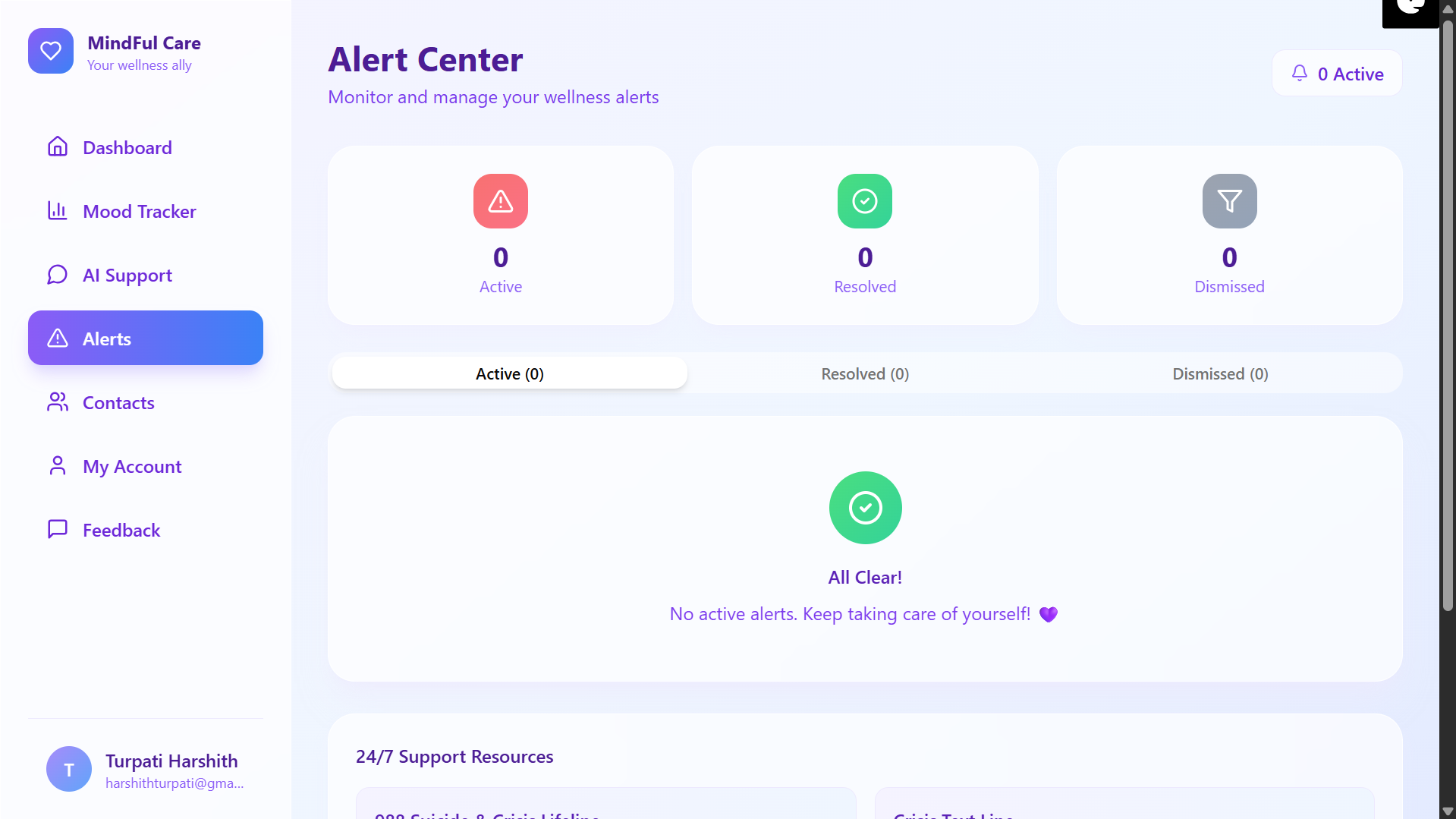
Alert page
-
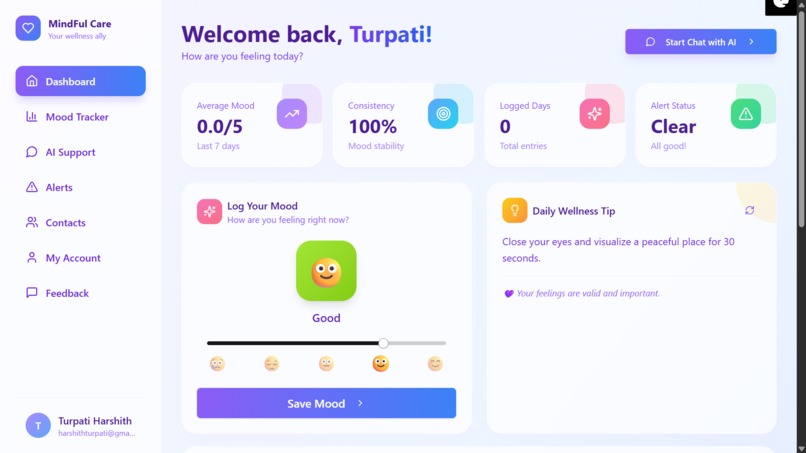
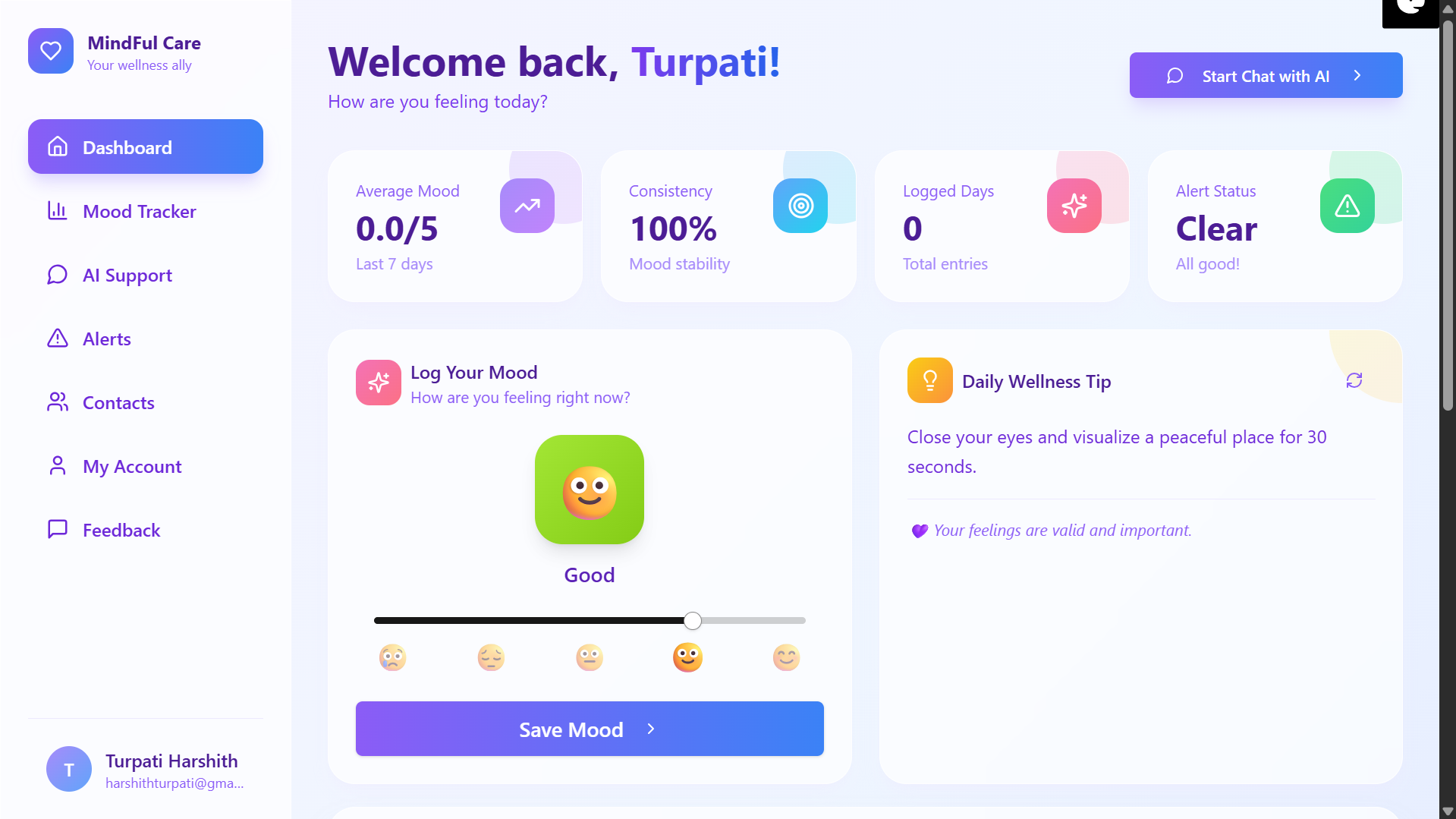
Dashboard page
-
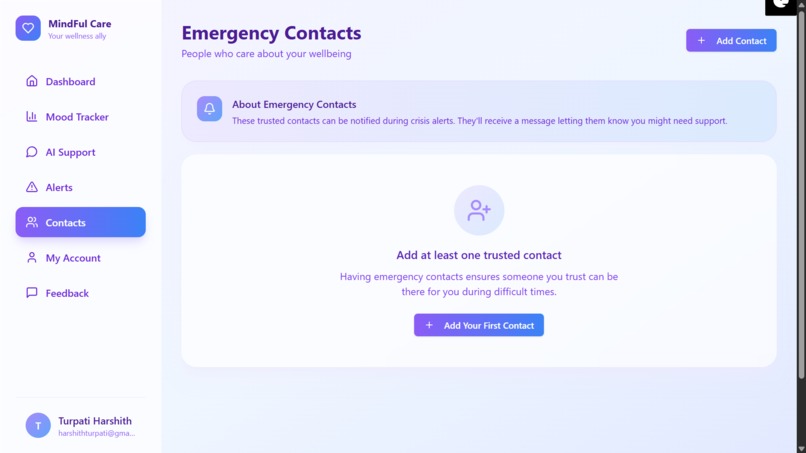
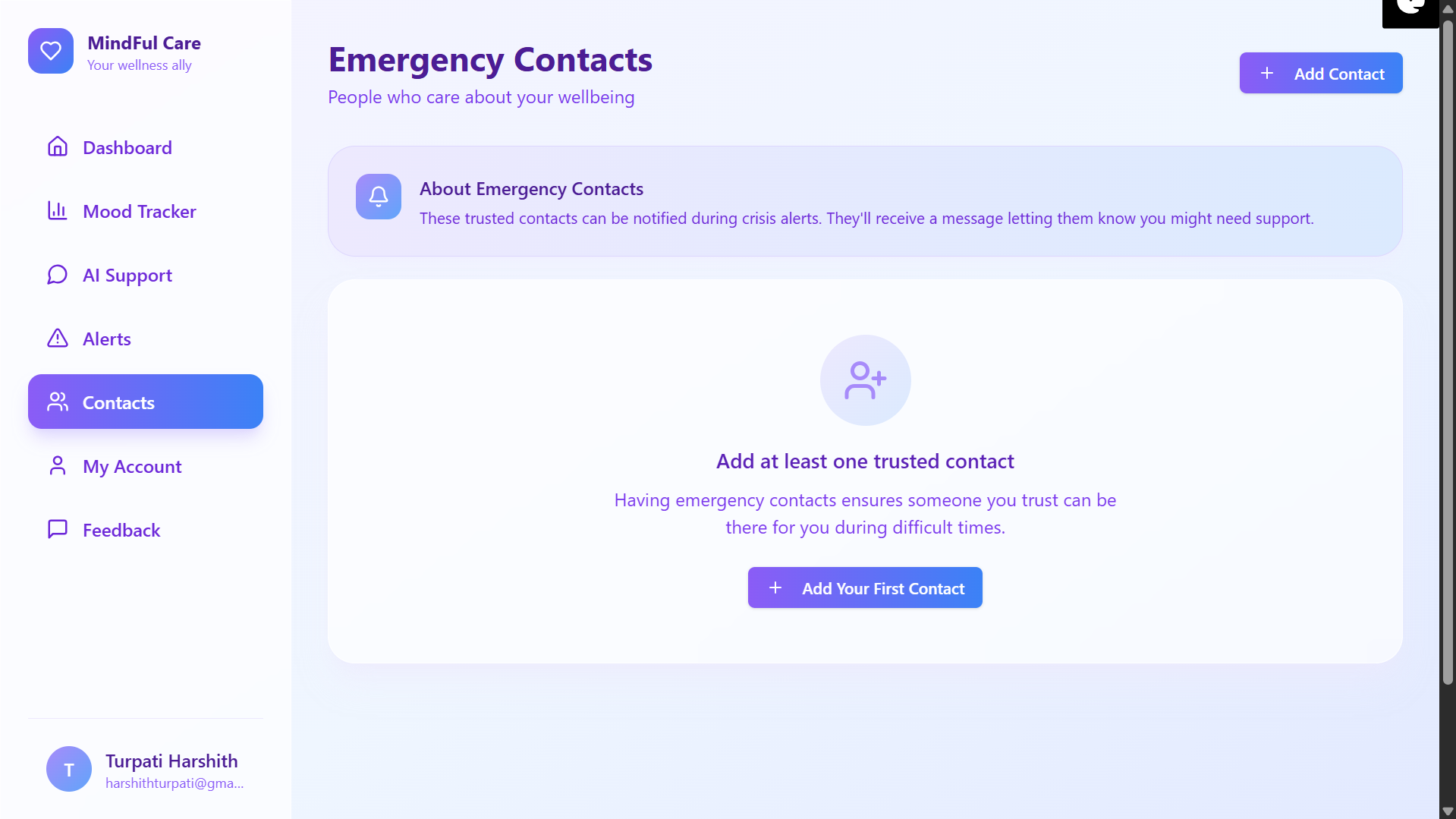
Emergency Contacts page
Inspiration
Mental health struggles often go unnoticed until they become overwhelming. Many people silently suffer because they don’t have someone to reach out to during their toughest moments. We wanted to build something that stands beside people even when others can’t — a companion that listens, understands, detects early warning signs, and immediately alerts trusted contacts so no one has to face their darkest moments alone. This inspired us to create Pulse Mind, a supportive AI-driven wellness and crisis-response platform.
What it does
Pulse Mind tracks a user’s daily mood, provides personalized motivation, and supports emotional wellbeing through an empathetic AI chatbot. It automatically detects crisis-related messages or high-risk moods and instantly alerts the user’s trusted contacts via email so they can check in right away. The system offers grounding exercises, breathing support, uplifting content, and personalized encouragement based on the user’s personal goals. It acts as a wellness tracker, emotional companion, and early-warning safety system all in one.
How we built it
We built Pulse Mind using a full-stack architecture. The frontend uses a calming lavender UI designed with a soft gradient theme to create emotional comfort and reduce anxiety during use. The backend integrates intelligent crisis-keyword detection, mood-scoring logic, and an automatic alert system. Trusted contacts are notified via email for the prototype (free and reliable), with future expansion for SMS/voice alerts through Twilio. The AI chatbot is powered by empathetic language models, guided with custom prompts that ensure safe, supportive, and non-judgmental responses. User settings, goals, and histories are stored securely, allowing personalized motivation and continuous wellness tracking.
Challenges we ran into
Designing a non-alarming but effective alert system that notifies friends first before escalating further
Ensuring the AI detects crisis messages accurately without false positives
Maintaining a soft, calming user interface that still contains powerful safety features
Handling asynchronous email notifications and logging delivery status
Creating a balanced AI tone — empathetic, supportive, and safe without sounding robotic
Integrating multiple features (mood tracking, goals, alerts, chatbot) into one smooth experience
Accomplishments that we're proud of
Successfully built an AI that understands emotional intent and provides comforting responses
Implemented a working trusted-contact emergency alert flow using email
Designed a visually calming lavender UI that supports emotional comfort
Created a complete mood-tracking system with history, averages, and trend graphs
Added personalized goals and motivational messages generated by AI
Built a prototype that truly conveys our mission: “No one fights their toughest moments alone.”
What we learned
How to design AI systems that prioritize safety, empathy, and crisis detection
How color psychology (like lavender) impacts emotional experience in UI design
The importance of balancing automation with human connection — notifying friends first is crucial
Deep understanding of backend alert workflows, state handling, and secure message delivery
How small UX details (like grounding exercises, language tone, button placement) can make a big emotional difference
How to build wellness features that feel personal rather than generic
What's next for Pulse Mind
Integrating SMS and voice alerts through Twilio and Eleven Labs Adding real-time location sharing only when crisis alerts are triggered and with user consent Providing AI-generated wellness plans, habit tracking, and mood-improvement challenges
Offering offline emergency shortcuts, like shake-to-alert or long-press SOS
Expanding into a mobile app (Android/iOS) with push notifications
Collaborating with mental health organizations and helplines for real-world impact
Improving AI emotional understanding using more advanced safety models
Built With
- base44

Log in or sign up for Devpost to join the conversation.