-
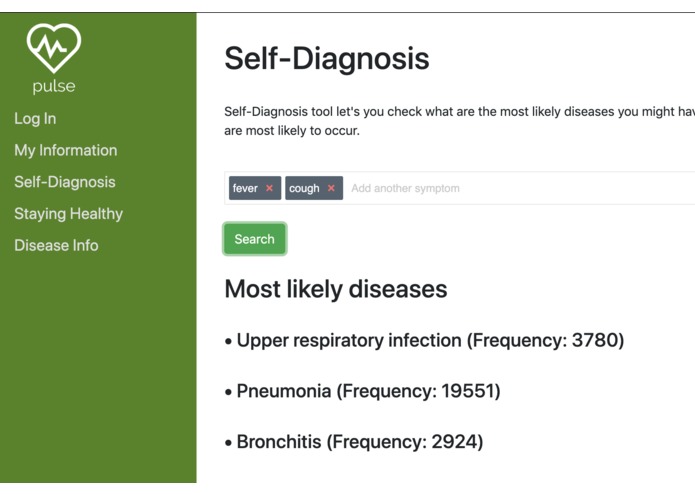
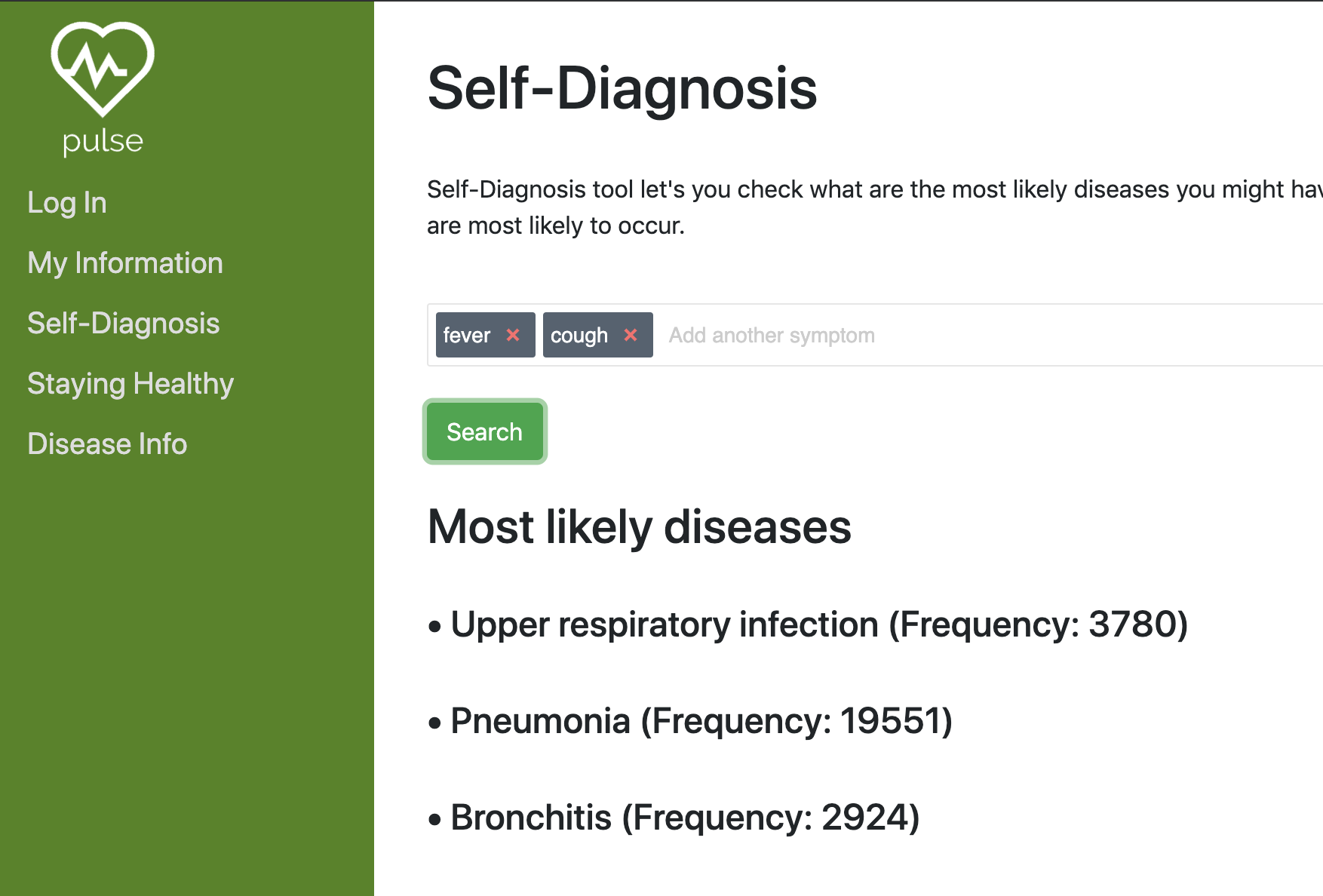
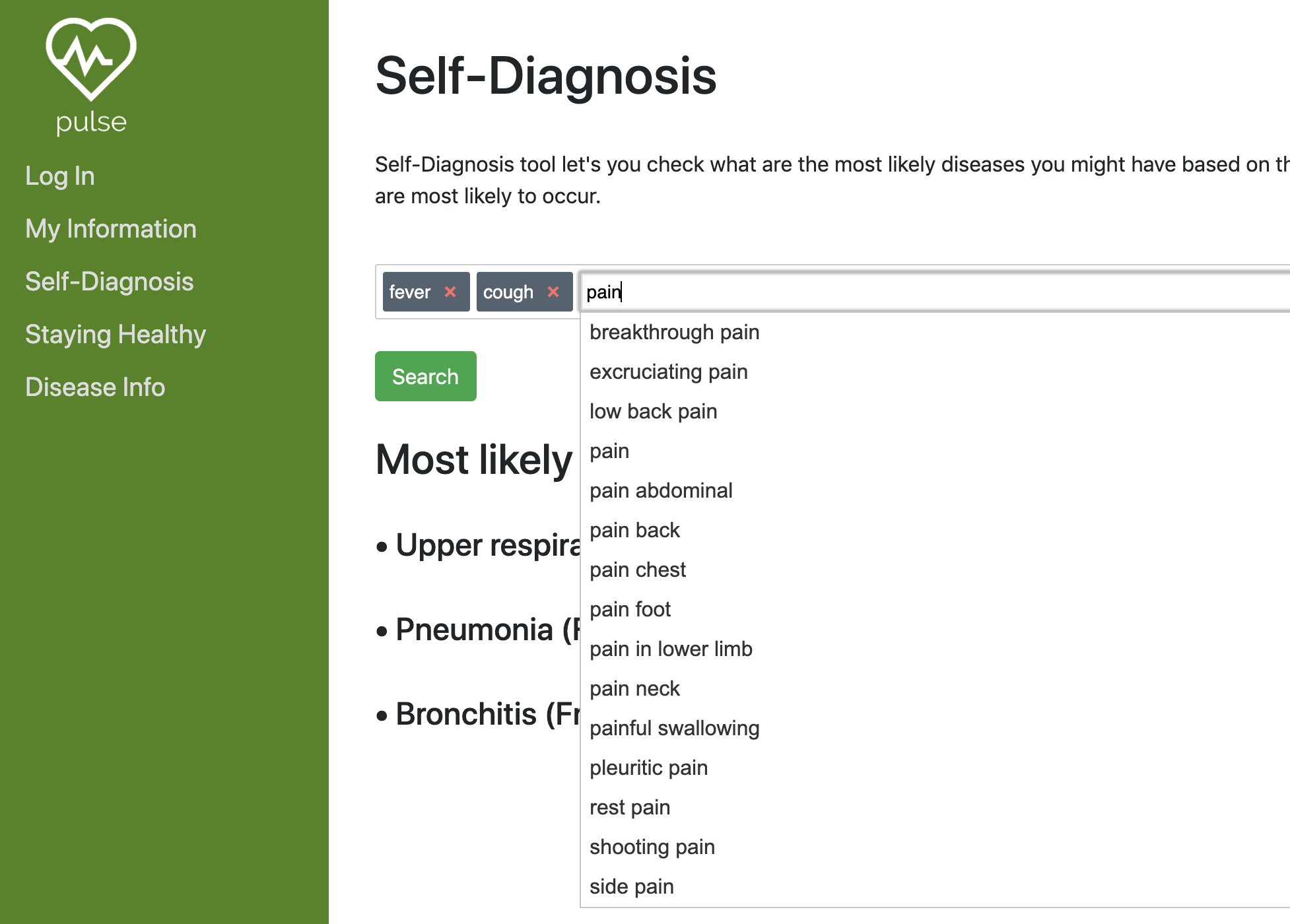
Given a set of symptoms, we suggest the most likely cause.
-
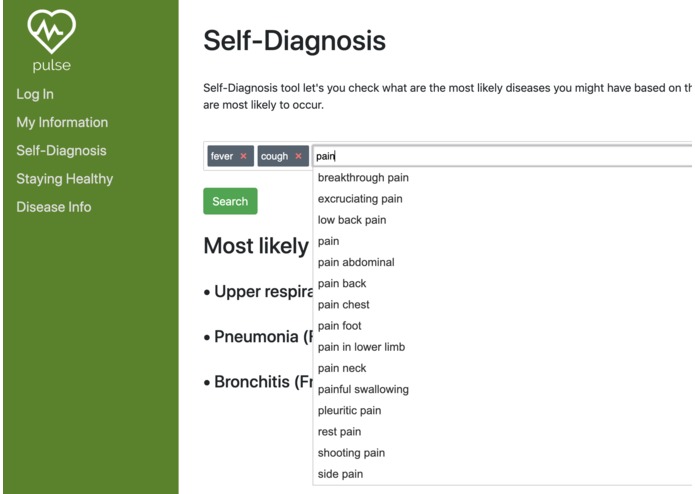
"Disease-Symptom Knowledge Databse" dataset from Columbia University was used to build this feature (along with retrieval algo we wrote).
-
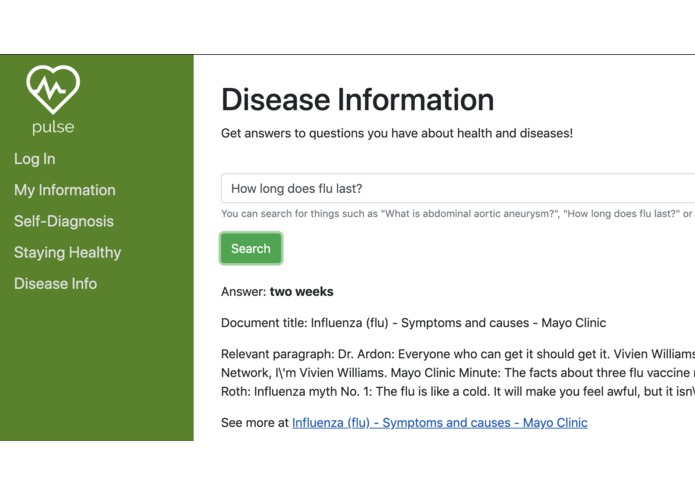
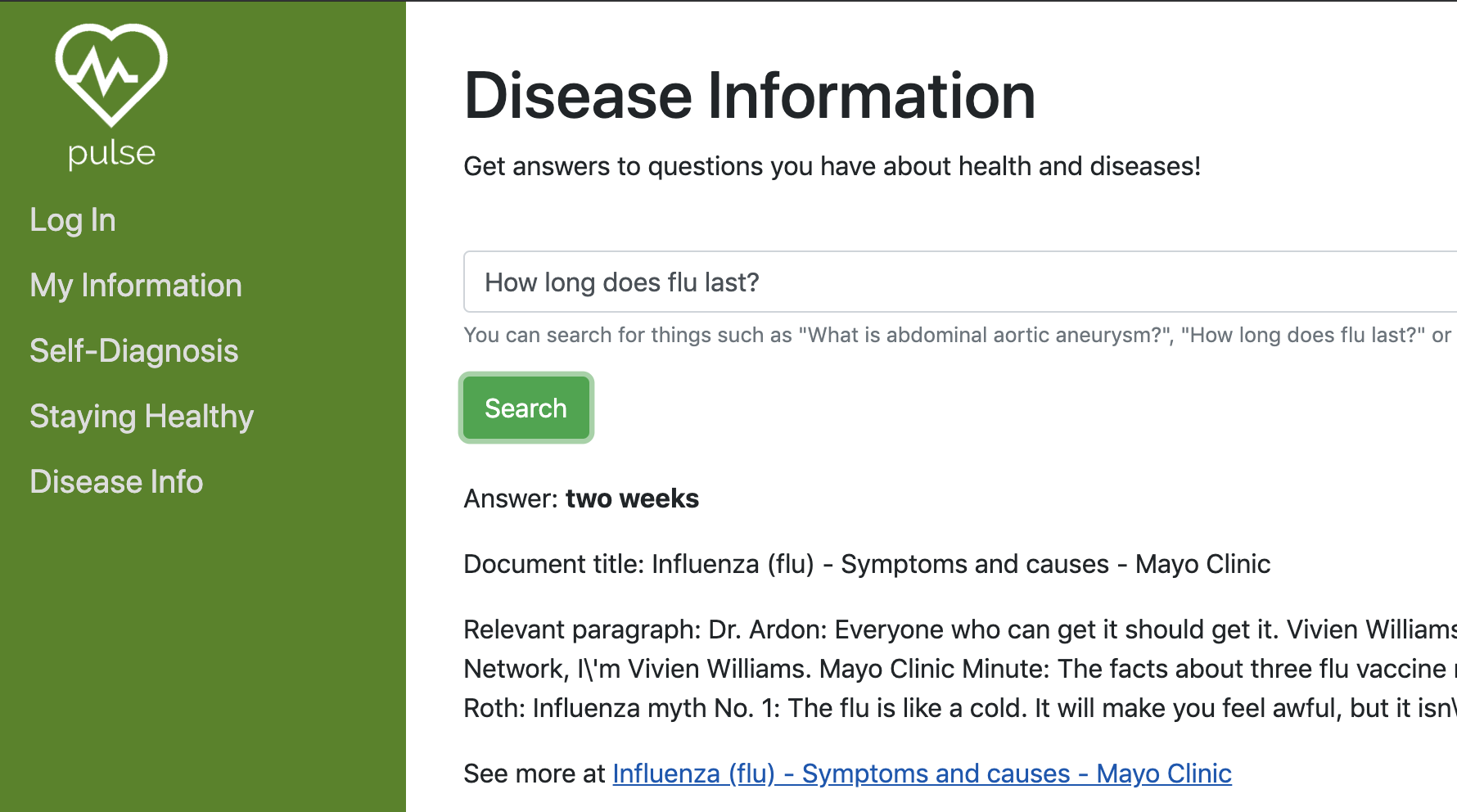
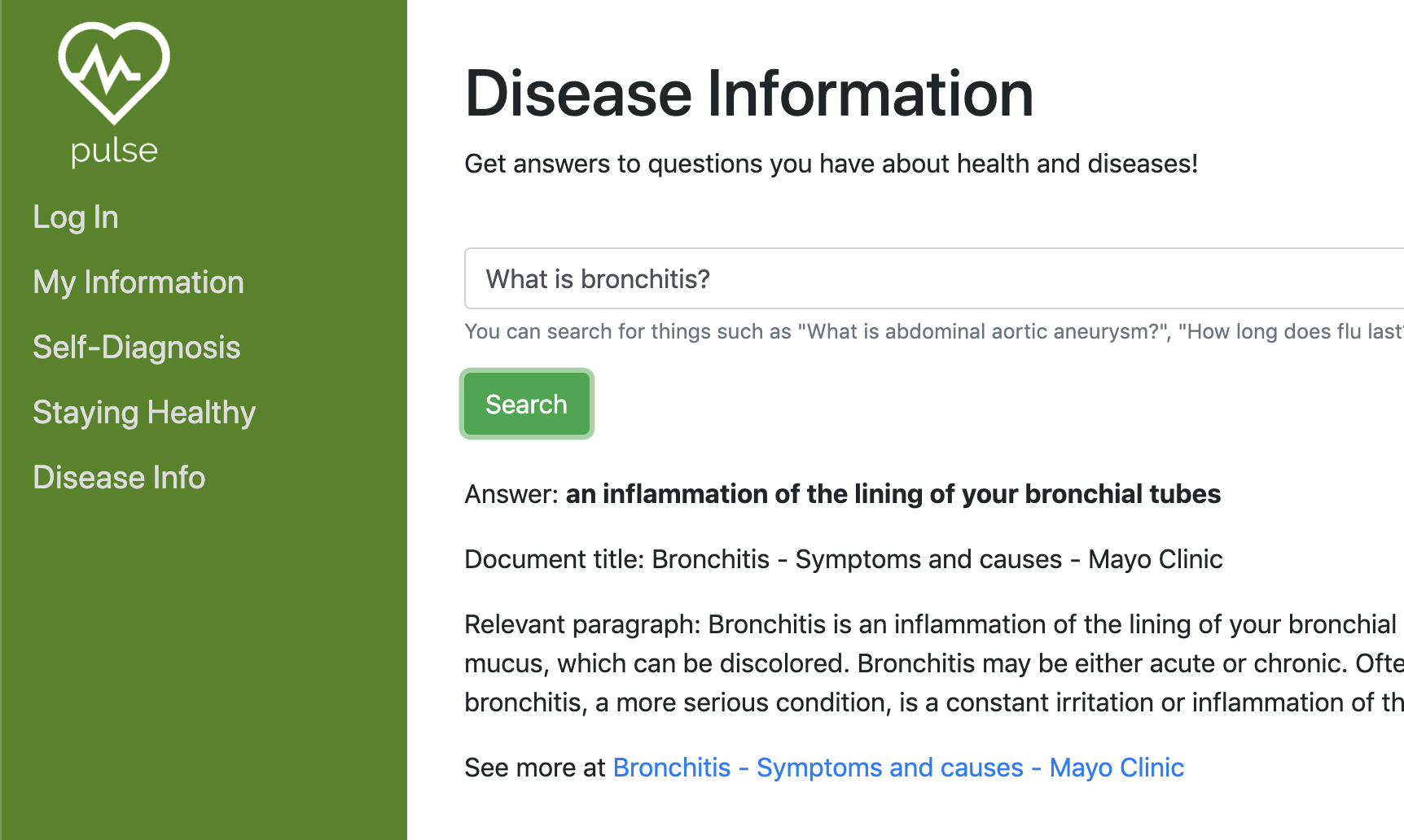
Ask questions about diseases without going to a hospital.
-
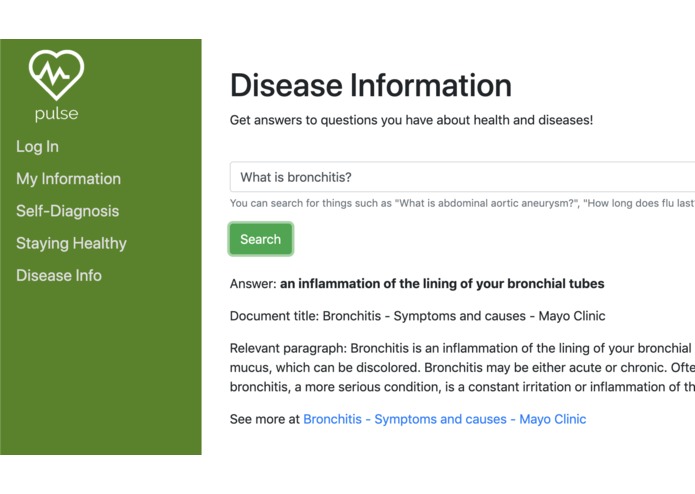
This feature is powered by BERT - a recent SOTA model for question answering.
-
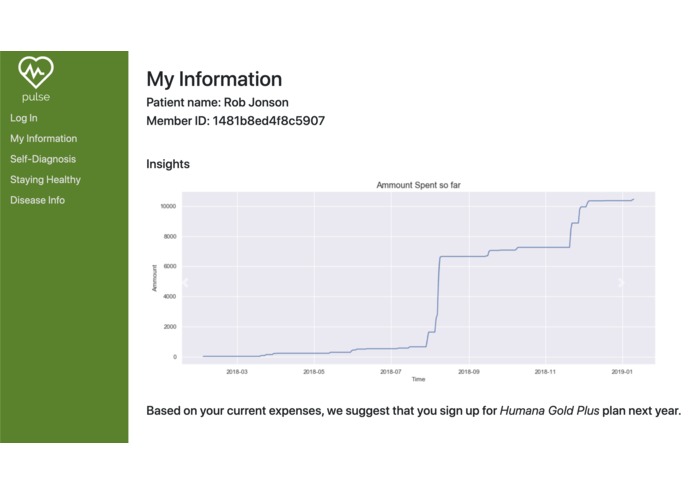
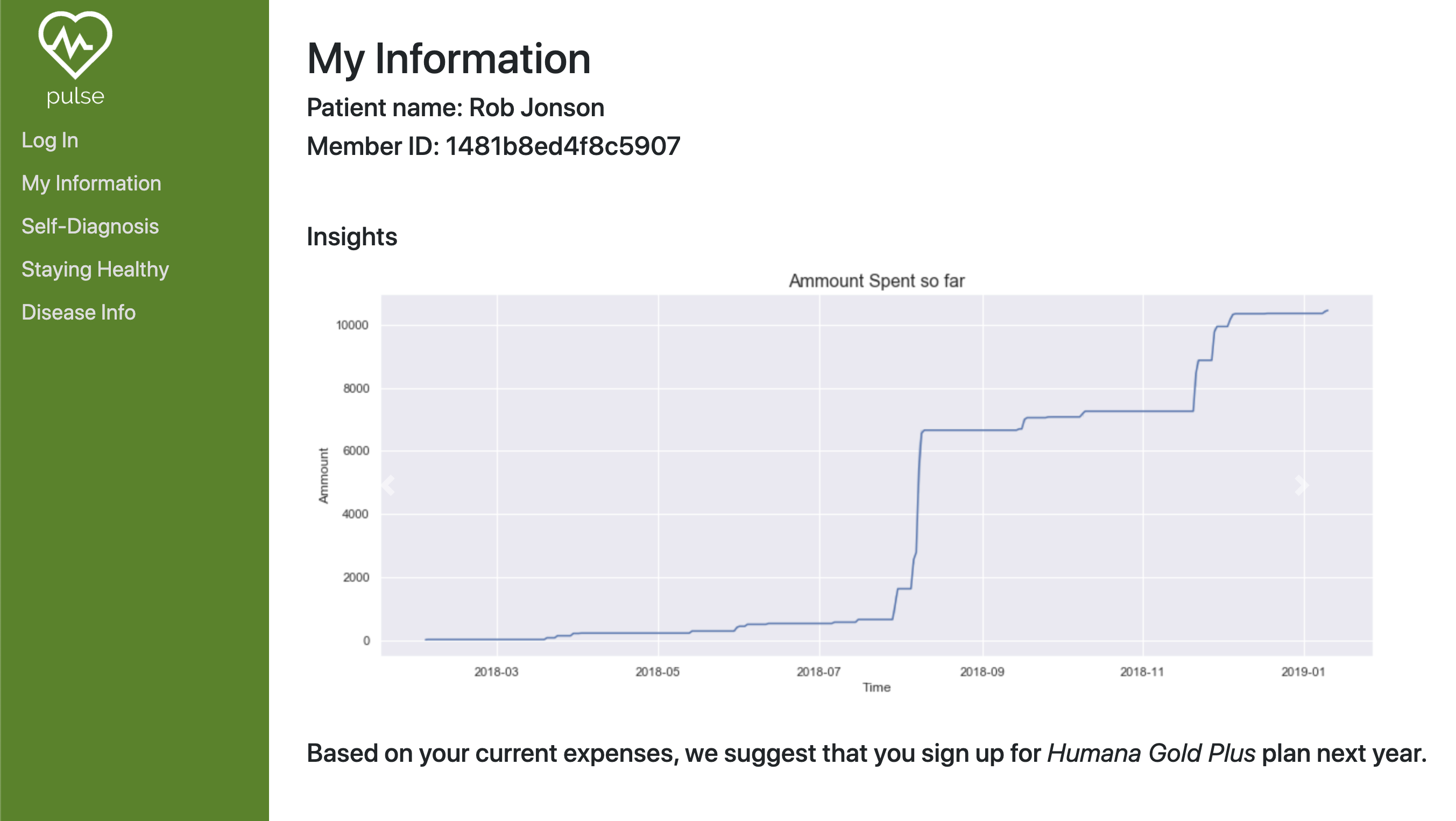
Users have a personal page with computed insights from their insurance provider such as Humana.
-
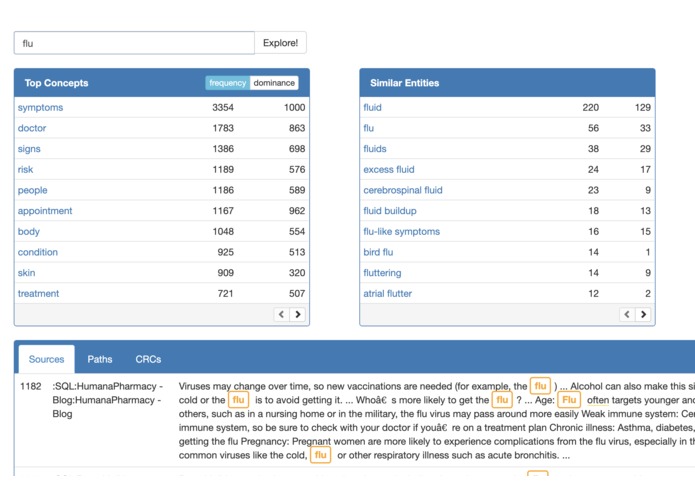
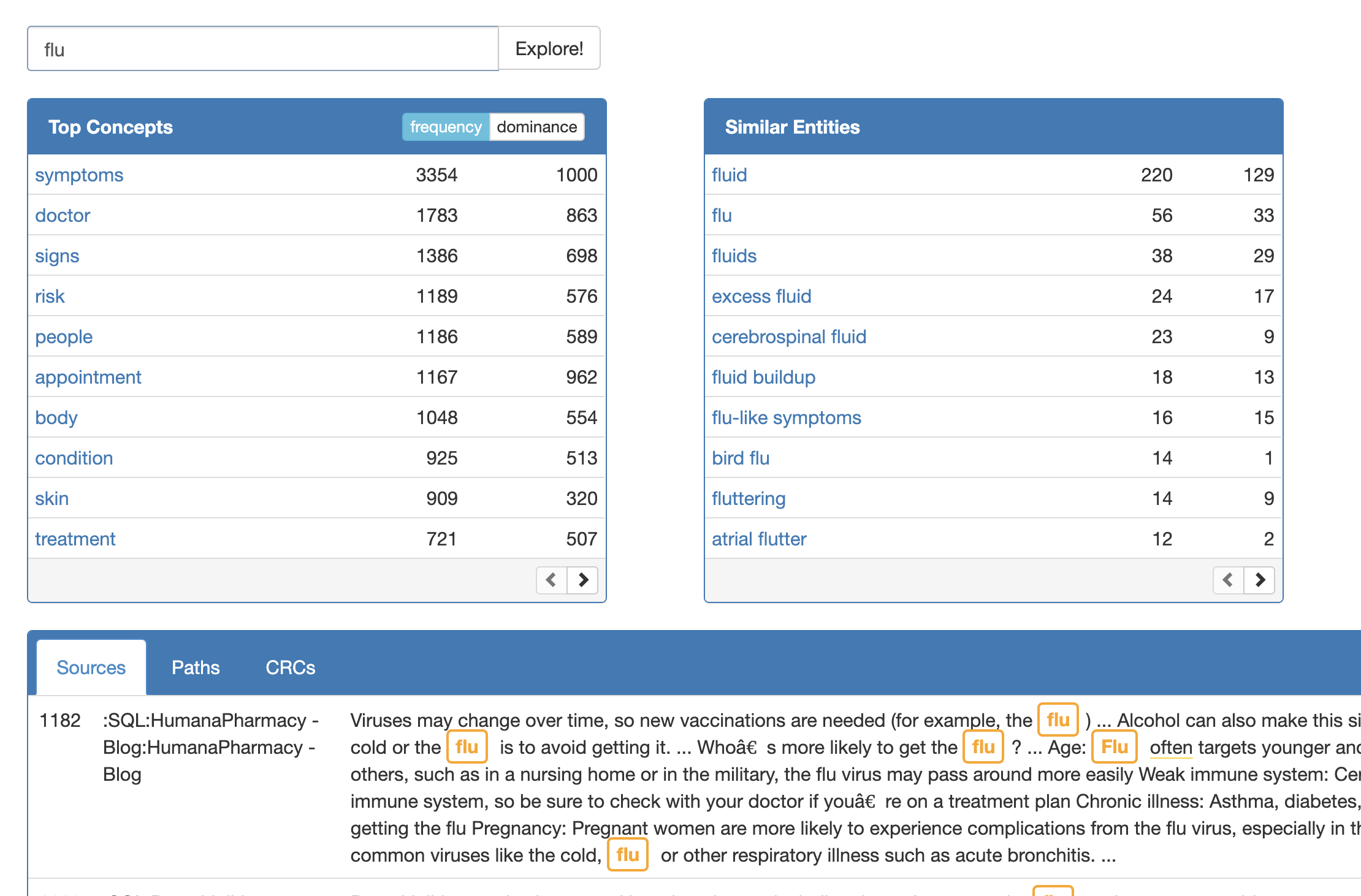
We've indexed a lot of data about diseases from the web and stored in IRIS - as a side bonus you get NLP insights from IRIS platform.
Inspiration
We focused on Humana challenge to minimize unnecessary provider interactions, and as a result lower costs. A lot of times patients simply lack resources to answer their health questions, or go to a doctor with a minor illness. Pulse allows you to self-service such requests. Our tool is especially useful to users who don't have access to a healthcare professional.
What it does
Pulse allows you to self-service some of the medical requests you might have:
- Given a list of symptoms, we provide the most likely cause.
- We answer questions you might have about diseases.
- Voice interface which uses NLP and NLU to identify the likely disease given the symptoms.
- Personal insights page from insurance provider.
How we built it
- Question answering about diseases is done using BERT - a former SOTA model for such task. It is deployed on a separate server (needs GPU to run fast enough), with fine-tuning on data used. For this purpose we wrote a web crawler to index pages about diseases from Mayo Clinic.
- Symptom-to-cause is done with a custom algorithm, "Disease-Symptom Knowledge Databse" dataset from Columbia University was used.
- Voice interface built using BERT (over SQUAD dataset) and TTS modules.
- Web part is done is Flask.
- Data is stored in IRIS database.
Accomplishments that we're proud of
- We've leveraged state of the art NLP technologies to build a useful tool.
- Developed our own algorithm to provide real value from an educational dataset.
- Used web crawling / scraping to get a new dataset.
- Picked up some skills on interacting with a new database (IRIS) using pyodbc.
What's next for Pulse:
With more polishing this could be a useful tool for many, especially those who can't access a medical professional at given time.
Where to find us
Come find us at table 60 or at http://ec2-34-209-226-198.us-west-2.compute.amazonaws.com/disease-info :)
Built With
- amazon-web-services
- bert
- flask
- indexer
- iris
- natural-language-processing
- python
- web


Log in or sign up for Devpost to join the conversation.