-
-
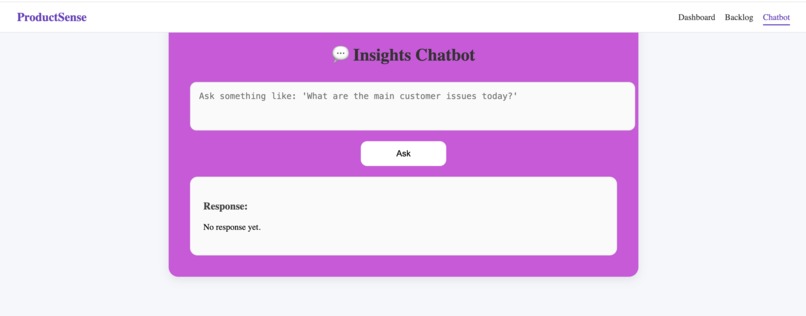
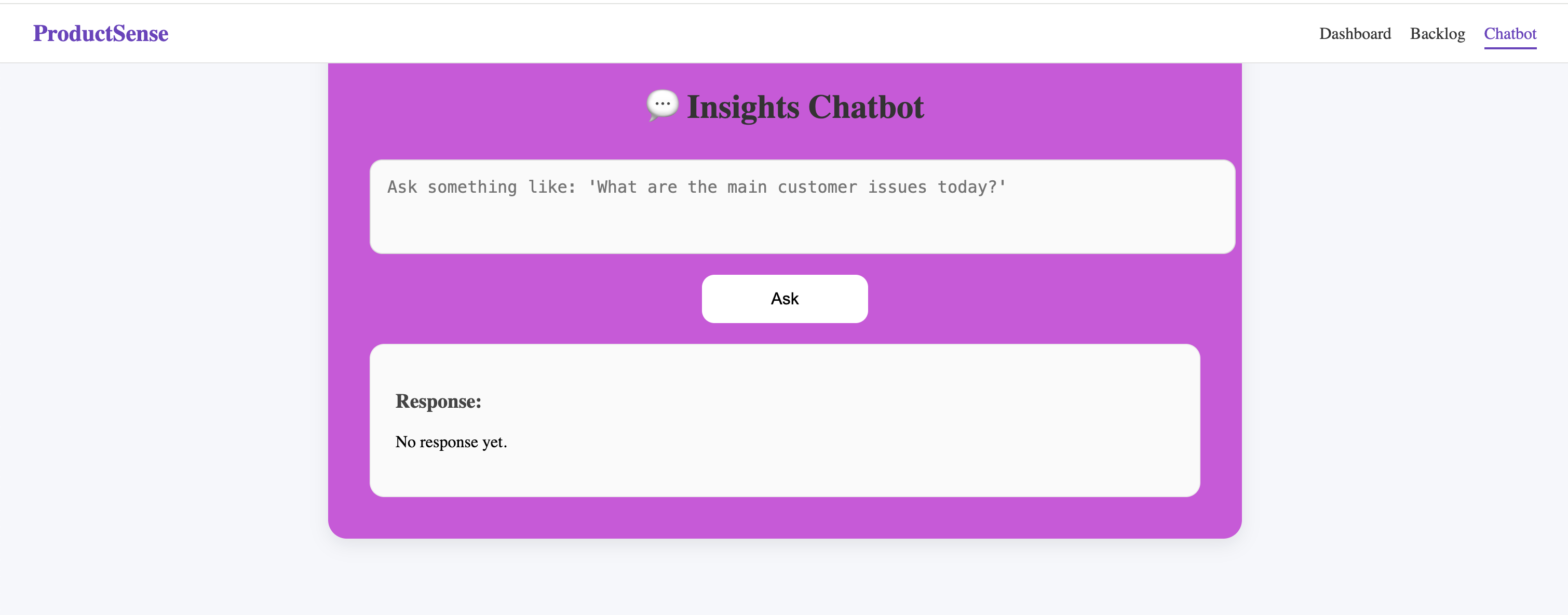
AI Chatbot for Insights
-
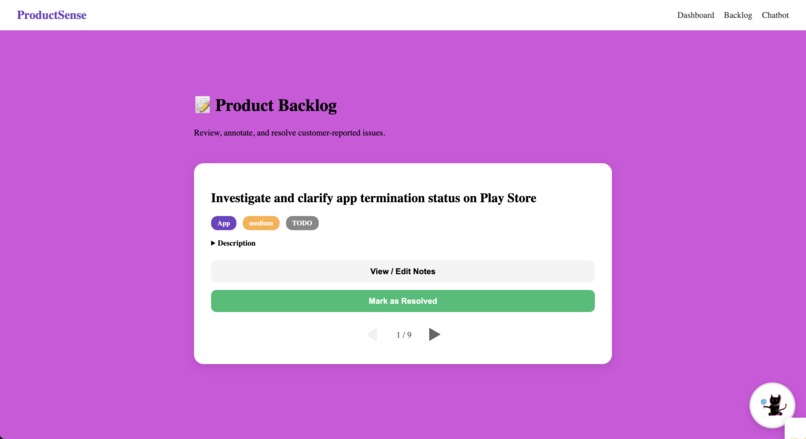
Product Backlog
-
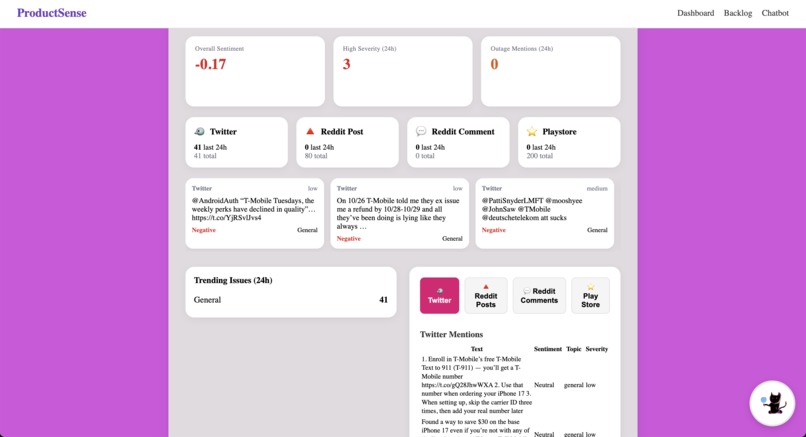
Dashboard
Inspiration
Our biggest inspiration in starting ProductSense was the potential we thought it has. We believe that despite the 24 hour time limit, ProductSense has the ability to grow and help companies by making management more efficient. When we first started, our plan was to make ProductSense a site which can cater to a company's needs regarding the feedback and development cycle of their products. Whether it's to monitor market performance or gain research for improvements, we think ProductSense can be of use to any company.
What it does
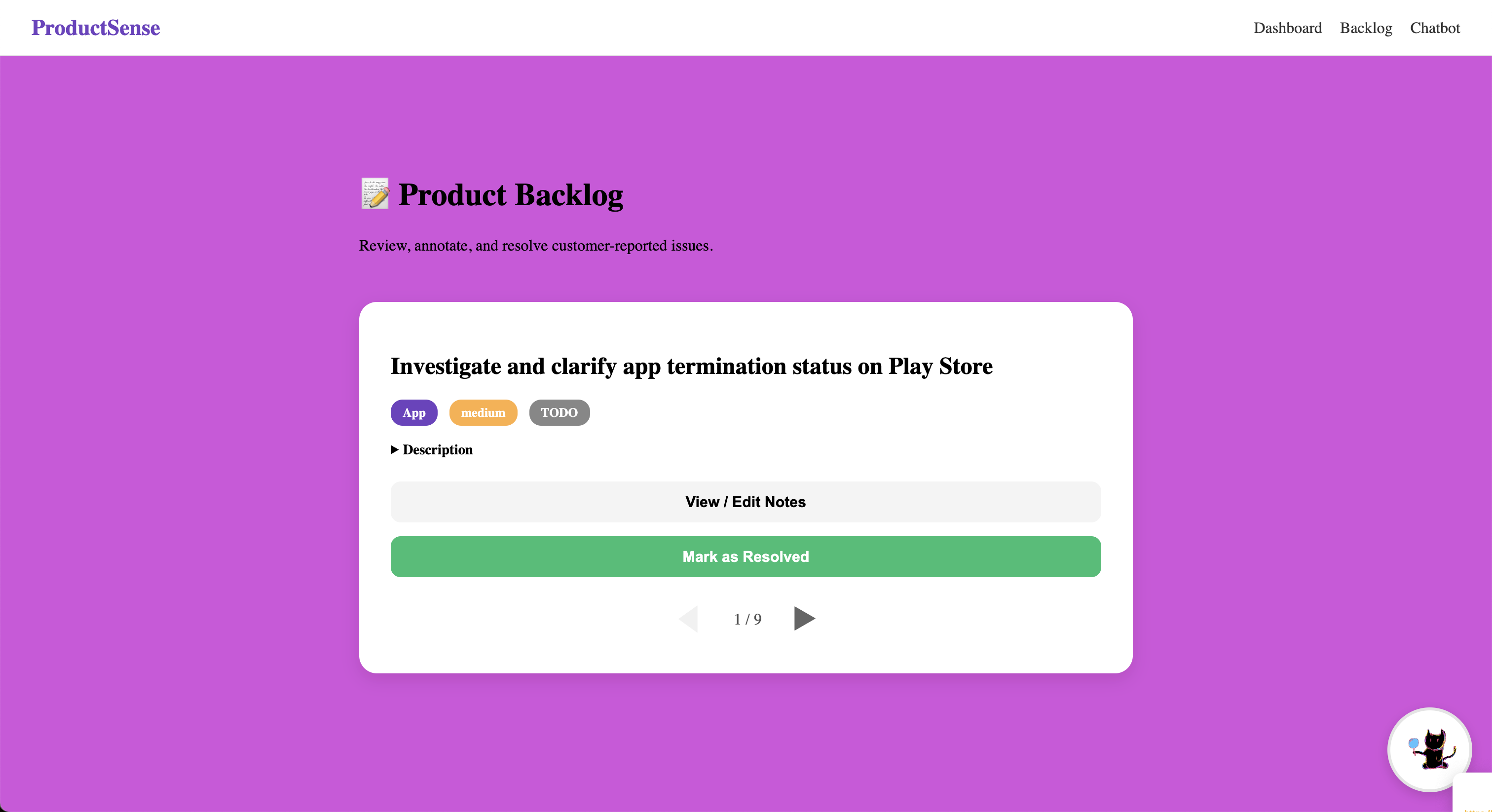
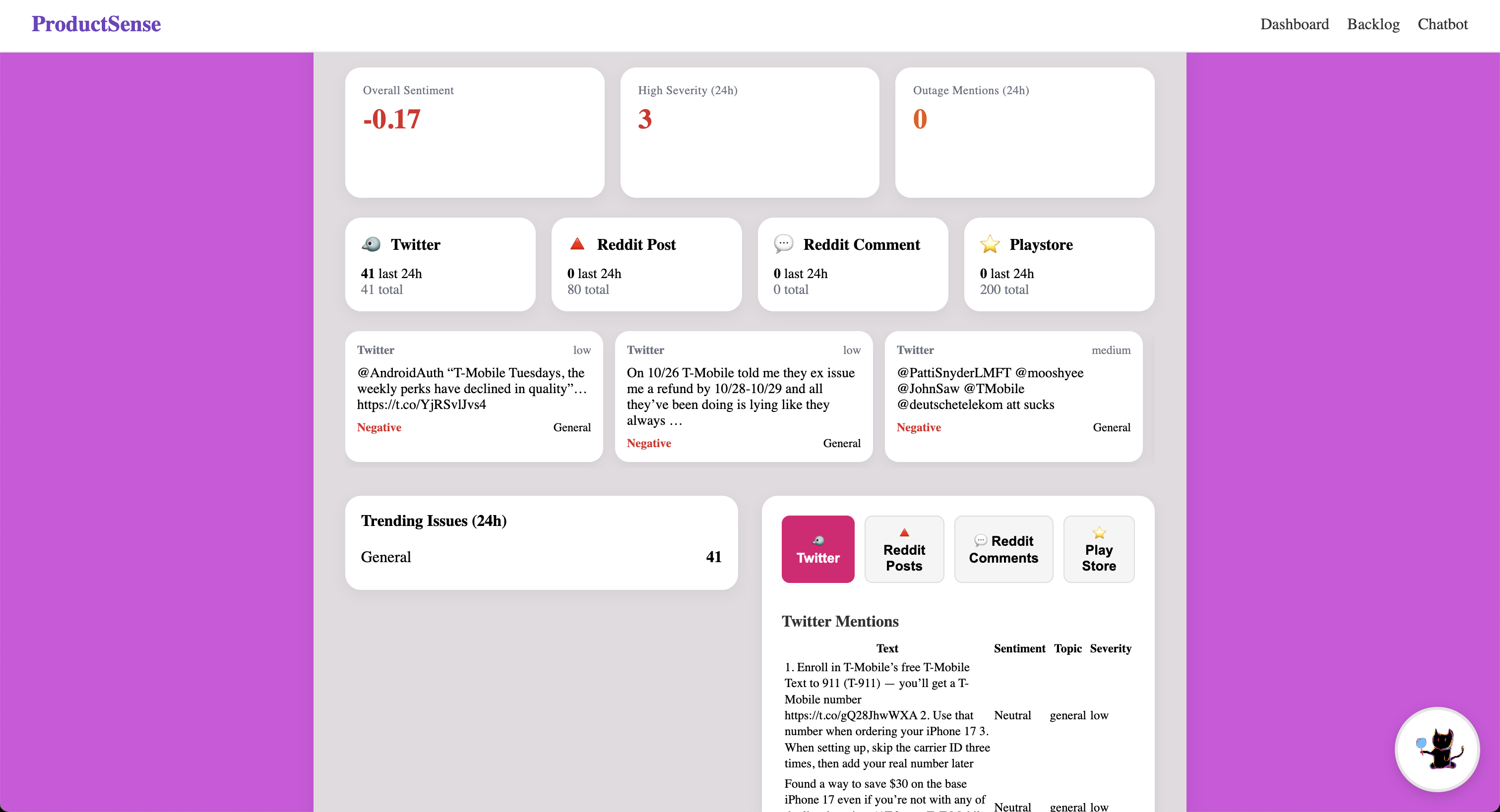
ProductSense can go through various media across the internet to obtain specific reviews for a certain product (in this case: general T-mobile reviews). Based on these reviews, ProductSense categorizes them and provides a breakdown of the analytics and gives a list based on the severity of each review, prioritizing problems which need to be solved with haste. There's also a chatbot feature for users to get personalized questions answered based on the data.
How we built it
We first created the python backend to go through various medias (X, Google playstore, Reddit, etc) and obtain various reviews. We then had Open AI process these reviews and categorize them into positive, negative, and neutral reviews and categorize the priority levels of each review, saving them into a database afterwards. After we were positive that the reviews were being handled correctly, we created the React frontend to display the information in an easy-to-read format which provides quick insights at the top as well as more detailed display towards the bottom. Once we confirmed that this worked, we continued to make small adjustments to improve the display of this information and make it more user-friendly.
Challenges we ran into
We originally wanted to include a map to visually depict the locations with urgent outages, however we weren't able to include this feature in time due to prioritizing the accuracy of our current features. Another issue we ran into was that we originally wanted to include Instagram and Facebook reviews into our dataset, however due to Meta's intense security we were unable to find a cost-effective solution.
Accomplishments that we're proud of
We're proud of creating a functioning site which correctly provides information from real posts and displays it in a ticket system, helping users focus on the key insights of their projects. We're also proud of creating a multi-functional site which can display data in multiple formats to allow the user to get what suits them best.
What we learned
The biggest thing we learned from this project was how to collect data from external sources. We have never used data from public sites such as X or reddit and in this project we learned how to get data from these sites and also filter this data to only include relevant keywords and topics.
What's next for ProductSense....
We wanted to connect ProductSense to Jira so that the problems that were detected by ProductSense would automatically be sent to Jira for project managers to use. This would streamline the process of market research and defining problem space. Also, PMs would have an easier time understanding which problems to prioritize based on the frequency of feedback, helping them avoid playing "politics" with stakeholders. We would also like to make ProductSense a more visual tool for users, reducing the large amount of reading and searching that users may have to do to get quick analytics.


Log in or sign up for Devpost to join the conversation.