-
-
mark1
-
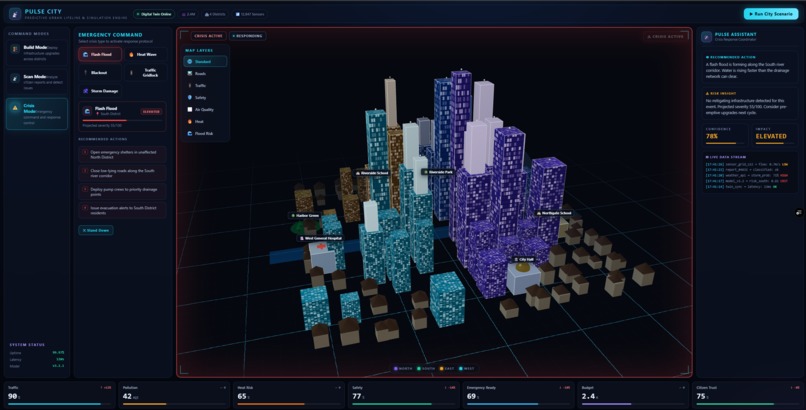
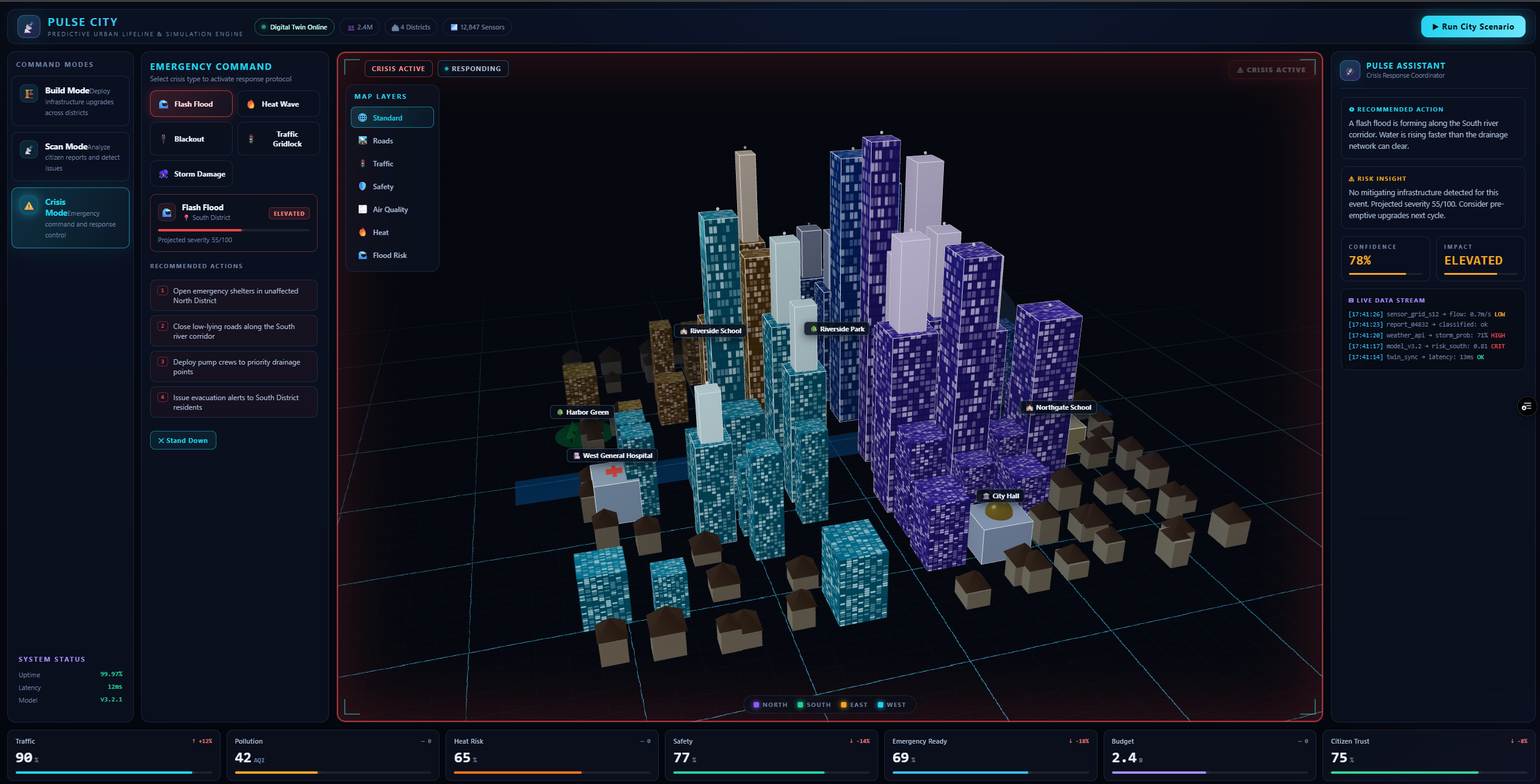
Crisis mode
-
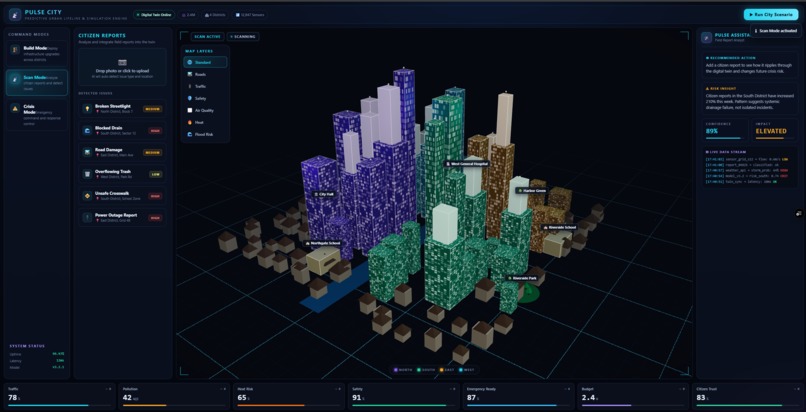
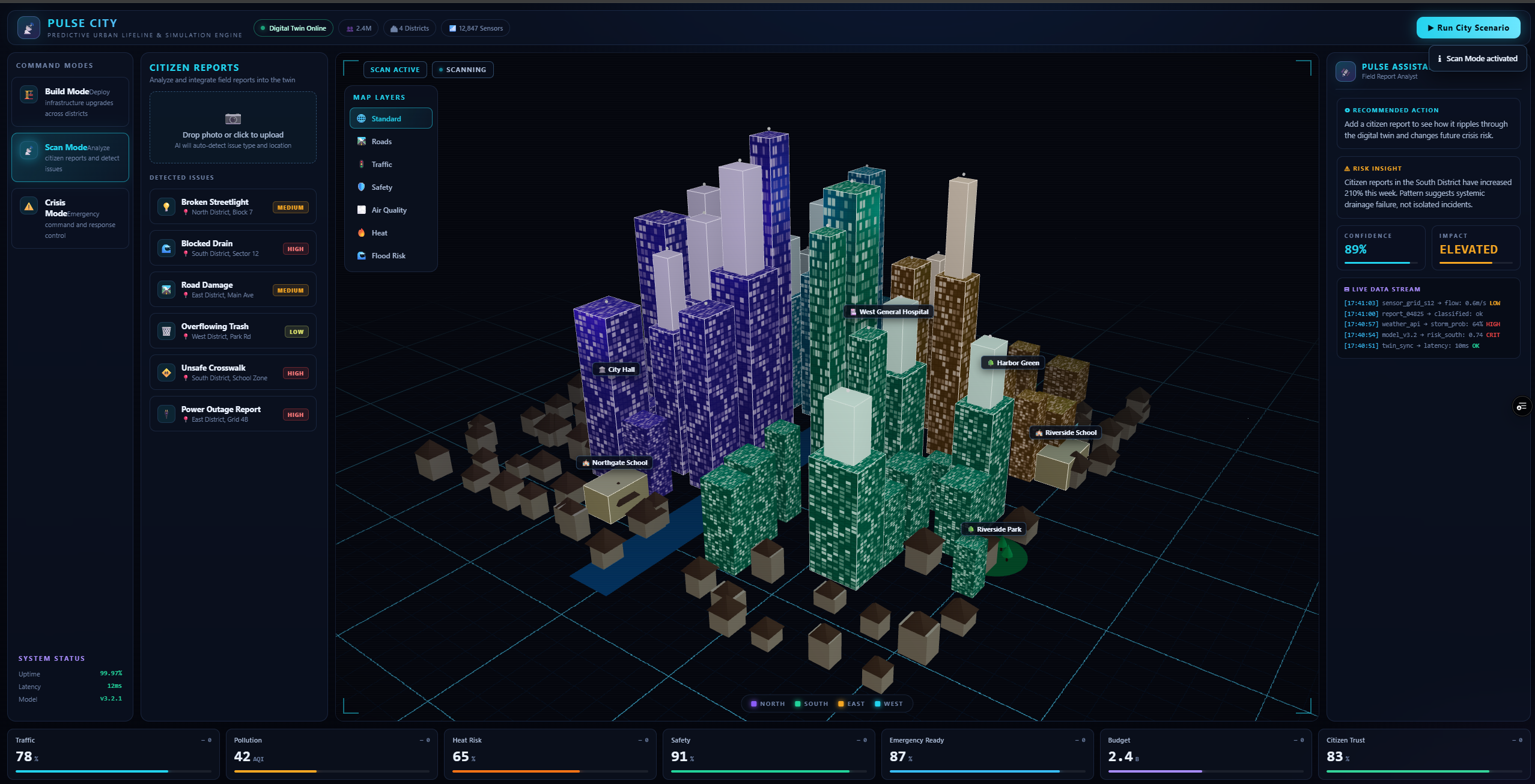
Scan mode
-
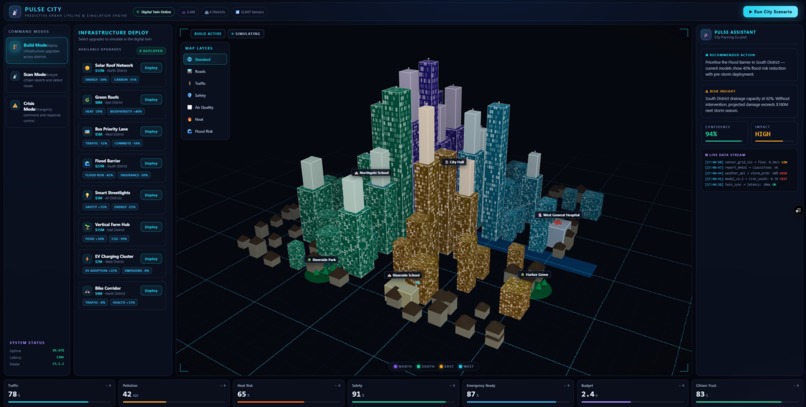
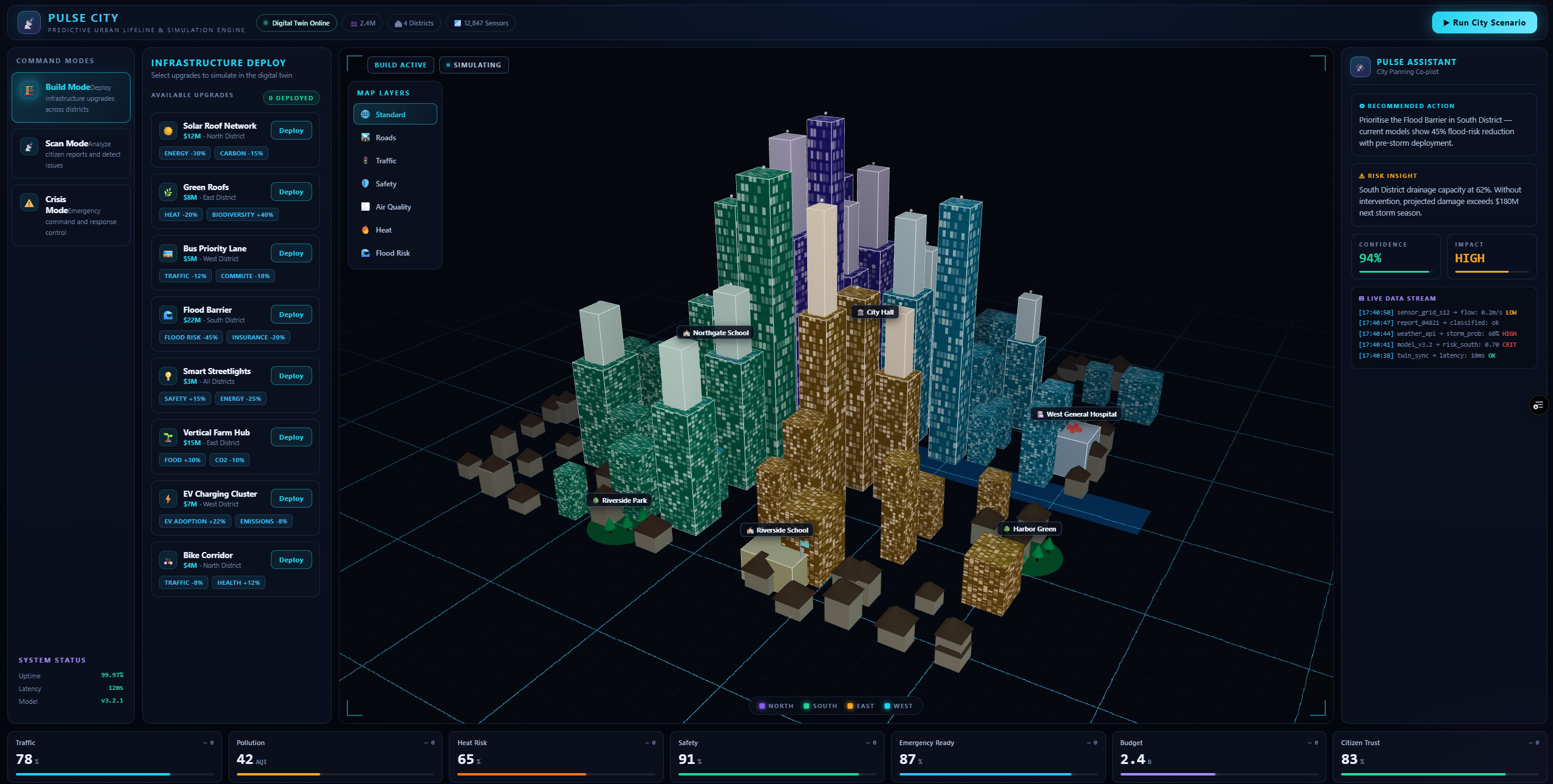
Build mode
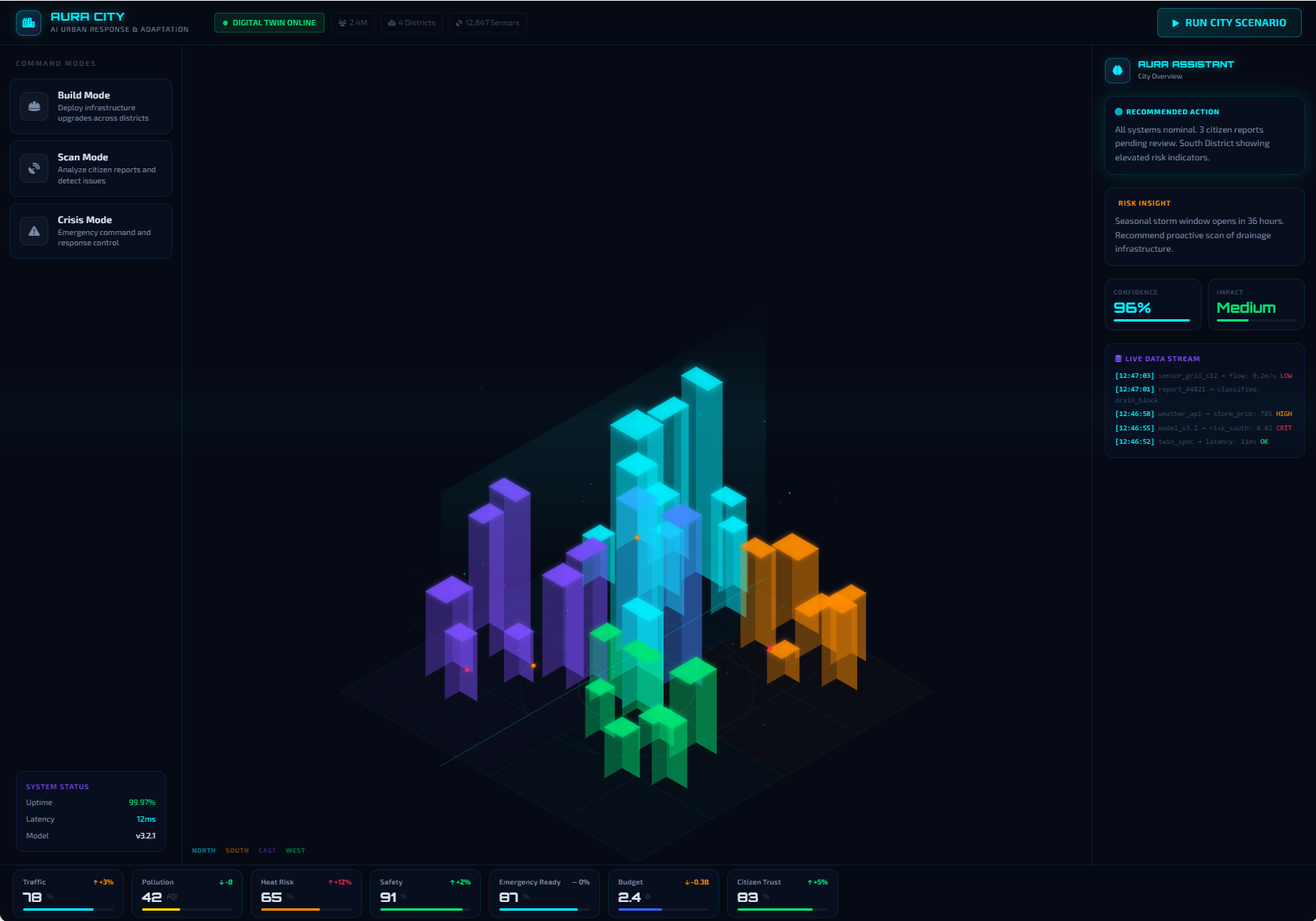
Inspiration
Cities are becoming more crowded, connected, and vulnerable to problems like flooding, heat waves, traffic, blackouts, and damaged infrastructure. I wanted to build something that felt futuristic, but still useful in real life. That is where PULSE City came from: a digital twin that helps cities see problems early, test solutions, and respond faster. 🏙️✨
What it does
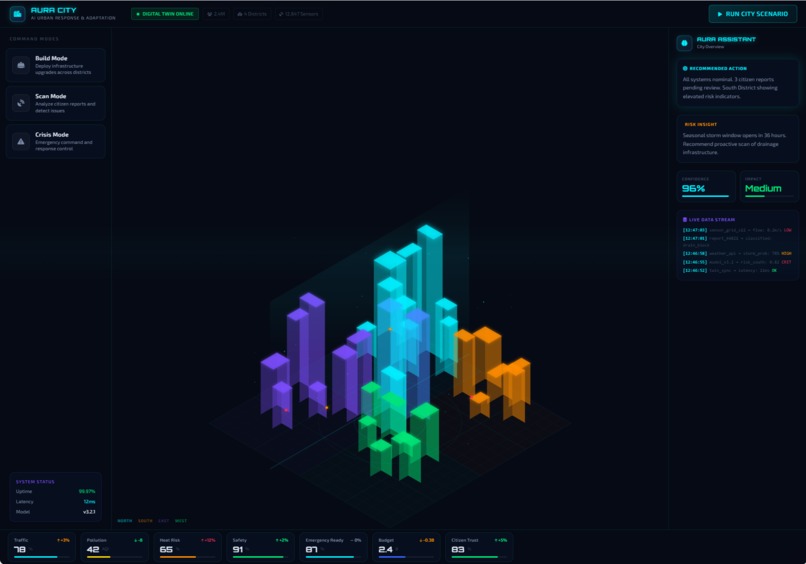
PULSE City is a futuristic digital twin for smarter and safer cities. It has three main modes:
- 🛠️ Build Mode: Test upgrades like flood barriers, solar roofs, smart streetlights, and green spaces.
- 🔍 Scan Mode: Report problems like blocked drains, broken lights, road damage, or power outages.
- 🚨 Crisis Mode: Simulate emergencies like floods, blackouts, and heat waves.
The strongest part is that reports do not just sit in a list. They become part of the city model. For example, if someone reports a blocked drain, PULSE City can use that report to show increased flood risk during a storm simulation. ⚡
The main idea is simple: the city does not just react. It remembers, predicts, and protects.
Why it helps
Many city problems start small. A blocked drain, broken streetlight, or damaged road may not seem urgent at first, but during a storm, blackout, or emergency, those small problems can become serious. PULSE City connects everyday reports to future risks, so cities can make smarter decisions before problems grow. 🌧️
It can help:
- 👥 Citizens report issues in a clearer way.
- 🏗️ City planners test upgrades before building them.
- 🚑 Emergency teams understand which areas need attention first.
- 🌱 Communities prepare for safer and more sustainable futures.
Instead of waiting for problems to become disasters, PULSE City gives cities a way to prepare earlier.
How to use it
Using PULSE City is simple:
- 🔍 Step 1: Open the dashboard and view the city as a digital twin.
- 📍 Step 2: Go to Scan Mode and report an issue, such as a blocked drain or broken streetlight.
- 🛠️ Step 3: Switch to Build Mode and test possible fixes, like flood barriers or smart lights.
- 🚨 Step 4: Use Crisis Mode to simulate a flood, blackout, or heat wave.
- 📊 Step 5: Watch how previous reports affect the city’s risk level.
This makes the app useful for planning, reporting, and emergency preparation in one place.
Why use it?
PULSE City matters because city problems affect millions of people every day. More people are living in urban areas, and cities have to deal with flooding, extreme heat, road damage, power issues, and emergency response challenges. 🌆
In real life, even small infrastructure problems can become serious when a crisis happens:
- A blocked drain can make flooding worse. 🌊
- Broken streetlights can make areas less safe at night. 💡
- Damaged roads can slow emergency vehicles. 🚒
- Power outages can make communication and response harder. ⚡
- Extreme heat can put extra stress on people and city systems. 🌡️
Instead of having separate systems for reporting, planning, and crisis response, PULSE City brings them together in one visual command center.
How I built it
I built PULSE City as a web app designed for deployment on Vercel. The project uses a futuristic dashboard layout with a holographic city interface, mode-based panels, city stats, and simulated data. 💻
The project includes:
- A glowing digital twin city interface 🏙️
- Build, Scan, and Crisis modes
- Simulated city risk data
- Interactive city stats
- A futuristic command-center UI
- Demo audio for the presentation 🎧
The UI was designed to feel like a digital command center, with a dark theme, glowing city visuals, and interactive panels. I used AI tools to help speed up the development process, generate UI ideas, refine the code, and create audio for the demo. The project is still a prototype, so the data is simulated, but the concept shows how a real system could work.
Challenges I ran into
One of the biggest challenges was combining three ideas into one project without making it feel messy. I wanted PULSE City to include city planning, citizen reporting, and emergency response, but it still had to feel like one connected system. 🧩
Some challenges included:
- Making the project look futuristic but still understandable
- Connecting Build, Scan, and Crisis modes into one flow
- Explaining the “citizen report to risk prediction” idea clearly
- Working with limited time before the deadline ⏳
- Managing limited AI credits for voice and tools
- Making the video/demo understandable without overcomplicating it
A holographic city looks cool, but judges also need to quickly understand what the app actually does. That balance was one of the hardest parts.
Accomplishments that I'm proud of
I am proud that PULSE City feels like a complete idea, not just a basic dashboard. The three modes connect together, and the strongest part is that citizen reports can affect crisis predictions. 🚀
I am especially proud of:
- The futuristic holographic city look
- The Build, Scan, and Crisis mode system
- The idea of turning small reports into emergency intelligence
- The clean dashboard layout
- The overall project story and purpose
The app feels like something from a future city, while still solving a real problem today.
What I learned
I learned how important it is to make a project easy to understand, especially in a hackathon. A cool UI is helpful, but the story behind the project matters just as much. 🧠
I also learned:
- How to connect multiple features into one main idea
- How to design a project around usefulness, not just visuals
- How to build a stronger demo story
- How to use AI tools more effectively during development
- How civic technology can help with real problems like infrastructure and emergency planning
Build Mode, Scan Mode, and Crisis Mode are useful separately, but they become much stronger when they work together.
What's next for PULSE City
Next, I would like to connect PULSE City to real city data, maps, and weather alerts. I would also add real image detection for citizen reports, so users could upload a photo and the system could identify issues like road damage, trash, or blocked drains. 🌐
Future improvements could include:
- Real map integration 🗺️
- Live weather and emergency alerts
- AI image detection for reports
- Citizen accounts and report tracking
- City planner/admin dashboards
- Real-time shelter and evacuation route suggestions
- More realistic risk prediction models
In the future, PULSE City could become a real civic platform where citizens, planners, and emergency teams work together through one digital twin. The goal would be to help cities become safer, smarter, and more prepared. 🌆🛡️
Credits
I only know Java (for about an year), so I did no coding for this project.
- 🤖 ChatGPT: Helped with brainstorming, project prompts, descriptions, and overall idea refinement.
- 🎨 Z.ai: Helped generate and design the UI direction.
- 💻 Claude Code: Helped with coding, structure, and refinement.
- 🎧 Minimax AI: Helped create the audio for the demo.


Log in or sign up for Devpost to join the conversation.