-
-
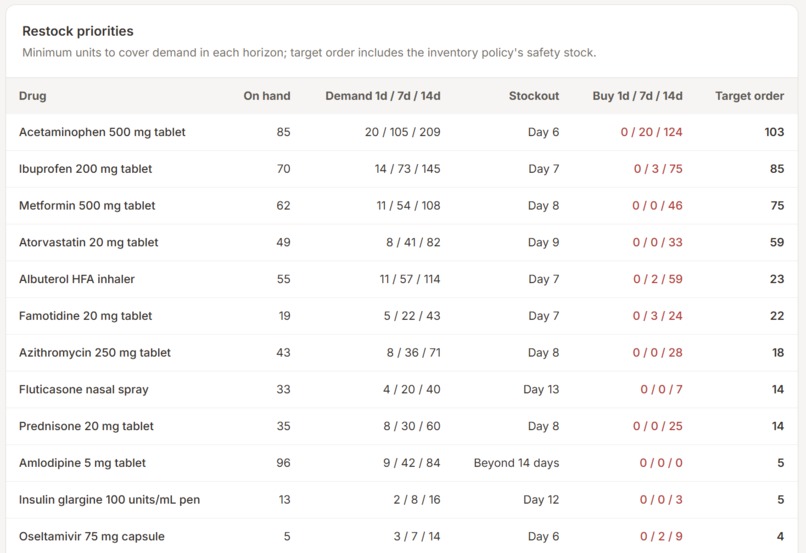
Output example for predicted demand
-
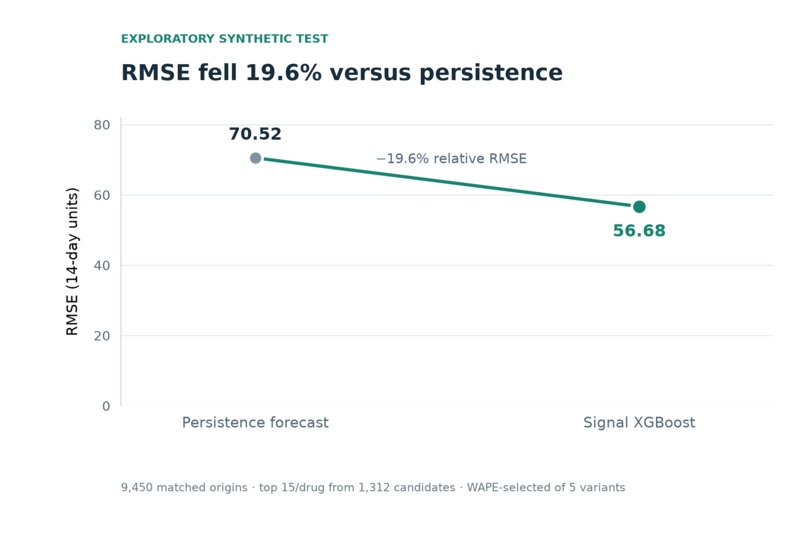
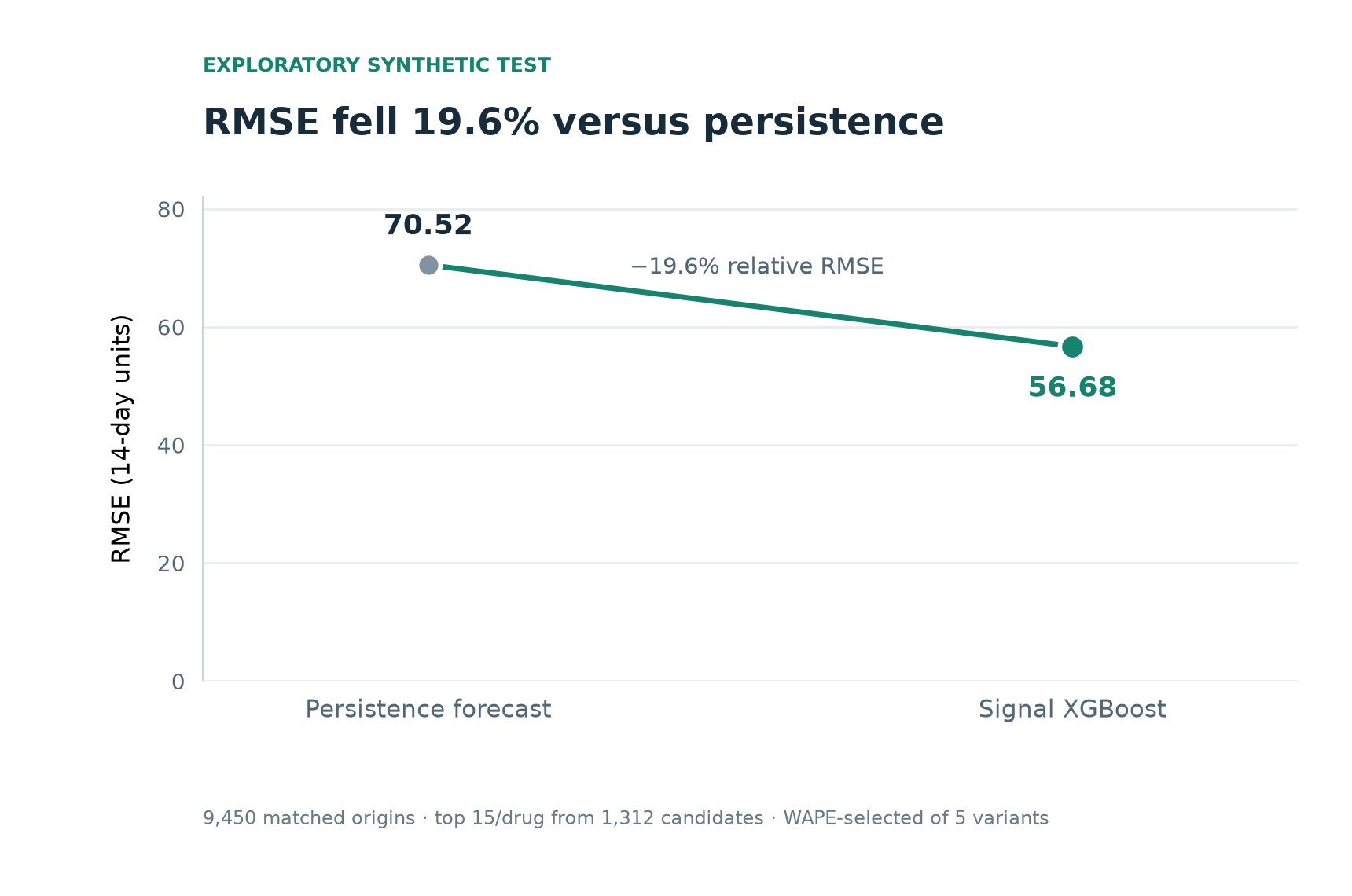
Improvement in Error by introducing news based signals
-
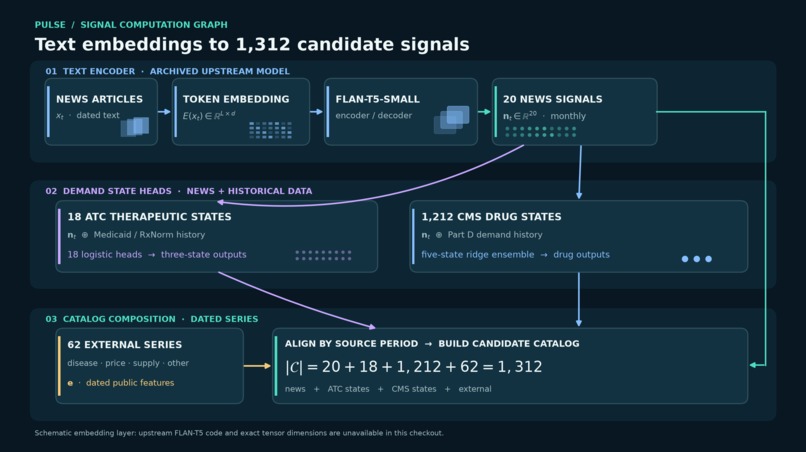
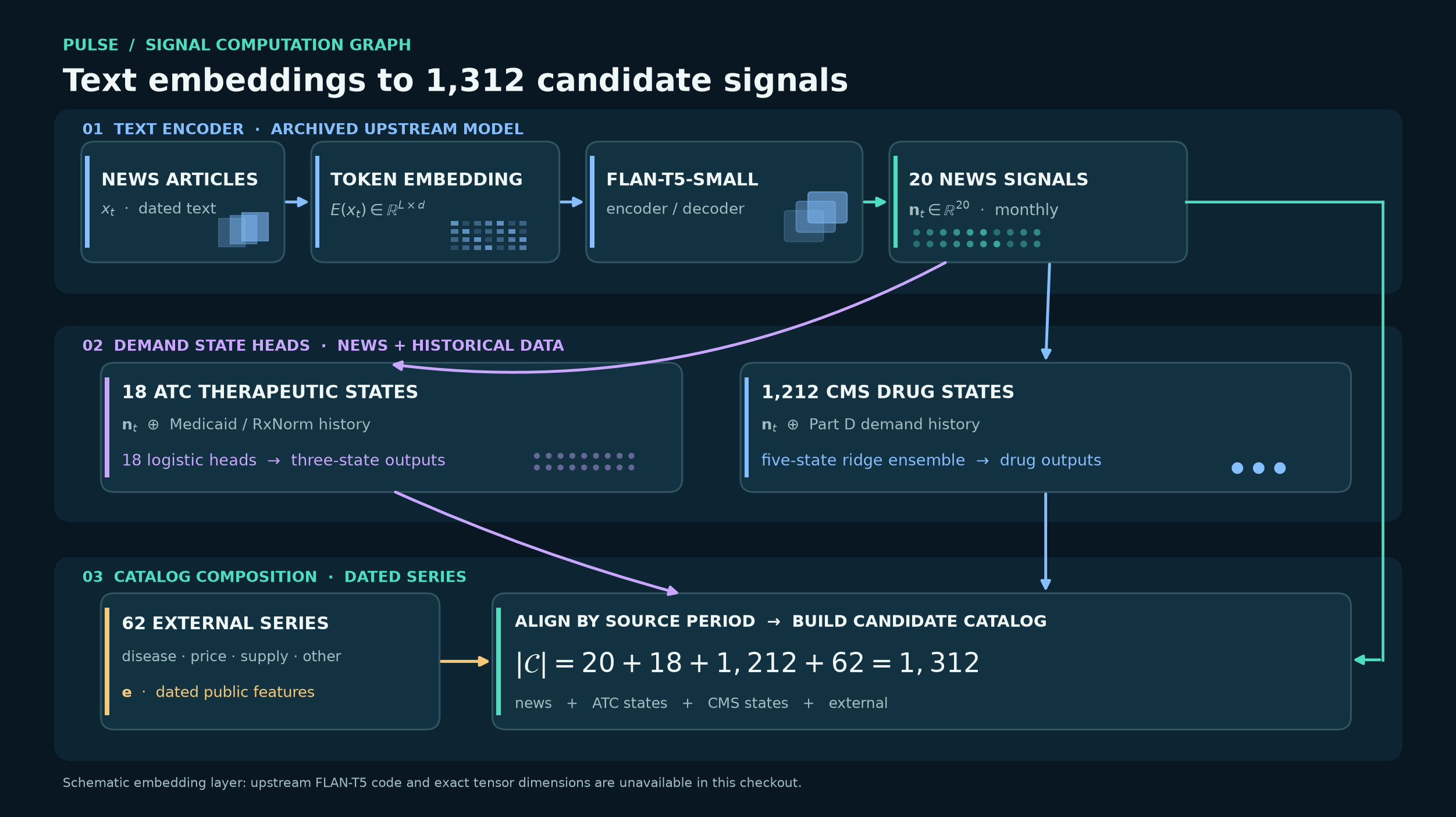
Main pipeline
Government funded clinics and community pharmacies struggle to properly manage their inventories during outbreaks and other medical crisis, loosing large amounts of money, and risking civilian health. Studies show pharmacies loose millions of dollars every year just because of poor inventory management, and there are thousand of such community and government funded clinics in the United States alone. Prediction algorithms used by larger pharmacies like Walmart and Walgreen use million dollar technical solutions. PULSE offers a low cost solution to inventory management for community clinics.
The main objective of PULSE is to predict what drugs would experience an increase in demand, and to maintain low runtime expenses. To predict such rises in demand, we needed an external source of input beyond a clinic's past data. PULSE uses news due to its ease of access and its cost optimality. PULSE utilizes a proprietary pipeline that starts with a Google Flan T5 small model to turn the news into vector embeddings that are done processed through a multi-model neural network that first converts the vector embeddings into 20 specialized demand signals, and then, those demand signals are combined with smaller regression models for individual pharmaceutical drugs to return 1312 final signals that represent the demand in the coming days for those drugs.
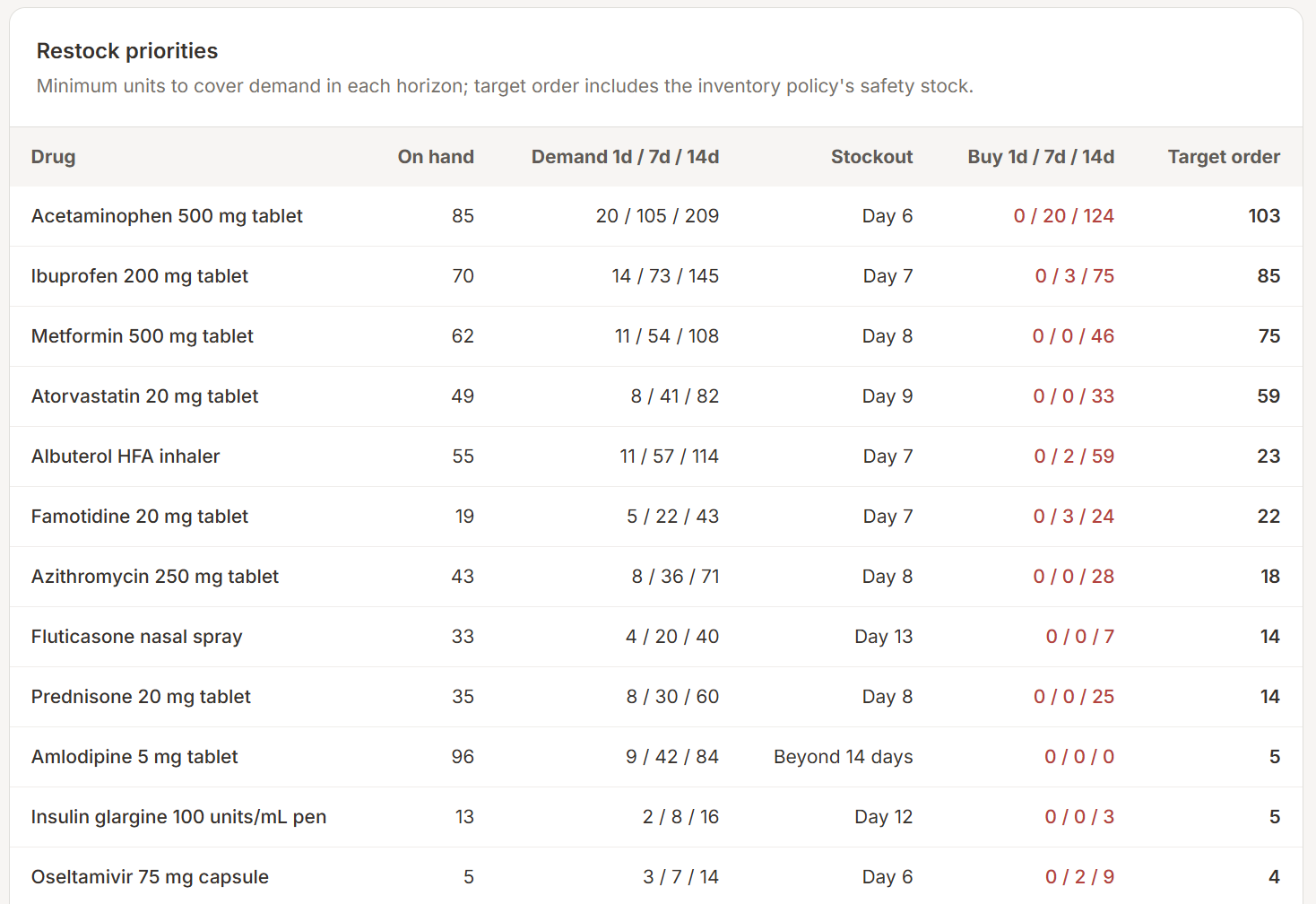
The final tool is a simplistic website where pharmacies can sign up, upload information of how their past demand looked, and, the website first identifies what medical drugs that pharmacy holds, what signals are relevant to it, and then, returns the final predictions for what medical drugs would be high in demand in the coming days, and by what quantity.

Log in or sign up for Devpost to join the conversation.