-
-
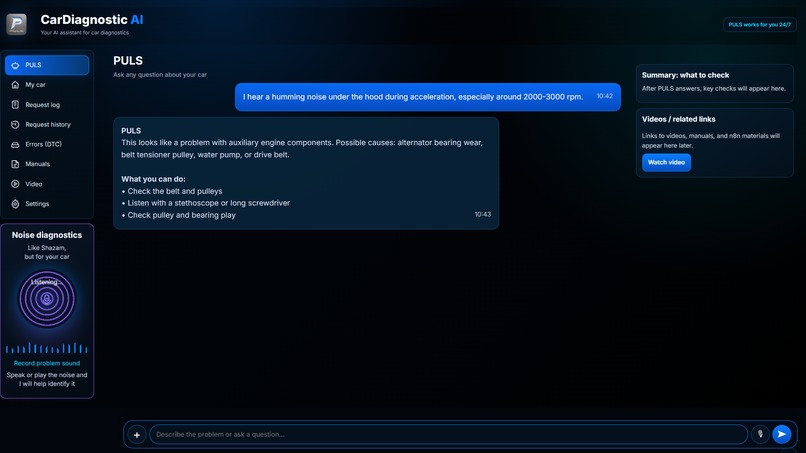
AI mechanic that analyzes real owner experiences worldwide.
-
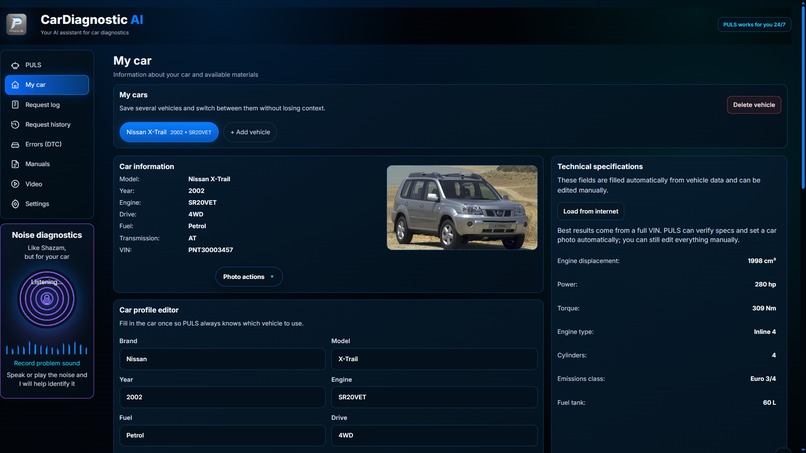
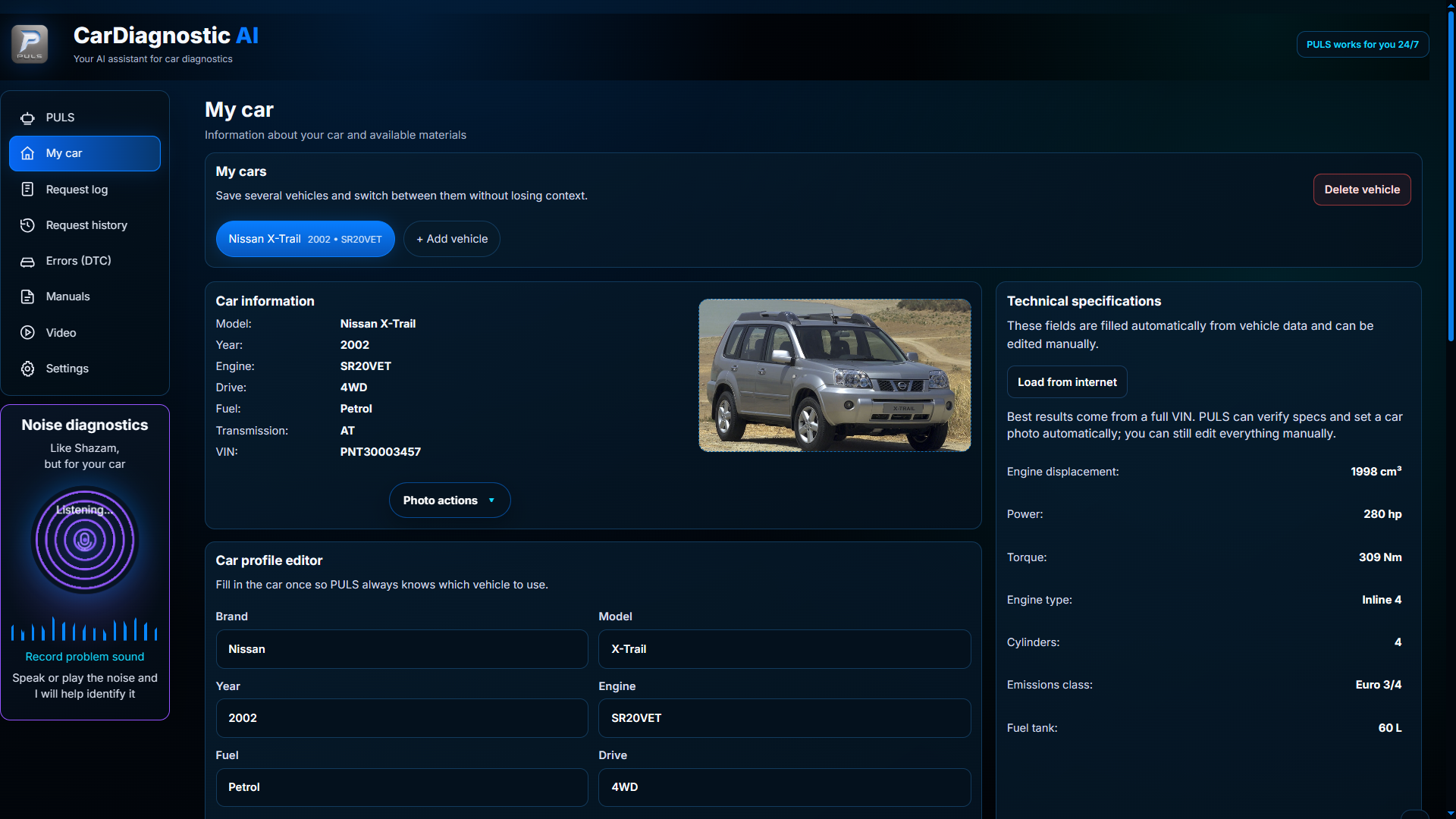
Store vehicle information and get accurate diagnostics for each car.
-
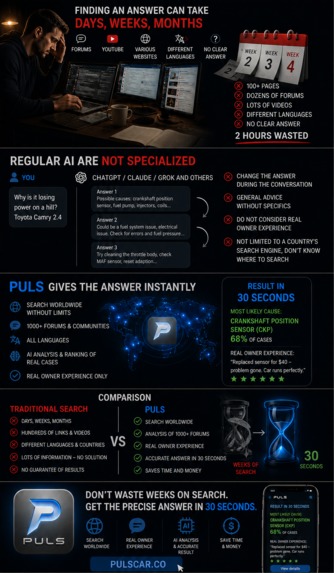
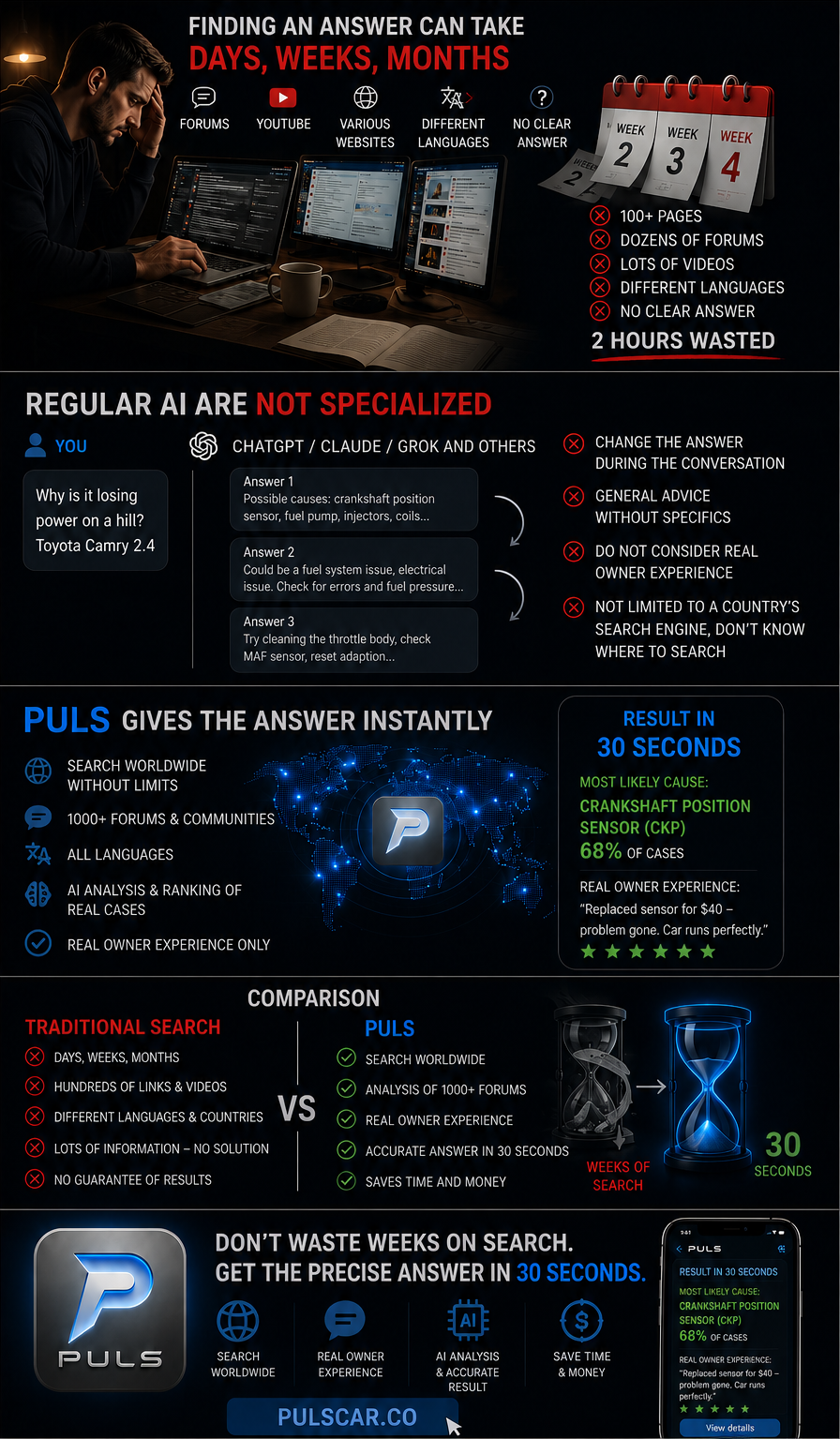
Car diagnostics should not take days of searching forums and videos.
-
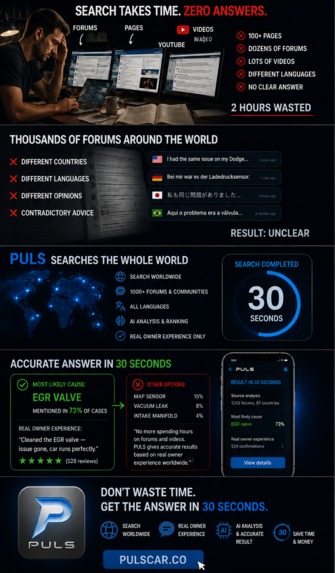
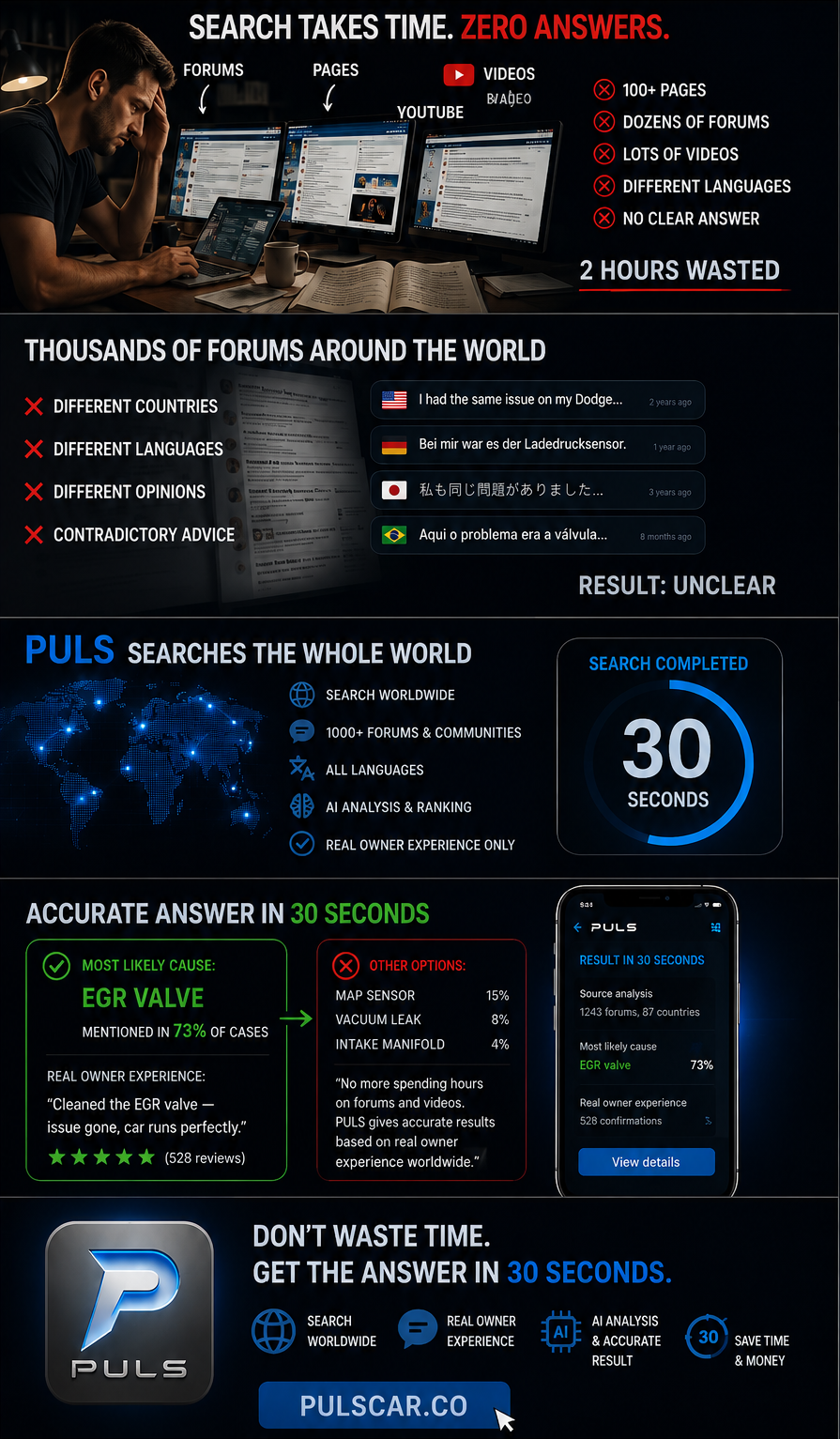
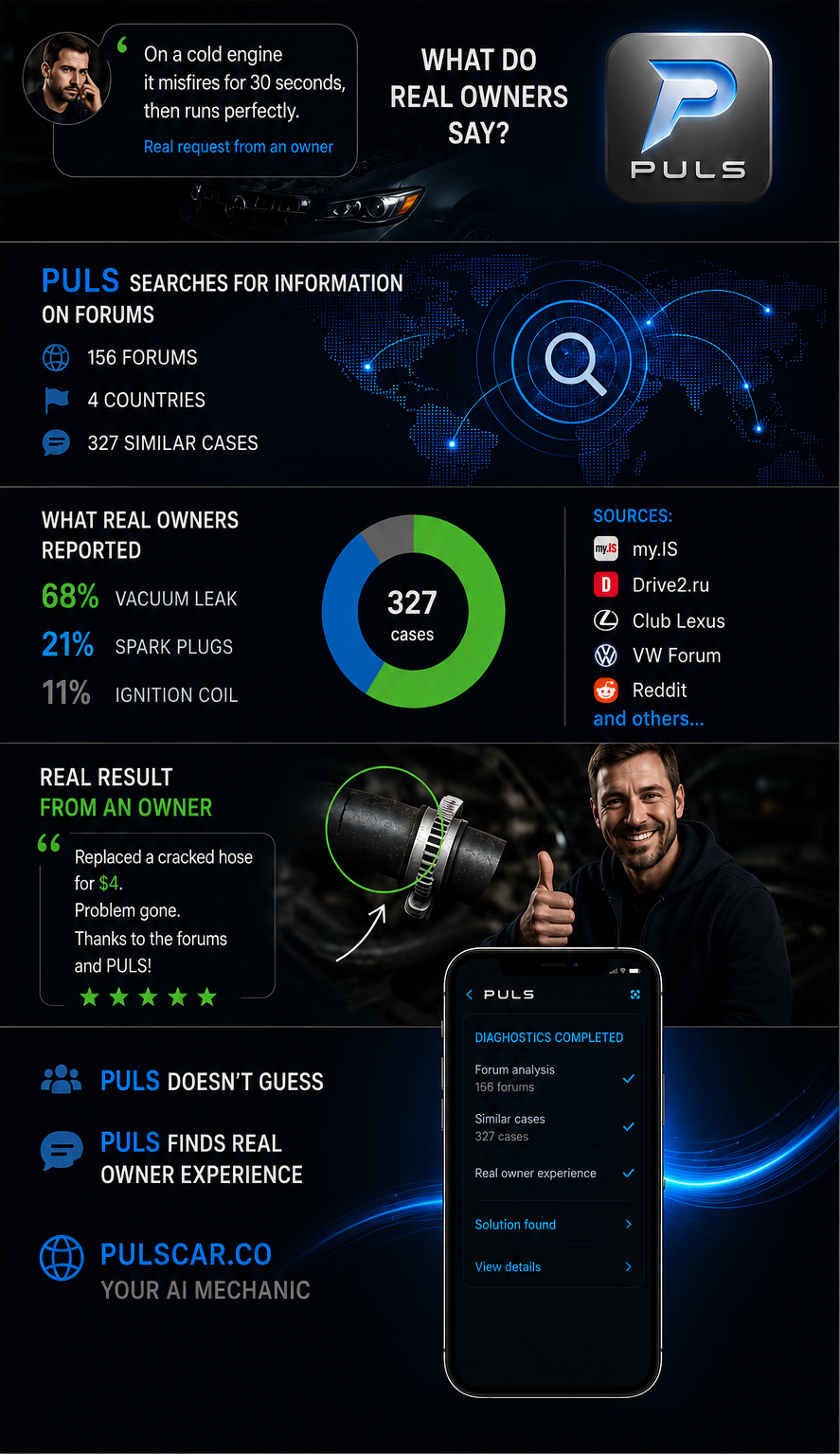
PULS searches thousands of real cases in 30 seconds.
-
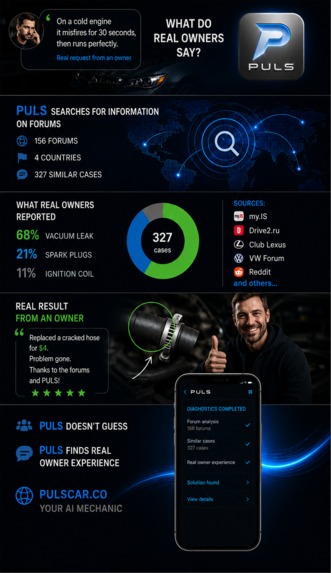
PULS ranks the most likely causes based on real owner reports.
-
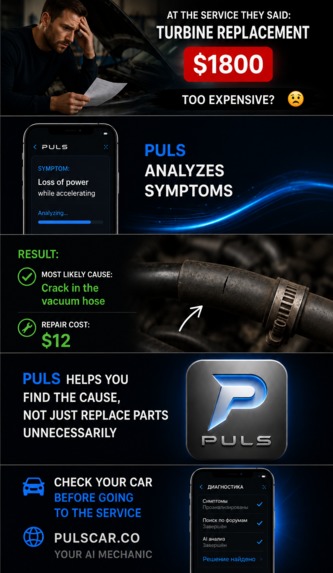
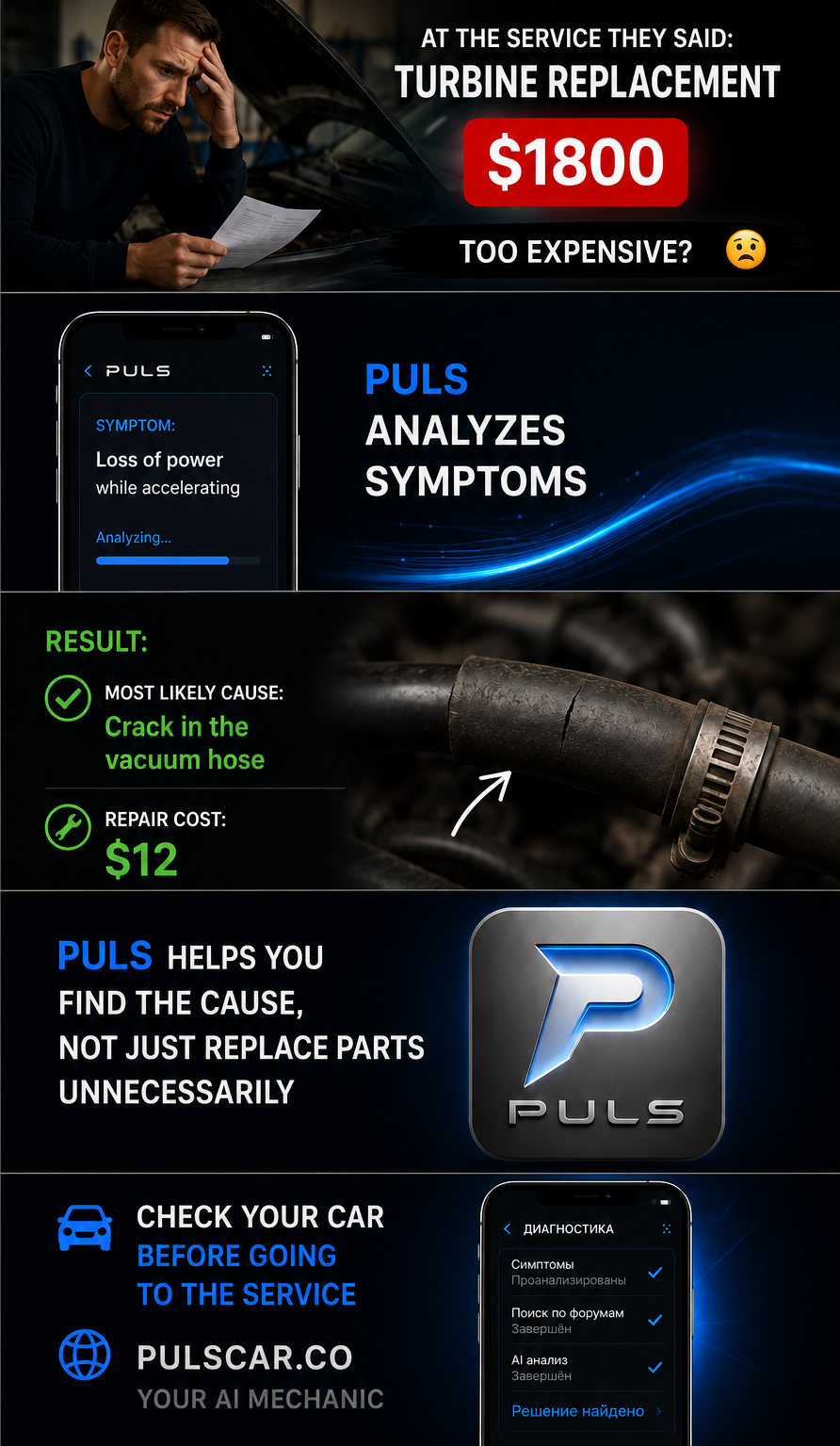
Avoid unnecessary repairs and expensive part replacements.
-
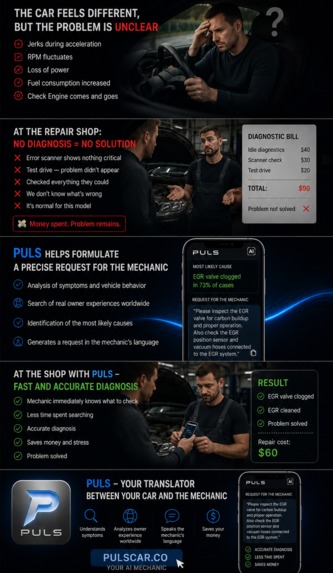
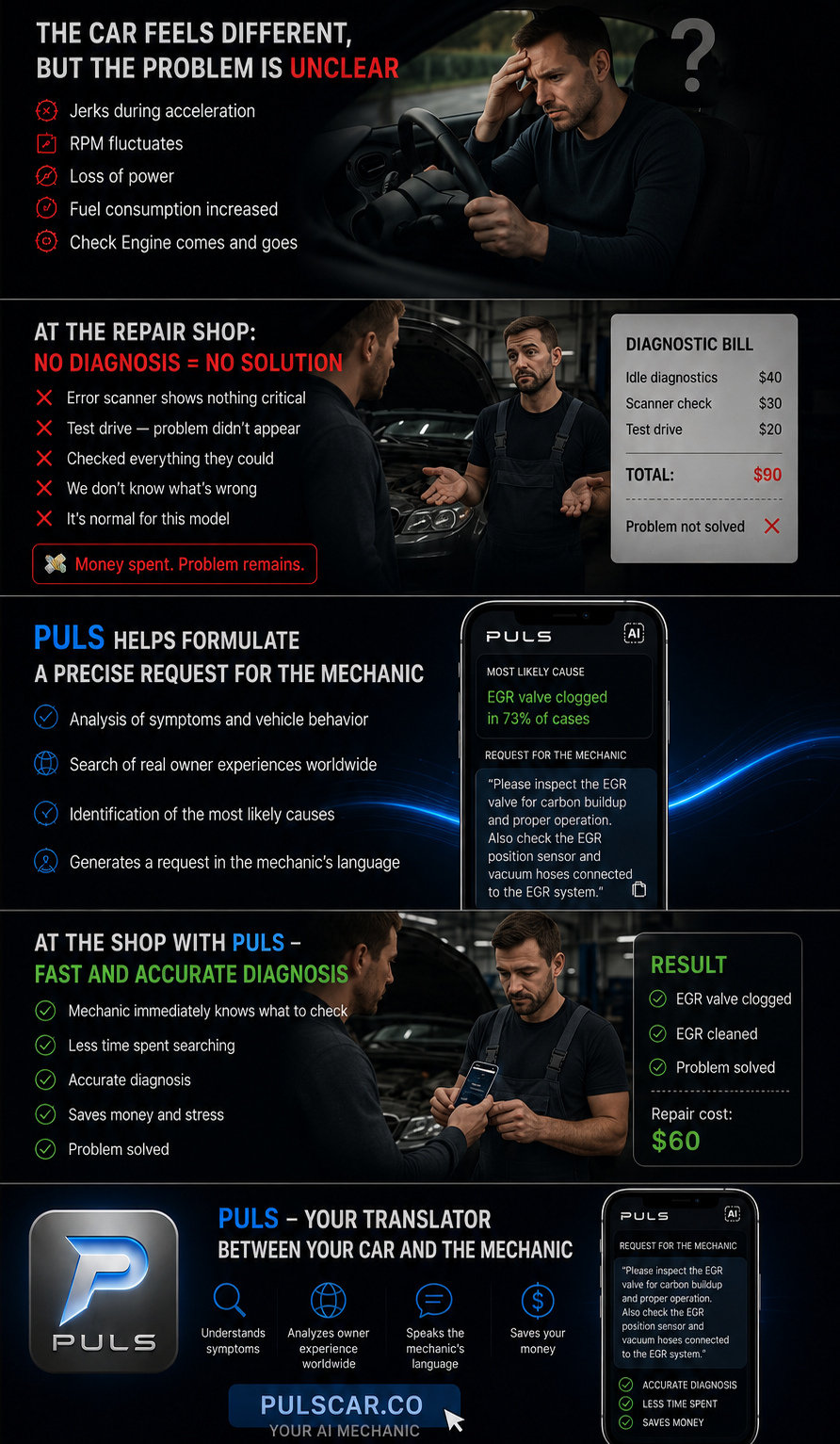
PULS converts symptoms into an accurate repair request for mechanics.
-
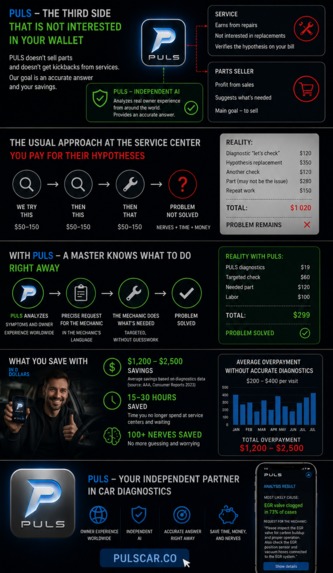
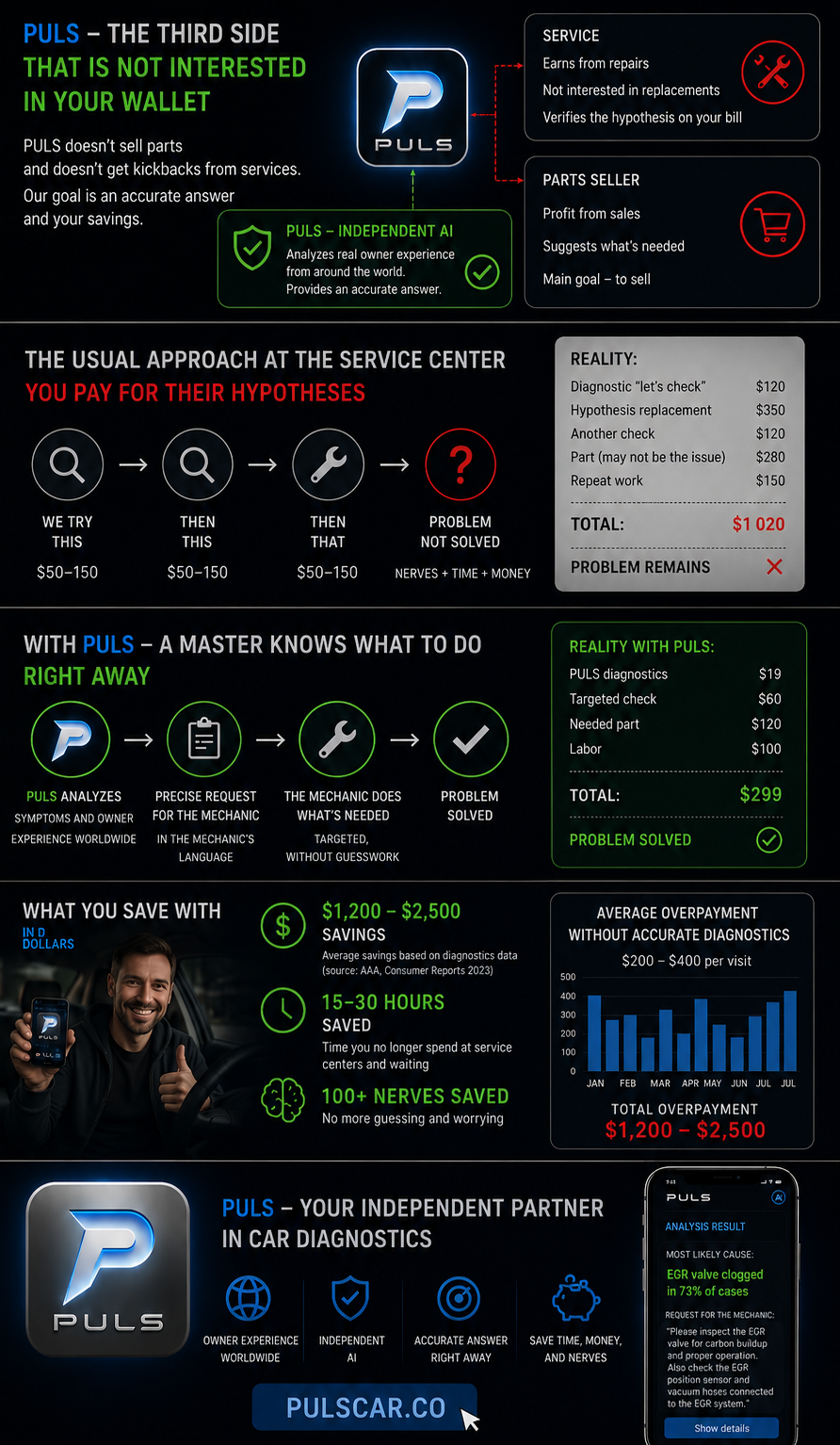
Independent AI that has no financial interest in selling repairs or parts.
Inspiration
Modern cars have become incredibly complex engineering systems. Millions of people rely on them every day, yet most car owners have little understanding of how their vehicles actually work or whether a repair recommendation is truly necessary.
Automotive knowledge is fragmented. Service manuals contain only official information, while the most valuable practical knowledge lives in forums, YouTube channels, repair communities, and the collective experience of mechanics and car owners worldwide.
Even professional mechanics spend time searching for similar cases because no one can know every common failure, every model-specific weakness, or every possible diagnostic scenario across thousands of vehicles.
The result is uncertainty. Car owners often pay for unnecessary repairs, postpone critical maintenance, or simply don't know whom to trust.
General-purpose AI models are powerful, but automotive diagnostics is not a generic problem. It requires engineering context, vehicle-specific knowledge, real-world repair experience, and the ability to distinguish between likely and unlikely causes of failure.
I have spent more than 10 years designing engineering systems and working with complex machinery. One thing I learned is that technical problems are rarely solved by having more information. They are solved by having the right information, presented in the right context.
That is why I decided to build PULS.
PULS is not another AI chatbot for cars. It is designed to become a specialized automotive intelligence platform that combines engineering knowledge, validated repair cases, vehicle history, and AI-assisted diagnostics to help car owners make better technical decisions.
My goal is simple: every car owner should have access to an independent technical assistant that explains what is happening with their vehicle before they spend money, time, or make the wrong repair decision.
What it does
PULS is a specialized AI-powered automotive assistant that helps car owners understand, diagnose, and manage the technical condition of their vehicles before spending time or money on repairs.
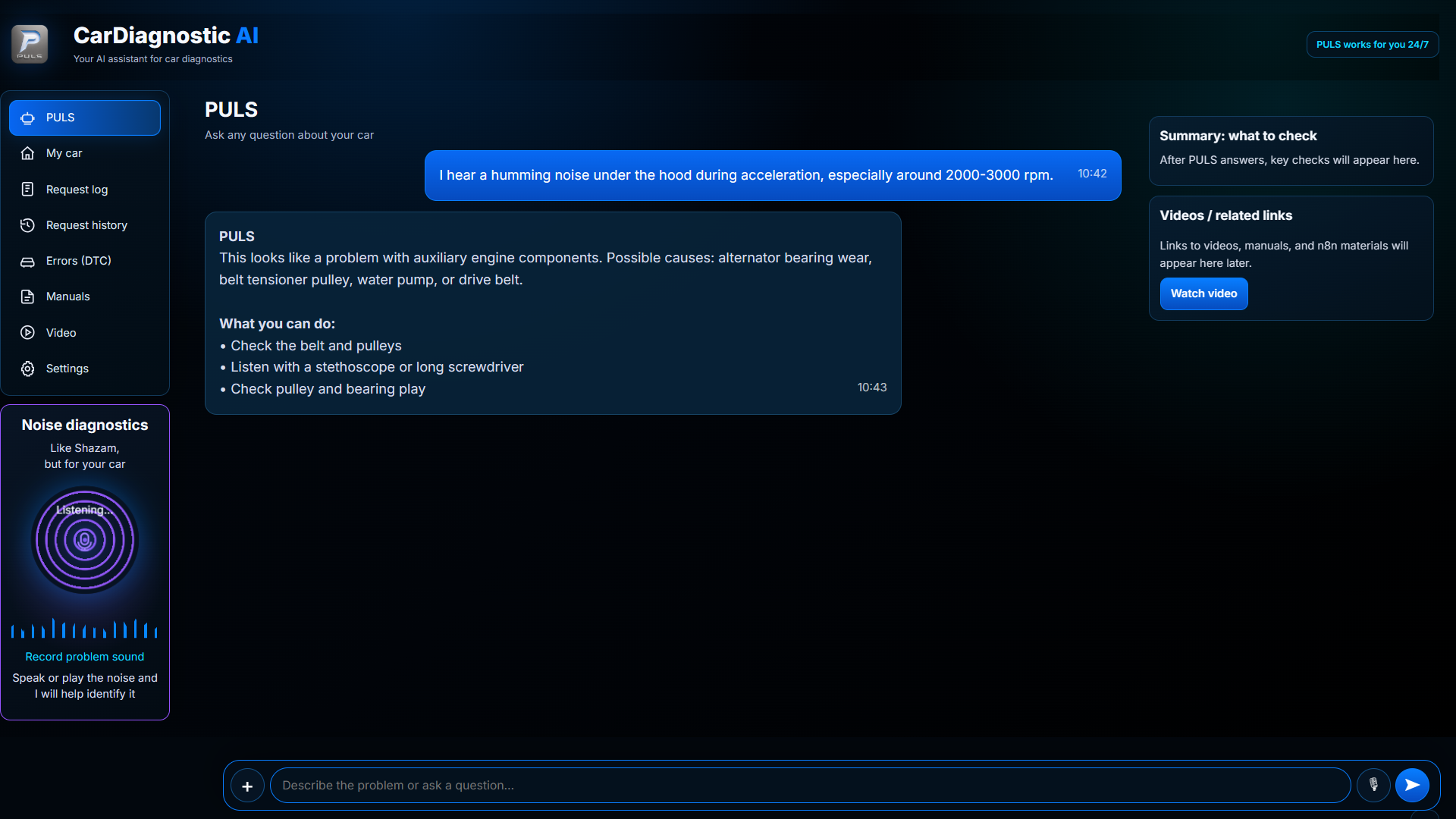
The user simply describes symptoms or asks a question in natural language.
PULS can:
- understand vehicle-specific context;
- ask clarifying questions;
- search and analyze real-world repair cases;
- learn from validated diagnostic outcomes;
- identify the most likely causes of a problem;
- explain what should be checked next in simple language;
- maintain vehicle-specific diagnostic and service history;
- accumulate automotive expertise over time.
PULS is not designed to replace professional mechanics. Its goal is to provide users with an independent technical opinion and help them make better repair and maintenance decisions.
How we built it
PULS is built using Python, FastAPI, OpenAI models, Supabase, and JavaScript.
The platform combines:
- AI reasoning;
- vehicle-specific context;
- conversational memory;
- automotive knowledge bases;
- real-world repair cases from automotive communities;
- validated repair outcomes from users.
Unlike general-purpose AI assistants, PULS is designed specifically for automotive diagnostics and technical decision-making.
Challenges we ran into
Automotive knowledge is fragmented and difficult to use.
The same problem may be discussed in different countries, languages, and communities. The most valuable information is often hidden inside forum discussions, YouTube comments, and real-world repair stories rather than official service manuals.
The biggest challenge was teaching AI to understand automotive context and distinguish between relevant and irrelevant information while working with real repair experience instead of generating generic answers.
Building an automotive diagnostic assistant is not simply a search problem. It is a context problem that requires engineering knowledge, vehicle-specific understanding, and practical repair experience.
Accomplishments that we're proud of
The current MVP can:
- perform conversational vehicle diagnostics;
- understand vehicle-specific context;
- search and analyze real-world repair cases;
- maintain vehicle diagnostic and service history;
- provide practical repair recommendations;
- remember previous conversations;
- support multilingual automotive knowledge;
- accumulate automotive expertise through validated repair outcomes.
PULS is already evolving into a personal AI mechanic, vehicle service journal, and automotive intelligence platform for car owners.
What we learned
We learned that specialized AI products can provide significantly better results than general-purpose AI when they understand both the user's context and a specific technical domain.
Automotive diagnostics is not simply about finding information. The real challenge is understanding which information is relevant for a particular vehicle, failure mode, and repair scenario.
Specialized AI systems become valuable when they combine domain expertise, real-world experience, and user-specific context.
What's next
The next step for PULS is making the core diagnostic platform production-ready.
My priority is not adding more AI features, but building a reliable and scalable automotive diagnostic system that continuously learns from validated real-world repair cases.
Unlike many AI applications that become more expensive as usage grows, PULS is designed to become more efficient over time. As validated repair cases accumulate, the platform can solve an increasing number of automotive problems using its own automotive knowledge base, reducing reliance on expensive deep searches and unnecessary AI computations.
I believe the most valuable part of PULS will not be the language model itself, but the continuously growing automotive knowledge network built from validated repair outcomes and real-world experience from car owners and mechanics worldwide.
The next milestone is validating the platform with real users and building a production-grade infrastructure with professional engineering support and investment.
In the future, PULS may include:
- image-based diagnostics;
- sound and vibration analysis;
- predictive maintenance capabilities;
- deeper vehicle-specific knowledge systems;
- AI-assisted DIY repair guidance;
- support for more vehicles worldwide.
The long-term goal of PULS is to become the most trusted independent AI-powered automotive assistant for understanding and managing vehicle health.
Built With
- ai
- api
- automotive
- css
- fastapi
- github
- gpt-5.5
- html
- javascript
- openai
- pages
- postgresql
- python
- supabase


Log in or sign up for Devpost to join the conversation.