-
-
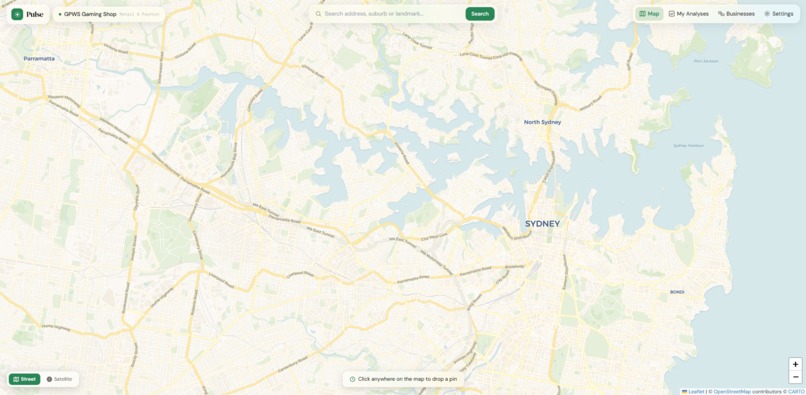
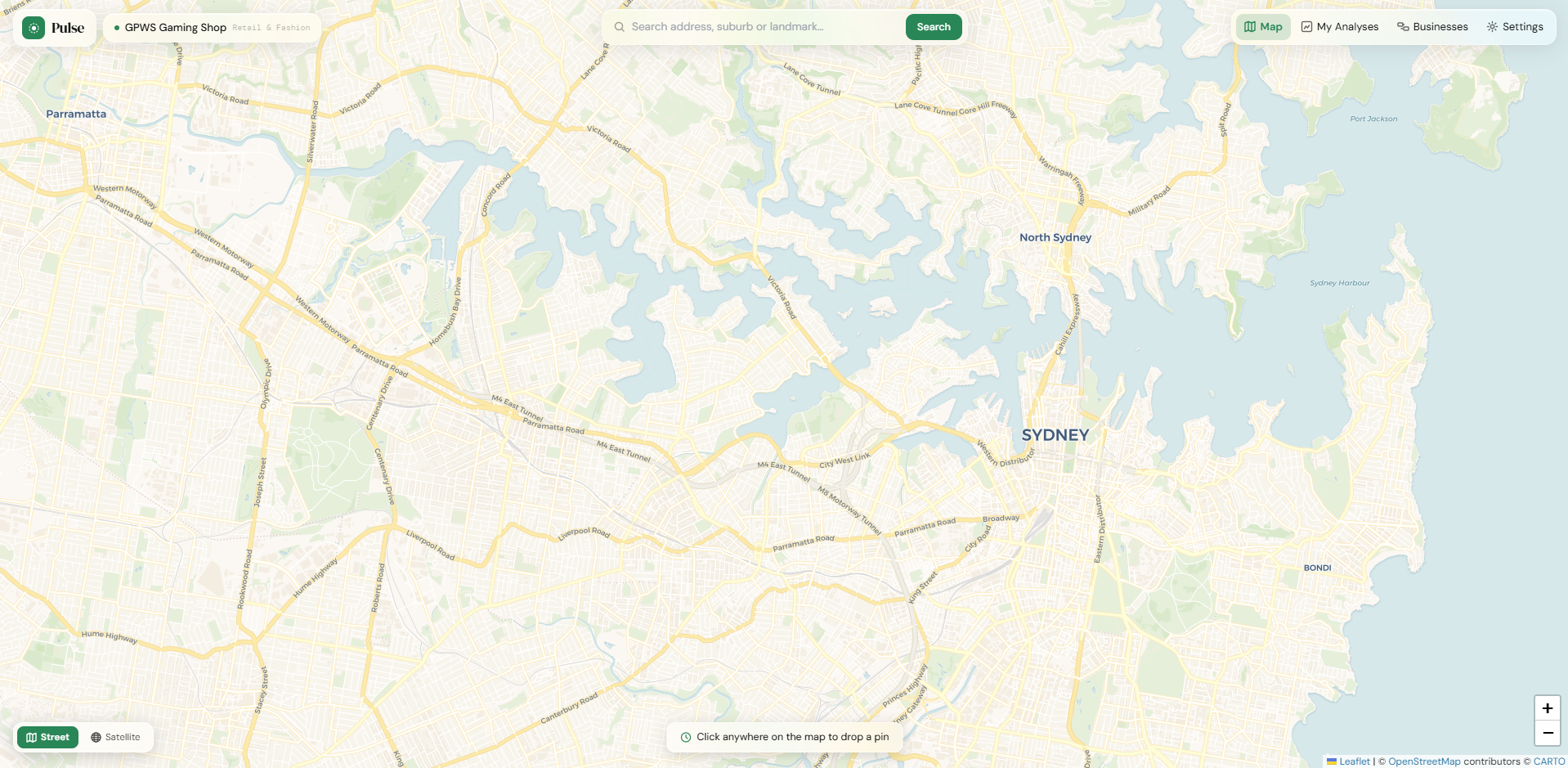
Dashboard in light mode of map
-
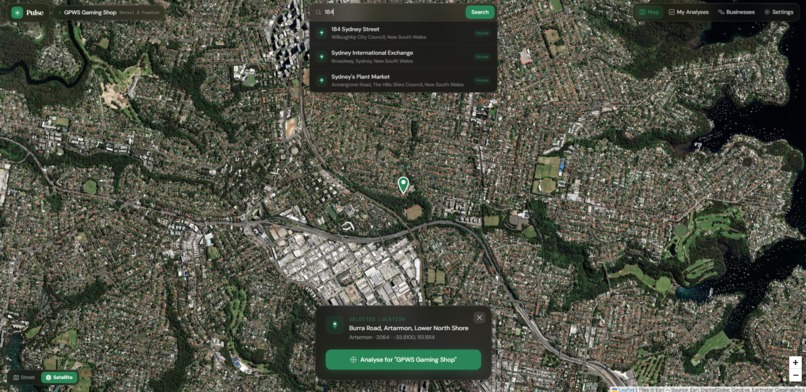
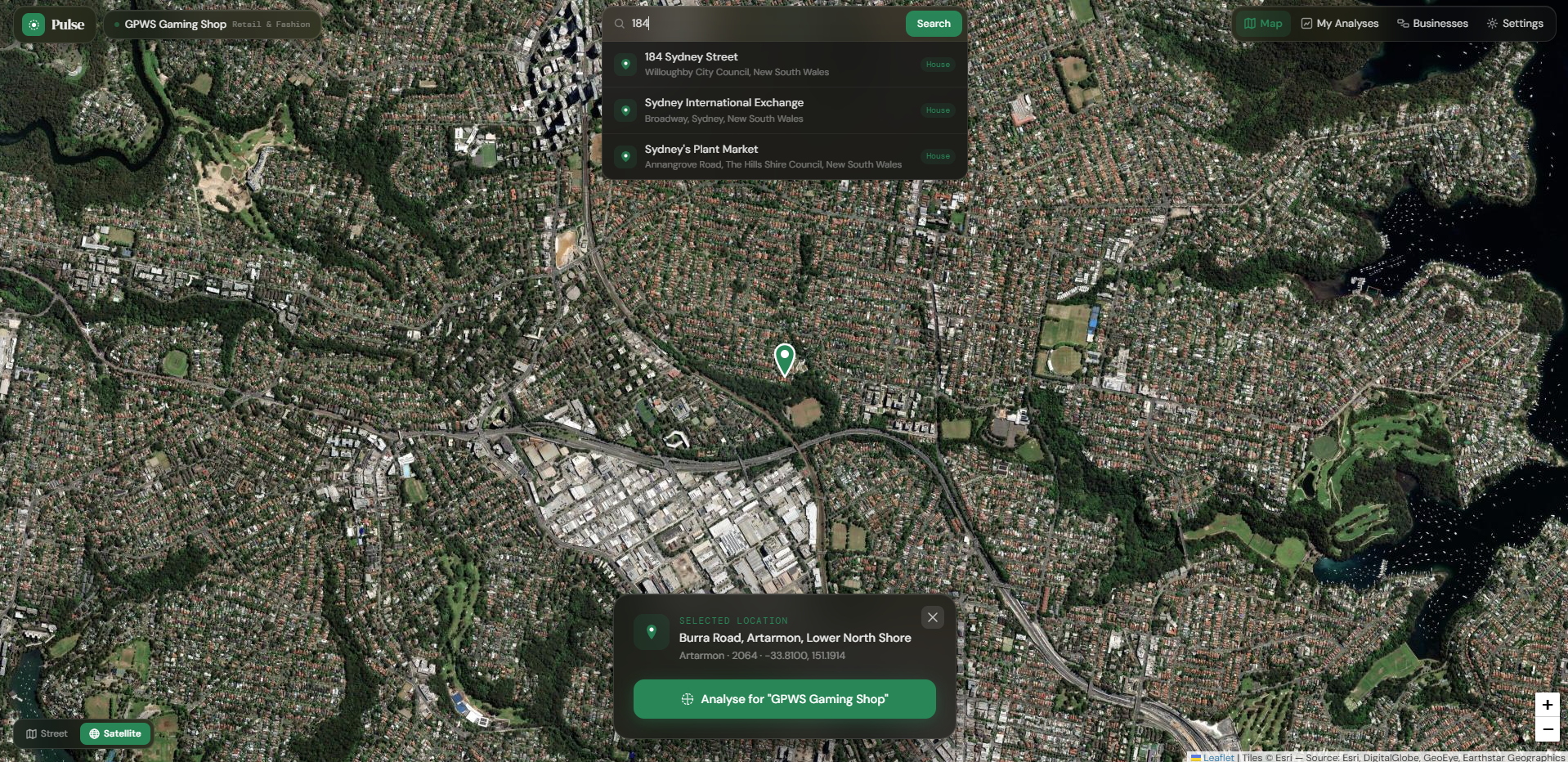
Dashboard in satellite mode of map, showing also search suggestions and a pop-up window of selected location
-
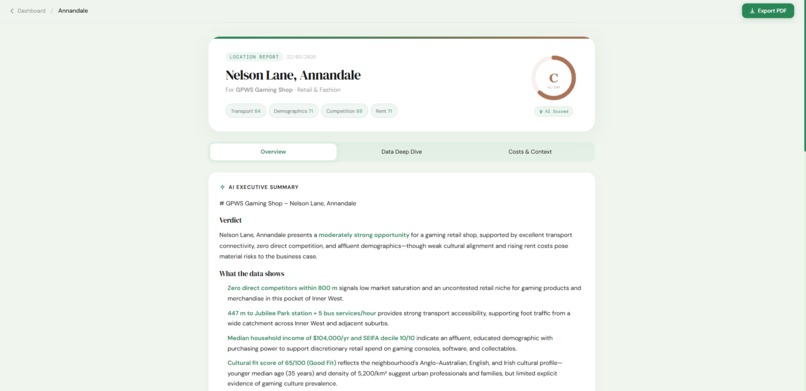
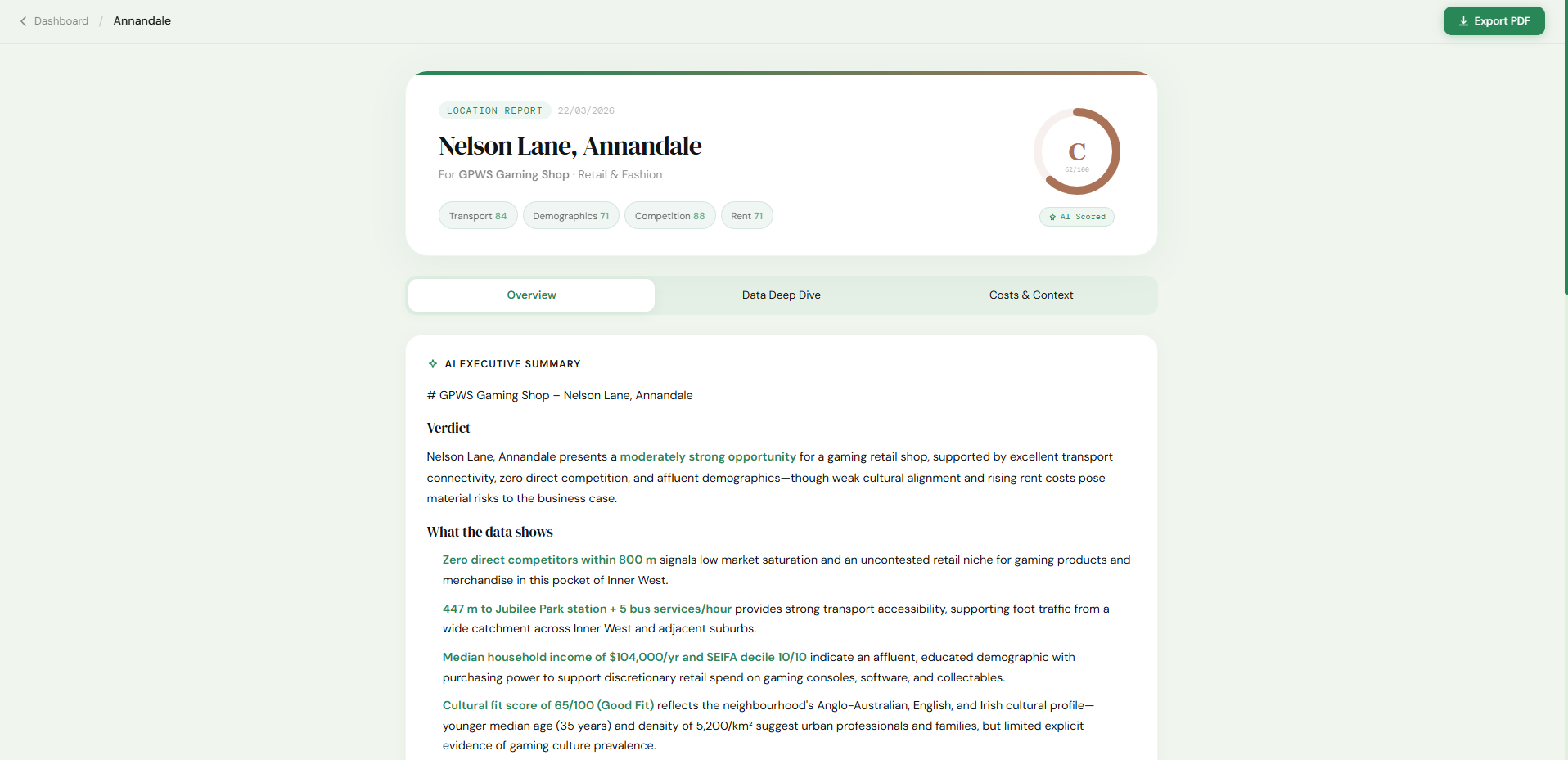
Summary of the analysis
-
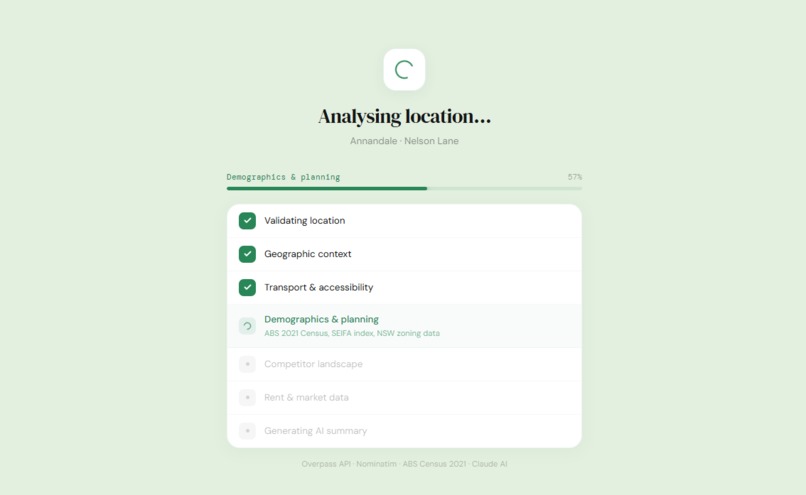
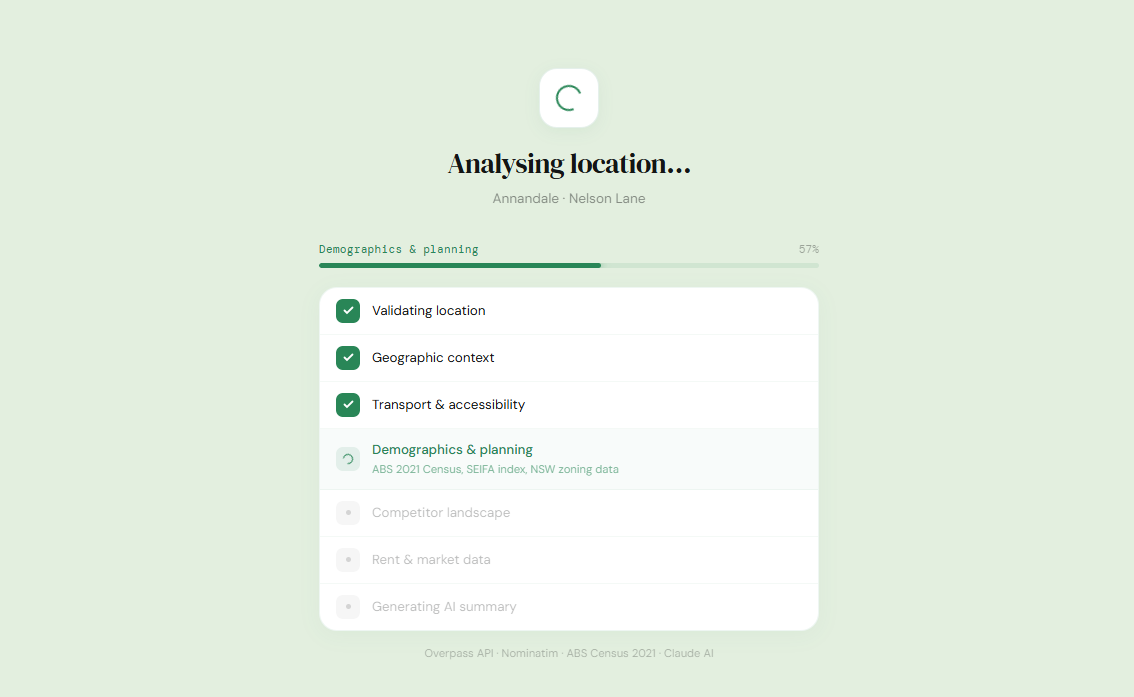
Analysing factors that influence business performance
-
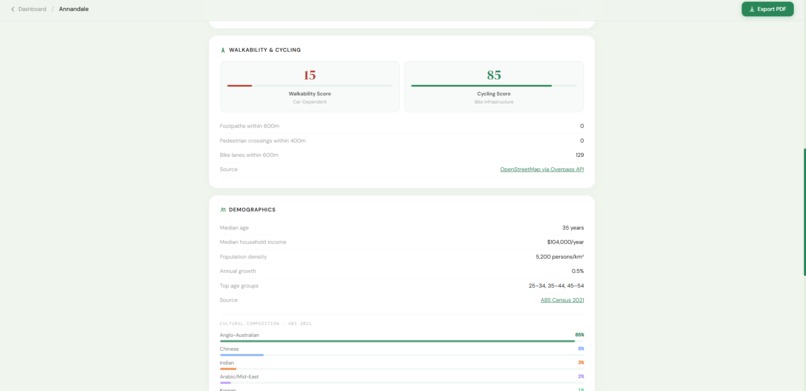
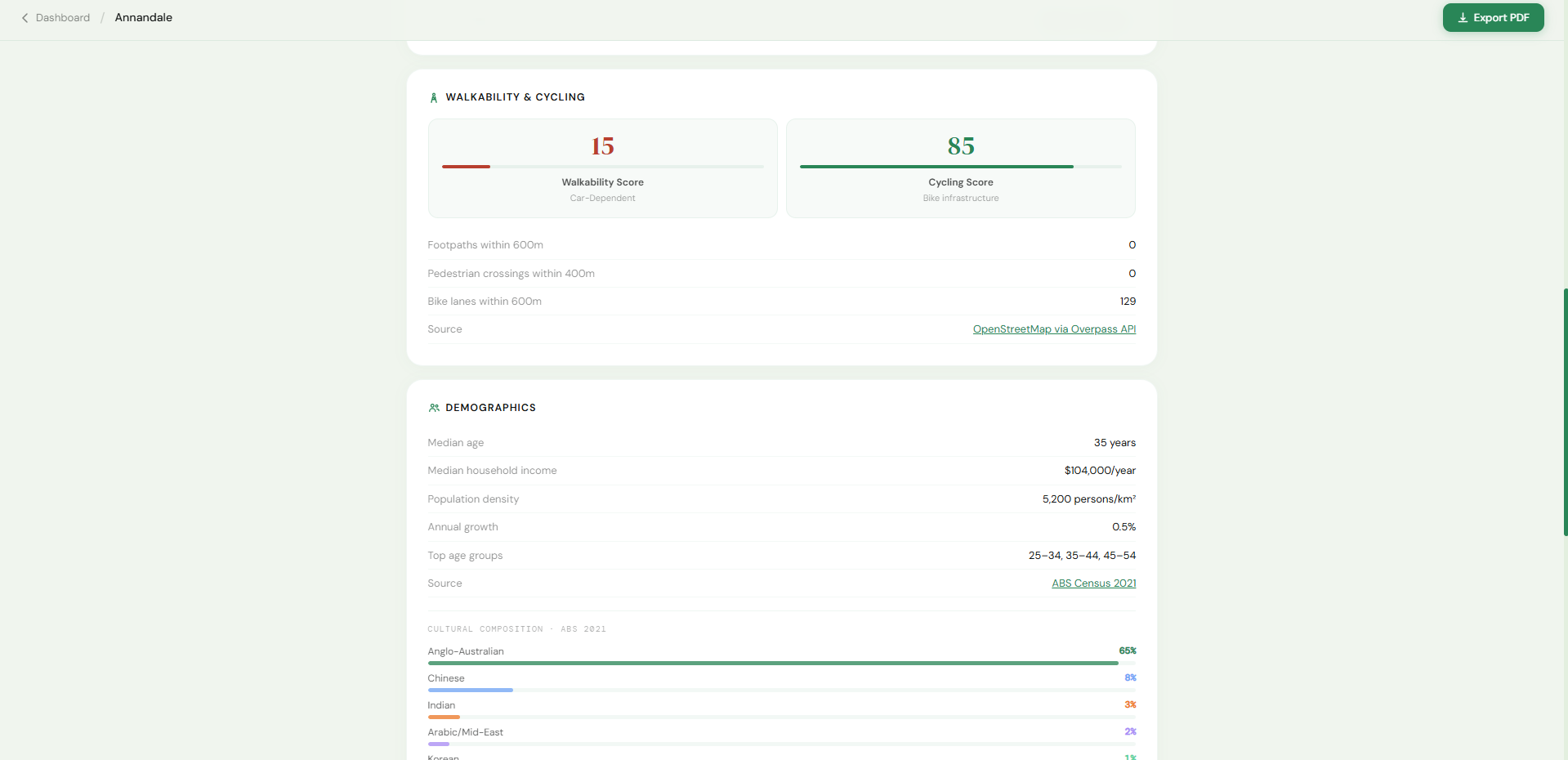
Categories of different data used for the analysis
-
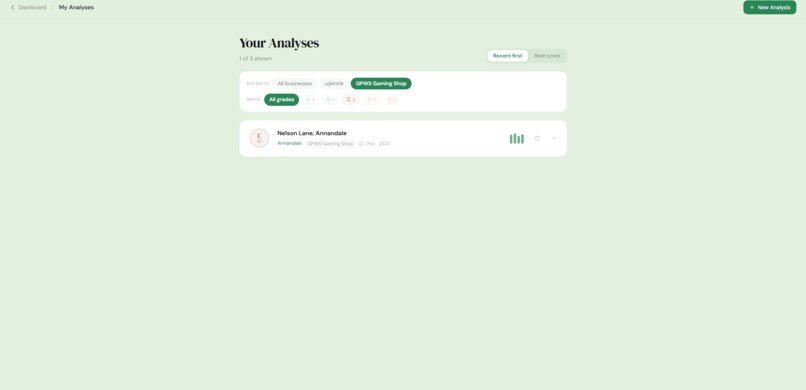
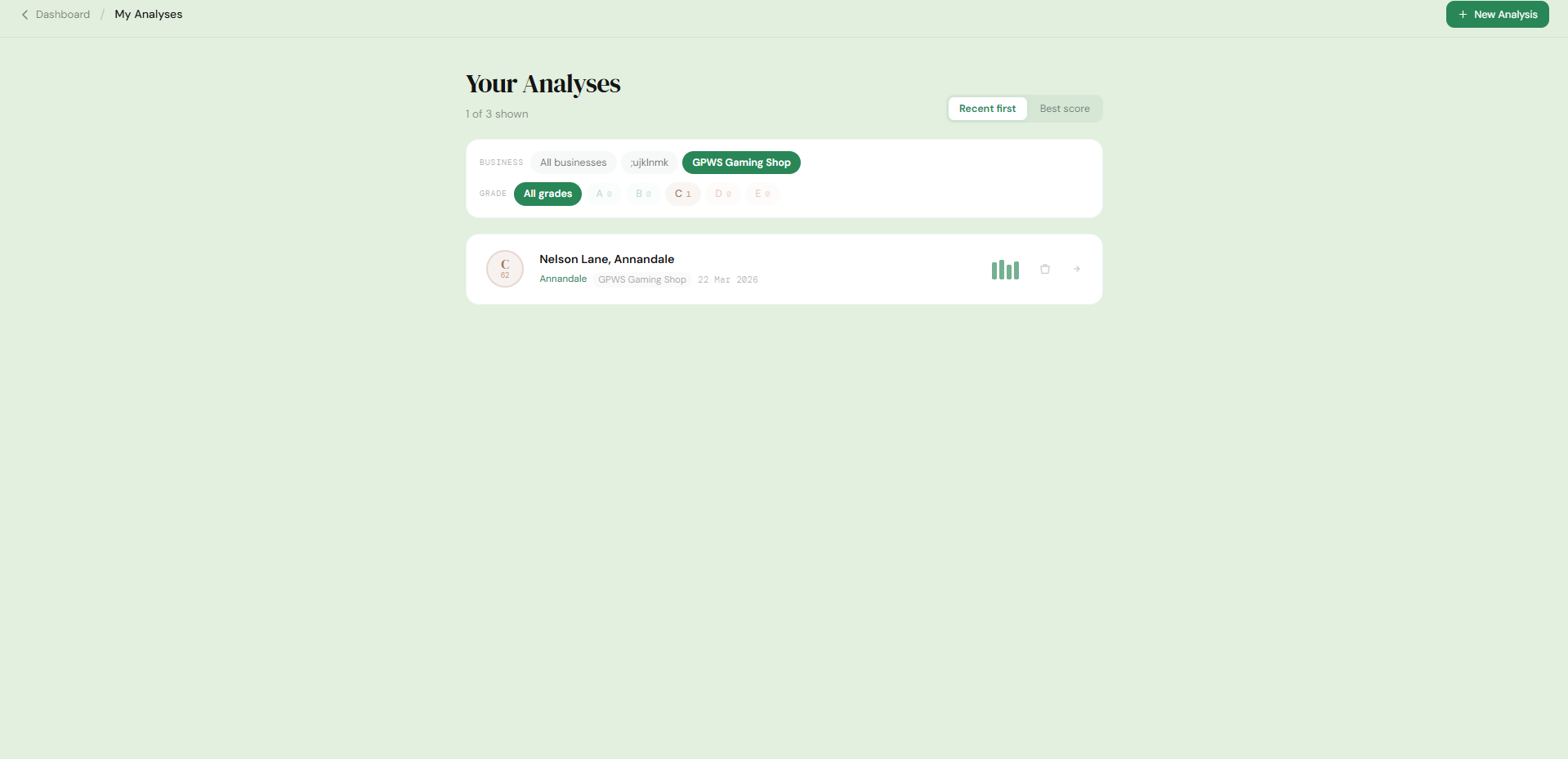
All analyses that the user have done
Inspiration
Pulse is inspired by a lot of stuff! Every year, thousands of Australians pour their savings into a business, sign a three-year lease, and commit everything to a single location decision — most of them blind. We spoke to real business owners: a hotpot restaurant owner who was told her area was "up and coming" but never saw the numbers, a convenience store owner who spent four months of rent before realising his street had a third of the foot traffic of the block next door. Location is the number one driver of retail and hospitality success or failure, yet the data to make that decision well is fragmented across ten tools, priced for enterprise, and completely inaccessible to the people who need it most. We built Pulse to fix that.
What it does
Imagine you are a new or an existing business trying to locate that valuable treasure site you need to maximise your profit. But you just don't know how, or that you need to juggle between more than 10 tools to know these information. Pulse solves that, it gives small business owners AI-powered location intelligence in under one minute, for free. A business owner enters their name, location, category, and what they sell. Pulse then pulls data from reliable and reputable public sources including OpenStreetMap, the ABS Census, and the NSW Planning Portal and way many more — and synthesises it into a single, readable insight: a viability score, key opportunities, key risks in plain-English.
How we built it
We built Pulse as a separated frontend and backend. The backend is Node.js and Express, with service modules each responsible for fetching, cleaning, and validating data from a different public API. All data payloads are aggregated and passed to Claude Haiku via the Anthropic API, which synthesises them into a structured JSON insight object. The frontend is Next.js 14 with the App Router, TypeScript, and Tailwind CSS. Location data is visualised using Leaflet.js with OpenStreetMap tiles. User accounts and saved analyses are handled by Supabase, with Row Level Security ensuring users only ever access their own data. Guest mode allows users to run a full analysis without signing up, with an option to save results by creating an account.
Challenges we ran into
Wrangling different public APIs — each with different data formats, rate limits, and reliability characteristics — into a single coherent response was the core technical challenge. Getting Claude Haiku to return consistently structured JSON across varied business inputs required significant prompt engineering. We also had to design a guest mode that felt seamless — showing the full product experience without any auth friction — while still giving signed-in users a persistent dashboard.
Accomplishments that we're proud of
We're proud of so many stuff alongside our journey to develop this platform. From collaborative discussions, we locked into this idea after trialing several others and realising that Pulse is the most interesting and critical one. Designing the UI and UX is no simple task to cater for the needs of our users and the aesthetics of elements including the use of blur. We are especially proud of our integration of multiple data sets and sources to provide our users with the most reliable and accurate information. And the challenge, being the technicality of the code and the hardness of implementation, were conquered by us. We're also really proud of our community consultation with local shops around Redfern train station and heard their insights on what kind of platform they would need for it to be useful to them!
What we learned
We learnt that:
- The hardest part of building on public data isn't access — it's consistency and the way the platform presents it to the users. Every dataset has its own quirks, gaps, and update cadences.
- We learnt to use Resend to send verification code emails to users for them to sign in
- We also learnt the complexities of using Supabase to offer Pulse's services to our users.
- We learnt the importance of customer conversations for us to build a product that is truly useful for our communities and users.
What's next for Pulse
- We want to expand coverage beyond Sydney to all major Australian cities.
- We want to implement a feature that allow users to compare two or more locations, side-by-side, so that they don't have to switch between pages to find their perfect site.
- We would also implement our monetisation model, and earn profits, so we can fund our API calls and the future investment of useful features.
- We would also utilise more data sources incl. foot traffic data to produce predictive insights for the businesses.
- For the longer term, Pulse has a natural path into ongoing monitoring — alerting businesses to new developments, competitor openings, or shifts in foot traffic patterns in their area after they've already opened.
Try It Out
Try it out yourself at https://pulse-5xso.vercel.app!
Additional Links
- Pitch| https://www.youtube.com/watch?v=HsgKLYTrCQc
- Demo| https://www.youtube.com/watch?v=ixsa5RCVGhY
- Slides https://www.figma.com/deck/s7rACcckW8se10jIPQr7rf/PULSE-PITCH-DECK?node-id=84- 255&t=GeKONnozNxbuisgs-1
- GitHub| https://github.com/fiatjustitia06/pulse
Built With
- figma
- next.js
- react
- resend
- supabase
- tailwind
- typescript


Log in or sign up for Devpost to join the conversation.