-
-
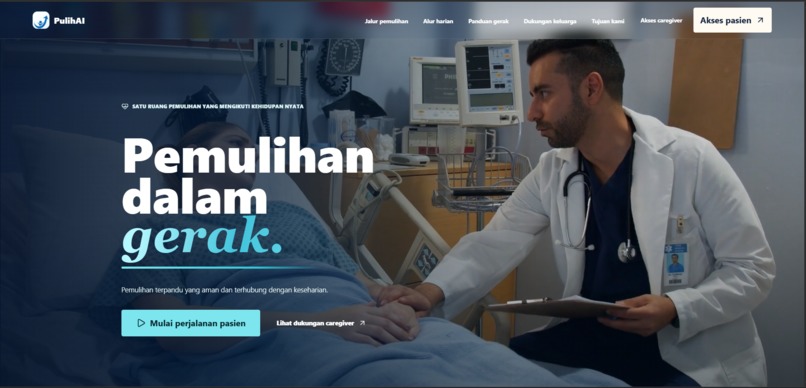
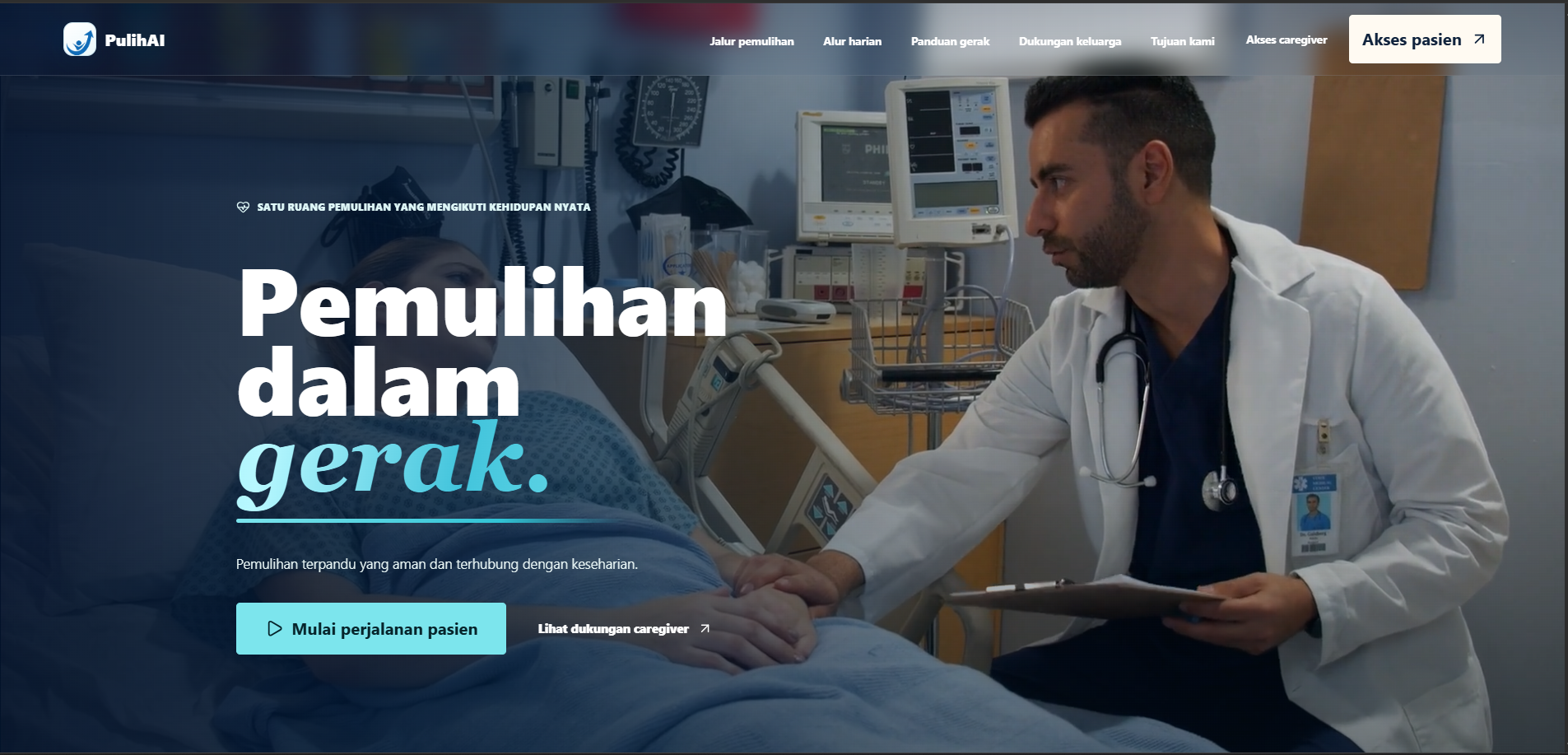
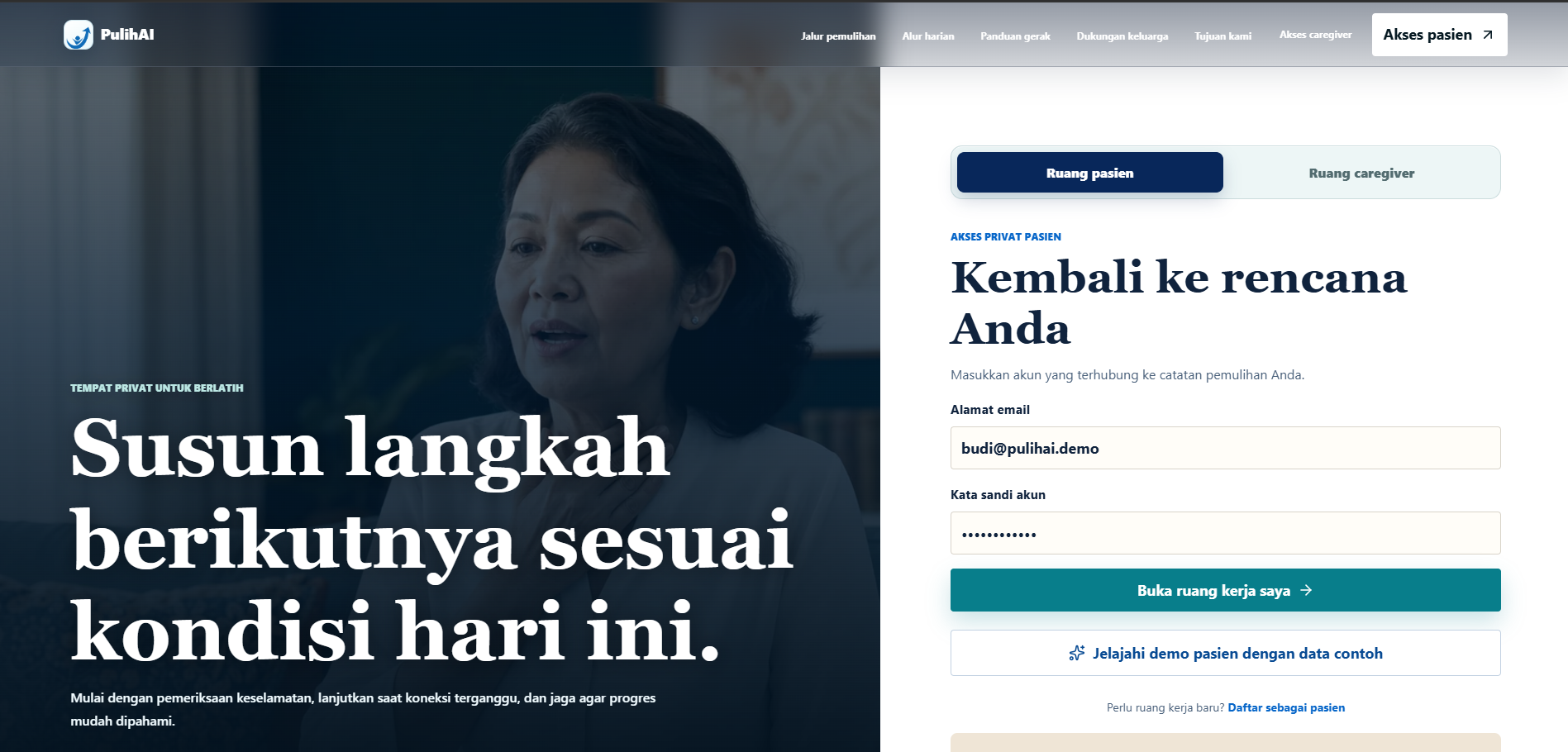
PulihAI introduces a private, connected home rehabilitation experience built around continuity, safety, and everyday recovery.
-
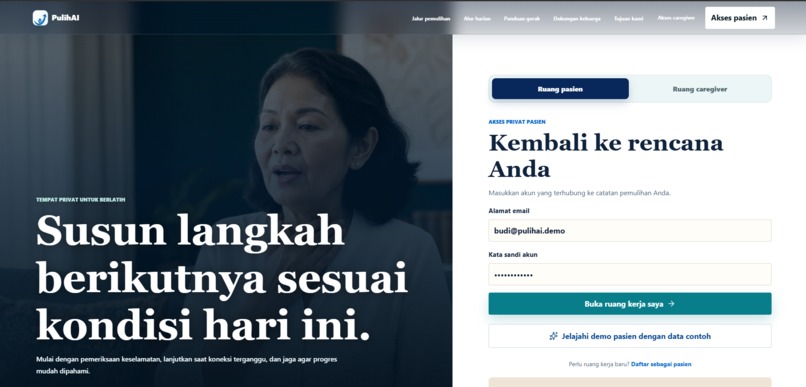
Patients can securely enter their recovery workspace or explore the complete experience instantly using demonstration data.
-
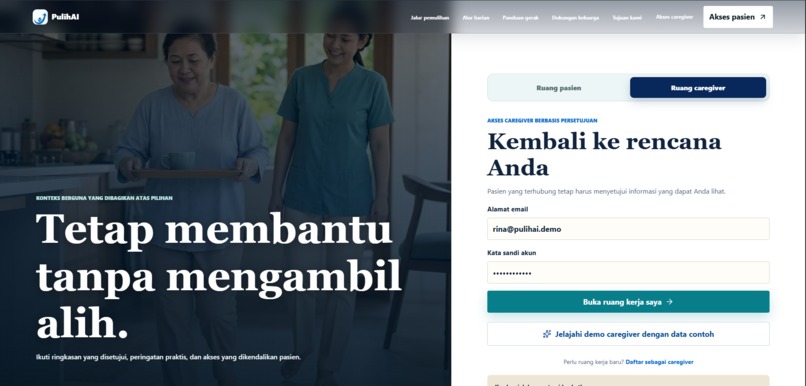
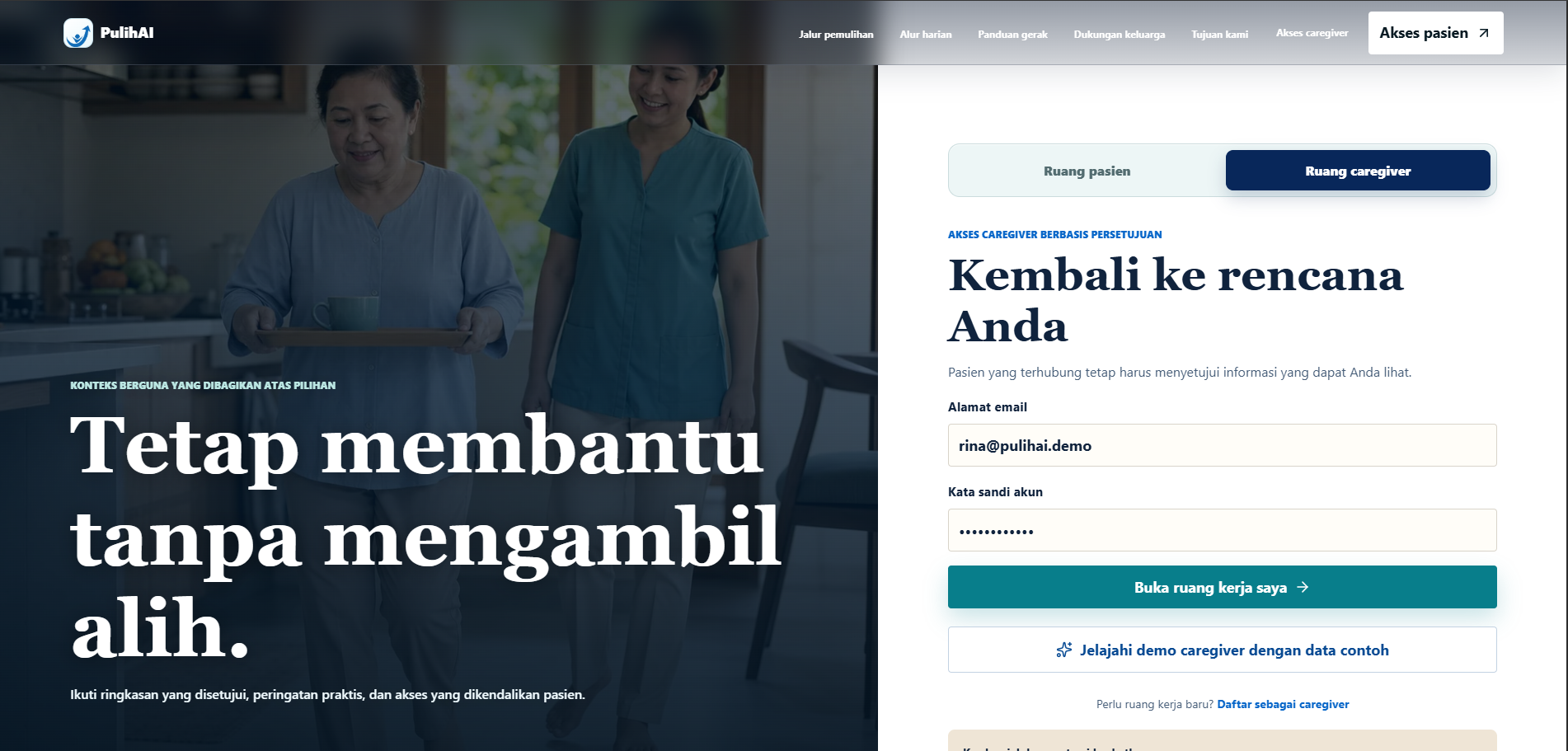
Caregivers receive a dedicated workspace where every connection and shared recovery detail remains controlled by patient consent.
-
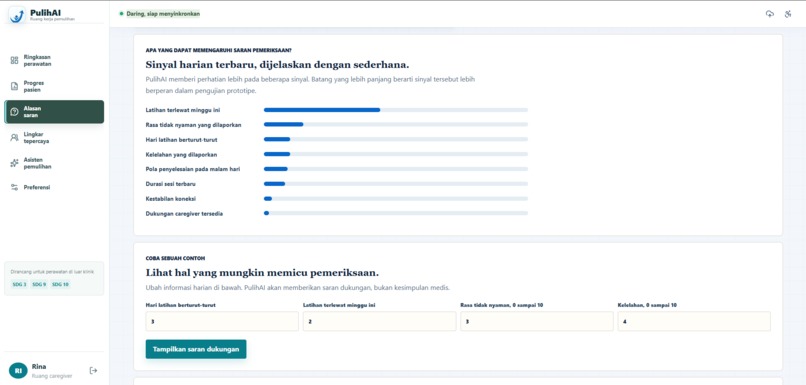
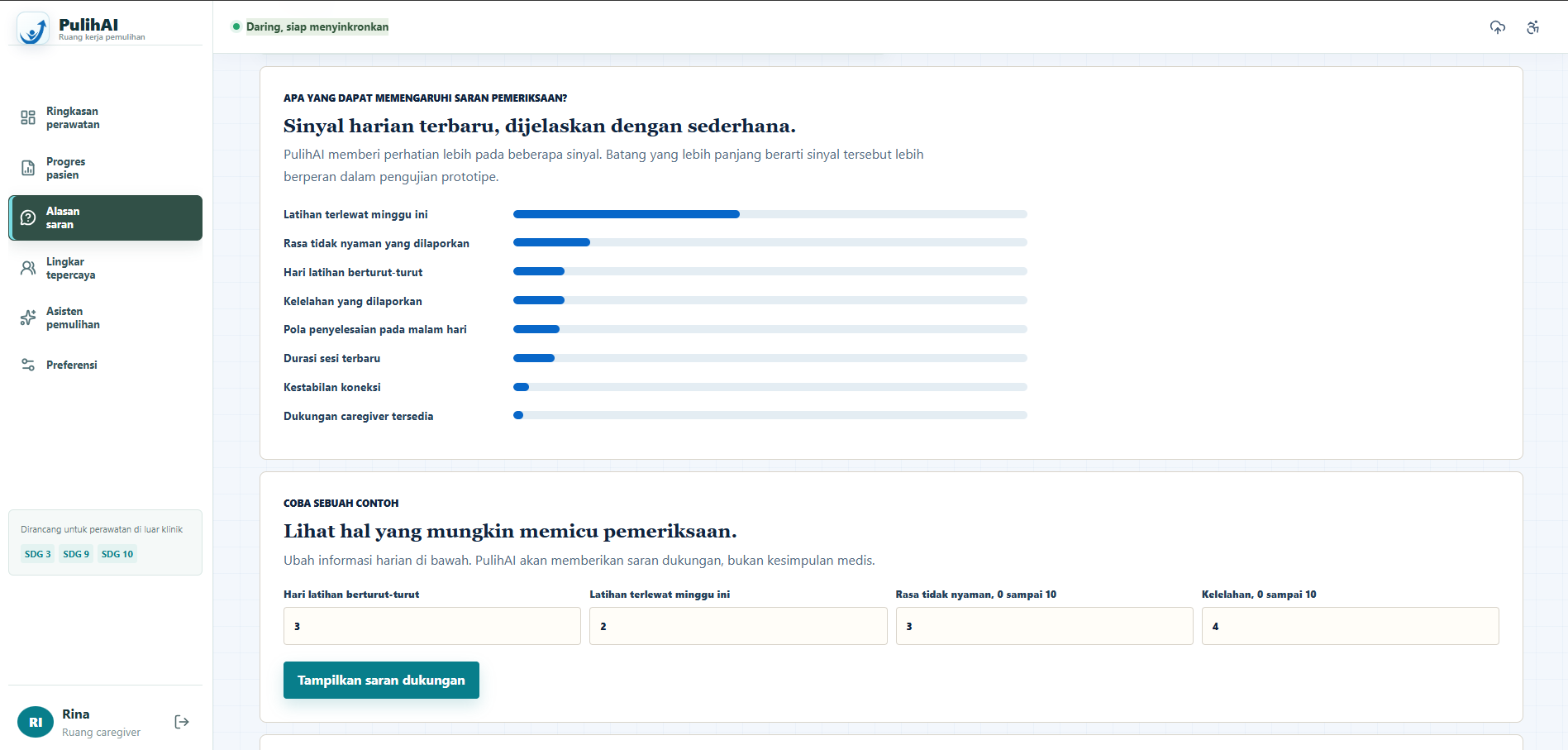
PulihAI explains the everyday signals behind each support suggestion in plain language, without presenting them as medical conclusions.
-
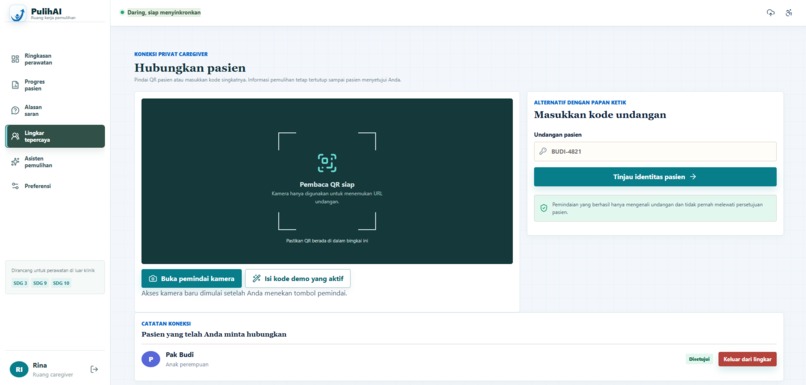
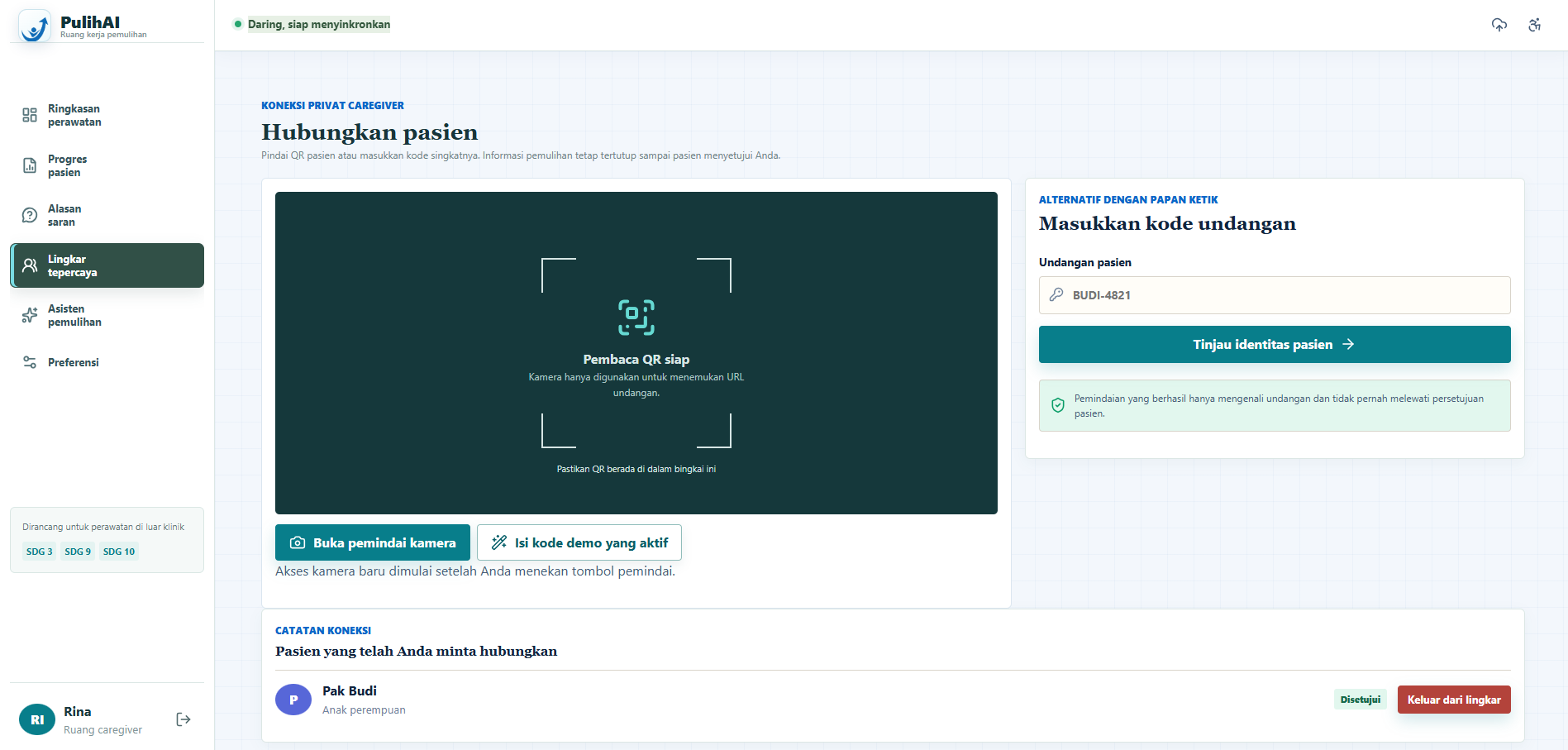
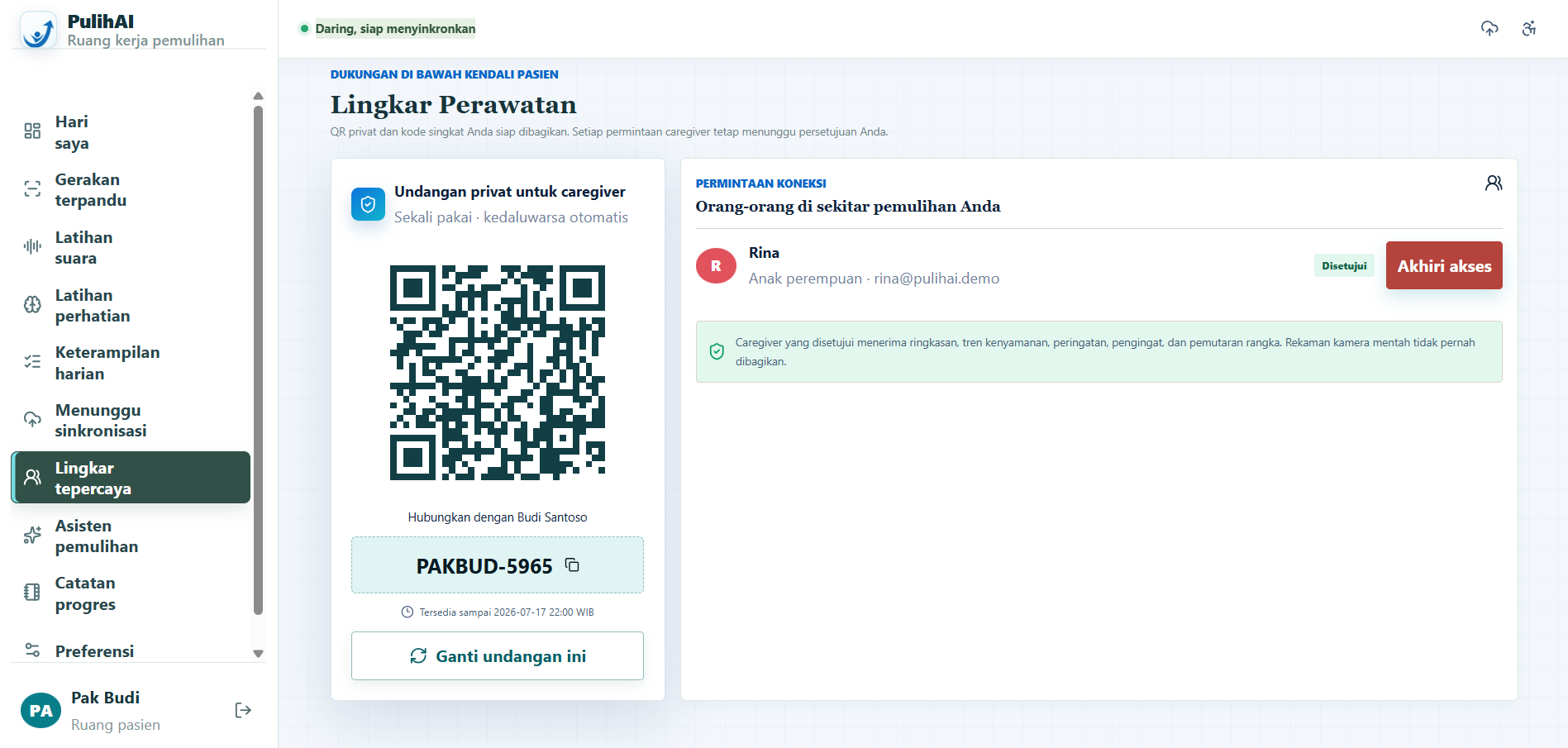
Caregivers can scan a private QR code or enter an invitation code, while patient information stays hidden until access is approved.
-
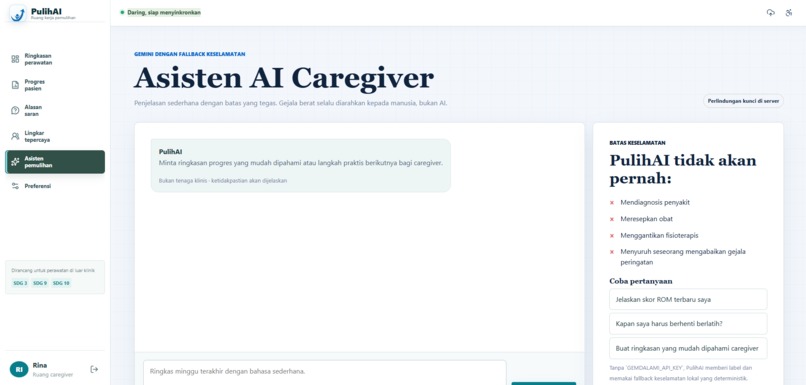
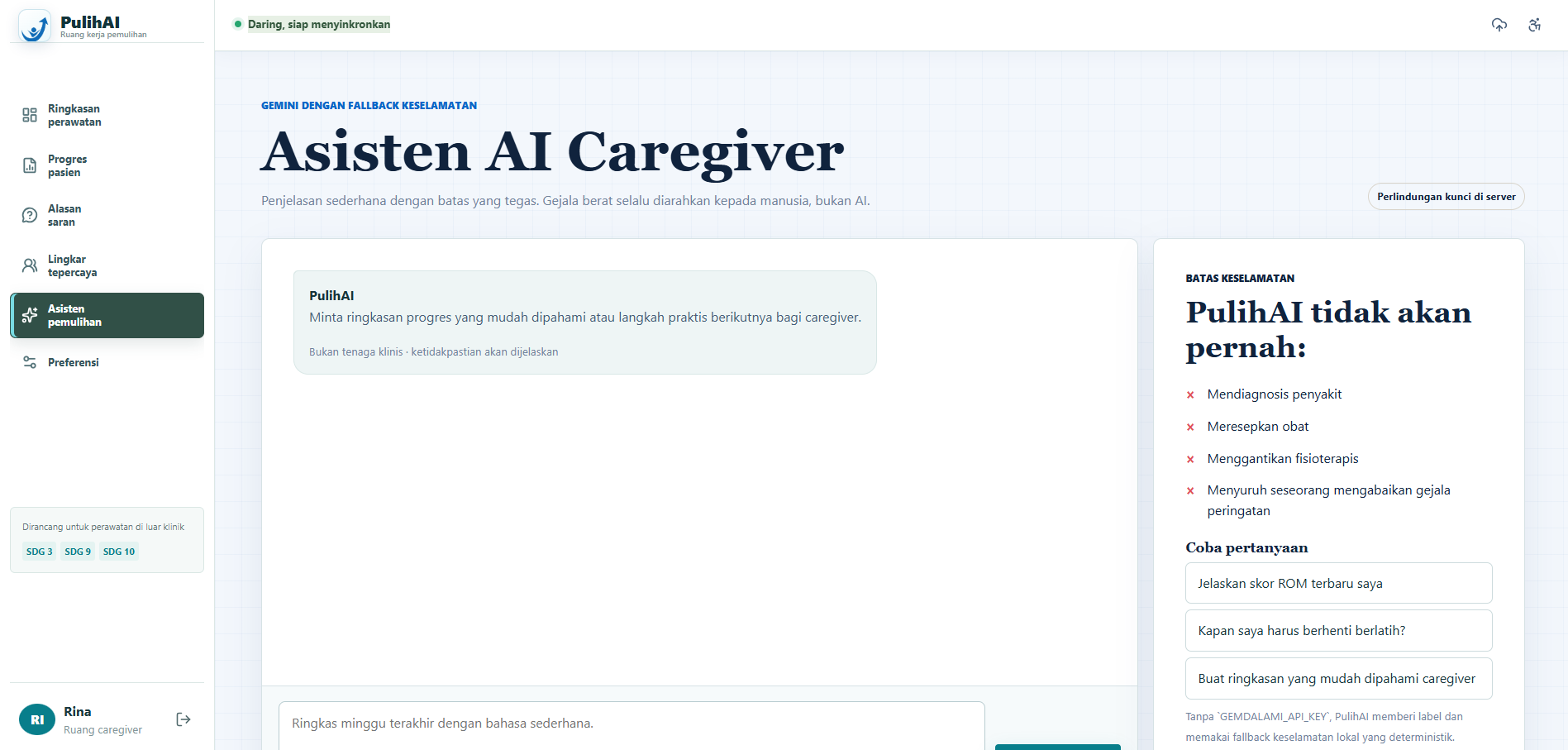
The caregiver assistant turns approved recovery information into clear summaries and practical next steps.
-
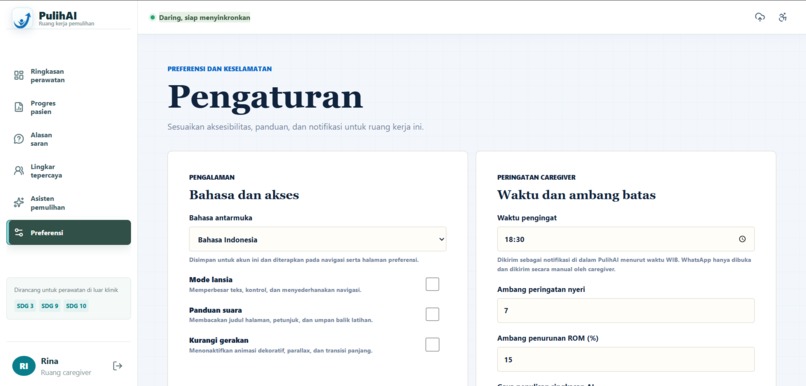
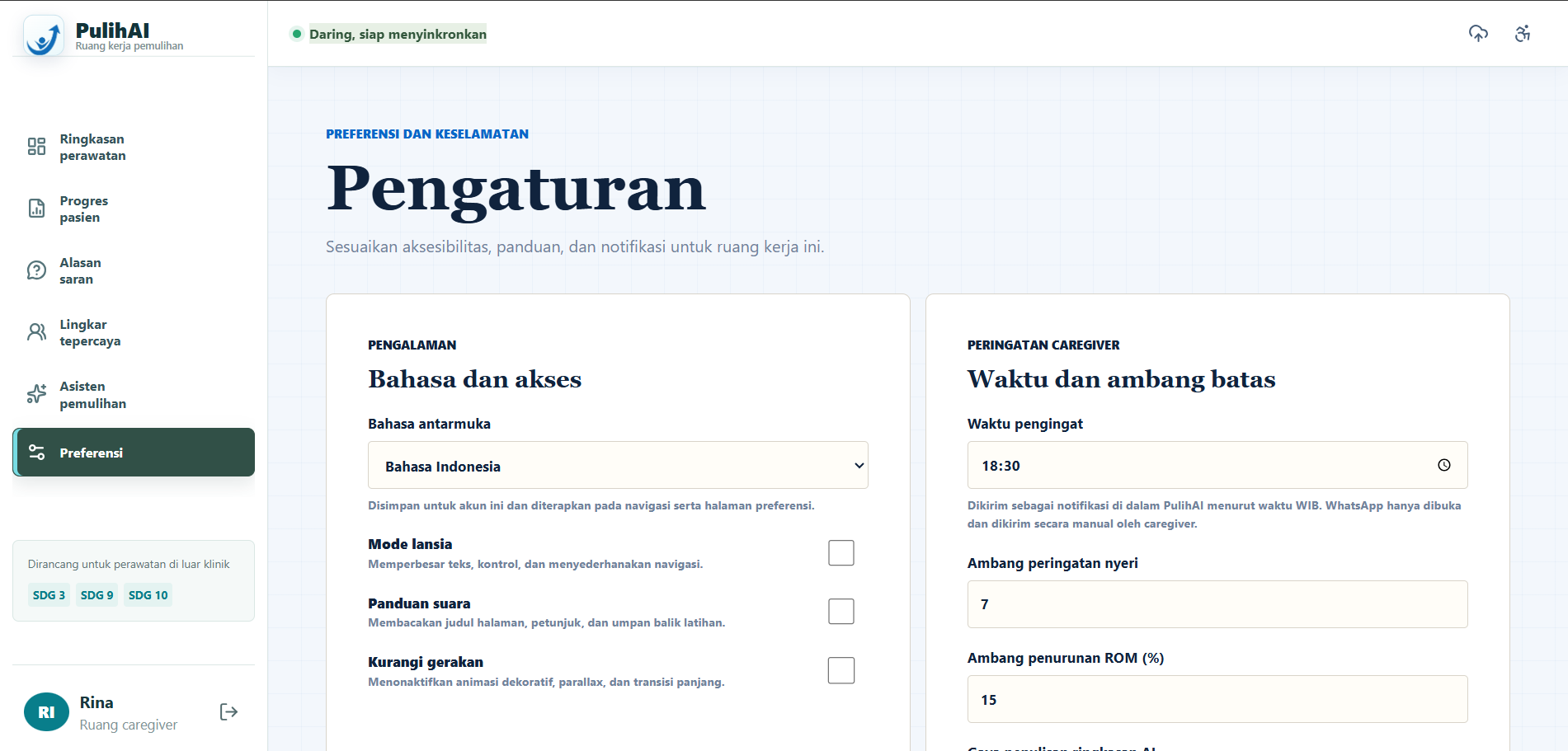
Caregivers can adjust language, accessibility, voice guidance, reminder timing, and alert thresholds to match their support routine.
-
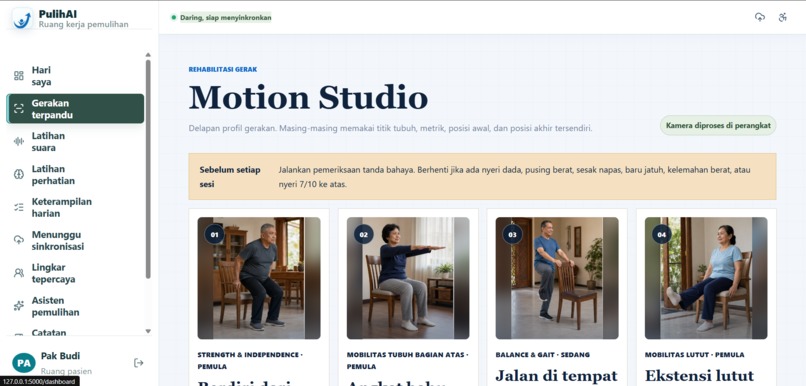
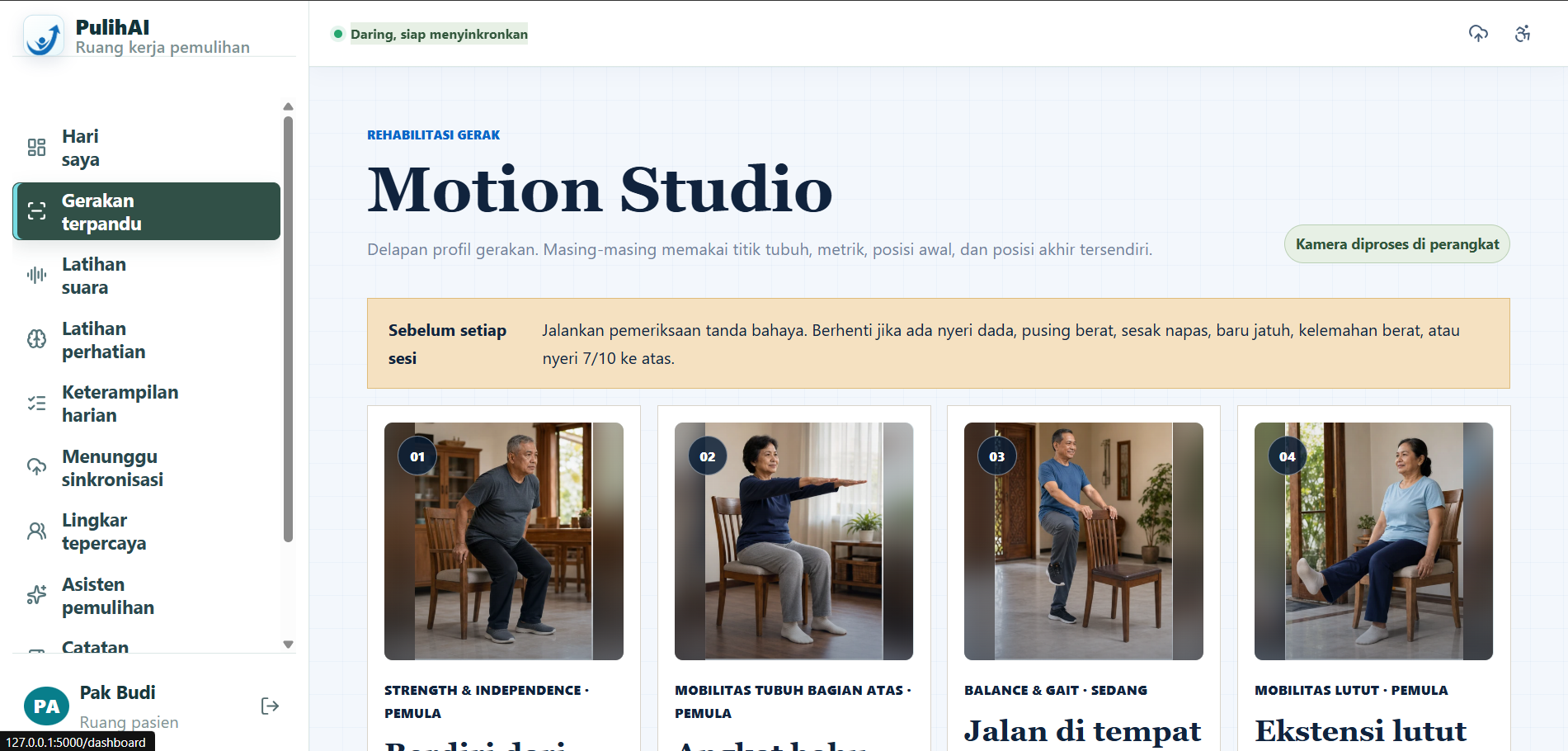
Patients can choose from eight guided movement programs designed for strength, mobility, balance, and everyday independence.
-
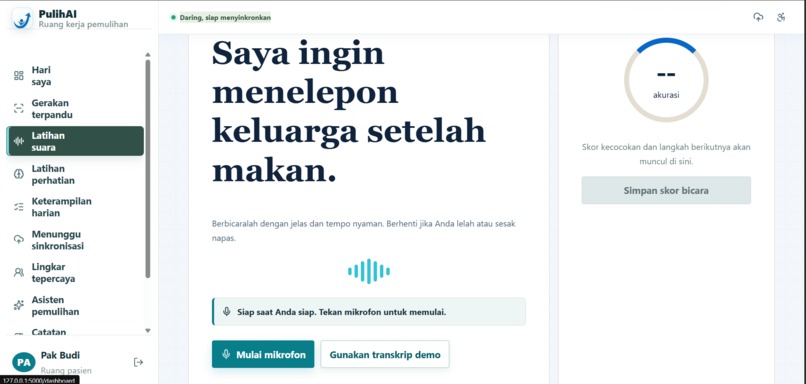
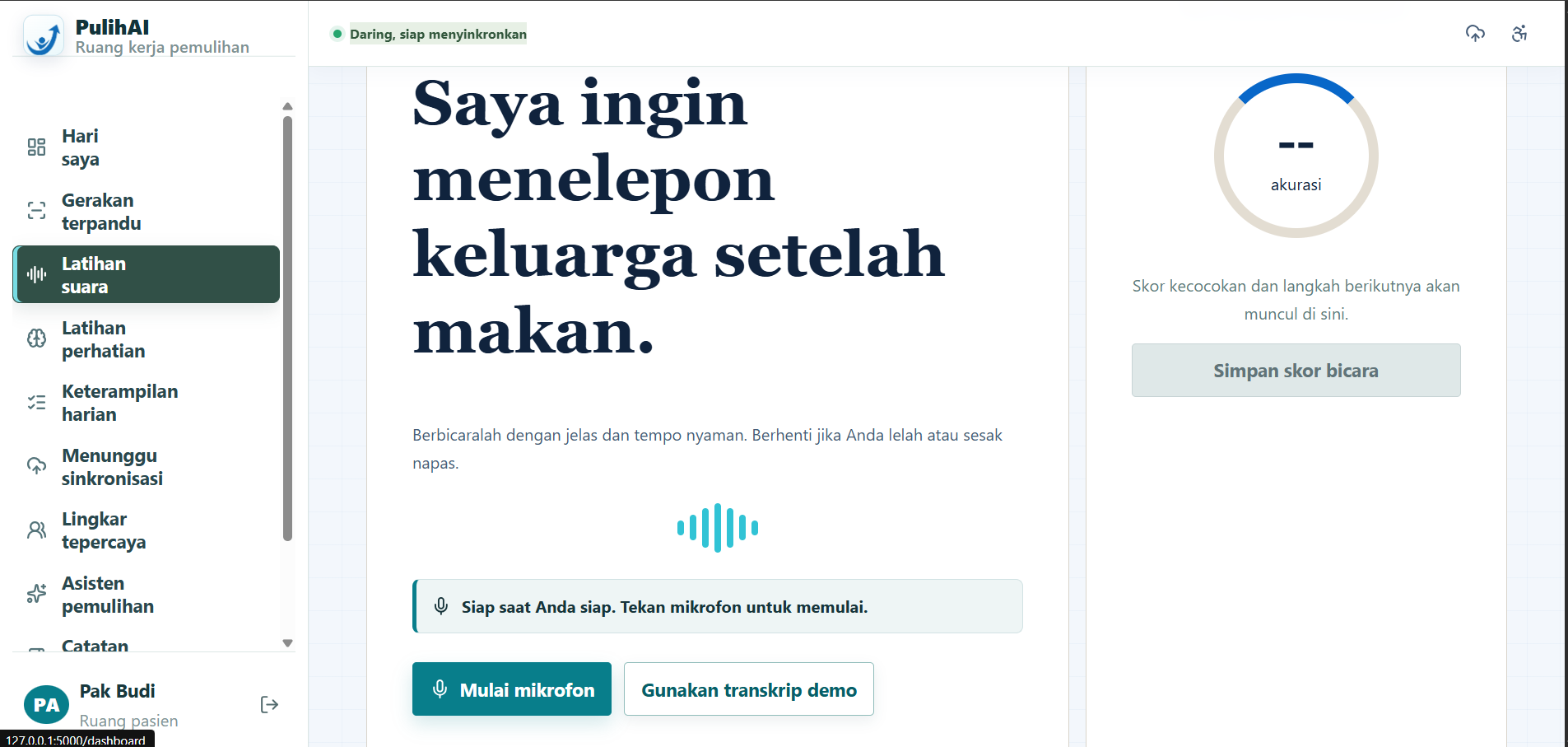
Patients practice useful everyday sentences using their microphone and receive clear feedback that can be saved to their recovery record.
-
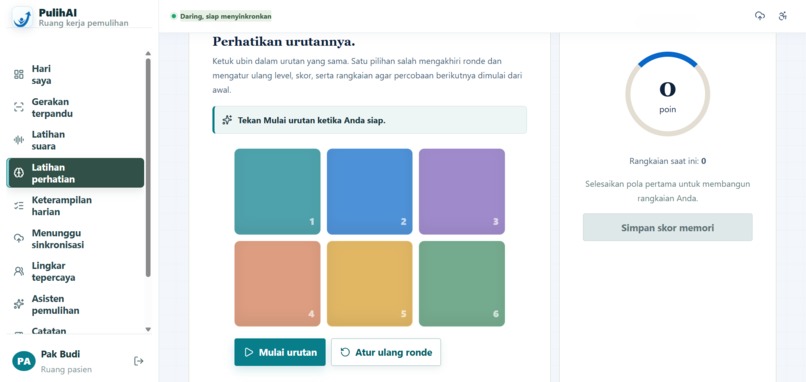
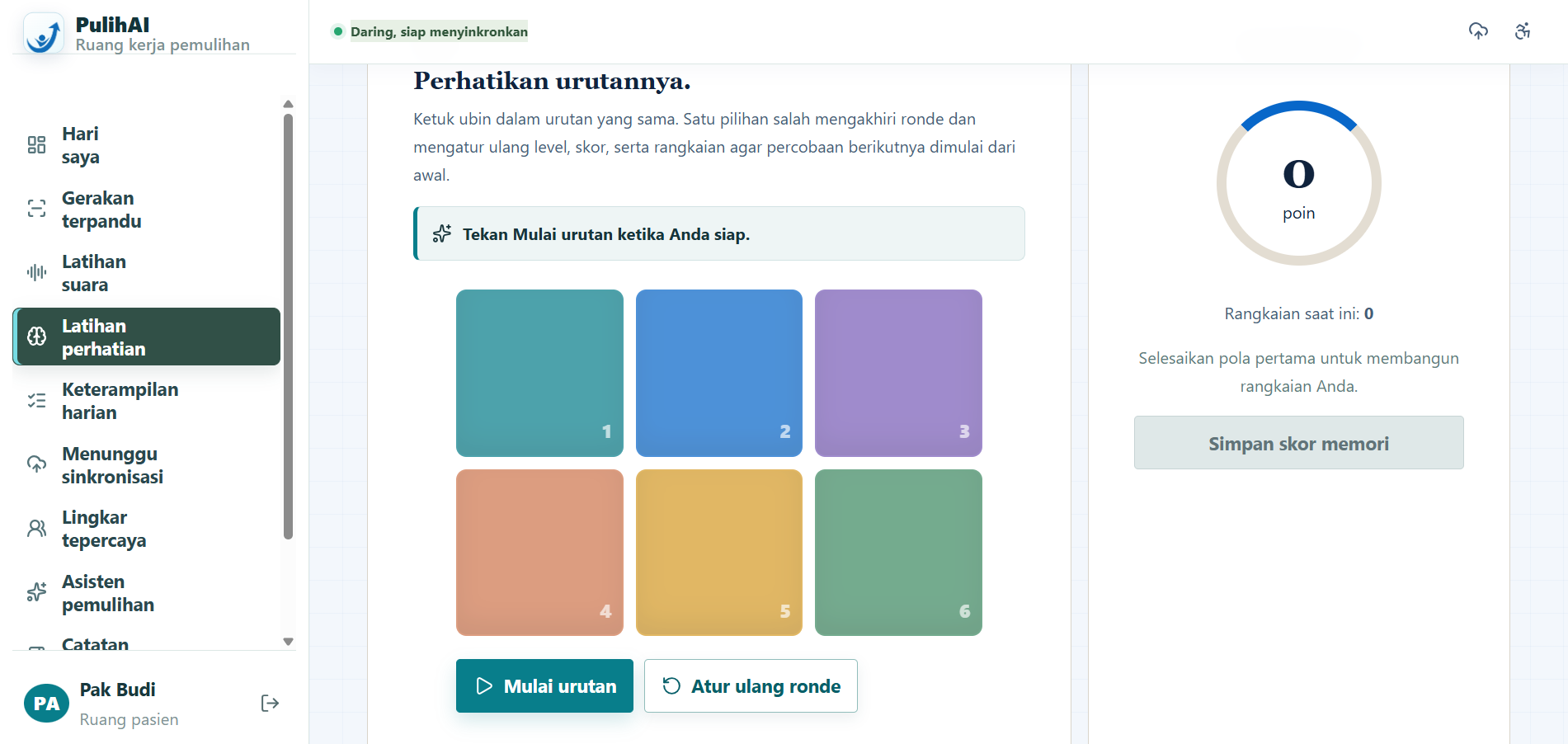
A progressive sequence activity helps patients exercise attention and memory, with scores and streaks recorded as part of their progress.
-
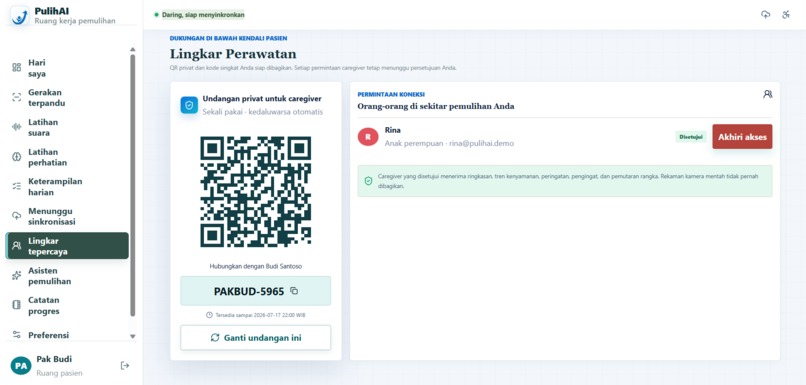
Patients invite trusted caregivers through a temporary QR code or access code, and revoke access whenever they choose.
Inspiration
Rehabilitation rarely ends when a patient leaves the clinic. Much of the real work happens at home, where instructions can be difficult to remember, internet access may be unreliable, and family members often want to help without knowing what support is appropriate.
We kept returning to one question: what would recovery look like if the technology respected the reality of home life?
PulihAI began as an attempt to make the time between clinic visits feel less uncertain. We wanted patients to receive clear, practical guidance while staying in control of their information. We also wanted caregivers to offer meaningful support without becoming supervisors or seeing data the patient never approved.
The result is a private rehabilitation workspace designed around continuity, consent, and everyday independence.
What it does
PulihAI brings four parts of home rehabilitation into one connected experience:
- Guided movement, with camera-based pose tracking and exercise-specific feedback.
- Voice practice, with varied phrases, speech feedback, and clear indicators when words or meaning change.
- Attention and memory practice, with progressive sequence exercises and saved results.
- Daily living check-ins, covering practical activities such as mobility, dressing, meals, and household tasks.
Patients can follow a daily plan, review long-term progress, and continue recording activities when their connection is interrupted. Pending activity is kept separately for each account and synchronized when the connection returns.
Through the Care Circle, patients can invite a caregiver using a code or QR. The caregiver receives no recovery information until the patient approves the request, and that permission can be withdrawn at any time.
PulihAI also includes reminders, shared care tasks, progress records, private skeleton replay, bilingual preferences, elderly mode, voice guidance, reduced motion, and a rehabilitation-focused AI explainer.
How we built it
We built PulihAI as a Flask application with SQLite, Jinja templates, responsive CSS, and browser-side JavaScript.
Motion Studio uses MediaPipe Pose Landmarker directly in the browser. Camera frames remain on the device. PulihAI saves only derived movement metrics and, when the patient allows it, compact skeletal landmarks for privacy-focused replay.
We developed movement logic for landmark visibility, smoothing, start and finish holds, minimum repetition duration, incomplete movement rejection, range-of-motion support, and selection of a safe representative repetition.
Offline activity uses an account-scoped queue for movement, speech, memory, daily living, settings, Care Circle actions, and caregiver tasks. The server validates the signed-in role, consent relationship, and duplicate identifier before accepting synchronized operations.
We used scikit-learn to demonstrate support signals for adherence risk, reminder timing, movement quality, and recovery trends. These models use deterministic synthetic data created for the prototype. They are engineering demonstrations, not clinically validated medical models.
Gemini provides plain-language rehabilitation explanations through the Flask server. Deterministic safety rules run before any provider request, unrelated questions are rejected, and a clearly labeled local fallback remains available when Gemini cannot respond.
Challenges we ran into
The hardest challenge was making camera tracking feel dependable instead of merely impressive. A visible skeleton is not enough. We had to distinguish a completed repetition from partial movement, occlusion, unsafe speed, or a person moving outside the frame.
Offline support introduced another layer of complexity. Queues had to remain isolated between patients and caregivers, survive refreshes, reject duplicates, and preserve consent boundaries after synchronization.
Care Circle also required more than an invitation form. Every caregiver route needed object-level authorization so that knowing an identifier would never be enough to access another patient’s information.
Finally, we had to keep the AI useful without allowing it to behave like a general-purpose chatbot or medical authority. That meant combining provider responses with deterministic scope checks, red-flag escalation, strict context limits, and honest fallbacks.
Accomplishments that we're proud of
We are proud that PulihAI became one connected workflow rather than a collection of isolated demos.
A patient can enter through one-click demo access, complete activities across four recovery modes, continue during an outage, synchronize the results, invite a caregiver, approve exactly what is shared, and receive a progress explanation based on the same account record.
The caregiver can then review approved progress, create practical support tasks, receive relevant notifications, inspect a skeleton-only replay, and prepare a WhatsApp reminder that is never sent without manual confirmation.
We are also proud of the less visible work: role authorization, CSRF protection, password hashing, account-scoped queues, duplicate prevention, local vision assets, explicit AI boundaries, third-party disclosures, and 19 automated acceptance tests.
What we learned
We learned that resilience is part of the user experience. Saving work during an outage is not only an infrastructure feature; it gives patients confidence that their effort will not disappear.
We learned that consent must remain visible and reversible. A single approval screen is not enough when health-related information continues to change over time.
We also learned that model accuracy is not the same as medical value. A prediction only becomes helpful when its inputs, limitations, and practical meaning can be understood by the person receiving it.
Most importantly, we learned that rehabilitation technology should support human relationships without trying to replace them.
What's next for PulihAI
Our next step is to move beyond synthetic demonstration data through collaboration with physiotherapists, rehabilitation specialists, patients, and caregivers.
We want to validate movement thresholds across different bodies, devices, lighting conditions, and home environments. We also plan to conduct formal accessibility testing, strengthen security and data-governance controls, and evaluate the product through a supervised pilot.
PulihAI will remain informational until proper clinical review and validation are completed. The long-term goal is not to replace professional care, but to make the approved work between visits easier to continue, understand, and share.

Log in or sign up for Devpost to join the conversation.