-
-
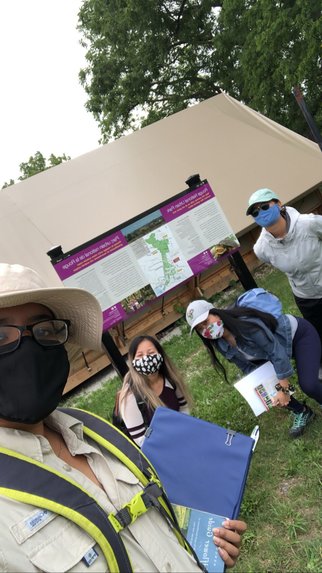
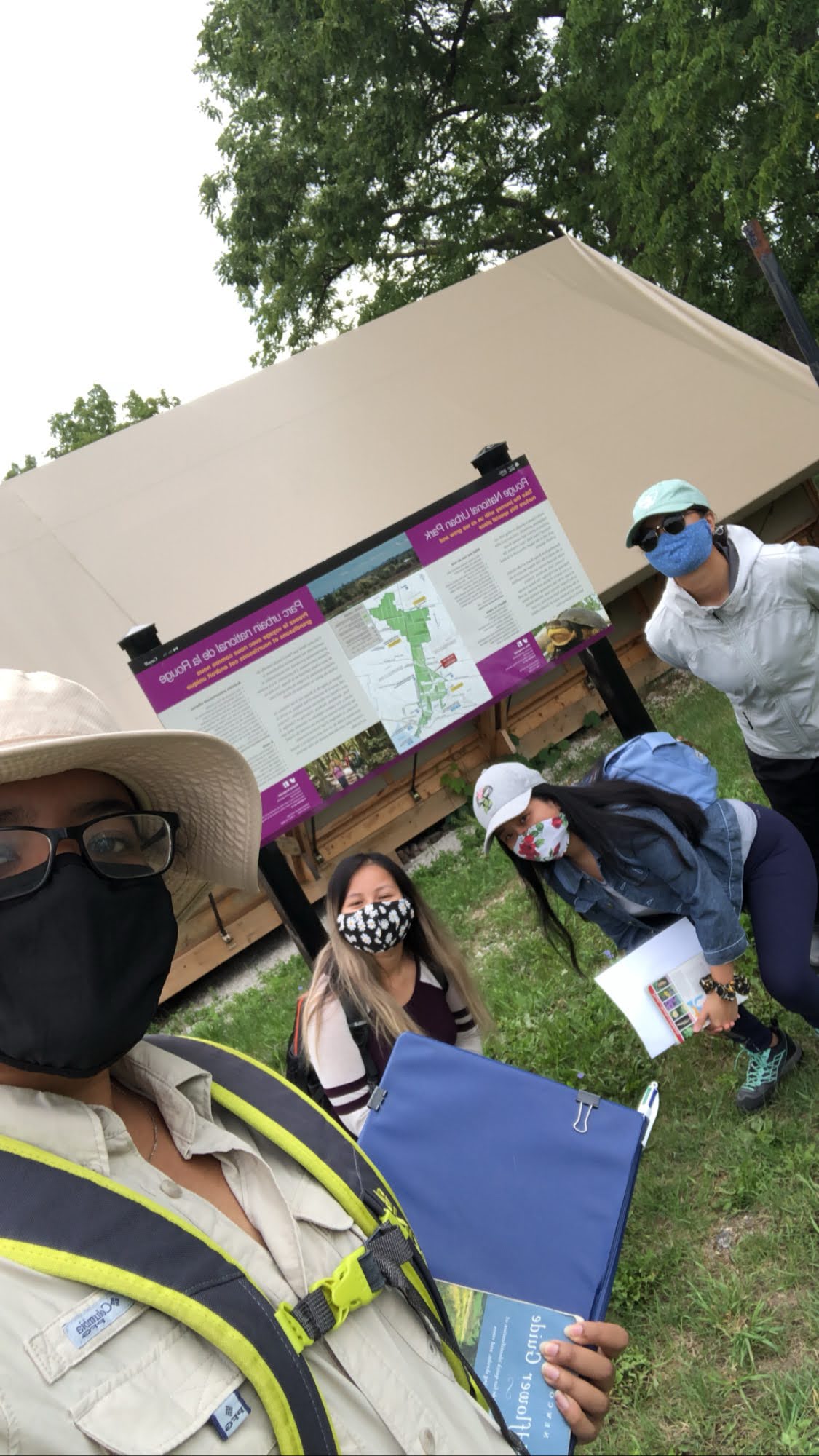
Meet the team! (Left to right: Mariah, Christine, Mary, Alliza)
-
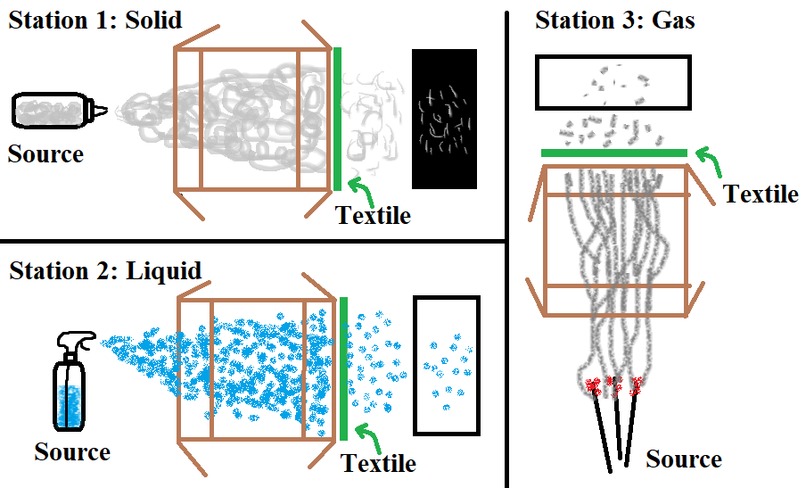
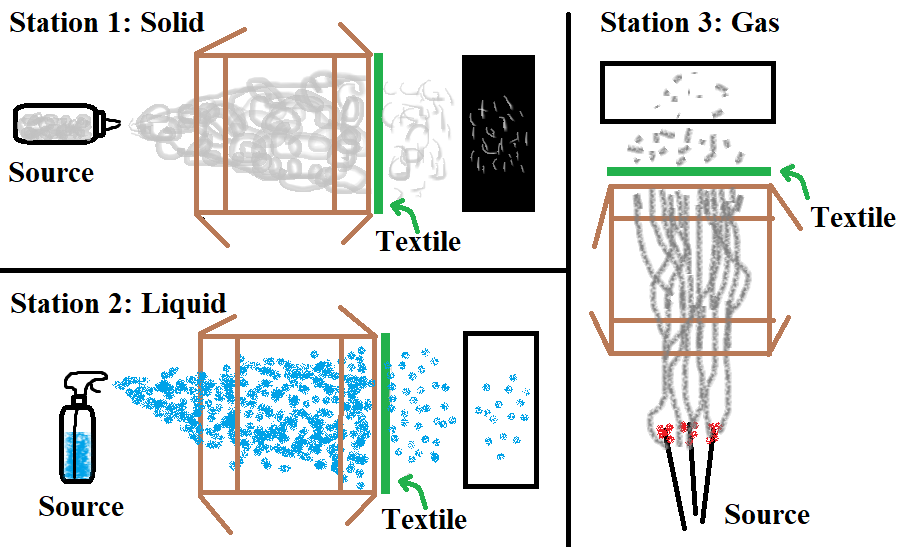
The textile portion of our experiment! Looking at the effectiveness of fabrics with different states of matter.
Inspiration
The inspiration for our project comes from the lived-experience of one of our team member's grandmothers, who has a first hand experience of the low air quality and large amounts of textile waste in the Philippines. The annual mean concentration of PM2.5 (particulate matter that has a diameter of less than 2.5 µg) in the Philippines is 18.4 µg/m3, exceeding the World Health Organization’s air quality guidelines of 10 µg/m3. Therefore, air quality in the Philippines is deemed as moderately unsafe. Textile waste is also another prominent issue because a third of Filipinos have discarded clothing that they’ve only worn once. We wanted to design a project that can educate about these issues, but also help to combat these problems.
Additionally, inspiration for our project comes from the UN Sustainable Development Goals:
- UN SDG #3: Good health and well-being; ensure healthy lives and promote well-being for all at all ages (Specifically,
Target 3.9 By 2030, substantially reduce the number of deaths and illnesses from hazardous chemicals and air, water and soil pollution and contamination)
- UN SDG #11: Sustainable cities and communities; make cities and human settlements inclusive, safe, resilient and sustainable
- UN SDG #4: Quality education; ensure inclusive and equitable quality education and promote lifelong learning opportunities for all
What it does
Our multi-part experiment consists of four components:
1) Mechanical lung demonstration: aimed to mimic a real human lung and can be used to discuss negative pressure
2) Distance and particle spread exercise: to learn about the relative motion of particles through air
3) Data collection exercise: to discuss about the importance of having a randomized experimental design
4) Textile exercise: to inspire thoughts about how to re-use textile waste
How we built it
We created a mechanical lung using a plastic bottle and balloons. We also developed exercises using flour, water, and incense to observe particles on a sheet with Vaseline.
Challenges we ran into
There were difficulties trying to ensure that our project incorporated multiple scientific components that aligned with the Philippines Science Curriculum. We also wanted to ensure our experiment was sufficiently complex for high school students in the Philippines, while keeping the costs of our project at a minimum. We also ran into issues with finding the best materials. For instance, flimsy water bottles were not strong enough to support a balloon, so we had to use a sturdy soda bottle instead.
Accomplishments that we are proud of
We are proud to have collaborated in designing a fleshed-out experiment from a short term idea in the span of two weekends, continually improving our experiments with feedback from the Hackathon mentors. We are also proud to have incorporated multiple reusable items from home and cheap, accessible items from stores for our project.
What we learned
We learned about the state of air quality and textile waste in the Philippines, how to design a comprehensive scientific experiment for different age groups, and many transferable skills from the workshops we attended.
What's next for Team MCFAM
Our team is graduating from the Master of Environmental Science program from the University of Toronto Scarborough in November 2020!
Built With
- google-docs
- google-sheets



Log in or sign up for Devpost to join the conversation.