Inspiration
While we all know we should be washing our hands more often, the reality is no one has the time to be running to a sink every few hours. When lunch time rolls around, most people care more about the food that they're eating than the cleanliness of their hands. Especially now, with the recent outbreak of the Wuhan Corona virus, it is more important than ever that we pay close attention to the risks of unhygienic practices, and do our part in reducing their threat.
What it does
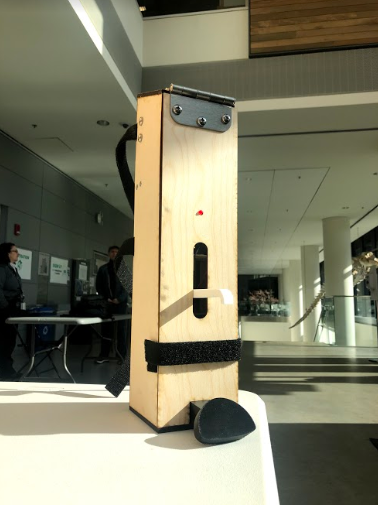
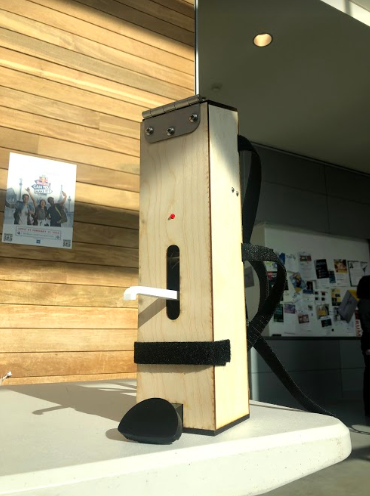
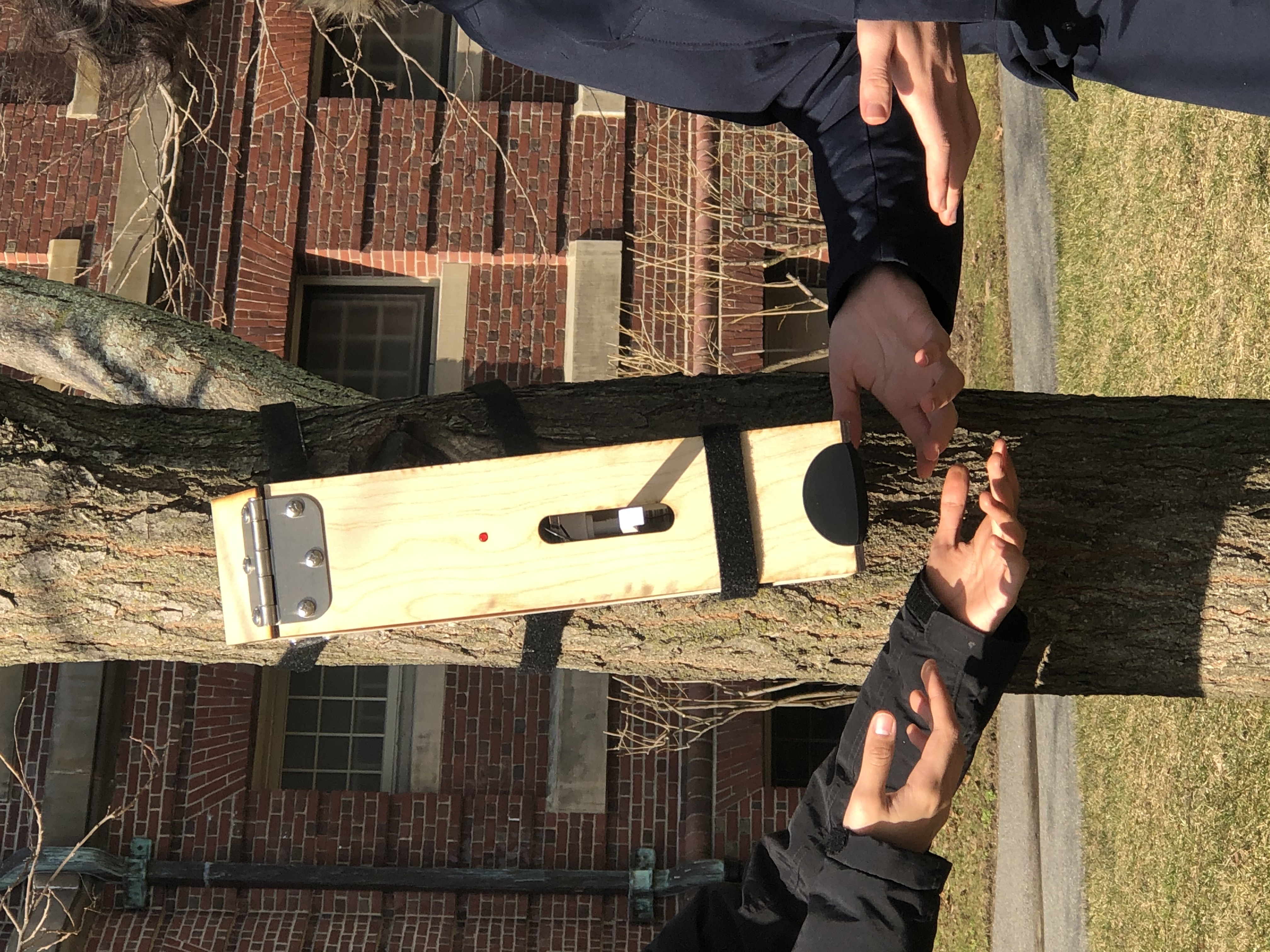
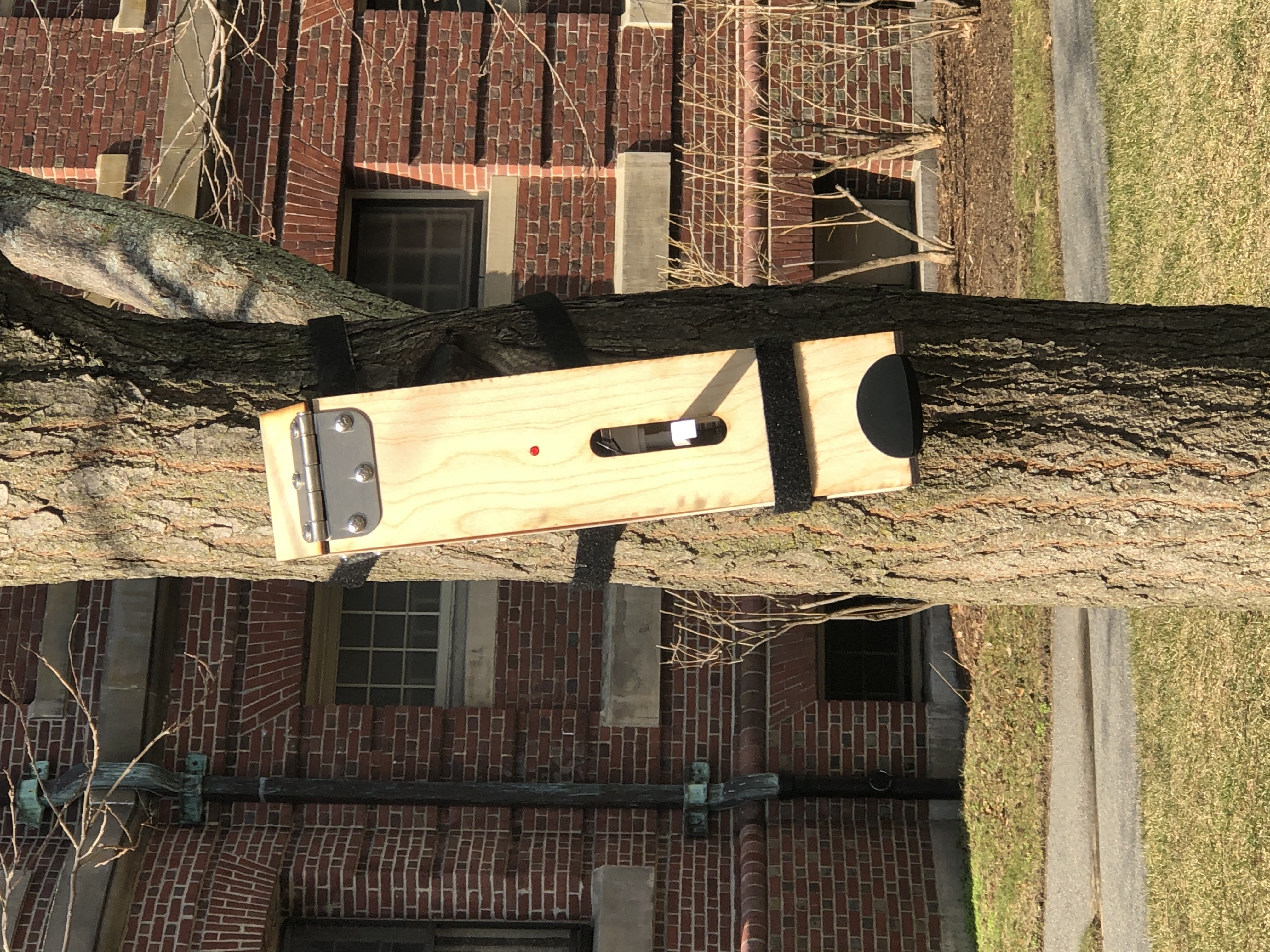
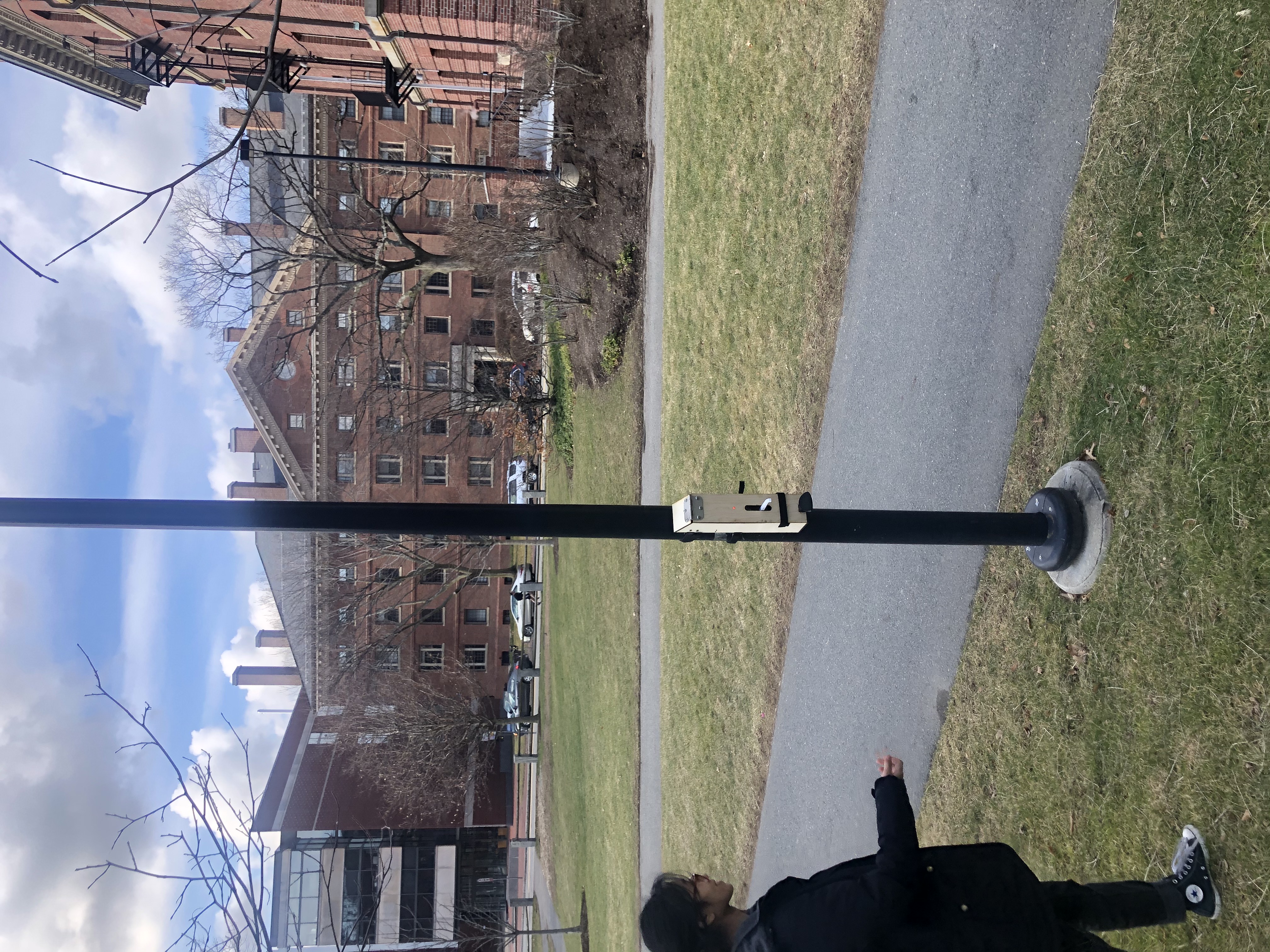
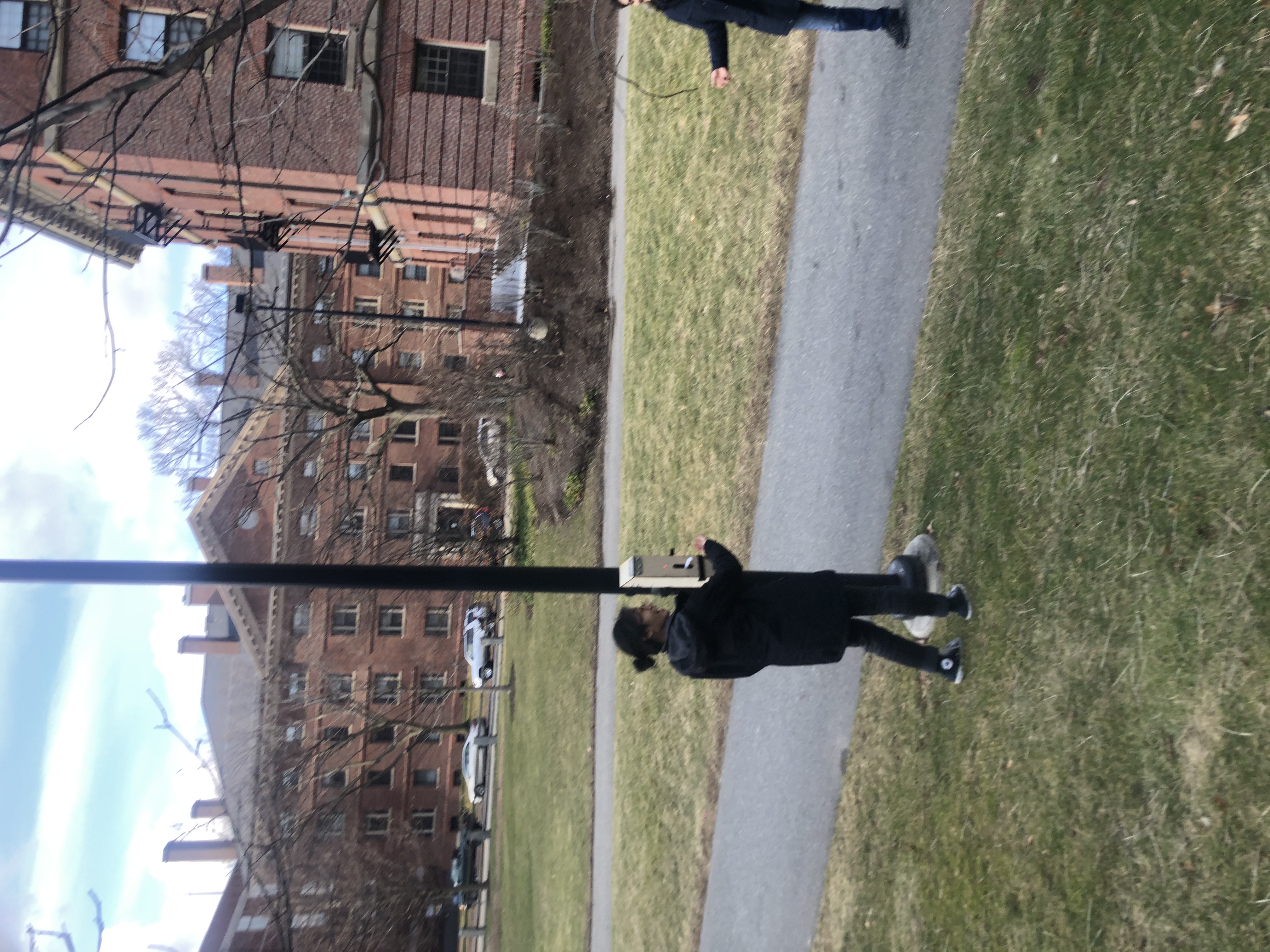
Public Purell (PP) makes hand sanitation convenient and accessible. It's unique dispensing mechanism means that people can sanitize without directly touching the dispenser, instead using the back of their forearm or elbow. As a result, people won't be risking the cleanliness of their hands (arguably the most susceptible body part to many infectious pathogens). Additionally, its adjustable straps and weatherproof casing means that the PP can be placed in a variety of public spaces, whether it be on a traffic light pole in a busy intersection or on a lamp post in a public park. It's so adaptable and mobile, it may as well be a backpack. Of course, in order for the PP to make any noticeable impact on public health, it needs to be used at a rather large scale. Luckily the PP has a built in sensor that clearly indicates to public health officers when it needs to be refilled-- making its maintenance as simple as its mechanism. Most important of all, the PP sends a powerful reminder to the public that they are all members of the same community-- members who have an obligation to care for their own well being in order to prevent the affliction of a neighbor.
How we built it
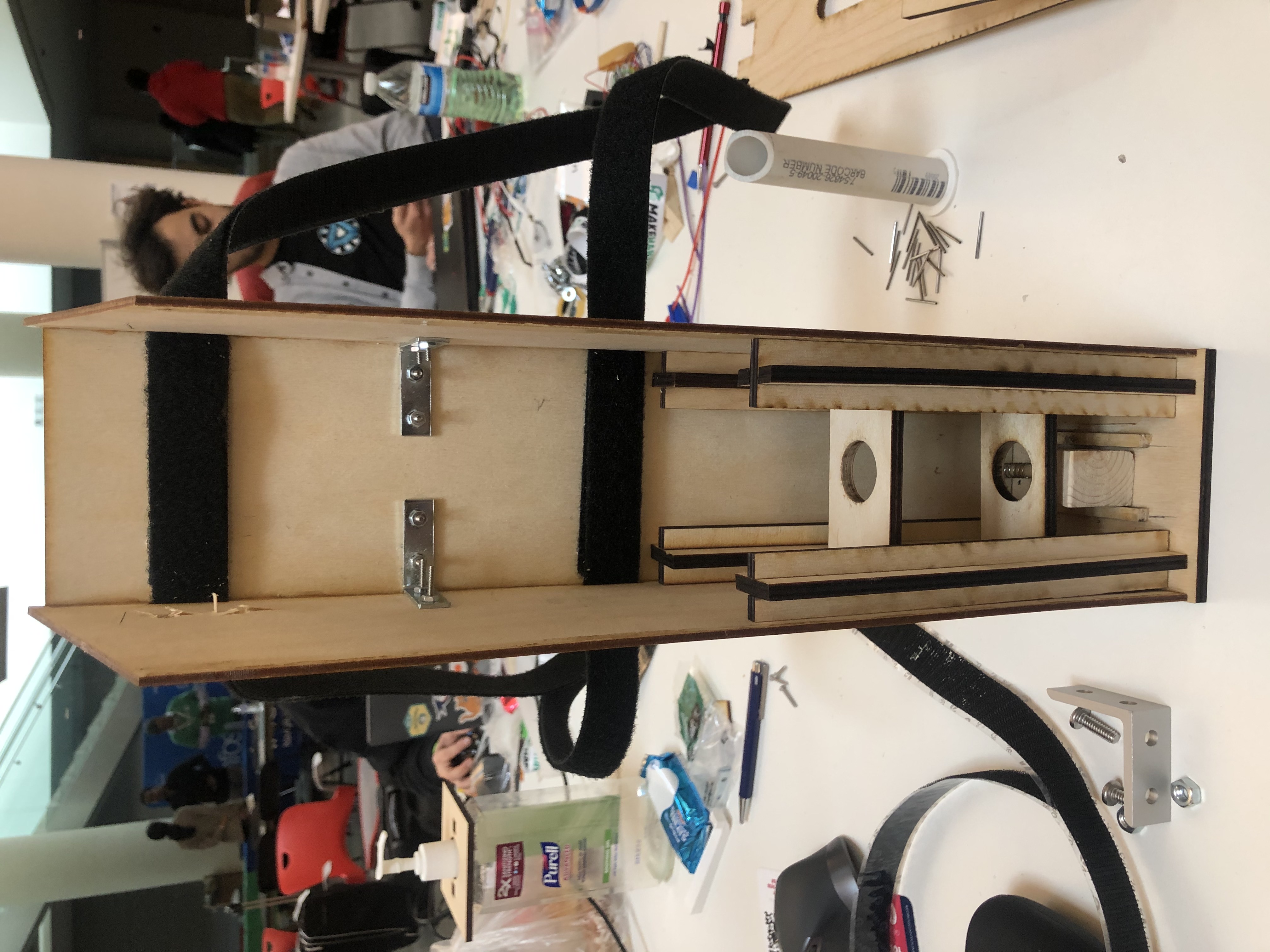
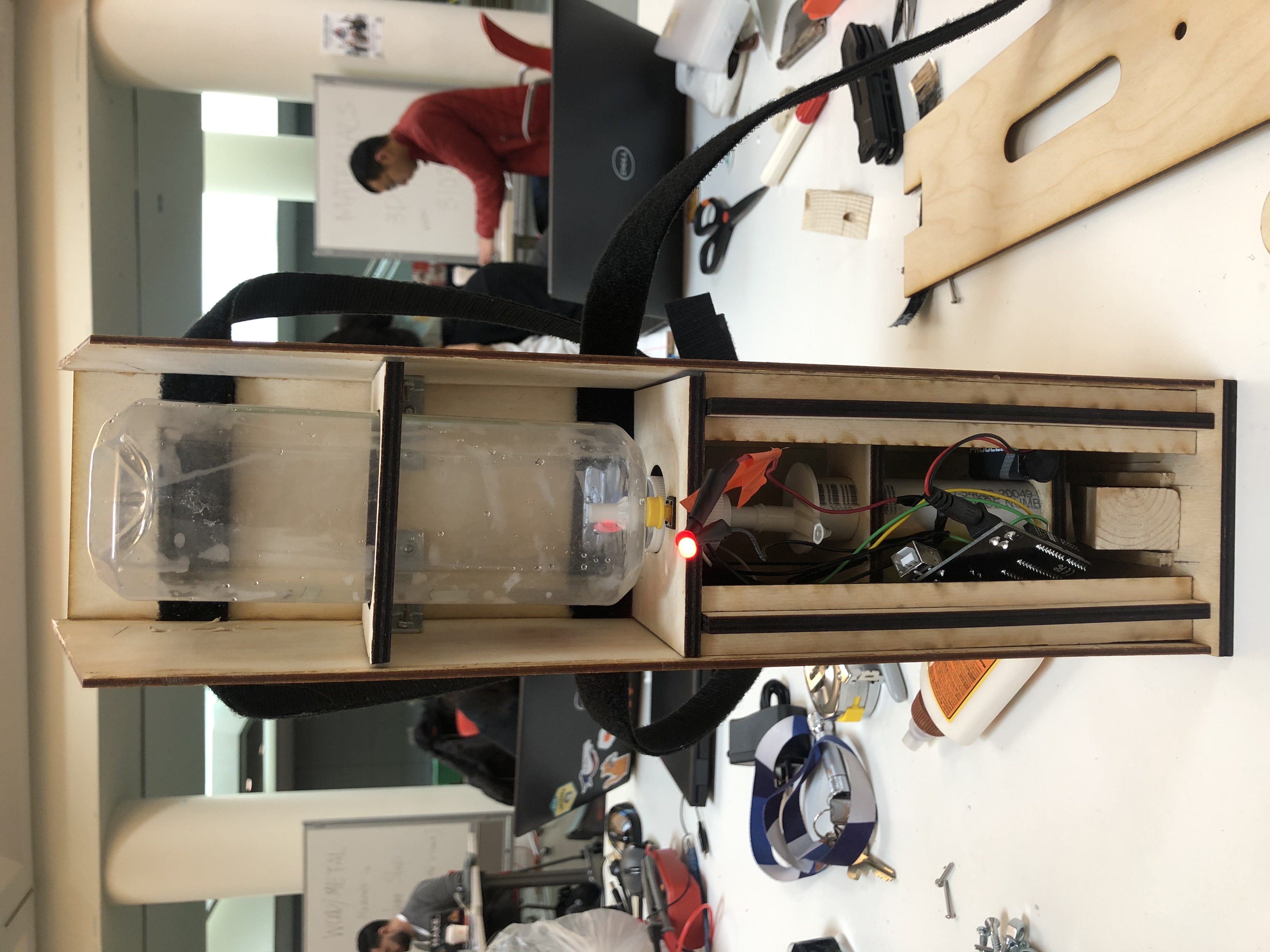
Using Autodesk Fusion 360, we designed parts to be 3D printed and laser cut. The electronics/software aspects are rather simple-- two buttons indicate the weight of the dispenser, which in turn tells us how much sanitizer is left. When the bottle isn't heavy enough to push down both buttons anymore, a red LED turns on, indicating that the PP is in need of a refill (since they ran out of flex and force sensors, we had to improvise using buttons instead). Everything was programmed using an "Arduino UNO" (actually and elegoo uno).
Challenges we ran into
We initially wanted to 3D print a frame, and use acrylic laser-cut parts to assemble our PP. However, after discovering that it would take 3+ days to 3D print all the parts we wanted, we switched to plywood laser-cut parts instead. When it came time to laser-cut files, we were dismayed at the long wait-time ahead of us, and the fact that teams were allowed to hoard the laser cutter for more than an hour to cut spare parts, despite the long queue.
We also struggled a lot with using the ESP8366 wifi module. None of us had any significant experience with Arduinos and coding, and it took a while to figure out that our problem was that we needed a 5-3V logic converter before we could start programming it. We then discovered that all of the converters had been taken, and spent even more time online trying to find alternatives. Ultimately many of our difficulties came from a lack or shortage of materials.
Accomplishments that we're proud of
Given that all of us are freshman, and 3/4 people on this team had never been to a Hackathon before, we are quite proud of the final product. Although our project definitely isn't as technically advanced or widely scoped as other teams, we'd still agree that our project was well worth the time and effort put into it. Additionally, we finished with enough time to write a decent devpost, and didn't drive each other crazy in the process. Another plus was that many of us worked with new technologies and even if no fruition ultimately came of it, we weren't discouraged.
What we learned
Don't try to 3D print all your parts at a 24 hour Makeathon. Fast prototyping and iteration is important. Start and stick with a clear MVP. Sleep and mental health is more important than a completed project.
What's next for Public Purell
There were several mechanisms we wanted to incorporate and didn't get a chance to. For instance, we wanted to use the ESP8366 WiFi module, or some other form of wireless device, to allow for communication between the PP and a server. Doing so would let city health officials easily monitor which PPs need to be refilled online, making their jobs significantly easier. We would also like to experiment with different casing and strap materials, and swap out the current MakeHarvard provided materials for something more durable. Ideally, we would also find a way to sustain battery life (such as a solar panel) to allow for automatic dispensing, and prevent physical contact with the PP altogether. If one were to actually implement the PP, they would also likely need tools to determine where the PP would be most effective at its job of eliminating germs.
Built With
- 3d-printing
- arduino
- autodesk-fusion-360
- laser-cutting
- plywood
- velcro

Log in or sign up for Devpost to join the conversation.