-
-
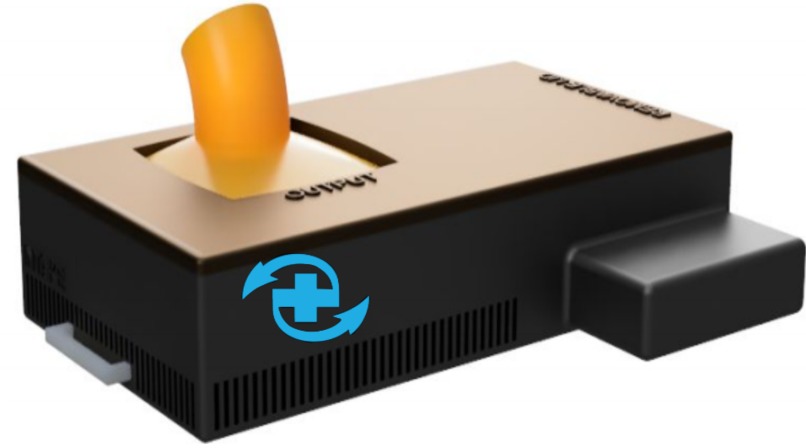
3D Model
-

-
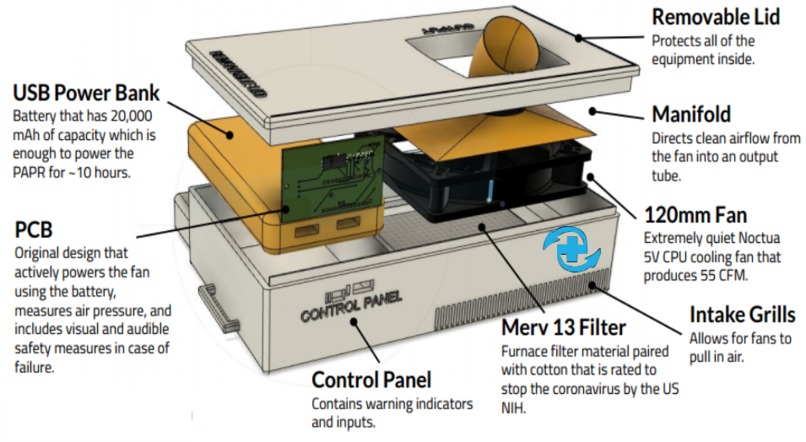
Our Design
-
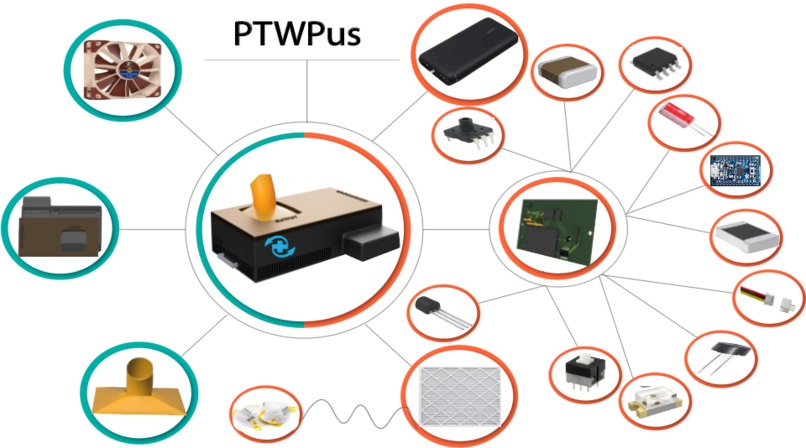
-
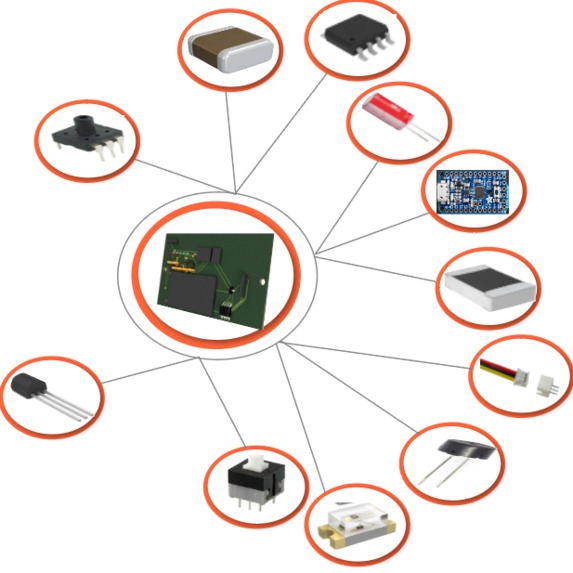
Electronics & PCB Overview
-
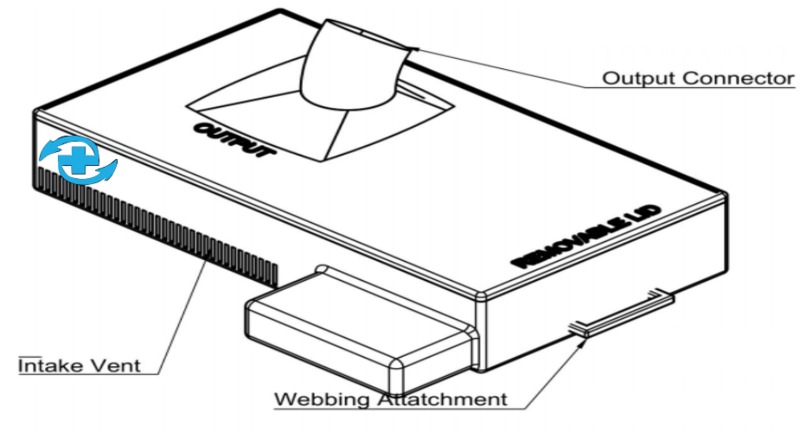
Cross Sectional Analysis
-
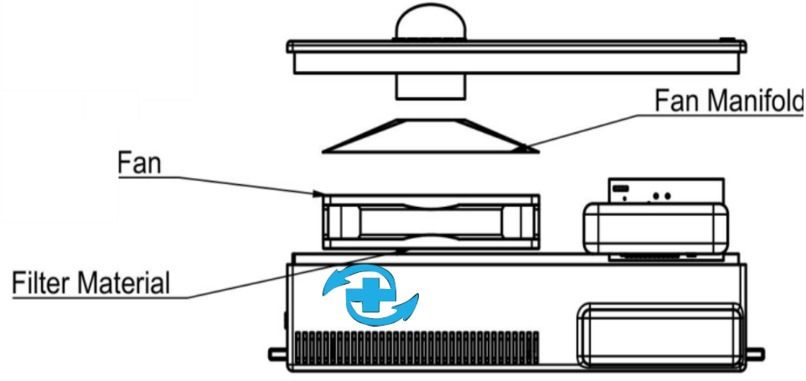
Cross Sectional Analysis
-
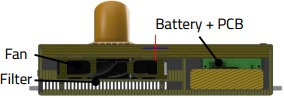
Cross Sectional Analysis
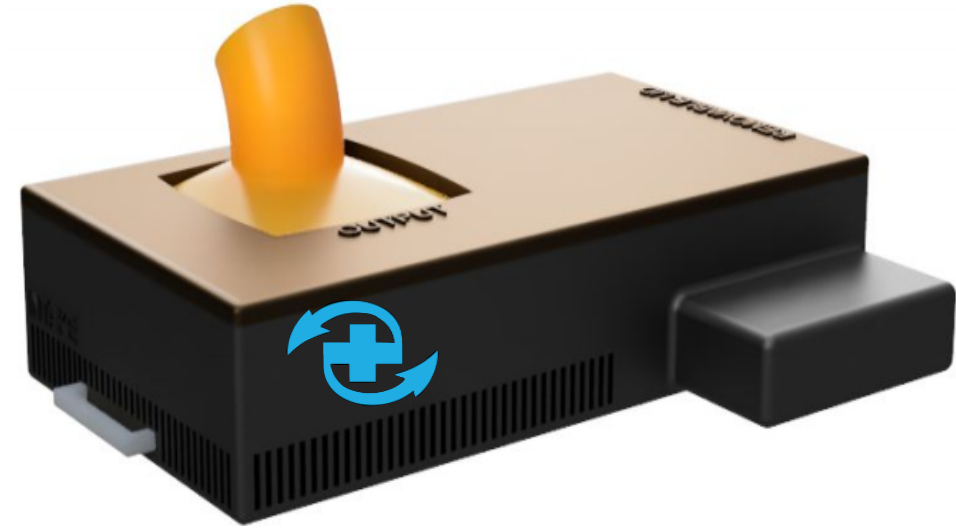

Inspiration.
In light of the recent COVID-19 crisis, Medical professionals are facing a massive shortage of proper Personal Protective Equipment (PPE) to protect themselves from COVID-19. Although N95 masks or powered air purifying respirators (PAPRs) are optimal for protection, most health care workers do not have access to these and are forced to use surgical masks that do not provide adequate filtration. Even when available, N95 masks do not fit well on many people’s faces, requiring them to use a PAPR unit to stay well protected. Current PAPR units sell for $900+ USD. This high price paired with an extreme shortage of units means that medical workers do not have access to the protection they need. Fortunately, there is no shortage of PAPR hoods, allowing me to focus on creating a cheaper PAPR body that could be readily available.
What is PTWPus?
PTWPus is an alternative to current PAPR unit. PTWPus is designed to replace the pump unit (air pump, battery, filter, and electronics controller), as a hood redesign is not needed as these are still readily available. PTWPus was made with economy and reproducibility at home. All of its components have the ability to be easily found or produced by the average person to allow for crowdsourcing of more units. It gives the Access to an open-source, 3D printable PAPR unit (that can be paired with existing hood supplies) allows medical workers and others better protection and access to clean, filtered air. It more affordable than existing PAPR units, while still maintaining all of the same safety features.
What are PTWPus components? How does PTWPus works?
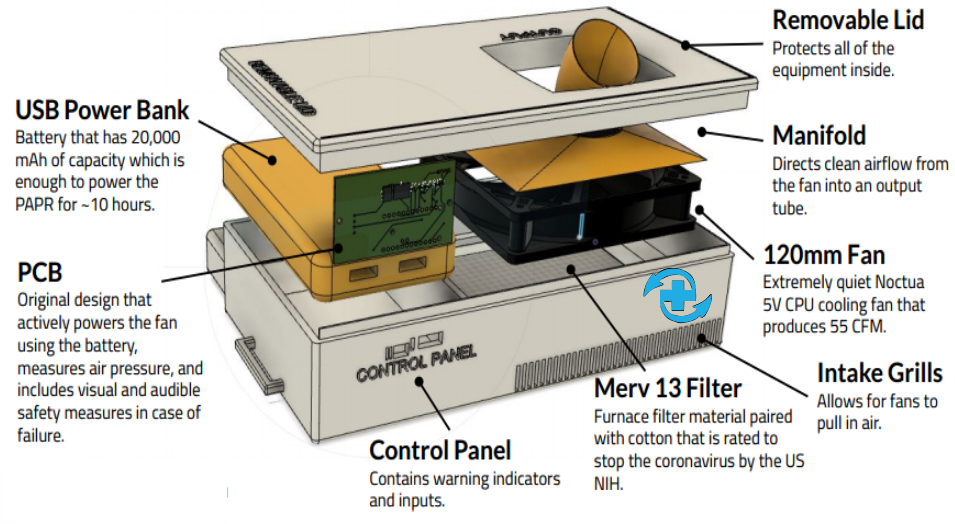
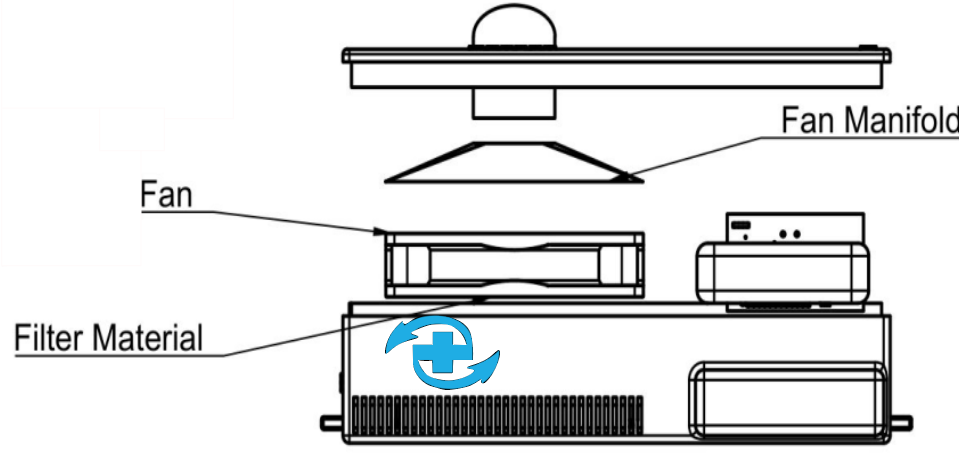
PTWPus consists of USB Power Bank that has 20,000 mAh of capacity which is enough to power the PAPR for ~10 hours, PCB (Original design) that actively powers the fan using the battery, measures air pressure, and includes visual and audible safety measures in case of failure, Control Panel that Contains warning indicators and inputs, Merv 13 Filter (Furnace filter material paired with cotton) that is rated to stop the coronavirus by the US NIH, Intake Grills that Allows for fans to pull in air, 120mm Fan (Extremely quiet Noctua 5V CPU cooling fan) that produces 55 CFM, Manifold that Directs clean airflow from the fan into an output tube ,and Removable Lid that Protects all of the equipment inside.
Electronics & PCB Overview.
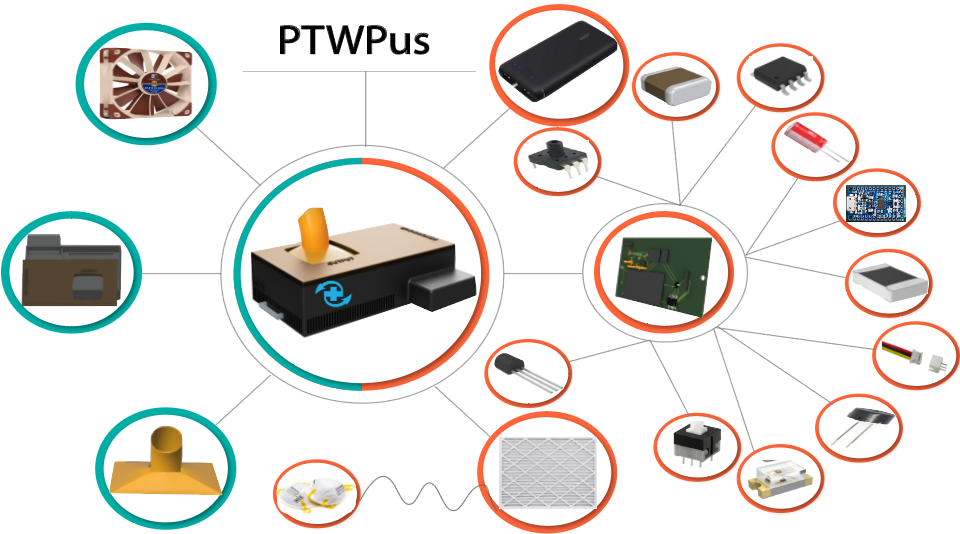
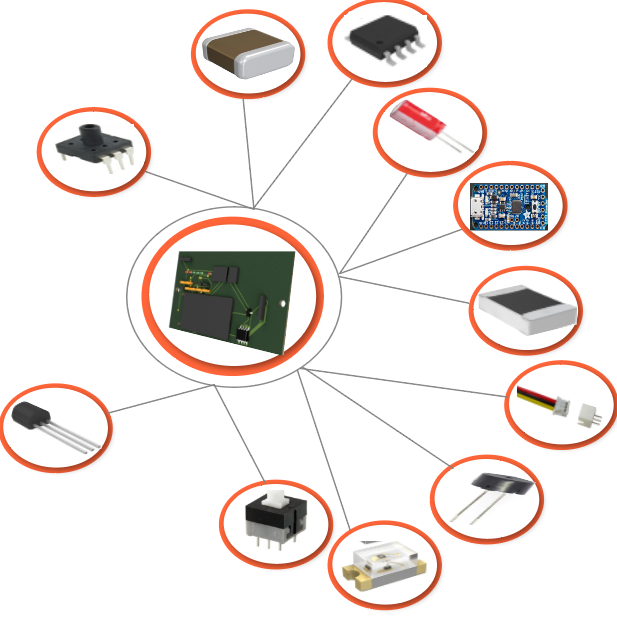
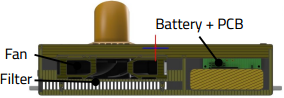
My electronics design consists of a printed circuit board with a Pro Trinket Microcontroller, a pressure sensor, and a temperature sensor. The Pro Trinket is able to monitor airflow through the pressure sensor and adjust fan speed accordingly. If the airflow still remains low, it alerts the user of low airflow, both through the use of audible and visual alerts. It also has a temperature sensor that allows the device to automatically shut off if the temperature exceeds the safe operating temperature range, allowing for safe usage of the device. The user is alerted if the device overheats through an audible alert as well. In addition, a filter life indicator of 5 LEDs signifies when it must be replaced. After replacing the filter, the user presses a button to reset the filter indicator, and it has a buzzer which produce the sound, Amplifier which increase signal strength to communicate wirelessly, and capacitor which capacitance of electric charge.
Mechanical Overview.
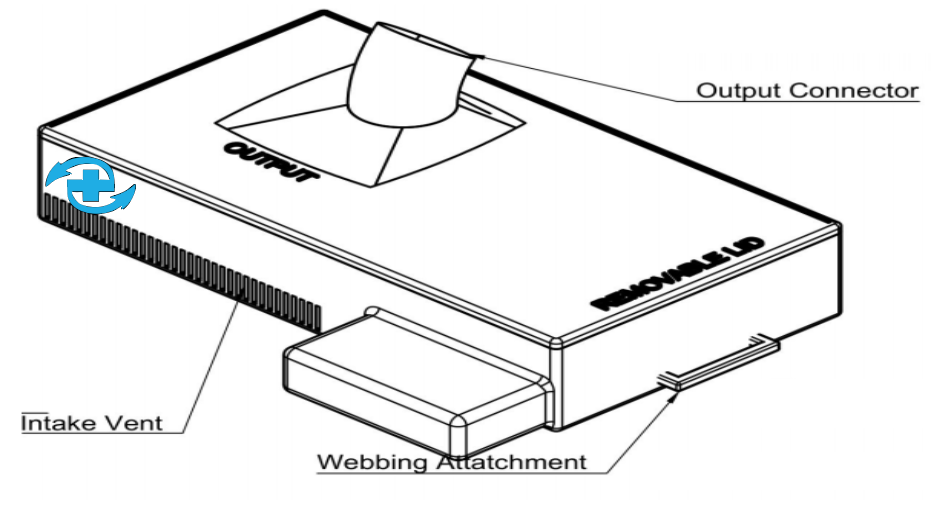
The PTWPus utilizes a 120mm computer fanin a parallel configuration to the case. Air is drawn in from the section of the case closer to the user’s back and pulled through a set of Merv 13 furnace filters before being sent through the tube to the hood of the PAPR. I chose to utilize the MERV furnace filter due to the fact that a MERV 13 and a N95 mask have equivalent success rates of being able to be able to block more than 95% of 0.3 micron particles from passing through the filter substrate. In accordance with the NIH approved specifications for MERV filters as N95 replacements, 5 layers of MERV fabric are sandwiched between two layers of cotton and stretched tight under the fan. The case is divided into two compartments: a ‘hot’ compartment houses the filter and fan, and a ‘cold’ compartment houses the electronics and battery. This allows for easy disinfection and cleaning as only half of the case has been exposed to potentially contaminated air. Ease of manufacturing was a key design element I had to work around when working on our project.
PTWPus results.
This design optimises low costs and is designed to be available to any hospital. In addition, PTWPus is smaller than other PAPR devices while still maintaining ~10 hours of battery life and containing all of the same visual and audible safety measures. At the time of writing, the cheapest 3M equivalent costs $908 USD. A major keystone of our design was our drive to release the PTWPus as a DIY kit that could be produced cheaply and easily by makers and engineers at home using only a 3D printer and a soldering iron with readily available components. By producing the PTWPus at home, the design is able to make it into the hands of frontline workers much faster. And for the price of the items lets lesson down: -USB Power Bank: $28.99 -PCB: $29.77 -Merv 13 Filter: $19.17 -120mm Fan: $19.90 -Case, lid, and manifold (3D printed): $5 Resulted in a Total of $102.83
Design Process.
I designed the majority of PTWPus using Autodesk Fusion 360, a collaborative CAD program that allowed me to integrate the PCB, fan, filter, and battery into our design. I developed PTWPus over 50 versions and developed a lighter, more compact, and cheaper alternative to current Powered Air Personal Respirators on the market. I looked at pre-existing PAPR models, and examined the patents to see what features were included, so that I could provide a similar functionality at a lower cost. In addition, I also focused on easily manufacturable parts, which led to either3D printing or laser cutting as our manufacturing methods of choice. In the end, after consulting with our mentor, I went with 3D printing, as it would be accessible to more people. This allowed me design to be easily producible in bulk, at home, to help fill the shortage of PAPR units in COVID-19 medical facilities around the world. For our microcontroller, I looked for cheap and compact controllers that would be able to control the PAPR unit, starting out with the Arduino Uno. However, I later decided to switch to an Adafruit Pro Trinket. The Adafruit Pro Trinket microcontroller is both smaller and cheaper, while still offering enough performance and ports for our design. By utilizing Fusion 360, its timeline, and sketch based design functionality, it was easy for me to make edits to certain components quickly as we developed the design.
Challenges we ran into
This was the first time that i used Autodesk Fusion 360 and CAD program, so it was difficult to integrate the PCB, fan, filter, and battery into my design. i was confused to choose the best microcontroller. I encountered lots of issues thus with the work of CAD and CAM for the PCB, as I have a little experiences in it.
What we learned?
Throughout this project, there has been a large variety of learning The learning ranges from larger respect, love, and understanding for the health care workers and other front line workers during these tough times and uncertain times. During the hackathon duration i received a huge business lessons which help me understanding that the product not only took scientific and technological knowledge but it also required understanding the market, the market size, the target audience, unique selling point, competitive analysis, to name a few. Researching all of the above helped me gain insight into importance of my solution and gaining a more in-depth understanding of the targeted problem.
Accomplishments that I'm proud of.
In just Four weeks, I generate this idea, worked on the Fusion360 and CAD program with little experiences in both, made the CAD and CAM for the PCB. Get it validated by some medical professionals and make in consider their recommendations. Turning the cost from $900+ to $102.83 while still maintaining all of the same safety features.
What's next for PTWPus?
PTWPus is more than just a product, it is a gesture of mutual reciprocity. As the tag line reads "Protecting Those Who Protect Us", this mask of the future is aiming at helping the heroes of modern-day just as much as they have helped mankind through their tireless services. In the current stage of the product, it has a protection rate of 99.97%. Finally, PTWPus is not only protective toward the coronavirus but it is built to protect against any influenza virus, hence I further want to explore the possible usages and markets for the product beyond the current target.
Note:
This project isn’t for doctors and hospital workers only, anyone can use it to have the highest protection from COVID-19. These aren’t only all things , you build PTWPus with yourself, so you aren’t need to buy it. If you have problem in building your PTWPus, you could ask us through our Slack group





Log in or sign up for Devpost to join the conversation.