Inspiration
Teachers don’t need another chatbot that invents a lesson from nothing. They need their materials on the table curriculum, class notes, last week’s quiz — and their professional judgment in charge.
Every week, teachers rebuild the same kinds of documents: lesson plans, student guides, assessments, and rubrics. The work is repetitive, high-stakes, and deeply personal. Generic AI drafts often ignore the teacher’s sources, tone, and standards. tero exists to take that busywork off their plate without taking away control.
What it does
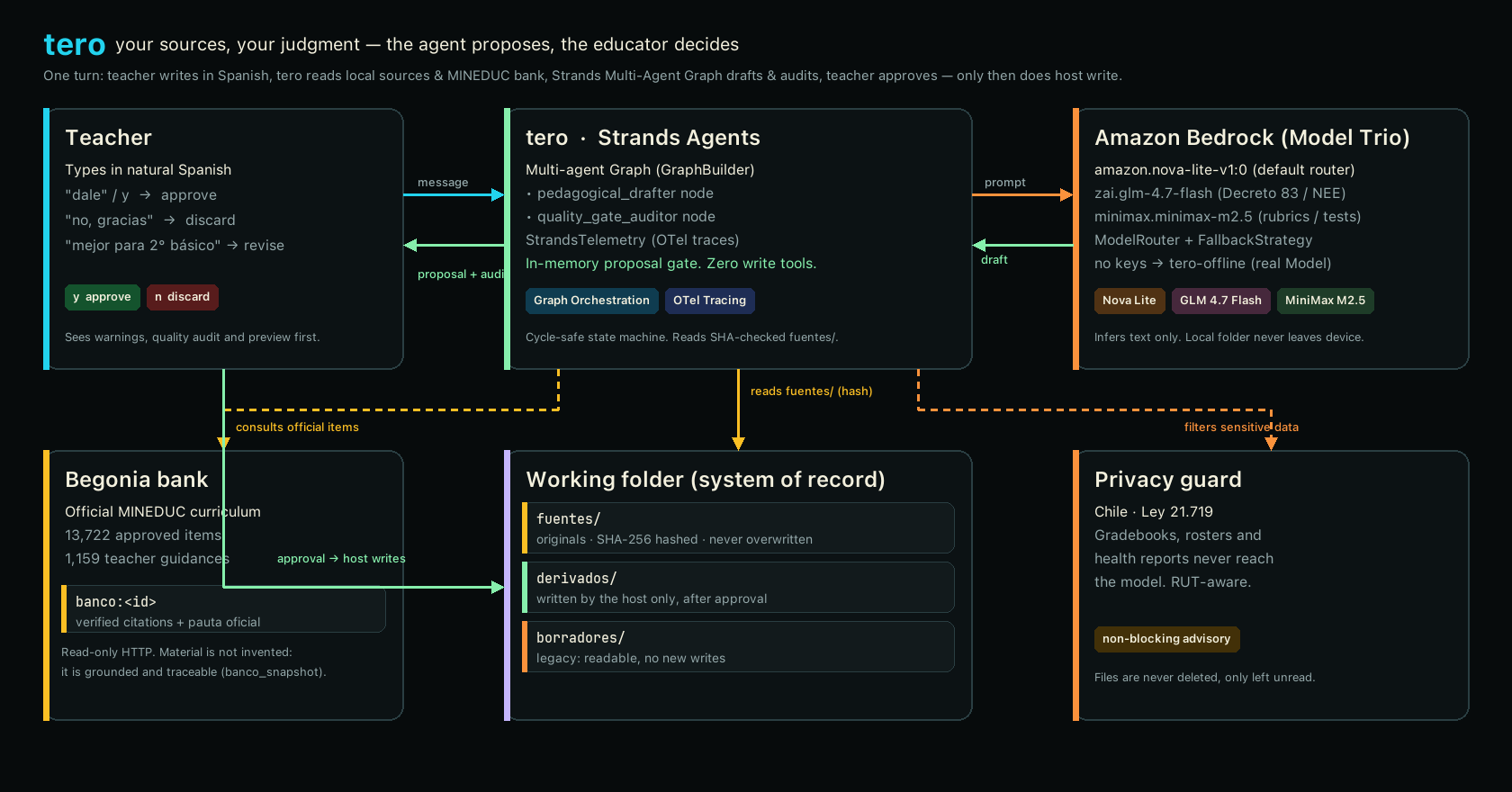
tero is a conversational teacher agent built with the Strands Agents SDK.
- Add context bring the teacher’s local source materials into the conversation.
- Review the proposal in chat, Strands proposes cited lesson material grounded in those sources.
- Decide before write — a human-in-the-loop gate (y/n/b) in chat. Only after approval does tero write under
derivados/. Originals stay untouched.
Thesis: the agent prepares; the teacher decides.
Live landing (GitHub Pages): https://marcorojasb.github.io/tero/
Public repo: https://github.com/marcorojasb/tero
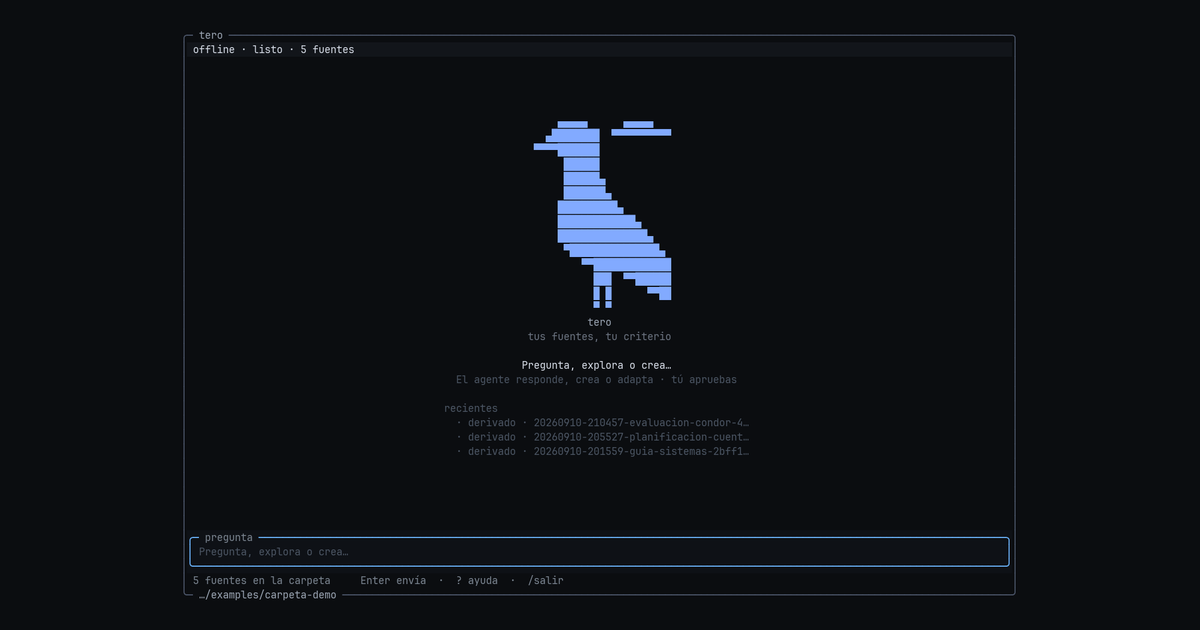
Judges can run offline: python -m tero demo --offline --yes
How we built it
- Strands Agents SDK orchestrates the conversational loop end to end.
- Tools support the teacher workflow: retrieve local context propose cited lesson material in chat → HITL gate write only to
derivados/. - Model path: Amazon Bedrock (Nova Lite) when online; offline demo path for judges without AWS credentials.
- Architecture documented in
ARCHITECTURE.mdin the repo.
Challenges we ran into
- Keeping the agent useful without overwriting teacher judgment.
- Grounding conversational proposals in the teacher’s own sources with citations.
- Shipping a public, judge-runnable path (including offline) while still showing real Strands usage.
- Packing problem → audience → working demo into a short video.
Accomplishments that we're proud of
- Clear HITL loop: sources → cited lesson material in chat → approve
derivados/only. - Professional teacher-prep workload as the agent job, not a chat toy.
- Explicit Strands + Bedrock implementation in a public MIT/Apache-ready repo.
- Offline demo judges can run in ~2 minutes.
After the teacher says yes, the host writes derivados/ and stamps a Decisional Seal: SHA-256 of sources + derivative, seal ID in the export footer, entry in the folder ledger, and verify-seal later — integrity proof of approval, not encryption.
What we learned
Repetitive professional work is a perfect agent problem when the human keeps final authority. For teachers, trust comes from local sources, citations, and an explicit you-decide moment.
What's next for tero
- Richer conversational revision flows (adapt for different students / sections).
- Stronger pedagogical memory across prep sessions.
- Polish the chat experience while keeping the CLI judge path rock-solid.
Built With
- agents
- amazon
- bedrock
- strands


Log in or sign up for Devpost to join the conversation.