-
-
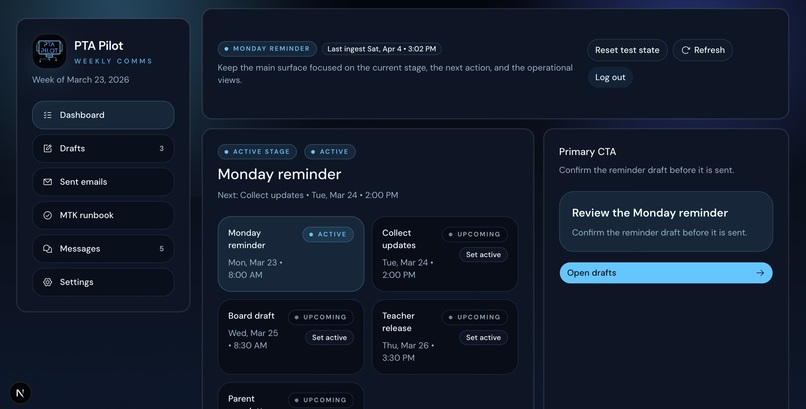
Dashboard
-
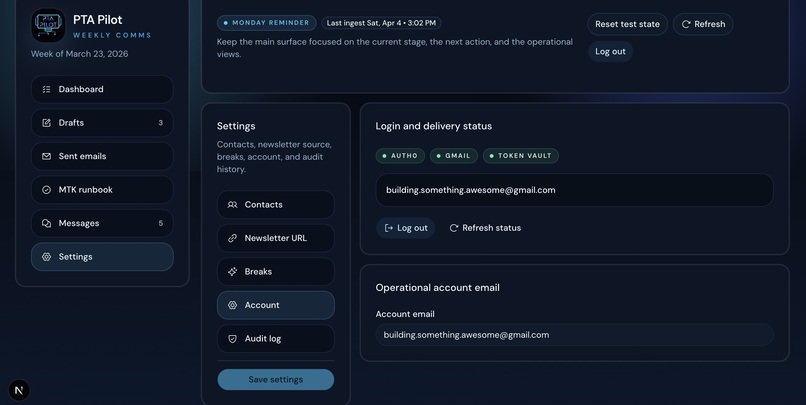
Settings
-
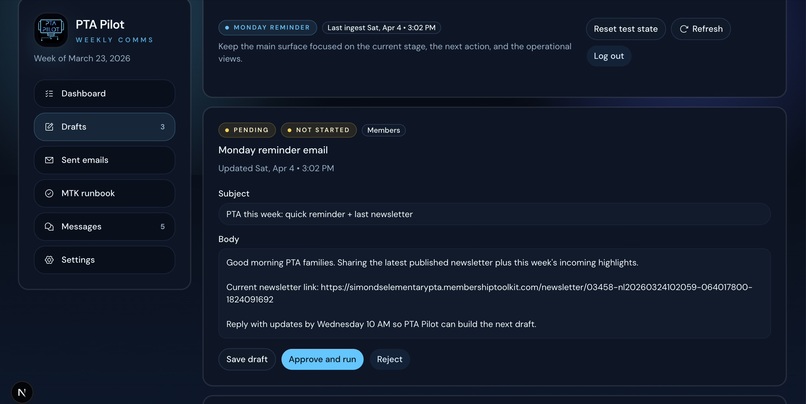
Email Drafts
-
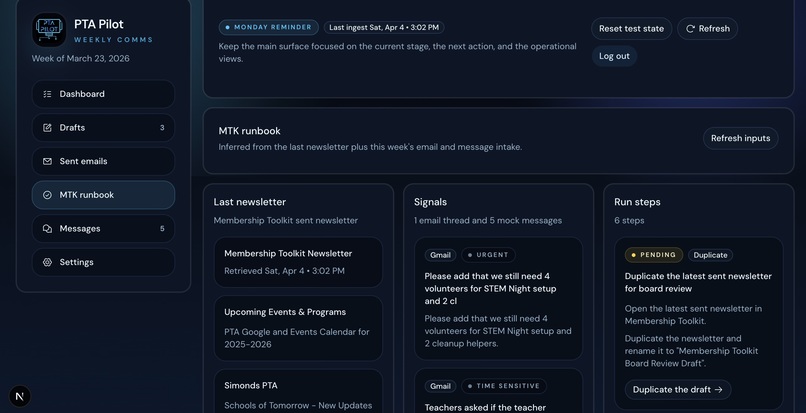
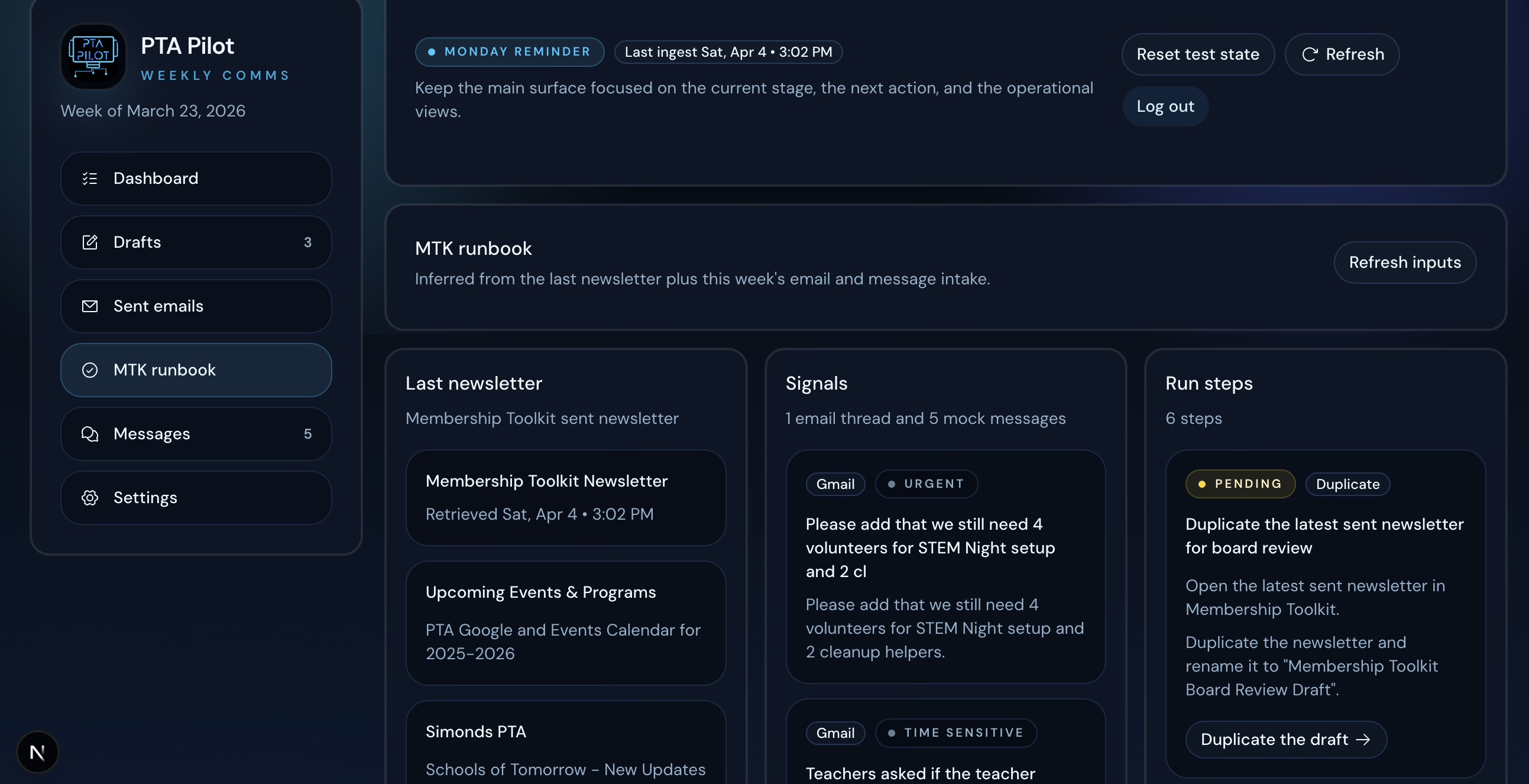
MTK Runbook
-
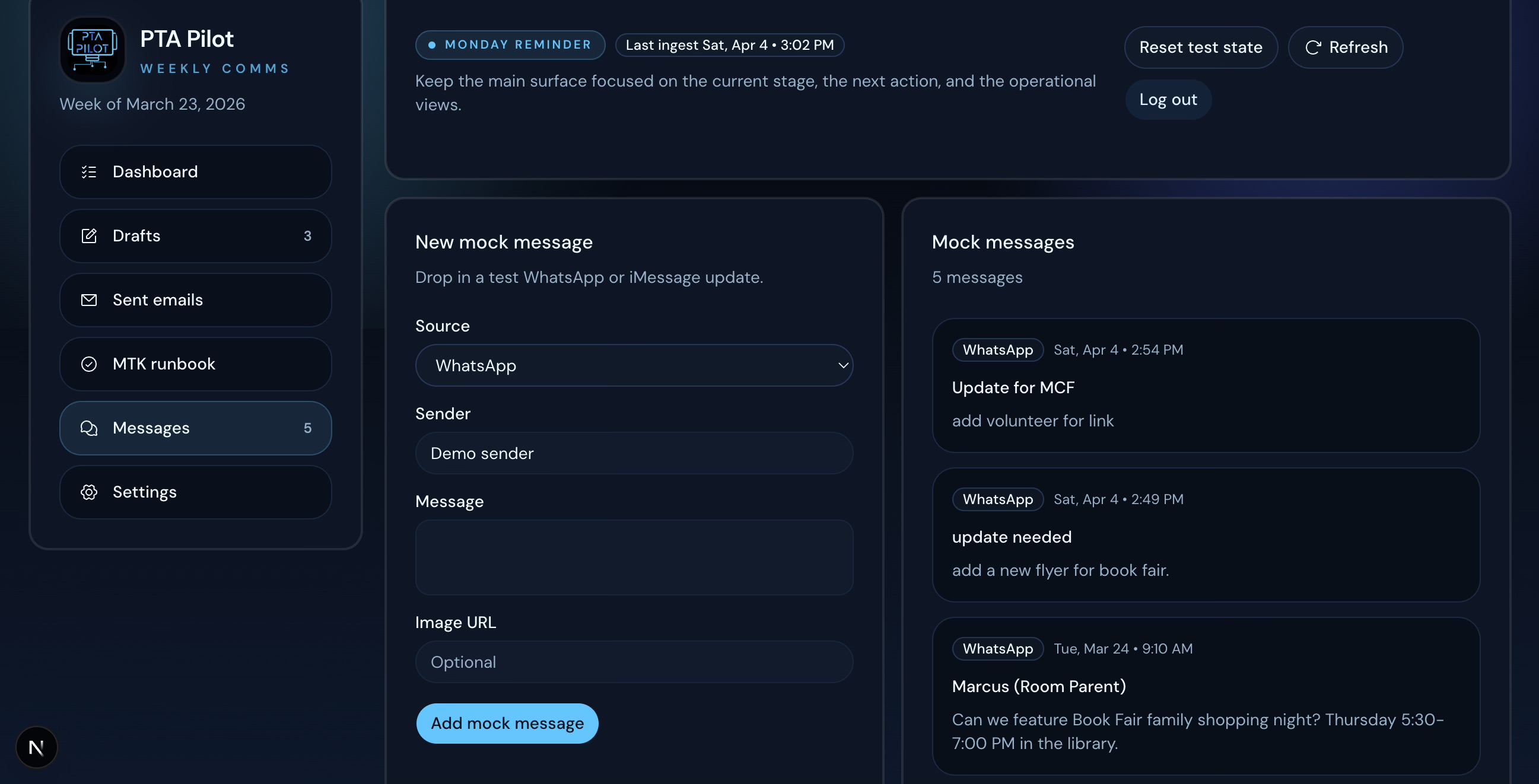
Mock Messages for Testing
Inspiration
As a PTA VP of Communications & Tech, I have a set schedule for requesting and providing newsletter updates every week. Most of the work is repetitive but needs some customization, which makes it hard to automate traditionally.
I wanted a tool that can orchestrate the whole workflow repetitively, letting me do only the parts that need my input, while the app handles the repetitive coordination.
What it does
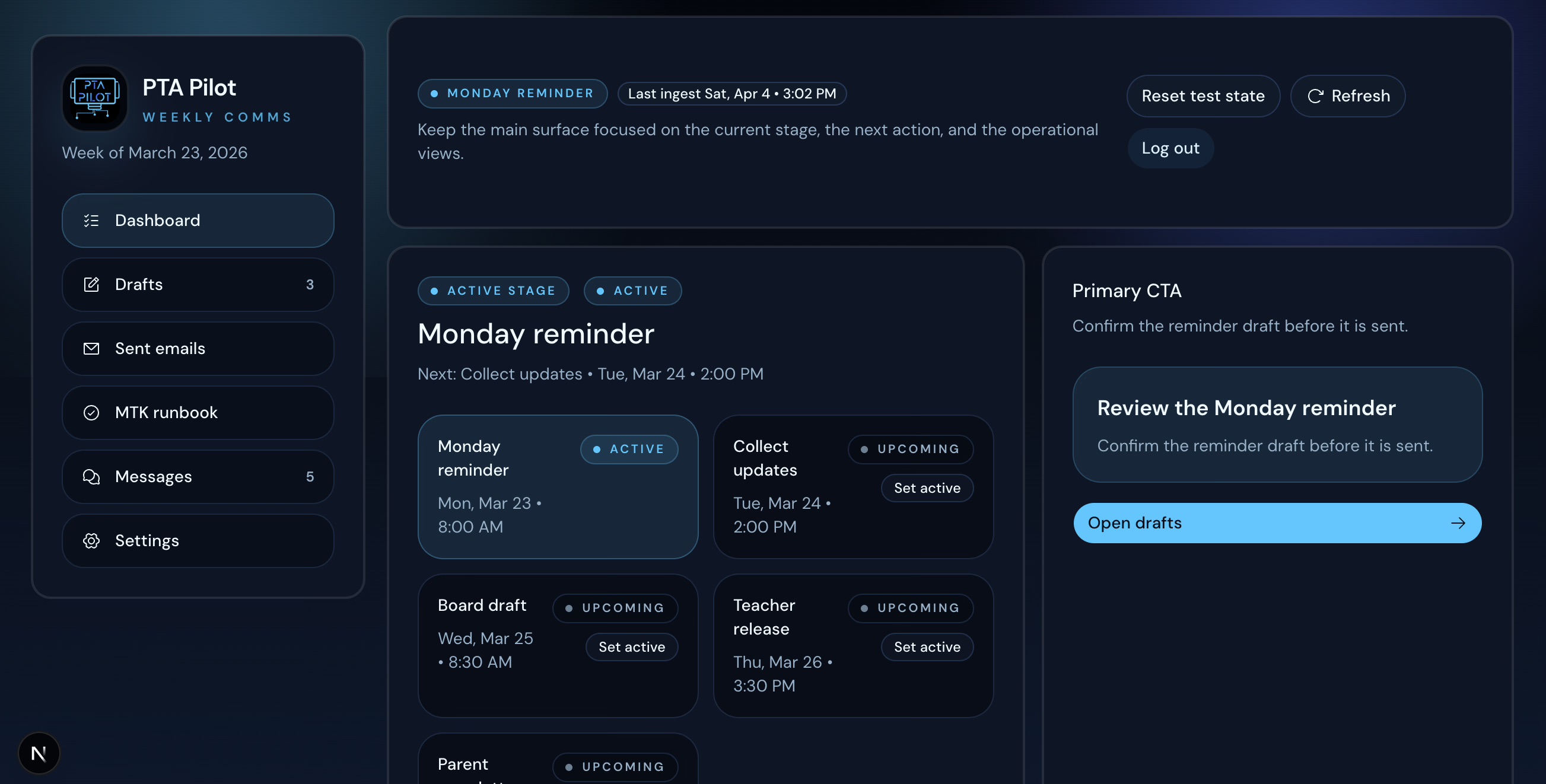
PTA Pilot is a hackathon MVP for an AI PTA communications agent. It demonstrates a weekly newsletter workflow with:
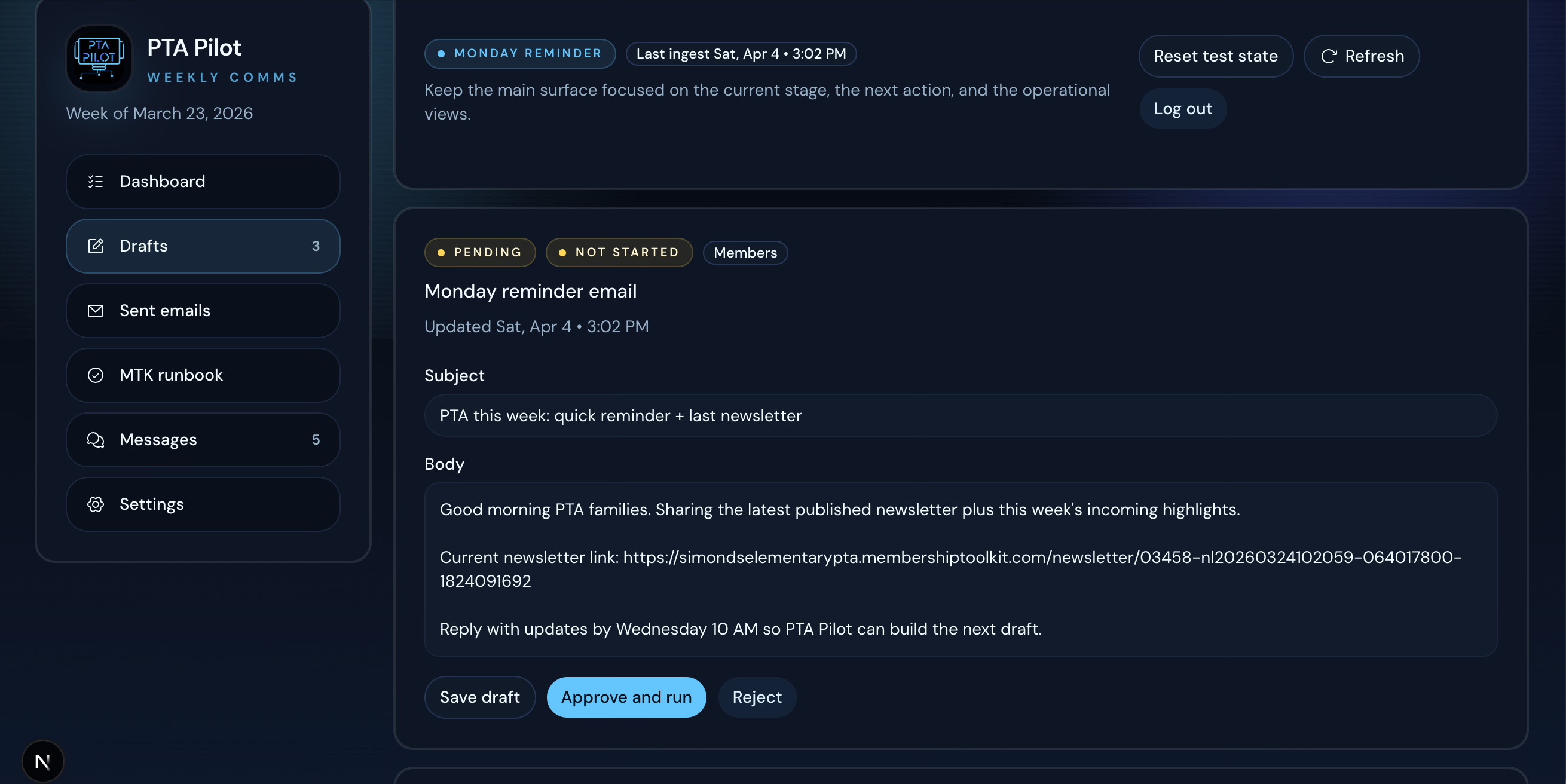
- A clean dashboard and explicit human approvals
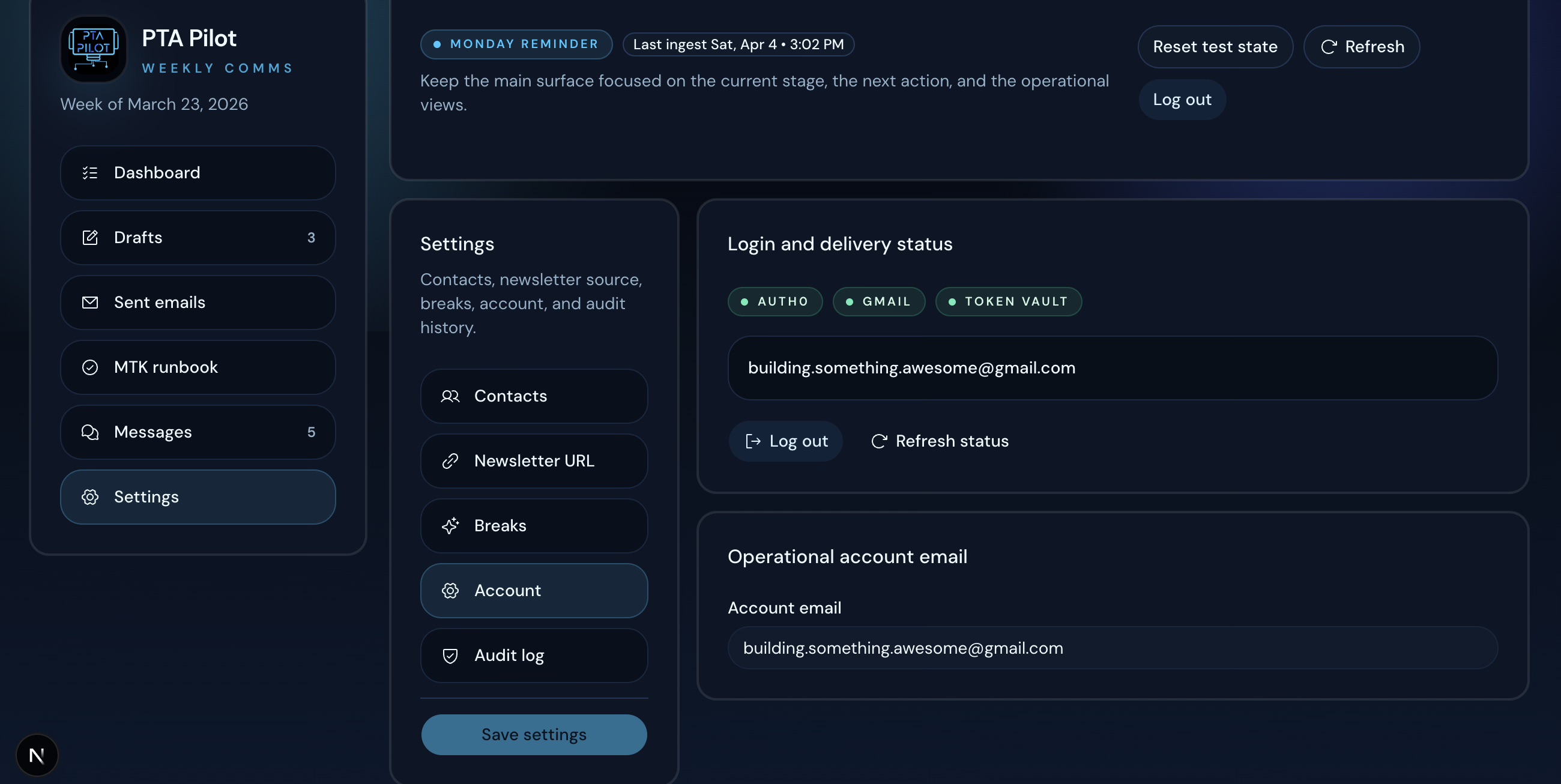
- Auth0-based delegated access (Auth0 Token Vault)
- Gmail and Membership Toolkit adapters
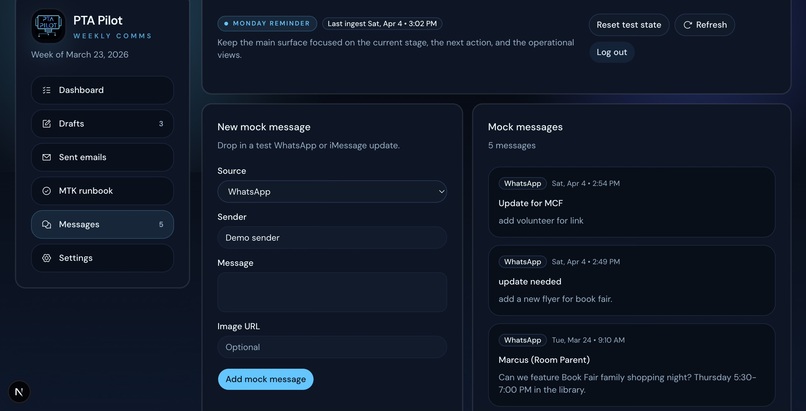
- mock WhatsApp/iMessage feeds
- Gemini-ready extraction/planning hooks (mock mode works end-to-end out of the box)
The app can generate ideas, collect updates, and create a custom runbook for each newsletter pass—saving time compared with doing that manually every week.
How I built it
I built PTA Pilot as a believable demo-first system with explicit approval rules so key actions don’t happen silently. The repo is organized with shared packages/adapters and focuses on the weekly newsletter workflow end-to-end.
Auth0 Token Vault is used for delegated access, and the app integrates with Gmail and Membership Toolkit (where possible), plus mock feeds and Gemini-ready extraction/planning hooks.
Challenges I ran into
I tried to integrate Token Vault with Membership Toolkit as well but couldn’t because Membership Toolkit doesn’t expose an API for my use case; only a UI-based interface is available.
Accomplishments that I am proud of
The app can generate ideas and collect all the updates to create a custom runbook for every newsletter, which previously took time for each pass.
What I learned
This was my first time using Auth0 Token Vault, and it was a seamless experience; I really liked it.
Bonus Blog Post
Building PTA Pilot came from a very real frustration: every week, the PTA newsletter followed the same cycle; request updates, wait across email and messaging apps, manually organize content, and assemble the final version. It was repetitive, coordination-heavy, and fragile. Traditional automation didn’t help because each step required judgment and customization. This led to a key shift: treating the problem as an agentic workflow rather than a scripting task. A major challenge was enabling AI to take meaningful actions without sacrificing control or trust. Early versions felt too “magical,” with actions happening automatically in ways that were uncomfortable for real communications. This drove a core design decision: every important step must be explicit and reviewable. PTA Pilot is therefore built around human-in-the-loop approvals and structured runbooks instead of silent execution. Auth0 Token Vault was critical in making this viable. It enabled clean delegated access, allowing the agent to act on behalf of users while maintaining clear boundaries, avoiding brittle custom auth solutions, and making the system feel production-ready. Integration posed another challenge. While Gmail was straightforward, tools like Membership Toolkit lacked APIs, exposing a common real-world limitation. This required fallback strategies using mock adapters and reinforced an important insight: agent systems must gracefully handle imperfect integrations. With more time, the next step would be deeper integrations and evolving the system into a generalized workflow orchestrator. Ultimately, PTA Pilot is less about newsletters and more about exploring how AI agents can safely and transparently operate real-world workflows.
Built With
- auth0
- express.js
- firestore
- gemini
- next.js
- tokenvault
- typescript
- zod


Log in or sign up for Devpost to join the conversation.