
Inspiration
Since the onset of the corona virus, many researchers have conducted health surveys that have shown clear increases in mental health issues, especially in the younger generations. Many have lost their jobs/internships and others are still stressed about college admissions and how their SAT/ACTs will be carried out. Some are optimistic that this pandemic may bring out the best in people, however others have lost their motivation and are unable to concentrate. This web application has been created as an effort to give these students an opportunity to rant and view how others are having similar struggles navigating the world during these unprecedented times, and relieve some of their anxiety and stress by browsing through some of the activities they could do from home.
What it does
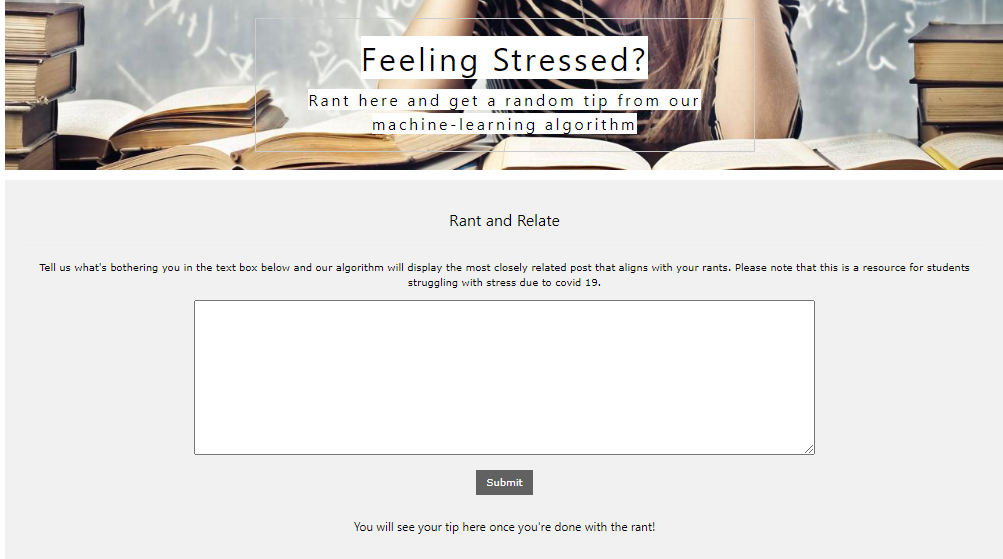
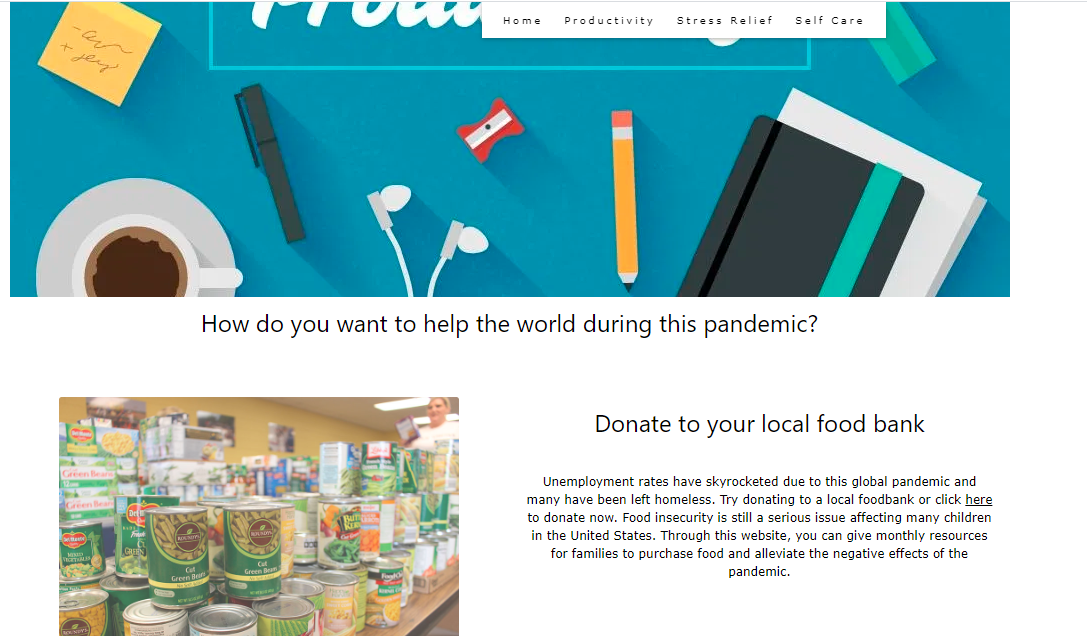
This website has multiple features for psychological relief for struggling students. It isn't meant as a replacement for medical psychological services but as a way to relieve some stress and express some struggles students may be facing. It contains three features, including a page to post a rant and receive a targeted ML-based response that corresponds with what the user has posted. This response is mostly consistent with the user's views and is meant as a way to show support and companionship for their struggles. Additionally, it also contains a productivity page that contains online volunteer opportunities that the user can start working on along with a short text box for them to share their experiences. Finally, the website contains a short survey under the self care page for them to get suggestions on how they could improve their lifestyle.
How I built it
I used TensorFlow.js and javascript on the backend and html on the front end. The built-in html scripts, including the TensorFlow universal sentence encoder model was used to embed user text and build a similarity function to respond to user's input with a targeted reply based on their rant in the stress relief page. The self care page was built with a combination of jquery and jssurveys modules. The rest of the website was basically built with html, css, and some javascript.
Challenges I ran into
I didn't have much experience in JavaScript so I struggled with the back-end code, especially with integrating TensorFlow into my html setup. I was also not familiar with jquery and hosting surveys so I had to quickly dive into it by briefly reading the documentation and doing a lot of debugging.
Accomplishments that I'm proud of
While I am not quite finished with the self care page yet, I am glad that I was able to build a fully functioning website within 24 hours, having never even used tensorflow.js in html before and having little familiarity with jquery.
What I learned
I learned how to integrate TensorFlow.js into my local enviroment and some complicated ML based functions on text-embeddings and similarity (TensorFlow's built in universal text encoder was easy to use and there was plenty of material on the web about how to use it). I also taught myself how to use the SurveyJS framework through jquery.
What's next for Psycho Helper for Students
I am planning to develop the self care page to include more questions and more targeted replies and expand the stress relief page, not just students, but for people of all populations.
Built With
- css
- html5
- javascript
- jquery
- json
- surveyjs
- tensorflow
- tensorflow.js

Log in or sign up for Devpost to join the conversation.