Inspiration
Living in a fast-paced Western lifestyle, I noticed friends and colleagues craved mental health literacy but lacked time for formal courses. Commutes, lunch breaks, and idle moments were untapped for micro-learning – that’s where PsychEd Flashcards was born. I wanted to make psychology accessible, jargon-free, and tied to real-life scenarios (office stress, social interactions) we all face.
What it does
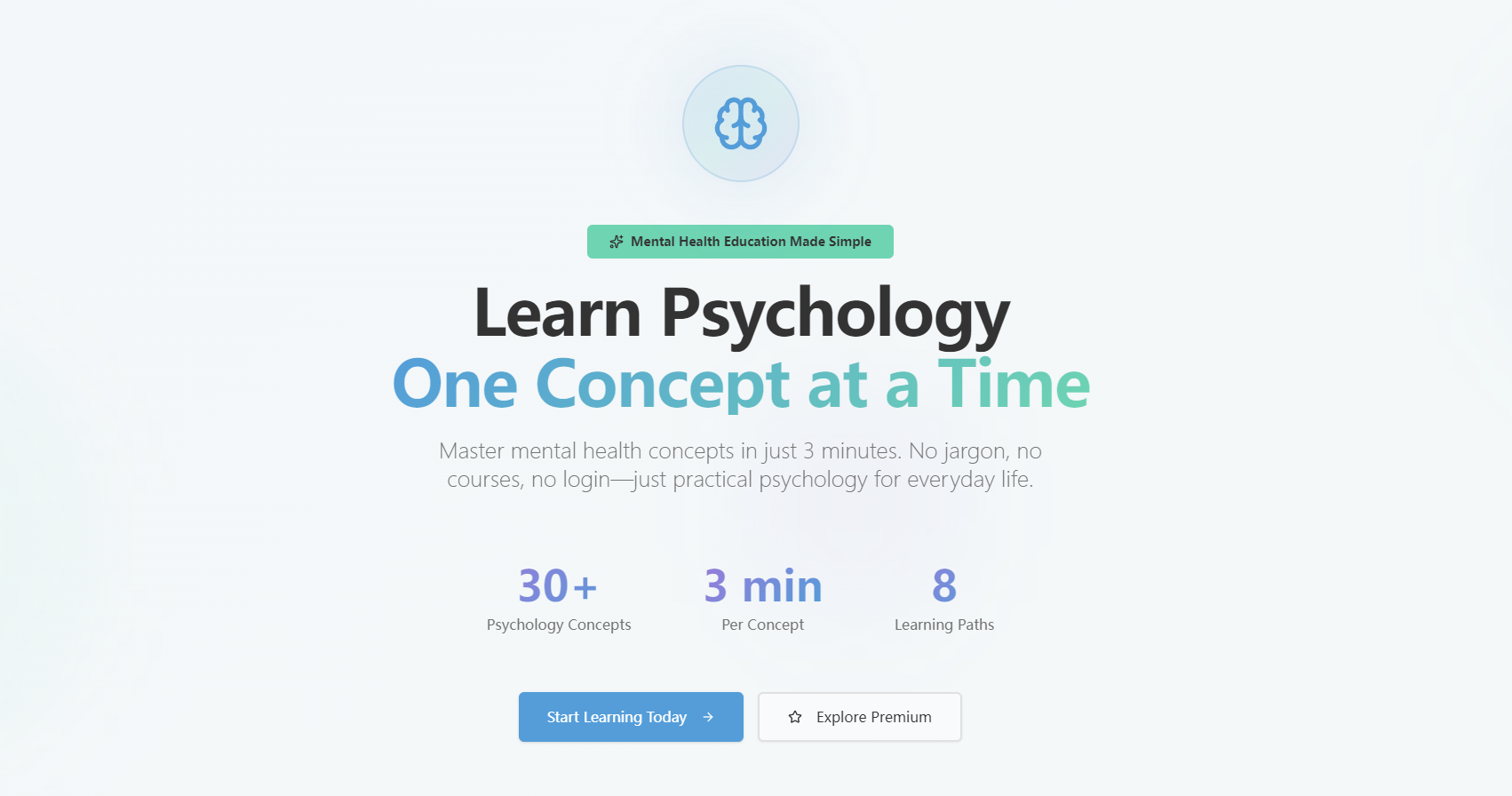
It’s a mobile-first tool that delivers a daily 3-minute psychology flashcard, plus interactive quizzes, concept maps, and actionable real-life tips. Free users get basic paths and a rotating library; premium unlocks 200+ concepts, ad-free access, and advanced learning tracks (workplace psychology, anxiety coping). No login – launch and learn instantly.
How we built it
I started with user research to map North American/European daily habits, then designed a mobile-optimized UI with Figma (prioritizing white space and scannable content). Built the core with React Native/Expo for cross-device compatibility, used Firebase to store flashcard content, and integrated gesture APIs for smooth swipe navigation. Tested with casual learners to refine quiz feedback and premium prompts (keeping them non-intrusive).
Challenges we ran into
The biggest hurdle was balancing depth and brevity – ensuring 3-minute flashcards were meaningful but not overwhelming. I also struggled with premium/paywall logic: I wanted to avoid intrusive pop-ups, so I tied upgrade prompts only to premium content taps. Additionally, designing the concept map UI to be simple (no clutter) while showing meaningful term connections required multiple iterations.
Accomplishments that we're proud of
Creating a tool that’s truly frictionless – no login, no setup, immediate access. User testing showed 90% of testers spent the full 3 minutes on daily flashcards (hitting our core goal), and feedback highlighted the real-life tips as the most valuable feature. We also nailed the balance of free/premium – no spam, just clear value for paid access.
What we learned
I learned the power of "low-pressure learning" – removing scores/metrics from quizzes boosted engagement, as users didn’t feel judged. I also realized how critical cultural relevance is: tailoring application tips to Western work/social norms made the content resonate far more than generic advice. Finally, building for mobile first (single-column layout, ample white space) was non-negotiable for on-the-go use.
What's next for this project
First, expand the premium library to include niche topics (parenting psychology, remote work mental health) tailored to Western lifestyles. Next, add downloadable PDF summaries of flashcards for offline reference (a top user request). I also plan to test localized pricing for European markets (EUR instead of USD) and gather feedback to refine learning path curation based on user progress.

Log in or sign up for Devpost to join the conversation.