PsiFlu Project Story
Inspiration
Building an app for our college campus that tracks people's sickness is a wonderful initiative that can make a significant impact on the health and well-being of our community. With this app, we can empower ourselves with knowledge about the health status of those around us, enabling us to make informed decisions about our own health. When we know that others around us are experiencing similar symptoms, we can take action to protect ourselves, such as seeking medical attention, taking preventive measures, or avoiding contact with sick individuals.
The app can also help identify trends in the health of our campus community over time. By collecting data on the types of illnesses and symptoms that are prevalent on campus, we can gain insights into the health needs of our community and take steps to address them. For example, if we notice that certain illnesses are more common during certain times of the year, we can launch targeted health campaigns or educate people on ways to prevent those illnesses.
Moreover, our app can help foster a sense of community around health and wellness. By sharing information about sickness on campus, we can come together to support each other and work towards a healthier campus environment. The app can serve as a tool for promoting awareness and encouraging healthy behaviors among students, faculty, and staff.
In conclusion, our logic was that, by providing ourselves with information, insights, and opportunities to take action, we're helping to create a safer, healthier campus environment for everyone.
What it does
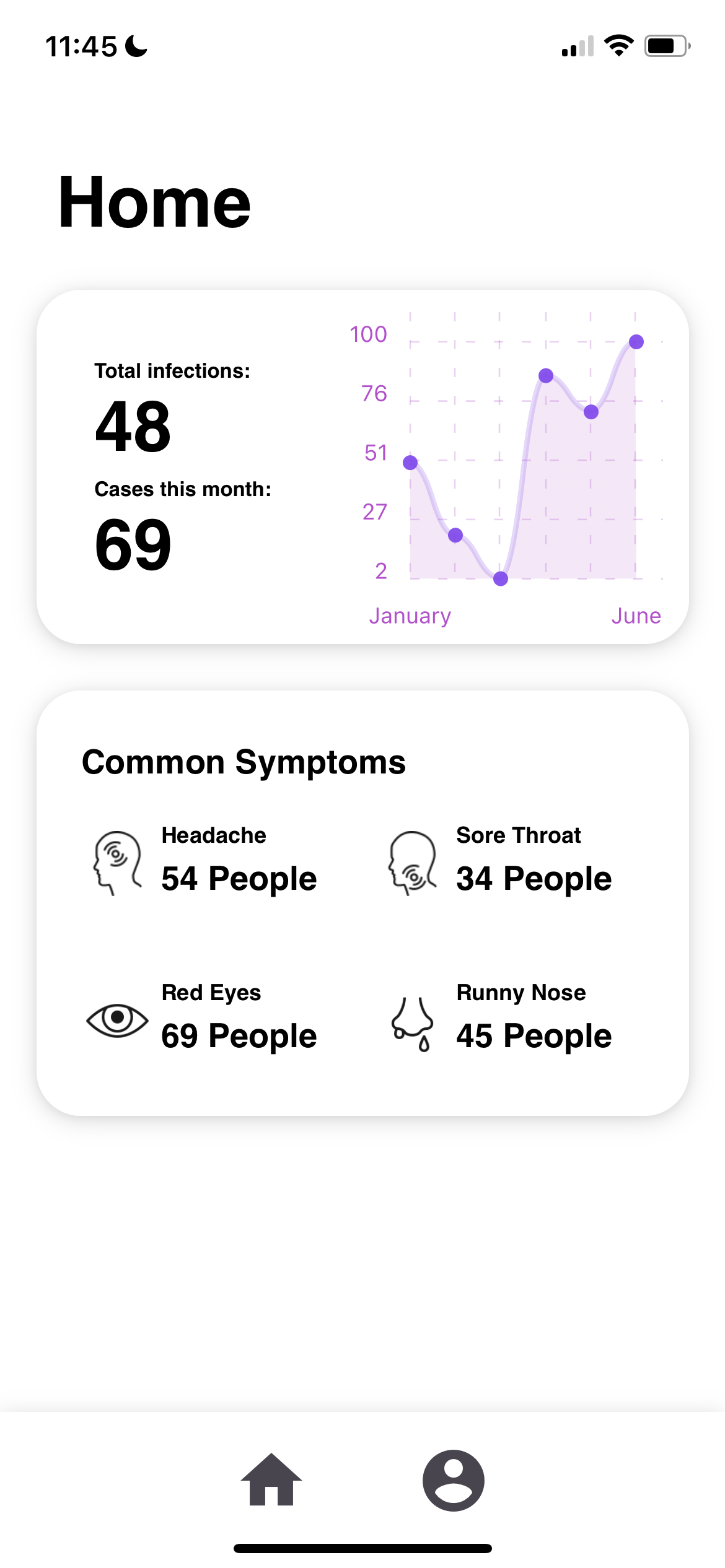
One of the key features of the app is the live current sick user total, which provides you with real-time information about the number of people who are reporting symptoms of illness. In addition, the app shows how many new people got sick that week, as well as the monthly total of sick users on campus. All of this information is presented in a dynamic graph that makes it easy to visualize trends in sickness on campus.
Another useful feature of the app is the list of the four most common symptoms going around campus right now. This information can help you to stay informed about the types of illnesses that are prevalent on campus, and take preventive measures to protect your health.
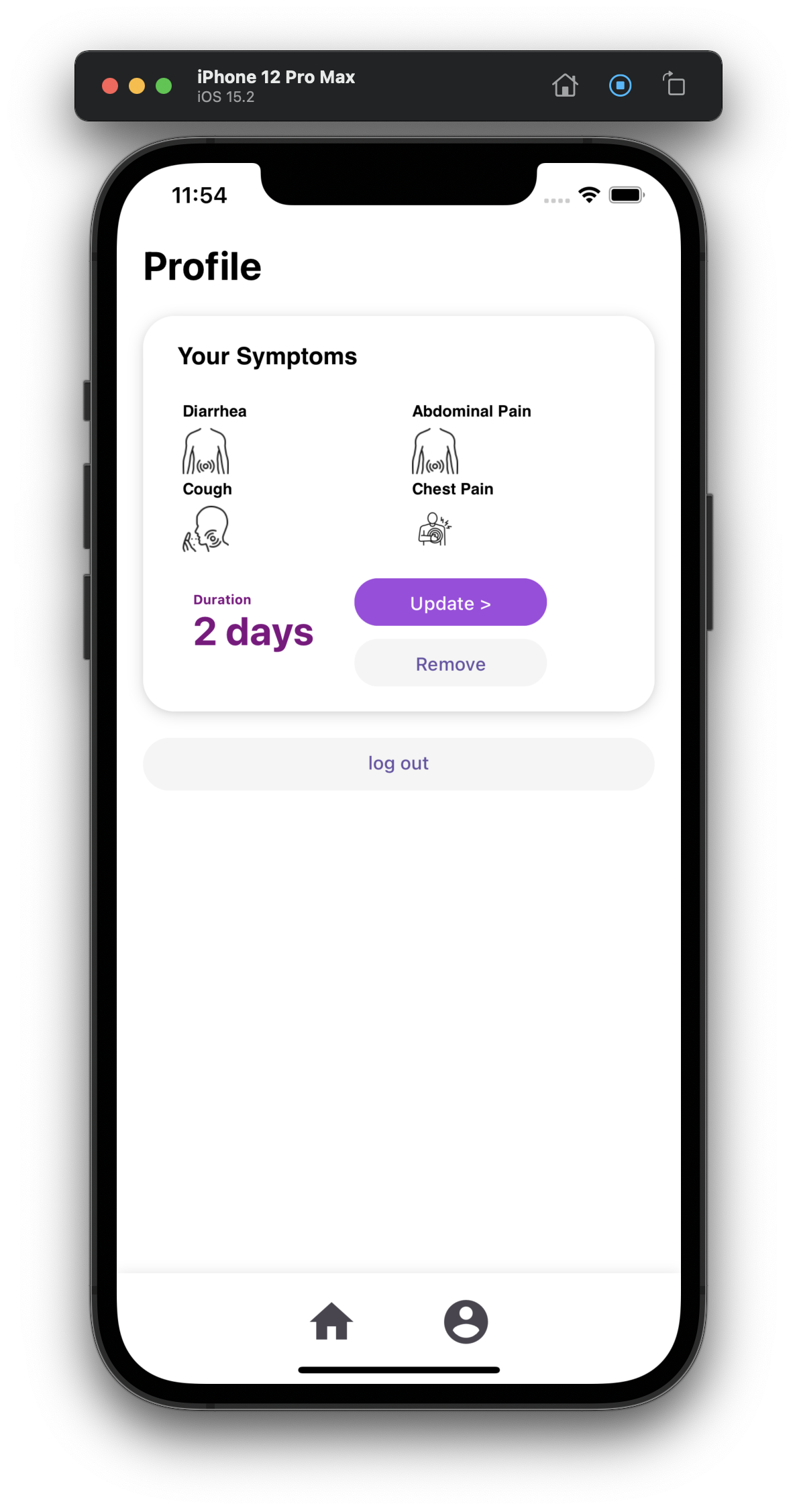
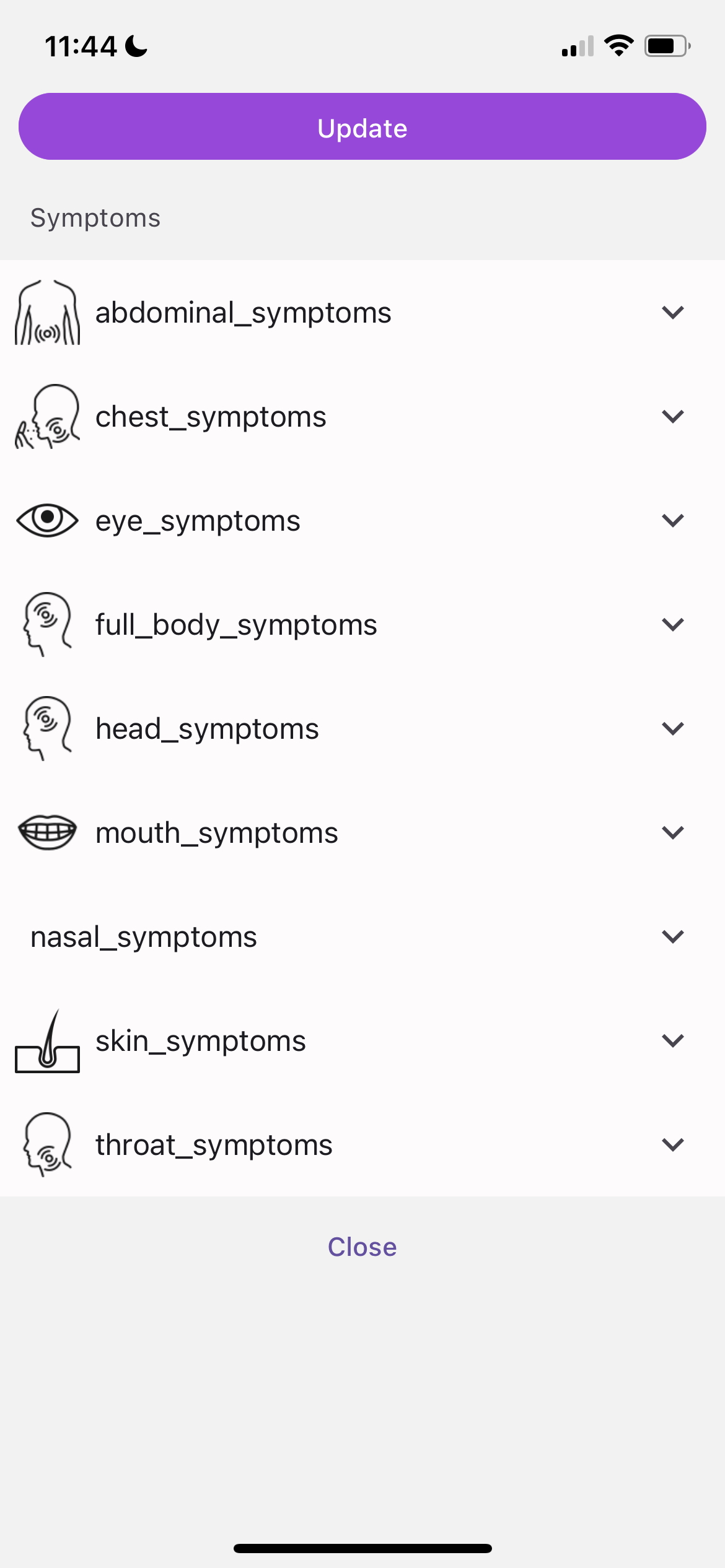
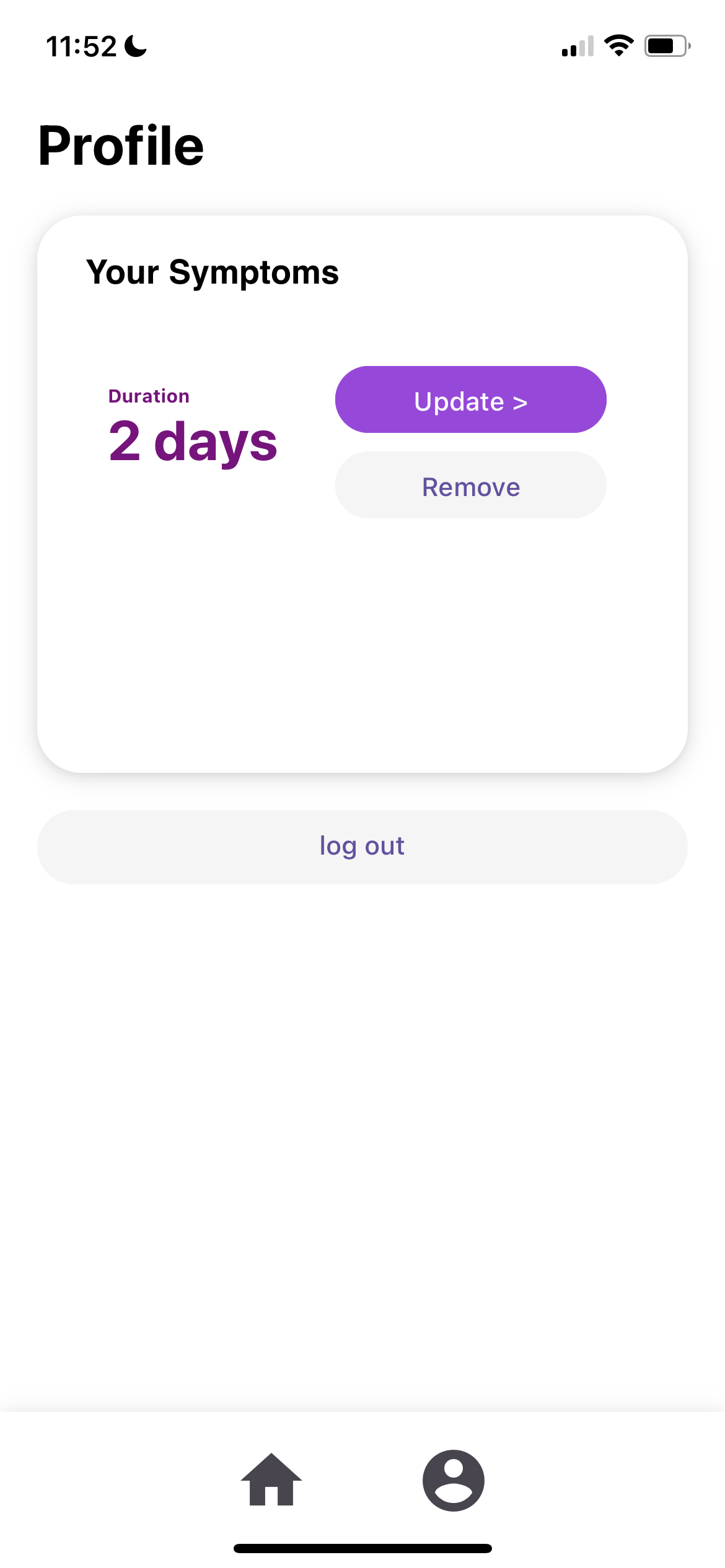
The app also allows users to upload their symptoms from a large list of the most common symptoms. This feature makes it easy to report illness and helps to ensure that the data collected by the app is accurate and comprehensive.
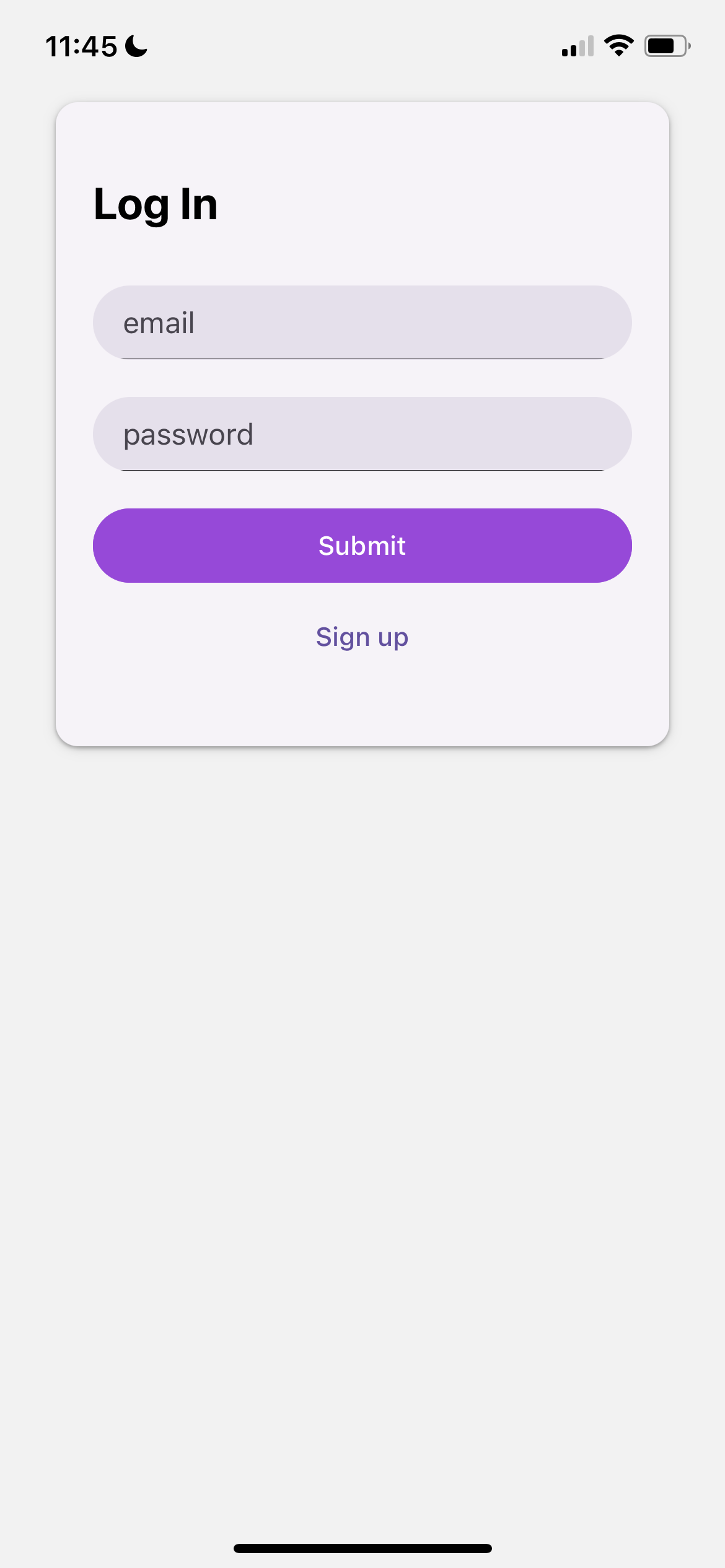
Moreover, the app features a secure OAuth system that stores user data on a per-user basis with secure tokens. This helps to protect user privacy and ensures that the data collected by the app is secure.
In addition, the app uses an algorithm to calculate the number of people with similar symptoms as you, which can help you to identify potential outbreaks and take preventive measures.
Finally, the app is fully self-sustaining and keeps track of timestamped aggregated data from past weeks and months. This enables you to gain insights into the health needs of the campus community over time and take steps to address them more effectively.
How we built it
- React Native with TS and TSX(Frontend)
- Python with FastAPI and MongoDB(Backend)
Challenges we ran into
During the development of our app, we encountered several challenges that required us to learn and adapt quickly. Our team was already familiar with React, but using React Native for mobile app development presented its own unique set of challenges. Initially, we faced many hurdles as we navigated the ins and outs of the new platform. However, with persistence and dedication, we quickly became proficient in React Native and were able to make progress on the app.
Another challenge we faced was developing an OAuth system for users to create accounts and securely store their data. Fortunately, we were able to implement this feature relatively quickly and had it up and running within a few hours. However, we still needed to find a secure way to access the aggregated data without revealing other users' data. This obstacle required a bit more time and effort, but we ultimately found a solution. Having the backend run fully on Python was also helpful in navigating these challenges, as we were all familiar with the language.
Finally, structuring our data for ease of display was another challenge that we tackled early on and continued to refine throughout the project. By being proactive in addressing this issue, we were able to create a user-friendly interface that made it easy to access and understand the data.
Accomplishments that we're proud of
We are super proud of the user system we developed, which we were able to implement successfully within the time constraints of the project. In particular, our backend system was a significant achievement for our team. Although Asher had no prior experience with building a backend, he dedicated a significant amount of time to the project and was able to make significant progress, resulting in a system that exceeded our expectations.
Creating a fully functional mobile app within such a short timeframe was a challenging task, but we are incredibly proud of what we accomplished. Our team managed to reach our MVP and even surpassed it, which is a testament to our hard work and dedication to the project.
What we learned
- We gained a lot of experience with React Native through this project, which is fantastic because it can be challenging to find the time to learn new languages at Dartmouth. Although the short turnaround time was stressful, it helped us prioritize the essential features and focus on building a complete product. While we have many ideas and metrics for the future development of the app, we recognize that 24 hours is not a lot of time, and we are all thrilled with what we accomplished.
What's next for PsiFlu
- We believe that PsiFlu has significant market potential on college campuses, as sickness is a prevalent issue that affects many students. It is a shared experience that students go through, but it is reassuring to know that others are experiencing similar symptoms. One feature that we are particularly excited about is the ability for users to upload their diagnoses from their doctors. This feature will allow the app to provide accurate and reliable information about the most common illnesses on campus at any given time, providing valuable insights for students seeking to stay healthy.


Log in or sign up for Devpost to join the conversation.