-
-
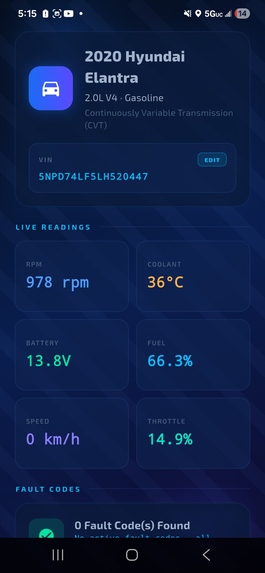
2020 elantra test
-
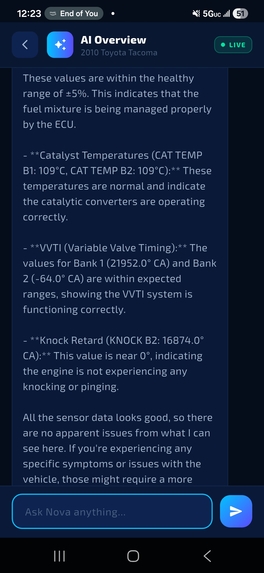
just asking the ai about the sensor data on 2010 tacoma
-
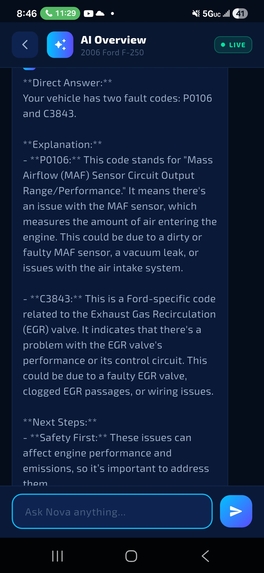
ai explaining 2 dtc codes
-
-
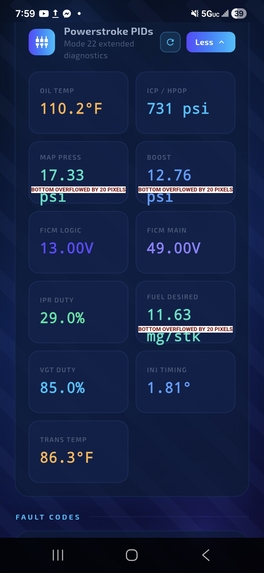
I have fixed the overflow issues but I wanted to show the extended pid's


Inspiration - I have always been interested in building my own remote start for my truck, and that passion has continued to evolve over the past couple of years. I went from a simple box with relays, wires, and a basic two-button fob, all the way to my third remote start build using a Raspberry Pi Zero W 2 — a massive jump in capability. I was looking to integrate AI into that project when I stumbled upon this hackathon. I originally planned to enter using my remote start, but then the AI Mechanic idea hit me. Even if it flopped, I knew I could still fold it into my remote start project — so it was a win either way. What It Does - AI Mechanic is designed to be simple enough for anyone to use. All you need is a Bluetooth OBD2 adapter. The user just needs to find the OBD2 port under their dashboard and plug it in — pairing is no more complicated than connecting a Bluetooth speaker, and who can't do that in this day and age? Once connected, the app automatically pulls the vehicle's VIN to identify the year, make, model, and supported sensors. From there, the AI analyzes all of the collected data and delivers a straightforward vehicle health diagnosis using simple stoplight colors — so you don't need to know anything about cars to understand whether something is serious or minor. AI Mechanic can break down engine fault codes, provide possible causes, and even generate repair cost estimates for both DIY and shop repairs. It can use GPS data to find local shop rate information for more accurate regional estimates. But the biggest advantage is that the AI can catch issues your car's computer doesn't know how to flag — for example, noticing that your airflow readings are low and suggesting you check your air filter before it ever becomes a problem. How We Built It - AI Mechanic was built using Flutter for cross-platform mobile development, with Bluetooth Classic and BLE support to connect to a wide range of OBD2 adapters — including cheap $20 dongles. The app communicates with the vehicle using the ELM327 protocol, reads standard OBD2 PIDs as well as an extensive manufacturer-specific extended PID database covering dozens of makes and models. Amazon Nova AI powers the vehicle health analysis, fault code explanations, repair estimates, and the conversational AI chat feature. Vehicle identification is handled automatically via VIN decode through the NHTSA public API. Challenges We Ran Into - Outside of the typical cycle of fixing one thing and breaking another, the development process went smoother than expected. The biggest challenge was building something truly universal — making the app work reliably across different vehicles, different Bluetooth adapter brands and price points, and different OBD2 protocol variations. Getting the DTC fault code reading accurate and consistent across all of those variables took significant iteration. Accomplishments We're Proud Of - The entire project, honestly. From the moment the idea came to me I haven't been able to stop developing it. What started as a hackathon entry has become something I genuinely believe in — a working app that connects to real vehicles, reads real sensor data, and uses AI to make that information accessible to everyone regardless of their mechanical knowledge. What We Learned - Anything is possible with a little know-how and the right AI tools. You don't need a computer science degree to build something meaningful — you need an idea, the drive to figure it out, and the right resources. What's Next for AI Mechanic - A win here would confirm that this is more than worth pursuing beyond DevPost. The vision is to grow this into a full commercial app — potential plans include partnering with a dongle manufacturer to offer a branded adapter, a $5/month subscription model, and local shop advertising partnerships. The possibilities are genuinely endless. One idea already forming for a future update is integrating vehicle history data — past repairs, accident records, ownership history. That single feature could turn AI Mechanic into the ultimate used car buying companion. Imagine pulling up to a car you're considering, plugging in a $20 dongle, and getting a complete picture of the vehicle's health and history right on your phone in seconds.
Built With
- android-studio
- claude
- flutter


Log in or sign up for Devpost to join the conversation.