-
-
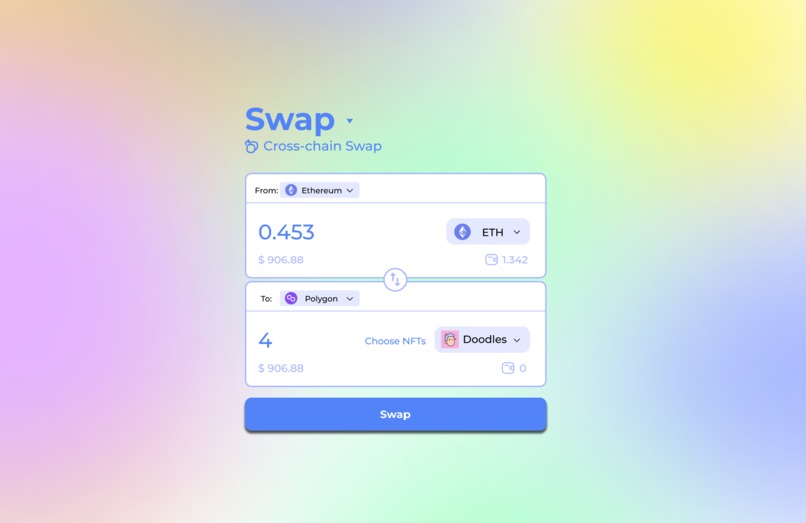
Cross-chain Swap Interface
-
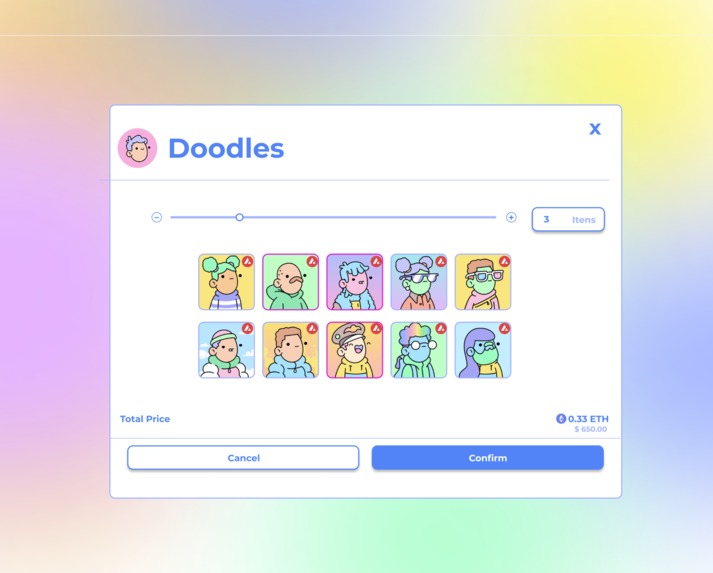
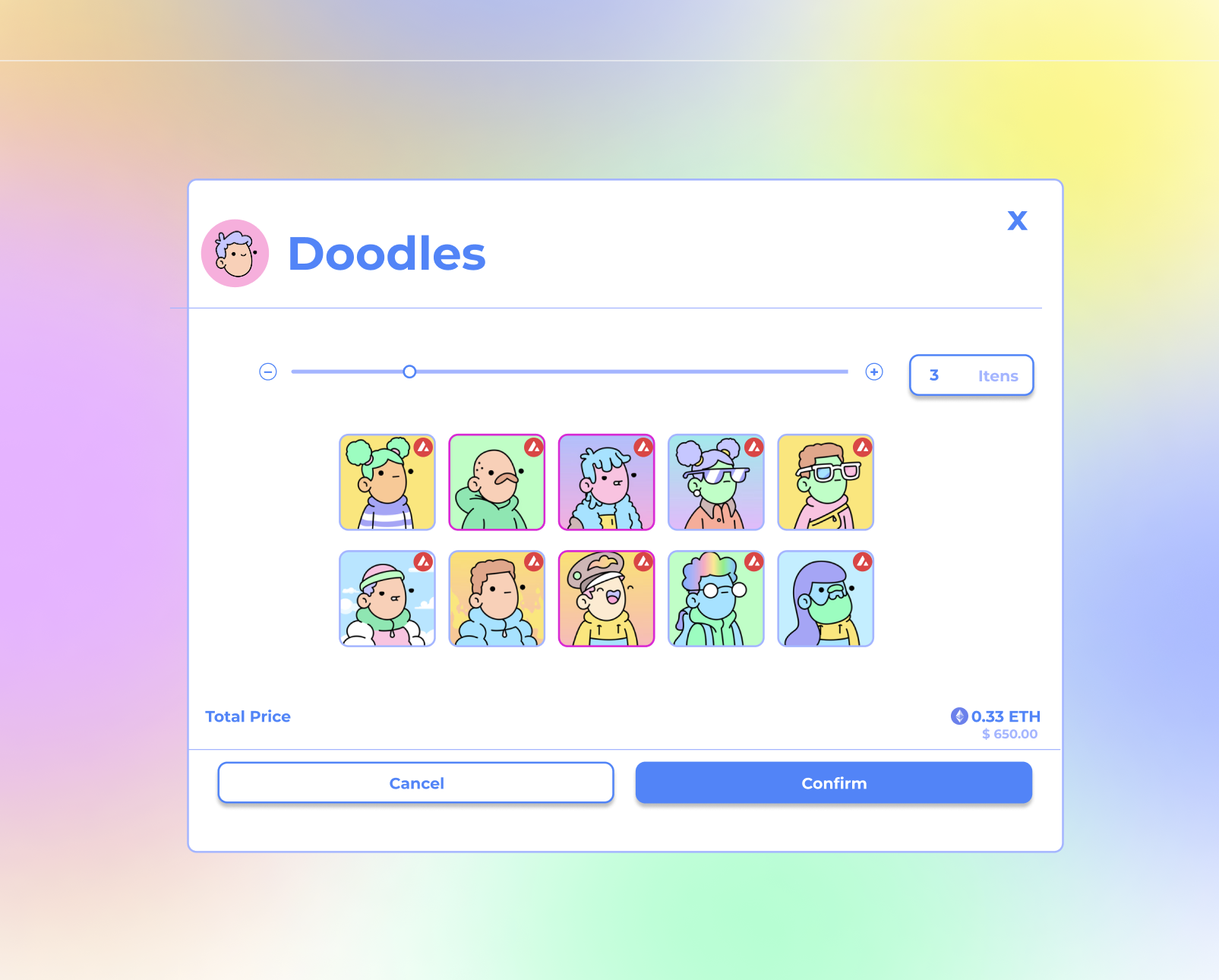
Choose NFTs Interface
-
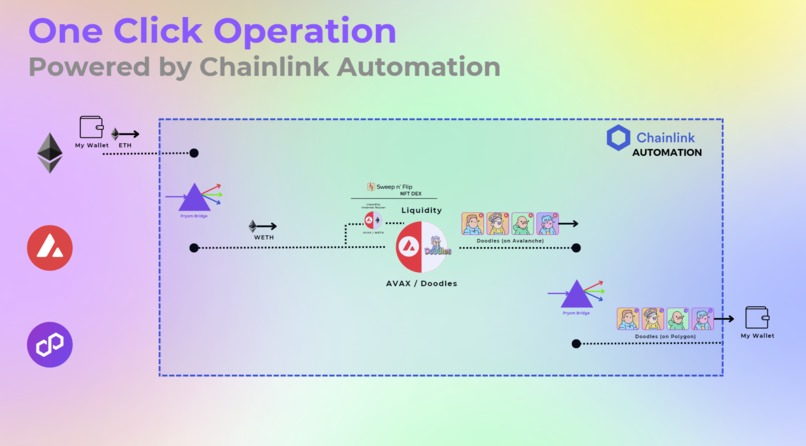
CC NFT Swap - Router + Automation
-
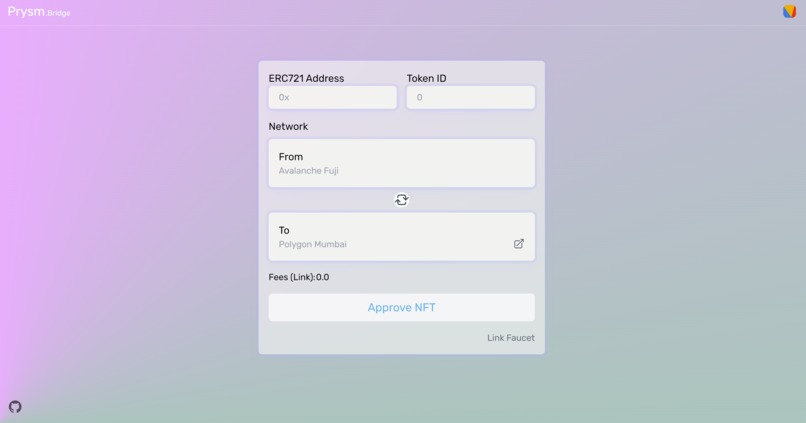
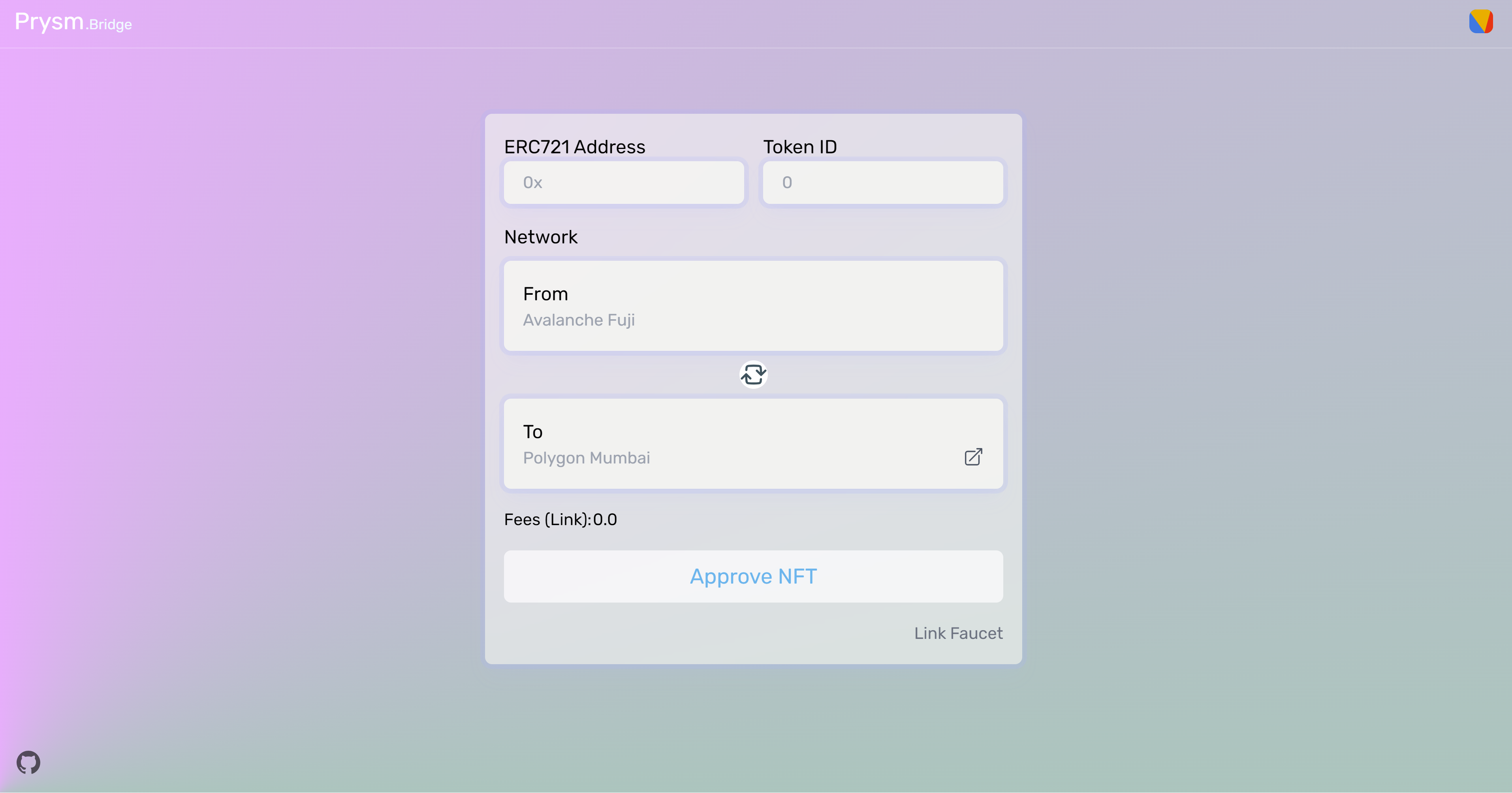
Bridge MVP Interface
-
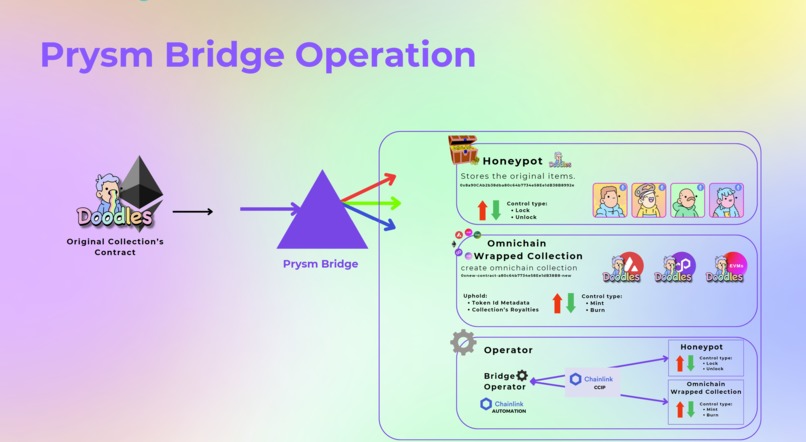
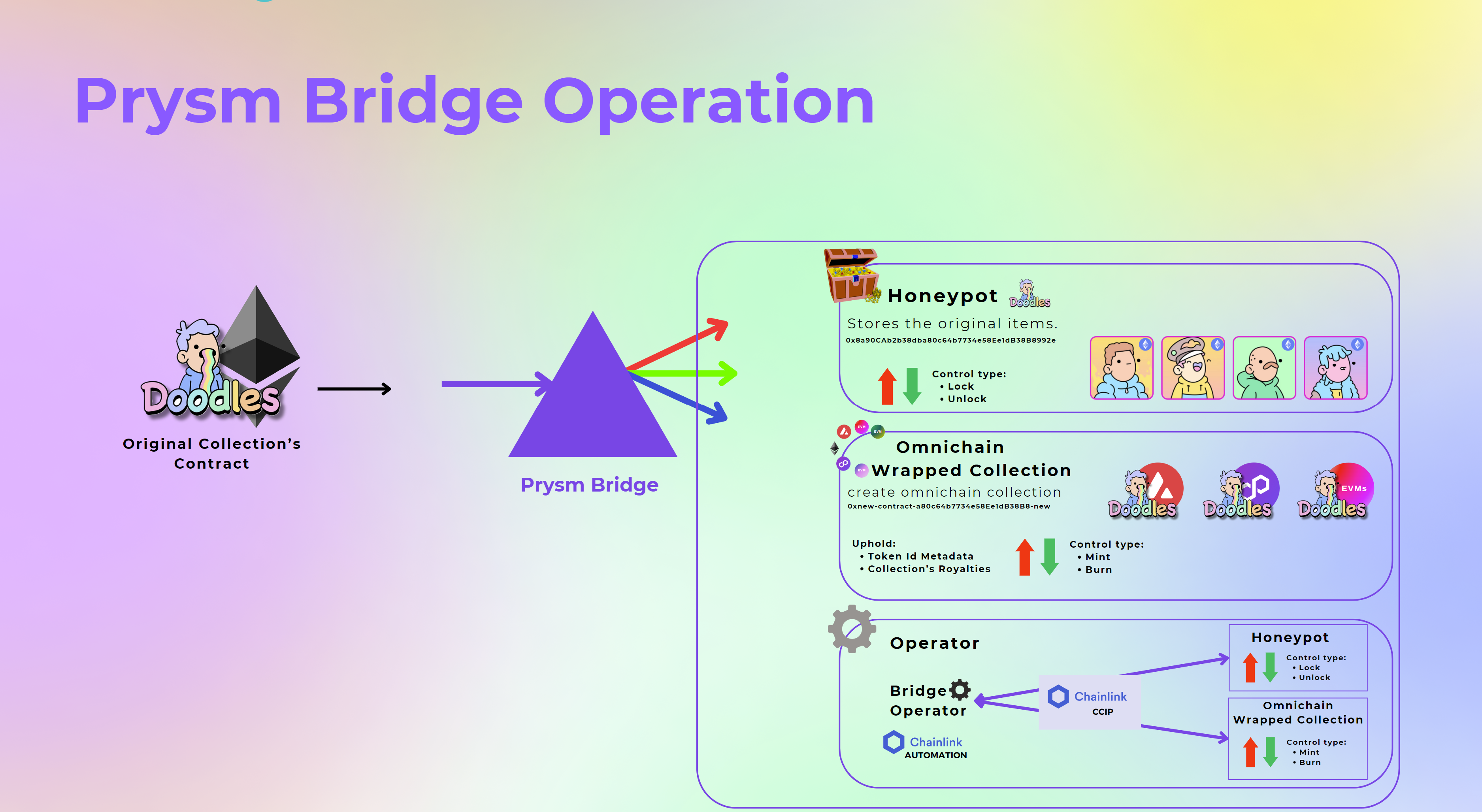
Prysm Bridge - Modules
-
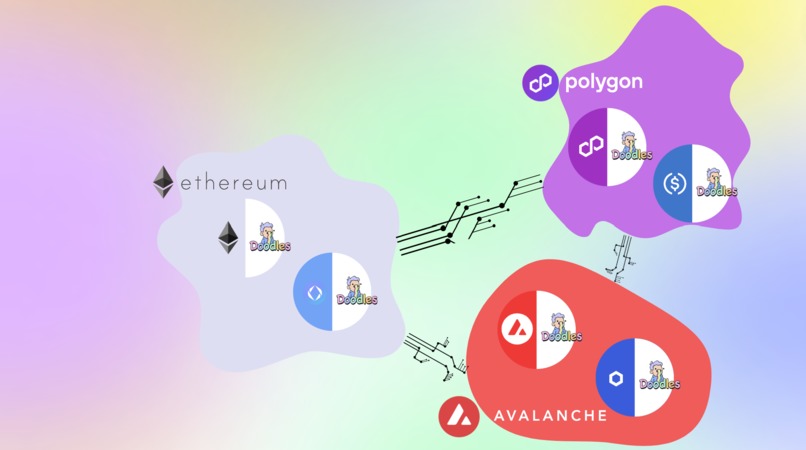
Cross-chain Liquidity Representation



Inspiration
We, the team at PrysmSwap, have been builders in the NFT ecosystem since 2020, having developed various NFT-Fi solutions, primarily focused on addressing the liquidity problem in the NFT market. Our most recent product is the Sweep n’ Flip NFT DEX, a AMM V2 for NFTs. However, earlier this year, when we launched this solution on the Ethereum Mainnet, it was quite frustrating to realize that the Gas Fee was a major barrier to operating the protocol on the Ethereum network, making it commercially viable only for collections with a floor price greater than 2 ETH. This frustration compelled us to expand into a Multichain vision, where we have already deployed on 7 networks and are planning to expand even further. However, this Multichain solution only works for the native NFTs of those various networks, still excluding the native Ethereum NFTs, which are indeed the market leaders. Consequently, this has forced us to add to our roadmap the development of a cross-chain application that combines the best of NFT AMM technology with a scalable framework across multiple chains in a cross-chain application, abstracted in an extremely simple way for the end user. This feature of our roadmap remained dormant until the announcement of the Constellation hackathon, which provided a motivational factor to embark on the challenge of developing the bridge and cross-chain operation, especially since Chainlink is the company providing the exact infrastructure we needed.
What it does
The PrysmSwap Cross-chain NFT DEX enables users to access cross-chain liquidity for Floor NFTs from major collections. Leveraging our PrysmBridge technology, which facilitates the transfer of NFTs across different chains, and the NFT AMM V2, which allows users to provide liquidity for NFTs in 50/50 Pools, we create a dynamic trade and arbitrage market across all chains. This enhances liquidity, opens new arbitrage opportunities, and boosts trading volume.
The NFT AMM V2 Pools play a crucial role in the NFT ecosystem. They are the premier technology for pricing the Floor Price of collections, ensuring liquidity for anyone looking to buy or sell NFTs at any time. This is a significant advancement over traditional NFT order books, which often suffer from a lack of Bid orders and very low volume.
The need for cross-chain functionality arises from the challenge that the main ecosystem is on Ethereum, which is expensive for settling operations. This cost factor is prohibitive for many collections and hinders onchain activities and usability. It's also a barrier to implementing NFT AMM V2 on Ethereum.
On PrysmSwap, you can:
Provide Liquidity:
Offer liquidity for a native Ethereum Collection on different networks, like PolygonzkEVM or Avalanche.
For example:
- Provide Liquidity on Doodles/ETH and Doodles/MATIC on PolygonzkEVM.
- Provide Liquidity for MutantApes/AVAX and MutantApes/LINK on Avalanche.
NFT Swaps:
With distributed cross-chain liquidity, users can, for example:
- Spend ETH from the Ethereum Network to buy Doodle Id #2435 and receive it on Polygon PoS.
- Sell MutantApe Id #1234 from the Ethereum Network in the MutantApe/AVAX pool on the Avalanche Network and receive ETH on Polygon zkEVM.
- Spend ETH from the Ethereum Network to buy a Native NFT from Polygon PoS, and receive it on Polygon PoS.
We believe the most common use case that will significantly boost trading volume is exploring arbitrage opportunities. Consider this scenario:
For the collection Doodles (native to Ethereum) on Avalanche and Polygon zkEVM:
On Avalanche:
- Doodles/AVAX,
- Doodles/LINK
On Polygon zkEVM:
- Doodles/ETH,
- Doodles/MATIC,
- Doodles/USDC
Since AVAX, LINK, ETH, MATIC, and USDC are highly liquid with constant price fluctuations relative to each other, any price change in these assets will affect the price of Doodles in each pool. This incentivizes arbitrage, greatly increasing Doodle Trading Volume. It also attracts volume and liquidity to networks like Polygon zkEVM and Avalanche. Therefore, we are scaling operations without further congesting the Ethereum network. On the contrary, we are removing items from it, effectively decongesting the network.

How we built it
PrysmSwap is a Decentralized Application (DApp) that facilitates Network Abstraction, simplifying a series of sequential and complex operations for the end user in an extremely straightforward manner. To achieve this, we needed to utilize various components of NFT-Fi Money Legos, such as the Sweep n’ Flip NFT DEX, our proprietary technology, and we also had to develop PrysmBridge to enable cross-chain operations.
Therefore, it was through the integration of existing components and the development of new ones, as needed, that we were able to build this application, which we refer to as DeFi Money Legos.

Challenges we ran into
Our team relied on just one developer, Welliton Gervickas, who was responsible for developing everything, which indeed resulted in an overwhelming workload for him. We had hoped to find a ready-made NFT bridge to build PrysmSwap on top of this fundamental block. However, as there was no suitable bridge available, we took on this challenge ourselves. This allowed us to define specific operational details for our bridge according to our needs, addressing deeper issues that other well-known bridges in the market do not, and even identifying critical bugs and malfunctions in some of these players. Consequently, this benchmark study took much longer than anticipated, delaying the development of the automation for all possible cross-chain formats and also the front end, which was created in a minimally viable way to validate the bridge. However, this process provided us with immense learning opportunities.
Accomplishments that we're proud of
After one month of development, we can execute the operations that were previously only conceptualized, proving that it is a viable product.
You can bridge NFTs across chains, create liquidity pools for these bridged NFTs, and execute cross-chain swaps.
To validate each operation, we executed them and they can be verified as follows:
Bridge / Liquidity Provision + Swaps / Cross-chain Swaps
Product Tests and Validation
MUMBAI Original Collection ERC721 (OrigER721): 0x46bEF163D6C470a4774f9585F3500Ae3b642e751
FUJI Omnichain Wrapped Collection ERC721 (OWCERC721): 0x0567835Dd96abbe8169C5Ca7E703e2303F7c74C7
1. Fully Operational Bridge
Send NFT from Original Network, to other chain, chain 2
- Lock OrigER721 - Mumbai
- Mint OWCERC721 - Fuji
Redeem Original NFT on chain 0 (bridge back)
- Burn OWCERC721 - Fuji
- Unlock OrigNFT - Mumbai
1.a) Send NFT from Original Network, to other chain, chain 2
1.b) Redeem Original NFT on chain 0 (bridge back)
2. Add Liquidity and Swap Omnichain Wrapped NFTs
Send NFT from Original Network, to other chain, chain 2
- Lock OrigER721 - Mumbai
- Mint OWCERC721 - Fuji
Open a NFT AMM pool and add liquidity
- Add Liquidity 30 NFTs + 0,2 AVAX on Fuji
Swap buy NFTs
- Buy NFT Id a)
Swap Sell NFTs
- Sell NFTs Id b)
2.a) 30 NFTs sent from Mumbai to Fuji
2.b) Open a NFT AMM pool and add liquidity
2.c) Swap Buy NFTs
2.d) Swap Sell NFTs
3. Cross-chain Swaps
Swap Sell 1 NFT Cross-chain
- Swap Sell 1 NFT (Mumbai) and receive funds in Avax (Fuji)
3.a) Swap Sell 1 NFT Cross-chain
I have the NFT [Id #563] OrigERC721 on Mumbai and I want to Sell this NFT and receive AVAX on Fuji.
Entire process:
- Bridge NFT from Mumbai to Fuji
- CCIP explorer
- NFT OWCERC721 [Id #563] arrive on Fuji
- NFT Swap OWCERC721 [Id #563] swapped for AVAX on Fuji
Learnings
We always knew that the challenge of developing a cross-chain application would involve a higher risk than what we are accustomed to, due to all the complicating factors related to a bridge operation. This includes, for example, the custody of the Honeypot or the need for a messenger to ensure the veracity and durability of the messages. When we got down to business, we realized that this matter indeed deserves the highest level of attention, security redundancy, and multiple audits. However, we also observed that the infrastructure provided by Chainlink operates at an excellent level, simplifying the entire operational base for development teams and making it feasible for small teams to develop applications with this level of complexity.
What's next
For our next steps, we will officially incorporate the development of PrysmBridge and PrysmSwap into our platform's development roadmap, with the goal of offering this operational product on more than 10 networks by 2024. As an initial Go To Market strategy, we envision becoming the liquidity base for the NFT ecosystem on the main EVM networks where we are already operational with Sweep n’ Flip. We plan to advance the development of the PrysmSwap cross-chain protocol, focusing on bringing Ethereum network collections to these other networks and exploring various structures and future tokenomics, such as Liquidity Mining, Farming, veNomics, among other tools, always with a focus on improving the liquidity of the NFT ecosystem.
Built With
- chainlink-automation
- chainlink-ccip
- figma
- github
- hardhat
- javascript
- nextjs
- solidity
- vercel


Log in or sign up for Devpost to join the conversation.