-
-
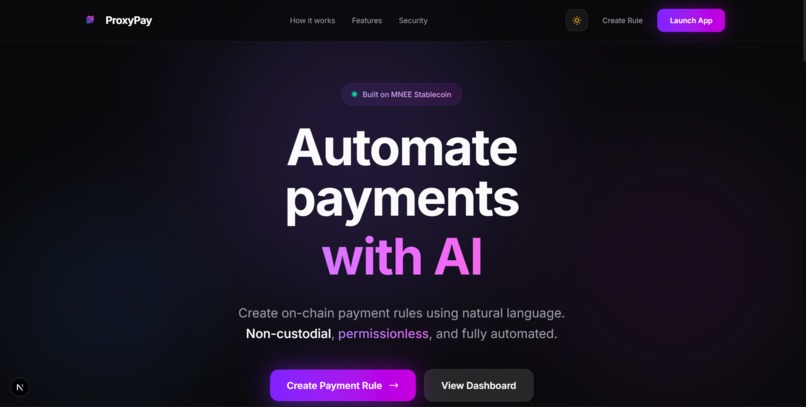
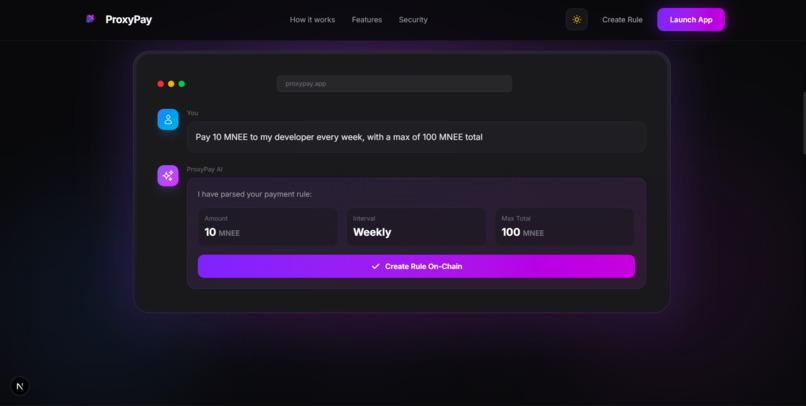
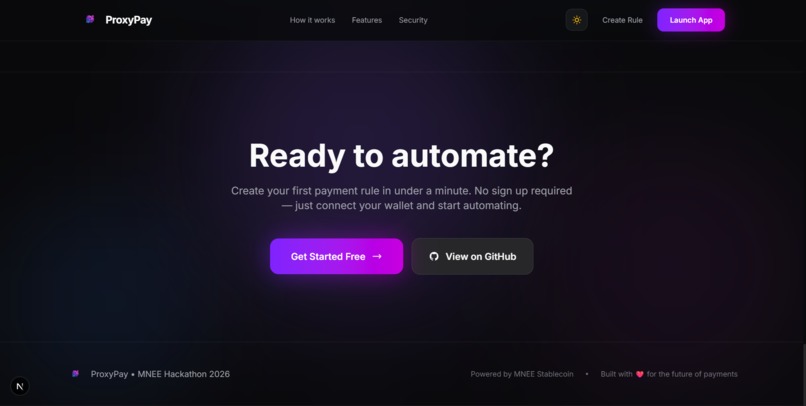
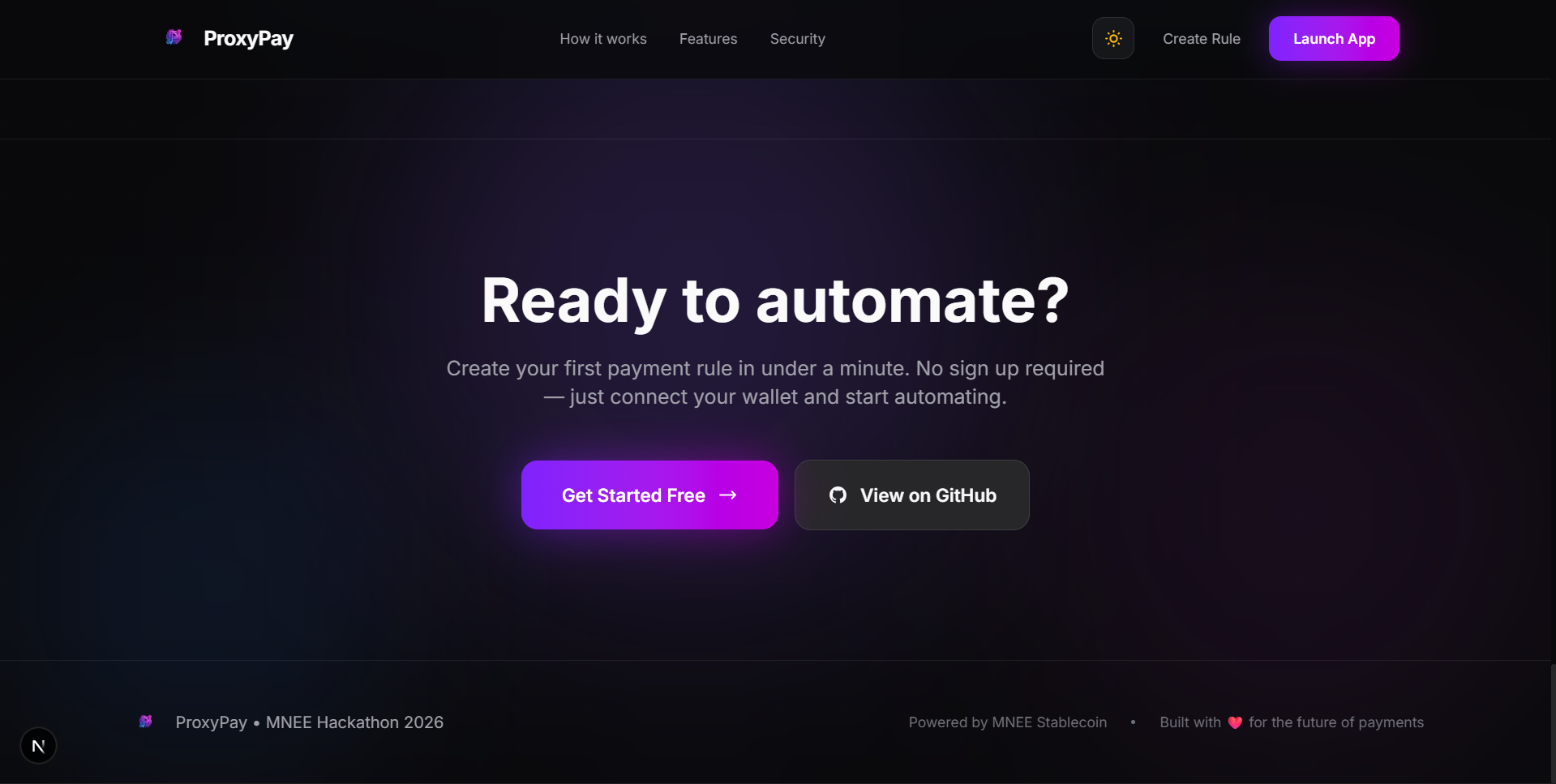
Landing Page
-
-
-
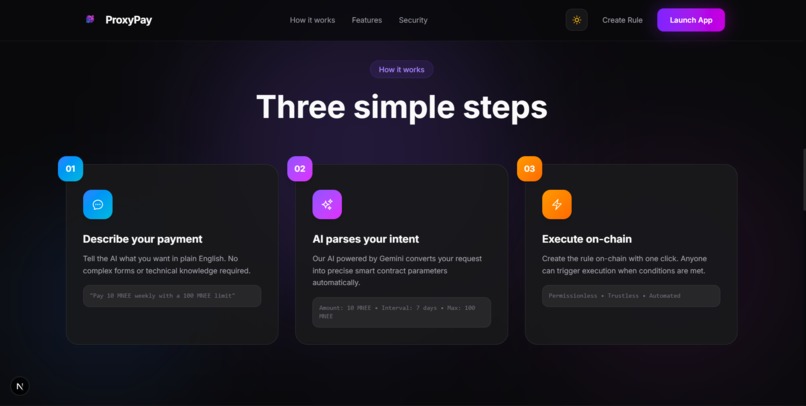
Steps to use
-
-
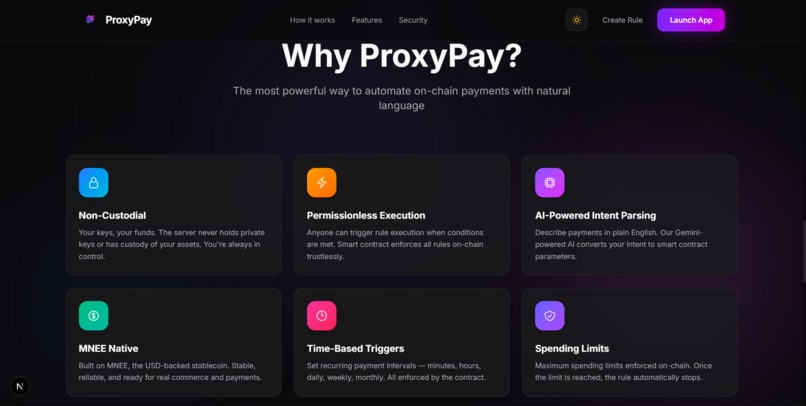
About ProxyPay
-
-
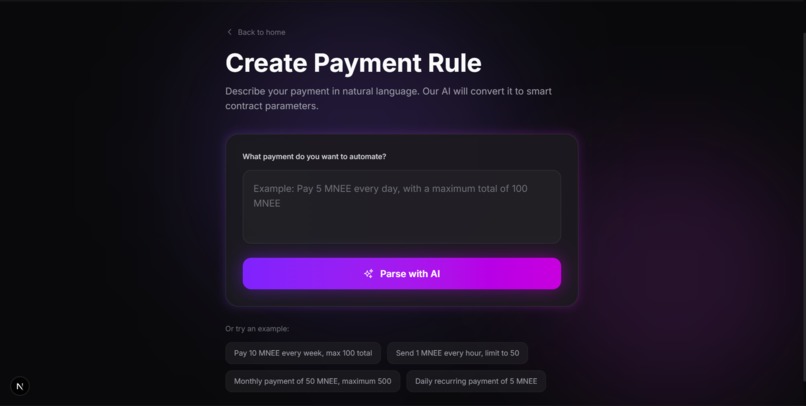
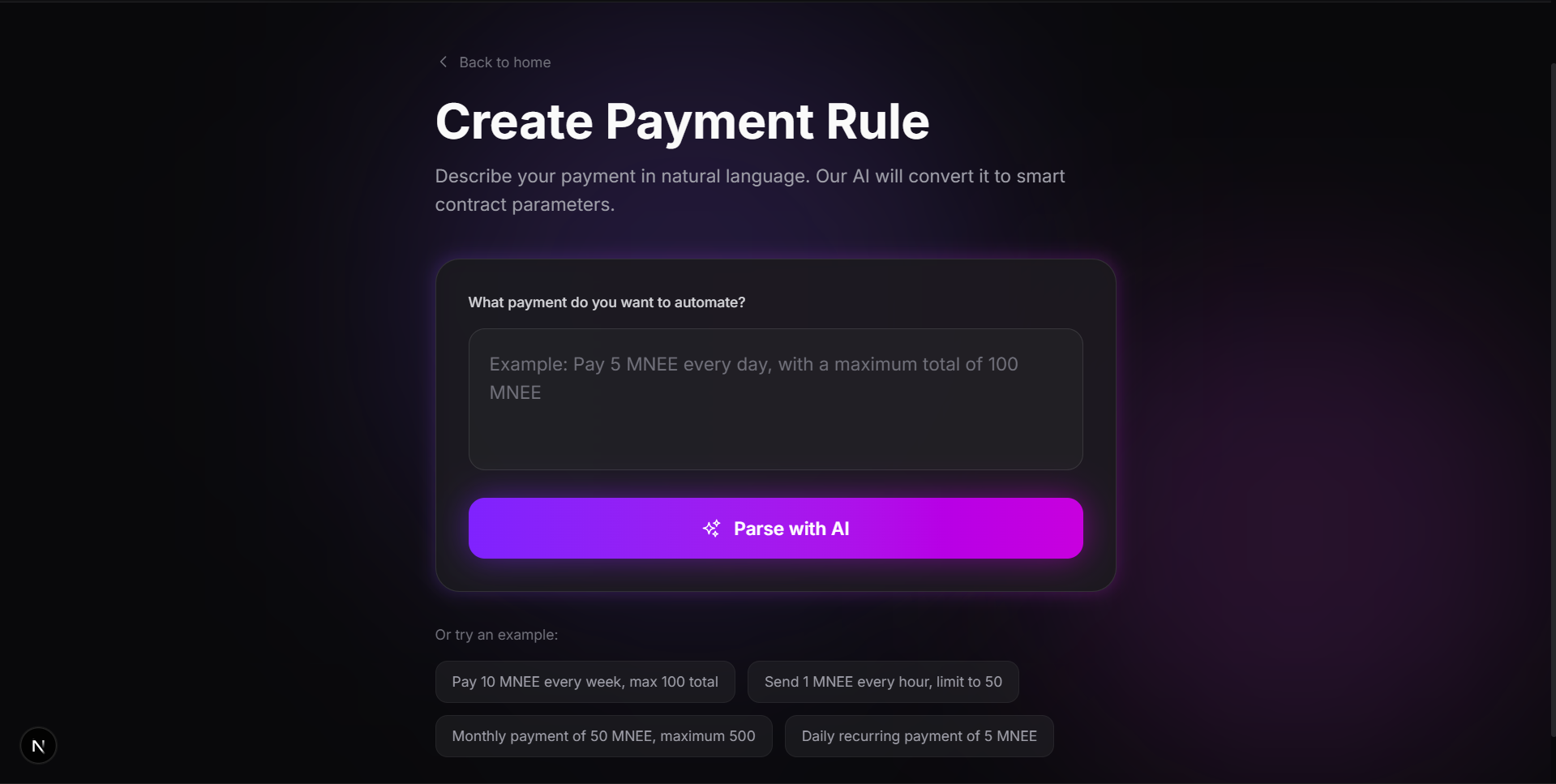
Rule Creation Page
-
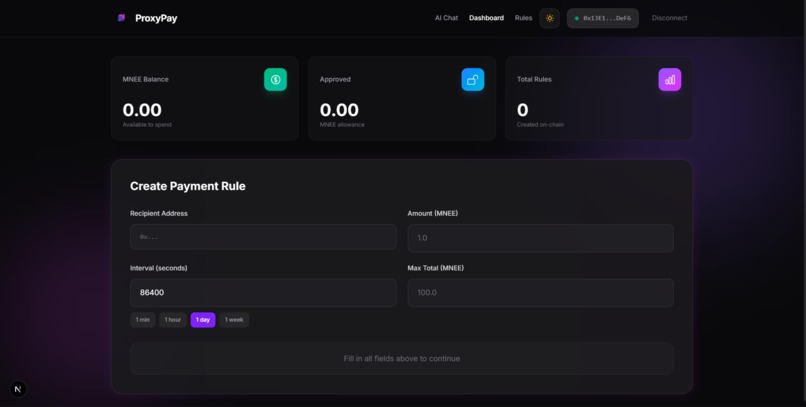
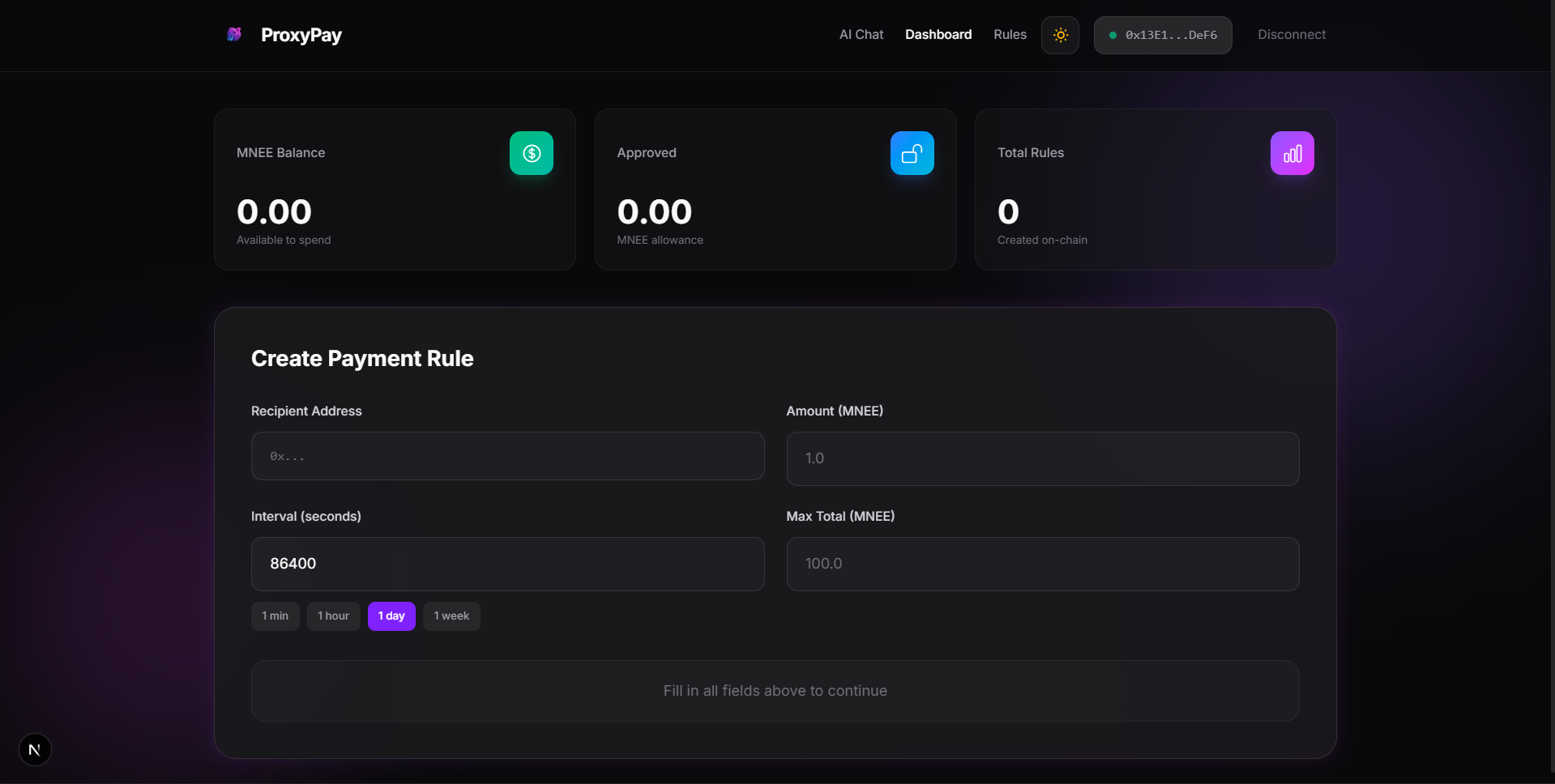
Dashboard
-
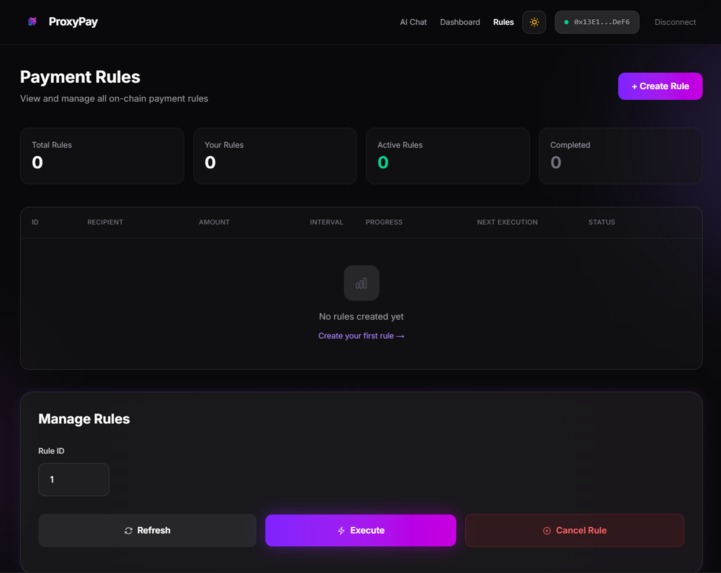
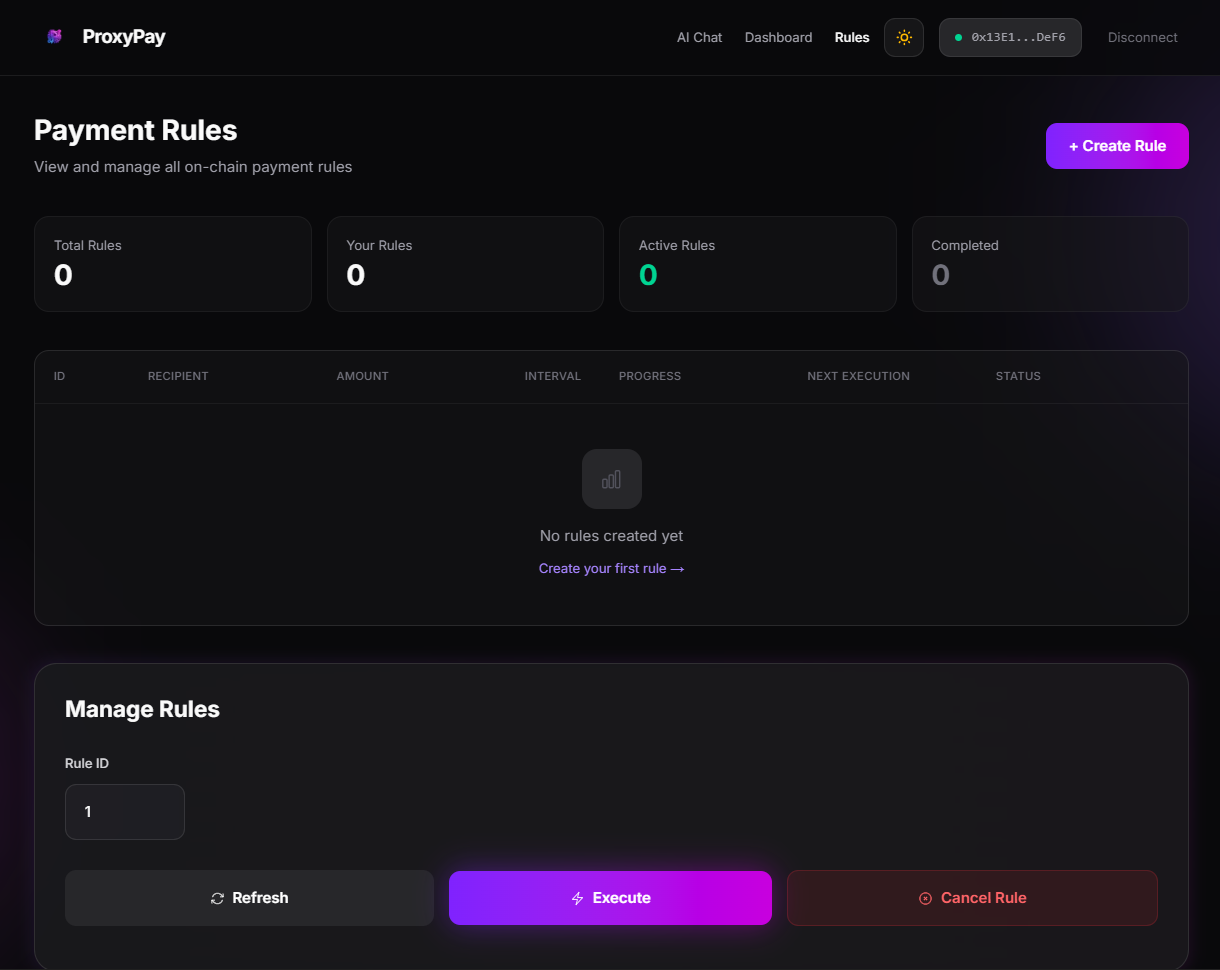
Payment Rules Page
Inspiration
The world of on-chain payments is fragmented and complex. Users need to manually execute transactions, remember payment schedules, and navigate complicated DeFi interfaces. We asked ourselves: What if anyone could automate payments just by describing what they want in plain English?
Inspired by the vision of programmable money, we built ProxyPay — a platform where payment rules live on-chain, execution is permissionless, and AI handles the complexity of translating human intent into smart contract logic.
What it does
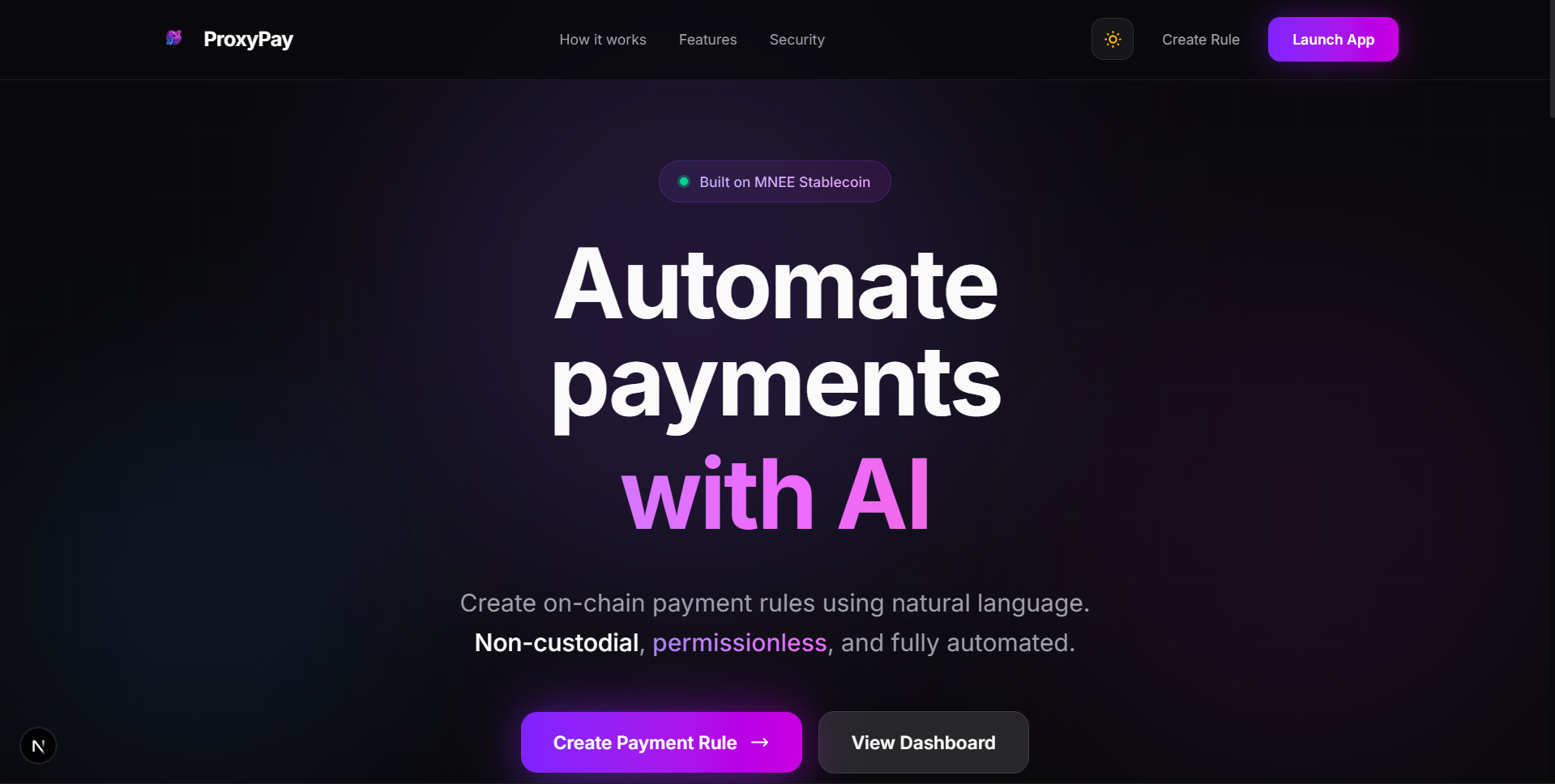
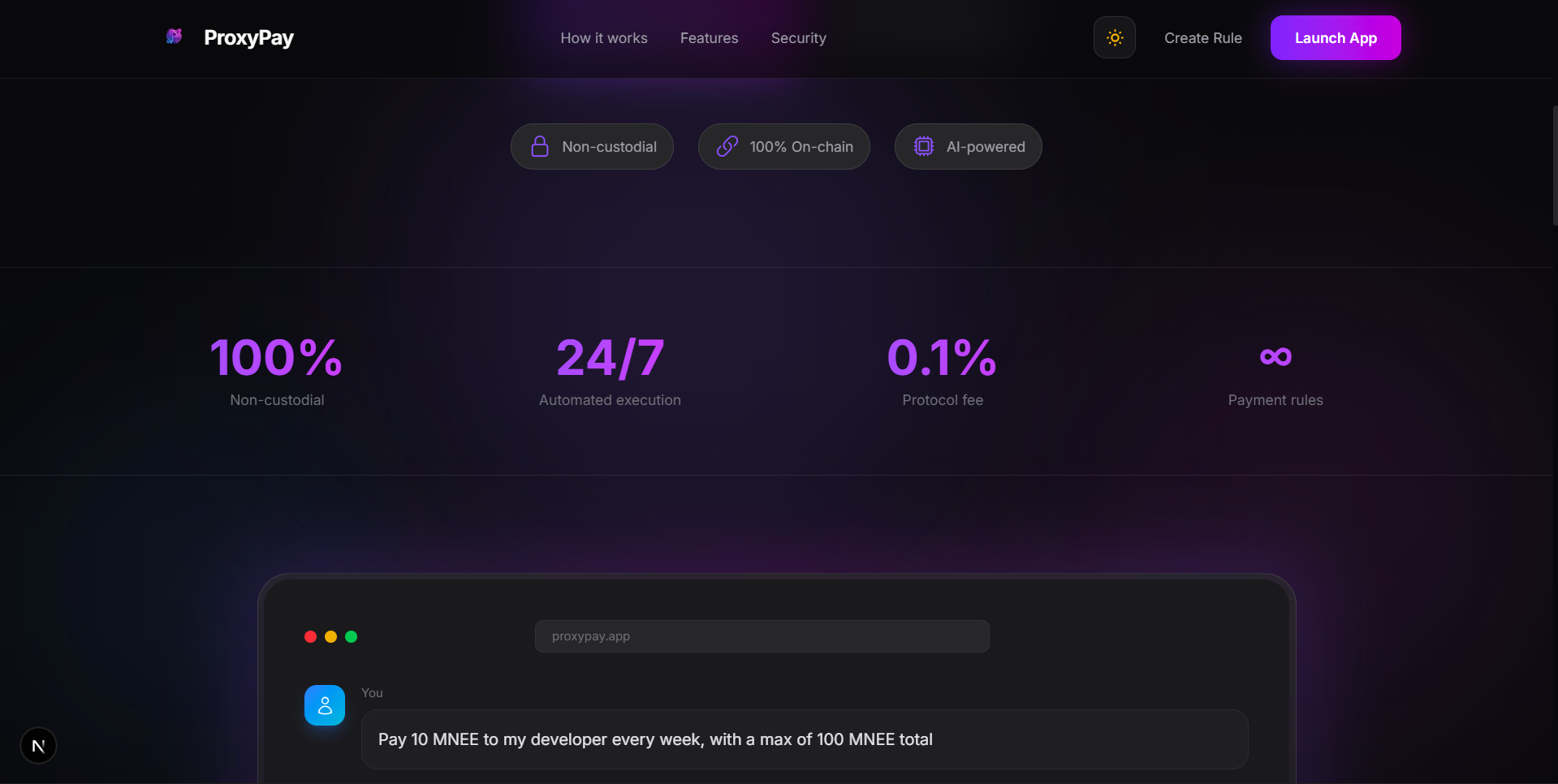
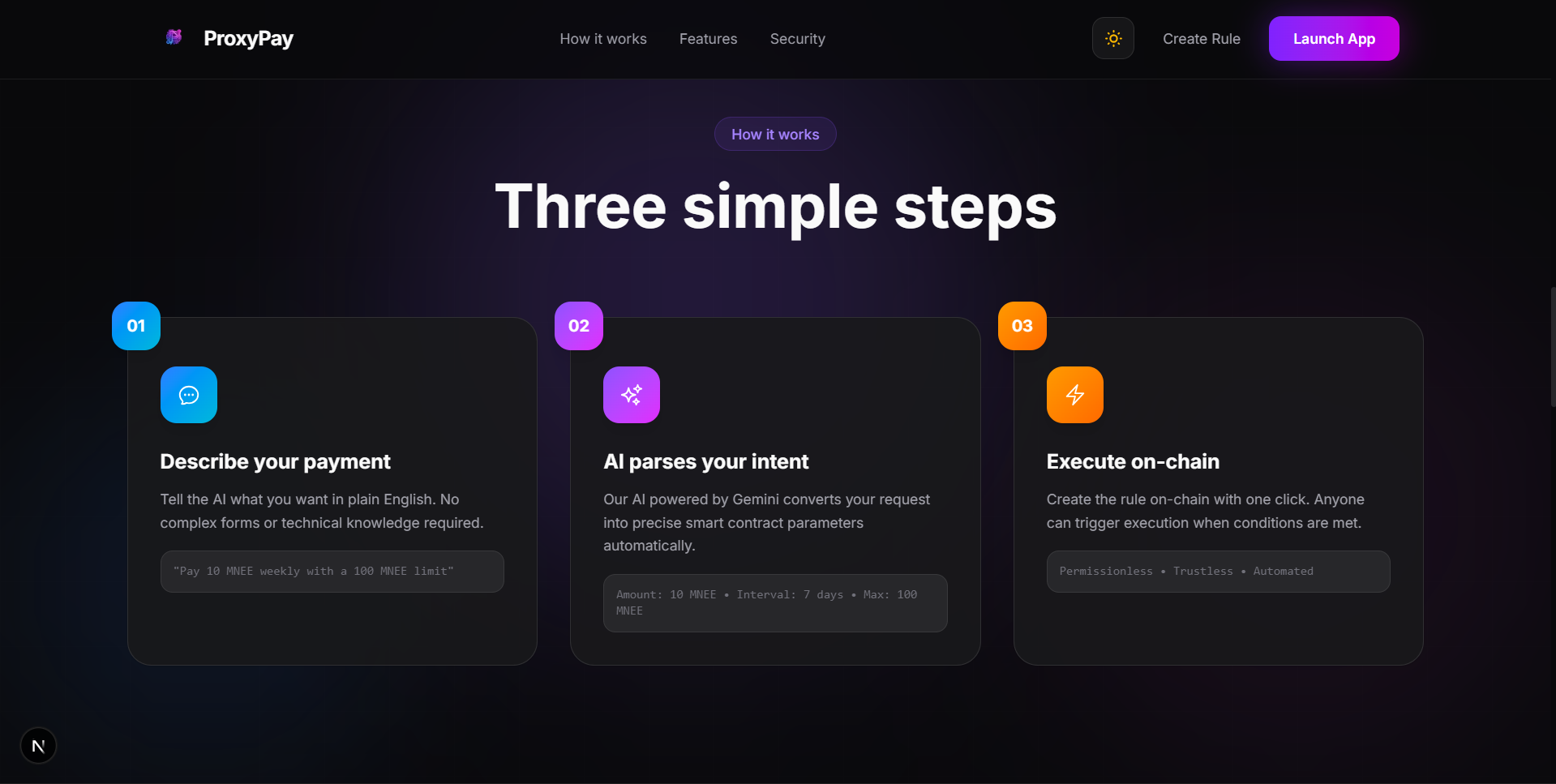
ProxyPay enables users to create automated, on-chain payment rules using natural language. Simply describe your payment in plain English:
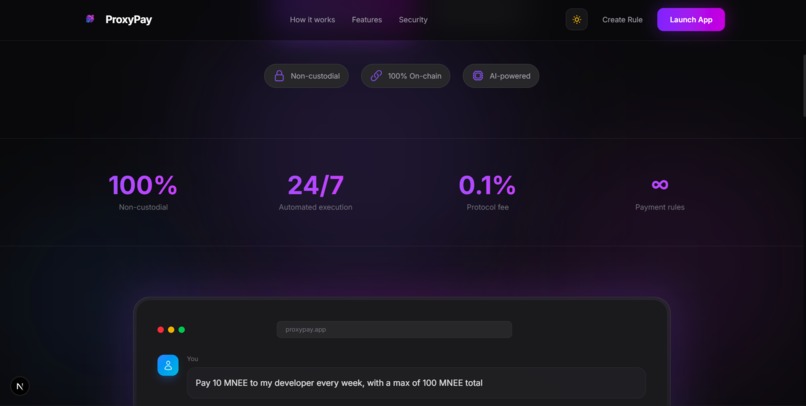
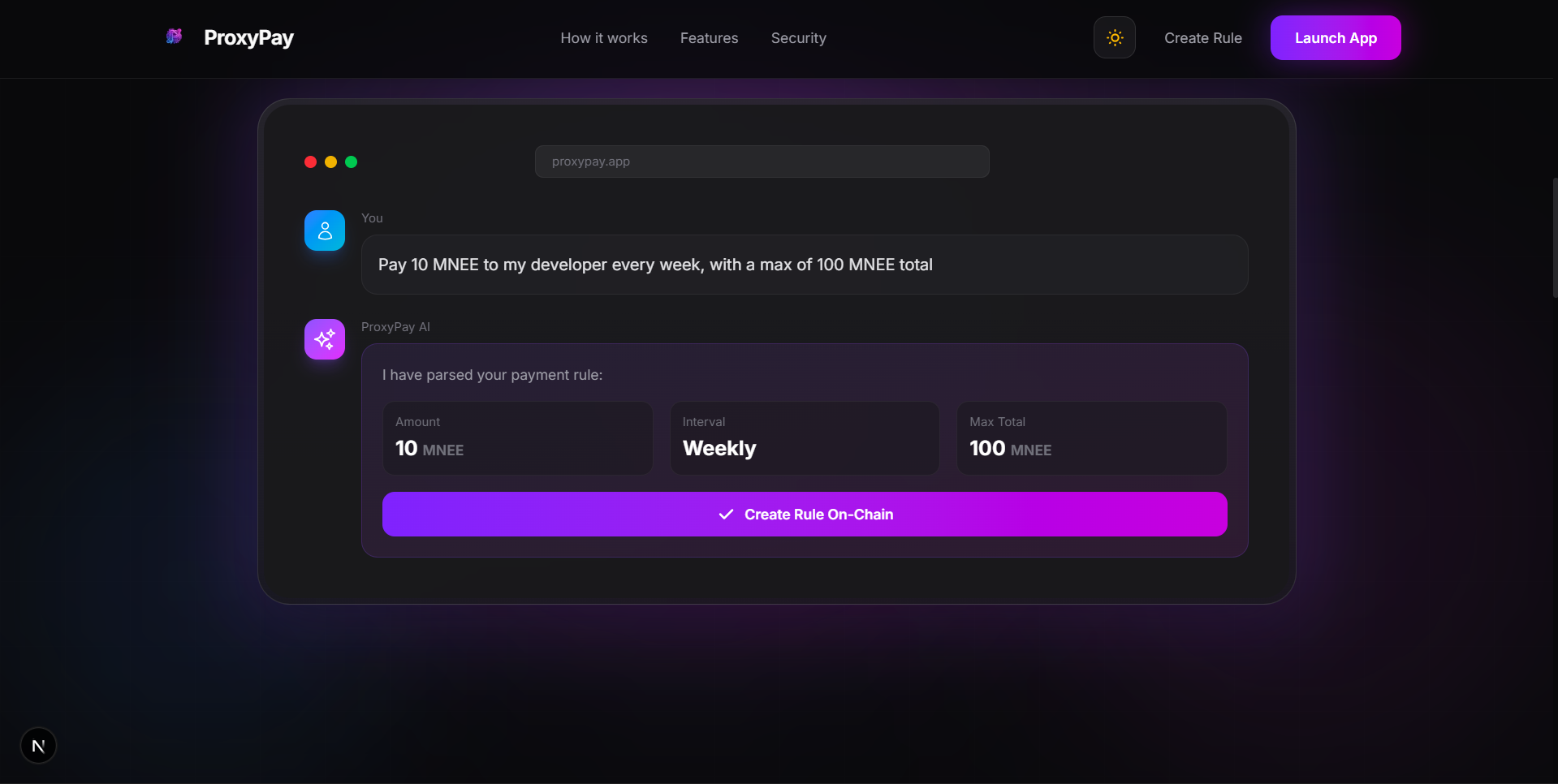
"Pay 10 MNEE to my developer every week, with a max of 100 MNEE total"
Our AI (powered by Google Gemini) parses your intent and creates a smart contract rule with:
- Recipient address
- Payment amount
- Time intervals (minutes, hours, days, weeks, months)
- Spending limits (enforced on-chain)
Once created, anyone can trigger the execution when conditions are met — making it truly permissionless and automated.
Key Features
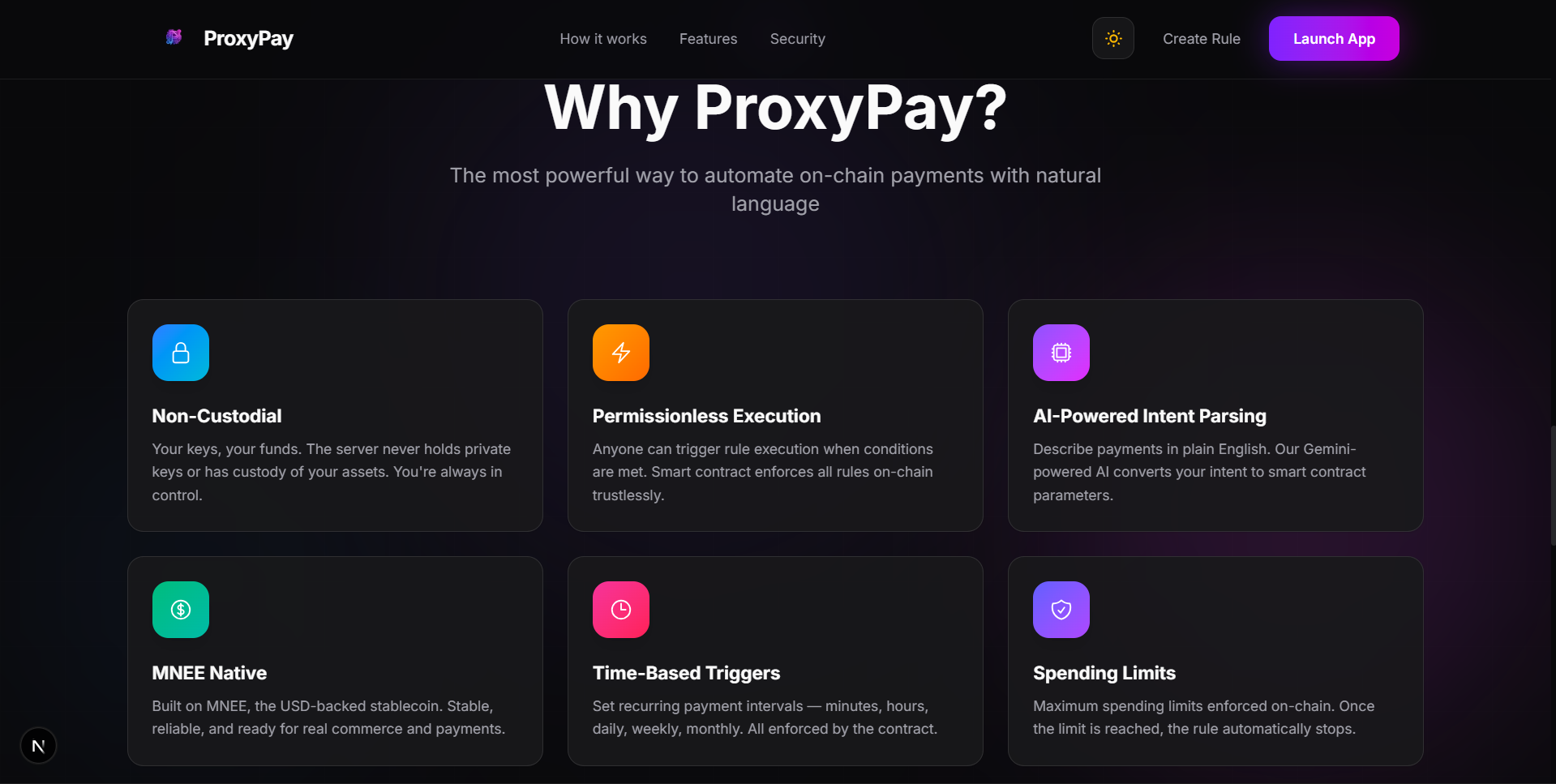
- 🔐 Non-Custodial: The server never holds private keys or has custody of your funds
- ⚡ Permissionless Execution: Anyone can trigger rule execution when conditions are met
- 🔗 100% On-Chain: Smart contracts validate and enforce all conditions
- 🤖 AI-Powered: Natural language → structured payment rules via Gemini AI
- 💰 Spending Limits: Maximum spending caps enforced on-chain
- ⏰ Time-Based Triggers: Recurring intervals enforced by the contract
How we built it
ProxyPay is a full-stack application with three main components:
1. Smart Contracts (Solidity + Foundry)
MockMNEE.sol: ERC-20 token contract for the MNEE stablecoinProxyPay.sol: Core payment rules engine with interval enforcement, spending limits, and permissionless execution- Comprehensive test suite with Foundry
2. Backend Server (Node.js + Express + TypeScript)
- RESTful API for rule management
- Google Gemini AI integration for natural language parsing
- Viem library for blockchain interactions
- Intelligent fallback when AI is unavailable
3. Frontend Dashboard (Next.js 16 + React 19 + TypeScript)
- Beautiful, responsive UI with dark/light theme support
- Wagmi + Viem for wallet integration
- Real-time rule monitoring and execution
- Chat interface for natural language rule creation
Challenges we ran into
Intent Parsing Accuracy: Getting the AI to consistently parse complex payment descriptions (like "pay 50 MNEE every 2 weeks for 6 months") required careful prompt engineering and validation layers.
Permissionless Execution: Designing a smart contract where anyone can trigger execution, but only when conditions are met, required careful security considerations.
Time Interval Enforcement: On-chain time-based logic is tricky. We implemented robust interval checking while keeping gas costs reasonable.
UX for Non-Technical Users: Making blockchain payments accessible through natural language while maintaining transparency about what's happening on-chain.
Accomplishments that we're proud of
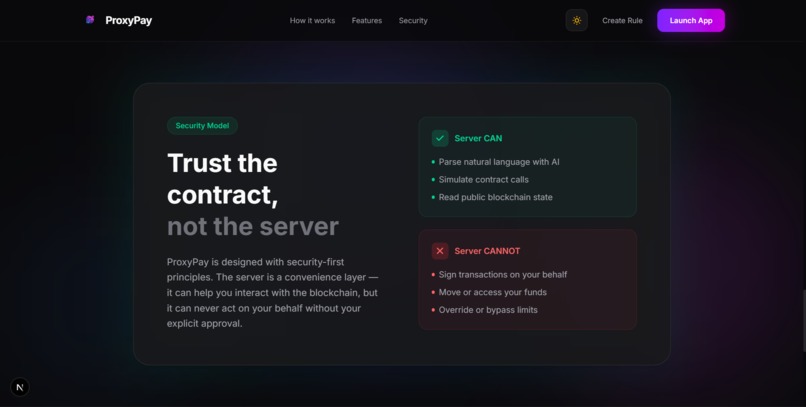
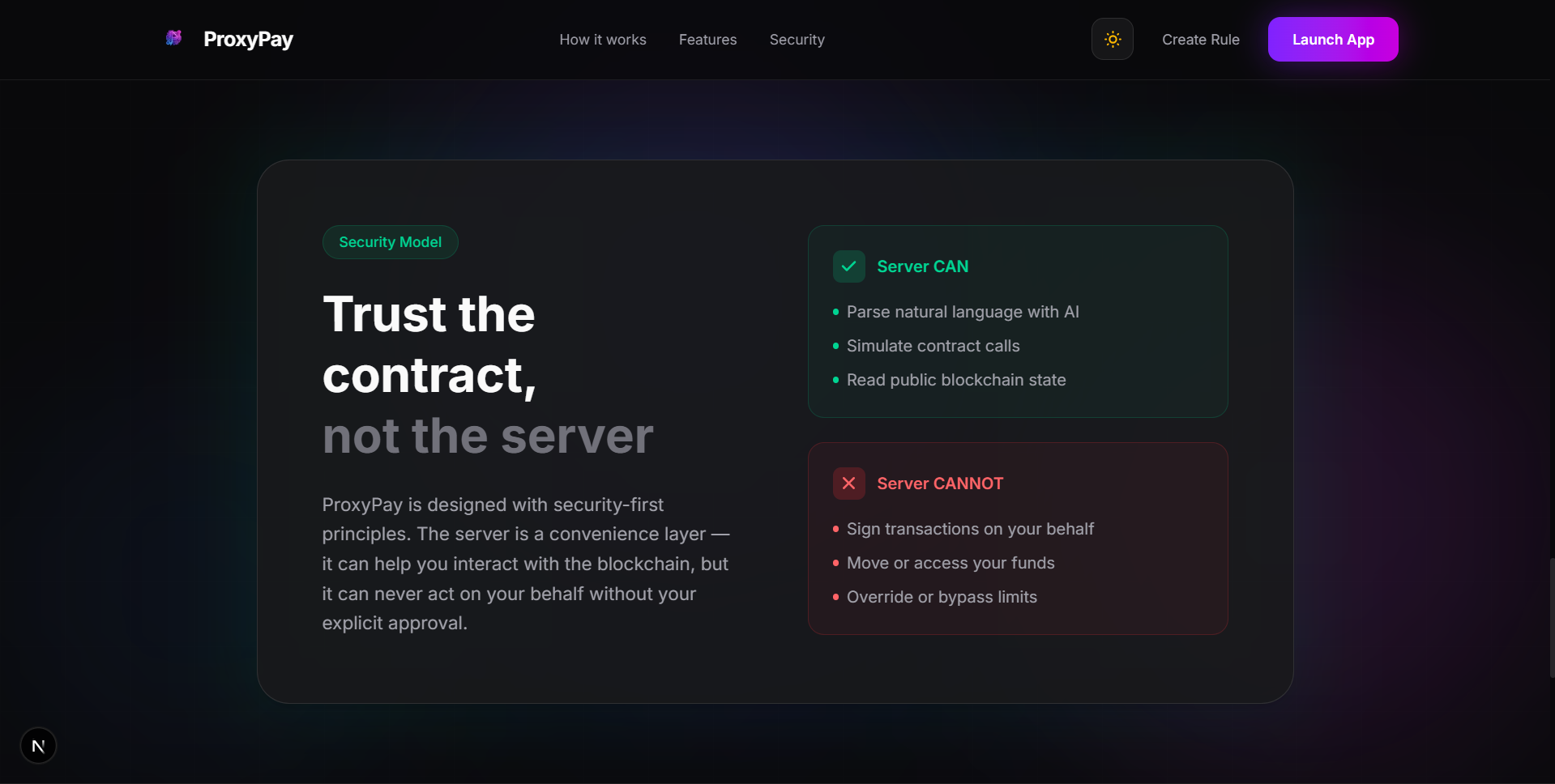
- True Non-Custodial Design: The server is purely a convenience layer — it can never move funds or sign transactions
- Working End-to-End Flow: From natural language input to on-chain execution, everything works seamlessly
- Clean Security Model: Clear separation between what the server CAN and CANNOT do
- Beautiful UI: Premium design with smooth animations and responsive layout
What we learned
- How to integrate AI with blockchain applications effectively
- The importance of fallback mechanisms when external APIs fail
- Designing truly permissionless systems where execution is trustless
- Building user-friendly interfaces for complex on-chain operations
What's next for ProxyPay
- Mainnet Deployment: Deploy to BSV mainnet with real MNEE tokens
- More Payment Conditions: Price triggers, balance thresholds, multi-signature approvals
- Notification System: Email/push notifications when payments execute
- Mobile App: Native mobile experience for on-the-go payment management
- Multi-Token Support: Expand beyond MNEE to other tokens
Built With
- ai
- css
- express.js
- foundry
- gemini
- mnee
- next.js
- node.js
- react
- solidity
- tailwind
- typescript
- viem
- wagmi


Log in or sign up for Devpost to join the conversation.